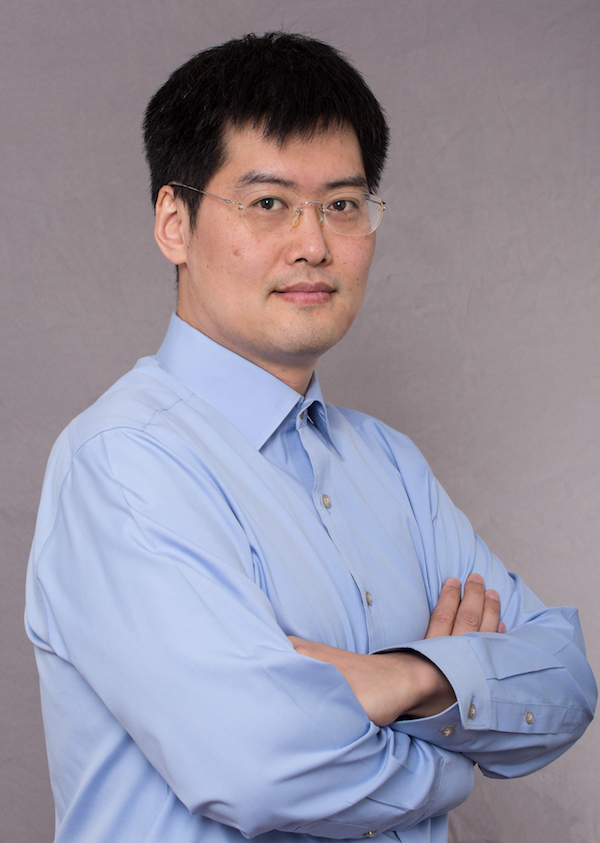
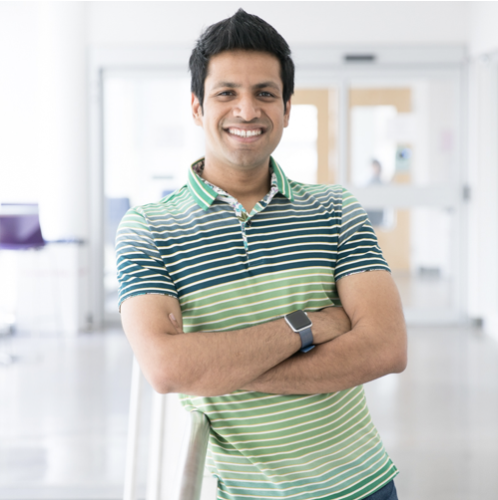
Prashant Sankaran is an Assistant Professor in the Department of Industrial and Systems Engineering at the University at Buffalo (School of Engineering and Applied Sciences). He holds a PhD in Mechanical & Industrial Engineering from Rochester Institute of Technology (2023), an MS in Industrial & Systems Engineering from RIT (2020), and a BTech in Mechanical Engineering from Sharda University (2014). His research focuses on artificial intelligence for reasoning under uncertainty, explainable AI, and applications in healthcare, energy management, transportation, and space exploration. He integrates operations research and AI techniques to address complex optimization challenges. Research interests include computational design of bioelectronic materials, kidney exchange optimization via graph machine learning, and solving NP-hard combinatorial problems with hybrid learning-optimization frameworks. His work bridges theoretical advancements (e.g., genetic algorithms) with real-world applications like autonomous logistics systems and renewable energy management. No scientific awards have been mentioned. While no advisees are listed, his publications reflect collaborations across AI, robotics, and healthcare sectors. His research spans topics from deep reinforcement learning in warehouse automation to synthetic data generation for transplant systems.
Xuming He is an Associate Professor at the School of Information Science and Technology (SIST), ShanghaiTech University, where he leads the PLUS Lab. His research spans computer vision and machine learning with a focus on developing algorithms that operate effectively under limited supervision and evolving data conditions. His core research interests include weakly-supervised and few-shot learning for scenarios with sparse annotations, continual learning frameworks for knowledge retention during sequential task acquisition, semantic segmentation techniques for scene understanding, and multimodal vision-language representations. He emphasizes interpretable machine learning to build transparent AI systems capable of human-understandable reasoning, addressing critical challenges in model trustworthiness and deployment reliability. Recent publications reveal strong trends toward novel class discovery in long-tailed recognition scenarios, physics-informed generative modeling for scientific applications, and robust segmentation under distribution shifts. His work increasingly integrates large language models for multimodal reasoning while maintaining focus on efficiency in resource-constrained environments like robotic grasping and medical imaging analysis. He actively mentors students, having supervised Qian He to PhD completion and Chuanyang Hu to Master's degree in 2023. He welcomes prospective graduate students through ShanghaiTech's Computer Science & Technology program and offers undergraduate research projects requiring minimum six-month commitments. The PLUS Lab under his direction drives innovation in learning under supervision constraints, with recent work spanning medical tumor analysis, cross-view geolocation, photonic computing, and semiconductor design verification. The lab's research bridges theoretical advances with practical applications across healthcare, robotics, and scientific discovery domains.
Andrea Del Prete is an Associate Professor in the Industrial Engineering Department at the University of Trento (Italy) since 2022. His research focuses on robot control, reinforcement learning, trajectory optimization, and numerical algorithms for dynamic systems. He leads the Interdepartmental Robotics Lab (IDRA) and has previously held roles as a tenure-track assistant professor at the University of Trento (2019-2021), a research scientist at the Max-Planck Institute for Intelligent Systems (2018), and an associated researcher at LAAS-CNRS (2014-2017) working with the HRP-2 humanoid robot. Earlier, he conducted PhD and post-doc research at the Italian Institute of Technology (2010-2013) on iCub robot control. PhD in Robotics (2013) - Italian Institute of Technology MEng in Computer Engineering (2009) - University of Bologna BSc in Computer Engineering (2006) - University of Bologna Dr. Del Prete specializes in merging learning and model-based techniques for safe robot control, particularly in legged systems. His work bridges trajectory optimization (TO) with reinforcement learning (RL) to overcome local minima challenges (CACTO/CACTO-SL algorithms) and develops robust controllers for humanoid and quadrupedal robots in unstructured environments. He explores viability kernels in MPC, safety certificates, and bi-level optimization for co-designing hardware/control policies. Key application areas include mountain rescue robotics (ALPINE platform), aerial maneuver recovery, and energy-efficient legged locomotion. His recent publications (2023-2025) emphasize numerical optimization algorithms, multi-contact locomotion, and hybrid control frameworks. Topics span from analytical integral optimization (2025) to climbing robots for mountain operations (2025), demonstrating a trajectory from theoretical algorithm development to real-world robotic applications. Research keywords include robotics, numerical optimization, and machine learning, with sub-fields like MPC for dynamic systems, humanoid control, and terrain adaptation. As an educator, he teaches advanced courses on: Optimization and Learning for Robot Control (48-hour master's course) Optimization-based Control of Legged Robots (12-hour PhD course) Task-Space Inverse Dynamics (3-hour PhD course) Current PhD advisees include Mohammad Hasan Yeganegi (generalization bounds for imitation learning), Pietro Noah Crestaz (numerically-efficient RL), Veronica Campana (ergodic control for defect detection), Elisa Alboni (data-efficient model-based RL), and Gianni Lunardi (MPC for legged locomotion).
Niklas Grabbe is a postdoctoral researcher at the Chair of Ergonomics, Technical University of Munich (TUM), where he leads the research group on "Automated Driving and Mobility Systems" and is establishing a new working group focused on "Modelling complex socio-technical systems" with emphasis on Resilience Engineering and the Functional Resonance Analysis Method (FRAM). His research centers on human factors in automated and teleoperated driving, mobility systems, and behavior modeling. He applies systems engineering principles to analyze safety and usability, particularly using FRAM to study performance variability and resilience in socio-technical systems. His work addresses critical challenges in urban automated driving, teleoperation, and multi-driver interactions through rigorous quantitative modeling and field studies. Analysis of Grabbe's publications reveals a dominant trend in applying FRAM to driving scenarios, with recurring themes of safety enhancement, human-automation interaction, and usability evaluation. His interdisciplinary work bridges transportation psychology, safety engineering, and human-computer interaction, consistently emphasizing systems thinking to solve complex problems in automated vehicle technology. Grabbe contributes to academic instruction through courses like "Modelling Complex Sociotechnical Systems" (Winter 2025/26). He operates within TUM's Chair of Ergonomics infrastructure, utilizing specialized labs including driving simulators and ergonomic mockups to support experimental research in human factors and automated systems.
Stefan Kowalewski serves as Professor of Embedded Software at RWTH Aachen University, leading the Chair of Embedded Software (Informatik 11) within the Department of Computer Science. His research spans critical domains including medical cyber-physical systems, automotive software, and industrial automation, with over 150 publications demonstrating sustained scholarly impact. Professor Kowalewski's work focuses on three interconnected research pillars: Embedded Systems Verification: Pioneering model checking techniques for PLC code, particularly addressing state space challenges in GRAFCET-based specifications Medical Cyber-Physical Systems: Developing safety-critical software for mechanical ventilation, extracorporeal membrane oxygenation, and ARDS diagnosis systems with strong clinical collaborations Automotive Software: Creating verification frameworks and safety architectures for automated vehicles through projects like UNICARagil Recent publications reveal an increasing integration of AI techniques with traditional verification methods, particularly for medical applications involving neonatal care and critical respiratory support. His 2024-2025 work shows particular emphasis on timing isolation in vehicle communication systems, middleware performance evaluation, and robust AI models for medical diagnosis. Professor Kowalewski maintains active collaborations with RWTH Aachen University Hospital's medical departments and automotive industry partners. His laboratory operates specialized facilities including the Cyber-Physical Mobility Lab for vehicle research and in-vivo testing setups for medical device validation. He has supervised numerous doctoral candidates, with recent students focusing on topics like ARDS classification algorithms, GRAFCET verification techniques, and safety architectures for software-defined vehicles. His educational contributions include developing remote teaching platforms for cyber-physical systems education.
Li Zhongfei is a Chair Professor and Vice Dean of the School of Business at Southern University of Science and Technology (SUSTech). He is a member of the State Council's Discipline Review Group, National Outstanding Young Scientist, National Model Teacher, and recipient of the State Council's Special Government Allowance. His career spans roles as Distinguished Professor at Lingnan College, Executive Dean at Sun Yat-sen University, and leadership positions in academic societies such as the Chinese Society for Systems Engineering. Education : PhD in Management (1997-2000) and Master's in Operations Management (1988-1990) from the Chinese Academy of Sciences, and a Bachelor of Science in Mathematics from Lanzhou University. Research Interests : His work focuses on Technological Finance Green Finance Pension Finance Financial Engineering and Risk Management Insurance and Actuarial Science with applications to financial markets, digital finance, and sustainability. Scientific Trends from his publications include: ESG rating impacts on capital markets Green innovation under carbon pricing Machine learning in cryptocurrency forecasting Robust portfolio optimization under uncertainty Climate risk and policy analysis Post-pandemic economic recovery and systemic risk Scientific Awards : Recipient of the National Teaching Achievement Award, Guangdong Province Philosophy and Social Sciences prizes, Zhong Jiaqing Operations Research Award, and recognition as a Top 2% Scientist (Stanford, 2023). He was honored as a National Model Teacher and 'Top Ten Most Respected Business School Deans in China.' Grants & Projects : Principal investigator in NSFC key projects, including 'Intelligent Investment and Risk Management under Dual Carbon Strategy' and 'Financial Innovation and Risk Management.' His projects address fintech, pension funds, and climate risk. Labs & Teams : Leads advanced research teams in SUSTech's School of Business and collaborates with international institutions like the University of Waterloo and Hong Kong Polytechnic University.
Mayank Goel serves as an Assistant Professor in the Software and Societal Systems Department (S3D) at Carnegie Mellon University's School of Computer Science. His research bridges computer science and societal impact through practical sensing systems that leverage existing environmental devices for health monitoring and human-computer interaction without requiring hardware modifications. Dr. Goel specializes in mobile computing, signal processing, and machine learning to develop unobtrusive health technologies applicable to real-world scenarios. His core research areas include passive activity recognition for chronic disease management (particularly multiple sclerosis), privacy-preserving acoustic sensing, smartwatch-based clinical interventions for post-operative care, and equitable healthcare systems for global development contexts. He emphasizes end-to-end solutions through close collaboration with medical professionals and designers to ensure immediate deployability outside laboratory environments. Analysis of his 2024-2025 publications reveals a strong interdisciplinary focus spanning computer science, biomedical engineering, and clinical practice. Key trends include longitudinal digital phenotyping for neurological conditions, on-device privacy preservation in activity recognition, and multimodal procedural assistance systems. His work consistently addresses real-world challenges in sensor placement flexibility, user adoption barriers, and equitable access to medical technologies. No scientific awards were mentioned in the available documentation. Information regarding student advising, research grants, or laboratory affiliations was not specified in the provided materials, though his publication record indicates active collaboration with medical professionals and bio-engineers for clinical validation of health technologies.
Professor Matthias Lederer serves as a faculty member at the Weiden Business School of Ostbayerische Technical University Amberg-Weiden, specializing in Business Informatics with a focus on Process Management. His academic position is complemented by extensive industry experience across multiple sectors including IT services, manufacturing, and consulting. Dr. Lederer's research spans four interconnected domains: process analysis and optimization, IT process management, agile process transformation, and didactics for process digitization. His work bridges theoretical frameworks with practical applications, particularly in business process management (BPM), digital transformation, and the integration of agile methodologies into organizational structures. His research demonstrates a clear trajectory toward increasingly sophisticated applications of data science and artificial intelligence in process optimization. Analysis of his recent publications reveals a strong focus on practical implementations of business process management, with particular emphasis on agile transformations, data-driven process design, and the application of AI in business contexts. His work consistently addresses the intersection of academic research and industry practice, with publications appearing in both academic journals and professional conference proceedings. The research demonstrates growing attention to digital platforms, smart manufacturing applications, and sustainable business practices. His scientific recognition includes: Best Program Director award from ISM International School of Management Project Award 'Innovative LernOrte' from OTH Award for Good Teaching from the Bavarian State Ministry Best Paper Award at the 2014 International Conference on Information Systems Multiple professional certifications including Lean Six Sigma Black Belt and OMG-Certified Expert in Business Process Management Professor Lederer has developed significant academic leadership through his role as Chairman of the Institute of Innovative Process Management. His teaching approach integrates practice-integrated methodologies, reflecting his belief in connecting academic concepts with real-world applications. His extensive consulting background with organizations like REHAU AG + Co. and the Bavarian Ministry of Justice informs his academic work and student mentorship.
Dr. Pascal Reuss is a Researcher at the Intelligent Information Systems (IIS) Division within the Institute of Computer Science , University of Hildesheim . His work focuses on Case-Based Reasoning (CBR) systems, Multi-Agent Systems , and Knowledge Management applications. Active in CBR framework development and game-based AI research Teaching Computer Science III (Databases) for winter 2025/26 Participating in university sustainability initiatives like Stadtradeln 2024/25 Reuss contributes to AI education through practical implementations in gaming environments and has developed visualization tools for CBR agent behavior. His research spans multi-agent collaboration , dynamic case bases , and domain-specific language implementations for knowledge maintenance. Notable contributions include: Co-developing the FEATURE-TAK framework for knowledge extraction Designing case factories for distributed CBR systems Implementing finite state machines for tactical game agents Creating CBR-based fitness planning systems His work appears in various CBR and Game Development publications from 2011-2024. The research demonstrates practical applications of CBR in aircraft maintenance diagnostics , training plan generation , and educational technology contexts.
Roopsha Samanta serves as an Assistant Professor in the Department of Computer Science at Purdue University, where she leads the Purdue Formal Methods (PurForM) research group and participates in the Purdue Programming Languages (PurPL) initiative. Her academic foundation includes a PhD from the University of Texas, Austin (2013) and postdoctoral research at the Institute of Science and Technology Austria prior to joining Purdue in 2016. Education: PhD in Computer Science, University of Texas, Austin (2013) Postdoctoral Researcher, Institute of Science and Technology Austria Professor Samanta's research centers on bridging formal methods with programming languages to enhance software reliability, with core expertise in program verification, program synthesis, and concurrency. Her work uniquely targets both professional developers and non-programmers, developing techniques to ensure programs align with user intent through automated reasoning and synthesis. Recent efforts focus on distributed systems verification where traditional methods face scalability challenges. Analysis of her 2020-2024 publications reveals a dominant trajectory in distributed agreement systems, particularly advancing parameterized verification for unbounded process networks. Key innovations include bounded verification techniques for doubly-unbounded systems, explainable synthesis through specification localization, and secure multi-party computation frameworks like HACCLE. Her work consistently integrates theoretical formal methods with practical system implementation. Scientific Awards: NSF CAREER Award (2019) for “Robustness of Inductive Reasoning Engines” Amazon Research Award (2021) supporting secure computation research Her research is primarily funded through competitive grants including the NSF CAREER award and Amazon Research Award, enabling exploration of verification robustness and secure multi-party computation. While specific advising details aren't publicly documented, her leadership of the PurForM group indicates active mentorship of graduate researchers in formal methods. Current projects suggest expanding applications to privacy-preserving technologies and explainable AI-assisted programming. The PurForM research group, under her direction, develops foundational tools for program verification and synthesis with emphasis on distributed and concurrent systems. Collaborations within PurPL and industry partners like Amazon drive translational research from theoretical models to practical verification frameworks applicable to real-world distributed infrastructure.
Hans Petter Hildre is Head of Department at the Department of Ocean Operations and Civil Engineering , part of the Faculty of Engineering at the Norwegian University of Science and Technology (NTNU). His work focuses on maritime engineering, digital twin technology, and marine operations. Research interests include: Digital Twin Applications in Maritime Industry Offshore Operations and Wind Turbine Installation Marine Robotics and Autonomous Systems Wave Field Estimation and Environmental Load Analysis Human-Machine Interaction in Maritime Contexts Co-simulation and Real-time Monitoring Recent publications highlight trends in: Wave shielding effects for offshore vessels Knowledge transfer from automotive/aviation to maritime Crane path planning using digital twins Visual attention zone recognition systems Hydrodynamic modeling and sensitivity analysis Smart city-maritime integration Scientific collaborations span institutions including: European Commission (Future Skills Reports) Royal Institution of Naval Architects The American Society of Mechanical Engineers (ASME) IEEE Transactions on multiple domains Springer Publishing
Professor Neil Berry is a distinguished academic and researcher in the Department of Chemistry at the University of Liverpool's School of Physical Sciences. He currently serves as Head of Department (2018-2024) and has held various significant administrative roles including Director of Post Graduate Research for the School of Physical Sciences (2015-2018) and Departmental PGR Lead. His academic journey began at Exeter College, University of Oxford where he earned his MChem in Chemistry (1999) followed by a DPhil (2002) under the supervision of Professor Paul Beer. Professor Berry's research expertise spans computational chemistry with a focus on applying AI, machine learning, and molecular modeling to solve complex problems in chemistry. His work primarily centers on four key areas: medicinal chemistry (particularly antimalarial and antiparasitic drug discovery), materials chemistry (including metal-organic frameworks and supramolecular gels), reaction mechanisms, and chemoinformatics. His group adopts a rational approach to research through molecular and material design, integrating computational modeling with experimental validation through close collaborations with the Liverpool School of Tropical Medicine, University of Washington, and industry partners including GSK, Bayer, and Unilever. His publication record demonstrates a strong focus on applying computational methods to drug discovery for neglected tropical diseases and advanced materials science. Recent work shows increasing integration of machine learning techniques across all research areas, with significant contributions to antimalarial drug development, snakebite treatment, and materials science applications. His research consistently bridges computational prediction with experimental validation, demonstrating the practical impact of his work. Treasurer - Royal Society of Chemistry Chemical Information and Computer Applications Group (2021 - present) Invited committee member - Royal Society of Chemistry Chemical Information and Computer Applications Group (2015 - present) Fellow of Higher Education Academy (2012 - present) Member of Royal Society of Chemistry (2005 - present) Referee for journals including Nature Communications, Journal of Medicinal Chemistry, and Journal of Computer Aided Molecular Design As an educator, Professor Berry has supervised numerous PhD students and postdoctoral researchers, with a particular emphasis on integrating computational approaches with experimental chemistry. His teaching innovations include Chemtube3D (web-based interactive 3D simulations of organic reactions), lecture recording systems, and ChemPreLab (a pre-lab interactive tutoring system). His research group operates at the intersection of chemistry, biology, and computer science, securing substantial funding from EPSRC, MRC, Wellcome Trust, and industry partners.
Jukka K Nurminen is a Professor of Computer Science at the University of Helsinki (since 2019) and a Research Professor at VTT. He leads the Empirical Software Engineering research group and supervises doctoral students in the Doctoral Programme in Computer Science. His career spans academia and industry, including roles as Adjunct Professor at Aalto University (part-time, 2016-2021) and Principal Scientist at VTT (2016-2019). His research focuses on efficient software systems , particularly energy-efficient software , mobile cloud computing , and data-intensive systems . Recent work addresses AI system testing , ethical decision-making in software , and quantum computing software . His publications highlight trends in quantum algorithms , machine learning for edge computing , and ethical AI . Best Paper Award (2023) Nurminen has supervised 6 PhD theses, 48 MSc theses, and 21 BSc theses. He has secured over 1 MEUR in research funding, including projects like FrameQ and EM4QS for quantum middleware. His teaching innovations include hackathons and summer schools, with excellence recognized in tenure-track evaluation (2018) and adjunct professorship (2015).
Carl-Mikael Zetterling is a Professor and Head of Department at Kungliga Tekniska Högskolan (KTH) in Stockholm, Sweden, affiliated with the School of Electrical Engineering and Computer Science (ICT) and the Electronics and Embedded Systems department. His research focuses on process technology and device design for high-temperature, high-power silicon carbide (SiC) electronics, expanding into SiC-based analog and integrated circuits. He has authored over 300 publications, including books on SiC process technology and plagiarism prevention. Dr. Zetterling has held leadership roles such as Vice Dean of the School of ICT (2013–2017) and teacher representative on KTH's faculty board. He has collaborated internationally at Stanford University, Kyoto University, and Kyoto Institute of Technology. His work addresses applications in extreme environments, including Venus exploration and fusion reactor monitoring, with a focus on radiation tolerance and thermal resilience. The 15 most recent publications highlight trends in wide bandgap semiconductors, gamma irradiation effects on SiC devices, and high-temperature integrated circuits. His articles span structural health monitoring with machine learning, novel SiC diode designs, and radiation-hardened electronics. Key contributions include advancements in self-aligned contacts, trench MOSFETs, and compact modeling for extreme conditions. While no formal awards are listed, his roles in technical program committees (TMS Electronic Materials Conference, IEEE SISC Conference) and editorial work demonstrate significant academic service. He teaches courses ranging from digital design to high-temperature electronics, overseeing degree projects in embedded systems, communication, and nanotechnology.
Bo Markussen is a Professor at the University of Copenhagen within the Department of Mathematical Sciences . He is also a member of the Data Science Laboratory , where he contributes to statistical methodology and interdisciplinary collaborations. His academic journey began with a Cand.Scient (MSc) and PhD in Statistics from the University of Copenhagen, awarded in 1998 and 2002 respectively. 2012–present: Professor, Department of Mathematical Sciences, University of Copenhagen 2009–2012: Associate Professor, Department of Basic Sciences and Environment, University of Copenhagen 2006–2009: Assistant Professor, Department of Basic Sciences and Environment, University of Copenhagen Bo Markussen's research focuses on applied statistics , particularly in functional data analysis and multiple testing corrections in genetics . His work spans diverse domains including environmental science, agriculture, and public health. Recent research output highlights applications in Arctic climate data analysis, fire risk modeling, plant stress phenotyping, and nutritional biomarker prediction. His recent publications demonstrate a strong trend toward machine learning integration with statistical modeling , addressing challenges in high-dimensional data analysis and environmental risk assessment. Collaborations span institutions in Denmark and internationally, reflecting his engagement in pan-Arctic climate studies and tropical agricultural research. 2018–present: Associate Editor, Scandinavian Journal of Statistics 2017–2019: Chair, Danish Society for Theoretical Statistics 2015–2017: Board Member, Danish Society for Theoretical Statistics As a central figure in the Data Science Laboratory , Markussen leads statistical consultancy initiatives and contributes to methodological advancements. His expertise bridges theoretical statistics with real-world applications, particularly in handling complex datasets across biological and environmental domains.