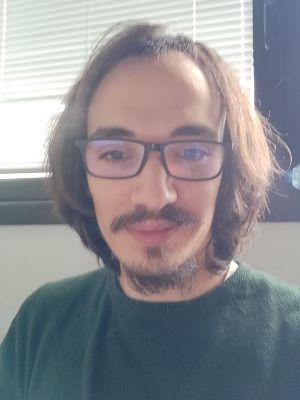
Gianluca D’Amico is a Postdoctoral Researcher (since January 2024) and previously completed a Ph.D. (October 2020 – June 2024). His work focuses on developing blockchain-based auction systems, machine learning applications, natural language processing tools, and embedded systems projects. He contributed to smart contract design for English and Vickrey auction mechanisms, emphasizing secure bidding phases and decentralized transaction management. Research interests include: Machine Learning: Character recognition on Raspberry Pi devices Blockchain Technology: Auction dApp development using Solidity and Truffle Natural Language Processing: Ontology-driven wiki description tools Parallel Computing: Optimized watermarking solutions for image streams
Letterio Galletta is an Assistant Professor of Computer Science at IMT School for Advanced Studies Lucca, within the SySMA research unit. Previously, he held a postdoctoral researcher position at the University of Pisa's Department of Computer Science and earned his Ph.D. in Computer Science from the University of Pisa in 2014. His research focuses on language-based security, leveraging programming languages, compilers, and formal verification to address security challenges in adaptive software, IoT, firewalls, and blockchain technologies. Key research areas include secure compilation, access control policy analysis, smart contract formal models, and static analysis techniques. His work bridges theoretical foundations with practical applications, such as securing satellite communication systems (IRIS2) and enhancing firewall policy enforcement. Publications highlight contributions to blockchain transaction parallelism, IoT security metrics, and formal methods for SELinux configurations. He actively contributes to tools like FWS (Firewall Synthesizer) and VeriOSS for bug bounty protocols. His research emphasizes interdisciplinary approaches, combining cybersecurity with distributed systems and embedded computing.
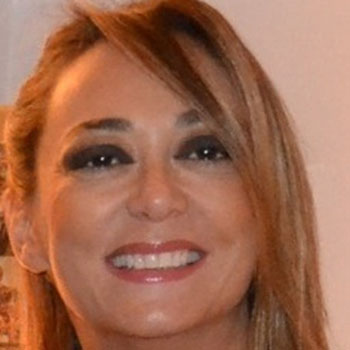
Stefania Santini is a Professor of Systems and Control Engineering at the University of Naples Federico II, leading the Distributed Automation Systems (DAiSY) Lab. Her research focuses on nonlinear control, cyber-physical systems, time-delayed systems, and their applications in automotive engineering, transportation, smart manufacturing, and energy. She has held roles in the Academic Senate (2013–2021) and serves as Senior Editor for IEEE Transactions on Intelligent Transportation Systems and Associate Editor for IEEE Transactions on Control Systems Technology. She actively collaborates with industry on national/international projects, emphasizing resilience and innovation in distributed control systems. Her research investigates distributed automation challenges in multi-agent systems, networked control, and cyber-physical security. Notable areas include fault-tolerant control for autonomous vehicles, resilient microgrid management under cyber-physical threats, and digital twin-based predictive maintenance. Recent work explores AI-driven solutions in smart manufacturing and energy systems, combining domain-specific expertise with advanced control methodologies. Publications span control theory advancements (e.g., time-delay systems stability, event-triggered control) and applied domains (autonomous vehicle platoons, telescope tracking, healthcare analytics). She leads projects addressing real-world challenges like eco-driving optimization for electric vehicles and cyber-resilient infrastructure. Current efforts emphasize sustainability in smart cities and railway automation through hybrid reinforcement learning and optimal control architectures. Her contributions include over 150 peer-reviewed articles and patents, with active engagement in IEEE ITS initiatives. Research outcomes are validated through industry partnerships, lab experiments, and high-fidelity cyber-physical platforms. Key projects involve SME collaboration on predictive maintenance frameworks and microgrid resilience under communication delays/attacks.
Milos Ajcevic serves as Assistant Professor in Biomedical Engineering at the Department of Engineering and Architecture, University of Trieste, specializing in biomedical signal and image processing with emphasis on neurophysiological signals and neuroimaging. His work bridges engineering and clinical neuroscience to address neurological disorders and chronic disease management. Education: B.Sc. in Electronic Engineering, University of Trieste M.Sc. in Electronic Engineering (summa cum laude, 2012), University of Trieste Ph.D. in Information Engineering (Biomedical Engineering curriculum, 2015), University of Trieste Dr. Ajcevic's research integrates advanced signal processing with machine learning to analyze neurophysiological data (EEG, PET, CT) for conditions including Alzheimer's, Parkinson's, and post-COVID cognitive impairment. His methodology emphasizes non-invasive diagnostic techniques and computational modeling for neurological assessment, with growing applications in hepatology and wound management through AI-driven solutions. Analysis of his 2025 publications reveals dominant trends in leveraging large language models for clinical decision support (particularly in hepatology via EASL guidelines), multimodal neuroimaging for post-COVID neurological sequelae, and deep learning for medical image segmentation. Key thematic clusters include AI safety validation in gastroenterology, non-invasive portal hypertension diagnosis using pan-elastographic models, and EEG-based biomarkers for stroke and neurodegenerative disorders. Dr. Ajcevic has secured research funding through multiple competitive projects including PARIDE and ECRES-DiabEx (2015-2016) for chronic disease self-management systems, followed by Airalzh, MeMoRi-NET, and CASSIA (2016-2022) focused on neurological disorders. He currently contributes to the Twin Brain H2020 project developing mobile brain/body imaging solutions. As an active member of EURASIP, IFMBE, and Italy's GNB group, he participates in international collaborative networks advancing biomedical signal processing standards.
Ernesto Damiani is a Full Professor at the University of Milan and holds leadership roles at multiple institutions. He is Director of the Center for Cyber-Physical Systems (C2PS) at Khalifa University, leader of the Big Data area at Etisalat British Telecom Innovation Center, and president of the Consortium of Italian Universities of Informatics (CINI). He serves as a member and speaker in ENISA's Ad-Hoc Working Group on Artificial Intelligence Cybersecurity. His research focuses on cyber-physical systems, Big Data Analytics, Edge/Cloud security, Artificial Intelligence, and Machine Learning. He has pioneered model-driven data analytics and received prestigious awards, including the Stephen Yau Award, IFIP TC2's Outstanding Contributions Award, and an honorary doctorate from INSA Lyon. His work intersects technical innovation with societal challenges, such as sustainability and inclusion, through initiatives like the HH4AI project and contributions to the MUSA project funded by the European Union's NextGenerationEU program. He leads projects addressing urban sustainability, migration integration, gender equality, and ethical AI. His interdisciplinary efforts span academia, industry, and policy-making to drive technological and social progress.
Giovanni Stea is an Associate Professor at the Department of Information Engineering within the College of Engineering at the University of Pisa. His research focuses on Quality of Service, resource allocation in wireline and wireless networks, performance evaluation through simulation and analytical techniques, and traffic engineering. Dr. Stea's research spans network calculus, wireless systems, and telecommunications infrastructure. His recent work demonstrates strong emphasis on 5G/6G networks, AI integration in telecommunications, and optimization of network performance. Key trends include: Advancements in network calculus methodologies Innovations in mobile edge computing applications Development of trustworthy AI systems for next-generation networks Cross-disciplinary approaches combining telecommunications and machine learning His publications consistently address computational efficiency in network analysis and practical implementations of theoretical models in real-world telecommunications environments.
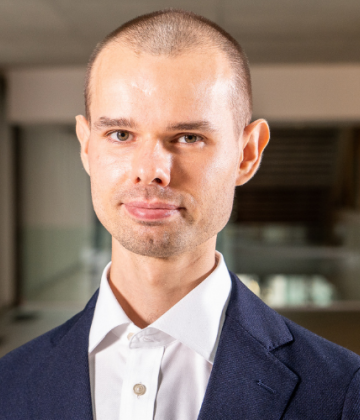
Marek Elias is an Assistant Professor at Bocconi University in Milan, where he is affiliated with the Theory Group . Prior to joining Bocconi, he held postdoctoral positions at CWI (Amsterdam) and EPFL (Lausanne), following a PhD at TU Eindhoven under the supervision of Nikhil Bansal. Earlier, he studied at Charles University in Prague with advisor Jiří Matoušek. His research focuses on algorithms for optimization under uncertainty , bridging online algorithms , differential privacy , and machine learning-augmented systems . Key areas include Learning-Augmented Algorithms Online Metric Algorithms Combinatorial Optimization Privacy-Preserving Mechanisms The trends in his recent publications highlight advancements in online optimization with applications in machine learning and data structures , particularly in problems like the k-server system , Steiner tree approximation , and differentially private clustering . Papers often explore the interplay between algorithmic robustness and predictive modeling to enhance efficiency in uncertain environments. He has contributed to major conferences including ICML, NeurIPS, SODA, and FOCS, with a consistent emphasis on theoretical guarantees and practical applications . While specific awards or grants are not detailed in the provided texts, his work is supported through institutional affiliations and collaborative research networks. Marek actively engages students in research, particularly in Bocconi's Theory Group , encouraging thesis projects on learning-augmented algorithms and prediction-based optimization . His laboratory environment fosters interdisciplinary collaboration between theoretical computer science and machine learning communities.
Pietro Ferrara is an Associate Professor in the Department of Environmental Sciences, Informatics and Statistics at Ca' Foscari University of Venice. His research focuses on applying abstract interpretation-based static analysis to address security vulnerabilities in software systems, particularly in blockchain smart contracts, IoT devices, and distributed systems. He is a member of the Software and System Verification group and has contributed to frameworks like LiSA for multilanguage static analysis. Teaching responsibilities include courses such as Software Architectures, Object-Oriented Programming, and Introduction to Coding and Data Management across undergraduate and graduate programs. His work emphasizes formal verification techniques, cybersecurity, and privacy enforcement in modern software systems. Recent research explores static analysis for detecting concurrency issues in Hyperledger Fabric, vulnerabilities in Go-based smart contracts, and GDPR-compliant privacy analysis. Ferrara collaborates with industry on practical applications of formal methods, including security policy extraction for ROS2 and industrial blockchain software determinism. His research has been published in top venues such as ACM SAC and IEEE Access, with a strong focus on bridging theoretical program analysis with real-world software systems. He maintains an active presence in open-source tools and educational materials for static analysis techniques.
Seyedmahmood Hosseiniimani is a Fixed-term Assistant Professor and Researcher in the Department of Energy (DENERG) at Politecnico di Torino, Italy. He is actively engaged in research and teaching in the domains of electrical energy systems, data science, and smart grid technologies. He contributes to multiple academic programs as a course collaborator and serves on several course councils. Position: Fixed-term Assistant Professor Institution: Politecnico di Torino Department: Department of Energy (DENERG) Research Focus: Data Science, Machine Learning, Electrical Energy Systems, Microgrids, Power Economics His research interests lie at the intersection of data analytics and energy systems, with a strong emphasis on applying machine learning and statistical methods to electricity markets, demand forecasting, and microgrid optimization. He explores topics such as price clustering, inter-zonal congestion, pandemic impacts on energy demand, and demand response in smart grids. The trend in his recent publications shows a consistent focus on data-driven analysis of electricity markets, particularly in the Italian context. His work combines technical modeling with economic and policy implications, targeting journals and conferences in power systems, energy informatics, and sustainable infrastructure. He frequently employs regression models, clustering algorithms, and systematic reviews to extract insights from complex energy datasets. He is a Guest Editor for the journal ENERGIES (2025–present), contributing to scholarly discourse in renewable and sustainable energy. While no formal scientific awards are listed, his editorial role reflects recognition in the academic community. Hosseiniimani supervises PhD student Erminia Consiglio in the field of Electrical, Electronic, and Communications Engineering. His teaching responsibilities include courses such as Smart Grids, Electrical Systems for Buildings, and Fundamentals of Energy Conversion, Transport, and Storage across various engineering programs. He collaborates with senior researchers like Prof. Ettore Bompard and contributes to interdisciplinary research projects aligned with UN SDGs 7, 9, 11, and 12. He is involved in research initiatives related to energy communities, prosumer integration, and data analytics for policy support, working within a dynamic research environment at DENERG focused on sustainable and intelligent energy systems.
Daniele Quercia is a Full Professor in the Department of Control and Computer Engineering (DAUIN) at Politecnico di Torino, where he is also a member of the Interdepartmental Center SmartData@PoliTO – Big Data and Data Science Laboratory. He is affiliated with the College of Computer, Film and Mechatronics Engineering and also contributes to the College of Environmental and Land Engineering. His work bridges computer science, AI, and societal impact. His research focuses on responsible software systems design and responsible AI , with deep engagement in human-computer interaction, data visualization, and ethical implications of AI systems. His work spans interdisciplinary domains, including urban informatics, public health, and social media analysis. He leads the DBDM - Database and Data Mining Group and teaches courses such as Engineering AI Systems, Data Science and Machine Learning for Engineering Applications, and Crafting Tech: Conceiving, Designing, and Communicating Tech Ideas. The most recent publications (2020–2024) reflect a strong trend in AI ethics , urban well-being , and social data analysis . His work appears in top-tier venues like CHI, RecSys, ICWSM, MobileHCI, and WWW, demonstrating a consistent focus on human-centered computing and real-world applications of AI. Themes include AI regulation, health-promoting urban recommendations, fake news, and wearable biofeedback. His scientific contributions are complemented by active mentorship and collaboration with researchers such as Marios Constantinides, Ke Zhou, Sanja Šcepanovic, and Giovanni Quattrone. He has secured teaching and research roles across diverse engineering programs and leads PhD-level instruction in Computer and Control Engineering. He is a member of key research groups and centers at PoliTO, including the DBDM group and SmartData@PoliTO, which focus on cutting-edge data science, AI, and responsible technology development.
Federica Baccini is an Assistant Professor at the Department of Computer, Control, and Management Engineering "Antonio Ruberti", Sapienza University of Rome. She is actively involved in the RSTLess research group, collaborating with Professors Fabrizio Silvestri and Irene Amerini. Her academic journey includes a PhD in Computer Science from the University of Pisa and a Master’s in Applied Mathematics from the University of Siena. Her educational background includes: PhD in Computer Science, University of Pisa, thesis: Analysis of Multiple Relations in Multilayer and Higher-Order Networks , supervised by Prof. Monica Bianchini and Dr. Filippo Geraci. Master’s Degree in Applied Mathematics, University of Siena, summa cum laude , thesis: Network analysis for the Integration of histone modification data to explain haematopoiesis . Visiting PhD student at Queen Mary University of London under Prof. Ginestra Bianconi. Federica's research is centered on the analysis of graph-structured data, particularly focusing on multilayer and higher-order networks. She investigates machine learning models for graphs, with emphasis on similarity network fusion , weighted simplicial complexes , and data integration across disciplines. Her work spans applications in biomedicine, environmental science, scientometrics, and AI security. She has published in high-impact journals such as Physical Review E , Journal of Informetrics , and Mathematics . The recent trend in her publications highlights a strong interdisciplinary approach, combining network science with machine learning to solve real-world problems in healthcare, scholarly communication, and climate systems. Her 2025 work on adversarial data poisoning shows engagement with AI security, while her medical applications (e.g., haemodialysis app, IgA nephropathy) demonstrate translational research impact. She has no listed scientific awards at this time. Federica is actively involved in academic advising and teaching, offering the course Fundamentals of Artificial Intelligence in the Bachelor's program in Mathematical Sciences for Artificial Intelligence. While specific grant details are not mentioned, her ongoing research in AI, network science, and interdisciplinary applications suggests active participation in funded projects. She is a member of the Theory of Deep Learning initiative. She is a key contributor to the RSTLess research group , where she collaborates on cutting-edge topics in deep learning and network analysis.
Roberto Marmo is a Professor of Computer Science at the University of Pavia since the 2022/23 academic year. His research spans multiple domains including Artificial Intelligence , Computer Vision , and Social Media Mining . He earned his PhD in Information Engineering at Pavia's Computer Vision and Multimedia Lab after completing a Computer Science degree at the University of Salerno. Core Expertise: Data Science, AI Algorithms, Scientific Visualization Industry Applications: Anti-fraud Systems, Tourism Analytics, Transportation Sign Recognition His academic work demonstrates consistent interdisciplinary innovation: 2020: Encyclopedia contributions on Cybersecurity and Social Engineering 2017: Market analysis through social media mining 2010: Social network architecture research Key collaborations include: IBM's Web 2.0 Security Encyclopedia Italian Tourist Railways Association (application of IT to heritage tourism) Academic-Industry Partnerships in transportation sign recognition His technical contributions include: Neural network applications in geological analysis Operational risk visualization frameworks SOS gesture recognition systems e-learning performance dashboards Available for consulting and training services in AI, data analysis, and scientific visualization.
Fabio Palomba is an Associate Professor at the Department of Computer Science , University of Salerno, Italy. He earned a European PhD in Management & Information Technology (2017), funded by University of Salerno and University of Molise, under advisor Prof. Andrea De Lucia. His research spans software maintenance and evolution , empirical software engineering , and ML systems quality . Recipient of IEEE Computer Society Best PhD Thesis Award (2017) Multiple Distinguished Paper Awards from ACM/SIGSOFT and IEEE/TCSE Recipient of prestigious SNSF Ambizione grant (2019) and IEEE Rising Star Award (2023) His work investigates fairness-aware practices in ML , technical debt in AI systems , and LLM applications in software engineering . Recent studies focus on automated requirements generation via RECOVER, quantum software engineering , and socio-technical community smells in ML-enabled systems, with empirical analyses across large datasets. Key editorial roles include Elsevier's Information and Software Technology Journal (2022-), Springer's Empirical Software Engineering Journal (2021-), and IEEE Transactions on Software Engineering (2020-). He has served as program co-chair for SANER 2024 , ICPC 2021 , and multiple conference tracks. 16 Distinguished Reviewer Awards for his refereeing work Co-authored 80+ journal papers , 100+ conference papers , and advised 300+ theses
Alfredo De Santis is a Professor and Director of the Dipartimento di Informatica at the Università degli Studi di Salerno. His research focuses on Data Security, Cryptography, Digital Forensics, and Communication Networks. He has authored numerous publications in top-tier journals and conferences, contributing to advancements in secret sharing schemes, cryptographic protocols, and privacy-preserving systems. His work bridges theoretical foundations with practical applications, including secure mobile communications, data compression, and IoT security. Key research interests include secure protocols, algorithm design, and the application of information theory to cybersecurity challenges. He has developed innovative solutions for entity authentication, distributed systems security, and privacy threats in mobile devices. His contributions span academic leadership, curriculum development in Data Security courses, and collaboration on projects like "Blockchain in Healthcare" and "Anti-Forensics Techniques". Publications highlight his expertise in hierarchical key management, secure data streaming, and cryptographic schemes. Recent works address fake news propagation modeling, privacy attacks exploiting smartphone sensors, and secure cloud storage solutions. His research emphasizes both theoretical rigor and real-world applicability across domains like healthcare, IoT, and digital forensics.
Riccardo Focardi is a Full Professor at Ca' Foscari University of Venice in the Department of Environmental Sciences, Computer Science and Statistics. He has held this position since September 2017, following roles as Associate Professor (2013–2017) and Researcher (1996–2002). He is also co-founder and Chief Scientist of Cryptosense and 10Sec, startups focused on cybersecurity and IoT security solutions. Education: PhD in Computer Science from the University of Bologna (1999), Laurea cum laude in Computer Science (1993). Research focuses on cybersecurity, cryptography, formal methods for security protocol analysis, and secure hardware/software systems. Notable projects include the Cryptosense Analyzer tool for cryptographic device analysis and contributions to IoT security via 10Sec's fingerprinting technologies. His work on PKCS#11 vulnerabilities and padding oracle attacks has significantly impacted practical cryptographic security. Publications emphasize applied cryptography, API security, and IoT systems. Recent work explores GAN-based authentication (EUAS-GAN) and zero-shot malware detection (Z-MDZS). Over 110 publications span top venues like CRYPTO, CCS, and IEEE S&P. Leadership roles include coordinating national cybersecurity projects (e.g., POR FESR 2017–2020), chairing conferences (ITASEC 2017, CSF 2007), and directing Ca' Foscari's Computer Science PhD program (2012–2019). Active in public engagement, including media appearances on cybersecurity trends. Labs/Teams: Cryptosense (founded 2013), 10Sec (2020), and the DAIS department's security research group. Supervised over 10 PhD students, contributing to academic-industry collaborations in secure systems.