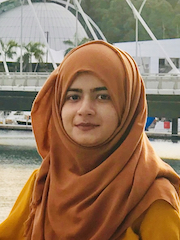
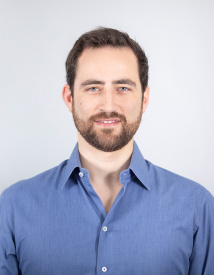
Shawkat K. Guirguis is an academic researcher with a focus on cybersecurity, machine learning, and IoT technologies. His work spans across intrusion detection systems, botnet prevention, and adaptive algorithms for network security. He has contributed to advancements in deep learning applications for social media analysis and real-time trajectory compression. His research often intersects with practical implementations in smart cities and healthcare authentication systems. Key areas of exploration include the use of boosting algorithms, tree-based models, and blockchain integration to enhance IoT security. His publications highlight contributions to wireless sensor networks and stock prediction models. Despite extensive research output, affiliations such as university or department remain unspecified in available records.
Roberto Minerva is a researcher at Sorbonne University , Paris, France, focusing on Digital Twin Technologies , Internet of Things (IoT) , and Edge Computing . His work addresses Smart Cities , Urban Data Management , and Machine Learning Applications through advanced architectural frameworks. His recent publications highlight innovations in: Digital twin architectures for real-time urban air quality and traffic management AI-driven and scalable frameworks for large-scale sensor networks Blockchain applications in secure supply chain finance Minerva frequently collaborates with researchers like Noël Crespi , Manoj Herath , and Maira Alvi , contributing to journals such as IEEE Internet Comput. , IT Prof. , and conferences like NetSoft and CNSM . His work bridges theoretical research and practical implementations in smart city ecosystems.
Atta ur Rehman Khan is an Associate Professor in the Department of Computer Science at the College of Electrical and Computer Engineering, COMSATS Institute of Information Technology, with additional affiliation at University of Malaya, Kuala Lumpur, Malaysia. His research spans multiple cutting-edge domains in computer science, with particular focus on mobile cloud computing, IoT security, and blockchain applications. Dr. Khan's research interests center around secure and efficient computing systems, with emphasis on mobile cloud environments, IoT security frameworks, and blockchain-based solutions for various applications. His work demonstrates a strong interdisciplinary approach, bridging theoretical computer science with practical applications in cybersecurity, healthcare, environmental monitoring, and smart city infrastructure. His research methodology often combines traditional computer science techniques with emerging AI and machine learning approaches to solve complex problems in distributed systems. Analysis of Dr. Khan's publication trends reveals a consistent research trajectory evolving from foundational work in mobile cloud computing and wireless networks toward more specialized applications in blockchain, IoT security, and AI-enhanced cybersecurity solutions. His recent work shows increasing interdisciplinary collaboration, particularly with healthcare researchers on medical diagnostics applications and environmental scientists on sustainability projects. The thematic progression demonstrates how his core expertise in distributed systems has expanded to address emerging challenges in secure computing across multiple domains. Dr. Khan has maintained active research supervision, mentoring numerous students who have contributed to publications across his research areas. His collaborative work spans multiple international institutions, reflecting a strong network of academic partnerships particularly with researchers in Malaysia, Pakistan, and other international collaborators. His laboratory work appears focused on applied research in secure distributed systems, with particular emphasis on blockchain-enabled security frameworks for IoT environments, mobile cloud computing architectures, and AI-enhanced cybersecurity solutions. The research group maintains strong industry connections, particularly with technology companies working on IoT and blockchain applications.
Liguo Zhang is a prominent academic specializing in control systems, traffic engineering, and machine learning. His research focuses on advanced control strategies for traffic flow, autonomous systems, and image processing. He has contributed significantly to the development of observer designs for complex systems, adaptive control methodologies, and cyber-physical systems. His work bridges theoretical control frameworks with practical applications in transportation, robotics, and computer vision. Key areas include stabilization of traffic patterns, decision-making in autonomous vehicles, and vulnerability detection in smart contracts. Zhang's research also spans digital twin technologies for railway systems, diffusion models for font generation, and robust Bayesian neural networks. His collaborative efforts with institutions and co-authors highlight interdisciplinary innovation in both foundational and applied domains.
Zhigang Li is a Professor in the Department of Computer Science at South China University of Technology's School of Computer Science and Engineering. His research spans multiple technical domains with significant contributions to neural networks, medical imaging, computer vision, and sensor technologies. Recent collaborations include work with Northwestern Polytechnical University, Hong Kong University of Science and Technology, and various medical research institutions. Dr. Li's research interests focus on neural network architectures, particularly small-world and feedforward networks for system modeling and medical applications. His work bridges computer science with practical applications in healthcare (EEG analysis, schizophrenia detection, liver transplant allocation), environmental monitoring (wastewater treatment), and engineering systems (CMOS image sensors, UAV networks). His research demonstrates strong interdisciplinary connections between theoretical computer science and real-world problem solving. Analysis of his recent publication trends shows increasing focus on medical applications of AI, with significant work in brain functional network analysis, depression recognition, and schizophrenia detection. His technical contributions include novel neural network architectures, efficient sensor systems, and advanced signal processing techniques. The publications reveal a consistent pattern of high-quality output in top-tier journals across multiple disciplines. Dr. Li has received recognition through publications in prestigious venues including IEEE Transactions, Medical Image Analysis, and Expert Systems with Applications, though specific awards aren't documented in the provided bibliography. His work demonstrates significant impact across multiple fields, particularly in applying computational methods to healthcare challenges. His research program includes collaborations with medical researchers for brain imaging applications, electrical engineers for sensor development, and computer scientists for network architecture design. Current projects appear focused on multi-view brain network analysis, energy-efficient sensor systems, and medical AI applications with potential clinical impact.
Dr. Linda Baumbach is a Researcher at the University of Hamburg's Center for Bioinformatics (ZBH), affiliated with the Genome Informatics department. Her work focuses on bioinformatics applications in healthcare, particularly federated learning, privacy-preserving technologies, and osteoarthritis management. She investigates personalized medicine, physical activity impacts on chronic conditions, and healthcare system improvements. Research Interests Her interdisciplinary research spans federated machine learning for biomedical data, predictive modeling in osteoarthritis treatment outcomes, and leveraging AI for systematic literature analysis. She explores innovative approaches to data privacy in genomic studies and evaluates cost-effectiveness of physiotherapy interventions. Key Contributions Dr. Baumbach co-developed the FeatureCloud platform for federated learning, enabling collaborative research while adhering to data protection laws. Her studies on GLA:D® programs highlight exercise therapy benefits for knee osteoarthritis patients. She also addresses challenges in implementing personalized predictive models and advancing LLM-driven literature screening. Professional Activities She contributes to academic committees at the Center for Bioinformatics and collaborates internationally on projects like the GLA:D initiative and JIGSAW-E quality improvement program. Her work bridges computational methods with clinical needs, emphasizing translational research.
John F. Roddick is a Professor affiliated with Flinders University in South Australia. His research focuses on data mining, database systems, and temporal databases, with significant contributions to association rule mining, schema evolution, and privacy-preserving techniques. He has collaborated extensively with researchers like Shu-Chuan Chu and Jeng-Shyang Pan, producing over 138 publications across journals and conferences. Key contributions include work on schema versioning, temporal vacuuming in databases, and algorithms for wireless sensor networks. His research extends to image processing, biometrics, and swarm intelligence, with notable applications in traffic prediction and secure communication systems. He has edited conference proceedings and contributed to encyclopedic entries on database systems and data warehousing. Roddick's work often bridges theoretical foundations with practical applications, emphasizing interdisciplinary approaches to data management challenges. His publications span venues such as IEEE Transactions on Knowledge and Data Engineering, Data & Knowledge Engineering, and the Journal of Network and Intelligence.
Jian Sun is a researcher affiliated with the Chinese Academy of Sciences' Institute of Computing Technology. His work spans interdisciplinary fields including machine learning, control systems, robotics, and signal processing. He collaborates with institutions globally to advance theoretical and applied research in computational methods and their real-world applications. Research interests focus on machine learning for healthcare diagnostics, optimization algorithms for complex systems, and sensor fusion technologies for autonomous systems. Recent work emphasizes applications in cognitive impairment detection, UAV-based communication systems, and crystal structure prediction. Publications highlight advancements in adaptive control methodologies, cybersecurity in control systems, and 3D reconstruction techniques. His contributions bridge theoretical foundations with practical implementations in robotics, aerospace, and environmental monitoring.
Denis Gracanin is a Professor at Virginia Tech's Department of Computer Science, College of Engineering. His research spans Human-Computer Interaction, Mixed Reality, Smart Built Environments, and Generative AI, with a focus on immersive technologies, cybersecurity, and assistive systems. Research highlights include: Developing frameworks for XR-based security in zero-trust networks Advancing real-time 3D object generation in augmented reality using generative AI Designing smart environments for stress management and mobility assistance His recent work explores AI-driven design optimization, sonification in immersive analytics, and privacy-centric IoT systems. Articles emphasize applications in healthcare, cybersecurity, and smart lighting, leveraging machine learning and multimodal data. Gracanin collaborates extensively with researchers like Kresimir Matkovic, Mohamed Azab, and Majid Behravan, publishing in top venues such as IEEE Transactions on Visualization and Computer Graphics, CHI, and VR Workshops.
Professor Yi-Ping Hung is a distinguished faculty member in the Department of Computer Science and Information Engineering at National Taiwan University's College of Electrical Engineering and Computer Science. With a prolific publication record spanning over three decades from 1988 to 2025, Professor Hung leads research at the intersection of virtual reality, human-computer interaction, and computer vision. Their work bridges theoretical innovation with practical applications in health monitoring, biomechanics, and immersive technologies. Professor Hung's research interests focus on creating novel interaction paradigms for virtual and augmented reality environments, with particular emphasis on multisensory feedback systems. Their lab has pioneered approaches for haptic feedback, gaze-based interaction, and physiological response integration in immersive environments. Recent work explores breathing-integrated relaxation techniques, wind simulation for VR, and personalized biofeedback systems that demonstrate the translational impact of their research. Analysis of publication trends reveals a consistent focus on making virtual experiences more natural and embodied, with increasing integration of machine learning techniques in recent years. Professor Hung's team has developed innovative systems for Tai Chi training, archaeological simulation, and mental wellness applications that showcase practical implementations of their research. Professor Hung has mentored numerous graduate students who have become first authors on significant publications, including Ping-Hsuan Han, Yang-Sheng Chen, and Kuan-Wei Tseng. The research group maintains strong collaborations across disciplines and has secured funding for projects spanning VR hardware development, health monitoring systems, and cultural heritage applications. Current research directions include blockchain applications for environmental stewardship, advanced avatar creation techniques using generative models, and sophisticated sensor fusion approaches for precise indoor localization. The lab continues to push boundaries in creating more immersive, natural, and beneficial human-computer interaction experiences.
Efe Bozkir is a researcher affiliated with the University of Tübingen, Germany. His work focuses on advancing virtual reality (VR) and augmented reality (XR) technologies through eye tracking, privacy-preserving data techniques, and integrating large language models (LLMs) into immersive systems. He explores human-computer interaction challenges, particularly in educational settings and ethical AI applications. Research interests include: privacy in eye-tracking data, generative AI for synthetic media analysis, and optimizing federated learning algorithms. He has co-authored over 50 publications in top-tier venues such as CHI, VR, and ACM Transactions on Applied Perception. Recent articles highlight innovations like CUIfy (an LLM integration toolkit for XR), privacy benchmarks for iris obfuscation, and AI-driven video assistants for active learning. His work consistently bridges technical advancements with societal implications, addressing GDPR compliance in metaverse environments and ethical AI use in education. Bozkir collaborates closely with interdisciplinary teams, including Enkelejda Kasneci (co-author in 49 works) and Süleyman Özdel. His PhD (2022) laid groundwork for 'Everyday Virtual Reality through Eye Tracking.' Though no formal awards are listed, his prolific publication record reflects significant contributions to XR research.
Sofiène Tahar is a Professor at Concordia University's Department of Electrical and Computer Engineering, affiliated with the Faculty of Engineering and Computer Science. His research focuses on formal verification, theorem proving, and their applications in cyber-physical systems, circuit design, and reliability engineering. He has authored over 300 publications in top-tier conferences and journals, including DATE, ICFEM, and FMCAD. Key research areas include formal methods for analog/digital circuits, approximate computing, stochastic systems, and safety-critical systems. His work bridges theoretical foundations (e.g., theorem proving in HOL) with practical engineering problems like circuit reliability and autonomous systems verification. Recent projects involve formal analysis of vehicular systems, energy-efficient approximators, and machine learning integration with formal verification frameworks. Tahar collaborates extensively with industry partners and holds leadership roles in international conferences, including co-chairing ICFEM 2023.
Dr. Anum Talpur is a Research Fellow at the University of Hamburg's Department of Computer Networks under Prof. Dr. Mathias Fischer. Her work focuses on Network Security, AI-driven cybersecurity solutions, and resilient infrastructure protection. She is affiliated with the Faculty of Mathematics, Informatics and Natural Sciences and contributes to projects like SOVEREIGN, a critical infrastructure security initiative. Research interests include intrusion detection systems, QUIC protocol security, and vehicular network security. Recent publications explore load balancing vulnerabilities, holistic infrastructure defense frameworks, and ML applications in vehicular networks. She collaborates with researchers such as Liliana Kistenmacher and Prof. Fischer on projects addressing cutting-edge cybersecurity challenges. Her work integrates theoretical advancements with practical implementations for modern networked systems.
Navid Ashrafi is a PhD candidate and researcher at the joint initiative between Technical University of Berlin and Hamm-Lippstadt University of Applied Sciences, focusing on immersive healthcare applications. His work bridges computer science and healthcare through projects like MIA-PROM, aiming to digitize medical questionnaires using virtual agents to enhance patient experiences. Navid holds a Master's degree in computer graphics, machine learning, and data analytics from TU Berlin (2022). His research spans immersive reality, XR technologies, and user-centered design, with specific interests in synthetic data generation, eye tracking, and quality-of-experience metrics in healthcare systems. His publications explore synthetic medical data via GANs and the impact of virtual human characteristics in therapy tools. He teaches C/C++ programming and interdisciplinary media projects at both institutions. Current projects include virtual reality exposure therapy and augmented reality applications in healthcare. Navid's work is conducted within the Quality and Usability Lab at TU Berlin's MAR 6.031 facility.
Nicolas Legewie is Professor for Methods and Social Structure Analysis at the University of Münster's Institute of Sociology, having assumed this position permanently on June 1, 2025, after serving as Acting Professor since October 2023. Previously, he held academic positions including Scientific Partner (Postdoc) at the University of Erfurt, Visiting Researcher at the University of Pennsylvania, and Postdoctoral Fellow at the German Institute for Economic Research. Master's degree in Social Sciences from Humboldt University of Berlin (2007-2010) PhD from Berlin Graduate School of Social Sciences, Humboldt-University zu Berlin (2011-2015) Professor Legewie's research centers on social inequality, education, migration & integration, social networks, artificial intelligence, and research methods , with a particular specialization in video data analysis. His methodological innovations bridge traditional sociological approaches with cutting-edge digital techniques, creating new pathways for analyzing social interaction through computer vision and AI applications. His publication trajectory reveals a consistent methodological focus that has evolved toward increasingly sophisticated applications of video data analysis in social research. Recent work demonstrates growing integration of artificial intelligence techniques, particularly in analyzing social interactions and studying refugee integration processes. His research often employs mixed-methods designs, combining quantitative data with qualitative insights to address complex social phenomena. Professor Legewie has secured funding for multiple significant research projects including the Leibniz Competition-funded 'Mentoring of Refugees (MORE)' study, 'Das Erwachsenwerden türkischer Migrantennachkommen,' and more recently, externally-funded projects on discrimination in everyday interactions using computer vision, rampage school shootings, and attitudes toward AI in public institutions. Discrimination in everyday interactions – A field-experimental study using computer vision (2023-2024) A mixed-methods study of rampage school shootings (2023-2024) Attitudes toward the use of Artificial Intelligence in public institutions (2023-2024) At the University of Münster, Professor Legewie teaches courses including Statistics I & II, Methods of Empirical Social Research, and specialized seminars on Big Data, social mobility, and the sociological perspective on artificial intelligence. His work contributes significantly to the development of digital sociology and the methodological toolkit available for contemporary social research.