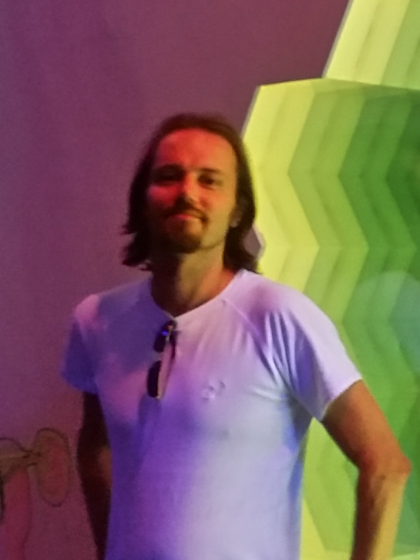
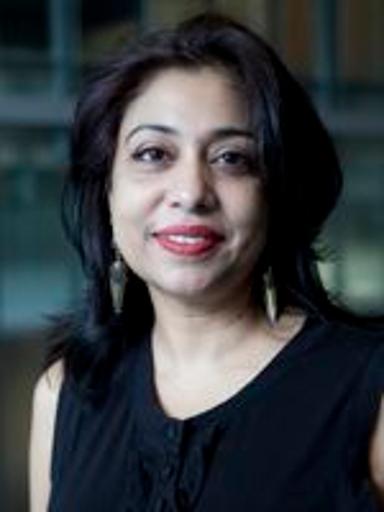
Kelsey Allen is an Assistant Professor in the Department of Computer Science at the University of British Columbia (UBC) and a Senior Research Scientist at DeepMind. Her research bridges cognitive science, machine learning, and robotics, focusing on understanding and replicating human-like problem-solving, tool use, and physical reasoning. She holds a PhD from MIT (2016) under Josh Tenenbaum and a B.Sc. in Physics from UBC (2010). Research Interests : Allen investigates computational mechanisms underlying human complex behaviors, particularly tool use and design. Her work emphasizes endowing machines with flexible problem-solving abilities. Key themes include lifelong learning, embodied cognition, and integrating symbolic and neural approaches. Awards & Recognition Best Paper Award at Robotics: Science and Systems (RSS) 2018 Oral Presentation at Cognitive Science Society 2019 Spotlight at NeurIPS 2018 and ICLR 2019 Key Projects : Includes developing graph network simulators for rigid body dynamics, tools for physical design optimization, and studies on human tool-use learning. Her work often combines empirical experiments with machine learning models to bridge human and artificial intelligence.
Ehsan Tavakoli-Nabavi is a Senior Lecturer in Technology and Society at the Australian National University (ANU), leading the Responsible Innovation Lab within the Australian National Centre for the Public Awareness of Science. His career transition from civil engineering to sociology and AI research positions him uniquely to bridge technical and social dimensions of innovation. He holds adjunct roles at Harvard Kennedy School and University of Bonn, and has held visiting positions at SOAS, University of London. Research focuses on Responsible AI , ethical computing , and addressing 'wicked problems' through transdisciplinary approaches. Key areas include governance frameworks for emerging technologies, water resource modeling, and sustainable development. He pioneered the Responsible Innovation Lab, emphasizing experimental methods in innovation ethics. Prior roles include Research Fellow at ANU School of Cybernetics (2018-2020) and Harvard Kennedy School (2016-2017). Current projects include the Water Policy Innovation Hub (2018-2022), addressing policy challenges in water scarcity via innovation ecosystems. His work integrates methodologies from systems dynamics, environmental impact assessment, and participatory modeling. Publications span journals like Nature Humanities and Social Sciences Communications , IEEE Transactions on Technology and Society , and Water Alternatives . He critiques AI development's societal impacts, advocating for equity-centered technical design and global South perspectives in innovation governance.
John M. Pauly is the Reid Weaver Dennis Professor in the Department of Electrical Engineering at Stanford University, with affiliations in the Wu Tsai Neurosciences Institute, Stanford Cancer Institute, Cardiovascular Institute, and Bio-X program. His research focuses on medical imaging, particularly MRI acceleration and reconstruction techniques for applications like cardiac imaging and interventional guidance. He holds a PhD from Stanford University (1990) and has received notable awards including the ISMRM Gold Medal (2012) and IEEE Fellow distinction (2022). His academic appointments include teaching courses such as Medical Image Reconstruction (EE 369C), Signals and Systems II (EE 102B), and The Wireless World (EE 100). He advises numerous PhD and master's students in MRI hardware, reconstruction algorithms, and clinical applications. Research highlights include innovations in deep learning for MRI quality assessment, coil design for pediatric imaging, and non-contact motion sensing via Doppler radar. His work bridges engineering and clinical needs, emphasizing practical translation of compressed sensing and machine learning methods into clinical MRI workflows.
Jens-Michalis Papaioannou is a prominent Researcher in clinical natural language processing (NLP) and medical informatics, with extensive publications in top-tier venues like ACL, LREC, and EMNLP. His work focuses on improving clinical decision support systems through advanced machine learning techniques. 2024 : Revisiting clinical outcome prediction for MIMIC-IV with biomedical transformers 2023 : Developing MEDBERT.de for German medical NLP and MedAlpaca conversational AI 2022 : Introducing ProtoPatient for interpretable diagnosis prediction 2021 : Creating self-supervised knowledge integration frameworks for admission note analysis His research spans seven major themes : Clinical outcome prediction from admission notes Cross-lingual knowledge transfer in medical NLP Prototypical network applications Data drift analysis in longitudinal datasets Knowledge integration techniques Model optimization for healthcare LLM interpretability frameworks He has collaborated with Wolfgang Nejdl, Alexander Löser, and Betty van Aken on 13+ publications , with over 445 citations. Notable contributions include: Novel patient similarity modeling approaches ICD code hierarchy integration methods Multilingual clinical model strategies Adversarial robustness analysis Medical conversational AI frameworks
Philippe Blache is a senior researcher at the Laboratoire Parole & Langage (LPL), a joint research unit of the French National Centre for Scientific Research (CNRS) and Aix-Marseille University. With a career spanning several decades, he has established himself as a leading figure in computational linguistics, natural language processing, and conversation analysis. His work bridges theoretical linguistics with practical applications in language technology. His research focuses on several key areas: Natural language processing and computational linguistics Speech and conversational systems Multimodal interaction analysis Linguistic annotation and corpus development Cognitive modeling of language processing Blache's recent work (2020-2025) has centered on developing methods to evaluate spoken language features in conversational models, studying common ground instantiation through multimodal signals (including brain activity), and investigating how language models process complex linguistic phenomena. His research often involves creating and analyzing large multimodal corpora that capture not just verbal content but also nonverbal cues, prosody, gestures, and neuro-physiological signals. His publication record shows consistent high-quality output in top-tier venues, with numerous papers in LREC, COLING, and SIGDIAL proceedings. His work demonstrates a strong interdisciplinary approach, combining insights from linguistics, computer science, cognitive science, and neuroscience to advance our understanding of language processing. Among his notable contributions is the BrainKT corpus project, which represents an innovative approach to studying the cognitive and neural underpinnings of conversation through simultaneous recording of audio, video, and EEG signals during natural interactions. Blache has received recognition through his sustained research productivity and leadership in major projects. His collaborations span multiple institutions and disciplines, reflecting the interdisciplinary nature of his work and its broad relevance across fields studying human communication.
Chaitanya Shivade is a prominent researcher specializing in medical natural language processing with significant contributions to clinical text analysis, radiology informatics, and behavioral health documentation. His work bridges computational linguistics and healthcare applications, focusing on practical solutions for clinical documentation challenges. Shivade's research spans multiple critical areas: developing evaluation frameworks for behavioral therapy notes (TN-Eval), creating shared tasks for medical summarization (MEDIQA), advancing visual dialog systems for radiology, and pioneering synthetic clinical note generation. He has made substantial contributions to textual inference in clinical domains through the MedNLI dataset and has explored fundamental linguistic challenges like negation detection and gradable term analysis in medical text. As a workshop organizer for the NLP for Medical Conversations series, he has helped shape community standards and foster collaboration. His publication record demonstrates consistent leadership in applying NLP to real-world healthcare problems, with particular emphasis on evaluation methodologies, dataset creation, and practical clinical applications. Shivade has collaborated extensively with medical professionals and researchers across institutions to ensure clinical relevance of his technical work. Organized MEDIQA shared tasks (2019, 2021) Co-organized NLP for Medical Conversations workshops (2019, 2020) Developed TN-Eval framework for therapy note quality assessment Created MedNLI dataset for clinical textual inference Pioneered synthetic clinical note generation approaches His work consistently addresses the tension between clinical utility and technical innovation, with growing emphasis on evaluating LLM performance in healthcare contexts. The progression from foundational clinical NLP techniques to complex evaluation frameworks demonstrates his evolving research trajectory toward ensuring reliable AI deployment in medical settings.
Peter Brandt is a Researcher and Head of the Knowledge Transfer Department at the German Institute for Adult Education - Leibniz Centre for Lifelong Learning (DIE) since 2017. He focuses on professional development in adult education, digital infrastructures for continuing education, science-practice collaboration, AI-supported learning, and educational journalism. Doctorate in Theology (summa cum laude), University of Bonn (2001) First State Examination in Catholic Theology and Mathematics (Secondary School Teaching Qualification), University of Bonn and Vienna His research emphasizes digital transformation in adult education, including projects like Digi-EBF II and TrainSpot2. He contributes extensively to educational policy discussions and has developed frameworks for teacher digital competencies through initiatives like GRETA. His recent publications show a focus on microcredentials, national education platforms, and adaptive learning systems. He actively engages in knowledge transfer between academic research and practical implementation in adult education contexts.
Scott McManus is a Lecturer in Spatial Science at Charles Sturt University, affiliated with the School of Agricultural, Environmental and Veterinary Sciences. He is an active academic researcher and educator, contributing to interdisciplinary studies that bridge data science, geostatistics, and Indigenous knowledge systems. PhD in Data Science, Charles Sturt University (2022) Graduate Certificate in Applied Statistics, CSU (2017) Graduate Diploma in Applied Science (Information Science), CSU (2005) Graduate Diploma in Archaeological Heritage, University of New England (2004) B.App.Sci in Applied Geology, CSU (1994) Scott's research focuses on the application of data science and machine learning in environmental and health contexts, with a strong emphasis on ethical AI, digital data sovereignty, and responsible use of data when working with First Nations communities. His work integrates Western scientific methods with Indigenous methodologies, particularly in conservation efforts such as koala habitat protection and mangrove ecosystem recovery. His recent publications and research outputs (23 total) demonstrate a consistent trend in merging geospatial analytics, Bayesian uncertainty modeling, and deep learning with ethical and cultural frameworks. Key areas include fire impact on coastal vegetation, river blockage detection in Southeast Asia, and reconciliation in science through collaborative Indigenous-Western research practices. Faculty Early Career Researcher (ECR) Scheme (2023) Open Access Publishing Scheme (2025) Conference Travel Grant (2018) CSU ILWS Category B Research Support Fund (2020) Executive Deans List (2017) Scott is a registered Professional Geologist (Australian Institute of Geoscientists), member of the International Association for Mathematical Geosciences, and the Aboriginal and Torres Strait Islander Mathematics Alliance. He serves as a Faculty representative on the Indigenous Board of Studies and is a registered supervisor. His work is supported by ongoing grants focused on AI, machine learning, and open-access research dissemination. He actively participates in academic workshops, particularly in digital learning platforms like Brightspace, and contributes to public engagement through media appearances on koala conservation and environmental stewardship. Scott is involved in the Data Science and Engineering Research Unit and the Data Mining Research Group (DaMRG) at CSU, where he contributes to projects on predictive analytics and responsible data use. His collaborative network includes researchers in environmental science, Indigenous studies, and conservation biology, reflecting his commitment to interdisciplinary and culturally responsive research.
George Prpich is an Associate Professor of Chemical Engineering at the University of Virginia. He holds a B.Sc. in Chemical Engineering from the University of Saskatchewan (2000) and a Ph.D. from Queen's University (2007). His research spans the water-energy-food nexus, blending engineering methods with policy analysis to address challenges in environmental remediation, risk management, and sustainable resource governance. He has received the Robert A. Moore Jr. Award for integrating industry-relevant research with student career preparation. Prpich's work focuses on contamination management in contexts such as Nigeria's oil-polluted sites, where he emphasizes stakeholder engagement and policy frameworks. He also explores CO₂ capture technologies and unconventional energy risks, alongside developing machine learning tools for toxicity assessments. His teaching includes 'Startup Ops for Entrepreneurs,' reflecting his interest in bridging technical innovation with real-world applications. Key research trends in his articles include bioavailability modeling of chemical mixtures, environmental policy risk analysis, and sustainable remediation strategies. His interdisciplinary approach addresses both technical and governance dimensions of environmental challenges, with a focus on global scalability and stakeholder collaboration. Awards: Robert A. Moore Jr. Award (2018) Prpich’s grants and advising activities are not explicitly detailed in the provided text, but his research consistently intersects engineering solutions with policy implementation. He has contributed to frameworks for contaminated land management in Nigeria and EU energy policy analysis, demonstrating a commitment to practical, cross-sectoral impact.
Ingvil Førland Hellstrand is a Professor in Interdisciplinary Gender Research at the Department of Media and Social Sciences, Faculty of Social Sciences, University of Stavanger (UiS). She is actively engaged in transdisciplinary research at the intersection of gender, technology, and care. Her work is deeply rooted in feminist theory, speculative fiction, and ethics. Her research interests include storytelling practices, science fiction as method, posthuman ethics, welfare technologies, and caring futures. She explores how narratives shape knowledge and influence ethical frameworks in technologically mediated care. Her work critically examines the role of AI, care robots, and digital tools in reshaping care practices, especially in elderly care contexts. Her recent publications reveal a strong focus on feminist monster studies, affective knowledge, art-based research, and the ethical implications of AI and robotics in healthcare. Themes such as vulnerability, relationality, and speculative futures recur across her work, often bridging literary analysis with social science inquiry. Universitetsfondets formidlingspris (2023) She leads a work package in the Norwegian Research Council–funded project Caring Futures , which develops care ethics for technology-mediated care practices. She is a founding member of The Monster Network and a steering committee member of the Nordic Network Gender, Body, Health . At UiS, she contributes to Professional Relations and The Greenhouse , an environmental humanities initiative. She frequently collaborates with artists and researchers in public engagement and experimental research formats, including art exhibitions and interdisciplinary seminars.
Dr. Shahzad Muhammad is an active academic researcher in the fields of Machine Learning, Computer Vision, and Remote Sensing. His work spans applications in financial risk management, environmental monitoring, and computer vision challenges. Research Focus: His recent publications highlight expertise in ensemble learning architectures, unsupervised face recognition systems, and multi-scale feature extraction techniques for geospatial data analysis. Publication Trends: His research demonstrates consistent contributions to top-tier journals and conferences such as Expert Systems with Applications , Pattern Analysis and Applications , and IEEE/CVF Conference on Computer Vision and Pattern Recognition Workshops . Key domains include financial modeling, biometric recognition, and environmental sensing.
Roles and Affiliation: María Rosario González Martín is a Researcher at the Department of Educational Studies (Universidad Complutense de Madrid), affiliated with the Faculty of Education - Teacher Training Center. Her work integrates theory and practice in education, with a focus on ethics, digital environments, and service-learning. Research Interests: She explores how digital technologies reshape education, emphasizing ethical frameworks for AI, critical thinking in social media, and moral development in families and schools. Key areas include: Ethics in education and applied ethics Civic education in digital contexts STEAM education for vulnerable youth Forgiveness and moral narratives AI ethics and human-machine interaction Her work bridges pedagogical theory with practical initiatives, including community-based learning projects. Key Contributions: Her recent articles address ethical challenges in AI, digital literacy for critical citizenship, and theoretical frameworks for well-being in education. She co-leads projects like the 'Educación cívica en tiempos de pandemia' initiative, linking university students with vulnerable schools during crises. Awards and Grants: While explicit awards are not listed, her involvement in UIU-funded CIDATEL projects (e.g., 'Ciudadanos Inteligentes para Ciudades Participativas') highlights grant-backed collaborations across Latin America and Spain. Labs/Teams: Active in interdisciplinary teams focusing on educational technology, bioethics research training, and participatory youth education through digital platforms. Collaborates with institutions like UBA (Argentina) and UNAM (Mexico) in participatory citizenship research.
Michael White is a Professor in the Department of Linguistics at The Ohio State University, specializing in computational linguistics, natural language generation, and spoken language dialogue systems. He holds a Ph.D. in Computer Science from the University of Pennsylvania and has collaborated with interdisciplinary teams in both academia and industry, including roles at CoGenTex, Inc., and visiting positions at Facebook/Meta and Australian universities. His research emphasizes controllable and ethical AI, with a focus on neural language models and their applications in healthcare and conversational systems. Education: Ph.D. in Computer Science, University of Pennsylvania. Professional Background: Former Research Fellow at the University of Edinburgh School of Informatics, and founder of CoGenTex, Inc. Collaborations include researchers in Computer Science and Linguistics at Ohio State, such as Eric Fosler-Lussier and William Schuler. Research Interests: Neural language generation controllability, ethical AI alignment, discourse processing, and conversational systems. Recent projects include developing virtual patient simulators for medical education and exploring knowledge distillation to mitigate AI-generated harm. Articles Trends: Focused on advancing neural NLG techniques, improving dialogue system safety, and leveraging large language models for domain-specific tasks (e.g., healthcare, KBQA). Recent work addresses transparency, data efficiency, and ethical implications in AI. Scientific Awards: Lumley Interdisciplinary Research Award (2023), PRE Accelerator Award. Grants: Supported by interdisciplinary initiatives such as the virtual patient project collaboration with Eric Fosler-Lussier and Laura Wagner. Advising and Grants: Mentors students in computational linguistics and leads projects funded by Ohio State’s interdisciplinary programs. Current work involves neuro-symbolic approaches for patient preparation assistants and data-efficient conversational AI. Labs/Teams: Collaborates with the Ohio State Computational Linguistics Group and industry partners. Active in organizing workshops on discourse-driven NLG and ethical AI challenges.
Dr. Andreas van Cranenburgh is an Assistant Professor of Digital Humanities and Information Sciences at the University of Groningen, Faculty of Arts. His work focuses on computational linguistics, statistical parsing, and computational literary studies, with expertise in information science, language & linguistics, and artificial intelligence. He leads projects on historical text normalization, authorship attribution, and narrative analysis frameworks like the GOLEM Triple Store. His research integrates NLP techniques with literary analysis, addressing topics such as gender bias in literary prizes, coreference resolution in Dutch literature, and psycholinguistic applications in speech disorder detection. He collaborates on corpora like OpenBoek and Dutch Novels 1800-2000, advancing digital humanities infrastructure. Notable contributions include developing Dutchcoref systems for literary text processing, exploring machine learning approaches to literary quality, and advancing graph-based narrative representations. His work bridges computational methods with humanistic inquiry, impacting both academic research and cultural heritage preservation.
Dr. Adeela Arshad-Ayaz is a Professor in the Department of Education at Concordia University, Montreal. Her research intersects neoliberal globalization, cultural pluralism, and technology’s role in education, focusing on how human-machine interactions shape collective action and global consciousness. She advocates for education as a tool to address systemic power imbalances and promote social justice. Education: PhD in Comparative and International Education, McGill University MSc in Anthropology, Quaid-i-Azam University, Pakistan BA in Psychology and Political Science, University of the Punjab Her research explores: - Social media’s impact on civic engagement and counter-extremism pedagogy - Contextual effectiveness of education policies in developing countries - Neoliberal globalization’s influence on curriculum and knowledge systems - Cultural pluralism and sustainability in education Her publications emphasize the contextual nature of educational solutions, rejecting universalist approaches. She co-founded the International Symposium Teaching about Extremism, Terror and Trauma (TETT) and leads projects on social media literacy and hate speech prevention. Grants: SSHRC, FQRSC, Security Canada (Kanishka Project) Concordia OVPRGS ARRE Grant Leadership: Co-chair of International Symposium TETT Member of UNESCO Chair advisory committee Founding member of Education Innovation Lab, Global Centre for Pluralism