Carlos Natalino Da Silva is a Researcher at Chalmers University of Technology's Optical Networks Unit , focusing on network automation and machine learning applications in optical network design and security. His work addresses resource efficiency (e.g., spectrum optimization), physical layer security , and 6G readiness , with involvement in EU and Brazil-funded projects. He has also contributed to computer programming education in Brazil and Sweden. Research Interests : Machine learning for optical networks Network automation and programmability Physical layer security 6G network readiness Distributed computing optimization Recent Article Trends : His 2025-2024 publications emphasize ML for QoT estimation , state-of-polarization analysis , hybrid FSO-THz for 6G , and DRL-assisted resource allocation , reflecting a focus on convergence between AI, security, and next-gen optical systems. Projects & Collaborations : Current initiatives include Resilient Remote Environment Emulation (2025-2025, ARC-funded), ECO-eNET (2024-2028, EU), and EMPOWER - 6G (2024-2027). Past projects span PHOTONIC HARDWARE (VR-funded), TeraFlow (EU), and ANIARA (VINNOVA).
Mattias Rantalainen is a Senior Lecturer and Docent at Karolinska Institutet's Department of Medical Epidemiology and Biostatistics, where he leads the Predictive Medicine research group. His work focuses on applying statistical machine learning, artificial intelligence, and big data analytics to medical research, with particular emphasis on computational pathology and cancer precision medicine. The research group maintains over 300,000 whole slide images for population-based studies, primarily focused on breast, prostate, and colorectal cancer. Dr. Rantalainen completed his PhD at Imperial College London developing multivariate pattern recognition methods with applications in metabonomics. He previously held a research fellowship (2009-2013) with joint affiliation at the Department of Statistics and the Wellcome Trust Centre for Human Genetics at the University of Oxford, where he was awarded the MRC Centenary Early Career Award (2012-2013) and a Medical Research Council Special Training Fellowship in Biomedical Informatics (2009-2012). He holds an undergraduate degree in Engineering Biology (combined BSc/MSc) from Umeå University in Sweden. His research interests span computational pathology, cancer precision medicine, and AI-driven medical research. The Predictive Medicine group develops and applies AI and machine learning methodologies for predictive modeling in biomedical applications. Their mission is to transform large biomedical datasets into clinically relevant predictions at the individual level, with a particular focus on precision pathology applications where the goal is to predict patient outcomes. Their work integrates comprehensive molecular profiling (DNA- and RNA-sequencing), clinical information, and medical imaging data. Analysis of his recent publications reveals a strong trend toward developing and validating deep learning models in computational pathology, particularly for breast cancer applications. His work focuses on risk stratification, histological grading, and gene expression prediction from histopathology images. There's a clear progression from method development to clinical validation and implementation, with increasing emphasis on real-world applicability and comparison with established clinical assays. His research bridges the gap between computational methodology and clinical practice in cancer diagnostics. MRC Centenary Early Career Award (2012-2013) Medical Research Council (MRC) Special Training Fellowship in Biomedical Informatics (2009-2012) Dr. Rantalainen serves as main supervisor for PhD students Philippe Weitz and Abhinav Sharma, and as co-supervisor for several other doctoral candidates including Dusan Rasic, Sandra Kristiane Sinius Pouplier, and Tewodros Yalew. He coordinates the Swedish AI Precision Pathology (SwAIPP) consortium, which focuses on translation and implementation of AI-based pathology. His group has received significant funding, including a recent 120 million SEK grant to the Department of Medical Epidemiology and Biostatistics from Swedish funding agencies. The Predictive Medicine group operates within the Department of Medical Epidemiology and Biostatistics at Karolinska Institutet, coordinating several national and international initiatives including the CHIMES study (www.chimestudy.se), ABCAP (www.abcap.org), and the Swedish AI Precision Pathology consortium (www.swaipp.org). The group has developed numerous AI-based tools that improve cancer diagnosis and risk prediction, with several projects advancing toward clinical implementation as regulatory-approved medical devices. Their work represents a significant contribution to the field of precision pathology and AI-driven cancer diagnostics.
Parosh Abdulla is a Professor in the Division of Computer Systems within the Department of Information Technology at Uppsala University, Sweden. His research focuses on formal methods and program verification with emphasis on concurrent systems, memory models, and verification techniques. With an extensive publication record spanning over three decades, he has established himself as a leading researcher in his field. His primary research interests include formal verification, model checking, concurrent systems analysis, memory models (particularly TSO and PSO), string constraints, timed automata, parameterized verification, and program analysis. His work addresses fundamental challenges in verifying complex software systems, especially those involving concurrency and weak memory models. In recent years, he has expanded his research to include quantum systems verification and the application of machine learning techniques to formal methods. Analysis of his recent publications (2023-2025) reveals a continued focus on advancing verification techniques for concurrent systems, with growing interest in quantum computing verification and the integration of graph neural networks with traditional formal methods. His work demonstrates consistent innovation in reducing the state space explosion problem while maintaining verification completeness. Professor Abdulla has established significant collaborations with researchers including Mohamed Faouzi Atig, Bengt Jonsson, and others, resulting in numerous high-impact publications in top-tier venues. His research has practical implications for developing reliable concurrent software systems and advancing formal verification methodologies. While specific details about his advising activities and grants aren't explicitly mentioned in the available information, his extensive publication record suggests active supervision of graduate students and involvement in multiple research projects. His work likely contributes to formal methods research groups at Uppsala University, focusing on verification tools and theoretical foundations of program analysis.
Ellen Tolestam Heyman is a MD PhD Student Researcher at Lund University's Faculty of Medicine, Department of Emergency Medicine. She works clinically as a resident physician in the emergency department at Halland Hospital Varberg while conducting AI-focused research within the interdisciplinary AIR Lund program. Her work explores AI applications for improving diagnostic accuracy, mortality prediction, and resource allocation in emergency care. Her research interests include: AI and machine learning for emergency medicine diagnostics Resource management optimization in acute care settings Clinical decision support systems Integration of ethical AI in healthcare Research trends show focus on dyspnea diagnosis, triage efficiency, and predictive analytics using cross-sectional studies and deep learning models. Her work aligns with UN Sustainable Development Goals for healthcare quality and accessibility. Scientific awards include multiple grants for AI-supported diagnostic systems (2021–2023). She actively contributes to academic discourse through presentations on AI's future in emergency medicine.
Anders Eklund is a Senior Associate Professor at Linköping University, affiliated with both the Department of Biomedical Engineering (IMT) and the Department of Computer and Information Science (IDA). He holds roles in the Center for Medical Image Science and Visualization (CMIV), focusing on developing advanced methods for medical image analysis, including applications in pediatric brain tumor classification, synthetic image generation, and federated learning frameworks. His research bridges biomedical engineering, artificial intelligence, and data science to address clinical challenges such as improving diagnostic accuracy and reducing healthcare resource bottlenecks. Education: Master of Science (2007), PhD in Medical Informatics (2012), Postdoc at Virginia Tech (2012–2014), Docent (2016), Associate Professor (2021). Research Interests: Medical image processing, deep learning for healthcare, federated learning for sensitive data, synthetic medical image generation, and statistical validation of neuroimaging techniques. Notable contributions include exposing flaws in fMRI analysis software and advancing AI-driven solutions for radiation treatment planning. Publications: Recent work emphasizes deep learning applications in medical imaging, including tumor classification, federated learning for privacy-preserving models, and synthetic image techniques to address data scarcity. His articles reflect a focus on interdisciplinary solutions for healthcare challenges, such as reducing queues post-pandemic through automated brain image analysis. Grants & Advising: Secured a 3.6M SEK grant from the Swedish Research Council (2016). Supervised numerous PhD students, including main supervision of Xuan Gu (2019) and co-supervision of Per Sidén (2020). Active in training the next generation of biomedical engineers and AI researchers. Labs & Collaborations: Leads projects within CMIV and collaborates across departments at Linköping University. Involved in initiatives like the ASSIST project, which aims to automate brain image analysis to free clinician time.
Carl Westin is an Assistant Professor at Linköping University's Department of Science and Technology (ITN), within the Media and Information Technology (MIT) division. He holds a PhD in Human Factors from Delft University of Technology (2017), an MSc in Applied Ergonomics from the University of Nottingham (2012), and a Commercial Pilot diploma from Lund University (2006). His research focuses on enhancing human-automation collaboration in safety-critical environments like aviation, maritime transport, and air traffic control. Key themes include automation transparency, personalized decision support, and the application of eye-tracking and visual analytics to improve system design and user understanding. Westin's work emphasizes designing automation that aligns with human cognitive strategies (e.g., 'strategic conformance') to foster trust and efficiency. He leads projects such as the EU-funded 'Explain Yourself' initiative, which explores automation transparency for end-users. His research bridges academia and industry, addressing challenges in air traffic management, maritime piloting, and unmanned aerial systems. Collaborations include partnerships with organizations like the Swedish Transport Agency and the European Union Aviation Safety Agency (EASA). Education: PhD in Human Factors, Delft University of Technology (2017) MSc in Applied Ergonomics, University of Nottingham (2012) Air Traffic Pilot Diploma, Lund University (2006) Key Projects: Explain Yourself: Designing Automation Transparency for End Users (EU Horizon 2020) RESKILL: Interactive Visualization for Self-Explanatory Automation DiTA Digital Tower Assistant for Remote Air Traffic Control Labs/Teams: Member of the Media and Information Technology (MIT) research group, focusing on visual analytics and human-automation systems. His publications span journals like Cognition, Technology & Work and conferences like IEEE Visualization, with a focus on empirical studies of human-automation interaction in safety-critical domains. Recent work explores AI transparency, visual analytics for decision support, and guidelines for ethical AI in air traffic management.
Björn Forsberg is an Assistant Professor in the Department of Physics, Chemistry and Biology (IFM) at Linköping University, where he leads a research group in structural bioinformatics. He is affiliated with SciLifeLab Linköping and the National Supercomputer Centre (NSC), and is part of the Wallenberg National Program for Data-Driven Life Science (DDLS), supported by the Knut and Alice Wallenberg Foundation. His work bridges computational science and molecular biology, focusing on the development of novel methods for analyzing cryo-electron microscopy (cryo-EM) data. His research centers on understanding molecular life through data-driven approaches. He develops computational tools to analyze ensemble cryo-EM data, using spatial filtering and local correlation metrics to identify sources of structural variation and attribute them to biological mechanisms. His lab leverages high-performance computing resources, including the Berzelius supercomputer, to process large-scale datasets and improve the resolution and interpretability of molecular models. This work has broad implications for understanding diseases like Alzheimer's and for drug discovery. The recent publications highlight a strong trend in advancing cryo-EM methodology, particularly through software development (e.g., RELION) and the integration of machine learning and GPU computing. His work spans fungal metabolism, ion channel dynamics, chloroplast ribosomes, and foundational algorithmic improvements in 3D reconstruction. The research combines structural biology, bioinformatics, and computational physics to extract biological meaning from complex data. Scientific Awards and Recognition: Selected for the SciLifeLab and Wallenberg National Program for Data-Driven Life Science (DDLS) Supported by the Knut and Alice Wallenberg Foundation through DDLS and the PALS (Program for Academic Leaders in Life Science) network Björn Forsberg is actively building his research team, advising PhD and master’s students, and seeking postdoctoral researchers with backgrounds in computational biology, computer science, or related fields. His lab collaborates with leading experts in structural biology and uses national research infrastructures to push the boundaries of data-driven life science. He has no listed formal grants yet, but his program is funded through major foundation support. His research is conducted at the intersection of the Department of Physics, Chemistry and Biology (IFM), SciLifeLab Linköping, and the National Supercomputer Centre (NSC), forming a multidisciplinary environment for innovation in computational structural biology.
Slawomir Nowaczyk is a Professor at the School of Information Technology , Halmstad University. His research focuses on Artificial Intelligence , Machine Learning , and Data Mining , particularly for Streaming Big Data and Knowledge Representation with Weakly-Supervised Models . Practical applications: Predictive maintenance, healthcare informatics, smart industry, and energy systems Developing interestingness metrics for distributed data analysis and self-organization in AI systems Publication Trends : Recent work spans Explainable AI , spatiotemporal forecasting , feature selection , and smart city applications. Key areas include healthcare diagnostics , transportation optimization , and industrial fault detection . Academic Leadership : Serves as Research Leader for the School of Information Technology. Supervises six PhD students and co-supervises one additional student across academic and industrial domains.
Mirjam Palosaari Eladhari is an Associate Professor (Docent) at the Department of Computer and Systems Sciences, Stockholm University. Her work bridges AI-based game design, interactive narratives, and co-creation, focusing on meaningful play experiences for mental health and cultural representation. Teaching: Game design and research methods Research: Interactive digital narratives, assistive technology, queer representation in games Projects: EU COST Action INDCOR, Sweden’s Female-Forward Creative Industries, Autism support platform Mirjam leads the Distributed Immersive Participation research group, exploring participation in physical and virtual societies. She contributes to organizations like Higher Education Video Game Alliance and Society for the Advancement of the Study of Digital Games . Her practical work includes games under the label Otter Play and digital art projects.
Matthew Hayes is an Associate Professor in Astrophysics at Stockholm University 's Department of Astronomy and a Wallenberg Academy Fellow. His research focuses on the formation and evolution of galaxies, particularly during the reionization epoch, using multi-wavelength observations (JWST, Hubble, ESO) and computational modeling. Research Pillars: Cosmic reionization, Lyman-alpha emission physics, stellar feedback mechanisms, circumgalactic medium properties, and diagnostics of ionizing radiation Key Instruments: James Webb Space Telescope, Hubble Space Telescope, VLT/MUSE, Nordic Optical Telescope His recent work uses UV spectral diagnostics to trace the ionization state of the intergalactic medium and constrain the escape fraction of Lyman continuum photons. Current teaching includes graduate-level courses on the Physics of the Interstellar Medium (AS7001) and Observational Techniques in Astrophysics II (AS7004) featuring hands-on radio/optical observations. Scientific Contributions: Developed novel methods for measuring ionized bubble sizes around high-redshift galaxies Advanced understanding of Lyman-alpha as a probe for galactic winds and outflows Calibrated UV diagnostic tools for metallicity and ionization parameters in the JWST era Funding Sources: Swedish Research Council, Knut and Alice Wallenberg Foundation, Swedish National Space Board
Meriem Beloucif serves as an Assistant Professor in Computational Linguistics at Uppsala University's Department of Linguistics and Philology, focusing on neural machine translation and lexical semantics for low-resource languages. Her work bridges theoretical linguistics and practical NLP applications, particularly for underrepresented language communities. Education: PhD in Machine Translation from HKUST (Hong Kong) Prior research appointments at Hamburg University (Comparative QA) and Copenhagen University (Semantic Parsing) Research Interests: Core expertise in low-resource language processing for African and Indigenous languages Specialization in sentiment analysis benchmarks (AfriSenti) and semantic role labeling Investigation of pre-trained language model capabilities through probing techniques Development of preprocessing strategies for challenging languages like Inuktitut Her publication trajectory (2021-2023) reveals concentrated efforts in creating evaluation frameworks for African languages, advancing cross-lingual transfer methods, and analyzing semantic compositionality in transformers. Key contributions include standardized datasets for semantic relatedness and novel approaches to zero-shot sentiment classification in Nigerian Pidgin. Collaborative work with researchers like Shamsuddeen Muhammad and Micaella Bruton demonstrates active mentorship in computational linguistics projects. While specific grant details aren't documented, her leadership in SemEval shared tasks indicates significant community engagement in NLP evaluation standards.
Thomas Hellström is a Professor at the Department of Computing Science at Umeå University and is also affiliated as a professor at the Centre for Transdiciplinary AI. He leads the Intelligent Robotics group, focusing on the application of artificial intelligence for developing robots for social and industrial applications, with a particular emphasis on Human-Robot Interaction (HRI). His research spans multiple domains including social robotics, field robotics, and robot ethics. Hellström's research interests center around making robots more understandable and effective in human environments. His work in Human-Robot Interaction explores how robots can communicate their intentions and actions clearly to humans, while his field robotics research focuses on unmanned forest vehicles and agricultural robotics. He has made significant contributions to robot ethics, particularly regarding military applications of robotics, and has published extensively on bias in machine learning. His approach combines theoretical frameworks with practical implementations, often resulting in tangible robotics systems. The analysis of Hellström's recent publications reveals a consistent focus on making robotic systems more transparent, understandable, and socially competent. His work increasingly integrates multiple modalities of interaction, combines cognitive models with practical robotics, and addresses the ethical implications of deploying AI systems in real-world contexts. There's a clear trajectory toward more sophisticated human-robot collaboration frameworks that respect social norms while maintaining technical effectiveness. Hellström has successfully supervised numerous PhD students including Michele Persiani, Ahmad Ostovar, Benjamin Fonooni, Mostafa Pordel, and Ola Ringdahl, while also serving as co-supervisor for several others. His research has been generously funded through multiple EU projects including INTRO (2010-2014), SOCRATES (2016-2020), CROPS, and SWEEPER, along with grants from Vetenskapsrådet, VINNOVA, and various foundations. At Umeå University, Hellström leads the Intelligent Robotics group which maintains strong connections with both academic and industrial partners. The group has developed notable systems including an intelligent rollator for stroke patients and harvesting robots for agricultural applications. Their work often bridges theoretical AI research with practical implementations in real-world environments, particularly in healthcare and agriculture.
Jenny Kunz is a Research Fellow at Linköping University's Department of Computer and Information Science (IDA), within the Artificial Intelligence and Integrated Computer Systems (AIICS) division. She holds a PhD in Computer Science from LiU (2024) and previously completed a Master’s in Language Technology from Uppsala University and a Bachelor’s in Computer Science from Humboldt University of Berlin. Her research focuses on interpretable and explainable NLP, including parameter-efficient language adaptation, self-rationalizing models, and understanding linguistic information storage in neural networks. She has contributed to studies on LLM-generated explanations, cross-lingual transfer learning, and the challenges of under-resourced languages. Kunz has taught courses such as Language and Computers and has held roles including Chair of the IDA PhD Council and co-representative on the IDA Board. Her work spans over 15 peer-reviewed publications in venues like ACL and COLING, addressing topics from model interpretability to multilingual NLP challenges.
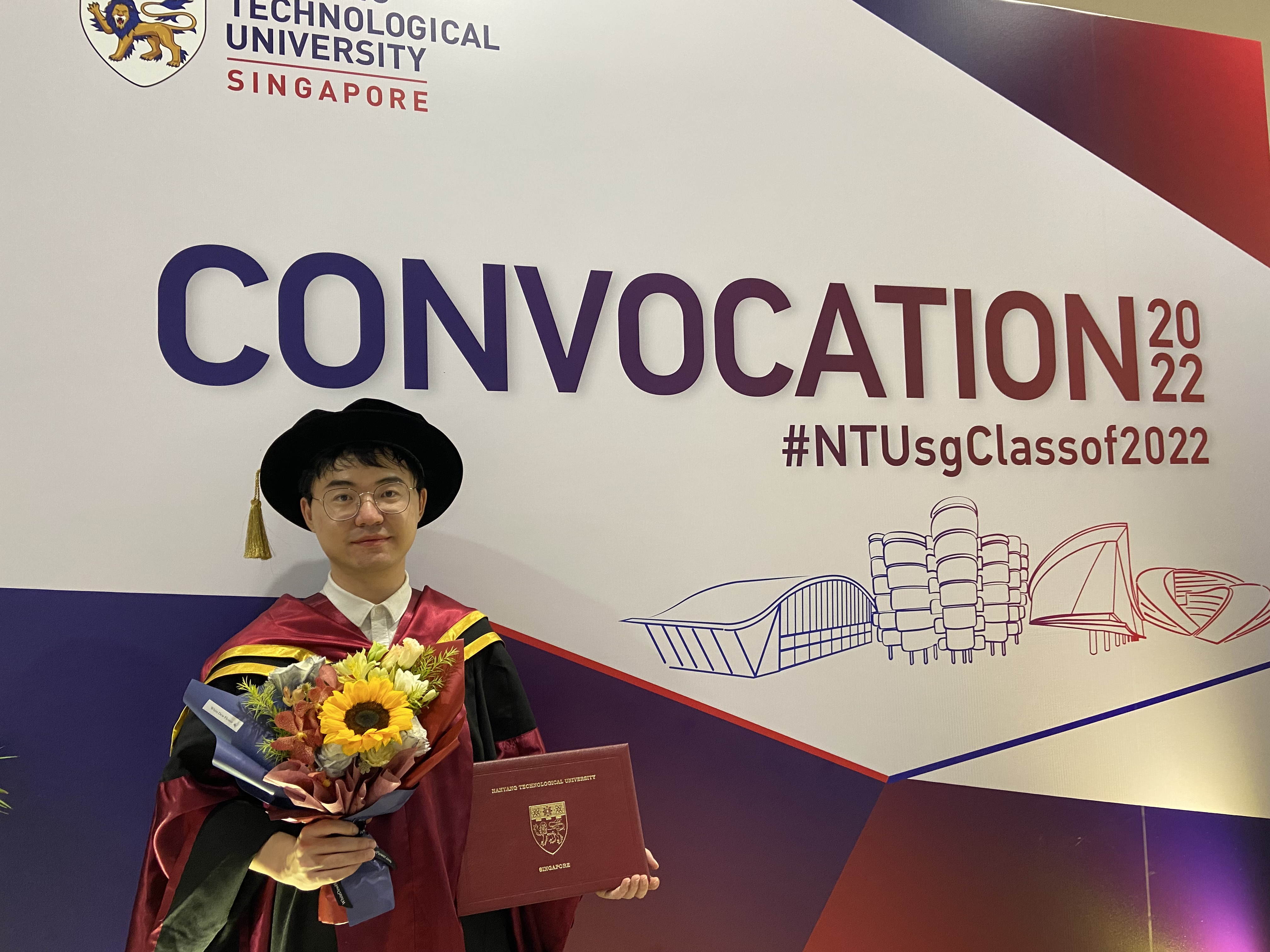
Chao Ren is a Wallenberg-NTU Presidential Principal Researcher (Forskare) at KTH Royal Institute of Technology's Department of Intelligent Systems. He holds a Ph.D. from Nanyang Technological University (NTU), Singapore, where he received the prestigious Graduate College Research Excellence Award. His research focuses on Quantum Federated Learning, Power Engineering, and Big Data Analytics for smart grid stability assessment. Ren has held postdoctoral fellowships at NTU and KTH, collaborating with leading experts like Prof. Mikael Skoglund (IEEE Fellow). Education: Ph.D. in Interdisciplinary Graduate Programme, NTU (2017–2022) B.E. in Computer Science, Nanjing University of Aeronautics and Astronautics (2013–2017) Research Interests: Combining quantum computing with federated learning to enhance cybersecurity and efficiency in power systems. Key areas include dynamic security assessment, adversarial robustness, and battery degradation prediction. His work bridges theoretical advancements and practical applications in smart grids and distributed systems. Awards & Grants: Winner of Graduate College Research Excellence Award (NTU, 2022) Wallenberg AI, Autonomous Systems & Software Program (WASP) grant (SEK 300,000) NTU grant for 'Modern Smart Grid Stability Assessment' (S$100,000) Professional Activities: Guest Lecturer at KTH, Editorial Board member for IET AI for Engineering, and reviewer for top conferences like NeurIPS and AAAI. Active in organizing workshops on federated learning and quantum computing. Labs & Teams: Leads the Trustworthy Federated Ubiquitous Learning Research Lab (AI Singapore-TrustFUL) and collaborates with the Singapore Power Group-NTU Joint Lab. Focuses on interdisciplinary projects involving energy systems, AI, and quantum technologies.
Lars Asker serves as an Associate Professor in the Department of Computer and Systems Sciences at Stockholm University. He was formerly the Co-Principal Investigator (Co-PI) for the EXTREMUM project (Explainable and Ethical Machine Learning for Knowledge Discovery from Medical Data Sources), a collaborative initiative under the Digital Futures research program. His research spans critical interdisciplinary domains at the AI-healthcare-ethics nexus, with emphasis on: Machine Learning Explainable AI (XAI) Ethical AI Frameworks Medical Data Interpretation Knowledge Discovery Systems Healthcare Informatics Through the EXTREMUM project, Dr. Asker pioneered methodologies ensuring algorithmic transparency and ethical compliance in medical AI systems, addressing fundamental challenges in clinical decision support and patient data utilization while maintaining rigorous scientific standards.