Alejandro Kuratomi is an Assistant Professor in Data Science at the Department of Computer and Systems Sciences (DSV), Faculty of Social Sciences, Stockholm University. His academic journey includes a Ph.D. in Machine Learning (2024), M.Sc. in Engineering Design: Mechatronics (2019), and dual B.Sc. degrees in Industrial and Mechanical Engineering (2014). Ph.D., Machine Learning – DSV, Stockholm University M.Sc., Mechatronics – KTH Royal Institute of Technology B.Sc., Industrial Engineering – Universidad de Los Andes B.Sc., Mechanical Engineering – Universidad de Los Andes Kuratomi’s research focuses on Machine Learning Interpretability , Algorithmic Fairness , and Multivariate Time Series Classification , with applications in GNSS error estimation and healthcare decision-making. He develops interpretable models like CRITS and ORANGE to address technical and ethical challenges in AI. His recent work explores Transformer/LLM interpretability , mechanistic explanations , and integer-justified counterfactuals . While no awards or students are mentioned, his publications highlight interdisciplinary efforts combining computer science, ethics, and engineering.
Luis Velez Quintero is an Assistant Professor at Stockholm University within the Department of Computer and Systems Sciences (DSV) . He is affiliated with the Data Science Research Group and the Stockholm Technology & Interaction Research (STIR) group, focusing on Human–Computer Interaction. His research spans adaptive immersive systems, affective computing, and physiological signal analysis in extended reality (XR) environments. Education & Background : Holds a PhD in Computer and Systems Sciences from Stockholm University (2023), MSc in Health Informatics from Karolinska Institutet (2019), and BSc in Electronics Engineering from the National University of Colombia (2015). He has led the startup PortalSense since 2018, developing VR solutions for real estate visualization. Research Interests : Combines data science and ML with XR technologies to create context-aware systems for healthcare, education, and professional training. Key themes include: Adaptive VR/AR systems using real-time physiological and behavioral signals Biosignal integration for personalized user experiences Immersive technologies for cognitive assessment and skill development Publications : Over 20 peer-reviewed articles, including work on affective databases (AVDOS-VR), biosignal frameworks (Excite-O-Meter), and XR applications in cybersecurity education. Recent efforts explore third-person locomotion in VR and early-stage Alzheimer’s detection via spatial navigation tasks. Awards & Grants : Wallenberg Foundation Grant (2023-2025): Analyzing non-verbal communication in psychotherapy Swedish Institute Scholarship (2017-2019): Fully funded Master’s and PhD studies Seed funding for PortalSense from Fondo Emprender SENA Colombia (2022-2023) Advising & Projects : Lead researcher in projects like AVDOS-VR and CS:NO . Co-designed the Excite-O-Meter open-source plugin for real-time physiological analysis in VR. Active in industry collaborations for scalable health interventions and immersive training systems. Labs & Teams : Collaborates with multidisciplinary teams at STIR and DSV, advancing human-centered AI and adaptive XR technologies.
Nicholas Pearce is an Assistant Professor at Linköping University, affiliated with the Department of Physics, Chemistry and Biology (IFM) and the Bioinformatics (BIOIN) division. He leads the Data-Driven Determination of Macromolecular Structures (D3MS) group, also known as PearceLab @ LiU, and is affiliated with SciLifeLab and the Wallenberg Centre for Molecular Medicine (WCMM) through the Data-Driven Life Sciences (DDLS) program. His research focuses on advancing structural biology by developing computational and experimental methods that capture the dynamic nature of proteins. Key interests include protein flexibility, disorder, and functional dynamics, with applications in drug discovery and macromolecular modeling. The group employs techniques such as X-ray crystallography, cryo-EM, machine learning, and statistical modeling to improve the resolution and interpretability of macromolecular structures. The recent publications highlight a strong focus on software and method development for structural biology, particularly in multi-dataset analysis and crystallographic data processing. The work contributes to open-source tools like the CCP4 suite and introduces novel approaches such as PanDDA and PanDEMIC.adp for detecting ligand binding and modeling disorder. While no formal scientific awards are listed in the provided text, his involvement in major collaborative projects and national research initiatives underscores his growing impact in the field. He actively mentors students and welcomes Master’s candidates to join his research group. Nicholas began his independent research career at Linköping University on October 1, 2022, with funding supporting the launch of his lab. His group emphasizes data-driven decision-making in structural analysis and collaborates extensively within Sweden and internationally. Current projects include multi-dataset analysis for fragment screening and decomposition of protein disorder using elastic net models. The D3MS group is active in outreach and scientific communication, maintaining a blog and public presence, including a Twitter feed. They have participated in international research visits, such as a recent trip to the University of Hamburg, and national conferences like Sweprot in Tällberg.
Cristian Rojas is a Professor of Automatic Control at KTH Royal Institute of Technology, specializing in system identification. His research bridges control theory, statistics, and machine learning to develop data-driven methods for analyzing and controlling dynamical systems. He holds an MS in Electronics Engineering from Universidad Técnica Federico Santa María (Chile) and a PhD in Electrical Engineering from the University of Newcastle (Australia). Research focuses on efficient utilization of data for self-learning systems, including topics like continuous-time system identification, robust control, and statistical estimation. Notable contributions include work on subspace identification, input design for sparse systems, and algorithms for H-infinity norm estimation. His methodologies emphasize practical applications in industrial automation, smart infrastructure, and autonomous systems. Recent publications highlight advancements in inverse filtering, decentralized learning systems, and the theoretical underpinnings of data-driven control. He collaborates widely on projects involving Bayesian methods, adversarial systems, and privacy-protected decision-making frameworks. Rojas' work often addresses challenges such as undersampling effects, model consistency, and computational efficiency in real-world control scenarios. His academic contributions include organizing academic ceremonies at KTH and mentoring researchers in the Department of Automatic Control. Current research explores intersections between machine learning interpretability and control theory, with applications to explainable AI in engineering systems.
Paolo Monti is a Professor and Head of the Optical Networks Unit at Chalmers University of Technology's Department of Communications, Antennas and Optical Networks. With extensive expertise in optical communication infrastructures, he leads research focusing on energy efficiency, network resiliency, programmability, automation, and techno-economics of optical networks. His work spans multiple international collaborations with funding from major research bodies across EU, USA, and Asia. Professor Monti's research interests center around next-generation optical networking technologies. His work explores the integration of artificial intelligence and machine learning with optical networks, quantum-classical network convergence, 6G infrastructure development, and network automation. His research addresses critical challenges in network energy consumption, reliability under failure conditions, and cost-effective deployment strategies for emerging communication technologies. The research group under his leadership develops frameworks for optical network monitoring, security, and resource optimization using advanced computational techniques. Analysis of his recent publications reveals a strong trend toward AI/ML integration with optical networking, with significant focus on quality of transmission estimation, network automation, and 6G readiness. His work increasingly combines quantum technologies with classical optical networks while addressing practical implementation challenges in multi-band elastic optical networks. The publications demonstrate a progression from theoretical network design to practical implementations with real-world validation. Professor Monti has received recognition as a Senior Member of IEEE, highlighting his contributions to the field of communications and networking. As an academic leader, Professor Monti has been involved as Principal Investigator, co-PI, and main technical leader in numerous national and international projects. His educational contributions include teaching courses at undergraduate, Master's, and PhD levels, as well as developing ICT-focused education programs. His research has been supported by major funding bodies including the European Commission, VINNOVA, and Wallenberg Centre for Quantum Technology. The Optical Networks Unit under Professor Monti's leadership operates as a vibrant research environment focusing on both theoretical and experimental aspects of next-generation optical communications. The unit maintains strong collaborations with industry partners and academic institutions worldwide, participating in multiple EU-funded projects and national initiatives focused on quantum communications and 6G infrastructure.
Anna Lukina is an Assistant Professor in the Department of Intelligent Systems at Delft University of Technology's Faculty of Electrical Engineering, Mathematics and Computer Science. She leads the Sequential Uncertainty Monitoring and Interpretability (SUMI) Lab, focusing on improving safety and interpretability of artificial intelligence through formal methods with applications in engineering, transportation, health, and finance. Her research spans the critical intersection of formal verification and machine learning, particularly in developing techniques for runtime monitoring of neural networks, safety verification of decision-tree policies, and creating verifiable reinforcement learning systems. She has established strong international collaborations with researchers across the US, Europe, Japan, and Australia. Lukina's recent publications (2021-2025) demonstrate consistent output in top AI venues including AAAI, NeurIPS, and IJCAI, with a clear trajectory toward increasingly sophisticated verification techniques for complex AI systems. Her work shows strong emphasis on practical applications while maintaining theoretical rigor, particularly in creating methods that provide formal guarantees for black-box AI systems. As part of her service commitment, she leads initiatives promoting junior computer scientists from underrepresented communities, reflecting her dedication to diversity in the field as highlighted in her DerStandard interview "Warum so wenige Frauen Den Code knacken wollen" and university magazine Delta. She currently supervises multiple PhD researchers including Sterre Lutz, Daniël Vos, Aaron Berger, and Johannes Koch, along with numerous successful MSc graduates who have completed theses on topics ranging from anomaly detection to genetic programming for explainable AI.
Claes Lundström is an Adjunct Professor at Linköping University's Department of Science and Technology (ITN), affiliated with the Media and Information Technology (MIT) school. His primary research focuses on medical imaging, integrating machine learning, visualization, and human-computer interaction in clinical settings. He leads the technical side of digital pathology research at the Center for Medical Image Science and Visualization (CMIV), directing national-scale grants and serving as Arena Director for the Analytic Imaging Diagnostics Arena (AIDA). Since 2010, he has held dual roles as Research Director at Sectra AB and academic researcher, driving innovations that translate into commercial healthcare solutions. Lundström's work spans AI-driven diagnostics, uncertainty visualization, and precision orthopedics, with contributions recognized through leadership in major projects like the €70M BIGPICTURE initiative. His academic credentials include a PhD (2007) and Docent degree (2014), alongside extensive industry collaboration. Education: PhD in 2007 and Docent degree in 2014 from Linköping University. PhD: 2007 Docent: 2014 Research interests emphasize AI integration in diagnostics, particularly digital pathology and medical imaging workflows. His work addresses challenges like domain adaptation in AI models, uncertainty quantification in segmentation tasks, and interactive visualization tools for clinicians. Recent projects include the VAI-B platform for AI validation in breast imaging and the BigPICTURE collaboration for global pathology data sharing. Key grants include leadership roles in national-scale projects, such as the AIDA arena and SCAPIS study-based AI lab. His contributions to AI ethics and clinical adoption include studies on human-AI collaboration and quality assurance frameworks. Lundström also oversees labs like CMIV and AIDA, fostering cross-disciplinary research in medical imaging and AI.
Yudi Pawitan is Professor at the Department of Medical Epidemiology and Biostatistics at Karolinska Institutet, where he leads the research group on Statistical and Bioinformatics Analyses of High-Throughput Molecular Data. His work focuses on developing statistical methods for genomic studies including SNP/RNA arrays and next-generation sequencing. Education includes BSc in Statistics (Bogor Agriculture Institute, 1982), MSc in Statistics (UC Davis, 1984), and PhD in Statistics (UC Davis, 1987). Research interests span bioinformatics, cancer genomics, and statistical genetics with emphasis on high-dimensional data analysis, genetic correlations, and neural cell biology. His group addresses fundamental questions in genomic data interpretation and neurodegenerative processes. Publications demonstrate strong focus on genetic epidemiology, single-cell analytics, and statistical methodologies. Recent works explore machine learning applications in longitudinal data visualization, neural cell characterization, and cancer biomarker discovery. Awards: Not documented in provided texts. Supervises doctoral candidates including Linda Lindström and Ralf Kuja-Halkola. Manages the Live Imaging Facility at St. Vincent's Centre for Applied Medical Research. Research funded by Swedish Research Council and Swedish Cancer Society grants. Leads interdisciplinary collaborations through the Statistical and Bioinformatics research group, integrating computational biology with experimental neuroscience.
Maxim Smirnov is an Associate Professor at Luleå University of Technology's Department of Civil, Environmental and Natural Resources Engineering. His research focuses on Applied Geophysics , particularly magnetotelluric methods for investigating crustal structures, tectonic processes, and geothermal systems. Key areas include continental collision zones, mineral exploration, and geoelectrical imaging of geological formations. He has contributed to studies in Fennoscandia, the Arabian Plate, and Iran, leveraging advanced electromagnetic modeling and multi-disciplinary data integration. Publications highlight expertise in crustal architecture, post-collisional tectonics, and 3D inversion techniques. Recent work includes analysis of the Norwegian Caledonides, the Slovakian Alpides, and geothermal reservoir characterization. He collaborates on projects like the European Plate Observing System (EPOS) and integrates seismic-MT data for orebody delineation. His research emphasizes bridging geophysical methods with tectonic and resource exploration challenges, with a focus on cross-scale analysis from deposit to regional scales.
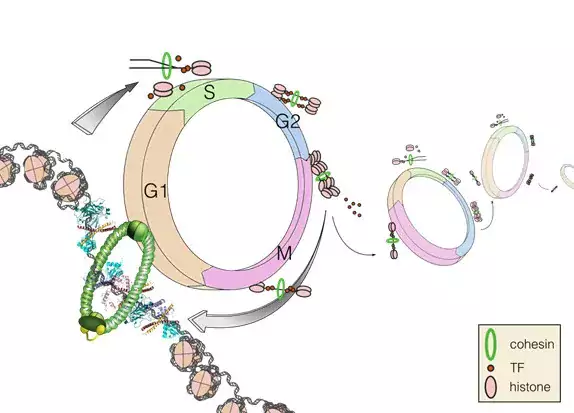
Jussi Taipale is a Professor of Medical Systems Biology at Karolinska Institutet and holds professorships at University of Helsinki. His research focuses on transcription factor binding mechanisms , cancer genomics , and gene regulatory networks . The interdisciplinary Taipale Lab operates across three international locations: Wellcome Sanger Institute (UK), Karolinska Institutet (Sweden), and University of Helsinki (Finland), with over 20 members including senior scientists, postdoctoral fellows, and graduate students. Ph.D., University of Helsinki (1996) Postdoctoral training: University of Helsinki, Johns Hopkins University Research spans transcription factor cooperativity , epigenetic regulation , chromatin accessibility , and noncoding mutation analysis . Key methodologies include HT-SELEX , CUT&RUN , ATI assays , and CRISPR-based functional genomics . The lab has significantly advanced understanding of Myc-driven oncogenesis , TF-nucleosome interactions , and dinucleotide specificity mechanisms . Notable discoveries include chromatin context-dependent enhancers , water-mediated DNA recognition , and novel composite transcription factor motifs . The group maintains active collaborations across Europe and has trained numerous alumni now leading academic and industry positions worldwide.
Alexandros Sopasakis is a Senior Lecturer at the Department of Mathematics, Faculty of Engineering (LTH), Lund University. He is affiliated with multiple research initiatives including eSSENCE (the e-Science Collaboration), ELLIIT (Linköping-Lund IT and mobile communication initiative), and LU Profile Areas in Natural and Artificial Cognition. Senior Lecturer in Mathematics Principal Investigator for eSSENCE Active in LU Profile Areas: Climate, Health, and AI Research Interests: His work bridges machine learning, dynamical systems, and applied mathematics, focusing on: Stochastic modeling of complex systems Attention-based forecasting (Transformers) Diffusion models for synthetic data generation Graph neural networks in transportation and agriculture Anomaly detection in signal processing Climate modeling under non-Gaussian noise Scientific Awards: Recipient of three patents in: 5G/6G mobility devices Beam management measurement optimization Traffic network forecasting
Måns Magnusson is an Associate Professor at the Department of Statistics, Uppsala University, with affiliations at the Institute for Analytical Sociology (Linköping University) and the Institute for Future Studies. His work bridges Bayesian statistics, probabilistic machine learning, and textual analysis, focusing on model evaluation, diagnostics, and inference algorithms. He contributes to computational social science and digital humanities through text-as-data methods. Research Themes: Bayesian inference, probabilistic machine learning, statistical inference from textual data Key Applications: Sociology, political science, law, education statistics, public health Current Projects: Improving probabilistic programming generalizability (Swedish Research Council grant), SWERIK research infrastructure (Riksbankens jubileumsfond) His recent publications emphasize text mining, model comparison, and legal data challenges. He has developed tools for national ID number validation, hate crime estimation, and parliamentary corpus construction. Notable awards include the Cramér Prize (2018), Statistician of the Year (2023), and membership in the Swedish Young Academy (2023) and ELLIS (2024). Scientific Contributions: Botten Ada Bayesian election model, 'loo' package for cross-validation Collaborative Work: AI4Research sabbatical (2024), Riksbankens jubileumsfond funding Industry Background: Statistician roles at Swedish Agency for Education, Crime Prevention, and Public Health
Atiye Sadat Hashemi is a Research Fellow at the Academy of Information Technology, Halmstad University. Her work bridges machine learning and healthcare innovation, with a focus on developing secure and interpretable AI models for medical applications. She maintains an active research profile through publications and collaborative projects in data-driven healthcare solutions. Research Focus: Her expertise spans machine learning applications in disease surveillance, precision medicine, and adversarial robustness. Key areas include: Optimizing ML for real-time disease outbreak detection using anomaly detection Advancing personalized treatment strategies through data-driven models Enhancing model security against adversarial attacks in critical domains Developing privacy-preserving synthetic health data generation techniques Publication Trends (2022-2024): Her recent works demonstrate a consistent focus on healthcare-AI integration, with emphasis on: Anomaly detection systems for epidemiological monitoring Privacy-enhancing technologies for medical data Explainable AI methods for clinical decision support Robustness improvements for safety-critical ML applications Methodologies frequently involve generative adversarial networks, graph neural networks, and time-series analysis.
Patrik Rydén is a Professor of Mathematical Statistics at the Department of Mathematics and Mathematical Statistics, Umeå University, where he applies statistical methods to complex datasets. He also directs the Industrial Doctoral School for Research and Innovation , fostering academia-industry collaboration. His research spans healthcare (ambulance logistics, cancer diagnostics), industrial optimization (automotive quality control), and bioinformatics. Research Focus Rydén develops data-driven methodologies for: Healthcare : Optimizing ambulance deployment, predicting patient care times, and modeling disease spread. Industry : Statistical process control for manufacturing and quality improvement. Bioinformatics : Cancer subtype identification and vaccine efficacy modeling. Publication Trends His recent work emphasizes applied statistics in healthcare (40%), industrial machine learning (30%), and genomic analysis (30%), with strong themes in predictive modeling, spatio-temporal analysis, and high-dimensional data interpretation. Leadership & Projects As director of the Industrial Doctoral School, he bridges academic research with industry needs. Key projects include: Predicting post-anesthesia care time using ML (2022–2027) Data-driven prehospital care optimization (2018–2028) Statistical learning for industrial defect detection (2017–2023)
Ricardo Vinuesa is an Associate Professor at KTH Royal Institute of Technology, affiliated with the Department of Mechanics within the School of Engineering Sciences. He serves as the Principal Investigator (PI) for projects such as 'An AI-based framework for harmonizing climate policies and projects with the SDGs' and co-leads the 'Faster-than-real-time and high-resolution simulation of fluid flow in engineering applications' initiative. His work integrates artificial intelligence with fluid mechanics, sustainability, and climate policy. Education and Academic Roles: Vinuesa teaches courses including Data-driven methods in engineering mechanics, Mechanics I, and Turbulence, holding roles as examiner, course manager, and teacher. He is part of the Digital Futures Faculty and actively contributes to academic programs at KTH. Research Interests: His research focuses on AI-driven solutions for fluid mechanics challenges, turbulence modeling, sustainable development goals (SDGs), and climate policy alignment. He develops machine learning frameworks for flow control, sensor optimization, and climate risk assessment, emphasizing interdisciplinary applications. Projects and Applications: Key projects include AI-based frameworks for SDG harmonization, high-resolution fluid simulations for indoor climate, and turbulence control via reinforcement learning. His work bridges computational fluid dynamics with real-world sustainability challenges, leveraging deep learning and data-driven methodologies. Labs and Collaborations: Vinuesa leads the Artificial Intelligence Group, with a lab website at vinuesalab.com . His research is supported by collaborations with industry and academic partners, focusing on advancing fluid mechanics and environmental engineering through AI innovation.