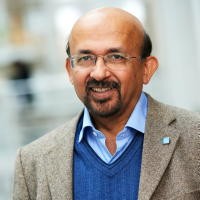
William S. Oates is the Cummins, Inc. Professor of Engineering in the Department of Mechanical Engineering at Florida A&M / Florida State University. He holds affiliations with the Mechatronics and Energy Center and the Florida Energy Systems Consortium (FESC). His research focuses on solid mechanics of multifunctional materials, quantum-informed continuum modeling, and applications in robotics, aerospace, and energy systems. He has advised over 20 graduate students and holds awards including ASME Fellow (2018) and NSF CAREER Award (2011). Education: Ph.D. from Georgia Institute of Technology. Research spans smart materials, fractal media mechanics, and quantum computing for material modeling. Key projects include high-temperature sapphire pressure sensors, photomechanical polymers, and Bayesian uncertainty quantification in materials science. Notable awards include DARPA Young Faculty Award (2009) and FSU Guardian of the Flame Teaching Award (2010). His lab collaborates with the National High Magnetic Field Lab and Challenger Learning Center for K-12 outreach. Current research includes quantum algorithm implementation for engineering applications and fractal-based viscoelastic models.
Professor Sir Bashir M. Al-Hashimi is currently Vice President (Research & Innovation) at King’s College London and holds the ARM Professorship in Computer Engineering there. He is also a Visiting Professor in Electronics and Computer Science at the University of Southampton. Prior to academia, he worked in the electronics design industry for eight years before joining the University of Southampton in 1999, where he became a personal Chair holder in 2004. His research focuses on energy-efficient computing systems, low-power testing, and energy-harvesting technologies, with a strong emphasis on smart city applications and wearable computing. He has led numerous interdisciplinary projects funded by the EPSRC and industry, including the PRiME Programme Grant and the EPSRC-funded Spatial Computational Learning consortium. He has supervised 45 PhD students and authored/co-authored nearly 400 technical papers, earning eight best paper awards and contributing to five books. His honors include a CBE (2018), knighthood (2025), Fellowship of the Royal Society (2023), and roles on the Research Excellence Framework panels. He founded the Arm-ECS industry-academia center in 2008, promoting energy-efficient computing research.
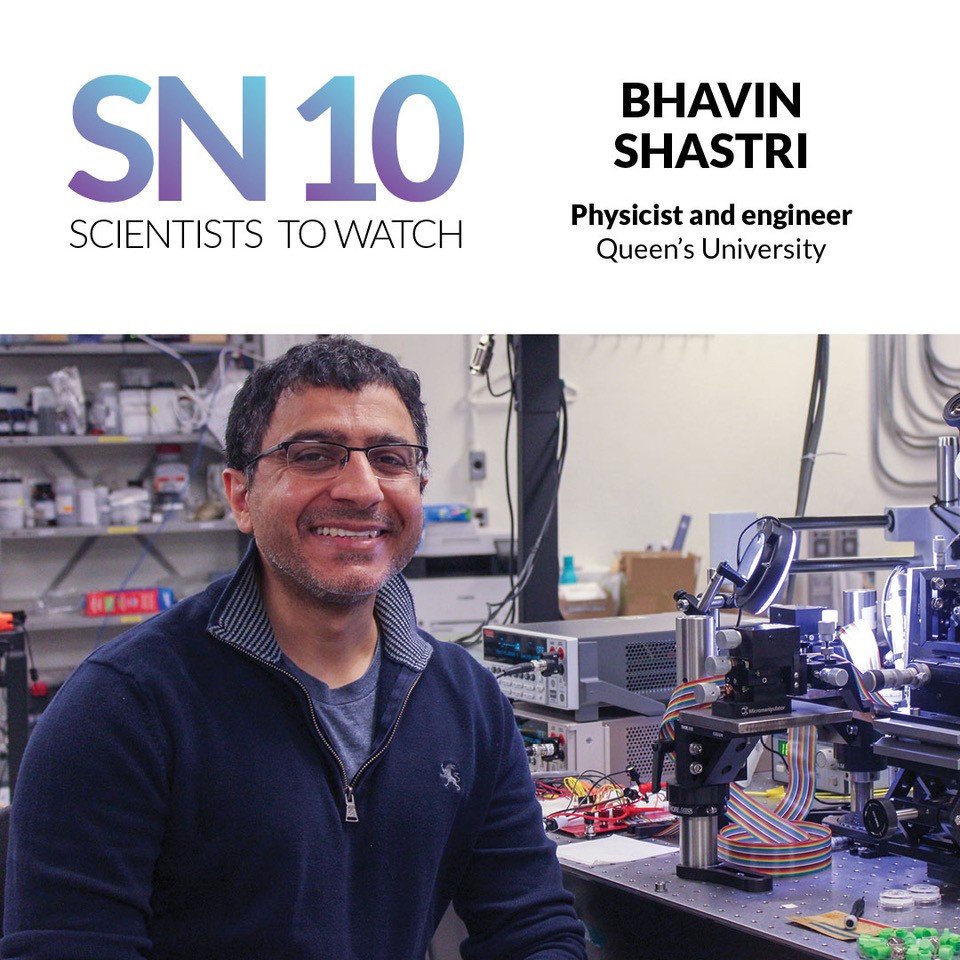
Bhavin Shastri is Canada Research Chair in Neuromorphic Photonic Computing and Assistant Professor of Engineering Physics at Queen's University. He directs research developing light-based computing systems that mimic neural processing for AI applications. His lab designs photonic integrated circuits that implement neural network architectures on chip-scale platforms. Research focuses on overcoming limitations of conventional computing through nanophotonic physics and novel materials. Publications demonstrate advances in photonic tensor cores, quantum photonic neural networks, and microwave photonic processors. Recent work achieves orders-of-magnitude improvements in processing speed and energy efficiency over electronic systems. Awards include: Alfred P. Sloan Research Fellowship (2025) Royal Society of Canada College Member (2024) Science News SN10 Scientist to Watch (2024) SPIE Early Career Award (2022) As Scientific Co-Director of NSERC's NUCLEUS program, he leads national efforts in photonic computing. Guides 12+ graduate students researching silicon photonics, neuromorphic architectures, and quantum photonics.
Wafi Danesh is an Assistant Professor in the Department of Engineering Programs at SUNY New Paltz, part of the School of Science & Engineering. He holds a PhD in Electrical and Computer Engineering from the University of Missouri Kansas City (2022). Prior to academia, he served as a Senior Engineer I - Design at Microchip Technology Inc. (2022-2023). His research focuses on hardware security, leveraging machine learning for FPGA Trojan detection and secure 3D IC design. Teaching interests include System-on-Chip Design, Digital Logic Fundamentals, and Computer Architecture. Education: PhD in Electrical and Computer Engineering, University of Missouri Kansas City, 2022 Research Interests: Dr. Danesh explores cutting-edge methods to enhance hardware security, including AI-driven approaches for IoT device protection and thermal management in 3D integrated circuits. His work bridges machine learning and physical hardware vulnerabilities, emphasizing FPGA security and PUF-based solutions for wireless systems. Publications Trends: His articles span FPGA Trojan detection via NLP and unsupervised learning, thermal challenges in 3D ICs, and neuromorphic computing innovations. Recent work highlights automated security tools and multi-valued computing for energy efficiency. Awards: None explicitly listed in the provided materials. Advising & Grants: No formal advisees or grants are mentioned. His professional activities center on research and teaching.
Professor Danilo Mandic is a leading academic in Machine Intelligence and Signal Processing at Imperial College London's Department of Electrical and Electronic Engineering. He holds roles including President of the International Neural Network Society and Distinguished Lecturer for IEEE Computational Intelligence and Signal Processing Societies. His research spans Statistical Learning, Wearable Sensing (Hearables), Financial Signal Processing, and Tensor Networks for Big Data. Key contributions include pioneering in-ear physiological sensing and developing quaternion-based adaptive filters. He has authored over 600 publications, including seminal monographs on neural networks and complex-valued signal processing. Education: PhD in Nonlinear Adaptive Signal Processing from Imperial College (1999). Professional accolades include the 2019 Dennis Gabor Award and multiple IEEE Best Paper Awards. His labs include the Financial Signal Processing & Machine Learning Lab and collaborations with the Centre for Neurotechnology. He advises numerous students and leads projects on AI ethics, graph signal processing, and biomedical applications. His work emphasizes translating research into educational curricula via participatory sensor-based learning.
Prof. Dr. Florian Knoll is a full professor in Computational Imaging at the Department of Artificial Intelligence in Biomedical Engineering (AIBE) at Friedrich-Alexander-Universität Erlangen-Nürnberg. He leads the Computational Imaging Lab, focusing on machine learning applications in medical imaging, particularly accelerating MRI through innovative reconstruction algorithms and translating them into clinical practice. His research emphasizes improving MRI speed, artifact robustness, and accessibility, alongside developing quantitative biomarkers for disease processes. Knoll's work is funded by NIH grants, including projects on machine learning for musculoskeletal imaging, MR fingerprinting, and deep learning frameworks for MRI reconstruction. He is a key figure in open science initiatives, co-creating the fastMRI dataset with Facebook AI, providing public access to over 1300 knee and 7000 brain MRI scans. He currently serves as deputy editor of Magnetic Resonance in Medicine and chairs the ISMRM Reproducible Research Study Group. His contributions extend to reproducible research, maintaining GitHub repositories with code for image reconstruction techniques (e.g., AGILE, gpuNUFFT) and educational materials. He teaches medical imaging fundamentals at FAU, integrating theoretical and practical insights for students and researchers. Grants: NIH R01EB024532, R21EB027241, P41EB017183, R01EB029957 Labs/Teams: Computational Imaging Lab, fastMRI initiative Software: GitHub repositories for MRI reconstruction (e.g., github.com/FlorianKnoll )
Shrimai Prabhumoye is a Senior Research Scientist at NVIDIA's Applied Deep Learning Research group and an Adjunct Assistant Professor at Boston University. Her research focuses on advancing large language models (LLMs), particularly in enhancing their reasoning capabilities and ensuring safety through toxicity and bias reduction. She is a core contributor to the Nemotron family of LLMs, including the state-of-the-art Nemotron4-15B. Previously, she earned her PhD from Carnegie Mellon University (2021), advised by Prof. Ruslan Salakhutdinov and Prof. Alan W. Black, with a thesis on controllable text generation and computational ethics in NLP. Education: PhD in Machine Learning (CMU, 2021), MS in Language Technologies (CMU, 2017), Undergraduate at National Institute of Technology Karnataka, India. Research Interests: LLMs, controllable generation, ethical AI, bias mitigation, data curation, and model safety. Her work emphasizes rigorous evaluation frameworks and practical applications of NLP systems. Publications span key venues like EACL, ACL, NAACL, and EMNLP, with notable contributions to bias testing, toxicity control, and model scalability. She has been recognized as a Rising Star finalist in the VentureBeat Women in AI Awards 2022 and has led teams in competitions like the Alexa Prize. Labs/Teams: Part of NVIDIA's Applied Deep Learning Research Group and contributed to CMU's Computational Ethics for NLP initiatives. Active in mentoring students on projects like politeness transfer and dataset creation.
Professor Ahmed Hemani is a faculty member at the Division of Electronics and Embedded Systems, KTH Royal Institute of Technology, affiliated with the Digital Futures Faculty. He holds the role of PI for the project 'New Chip Architectures for Industrial Vision' and leads research in reconfigurable computing, memristor-based systems, and hardware acceleration for AI and edge computing. His work bridges theoretical computer science with practical VLSI design and embedded systems development. He actively contributes to cross-disciplinary initiatives at Digital Futures, a joint center with Stockholm University and RISE Research Institutes of Sweden focused on digital innovation. His research emphasizes scalable FPGA/HPC architectures, low-power neuromorphic systems, and optimization techniques for custom silicon solutions. Current projects include a Lego-inspired edge AI framework and memristor-driven MIMO acceleration. Teaching responsibilities span advanced courses in SOC design, digital system verification, and embedded systems. He supervises advanced-level degree projects across computer engineering and ICT innovation specializations, emphasizing hands-on hardware-software co-design methodologies. Recent publications highlight innovations in memristor applications, FPGA-based acceleration, and reconfigurable architectures for neural networks and bioinformatics. His work addresses challenges in dark silicon utilization, energy-efficient computation, and high-performance embedded systems.
H. Jonathan Chao is a Professor in the Department of Electrical and Computer Engineering at New York University (NYU Tandon School of Engineering). He is the Director of the High-Speed Networking Lab, leading a team of 6 PhD students and 10 Master’s students. His research focuses on software-defined networking, network function virtualization, datacenter networks, and high-speed packet processing. Chao has held significant roles, including Head of the ECE Department (2004–2014) and former CTO of Coree Networks. He has authored over 200 publications and holds 58 patents. His awards include IEEE Fellow and National Academy of Inventors (NAI) Fellow. Education: B.S. and M.S. from National Chiao Tung University (Taiwan), Ph.D. from Ohio State University. Research Highlights Developing solutions for data center networks, network security, and quality of service control. Pioneering work in programmable packet schedulers, reinforcement learning for traffic engineering, and SDN security frameworks like SDNShield. Contributions to hybrid SDN networks, bufferless switch architectures, and energy-efficient data center designs. Awards Fellow of National Academy of Inventors (NAI) Fellow of IEEE Telcordia Excellence Award (1987) IEEE Best Paper Award (2001) IEEE New Jersey Coast Section Speaker of the Year (2003) Advisees & Labs Supervises 6 PhD and 10 Master’s students in the High-Speed Networking Lab. Collaborates with the Center for Advanced Technology in Telecommunications (CATT) to advance telecom innovations. Labs & Teams Directs the High-Speed Networking Lab, focusing on cutting-edge networking solutions, and contributes to CATT’s mission of technology transfer and entrepreneurship.
Christian Jacob is a Professor in the Department of Computer Science within the Faculty of Science at the University of Calgary . He holds a B.S. in Computer Science and a Doctor of Engineering Science from Erlangen University . His research focuses on nature-inspired algorithms, biocomputing, and agent-based simulations applied to biological systems and education. Key initiatives include the LINDSAY Virtual Human Project , which uses immersive virtual reality to explore human anatomy and physiology. He contributes to the university's strategic priorities in Digital Worlds and Health and Life initiatives. His work integrates evolutionary algorithms, cellular automata, and swarm intelligence into creative and medical applications. Notable achievements include the ASTech Award (2015) from Alberta Science and Technology. His projects emphasize interactive education through tools like LeukemiaSIM , Eukaryo , and the Giant Walkthrough Gut . Jacob also explores visualization techniques, such as evoVision3D and LifeBrush , to enhance scientific understanding. His research bridges computational methods with real-world applications in healthcare, architecture, and game design. Collaborative efforts include developing agent-based models for immune systems, nervous responses, and crowd behavior. Jacob's work spans interdisciplinary fields, blending computer science with biology, engineering, and the arts.
Fatemeh Ganji is an Assistant Professor in the Department of Electrical & Computer Engineering at Worcester Polytechnic Institute (WPI), with an affiliation to the Cybersecurity program. She holds a Ph.D. in Electrical Engineering from the Technical University of Berlin (2017), where she received the BIMoS Ph.D. Award and was nominated for the ACM Dissertation Award. Prior to WPI, she served as a Post Doctoral Associate at the University of Florida (2018–2020) and at Telecom Innovation Laboratories/Technical University of Berlin (2017–2020). Her research focuses on interdisciplinary approaches in hardware security, combining machine learning and cryptography to design and evaluate security-critical hardware systems. Key areas include physically unclonable functions (PUFs), side-channel analysis, and countermeasures against tampering and counterfeiting. Her work is funded by the European Union (Horizon 2020, FP7), German BMBF, NSF, and NIST. Ganji actively contributes to the academic community as a reviewer for IEEE and ACM journals and serves on technical program committees for CHES, FPL, DATE, and SPACE conferences. Her recent projects include developing AI-driven forensic analysis for PCB tamper detection, secure multiparty computation frameworks for chiplet systems, and open-source tools for implementation security testing. Her awards include the BIMoS Ph.D. Award 2018 and recognition from the Technical University of Berlin for her doctoral work on PUF learnability. She has also pioneered methods to detect recycled integrated circuits and enhance hardware trust through reverse engineering and machine learning.
Daniel Müller-Gritschneder is an Adjunct Teaching Professor (Privatdozent) at the Technical University of Munich (TUM), affiliated with the Chair of Electronic Design Automation. He leads the 'Electronic System Level' research group, focusing on embedded systems, TinyML, virtual prototyping, and hardware resilience. He temporarily served as head of the Chair of Real-Time Systems (2019–2020) and holds a senior membership in IEEE. His research spans: TinyML : Optimizing neural network inference for microcontrollers. Virtual Prototyping : Fast simulation for embedded software development (e.g., ETISS simulator). Runtime Verification : Hardware monitoring for safety-critical systems. Fault Tolerance : Cross-layer resilience against soft errors. Design Automation : NoC synthesis and RISC-V toolchain optimization. His publications emphasize RISC-V-based systems, TinyML deployment, fault injection, and embedded AI. Recent works show trends toward compiler-assisted security, thermal management, and automated design-space exploration for edge devices. Awards: Best Paper Award (SiPS 2019) Habilitation Award (Bund der Freunde der TUM, 2019) 2nd Best Paper (SMACD'15) Best Paper nominations at DAC'07, DATE'10, Analog'10, NOCS'13 He advises researchers in the Electronic System Level group and contributes to EU projects (e.g., Scale4Edge). His lab develops tools like ETISS, MLonMCU, and Seal5 for RISC-V and TinyML ecosystems.
Baris Kasikci is an Associate Professor in the Paul G. Allen School of Computer Science & Engineering at the University of Washington. Previously (2017-2023), he was a Morris Wellman Assistant Professor in the Electrical Engineering and Computer Science Department at the University of Michigan. His research focuses on building efficient and trustworthy computer systems through innovative combinations of approaches from systems, computer architecture, and programming languages. Dr. Kasikci received his PhD in Computer Science at EPFL and has held research positions at Microsoft Research Cambridge, Google, Intel, and VMware. His work addresses critical challenges in system reliability, security, and performance in increasingly complex software ecosystems. His research interests center on improving the efficiency of datacenter applications and machine learning systems, analyzing and fixing failures, and enhancing hardware security. His lab develops techniques for automated bug detection, formal verification of distributed systems, and building systems support for heterogeneous hardware architectures. Recent projects include Whisper (profile-guided branch misprediction elimination), Huron (taming false sharing), and Agamotto (automatic detection and repair of bugs in persistent memory applications). Analysis of his recent publications shows a strong trend toward optimizing large language model serving, hardware security, and performance optimization for modern heterogeneous architectures. His work bridges traditional systems research with emerging AI infrastructure needs, particularly in efficient LLM serving, security vulnerabilities in modern hardware, and performance optimization for heterogeneous computing environments. NSF CAREER award Microsoft Research Faculty Fellowship Intel Rising Star Award VMware Early Career Faculty Grant Google Faculty Award Roger Needham PhD Award (best PhD thesis in computer systems in Europe) Patrick Denantes Memorial Prize (best PhD thesis at EPFL) Best Paper Award at OSDI'18 Best Paper Award at MICRO'22 Dr. Kasikci has advised numerous PhD students who have gone on to prestigious positions in academia and industry, including Tanvir Ahmed Khan (Assistant Professor at Columbia University), Akshitha Sriraman (Assistant Professor at CMU), and Jiacheng Ma (AMD). His research has been supported by significant grants from NSF, DARPA, Intel, Google, Microsoft, VMware, and Amazon. His lab, the EfesLab, focuses on building tools and techniques that make computer systems more reliable, secure, and efficient. The EfesLab, led by Dr. Kasikci, brings together postdocs, PhD students, and undergraduate researchers to tackle fundamental challenges in systems reliability and performance. The lab has developed numerous influential tools including Whisper, Huron, and Agamotto that address critical performance and reliability issues in modern computing systems. Current research directions include efficient LLM serving, security of emerging hardware technologies, and automated debugging techniques.
Dr. Zhenghao Chen is a Lecturer in Data Science at the University of Newcastle, affiliated with the School of Information and Physical Sciences. He earned his Ph.D. from the University of Sydney in 2022, following a B.Eng. H1 degree from the same institution in 2017. Prior to his current position, Dr. Chen served as a Postdoctoral Research Fellow at the University of Sydney (2022-2024), a Research Engineer at TikTok (2024), and as a Visiting Research Scientist at Microsoft Research and Disney Research (2022-2023). Dr. Chen's educational background includes: Doctor of Philosophy, University of Sydney (2022) Bachelor of Information Technology (B.Eng. H1), University of Sydney (2017) Dr. Chen's research spans multiple domains within artificial intelligence, with particular expertise in Computer Vision, Natural Language Processing, and Machine Learning. His work in Generative AI has garnered significant recognition, with applications in both academic and industrial settings. His research interests are reflected in his Fields of Research percentages: Deep Learning (30%), Computer Vision (30%), Natural Language Processing (20%), and Multimodal Analysis and Synthesis (20%). His publications in top-tier venues like CVPR, ICCV, ECCV, and journals like IEEE TPAMI demonstrate the breadth and impact of his work. Analysis of Dr. Chen's recent publications (2022-2025) reveals a consistent focus on neural compression techniques, 3D perception, and multimodal AI systems. His work spans medical imaging (CXR bone suppression), video compression, point cloud processing, and neural surface reconstruction. A notable trend is his exploration of efficient AI systems that work well under resource constraints, as evidenced by his involvement in the EMCLR workshop. His research often bridges theoretical advances with practical applications across multiple domains. Dr. Chen has received several prestigious awards: Microsoft Research Asia StarTrack Fellowship (2025) ACM SIGMM Award for Outstanding PhD Thesis in Multimedia Computing (2024) Australia Government Research Training Program (RTP) Fellowship (2019) Google Australia Prize for Excellence in Computer Science (2017) Dr. Chen is actively involved in the academic community, serving on the Program Committee for major AI conferences including CVPR, ICCV, ECCV, SIGGRAPH, AAAI, and others. He also organizes workshops in Multimedia and ICCV conferences, and serves as a reviewer for prestigious journals. His teaching responsibilities include courses on Intelligent Visual Signal Understanding, Video Intelligence and Compression, Database and Information Management, and Computing Fundamentals at both the University of Sydney and University of Newcastle.
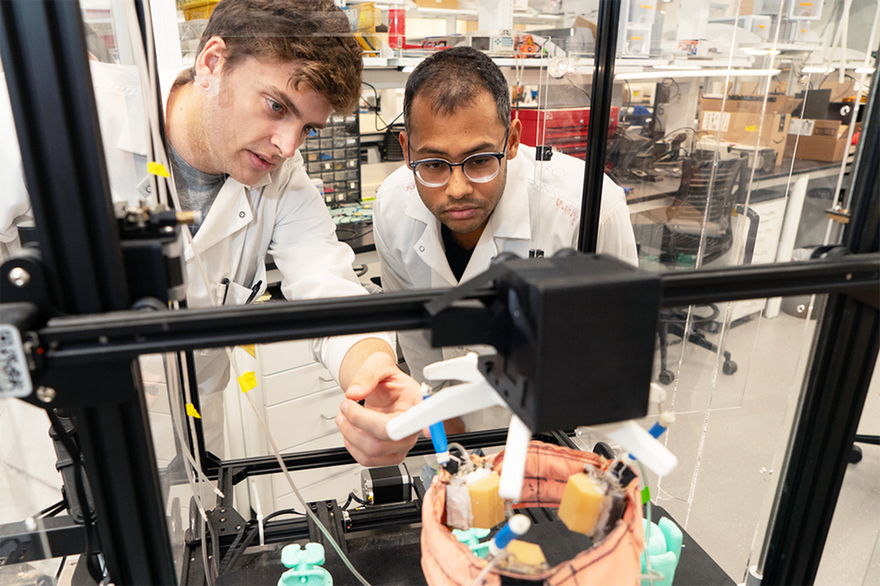
Victoria Webster-Wood is an Associate Professor at the College of Engineering , Carnegie Mellon University , where she leads the Biohybrid and Organic Robotics Group (B.O.R.G) . Her research integrates organic materials into robotics as structures, actuators, sensors, and controllers for biohybrid robots and prosthetics. Education: Ph.D., Mechanical Engineering, Case Western Reserve University (2017) M.S., Mechanical Engineering, Case Western Reserve University (2013) B.S., Mechanical Engineering, Case Western Reserve University (2012) Research Interests focus on biohybrid robotics , biologically inspired systems , soft robotics , additive manufacturing , biomechanics , and computational modeling . Her work spans applications in medical robotics , micro/nano manufacturing , and environmental monitoring . Scientific Awards include being named to ASME’s 2025 MechE Watch List and awarded MIT Technology Review’s 35 Innovators Under 35 (2023) . Collaborations involve projects like neurodegenerative disease therapy tools and soft robotic tactile sensors for manufacturing , supported by the Manufacturing Futures Institute and NextManufacturing Center .