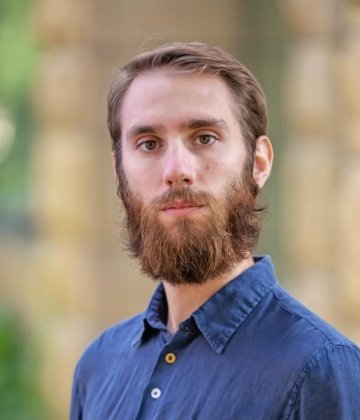
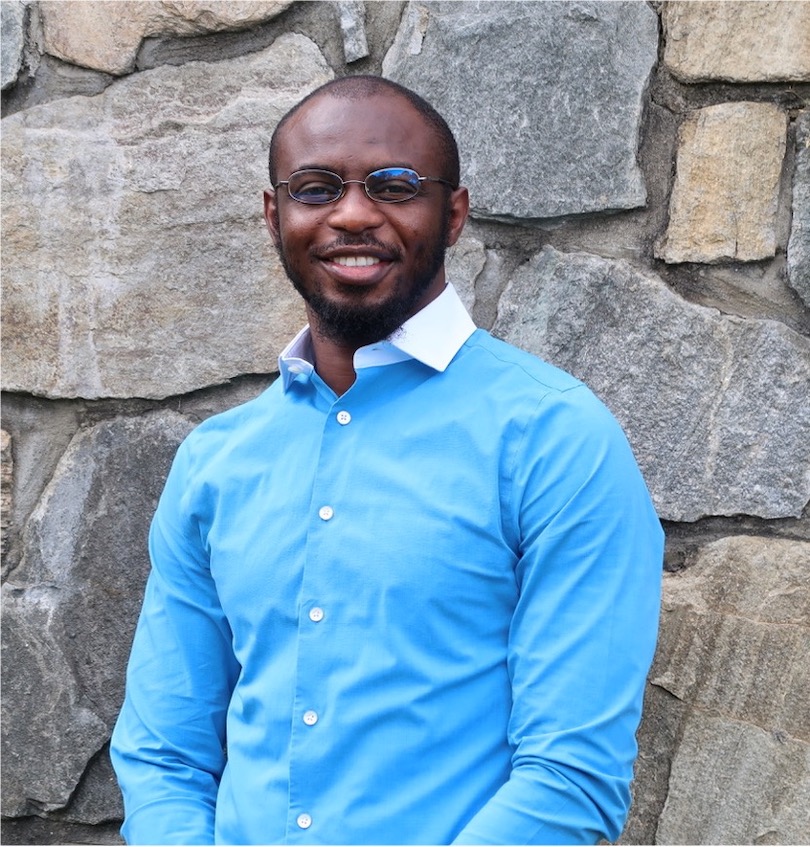
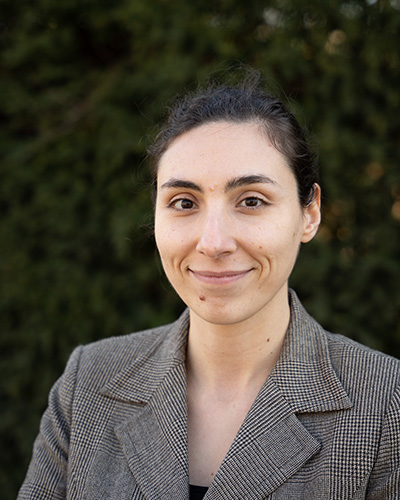
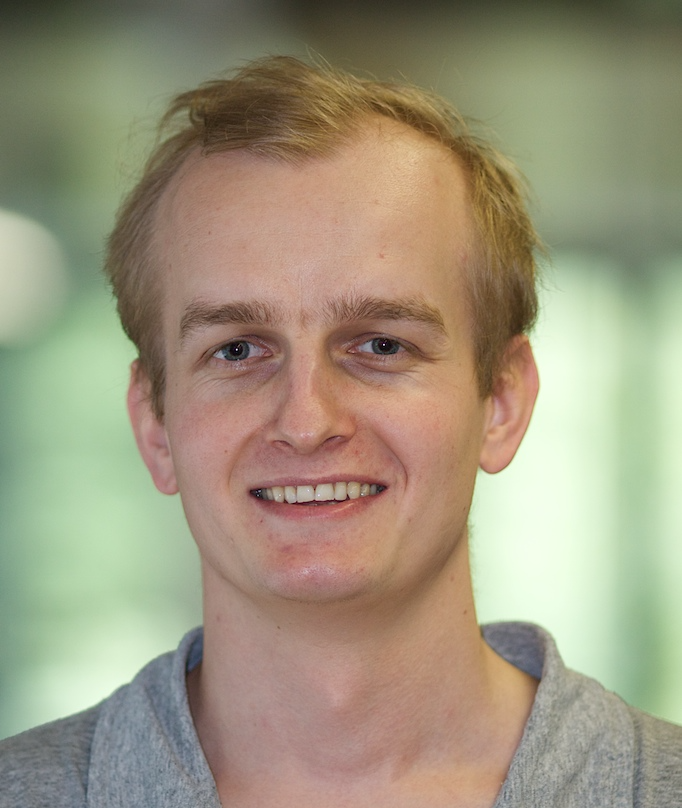
Olga Vechtomova is a Professor at the University of Waterloo, affiliated with the Information Systems research group and specializing in Search Engines and Natural Language Processing. Her work bridges computational creativity, multimodal systems, and AI-driven text generation. She leads projects like LyricJam , a real-time lyric generation system for live music, and explores applications in dynamic story generation, hate speech detection, and low-resource summarization. Her research emphasizes ethical AI, creative technologies, and leveraging large language models for diverse tasks. Research interests include natural language processing, machine learning, and multimodal interaction. Recent work focuses on artistic inspiration modeling, stylized text generation, and improving NLP efficiency through semi-supervised learning and distillation techniques. Her contributions span over 60 papers since 2000, with a strong emphasis on foundational NLP challenges and real-world applications. She collaborates on systems like Promptmix for model distillation and LyricJam sonic for music-audio lyric generation.
Dr. Eylem Asmatulu is an Associate Professor in the Department of Mechanical Engineering at Wichita State University (WSU), part of the College of Engineering. She joined WSU as an educator in 2015, became an Assistant Professor in 2017, and was promoted to her current rank in 2023. Previously, she worked in Environmental Health and Safety at WSU. She currently advises three PhD, three MS, and two BS students, having graduated 13 students since 2015. Her research focuses on recycling and reuse of materials, composite materials engineering, nanotechnology safety, and sustainable manufacturing. She has secured over $1.7 million in grants, published 131+ articles (h-index 26), and contributed to fields like thermal energy storage, biomedical nanomaterials, and aerospace material science. Her work emphasizes interdisciplinary approaches, combining machine learning for material property prediction and addressing safety concerns in nanotechnology across industries. Key projects include flame-retardant composites, biogas production optimization, and superhydrophobic nanofiber applications for water treatment. She actively promotes sustainability through recycling innovation and lean manufacturing practices in aerospace. Dr. Asmatulu’s research has been cited over 2,870 times. Her contributions span academia and industry, with a focus on translating innovations into practical solutions for environmental and industrial challenges.
Martino Banchio is an Assistant Professor at the Department of Economics of Bocconi University and an Affiliate of the Innocenzo Gasparini Institute for Economic Research (IGIER). He concurrently serves as a part-time Research Scientist at Google Research. His work bridges microeconomic theory, market/ mechanism design, and computer science. His PhD thesis earned an honorable mention in the 2023 ACM SIGecom Doctoral Dissertation Award. Research interests focus on market design, industrial organization, and computer science applications in economics. Notable contributions include studies on credible auctions, AI-driven collusion, and dynamic pricing mechanisms. He frequently publishes in top venues like the ACM Conference on Economics and Computation (EC) and the ACM Web Conference (WWW). His awards include the Research Paper Competition at MIT Sloan Sports Analytics Conference 2020 and the Exemplary AI Track Paper Award. His research explores cutting-edge topics such as AI ethics in market design and algorithmic game theory, reflecting a strong interdisciplinary approach. No student advising records are explicitly listed. His work bridges academic theory and industry applications, as seen through collaborations with Google Research and affiliations with leading economic institutes.
Niall Winters is a Visiting Fellow at the University of Oxford's Department of Education, previously serving as Professor of Education and Technology and an Official Fellow. His research focuses on socially-just technology innovations, particularly in healthcare and education, supported by over €7 million in funding. He holds a PhD in Computer Science from Trinity College Dublin. Key roles include co-convenor of the Critical Digital Education Research Group, director of the MSc Education (Digital and Social Change), and mentor to Kellogg students. Prior to Oxford, he was a Reader in Learning Technologies at UCL Institute of Education and Deputy Head of the Department of Culture, Communication and Media. His research integrates global health challenges with digital solutions, emphasizing community health workers' training in low-resource settings. Collaborations include the Global Centre on Healthcare and Urbanisation at Kellogg and projects with UNESCO, WHO, and the NHS. He has held fellowships at institutions like Sciences Po and MIT Media Lab Europe. Publications span mobile health technologies, gamification in medical education, and policy frameworks for digital equity. His work bridges theory and practice, advocating for ethical technology design that addresses systemic inequalities in education and healthcare systems.
Jordan Boyd-Graber is a Full Professor at the University of Maryland, affiliated with the Department of Computer Science and the University of Maryland Institute for Advanced Computer Studies (UMIACS). His research focuses on machine learning, natural language processing, computational linguistics, topic models, and question answering. He has made significant contributions to the development of interactive topic modeling systems and evaluations of large language models. His work often bridges theoretical advancements with practical applications, such as improving human-AI collaboration and enhancing the interpretability of machine learning models. Boyd-Graber’s research also addresses challenges in adversarial examples, calibration of models, and the ethical implications of AI systems. His recent publications span cutting-edge topics like evaluating topic models through ProxAnn, mitigating hallucinations in vision-language models, and exploring human-AI complementarity in question answering. He collaborates extensively with researchers in computer science, linguistics, and social sciences to advance interdisciplinary applications of NLP and ML.
Loris D'Antoni is an Associate Professor in the Department of Computer Science and Engineering at the University of California at San Diego (UCSD) . He is also a Visiting Academic at Amazon Web Services (AWS) . His research focuses on helping people write trustworthy software through techniques in program synthesis, formal verification, and machine learning robustness. Bachelor and Master in Computer Science from University of Torino (2008, 2010) PhD in Computer Science from University of Pennsylvania (2015) His research integrates programming languages , automata theory , and formal methods to ensure software reliability. Recent work explores semantics-guided synthesis and specification-aligned LLMs , with applications in network security, machine learning fairness, and automated code repair. Key trends in his publications include program synthesis , formal verification , and trustworthy AI systems . He has contributed to tools like AutomataTutor and SemGuS , a framework for customizable synthesis problems using constrained Horn clauses. Phillip R. Certain-Gary D. Sandefur Distinguished Faculty Award NSF CAREER Award Microsoft Research Faculty Fellowship Google and Facebook Faculty Awards Best Paper Award at ICDCN 2023 Distinguished Paper Award at SBES 2021 D'Antoni actively contributes to academic community service as a committee member in PLDI , OOPSLA , POPL , and CAV . He leads the Programming Systems Group at UCSD and collaborates with SemGuS research team on synthesis frameworks.
Habeeb Olufowobi is an Assistant Professor in the Department of Computer Science and Engineering at the University of Texas at Arlington (UTA), where he leads the Cyber-Physical System Security Lab. He holds a PhD in Computer Science from Howard University (2019) and previously served as a Lecturer at Howard before joining UTA in 2020. His research is centered on the security and trustworthiness of embedded and distributed systems, particularly in the domains of autonomous vehicles, IoT, and healthcare AI. He investigates cybersecurity challenges at the hardware-software interface in real-time systems and develops AI/ML models that are transparent, explainable, and equitable. His interdisciplinary work integrates principles from cybersecurity, real-time systems, and machine learning. The recent publications reflect a strong trend in securing cyber-physical systems using advanced AI techniques, with emphasis on intrusion detection, secure communication (e.g., named data networking), and robustness of autonomous systems. His work frequently appears in top-tier venues such as IEEE Transactions, VehicleSec, and ICMLA. Project Management Professional (PMP), PMI (2012–Present) Member, Institute of Electrical and Electronics Engineers (IEEE) (2020–Present) Habeeb has secured significant research funding, including an NIH grant on ethical AI for Chagas disease prediction and an AIM-AHEAD grant focused on health equity. He mentors several graduate students, including Paul Agbaje and Afia Anjum, who have received awards and internships at prestigious institutions like Los Alamos National Laboratory. He teaches courses in cloud computing, embedded systems, and information security, and serves as a faculty advisor for the National Society of Black Engineers (NSBE) at UTA. His lab, the Cyber-Physical System Security Lab, focuses on developing scalable and reliable security solutions for critical infrastructure, with growing emphasis on healthcare applications and fairness in algorithmic decision-making.
Julian Berger is a postdoctoral researcher at the Max Planck Institute for Human Development in the Center for Adaptive Rationality , where he explores how to enhance decision-making through hybrid human-AI systems. He is also a fellow of the Joachim Herz Foundation and has received funding from the Foundation of German Business and the Danish Data Science Academy. Education: M.A. Psychology in Business and Economics, Universidade Catolica Portuguesa (2021) B.A. Politics, Administration and International Relations, Zeppelin Universität (2018) His research spans human-AI collaboration , collective intelligence , and interpretable machine learning . A recurring theme in his work is developing methods to combine human expertise with AI capabilities for accuracy in domains like medical diagnostics , credit scoring , and football analytics . He has authored publications in high-impact venues such as PNAS , Nature Human Behavior , and Science and Medicine in Football . Scientific awards and funding include: Fellowship for interdisciplinary economics, Joachim Herz Foundation (2024) PhD funding from the Foundation of German Business (Stiftung der deutschen Wirtschaft) Research grant from the Danish Data Science Academy His recent article trends emphasize ensembling techniques that leverage complementary human and AI errors, algorithmic fairness, and practical heuristics like Hybrid Confirmation Trees. These works demonstrate significant improvements in diagnostic accuracy and decision cost-efficiency. Beyond academia, Berger works as a consultant and ML engineer with Simply Rational , focusing on interpretable models for financial and sports analytics. His work bridges theoretical research with real-world applications, prioritizing fairness, transparency, and human accountability in AI systems.
Mariya Toneva is a tenure-track faculty member at the Max Planck Institute for Software Systems , conducting groundbreaking research at the intersection of Machine Learning , Natural Language Processing , and Neuroscience . She leads the Bridging AI and Neuroscience (BrAIN) group , focusing on computational models that align AI systems with human brain processes. Her work aims to enhance both AI capabilities and neuroscience understanding through this cross-disciplinary approach. Actively recruiting postdocs, PhDs, and research interns in areas like code/text representation, brain-AI alignment, and neuroimaging data analysis Collaborator on NIH-funded projects using fMRI and neuropixel data Research Themes : Her group explores neural mechanisms of language processing, event segmentation in narratives, memory reactivation via music, and effective human-AI collaboration frameworks. Key methods include LLM analysis, cross-modal similarity metrics, and naturalistic task-based fMRI studies. Key Publications (2024-2025): Brain-tuned speech models (INTERSPEECH 2025) Cognitive event boundaries in LLMs (Behavioral Research Methods 2025) Music-induced memory reactivation (biorxiv 2024) LLM-brain alignment reasons (EMNLP 2024) Advising : Mentors PhD candidates Omer Moussa (speech processing), Camila Kolling (representational similarity), and Gabriele Merlin (LLM alignment). Collaborates with institutions like MIT, NYU, and ETH Zurich.
Hassan Khan is an Associate Professor at the University of Guelph's School of Computer Science, with research spanning security, systems, and human-computer interaction (HCI). He is a member of the Centre for Advancing Responsible and Ethical Artificial Intelligence (CARE-AI). Research Interests: His work focuses on improving AI-driven mobile security systems through human-in-the-loop evaluations, addressing vulnerabilities in continuous authentication, shoulder surfing, and privacy in enterprise/repair settings. He explores how users interact with security mechanisms and designs interfaces to enhance usability. Scientific Recognition: He has received the NSERC Early Career Researcher Award and a NSERC Discovery Grant, with media coverage in outlets like Time Magazine, The Globe and Mail, and New Scientist. Teaching: Khan teaches courses such as Computer Security Foundations and Advanced Penetration Testing, emphasizing practical cybersecurity and AI systems architecture.
David Chalmers is a University Professor of Philosophy and Neural Science at New York University and co-director of the Center for Mind, Brain, and Consciousness. He is also an Honorary Professor of Philosophy at the Australian National University and co-director of the PhilPapers Foundation. His work bridges philosophy, cognitive science, and emerging technologies. Research Interests: Chalmers is best known for his work on the 'hard problem of consciousness'—the challenge of explaining subjective experience. His research spans philosophy of mind, metaphysics, epistemology, philosophy of language, and the foundations of physics and AI. He actively explores the implications of virtual reality, simulation theory, and large language models for philosophy and consciousness studies. Recent Research Trends: His recent publications focus on AI consciousness, the ethical treatment of AI systems, the simulation hypothesis, and the nature of thought in language models. These works reflect a growing engagement with artificial intelligence and digital metaphysics, positioning philosophy at the forefront of technological inquiry. Scientific Awards: While no specific awards are listed in the provided text, Chalmers is widely recognized as one of the most influential contemporary philosophers, particularly in philosophy of mind. Advising and Grants: He mentors students and postdocs, though specific names are not listed. His leadership in the Center for Mind, Brain, and Consciousness and the PhilPapers Foundation suggests active grant-funded research and academic collaboration. Labs and Teams: He co-directs the Center for Mind, Brain, and Consciousness at NYU and the PhilPapers Foundation , both of which support research, publications, and global philosophical discourse in philosophy of mind and related fields.
Juan Carlos De Martin is a Full Professor of Computer Engineering at the Polytechnic of Turin, where he is also co-founder and co-director of the Nexa Center for Internet & Society. He holds a Faculty Associate position at the Berkman Klein Center for Internet & Society at Harvard University and is a member of the Scientific Council of the Treccani Institute and the Steering Committee of Biennale Democracy. He previously served as Vice Rector for Culture and Communication at the Polytechnic of Turin (2018–2023) and as president of its libraries (2007–2015). His research centers on the societal implications of digital technologies, with a strong emphasis on algorithmic and data justice, digital power, and the democratic challenges posed by modern technology. He advocates for a more democratic and ethical technological future, particularly critiquing the dominance of smartphones and promoting digital sovereignty. His recent publications reflect a clear trend toward ethical AI, data protection, and the social impact of algorithms. He has published on gender bias in language models, GDPR compliance tools, and non-discrimination audits in software, demonstrating a sustained commitment to fairness, transparency, and accountability in digital systems. Best Student Paper Award IEEE ISCC 2011 Best Student Paper Award IEEE ICME 2005 Fellow at Harvard University (Berkman Klein Center) (2011–2015, 2016–2024) Faculty Associate at Collège d'études mondos, France (2016) De Martin has advised PhD students like Marco Rondina on Responsible AI and has led numerous EU-funded research projects such as COMMUNIA and DECODE. He has also played a key role in public policy, serving on ministerial working groups on AI and online hate. He is the founder of the Biennale Tecnologia and has authored influential books on the future of universities and technology, all published under Creative Commons licenses. He leads the Nexa Center for Internet & Society, a multidisciplinary research group focused on the legal, economic, and social aspects of the Internet. The center fosters collaboration between computer scientists, legal scholars, and social scientists to address pressing digital challenges.
Przemyslaw Grabowicz is an Assistant Professor of Computer Science at University College Dublin and an Adjunct Professor at the University of Massachusetts Amherst. He leads the SIMS (Socially Intelligent Media and Systems) Lab and the EQUATE initiative, and is actively involved in the Knowledge Discovery Lab (KDL). His work bridges computer science, social science, and public policy, focusing on responsible AI and digital society. Research Interests: Fair and Explainable Machine Learning Computational Social Science Social Media and Network Science Public Opinion Modeling Algorithmic Bias and Discrimination Prevention Open-World Learning His research develops statistical and machine learning methods to understand and augment public opinion in digital environments, ensuring fairness, transparency, and societal benefit. He emphasizes legal compliance and ethical design in AI systems. Recent Research Trends: His recent publications focus on social media polls, political bias, misinformation, and fairness in machine learning. He investigates how algorithmic systems shape public discourse, especially during elections and global crises, and develops methods to detect and mitigate bias in data and models. Scientific Awards and Recognition: Best Paper Honorable Mention, ICWSM’25 WICI Data Challenge Main Prize (2013) Arnold O. Beckman Research Award Multiple UMass Amherst Interdisciplinary Research Grants Volkswagen Foundation Grants (over €900k total) Advising and Grants: Dr. Grabowicz supervises several PhD students in the SIMS and KDL labs and collaborates with MS students. He has secured significant funding from the Volkswagen Foundation, UMass Amherst, and the University of Illinois, supporting research on political misinformation, media bias, and global agenda setting. He is currently recruiting a postdoc at UCD. Labs and Initiatives: He heads the SIMS Lab and the EQUATE initiative, and contributes to the KDL. His project socialpolls.org explores public opinion through social media, and he maintains an active presence through the Uncommon Good blog on responsible AI.
Yoshua Bengio is a Full Professor at the Université de Montréal, affiliated with the Department of Computer Science and Operations Research at the Faculty of Arts and Sciences. He is a pioneer of deep learning and a leading figure in AI safety. He co-founded Mila – Quebec Institute of Artificial Intelligence and serves as its scientific director. His work focuses on advancing AI technology while addressing ethical and safety challenges, including AI governance and catastrophic risk mitigation. Education: Ph.D. in Computer Science from McGill University (1991), postdoctoral studies at MIT. Research interests include deep learning, causal inference, AI ethics, and responsible AI development. He contributed to the Montreal Declaration for Responsible AI and leads the International Scientific Report on AI Safety. Recent articles emphasize AI safety frameworks, governance, and technical advancements in machine learning. Awards include the Turing Award (2018), Killam Prize (2019), and recognition as TIME's Most Influential Person (2024). He holds prestigious fellowships and is a member of the UN Scientific Advisory Board for Breakthrough Science and Technology. Affiliations include Mila, IVADO (as founding scientific director), and CIFAR programs. His work bridges academia, industry, and policy to ensure AI benefits humanity while minimizing existential risks.
Claudia Patricia Ayala Martinez serves as a Lecturer in the Department of Service and Information Systems Engineering at the Barcelona School of Informatics (FIB), Polytechnic University of Catalonia (UPC). She is actively involved in research through the GESSI - Group of Software and Service Engineering and the UPC inSSIDE - integrated Software, Services, Information and Data Engineering research groups. Her career spans over two decades of academic contributions in software engineering with consistent publication output. Dr. Ayala Martinez's research focuses on Empirical Software Engineering, Off-The-Shelf Adoption, Requirements Engineering, and Software and Architectural Quality. Her work demonstrates an evolution from traditional software engineering topics toward increasing integration with machine learning and AI systems. Recent publications show particular emphasis on software quality indicators, ML pipeline design principles, trustworthiness of ML models, and green computing in software systems. Analyzing her publication trends reveals a consistent research trajectory with growing focus on AI/ML integration in software engineering. Her work spans empirical studies, systematic literature reviews, and practical industrial applications. The research shows strong connections between software quality metrics, architectural decisions, and emerging technologies, with increasing attention to ethical considerations in ML systems and sustainability in software development. Most-Influential Paper Award at the 30th IEEE International Requirements Engineering Conference Dr. Ayala Martinez has participated in numerous competitive R&D projects including those funded by the Spanish National Research Plan, Horizon 2020, and the Catalan Innovation Strategy. Her collaborative network includes extensive work with Professor Javier Franch Gutierrez (69 joint publications), Silverio Juan Martinez Fernandez (26 joint publications), and Cristina Gomez Seoane (20 joint publications). Her research has been supported by various national and European funding programs focusing on software engineering, quality assessment, and open source adoption. She is actively involved with the GESSI and inSSIDE research groups at UPC, which focus on integrated software, services, information, and data engineering. These groups maintain strong industry connections and have produced significant research in empirical software engineering, reference architectures, and quality assessment methodologies. Her recent work shows increasing collaboration with researchers working at the intersection of software engineering and artificial intelligence.