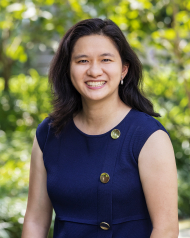
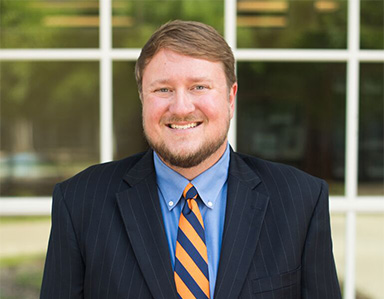
Sorelle Friedler is the Shibulal Family Professor of Computer Science at Haverford College and a Nonresident Senior Fellow at The Brookings Institution. Her work centers on algorithmic fairness, transparency, and policy, including co-authoring the White House AI Bill of Rights. Ph.D. in Computer Science from the University of Maryland, College Park B.A. from Swarthmore College Research interests include fairness in machine learning , accountability frameworks , and responsible AI , with applications to social networks, materials science, and civic systems. Her recent publications focus on network equity , generative AI bias , and policy-compliant algorithms . Key scientific awards include the Data and Society Research Institute Fellowship. She has secured grants from NSF, DARPA, and Mozilla for projects on algorithmic fairness and responsible computing.
Philipp Danylak is a research associate and PhD candidate at the Chair of Information Infrastructures, Technical University of Munich (TUM), Campus Heilbronn, focusing on information security and data protection certification implementation within organizations. He holds a Master of Science in Industrial Engineering and Management from Karlsruhe Institute of Technology, including an Erasmus+ semester at Linköpings Universitet in Sweden. His research centers on IS certification internalization, examining how organizations implement information security standards while addressing superficial adoption challenges. Key interests include privacy frameworks, cybersecurity compliance mechanisms, and certification process optimization, with emphasis on bridging theoretical standards and practical organizational implementation. His publication trajectory shows consistent focus on certification internalization challenges, evolving from framework development (2022) to applied criteria catalog creation (2024 DIRECTIONS project), demonstrating growing impact in security standardization practices within German research contexts. No scientific awards are documented in available sources. As a doctoral candidate, he is not currently supervising students but contributes to the DIRECTIONS project under Prof. Sunyaev's leadership, with research intersecting blockchain systems and autonomous driving safety frameworks. He actively participates in TUM's Information Infrastructures research group, collaborating on projects spanning GameUP, blockchain decentralization, and machine learning coordination systems at the Heilbronn campus.
Ruth Fong is a Teaching Professor in the Department of Computer Science at Princeton University since July 2021. Her academic journey includes a Ph.D. in Engineering Science (2020) and an M.Sc. in Neuroscience from the University of Oxford , where she was funded by the Rhodes Trust and Open Philanthropy . She completed her B.A. in Computer Science at Harvard University . Research Focus: Computer Vision, Machine Learning, Explainable AI (XAI), ML Fairness, Human-Computer Interaction (HCI) Key Techniques: Post-hoc model analysis, interpretable-by-design architectures, interactive visualization tools, concept-based explanations Her 15 most recent publications (2023-2025) span topics in interactive explainability, gender artifacts in datasets, concept-based explanation frameworks (UFO, ELUDE), and real-world AI trust dynamics. Collaborative work with Olga Russakovsky 's Visual AI Lab appears prominently. Scientific Recognition: Rhodes Scholarship (2015) Open Philanthropy AI Fellowship (2018) Princeton Engineering Council Teaching Award (2025) Keller Center Summer Course Development Grant (2025) CHI Honorable Mention (2023) As director of Princeton's Looking Glass Lab , she mentors students like Indu Panigrahi and Sunnie S.Y. Kim . Her teaching portfolio includes COS324 (Machine Learning) and COS126 (Intro CS) , where she implemented an open-ended final project gallery.
Marjo Kauppinen serves as Professor of Practice in Software Engineering within Aalto University's Department of Computer Science, leading research at the intersection of requirements engineering and customer value creation. Her two-decade career focuses on translating user needs into effective digital services through roadmapping and solution planning methodologies. Her research trajectory demonstrates a strategic evolution from foundational requirements engineering toward contemporary ethical AI challenges. Recent work (2020-2025) pioneers frameworks for integrating transparency and explainability requirements into AI development, addressing critical gaps between ethical guidelines and practical implementation. Concurrently, she maintains active contributions to software ecosystem research, examining planning-phase dynamics and minimum viable product impacts. Key publication trends reveal three interconnected research streams: (1) Ethical AI requirements specification, (2) Software ecosystem governance, and (3) Continuous value validation through experimentation. This triad reflects her consistent focus on bridging theoretical requirements processes with real-world business value creation. Her scholarly recognition includes: Best Paper Award at the 11th International Conference on Requirements Engineering (2007) Distinguished Paper Award at the 15th International Conference on Requirements Engineering (2011) Kauppinen actively mentors master's thesis students while contributing to academic discourse through program committee roles at major requirements engineering conferences and editorial board membership for the Requirements Engineering Journal. Her leadership extends to the Software and Service Engineering research group where she drives collaborative projects examining emerging software development paradigms. Embedded within Aalto's Department of Computer Science, her work maintains strong industry connections through practical case studies examining real-world implementation challenges across healthcare, public sector, and commercial software ecosystems.
Mirko Marras is an Assistant Professor at the Department of Mathematics and Computer Science, University of Cagliari (Italy). He holds a PhD in Computer Science (2020) and MSc (2016, summa cum laude) from the same university, along with a Computer Science Engineering certification from the University of Pisa (2016). His affiliations include academic positions at University of Cagliari, EPFL (Switzerland), and collaborations with institutions in Spain, USA, and Switzerland.
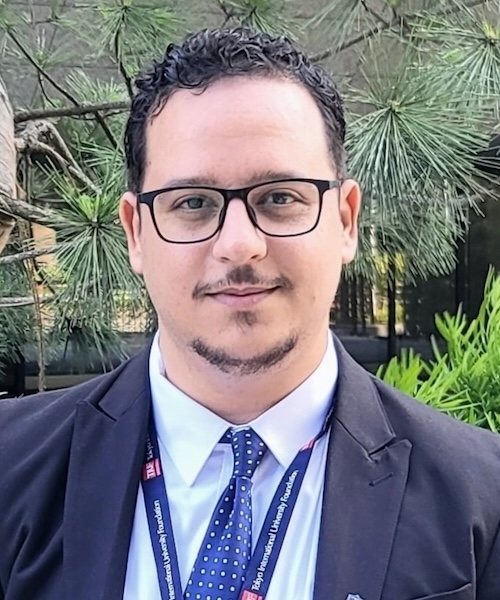
Rafik Hamza is an Associate Professor in Information Management & Cybersecurity at Tokyo International University , with prior roles at National Institute of Information and Communications Technology (NICT, Tokyo), Guangzhou University, and SONATRACH (Algeria). His work spans Cryptography , Privacy-Preserving Machine Learning , and Blockchain-Enabled IoT Security . Ph.D. (2017) in Cryptography and Security from University of Batna M.Sc. (2014) in Cryptography and Security from University of Batna B.Sc. (2011) in Applied Mathematics from University of Batna His research interests focus on securing big data ecosystems through advanced cryptographic methods, including post-quantum algorithms and homomorphic encryption. He actively explores blockchain integration for IoT authentication and privacy-preserving deep learning architectures. Recent publication trends highlight his contributions to hybrid chaotic image encryption, IP protection in distributed systems, and secure ML frameworks. Collaborations with researchers like Alzubair Hassan and Minh-Son Dao demonstrate cross-disciplinary applications. 2021-2022 : Funded by Najran University's Institutional Funding Committee (Project NU/IFC/ENT/01/013) for AI/ML in emerging technologies Associate Editor at Cureus Journal of Computer Sciences (2024–present) Conference Chair for AMLDS 2025
Alexei (Alyosha) Efros is a Professor in the Department of Electrical Engineering and Computer Sciences at the University of California, Berkeley, where he holds the Howard Friesen Professorship and is a core member of the Berkeley Artificial Intelligence Research Lab (BAIR). Prior to joining UC Berkeley in 2013, he spent a decade as faculty at Carnegie Mellon University and maintained affiliations with École Normale Supérieure/INRIA and the University of Oxford. His educational background includes: PhD in Computer Science, University of California, Berkeley (2003) BS in Computer Science, University of Utah (1997) Efros's research fundamentally explores how machines can understand and recreate the visual world using vast unlabeled data, with pioneering contributions at the intersection of computer vision and computer graphics. He champions data-driven and self-supervised learning approaches, emphasizing slow science principles while advancing applications in computational photography, visual data mining, robotics, and interdisciplinary humanities projects. His work consistently bridges theoretical innovation with practical impact, as evidenced by his prolific publication record and industry collaborations. Analysis of his 2024-2025 publications reveals three dominant trajectories: 1) Generative model interpretability (CLIP analysis, diffusion model auditing), 2) 3D scene understanding through novel representations (Gaussian splatting, persistent state modeling), and 3) Self-supervised techniques for video and multiview consistency. These threads demonstrate his lab's strategic focus on making generative systems more controllable, interpretable, and spatially coherent while maintaining strong connections to human vision principles. His exceptional contributions have been recognized with: ACM Prize in Computing (2016) Five ICCV Helmholtz Test-of-Time Prizes (1999-2017) SIGGRAPH Significant New Researcher Award (2010) NSF CAREER Awards (2006, 2010) Multiple teaching honors including the Jim and Donna Gray Award (2023) As a dedicated mentor, Efros has advised 19 PhD students to completion (including current faculty at CMU, TTIC, and Stanford) and numerous MS/BS researchers, with his trainees consistently securing prestigious fellowships and industry positions. His research has been supported by sustained NSF funding, industry partnerships with Adobe and NVIDIA, and collaborative grants through BAIR's multi-institutional initiatives. The lab maintains active international collaborations with Oxford, École Normale Supérieure, and leading AI institutes worldwide. His research group operates within BAIR's collaborative ecosystem, featuring dedicated computational resources for vision and graphics research. The lab emphasizes interdisciplinary teamwork, regularly partnering with robotics and cognitive science researchers to explore human-AI visual interaction. Current projects focus on foundational challenges in visual representation learning, with increasing emphasis on ethical AI development and societal impact through initiatives like visual data attribution frameworks.
Xueyuan Michael Han-Vanbastelaer is an Assistant Professor in the Department of Computer Science at Wake Forest University , focusing on systems-level security and privacy research. His work integrates data provenance, machine learning, and distributed systems to develop robust security mechanisms. Ph.D. in Computer Science (2022) from Harvard University Master of Science in Computer Science (2022) from Harvard University B.Sc. in Computer Science (2015) from University of California, Los Angeles His research interests span systems security , privacy , data provenance , and graph analysis , where he develops operating system infrastructures, language-level frameworks, and algorithms to enhance system transparency and detect sophisticated attacks. His publications reveal a trend of advancing provenance-based security solutions, including intrusion detection systems like KAIROS and Unicorn, eBPF security frameworks like SafeBPF, and data deletion techniques like Splice. He has contributed to 15 major publications since 2016, with recent work (2024–2025) focusing on hardware-assisted kernel security and real-time provenance auditing. His teaching includes courses like CSC 111: Introduction to Computer Science and CSC 250: Computer Systems I , covering programming fundamentals, system architecture, and memory management.
Klaus Mueller is a Professor in the Computer Science Department at Stony Brook University , with additional appointments in Biomedical Engineering and Radiology. He serves as Director of the Visual Analytics and Imaging (VAI) Lab, Liaison for the SUNY Korea CS Program, and Interim Chair of the Department of Technology and Society . His career spans roles at Brookhaven National Lab and leadership positions at SUNY Korea. Dr. Mueller earned his PhD in Computer and Information Science (1998), MS in Computer and Information Science (1996), and MS in Biomedical Engineering (1990) from The Ohio State University , alongside a BS in Electrical Engineering (1987) from the Polytechnic University of Ulm, Germany. His research focuses on visual analytics , explainable AI , algorithmic fairness , computational imaging , and medical imaging . He has pioneered GPU-accelerated CT reconstruction techniques, bias mitigation frameworks (e.g., D-BIAS), and tools like DOMINO for causal reasoning. His work bridges data science , human-computer interaction , and medical applications , often integrating large language models for visualization tasks. Recent publications highlight advances in multivariate volume rendering , LLM-driven bias detection , and mDDPM-based medical image synthesis . His articles span IEEE Transactions , Nature Machine Intelligence , and conferences like IEEE VIS and ACM CHI . Award highlights include NSF CAREER (2000), SUNY Chancellor Award (2011), IEEE Golden Core Award (2016, 2022), induction into the National Academy of Inventors (2018), and elevation to IEEE Fellow (2024). He has chaired major conferences and served as Editor-in-Chief of IEEE Transactions on Visualization and Computer Graphics (2019-2022). He teaches graduate and undergraduate courses in visualization , medical imaging , and GPGPU programming , and leads the Visual Analytics Seminar (CSE 648). His lab ( VAI Lab ) fosters interdisciplinary research in GPU-accelerated analytics and ethical AI.
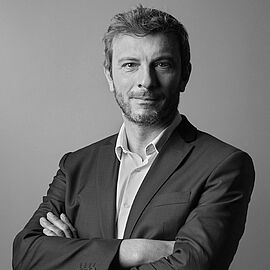
Nicolas Berland serves as a Professor at Paris-Dauphine University, where he has established himself as a leading scholar in management control and organizational management. His office is located in room P416, with contact numbers 01 44 05 40 04 and 06 62 45 04 36. With a prolific academic career spanning several decades, Professor Berland has developed a distinctive research approach focused on the intersection of management control with strategic processes and organizational management. Professor Berland's research spans multiple dimensions of management control systems, with particular emphasis on their historical development, contemporary applications, and future trajectories. His work critically examines traditional budgeting practices, exploring alternatives such as management without budgets and the relationship between accounting systems and organizational behavior. A significant strand of his research addresses the application of management control in public sector organizations and its relationship to sustainable development initiatives. He has also investigated the evolving role of financial directors and the impact of artificial intelligence on management control systems. Analysis of Professor Berland's recent publications reveals a consistent focus on organizational complexity, the tensions between different control mechanisms, and the adaptation of management control to contemporary challenges including environmental sustainability, digital transformation, and financialization. His work demonstrates a sophisticated understanding of how accounting practices intersect with broader organizational phenomena, often employing historical and critical perspectives to challenge conventional wisdom in the field. The methodological diversity in his research portfolio, ranging from historical analysis to contemporary case studies, reflects his comprehensive approach to understanding management control in practice. Throughout his career, Professor Berland has contributed extensively to academic discourse through editorial roles, including serving on the editorial board of Comptabilité contrôle audit. His leadership in the academic community is further evidenced by his participation in numerous conferences and his contributions to major reference works in management control. As an educator, he has shaped the field through textbooks and teaching materials that have influenced generations of management control practitioners and scholars.
Jean-Paul TCHANKAM is a full-time professor at Kedge Business School Bordeaux specializing in strategy, sustainable development and entrepreneurship. He serves as the educational director of the Doctorate in Business Administration (DBA) at BEM-Dakar and Abidjan, extending his academic influence across multiple continents. His research primarily focuses on organizational performance, strategic management, and entrepreneurship , with particular attention to contexts in developing economies. Professor TCHANKAM has established himself as a leading scholar in social auditing and corporate responsibility, evidenced by his co-authorship of "The Encyclopedia of Social Auditing and Corporate Responsibility" (EMS Paris 2012) and other significant publications including "Reinventing Leadership" (2017), "Learning for Performance" (2018), and "Africa Positive Impact" (2020). His recent scholarly output demonstrates a diverse research portfolio spanning organizational behavior, entrepreneurship, financial economics, and sustainable development. His work frequently examines business contexts in Africa, particularly Cameroon, with numerous publications analyzing SMEs, gender dynamics in entrepreneurship, and the impact of digital technologies on business practices in developing economies. Laureate of the National Academy of Sciences, Belles-Lettres, and Arts of Bordeaux Associate member of CEPN-CNRS-Paris Member of the Scientific Council of the Academy of Management Sciences of Paris (ASMP) Member of the Scientific and Evaluation Committee of the journal "Questions de Management" Co-president of the International Institute of Social Auditing for Sub-Saharan Africa Professor TCHANKAM has supervised numerous doctoral students through the DBA program at BEM-Dakar and Abidjan, fostering academic and professional development across Francophone Africa. His leadership in social auditing initiatives demonstrates a commitment to practical applications of academic research for societal benefit.
Rui Zhu is a Postdoctoral Associate in Biomedical Informatics and Data Science at Yale University School of Medicine. Their work bridges artificial intelligence, privacy-preserving technologies, and biomedical applications, focusing on secure and ethical AI systems for healthcare. Education: PhD in Computer Science (2024) and MS in Statistics (2019) from Indiana University Bloomington; BA in Mathematics (2015) from the University of Utah. Zhu's research explores privacy risks in large language models, federated learning security, and explainable AI for drug recommendation. They investigate adversarial attacks, backdoor suppression, and fairness enhancement in AI systems, particularly under resource constraints. Their recent publications highlight expertise in AI-driven diagnostics (e.g., Alzheimer's detection via voice analysis), financial risk modeling, and differential privacy. Key themes include membership inference, neural network robustness, and ethical deployment of AI in healthcare. Zhu is affiliated with Yale's Biomedical Informatics & Data Science department, mentored by Prof. Lucila Ohno-Machado, and previously worked with Prof. Haixu Tang at Indiana University. Their work emphasizes collaboration between computer science and biomedical domains.
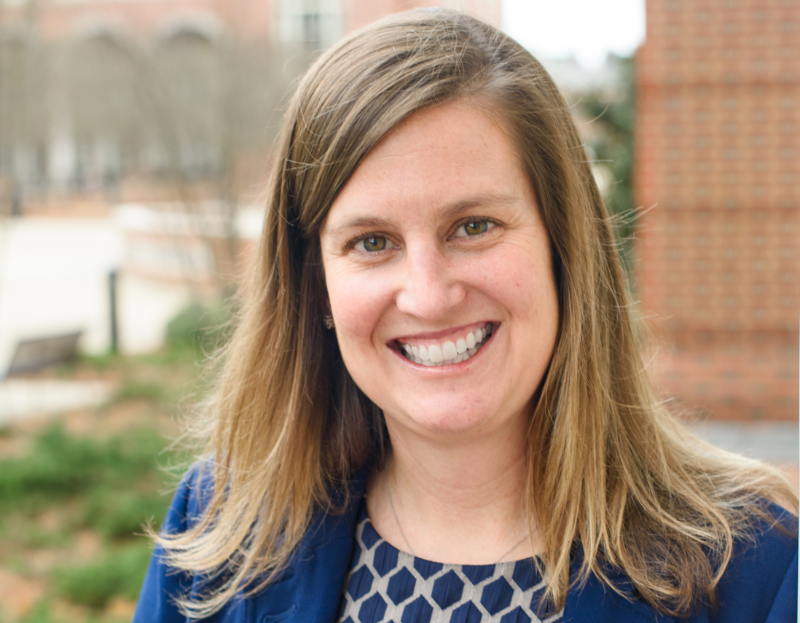
Kerry Inger serves as a Professor in the Department of Accountancy at Auburn University's Harbert College of Business, where she teaches accounting and tax courses both domestically and internationally (including at the University of Regensburg in Germany). Her academic credentials include a PhD in Philosophy, Business from Virginia Polytechnic Institute and State University (2012), complemented by master's and bachelor's degrees in Accountancy and Accounting from the University of Florida (2003). Her educational qualifications are: PhD in Philosophy, Business from Virginia Polytechnic Institute and State University (2012) MA in Accountancy—Tax from the University of Florida (2003) BS in Accounting from the University of Florida (2003) Dr. Inger's research centers on the critical intersection of financial accounting and corporate taxation, with expanding focus on sustainability accounting and AI applications. She examines tax avoidance behaviors within corporate social responsibility frameworks, stakeholder perceptions of tax transparency, and the transformative impact of artificial intelligence on tax preparation services and accounting education. Her work bridges theoretical accounting principles with practical tax policy implications, addressing contemporary challenges in regulatory compliance and technological disruption. Analysis of her recent publications (2022-2025) reveals a pronounced shift toward artificial intelligence's role in tax services and accounting education, while maintaining strong engagement with tax transparency, avoidance behaviors, and sustainability reporting. Her work appears consistently in premier journals including The Accounting Review and The Journal of the American Taxation Association , with significant media attention from the Wall Street Journal , CFO Magazine , Bloomberg , and Politico . Her teaching excellence has been recognized through: Auburn University's Gerald and Emily Leischuck Endowed Presidential Award for Excellence in Teaching Alumni Undergraduate Teaching Excellence Award Harbert College's Lowder and McCartney teaching awards Dr. Inger has developed innovative tax research cases and educational materials, including an annotated bibliography of tax cases. While specific grant details aren't provided, her extensive publication record spanning tax policy, AI applications, and sustainability accounting indicates active research funding and scholarly engagement. Her international teaching experience in Germany further demonstrates global academic contributions.
James Long is a Professor of Accountancy at the Harbert College of Business, Auburn University, where he serves as Assistant Dean of Global Programs. His career spans academic leadership, research, and teaching excellence in accounting, financial wellness, and international business. Education: PhD in Accounting, Virginia Polytechnic Institute and State University (2009) MAcc in Accounting, Auburn University (2002) BSBA in Accounting, Auburn University (2001) Dr. Long's research focuses on how task timing affects judgment, decision-making, and performance in accounting. His work intersects behavioral accounting, audit quality, and emerging technologies like blockchain and artificial intelligence, particularly in educational contexts. His scholarly output includes publications in top-tier journals such as Accounting, Organizations & Society , Auditing: A Journal of Practice & Theory , and Journal of Accounting Education . Recent studies examine AI's role in accounting education, cryptocurrency accounting challenges, and interruptions in financial decision-making. Scientific Awards: Gerald and Emily Leischuck Endowed Presidential Award for Excellence in Teaching Alumni Undergraduate Teaching Excellence Award Harbert College's Lowder and McCartney Teaching Awards School of Accountancy Outstanding Research Award (three-time recipient) National awards for educational research articles (four-time recipient) Dr. Long has also contributed to professional practice, including a Fulbright Scholar stint in Hungary (2017), and prior industry roles as a Staff Auditor and Internal Audit Manager. He holds certifications in CIA, CMA, CPA, ABV, and CGMA, and is active in major accounting associations.
Peter Kieseberg is a Lecturer and Senior Researcher at the St. Pölten University of Applied Sciences , affiliated with the Institute for IT Security Research and Department of Computer Science and Security . He has held his lecturer position since November 2017 and contributes to research in Cybersecurity , Artificial Intelligence , and Blockchain Technologies . His research spans AI Security , Cyber Resilience , Data Privacy , and Explainable AI . He has co-authored numerous publications on topics such as Secure Drone Integration , AI Procurement Guidelines , and Blockchain-based Auditing . His work often bridges technical and legal domains, emphasizing Ethics and Transparency . Key Trends: Recent articles focus on Cyber Resilience Fundamentals , Controllable AI , and Risk Factors in AI Applications . Projects: Active in initiatives like A3 (AI Act for Austria) , Dataskop , and Josef Ressel Center for Blockchain Technologies . Education: Studied Technical Mathematics in Computer Science at TU Wien (2001–2007).