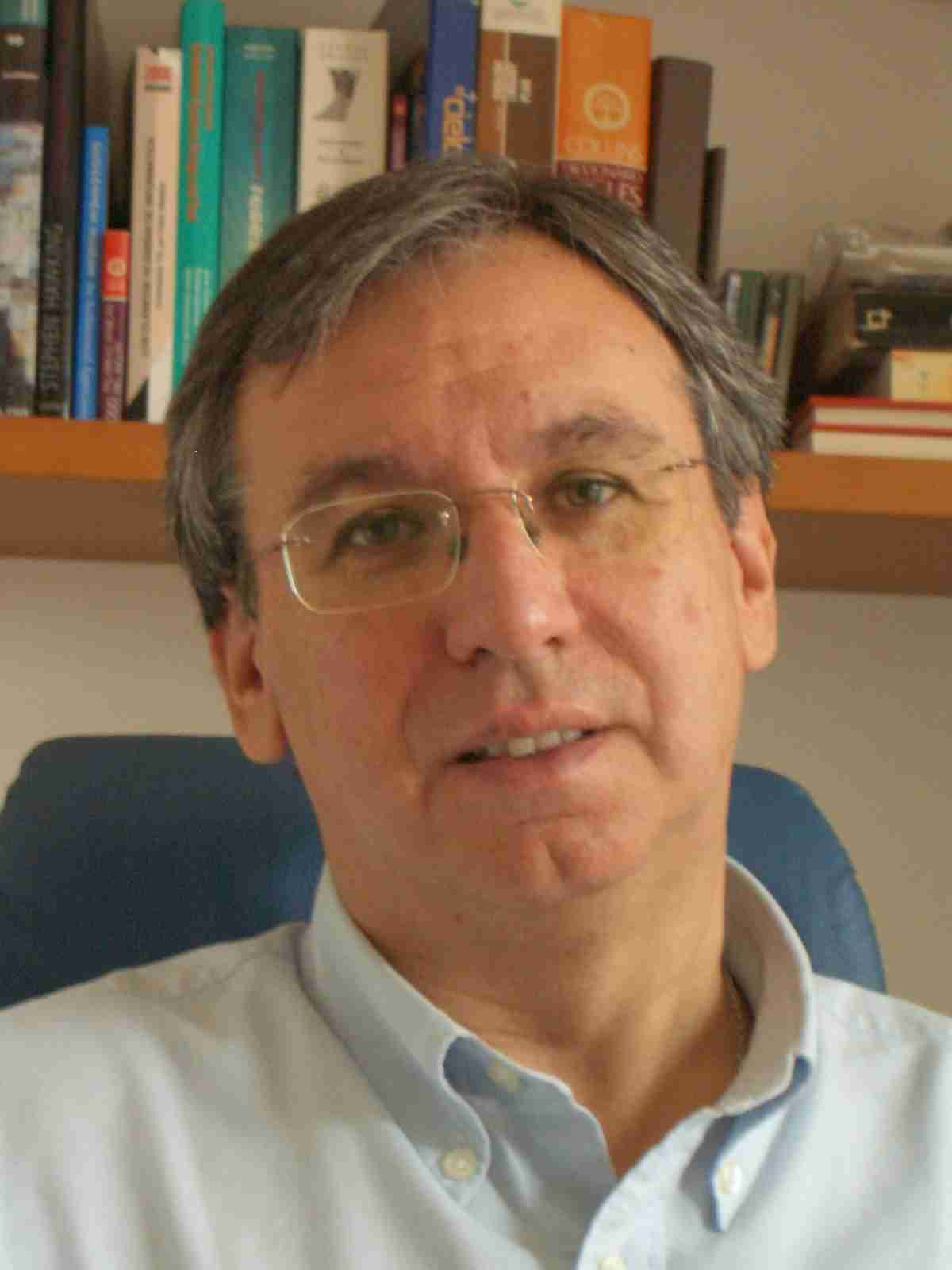
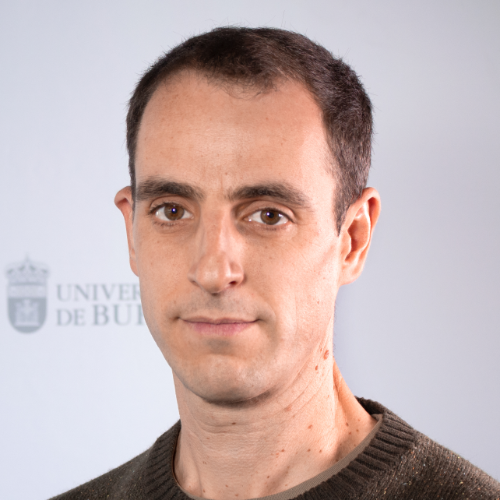
Ana I. Molina is a Full Professor at the University of Castilla-La Mancha since February 2024, specializing in Information Technologies and Systems. She holds a PhD in Computer Engineering (2007) and a Computer Engineering degree (2002) from the same university, along with a Psychology degree (2019) from the National University of Distance Education (UNED, Spain). PhD in Computer Engineering (2007) Computer Engineering degree (2002) Psychology degree (2019) Her research focuses on Human-Computer Interaction , Educational Technology , and Collaborative Systems , with a strong emphasis on Eye Tracking and Usability . Recent work explores Augmented Reality and Mobile Applications for Autism Spectrum Disorder (ASD) and physical rehabilitation. She has contributed to frameworks like MultiTEA for ASD applications and Learn-CIAM for collaborative learning tools. Her publications (15 most recent) span journals like Multimedia Tools and Applications , Journal of Systems and Software , and Universal Access in the Information Society . Topics include Algorithmic Learning , Gender Bias in Computing , and Medical Gamification . While no formal awards are listed, her extensive peer review activity (Applied Sciences, Brain Sciences, Sensors) highlights her academic engagement.
Juan Carlos López is a Professor of Computer Architecture at the University of Castilla-La Mancha (UCLM), where he has been employed since 1999. He previously served as Dean of the School of Computer Science from 2000 to 2008 and is currently the Director of the Indra Chair at UCLM. He is also Head of the ARCO (Computer Architecture and Networks) Group. Dr. López received his MS and Ph.D. degrees in Telecommunication (Electrical) Engineering from Technical University of Madrid in 1985 and 1989, respectively. From September 1990 to August 1992, he was a Visiting Scientist in the Department of Electrical and Computer Engineering at Carnegie Mellon University. From 1989 to 1999, he served as an Associate Professor of Electrical Engineering at Technical University of Madrid. His research activities center on embedded system design, distributed computing, and advanced communication services. His work spans Internet of Things (IoT), edge computing, computer vision applications, and health monitoring systems. He has co-founded a startup company focused on control and communication systems for metropolitan transportation, serving as CTO from 1992 to 1997. Analysis of his recent publications (2023-2025) reveals a strong focus on practical edge computing applications, particularly in agriculture (olive fly detection) and healthcare (fall detection for elderly). His work demonstrates expertise in FPGA-based hardware acceleration, IoT context reasoning, and astronomical instrumentation. His research bridges theoretical computer architecture with real-world applications in smart cities, precision agriculture, and assistive technologies for aging populations. Member of IEEE, ACM and ATI professional organizations Spanish Representative at IFIP TC10 (Computer Systems Technology) Dr. López has led numerous national and international projects funded by EU, NATO, and private companies including Indra and Telefónica. His Indra Chair position since 2006 demonstrates sustained industry collaboration. He has served on panels for the Spanish National Science Foundation and Ministry of Education and Science regarding Information Technologies research programs. From 2004 to 2009, he coordinated the Doctoral Education Program of the Ministry of Science and Innovation in the area of Information Technologies. He directs the ARCO Research Group, which focuses on Computer Architecture and Networks, with particular emphasis on embedded systems, energy-efficient computing, and IoT applications. His team has developed innovative solutions for smart cities, healthcare monitoring, and precision agriculture, often leveraging FPGA technology for hardware acceleration.
Miguel Carvajal Zaera is a Professor at the Department of Integrated Sciences within the Faculty of Experimental Sciences , Universidad de Huelva. He is affiliated with the Advanced Studies in Physics, Mathematics, and Computing research center, and previously contributed to the Structure of Matter research group. Education : PhD in Physics from the University of Seville , with a thesis on Analytical methods for anharmonic potentials in molecular physics (2000), supervised by Dr. Renato Lemus and Dr. José Miguel Arias Carrasco. Research Interests focus on molecular physics, spectroscopy, and astrophysical applications. His work bridges theoretical models (e.g., anharmonic oscillators, quantum phase transitions) with experimental studies on molecular dynamics, isotopologues, and interstellar chemistry. Key areas include: Quantum mechanical analysis of molecular vibrations and phase transitions Development of algebraic models for spectroscopic simulations Chemical reaction networks in astrophysical environments Interstellar molecule detection and characterization Publication Trends (15 most recent) highlight collaborations in CO2 isotopologue studies, methyl formate analysis, and machine learning applications to astrophysical spectral data. His theoretical work on quantum phase transitions and anharmonic effects spans both molecular and nuclear physics. Research Groups include: FQM370 Subatomic and Molecular Physics FQM318 Structure of Matter (past involvement)
Jose Guadix Martin is a Professor in the Department of Industrial Organization and Business Management II at the Higher Technical School of Engineering, University of Seville. His academic work spans business organization, industrial engineering, and logistics management. He has supervised numerous research projects in transportation systems, vertical transport optimization, and sustainable business practices. His research interests focus on the intersection of business organization and engineering systems, particularly in logistics and transportation. His work applies optimization techniques to real-world problems in vertical transport systems, urban mobility, and sustainable business practices. Recent research has shifted toward thermal comfort, energy efficiency in buildings, and green supply chain management, reflecting evolving priorities in sustainable development. His publications demonstrate a progression from traditional business organization topics to more technology-driven and sustainability-focused research. Early work centered on vertical transport systems and revenue management, while recent publications address thermal comfort in Mediterranean climates, green supply chain practices, and sustainable tourism start-ups. This shows an evolution toward addressing contemporary challenges in sustainability and energy efficiency. Professor Guadix Martin has been actively involved in numerous research projects spanning over two decades, with a particular focus on transportation logistics, vertical transport systems, and smart city applications. His work has been applied in diverse contexts including urban water management, tourism sustainability, and educational approaches to logistics management. He has developed several advanced systems including parking management solutions, intelligent building management tools, and logistics optimization frameworks. His work often involves collaboration with industry partners to implement practical solutions to complex organizational and engineering challenges.
Jose Luis Garrido Labrador is an Assistant Professor at the University of Burgos, affiliated with the College of Engineering and Department of Computer Engineering. His research focuses on advanced data mining techniques, bioinformatics, and telemedicine applications in neurological disorders. He earned his PhD in 2024 with the thesis New techniques for semi-supervised learning with ensembles and constraints , supervised by Dr. César García Osorio and Dr. Jesús M. Maudes Raedo. His work includes a 2021 clinical trial protocol for fall prevention in Parkinson's disease using an ICT platform. His research combines machine learning with healthcare solutions, emphasizing accessibility for vulnerable populations. No scientific awards or student advising details are currently available in public records.
Jose Miguel Ramirez Sanz serves as an Assistant Professor in the Department of Computer Engineering at the School of Engineering, University of Burgos, specializing in the Computer Languages and Systems academic area. His research centers on data mining and machine learning methodologies, with emphasis on bioinformatics applications and industrial process optimization through semi-supervised learning techniques. As an active member of the ADMIRABLE research group, he contributes to advancing data mining frameworks and bioinformatics learning systems. Dr. Ramirez Sanz earned his doctorate from the University of Burgos in 2025 with a thesis titled "Optimization of industrial processes through semi-supervised learning," supervised by Dr. Andrés Bustillo Iglesias and Dr. Álvar Arnaiz González. Professional contact: jmrsanz@ubu.es
Sergio Antonio Cruces Álvarez is a Professor of Signal Processing and Communications at the University of Seville, Spain, affiliated with the Signal Theory and Communications Department and leading the TIC-246 Research Group (Machine Learning Technologies and Digital Information Processing). His work bridges statistical signal modeling, data-driven learning, and applications in brain-machine interfaces and nonlinear behavioral modeling .
Dr. Rubén Martín Clemente is a Professor in the Department of Signal Theory and Communications at the University of Seville, Spain. His research focuses on biomedical engineering, signal processing, and artificial intelligence, with significant contributions to blind source separation (BSS), fetal electrocardiogram (ECG) extraction, and EEG analysis for cognitive neuroscience. He leads the Biomedical Engineering research group and has participated in numerous national and European projects, including IAREPRO II (AI in assisted reproduction), MARCO-BOLO (coastal biodiversity monitoring), and PID2022-138590OB-C22 (wind turbine structural monitoring). Research Themes : Machine learning for biomedical signal processing, ICA algorithms, cognitive neuroscience applications, and IoT systems for infrastructure monitoring Technical Leadership : Developed RFID-based traffic sign inventory systems and adaptive algorithms for nonlinear source separation His work spans neuroimaging data analysis (e.g., Scientific Reports 2022), energy prediction models (IEEE Access 2023), and smart city applications . Key publications include foundational work on ICA in Springer (2014) and CRC Press (2013). He holds patents for wireless highway inventory systems and has mentored doctoral theses on ICA and image processing. Selected Scientific Contributions 2011: Fetal ECG extraction techniques (IEEE Transactions on Biomedical Engineering) 2022: Reliability analysis of visual processing EEG (Behavioral Brain Research) 2017: L1-PCA/ICA connections (IEEE TPAMI)
Eva María Arias de Reyna Domínguez serves as a Full Professor in the Department of Signal Theory and Communications at the University of Seville. Her research is centered within the Signal Processing and Communications research group (TIC-155), where she has led numerous national and international projects focused on advanced signal processing techniques for wireless communications and localization systems. Her research interests span Signal Processing , Wireless Communications , and Ultra-Wideband Localization , with particular expertise in Expectation Propagation algorithms, UWB signal processing, and crowd-based learning for IoT applications. Her work bridges theoretical signal processing with practical implementations in digital communications and indoor positioning systems. Analysis of her 15 most recent publications reveals a consistent focus on Expectation Propagation techniques for digital communications (constituting 40% of recent work), UWB localization algorithms (30%), and channel equalization methods (20%). Her research demonstrates a progression from fundamental signal processing algorithms toward IoT-integrated spatial field estimation and machine learning applications. She has advised doctoral student Irene Santos Velazquez (2018 thesis on Expectation Propagation for digital communications) and participated in significant research projects including ATENEA (Artificial Intelligence for Art Fabric Analysis), Finite-Length Iterative Decoding, and multiple national grants under Spain's TEC and CSD programs. Her laboratory work centers on the Signal Processing and Communications research group, which has received continuous consolidation funding from 2005-2017.
Juan Carlos Gutierrez Estrada is a Professor at the Department of Agroforestry Sciences, University of Huelva, affiliated with the Higher Technical School of Engineering. His research focuses on environmental technologies, aquaculture, fisheries management, and artificial neural networks. PhD in Environmental Technologies (2003) from the University of Córdoba Research group: RNM315 - Analysis and Planning of the Natural Environment His work bridges computational modeling with ecological and aquacultural challenges, including hydroacoustic monitoring, fish stock analysis, and sustainable water management. Articles highlight applications of machine learning, fuzzy logic, and wavelet analysis to marine ecosystems. As part of his role, he supervises research projects and contributes to academic advising, though specific student details are not listed in the provided texts.
Carlos Alonso de Armiño Perez is an Associate Professor at the University of Burgos, affiliated with the School of Engineering and the Digitalization Department. His research focuses on Business Management, Digitalization, and Machine Learning applications in the transport sector. He earned his Ph.D. from the University of Burgos with a thesis titled Vinculaciones de la actividad del sector del transporte de mercancías por carretera con los cambios económicos: un estudio basado en aprendizaje máquina in 2019, supervised by Dr. Miguel Ángel Manzanedo del Campo and Dr. Álvaro Herrero Cosío. Email: caap@ubu.es
Alvar Arnaiz Gonzalez serves as an Associate Professor in the Department of Computer Engineering at the School of Engineering, University of Burgos. He actively contributes to the ADMIRABLE research group focused on advanced data mining and bioinformatics learning within the Consolidated Research Unit 170. His academic foundation includes a 2018 PhD from the University of Burgos with the thesis 'Estudio de métodos de selección de instancias' (Study of Instance Selection Methods), supervised by Dr. César García Osorio and Dr. Juan José Rodríguez Diez. This doctoral work established his expertise in machine learning optimization techniques. His research spans Machine Learning, Data Mining, and Bioinformatics, with emphasis on instance selection methodologies to enhance algorithmic efficiency. Current work integrates these approaches within bioinformatics applications through the ADMIRABLE group, supporting the university's PhD program in Industrial, Computer, and Civil Engineering Technologies. He maintains active roles in institutional research frameworks without documented awards or student supervision in the provided materials.
Álvaro Herrero Cosio is a Professor at the Department of Digitalization within the Higher Polytechnic School of the University of Burgos, Spain. His academic career spans since 2005, with expertise in applied Artificial Intelligence (AI) across industrial systems, cybersecurity, environmental sciences, e-health, and business management. Research Interests: He focuses on soft computing, machine learning, multi-agent systems, and hybrid AI models. His work addresses real-world problems like cybersecurity threat detection, environmental monitoring, healthcare diagnostics, and telecom project success prediction. Recent Publications: His 2024-2023 work includes advancements in web traffic attack detection, neonate cry analysis, UAV human detection, Ecuadorian tourism modeling, and solar energy forecasting. These studies demonstrate cross-disciplinary AI applications. Scientific Roles: He serves as Senior Member of IEEE and chairs the IEEE Systems, Man & Cybernetics Society - Spanish Chapter. He contributes to editorial boards of Soft Computing and Progress in Artificial Intelligence . Educational Initiatives: He promotes STEM careers via programs like FIRST LEGO League Burgos and World Robot Olympiad Burgos, alongside talent development initiatives.
Luis Rodrigo Izquierdo Millan is a Professor at the University of Burgos , Spain, with a research focus on evolutionary game theory , complex systems modeling , and computational economics . He holds a PhD from Manchester Metropolitan University, awarded for his thesis Advancing Learning and Evolutionary Game Theory with an Application to Social Dilemmas (2008) under supervision of Dr. Nick Gotts and Dr. Bruce Edmonds. Education: 7-year Master in Industrial Engineering (Extraordinary Graduation Prize), Bachelor in Business and Administration (9.5/10 average). Research: 4+ years at Macaulay Institute (Aberdeen), collaborations with Santa Fe Institute, University of Wisconsin-Madison, and European University Institute. Expertise: Combines evolutionary game theory , agent-based modeling , mathematical economics , and computational simulation to study social dilemmas and coordination problems. Technical Contributions: Co-developed open-access tools like ABED and EvoDyn-3s for evolutionary game dynamics analysis. His 2023-2025 publications demonstrate methodological innovations in evolutionary protocols (nBEPA1), cost allocation in energy communities, and stability analysis of strict equilibria. Key scientific awards include the Extraordinary Graduation Prize and EDAMBA Honorable Distinction for doctoral work.
Ginevra Castellano is a Professor in Intelligent Interactive Systems and Director of the Uppsala Social Robotics Lab at the Department of Information Technology of Uppsala University. Her research focuses on developing ethical and trustworthy human-robot interactions across education, healthcare, and transportation systems. Castellano's work explores critical dimensions of social robotics including robot ethics, autonomy, human oversight, gender fairness, transparency, trust, and relationship formation. She employs a dual approach combining computational skill development for robotic systems with rigorous human user evaluations to study acceptance and social consequences. Her interdisciplinary research bridges computer science, psychology, ethics, and social sciences. Her recent publications (2023-2025) reveal strong trends toward trustworthy autonomous systems, with emphasis on human-robot trust measurement, socio-legal frameworks for robotics, gender considerations in design, and healthcare applications including perinatal depression screening. Her work demonstrates increasing attention to artificial awareness and human-centered design principles. Castellano has received significant recognition including the 10-Year Technical Impact Award at the ACM International Conference on Multimodal Interaction (2019) and the Frontiers in Robotics and AI Outstanding Associate Editor Award (2021). As Principal Investigator, she has led multiple national and EU-funded projects on ethical human-robot interaction. Notably, from 2012-2016 she coordinated the EU FP7 EMOTE project developing educational robots for classroom environments. She currently serves as Associate Editor for Frontiers in Robotics and AI and ACM Transactions on Human-Robot Interaction, while actively contributing to the Swedish AI Society and ACM/IEEE Conference on Human-Robot Interaction Steering Committee. Castellano founded and directs the Uppsala Social Robotics Lab, which investigates how humans and robots can coexist and collaborate effectively while maintaining ethical standards and human values. The lab's research spans multiple application domains with particular focus on creating socially intelligent robotic systems that enhance human experiences while addressing critical societal questions.