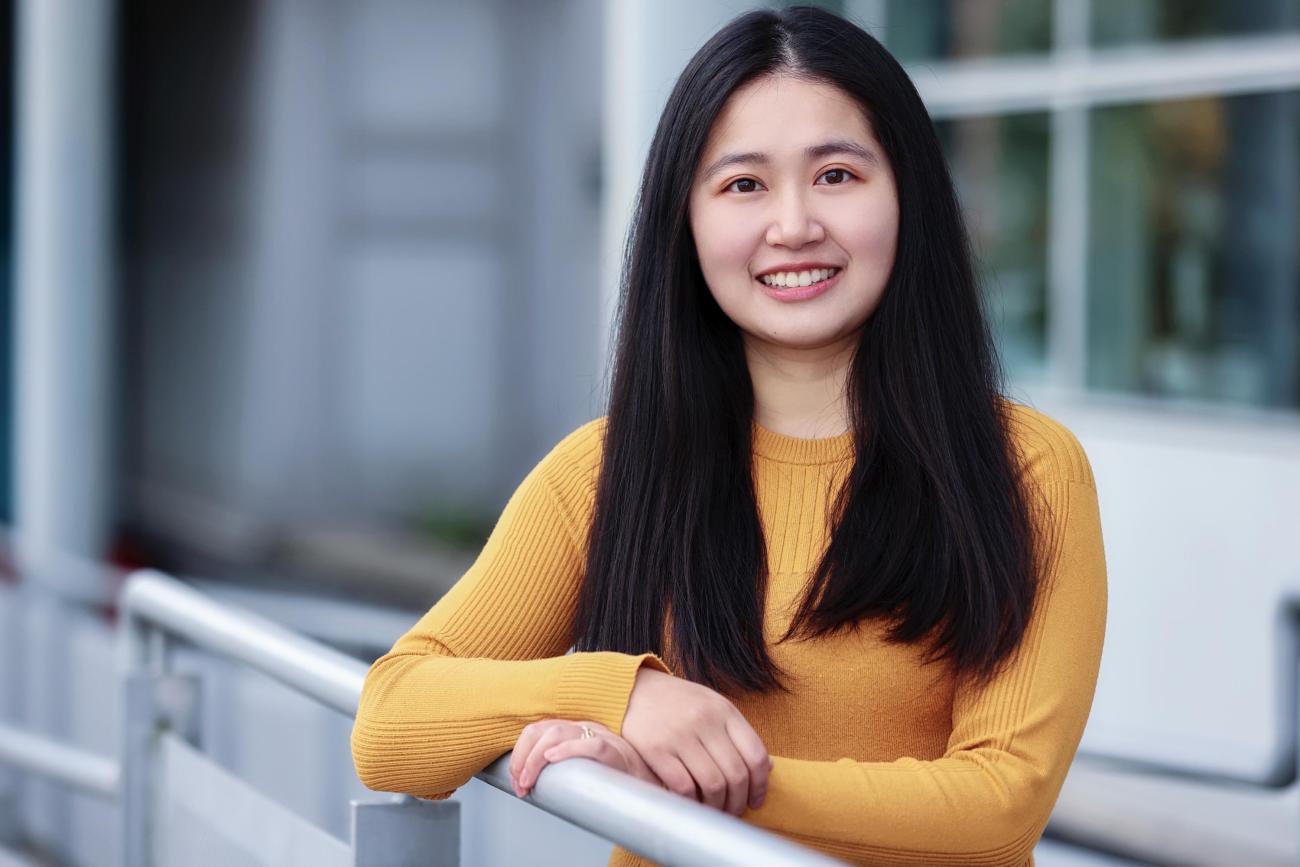
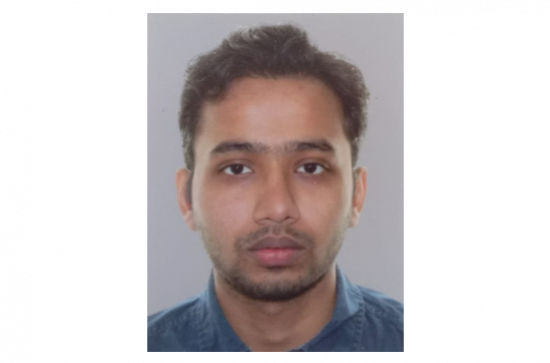
Dr. Dongyun Nie is an Assistant Professor at Dublin City University's School of Computing. She holds a PhD in Computer Science with a specialization in Customer Relationship Management. Her core research explores customer lifetime value, forecasting, data mining, and record linkage. Her recent publications demonstrate interdisciplinary work spanning health informatics, sports analytics, and environmental data engineering. Research predominantly focuses on machine learning applications for real-world data challenges including eye-tracking systems, lifelog analytics, and public health data infrastructure. Teaching responsibilities include modules on Machine Learning (CA4109), Enterprise Systems Configuration (CA2049), and Web Design (CA106), integrating research expertise into computing education.
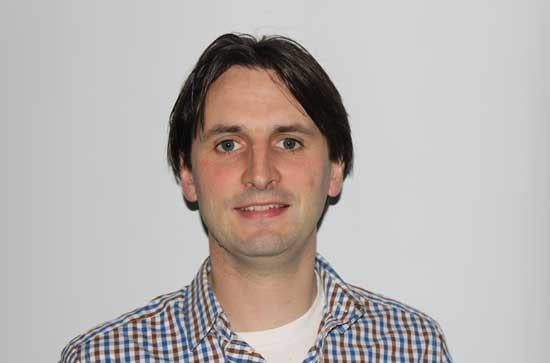
John McDonald is a Professor in the Department of Computer Science at Maynooth University, where he has held a faculty position since 2001. He is affiliated with the Maynooth University Hamilton Institute and the Assisted Living and Learning Institute (ALL). His research focuses on computer vision, robotics, and AI, emphasizing spatial perception and autonomous systems. He has contributed to areas such as visual SLAM, intelligent vehicle systems, and digital holography, with funding from SFI, EU, and other agencies. Currently, he is a Funded Investigator in Lero (SFI Research Centre for Software) and collaborates on the SFI Blended Autonomy Vehicles Spoke. Key research themes include simultaneous localization and mapping (SLAM), robotic navigation, 3D reconstruction, and applications in autonomous driving. His work integrates cutting-edge techniques in computer vision and machine learning to address challenges in spatial intelligence and perception. Publications highlight advancements in dense mapping, fisheye camera systems, and geospatial analysis. He has held visiting roles at MIT’s CSAIL and the National Centre for Geocomputation. His contributions span academic journals, conferences, and technical reports, reflecting a strong emphasis on both theoretical and applied robotics research. John McDonald has supervised numerous research projects and contributed to initiatives like the John and Pat Hume Doctoral Scholarships. His work bridges academia and industry, with a focus on real-world applications of autonomous systems and AI-driven robotics.
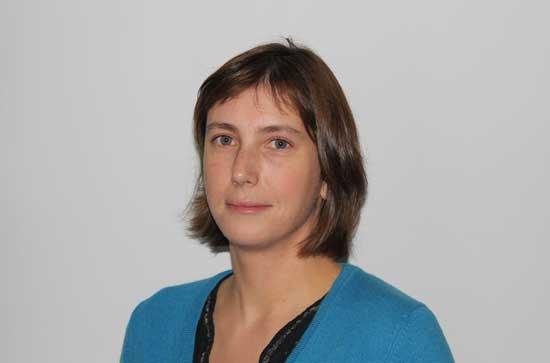
Dr. Sheila Castilho is an Assistant Professor at the School of Applied Language & Intercultural Studies, Dublin City University (DCU). She holds a PhD from DCU (2016) and a Master's from the University of Wolverhampton and University of Algarve. Her expertise lies in machine translation (MT), post-editing, and translation technology evaluation. She co-leads the New Trends in Translation Technology (NeTTT’22) conference and chairs DCU's Master in Translation Studies and Master in Translation Technology programs. Education: Licenciatura em Letras Inglês/Português (UNIOESTE University, Brazil) Master in Natural Language Processing (University of Wolverhampton & University of Algarve) PhD in Translation Technologies (Dublin City University) Research: Focuses on document-level MT evaluation, post-editing strategies, and user-centric MT assessment. Leads the DELA project and contributed to TraMOOC/iADAATPA initiatives. Published over 40 articles and co-edited 'Translation Quality Assessment: From Principles to Practice' (Springer, 2018). Grants & Projects: DCU PI for DELA (Document-level Evaluation) PRINCIPLE project (EU Low-resource MT) ELE (European Language Equality) initiative Labs/Teams: Active in ADAPT Centre (DCU) and collaborates with international NLP/MT communities (ACL, EMNLP, WMT).
Catherine Mooney is a Professor in the School of Computer Science at University College Dublin (UCD), leading the Life Science Data Analytics Group (LiSDA). Her research focuses on applying machine learning to healthcare challenges, including biomarker development, clinical decision support systems, and addressing ethical and technical barriers in healthcare AI. Education: BSc in [field unspecified] from Trinity College Dublin PhD in Computer Science from UCD Prof Dip University Teaching & Learning from UCD Research Interests: Machine Learning applications in healthcare Biomarker discovery for neurological and metabolic conditions Explainable AI for clinical decision support Promoting diversity and inclusion in STEM education Her work bridges computational methods with medical challenges, emphasizing ethical AI and translational research. Notable Awards: Best Paper Award in Applied Biosciences (2023) UCD Long-Service Award (2022) Best Poster Award at ITiCSE ’20 (2020) Her research has led to impactful tools like LiSDA’s clinical decision support systems for epilepsy and pregnancy care. She also advocates for gender diversity in computing, serving in leadership roles like Vice Principal for EDI in UCD’s College of Science (2022–2024).
Prof. Zena Moore is a renowned academic and clinician serving as Professor and Head of the School of Nursing & Midwifery at RCSI, University of Medicine and Health Sciences. She holds adjunct professorships at Curtin University (Australia), Griffith University (Australia), Cardiff University (UK), Ghent University (Belgium), and Fakeeh College for Medical Sciences (Saudi Arabia). Her research focuses on wound healing, pressure ulcer prevention, and nursing education, with over 300 publications. She leads the Skin Wounds and Trauma (SWaT) Research Centre and chairs multiple international bodies including the European Pressure Ulcer Advisory Panel. Education: PhD in Wound Healing (RCSI), MSc in Leadership in Health Education (RCSI), MSc in Wound Healing (University of Wales), FFNMRCSI, and Diplomas in Management and Nursing. Research Interests: Wound pathophysiology, pressure ulcer risk assessment, technologies for early detection, and healthcare equity. Awards: 2022 Lifetime Achievement Award from World Union of Wound Healing Societies. Her work spans over 50 funded projects, including grants from Science Foundation Ireland and the National Health and Medical Research Council. She has supervised numerous research projects on topics like pressure ulcer prevention algorithms and eHealth interventions.
Upaka Rathnayake is a Professor of Civil Engineering and Principal Investigator at the Mathematical Modelling and Intelligent Systems for Health and Environment (MISHE) research unit at Atlantic Technological University Sligo, Ireland. He has held academic and research roles globally, including in Sri Lanka, Japan, the UK, New Zealand, Australia, and Fiji. His research focuses on water resources management, hydrological modeling, climate analysis, and AI-driven solutions for environmental challenges. He holds a PhD from the University of Strathclyde and advanced certifications from Hokkaido University. Education: PhD in Optimal Management of Urban Sewer Systems (University of Strathclyde, 2013) Professional Memberships: Institution of Engineers Sri Lanka, Engineers New Zealand, International Association of Hydrological Sciences Research interests include: Hydrological modeling and climate change adaptation Multi-objective optimization and soft computing techniques Explainable AI applications in environmental systems Remote sensing and GIS for water resource management Recent articles highlight AI-driven solutions for air quality prediction, soil nutrient analysis, and flood risk assessment. Awards include the 2023 Presidential Award for Scientific Publications and multiple university excellence awards. He actively advises PhD students on projects like urban water systems optimization and climatic trends analysis. Rathnayake is an editorial board member of journals like Scientific Reports and PLoS ONE , contributing to peer review and policy-oriented research. His work bridges data-driven methods with traditional hydrological practices to address global environmental challenges.
Dr. Krishnendu Guha is an Assistant Professor and CONNECT Funded Investigator at the School of Computer Science and Information Technology, University College Cork. His research bridges embedded systems, cybersecurity, and quantum-safe hardware design with AI and bio-inspired strategies. PhD: University of Calcutta (Department of Science and Technology, Government of India) Postdoctoral: University of Florida Past Roles: Research Fellow at Intel India, Visiting Scientist at Indian Statistical Institute, Temporary Assistant Professor at NIT Jamshedpur His research focuses on embedded systems security , real-time security mechanisms , and quantum-safe hardware . He integrates AI (e.g., neural networks) and bio-inspired strategies (e.g., gecko crypsis behavior) into security frameworks for FPGAs and edge platforms. Recent publications highlight trends in blockchain for supply chains , quantum machine learning , secure FPGA architectures , and distributed AI systems . His work addresses energy efficiency, fault detection, and decentralized security in hardware. As a CONNECT Centre member, Dr. Guha contributes to advanced research in reconfigurable systems and cybersecurity. Grants and collaborations span quantum-safe design, cloud FPGA security, and hardware trojan mitigation.
Katarina Domijan is an Associate Professor in Statistics at the Department of Mathematics and Statistics, Maynooth University, Ireland. She holds a PhD in Statistics from Trinity College Dublin (2008) and has been affiliated with Maynooth University since 2008, transitioning from Lecturer/Assistant Professor to her current role in 2024. Her academic career includes editorial roles as Associate Editor for The R Journal (2021–present) and the Journal of Computational and Graphical Statistics (2015–2024). Research Interests focus on Bayesian methods for high-dimensional data, particularly in classification problems. She specializes in feature selection and model visualization, with applications spanning agricultural data analysis (e.g., hyperspectral imaging for lactose prediction), medical diagnostics (e.g., sepsis and cancer detection), and space physics (e.g., Saturn Kilometric Radiation classification). Her work bridges theoretical statistics with real-world challenges, including socio-economic studies and forensic science. Key Research Areas Bayesian statistical inference Machine learning for large feature spaces Statistical computing and model interpretability Data visualization and chemometrics Scientific Contributions include leading projects like VistaMilk Phase II (2024–2030, €152,300) and Measuring Carbon Sequestration (2024–2028, €174,788.90). Her 15 most recent publications highlight advancements in ensemble modeling, spatial statistics, and medical diagnostics. Scientific Awards Associate Editor, The R Journal (2021–present) Associate Editor, Journal of Computational and Graphical Statistics (2015–2024) Student Supervision includes PhD and MSc graduates such as Dr. Bruna Wundervald (2024) and Dr. Mark O’Connell (2017). She also collaborates with researchers across disciplines, including Dr. Nadim Akasheh in food hypersensitivity studies.
Prof. Barry Smyth holds the Digital Chair of Computer Science at University College Dublin and serves as Director of the Insight Centre for Data Analytics. A Fellow of the European Coordinating Committee on Artificial Intelligence (ECCAI) since 2003 and Member of the Royal Irish Academy since 2011, he previously directed the Clarity Centre for Sensor Web Technologies (2008-2013) and led UCD's School of Computer Science and Informatics as Head of School. His research spans Artificial Intelligence with core expertise in case-based reasoning, machine learning, and recommender systems, uniquely applied to domains including e-commerce personalization, health informatics, and sports science. Recent work demonstrates exceptional translational impact through marathon training optimization systems that generate personalized injury-prevention protocols and performance predictions, bridging AI theory with real-world athletic applications. Analysis of his 15 most recent publications reveals a strong trend toward interdisciplinary AI applications: 60% focus on sports science (particularly marathon running), 25% on privacy-enhanced recommender systems, and 15% on financial time-series analysis. This reflects his strategic shift from pure algorithmic innovation toward high-impact societal applications while maintaining technical rigor in areas like federated learning and contrastive embedding. Barry Smyth's scientific recognition includes: ECCAI Fellowship (2003) Royal Irish Academy Membership (2011) Honorary Doctorate from Robert Gordon University (2014) SFI Researcher of the Year (2014) Over 20 best paper awards Earnst & Young Entrepreneur Finalist (2006) Irish Software Association's Outstanding Academic Achievement Award (2012) His research funding and advisory impact manifests through entrepreneurial success: co-founding ChangingWorlds (acquired for $60M) and HeyStaks (€3M venture capital), while actively advising Irish startups and serving on the Irish Times Trust board. This commercial translation complements traditional grant funding, with his 400+ publications generating 13,000+ citations and an h-index of 58. Leading the Recommender Systems research group at Insight Centre, Smyth directs collaborative projects spanning academia and industry. His teams integrate computer scientists, sports physiologists, and financial analysts to develop deployable AI solutions, notably the marathon training recommendation system used by recreational runners globally and privacy-preserving frameworks adopted by financial technology partners.
John Byabazaire is a Research Fellow at the School of Computer Science, University College Dublin (UCD). He holds a PhD in Computer Science from UCD (2024), following a BSc (Gulu University, 2013) and MSc (Waterford Institute of Technology, 2018). His research focuses on IoT systems for data collection, remote sensing, AI-driven end-to-end system management, and fog analytics. He has held academic roles including Assistant Lecturer at Gulu University (2018–2019) and teaching roles at UCD since 2019, including Occasional Lecturer and Senior Teaching Assistant. His research spans smart agriculture, data quality in IoT, and education technology. Notable contributions include frameworks for yield mapping in precision agriculture, trust-based data validation in IoT, and machine learning approaches for livestock health monitoring. He has secured grants like the National ICT Initiatives Support Program (Uganda Government, 2019–2020). Teaching includes courses on cloud computing, web development, and distributed systems. His articles emphasize IoT data quality, agricultural analytics, and educational technology innovation. He actively promotes technology adoption in African education and agriculture sectors through collaborative projects.
Dr. John G. Hayes is a Senior Lecturer at University College Cork (UCC) in the Department of Electrical & Electronic Engineering . He holds a Ph.D. from UCC (1998), an M.S.E.E. from the University of Minnesota (1989), an M.B.A. from California Lutheran University (1993), and a B.E. from UCC (1986). His academic career began at UCC in 2000, and he directs the Power Electronics Research Laboratory (PERL) , focusing on industrial collaborations with companies like Analog Devices and General Motors. Research Interests : Power electronics, magnetic components, electric vehicles, renewable energy systems, smart grids, and energy storage. Notable Work : Joint author of Electric Powertrain: Energy Systems, Power Electronics and Drives for Electric, Hybrid and Fuel Cell Vehicles (Wiley, 2018) and its Chinese edition (2021). Scientific Awards : 2011 IEEE William M. Portnoy Award for Best Paper/Presentation at IEEE ECCE. Advising : Supervised 10+ Ph.D. students across powertrain modeling, magnetic materials, and converter control. Current advisee: Conor Healy (Doctoral Degree). Labs : Leads PERL, which develops high-power converters for automotive and renewable energy applications, partnering with industry leaders like SMA Magnetics and United Technologies.
Aonghus Lawlor is an Assistant Professor/Lecturer in Computer Science at the School of Computer Science, University College Dublin. His roles include coordinating modules such as Software Engineering, Data Structures, Machine Learning, and Final Year Project Foundations. He holds an Orcid identifier: 0000-0002-6160-4639. His research focuses on machine learning applications in medical imaging (e.g., MRI, CT), sports science, and healthcare systems. Notable areas include AI-driven diagnostics, cybersecurity in radiology, and genomics for agricultural optimization. Recent work explores ChatGPT4-vision in MS progression, knee osteoarthritis grading via anomaly detection, and reinforcement learning in exercise prescriptions. Professional activities include committee roles in ACM Recommender Systems and Intelligent User Interfaces, grant assessments, and peer reviewing. He has published 137+ outputs, emphasizing interdisciplinary AI solutions with clinical and agricultural impact. Teaching responsibilities span foundational CS courses to advanced ML and project modules. No formal awards are listed, but his work demonstrates contributions to AI ethics, health informatics, and agricultural genomics.
James Sweeney serves as Professor in the Department of Mathematics and Statistics at the University of Limerick, concurrently holding memberships in the Centre for Battery and Energy Materials Research and the Mathematics Applications Consortium for Science and Industry (MACSI). Actively accepting PhD students, his research bridges theoretical mathematics with practical industry applications across diverse sectors including energy materials, real estate, and public health. His research portfolio demonstrates exceptional interdisciplinary range, with core expertise in machine learning algorithms (particularly time series classification and neural networks), geospatial statistics for property valuation, and epidemiological modeling for disease surveillance. Key methodological contributions include evolutionary algorithms for optimization, dissimilarity-preserving representation learning, and flexible geospatial smoothing techniques that address complex real-world data challenges. Analysis of his 23 publications (2015-2024) reveals accelerating scholarly output since 2020, with 2024 being particularly prolific. His work consistently targets high-impact applications: developing diagnostic thresholds for bovine tuberculosis, modeling COVID-19 transmission dynamics in Dublin, and creating neural network solutions for geodemographic clustering. This trajectory reflects deepening engagement with computational approaches to solve pressing societal problems through mathematical innovation. As a PhD supervisor, he cultivates next-generation researchers in advanced computational methods. His collaborative framework extends through MACSI's industry partnerships and the Centre for Battery and Energy Materials Research, where mathematical modeling directly informs energy technology development. These dual affiliations position him at the critical intersection of academic research and industrial application, particularly in Ireland's growing tech and energy sectors. His laboratory activities center around computational mathematics teams within MACSI, focusing on applying statistical learning to battery materials research and real-world data challenges. Current projects involve time series analysis for sensor data, geospatial modeling for economic forecasting, and optimization algorithms for veterinary epidemiology – demonstrating remarkable methodological versatility across traditionally disparate domains.
Dr. Shivam Agarwal is an Assistant Professor in the Department of Finance at Maynooth University's School of Business. His research focuses on explainable AI, financial misconduct, mitigating fraud, and organizational culture's impact on risk in international banks. He teaches Corporate Finance, Machine Learning, and Risk Management across various academic levels. Education: Bachelor’s in Mathematics, St. Xavier’s College, Mumbai Master’s in Quantitative Finance, University College Dublin (UCD) PhD in Finance, UCD (2017, supported by Operational Risk scholarship) Research Interests: His work explores the intersection of AI ethics, financial regulation, and banking risk management. Methodologies include textual analysis and machine learning to address algorithmic bias, organizational misconduct, and regulatory compliance. Publications: Recent contributions include peer-reviewed articles in Economic Letters (2023) and European Financial Management (2022), focusing on algorithmic lending discrimination and law enforcement spillover effects. Professional Contributions: Presented at conferences including the Multinational Finance Society and Irish Academy of Finance Teaching experience includes derivatives, econometrics, and a 2021 Machine Learning in Python workshop at UCD Awards: Operational Risk scholarship for PhD studies (2017) Administration: Serves as Program Director for BA Finance and Quantitative Finance programs at Maynooth University.
Dr. Harriet Bennett-Lenane is a Lecturer in Clinical Pharmaceutics at the School of Pharmacy, University College Cork (UCC). She holds a BSc(Pharm) from Trinity College Dublin (2017), an MPharm from the Royal College of Surgeons in Ireland (2018), and a PhD in Pharmaceutics from UCC (2022), supported by an Irish Research Council Postgraduate Scholarship. Her research focuses on machine learning applications in drug formulation, computational pharmaceutics, and digital pharmacy practice. She has industry experience in Quality Assurance and Regulatory Affairs roles at Eli Lilly, MSD, and Clinigen. Research Interests include optimizing medicines using AI, improving drug delivery systems, and enhancing pharmacy services for vulnerable patients. Her work bridges academia and industry, emphasizing translational research. Notable Awards: Gold Medal for Pharmaceutics (Trinity College Dublin, 2017), Irish Research Council Postgraduate Scholarship (2018), and Entrance Exhibition Scholar (Trinity College Dublin, 2014). Teaching: Focuses on integrating research-led, active learning approaches in Clinical Pharmacy and Pharmaceutics.