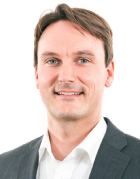
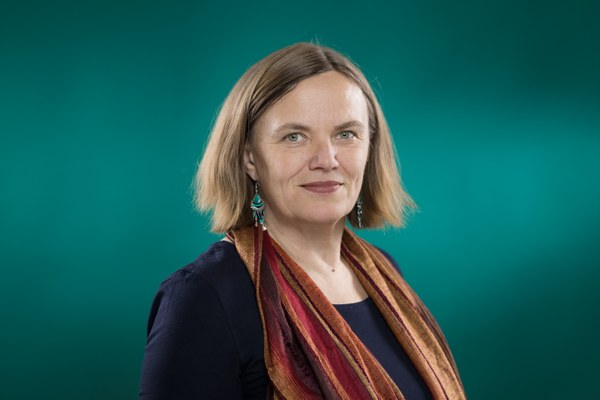
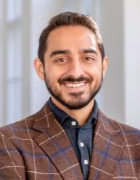
Albi Mema is a researcher affiliated with the Chair of AI Processor Design (AI-Pro) at Technische Universität München (TUM). His work focuses on emerging technologies for AI applications, including neuromorphic hardware, reliability engineering, and quantum computing. University: Technische Universität München Department: Chair of AI Processor Design (AI-Pro) Key research areas include: Emerging Technologies for AI Neuromorphic Hardware Reliability in Semiconductor Devices Quantum Computing RISC-V Architecture Machine Learning Computer-Aided Design His recent publications address fault-tolerant hyperdimensional computing, analog computing for AI, FeFET-based neuromorphic systems, and compact majority gate design using FDSOI technology. No scientific awards are mentioned in the provided text.
Dr. Stefan Conrad is a Postdoctoral researcher at the DELIVER project of the Carl Zeiss Foundation, focusing on data-driven engineering of sustainable living materials. Previously, he was a Hermann Staudinger Fellow (2019) and a demonstrator at the Cluster of Excellence livMatS (Freiburg Center for Interactive Materials and Bioinspired Technologies). He completed his PhD in 2023 under Prof. Thomas Bacon at the University of Freiburg, with a dissertation on 3D-printed actuators and material-embedded logic for pneumatic soft robotics. Education : PhD in Engineering (2023), University of Freiburg. Research Interests : Stefan’s work spans 3D printing technologies for soft robotics, pneumatic systems, and bioinspired material design. He develops multi-material 3D printers and electronics-free logic devices for autonomous decision-making in soft robots. His recent projects integrate artificial intelligence into lab automation, aiming to streamline repetitive testing procedures. Publications : His research trends highlight advancements in 3D-printed pneumatic logic, lab automation with AI, and rapid prototyping of bioinspired components. Key contributions include tool-changing printers and compliant machines without electronic controllers. Awards : Hermann Staudinger Fellow (2019). Advising & Grants : Supervised by Prof. Thomas Bacon. Funded by DFG (Germany’s Excellence Strategy) and the Carl Zeiss Foundation. His work aligns with the livMatS initiative for sustainable, living materials. Labs/Teams : Part of the livMatS Demonstrator Project and the DELIVER collaborative initiative, advancing soft robotics and sustainable engineering.
Prof. Kira Weber is an Assistant Professor at the University of Hamburg 's Faculty of Education . Her research focuses on AI-driven feedback systems in education, teacher professional development, classroom management, and educational technology adoption. She leads studies analyzing the impact of prompt engineering on AI feedback quality and investigates how teacher educators' AI literacy influences pedagogical practices. Her work bridges educational psychology with technological innovation, emphasizing video-based interventions and peer feedback mechanisms. Her research explores topics such as the role of self-efficacy beliefs in AI tool adoption among student teachers, the effects of expert feedback on pre-service teachers' competencies, and the influence of socioeconomic factors on teacher professional development needs. She has published extensively on professional vision measurement, reflective practice in teacher training, and digital tools for feedback quality enhancement. Recent studies include analyses of LLMs in educational feedback (2025), mixed-methods investigations of teacher educators' AI literacy (2024), and longitudinal studies on peer feedback expertise development (2022–2023). Her work consistently emphasizes practical applications of research in teacher training programs and classroom settings. Prof. Weber's academic contributions span over 30 peer-reviewed articles since 2017, covering domains from self-concept measurement in primary education to cutting-edge AI applications. She is affiliated with the University of Hamburg's Faculty of Education , contributing to both research and pedagogical innovation.
Prof. Norbert Ritter is the Dean of the Faculty of Mathematics, Computer Science and Natural Sciences (MIN) at the University of Hamburg since August 2022. He holds a full professorship in the Department of Informatics, leading the Databases and Information Systems group. Previously, he served as an associate professor (2002–2005) and assistant professor (1998–2002) at the Technical University of Kaiserslautern and the University of Hamburg. His research focuses on advanced database technologies, including NoSQL systems, scalable cloud data management, big data analytics, and information integration. Key areas include service-oriented computing, federated database systems, and transaction management. He has authored over 149 publications, with recent work emphasizing polyglot data stores, spatio-temporal data processing, and web performance optimization. Education: M.Sc. (1991), Ph.D. (1997) in Computer Science from the University of Kaiserslautern Professional Activities: Dean of MIN Faculty (since 2022), former head of DBIS group Labs/Teams: Leads the Databases and Information Systems research group His advising record includes over 274 student theses, spanning PhD and master's projects in database design, data integration, and web performance engineering. Collaborative projects include Beaconnect (continuous web A/B testing) and Compaz (shared dictionary compression).
Simon Süwer is a Research Associate and PhD student at the Computational Systems Biology (CoSy.Bio) department within the Faculty of Mathematics, Informatics and Natural Sciences at the University of Hamburg. His work focuses on developing privacy-preserving tools for federated collaboration, aiming to bridge theoretical and practical challenges in data-sharing frameworks. He is involved in the FeatureCloud (https://featurecloud.ai/) and dAIbetes projects, which emphasize innovative solutions for secure, effortless data collaboration. Education: Simon holds a Bachelor of Science in Applied Computer Science from the University of Applied Sciences and Arts Hannover and a Master of Science in Computer Science from the University of Vienna, specializing in Data Science. His master’s thesis explored hierarchical dynamic Graph Neural Networks (GNNs) for session- and sequence-based recommender systems. Research Interests: His current research emphasizes federated learning, privacy-preserving methodologies, and the integration of dynamic graph models. He seeks to redefine data collaboration paradigms through interdisciplinary approaches, merging computational techniques with real-world applicability. Labs/Teams: Active contributor to CoSy.Bio and the FeatureCloud initiative, advancing decentralized AI frameworks for healthcare and beyond.
Summary Prof. Tim Kacprowski is a Professor and Head of Data Science in Biomedicine at the Peter L. Reichertz Institute for Medical Informatics (PLRI), jointly affiliated with TU Braunschweig and Hannover Medical School. His research focuses on integrating computational methods with biomedical challenges, particularly in network medicine, federated learning, and alternative splicing analysis. Key projects include the development of the NeDRex platform for drug repurposing and the FeatureCloud framework for privacy-preserving federated learning in healthcare. Research Interests His work spans multiple domains: Network Medicine: Leveraging molecular networks for disease module identification and drug discovery. Data Science: Advanced analytics for biomedical data, including ECG monitoring, microbiome studies, and flow cytometry. Federated Learning: Developing decentralized AI systems to protect patient data while enabling collaborative research. Alternative Splicing: Investigating splicing patterns in diseases like cancer and kidney disorders. Publications Trends Recent publications emphasize tools for drug repurposing (NeDRex-Web), ethical AI in clinical decision-making, and microbiome dynamics in chronic diseases. His work bridges computational methods with clinical applications, addressing challenges in precision medicine and healthcare technology. Labs & Collaborations As head of the Data Science group at PLRI, he leads interdisciplinary teams advancing biomedical informatics. Collaborations span institutions in Germany and internationally, focusing on translational research and AI-driven healthcare solutions.
Prof. Dr. Jana-Rebecca Rehse serves as Assistant Professor for Management Analytics at the University of Mannheim Business School, where she leads the Chair of Management Analytics within the Information Systems department. Her academic work bridges theoretical research with practical business applications, focusing on data-driven approaches to business process optimization. Her primary research interests encompass User Behavior Mining , Process Mining , and AI applications in business process management . Rehse investigates how organizations can leverage process mining techniques to extract meaningful insights from event logs, with particular attention to conformance checking, process resilience assessment, and the practical implementation challenges businesses face when adopting these technologies. Her work frequently addresses the intersection of human behavior and process execution, examining how user interactions with IT systems can be analyzed to improve process design and user experience. Analysis of her recent publications reveals a clear research trajectory toward increasingly sophisticated integration of artificial intelligence with traditional process mining techniques. Starting with foundational work on reference model mining and process discovery methodology, her research has evolved to address cutting-edge applications of generative AI, explainable AI, and predictive analytics in business process contexts. The majority of her work appears in top-tier information systems and business process management journals including Information Systems, Process Science, and ACM Transactions publications, demonstrating her significant contributions to the field. Professor Rehse actively collaborates with industry partners including Siemens and MEHRWERK, offering thesis opportunities and research projects that address real-world business challenges. Her current call for applications includes work-study programs at Siemens and master thesis topics focused on conformance checking in cooperation with MEHRWERK. She has recently introduced innovative thesis topics exploring the use of Generative AI for Emotion Identification, reflecting her forward-looking research agenda that anticipates emerging technological trends and their business implications.
Martin Kada is Professor for Methods of Geoinformation Science at Technische Universität Berlin and Prodekan 'International' for Faculty VI. His research focuses on geoinformatics, 3D city modeling, and remote sensing applications. Research highlights include: Development of automated 3D building reconstruction methods Radar interferometry for deformation monitoring Machine learning for geospatial data analysis Spatial data quality assessment He has received multiple best paper awards for his work on 3D building reconstruction and geospatial data processing. Current projects involve using persistent scatterer interferometric SAR for monitoring infrastructure deformation and developing deep learning approaches for building footprint extraction.
Prof. Christian Wachinger is a Professor of Artificial Intelligence in Radiology at the Technical University of Munich (TUM), part of the TUM School of Medicine and Health. His research focuses on developing AI algorithms for medical imaging, disease prediction, and addressing challenges like AI transparency and data bias. He holds a PhD in Medical Image Processing from TUM and completed postdoctoral training at MIT and Harvard Medical School. Notable awards include the Feodor Lynen Fellowship and Siemens Excellence Award. His lab, Artificial Intelligence in Medical Imaging, pioneers innovations in multimodal data integration and clinical AI applications. Education: PhD in Medical Image Processing, TUM (2011) Diploma in Computer Science, TUM and ENST Paris Honors Degree in Technology Management, CDTM Research Interests: Prof. Wachinger's work bridges AI and medicine, emphasizing neuroimaging, generative models, and clinical translation. Key areas include bias correction in medical datasets, multimodal fusion (MRI/PET), and explainable AI for healthcare. Awards: Feodor Lynen Research Fellowship (2011) German Computer Science Society Award (2011) Siemens Excellence Award (2007) Junior Research Group, Bavaria Center for Digitalization (2017) Grants & Labs: Leads the AI in Medical Imaging lab at TUM, with projects funded by grants focusing on AI-driven diagnostics and healthcare innovation.
Prof. Wolfgang Ecker is a Professor at the Technical University of Munich (TUM), affiliated with the Chair of Design Automation within the TUM School of Computation, Information and Technology . His research focuses on Electronic Design Automation (EDA), RISC-V processor architectures, and hardware-software co-design. He leads projects advancing EDA tools for embedded systems, neural network acceleration, and formal verification methodologies. Ecker's work bridges machine learning techniques with traditional EDA challenges, addressing topics like energy-efficient AI inference and automated documentation generation. His contributions span compiler optimization, FPGA implementations, and fault analysis in digital systems. Recent research highlights include contributions to the TRISTAN project for RISC-V ecosystem development, model-driven architecture frameworks, and AI-driven timing analysis. He actively collaborates on open-source EDA tools and explores Rust-based embedded systems development. Ecker’s lab emphasizes practical applications in edge computing and automotive microcontroller safety, with a strong emphasis on interdisciplinary collaboration across TUM’s CIT School. His publications (15 most recent listed) reflect a focus on EDA tool innovation, processor design, and leveraging machine learning for hardware optimization. While no specific awards are mentioned, his involvement in ERC-funded projects and leadership in international collaborations underscores his academic impact.
Andrea Walther is a Professor of Mathematical Optimization at the Humboldt University of Berlin, holding a position within the Faculty of Mathematics and Natural Sciences. She leads the Mathematical Optimization research group at the Institute of Mathematics, focusing on algorithmic differentiation, nonlinear optimization, and applied mathematics. Her academic journey includes a Diploma in Business Mathematics (1996, University of Bayreuth), a PhD (1999, TU Dresden), and habilitation (2008, TU Dresden). She has held roles such as Junior Professor at TU Dresden (2007–2008) and Professor at the University of Paderborn (2009–2019) before joining Humboldt in 2019 as a MATH+ Professor. Education : 1991–1996: Studies in Business Mathematics, University of Bayreuth 1996: Diploma in Business Mathematics, University of Bayreuth 1999: PhD in Mathematics, TU Dresden 2008: Habilitation, TU Dresden Her research interests center on optimization methods, particularly algorithmic differentiation (e.g., ADOL-C software), nonsmooth optimization, and applications in engineering and machine learning. She leads initiatives like the Cluster of Excellence MATH+ and contributes to projects such as the Transregio 154. Key Projects: Co-PI of DFG Project 'Mixed-integer non-smooth optimization for gas market problems' (2020–2022) Principal Investigator in MATH+ Projects (EF3-7, AA2-7) Co-developer of ADOL-C, a widely used tool for algorithmic differentiation Notable awards include being a SIAM Fellow. Her work bridges theoretical advancements and practical applications, with contributions to energy sector optimization, inverse problems, and computational frameworks for solving complex systems.
Ulrich Parlitz is an Adjunct Professor of Physics at Georg-August-University Göttingen and a Scientist leading the Biomedical Physics Group at the Max Planck Institute for Dynamics and Self-Organization. His research focuses on nonlinear dynamics, chaos theory, and biomedical applications, particularly in cardiac dynamics and excitable media. He has held visiting positions at institutions like UC San Diego and the Santa Fe Institute. Education: 1987 PhD in Physics, Georg-August-University Göttingen 1984 Diploma in Physics, Georg-August-University Göttingen Research Interests: Analysis of nonlinear systems (neurons, lasers, oscillators) Bifurcation and chaos phenomena Data-based modeling and synchronization control Wave dynamics in excitable media (e.g., cardiac arrhythmias) Fractal dimension estimation and reservoir computing Labs/Teams: Leads the Biomedical Physics Group at MPI-DS and contributes to the IMPRS Program in Physics of Biological and Complex Systems.
Dongqi Han is an Assistant Professor at the School of Cyberspace Security, Beijing University of Posts and Telecommunications (BUPT), where he joined in July 2024. He earned his Ph.D. in Computer Science from Tsinghua University in 2024, advised by Prof. Zhiliang Wang, with a joint Ph.D. at Nanyang Technological University under Prof. Yang Liu. His research spans AI/LLM + Security, Traffic Analysis, and Network Security. Education Ph.D., Tsinghua University (2019-2024) CSC Visiting Ph.D., Nanyang Technological University (2022-2023) Bachelor's, Jilin University (2015-2019) Research Focus: • Trustworthy AI for cybersecurity • Anomaly detection in network traffic • Network architecture security analysis Scientific Awards: IRTF Applied Networking Research Prize (2024) Distinguished Artifact Award at CCS'24 Outstanding graduate of Tsinghua University (2024) Qihang Award (2-claass) from Tsinghua University (2024) Grants & Collaborations: Participated in key R&D programs, State Grid projects, and collaborations with Alibaba and Qi-anxin Group.
Prof. Sudharsanan Nikkil is a Rudolf-Mößbauer Assistant Professor and head of the Behavioral Sciences in Prevention and Care at the TUM School of Medicine and Health, Technical University of Munich. His research focuses on applying behavioral science insights to improve preventive healthcare in low- and middle-income countries, particularly addressing cardiovascular disease prevention and aging societies in Asia and Africa. He holds a BA from UC Berkeley, MPH from Emory University, and MS/PhD from the University of Pennsylvania. Key research areas include: Behavioral determinants of health decisions Interventions to enhance preventive care delivery Health systems strengthening in LMICs Awards: Lehrpreis Beste Vorlesung (2025) Falling Walls Science Breakthrough Finalist (2022) Delta Omega Honor Society (2013) Recent Work Trends: His 2025 studies emphasize randomized trials on hypertension management, health insurance utilization, and the HEARTS initiative for CVD reduction. 2023-2024 work explores machine learning applications in cardiovascular risk prediction and WhatsApp-based interventions for follow-up adherence.
Wenguang Chen is a researcher affiliated with Tsinghua University and Pengcheng Laboratory , specializing in computer science and high-performance computing . His work bridges theoretical advancements with practical applications in domain-specific languages , parallel programming , and machine learning . Research Interests include: Development of modular DSLs for numerical methods (e.g., Mat2Stencil) Performance optimization in distributed and parallel systems Compiler frameworks for privacy-preserving AI (e.g., FHE-based neural network inference) Graph algorithms scaling to trillion-edge datasets Applications of Rust in memory-safe pointer analysis Recent Publications span 2014–2025, focusing on: Parallelization strategies for supercomputing Compiler automation tools Extreme-scale data processing Performance variance diagnosis in production environments