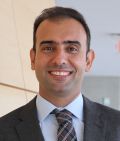
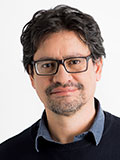
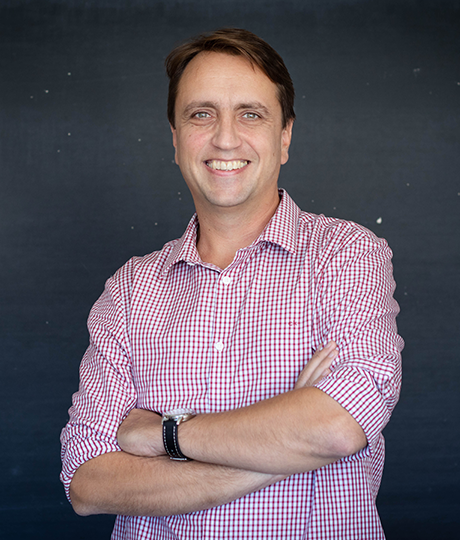
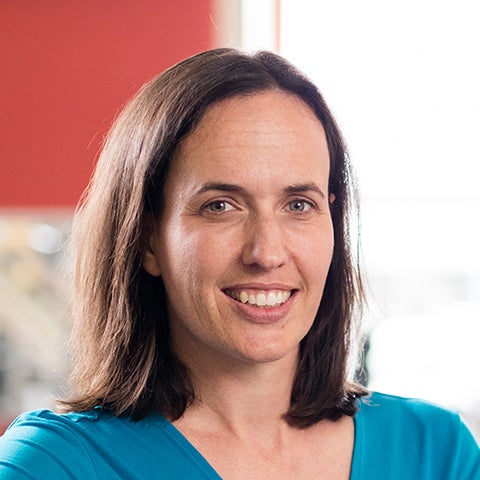
Andrej Bogdanov is a Professor at the University of Ottawa in the School of Electrical Engineering and Computer Science . He earned his B.S. and M.Eng. from MIT and Ph.D. from UC Berkeley . Before joining Ottawa, he held positions at the Chinese University of Hong Kong , ITCS (Tsinghua) , DIMACS (Rutgers) , and the Institute for Advanced Study . He has served as a Visiting Professor at the Tokyo Institute of Technology (2013) and the Simons Institute (2017, 2021). Research Interests : Computational complexity, cryptography foundations, pseudorandomness, one-way functions, property testing, quantum algorithms, and sublinear-time algorithms. Teaching : Courses on Discrete Mathematics, Great Algorithms, Computational Complexity, and Cryptography at University of Ottawa, Chinese University of Hong Kong, and Rutgers University. Publications : 15+ recent works in TCC , CRYPTO , ICALP , RANDOM , and journals like Journal of Cryptology and Theory of Computing . Service : Program co-chair for SAC 2026 , and committee member for major conferences including CRYPTO , TCC , Eurocrypt , and FOCS . Advising : 12 current and former Ph.D./M.Phil. students, with postdoctoral advisees at institutions like IIT Palakkad and Academia Sinica . His work bridges theoretical computer science with applications in cryptography, quantum computing, and network security.
Roie Levin is an Assistant Professor at Rutgers University's Department of Computer Science. He received his PhD in Algorithms, Combinatorics and Optimization from Carnegie Mellon University in 2022, advised by Anupam Gupta. Prior to that, he worked at the Allen Institute for Artificial Intelligence (2015-2017) and earned dual BSc degrees in Computer Science/Applied Mathematics and Mathematics from Brown University (2015). Before joining Rutgers, he was a Fulbright Postdoctoral Fellow at Tel Aviv University under Niv Buchbinder. Current Role: Assistant Professor in Computer Science Academic Training: PhD (2022) CMU, BSc (2015) Brown University Postdoctoral: Fulbright Fellow at Tel Aviv University Levin's research focuses on approximation algorithms for uncertain environments (online/dynamic/streaming models) and submodular function optimization. His work spans theoretical foundations and practical implementations across distributed systems, geometric constraints, and reinforcement learning paradigms. Teaching includes graduate and undergraduate algorithms courses (CS 344, CS 513) with emphasis on problem-solving techniques, computational complexity, and modern algorithmic trends. His publications showcase expertise in online algorithms, submodular optimization, and approximation theory with applications in clustering, caching, and machine learning. The 2025 articles demonstrate continued exploration of online consistency and contention resolution, while 2023-2024 works focus on submodular optimization under uncertainty and dynamic environments. Earlier publications (2015-2017) cover semantic parsing, geometric approximation, and planar graph optimization. Fulbright Postdoctoral Fellow Levin's research connects theoretical guarantees with practical implementations, bridging classical algorithm design with modern machine learning applications. His recent work explores primal-dual methods in online settings and robust subspace approximation techniques for streaming data environments.
Victoria Hemming is an Adjunct Professor in the Department of Forest and Conservation Sciences at the University of British Columbia. She is also a Decision Analyst at Compass Resource Management and an Honorary Research Associate at the Martin Conservation Decisions Lab, UBC. Her work bridges decision science, risk analysis, and behavioral sciences to address natural resource management challenges. Education: PhD in Environmental Science and Ecology, University of Melbourne (2019); BSc (Hons) in Botany, University of Melbourne (2009); BASc in Environmental Science, Geography, and Ecology, University of Melbourne (2008) Research Interests: Victoria focuses on improving decision quality under uncertainty, overcoming data deficiencies through structured expert elicitation, and addressing the decision-implementation gap in conservation. Her work integrates Indigenous knowledge, climate change impacts, and co-benefits frameworks to enhance biodiversity outcomes. Article Trends: Recent publications emphasize expert elicitation protocols (IDEA and Classical Model), decision-making under uncertainty, ecosystem-based climate solutions, and interdisciplinary applications of decision science in conservation and urban planning. Scientific Awards 2022 Top Downloaded Article: An Introduction to Decision Science for Conservation 2020 Chancellor’s Prize for Excellence in PhD thesis 2018 Editor Recommendation: A Practical Guide to Structured Expert Elicitation Teaching & Mentorship: She co-developed UBC’s CONS440 course and led workshops on expert elicitation and decision science. Her mentorship includes PhD and Masters students working on urban forestry, marine conservation, and threat management.
Gordon Huang is an Adjunct Professor in the Civil Engineering department at McMaster University , specializing in environmental systems analysis and sustainable resource management. His research focuses on quantitative methods for addressing uncertainties in climate change, water-food-energy nexus planning, and contaminant remediation. Primary Affiliation : Civil Engineering, McMaster University His work integrates advanced computational models like Bayesian neural networks, factorial optimization, and copula-based downscaling to analyze complex environmental interactions. Recent projects examine CO2 emission pathways, microplastic impacts, and climate-driven drought risks. Key methodologies include stochastic programming , ecological network analysis , and machine learning for predictive modeling. Publications span topics from membrane technology for water treatment to large-scale hydropower socio-economic effects. Email : huangg31@mcmaster.ca
Dr. Fei Chiang is an Associate Professor in the Department of Computing and Software at McMaster University's Faculty of Engineering. Her research focuses on data management , with emphasis on data quality, data privacy, information extraction , and contextual data cleaning . She has collaborated with IBM Global Services and Microsoft Research on improving data quality in enterprise systems. Key research themes include graph databases , temporal data analysis , and privacy-aware data processing Recent publications explore federated learning , SQL understanding in LLMs , and temporal graph constraints Industry collaborations with IBM Toronto Lab and Microsoft Research have led to innovations in data cleaning automation and semantic analysis. Her work bridges database theory with machine learning applications in healthcare inventory optimization and flight reliability prediction.
Douglas G Down is a Professor in the Department of Computing and Software at McMaster University . He leads the Resource Allocation and Stochastic Systems Lab (RASSL) and serves as co-PI of the Computing Infrastructure Research Centre (CIRC) . Education: Ph.D., University of Illinois at Urbana-Champaign His research focuses on stochastic modelling , scheduling , and performance evaluation of computer systems, with recent work on intelligent control of data centers , thermal-aware workload management , and data-driven resource allocation for healthcare systems. Publications span queueing theory , energy-aware scheduling , and machine learning applications in logistics. Recent scholarly trends include deep learning for pandemics (2023-2025), stochastic optimization of cooling systems (2024), and hybrid models combining queueing theory with AI (2023). He has pioneered frameworks like MGST for scheduling in heterogeneous grids and contributed to cache locality improvements in Hadoop systems. Scientific Awards: Nominated for Best Paper at MASCOTS 2013
Ali Tavallaei serves as an Assistant Professor at Toronto Metropolitan University since 2019 and concurrently holds a Visiting Scientist position at Sunnybrook Research Institute. He is also the President and Co-founder of Magellan Biomedical Inc. (2018-present) and Vital Biomedical Technologies Inc. (2012-present), demonstrating strong industry engagement in medical device commercialization. His academic foundation includes: Ph.D. in Biomedical Engineering from Western University (2010-2015) Medical Innovation Fellowship at University of Minnesota/Western University (2015-2016) Postdoctoral Fellowship at Sunnybrook Research Institute, University of Toronto (2016-2019) Dr. Tavallaei's research centers on image guided therapy with emphasis on solving unmet clinical needs in minimally invasive interventions. His core focus areas include: Cardiovascular device innovation and evaluation Medical imaging instrumentation for real-time guidance Robotic systems for catheter navigation Mechatronic solutions for therapeutic delivery His work bridges engineering design with clinical translation through preclinical and clinical validation. Recent publications (2023-2026) reveal a concentrated effort in developing next-generation catheter technologies, including steering mechanisms (CathPilot), imaging tools (CathEye, CathCam), and specialized devices for vascular interventions. The research consistently emphasizes performance validation, mechanical characterization, and clinical feasibility across peripheral artery disease, aneurysm repair, and cardiac ablation applications. As director of the Medical Devices and Systems Lab, Dr. Tavallaei leads a translational research program focused on fundamental advances in cardiovascular disease management. The lab's workflow integrates solution design, system verification, preclinical testing, and technology transfer to address global healthcare challenges posed by cardiovascular diseases—the leading cause of death worldwide.
Morteza Zihayat is an Associate Professor and Canada Research Chair (Tier 2) in Human-Centered Artificial Intelligence at Toronto Metropolitan University. He holds dual appointments in the Faculty of Engineering and Architectural Science (Department of Electrical, Computer, and Biomedical Engineering) and the Ted Rogers School of Management. Additionally, he serves as an Adjunct Professor at the University of Waterloo in Management Sciences and is a Faculty Fellow at IBM's Centre for Advanced Studies. Dr. Zihayat's educational background includes: PhD in Computer Science from York University (2016) MSc in Computer Engineering from University of Tehran (2011) Postdoctoral Research Fellowship at University of Toronto's Faculty of Information (2017) His research lies at the intersection of AI, security, and society with a focus on building fair and transparent AI systems. Dr. Zihayat's expertise spans human-centered AI, fair information retrieval systems, and blockchain-enabled AI infrastructures. His work emphasizes creating AI systems that are accountable and designed to serve the public good, with applications in healthcare, digital media, and social networks. Dr. Zihayat has received numerous accolades including the Canada Research Chair (Tier 2) in Human-Centered AI (2024), Dean's Outstanding Scholarly, Research, and Creative Activity Award (2023), Best Short Paper Award at ECIR (2023), and IBM CAS Faculty Fellowship (2021). His research has attracted over $1.7 million in external funding from agencies such as NSERC, Mitacs, and multiple industry partners including Toronto Transit Commission, The Globe and Mail, AT&T, and IBM. Dr. Zihayat serves as Associate Editor of the Computational Intelligence Journal and is an active reviewer for top-tier venues. He is also Co-director and Co-founder of the Digital Enterprise Analytics and Leadership (DEAL) Research Center.
Alessandra Ponte is a full professor at the École d’architecture of Université de Montréal. She has held teaching positions at Princeton University, Cornell University, Pratt Institute, ETH Zurich, and Istituto Universitario di Architettura di Venezia. Her research focuses on architecture's relationship with environment, mapping, and information systems, particularly in extreme landscapes and post-industrial contexts. Collaborated on CCA exhibitions: Environnement Total: Montréal 1965-1975 (2009) and God & Co: François Dallegret, Beyond the Bubble (2011-2014) Authored The House of Light and Entropy (2014) and Architecture et Information 2.0 series (2017-2020) Led research projects: Mining infrastructures in Québec (2014-2016), Architecture and Information 2.0 (2017-present), and Claiming the Planet: Post-Industrial Design Experiences (2020-2022) Her current work examines machine-generated spatial representations through drones, autonomous vehicles, and AI mapping systems. This research challenges traditional horizon-based aesthetics and explores non-human territorialization processes. Publications analyze how digital technologies reshape architectural practice and environmental understanding. She has contributed to journals like Landscript , Annals of Architectural Research , and New Geographies . Her students' research includes topics like Tunisian urban modernization, architectural branding, and digital mapping systems. She co-edited the book God & Co: François Dallegret, Beyond the Bubble (2011-2014).
Archer Yang is an Associate Professor in the Department of Mathematics and Statistics at McGill University, with additional affiliations as an Associate Academic Member of Mila - Quebec AI Institute, Associate Member of the School of Computer Science, and Member of the Quantitative Life Science Program. His academic journey began with a PhD from the University of Minnesota under the supervision of Hui Zou, establishing his foundation in statistical methodology and machine learning. Dr. Yang's research spans three interconnected themes: statistical machine learning, applications in drug discovery, and computational genomics and healthcare. In statistical machine learning, he focuses on developing dimensionality reduction, probabilistic models, and causality-inspired methods to address complex high-dimensional data challenges. His work in drug discovery involves creating machine learning models to accelerate drug candidate identification and enhance understanding of drug efficacy and safety. In computational genomics and healthcare, he develops techniques to analyze genomic data, identify biomarkers, and explore the genetic basis of diseases, with the goal of improving precision medicine and predicting patient outcomes. His overarching objective is to bridge advanced data-driven methodologies with impactful applications in pharmacology, genomics, and healthcare. His recent publications reveal a strong trend toward applying machine learning to healthcare challenges, particularly in congenital heart disease analysis, mortality prediction, and drug discovery. His work demonstrates expertise in developing interpretable models that can handle complex, high-dimensional biomedical data while maintaining statistical rigor. The integration of causal inference methods with machine learning appears to be a growing focus in his research trajectory. ICML Spotlight Paper (top 2.6%, 313/12,107) Dr. Yang actively supervises a large research group including multiple postdoctoral fellows, PhD students, and Master's students. His lab has developed several notable software tools, including ml-mr for machine learning in Mendelian randomization. His supervision extends across statistics, computer science, and biomedical applications, reflecting the interdisciplinary nature of his work. He appears to maintain strong collaborative relationships with researchers in healthcare and genomics fields. His laboratory, the Archer Yang Lab, maintains active GitHub repositories focused on machine learning applications in healthcare and drug discovery, with particular emphasis on interpretable models and statistical methodology development. The lab appears to work at the intersection of theoretical statistics and practical biomedical applications, with projects spanning from algorithm development to clinical implementation.
Professor Ebrahim Bagheri is a Tenured Full Professor at the University of Toronto's Faculty of Information and co-founder of Reviewerly, an AI-driven platform for scientific peer review. He holds editorial roles at IEEE Transactions on Network Science and Engineering and ACM Transactions on Intelligent Systems and Technology. His research focuses on ethical AI, information retrieval, and responsible AI development. He has secured over $16M in research funding and led initiatives such as the NSERC CREATE program on Responsible AI and the CFREF Bridging Divides Program. Education: PhD (prior institution not specified) Research Interests: Artificial Intelligence, Data & Society, Information Behavior, Social Media, Software & Systems. He emphasizes balancing technological innovation with societal benefits, addressing issues like algorithmic bias and ethical AI practices. Notable Awards: NSERC Synergy Award for Innovation (2019) recognizing industry-academia collaboration excellence. Grants: Includes projects on warranty design, knowledge graph mining, and robust neural retrieval techniques. Labs: Laboratory for Systems, Software and Semantics (LS3).
Manuel J. Rodriguez is a Full Professor at the École supérieure d'aménagement du territoire et de développement régional (School of Land Use Planning and Regional Development) at Université Laval, Canada. Holder of the NSERC Industrial Research Chair in Drinking Water Quality Management and Monitoring, he specializes in integrated water quality management from watersheds to urban distribution systems. His work addresses source protection, spatio-temporal water quality analysis, and decision-support tools for municipalities. BSc in Civil Engineering MSc in Land Use Planning and Regional Development PhD in Environmental Engineering Postdoctoral work in England and France His research program emphasizes climate change adaptation, land use planning impacts, and machine learning applications for predicting water quality parameters. Recent publications focus on disinfection byproduct (DBP) management, contamination monitoring, and computational tools for water security. He has supervised over 80 doctoral, master's, and postdoctoral students. Professor Rodriguez has received the 2013 Université Laval Teaching Excellence Award and leads collaborations with entities like the City of Quebec, Canada First, and WaterShed Monitoring. His 2024-2025 articles highlight trends in climate-water interactions, DBP control, and AI-driven water quality assessment. NSERC Industrial Research Chair Active in 2025 publications Teaching excellence laureate He has held administrative roles including Director of CRAD, ÉSAD, and doctoral/master programs in Land Use Planning. His work spans 200+ peer-reviewed articles and 400+ conference presentations, addressing global water challenges from Arctic communities to tropical basins.
Andrei L. Badescu is a Professor of Actuarial Science and Director of the Master of Financial Insurance in the Department of Statistical Sciences at the University of Toronto. His academic leadership spans editorial roles at Insurance: Mathematics and Economics and program direction for graduate actuarial programs. His educational foundation includes: BSc in Mathematics and Economics from Bucharest University of Economic Studies (1998) MSc in Mathematics and Economics from Bucharest University of Economic Studies (2000) PhD in Actuarial Science from Western University (2004) He completed postdoctoral training at the University of Waterloo (2006) before joining the University of Toronto faculty in 2006. Research interests evolved from foundational work in Risk and Ruin Theory using Matrix Analytic Methods to contemporary applications in Stochastic Claim Reserving, Dependence Modelling, and Predictive Analytics. Current emphases include Telematics risk assessment and Insurance Data Science, leveraging advanced statistical techniques for real-world insurance challenges. Recent publications (2021-2025) reveal a strategic shift toward data-driven insurance solutions. Key trends include micro-level claim reserving via inverse probability weighting, telematics-based driving risk modeling using unsupervised learning, and mixture-of-experts frameworks for portfolio ratemaking. These works bridge traditional actuarial science with machine learning, particularly in handling censored data and operational risk. Professor Badescu mentors five doctoral students (Spark Tseung, Sebastian Calcetero, Ian Weng, Sophia Chan, Hassan Abdelrahman) and two master's students (Kaihua Sun, Yifeng Ge). His administrative leadership includes directing the Master of Financial Insurance program and previously overseeing the Data Science concentration in the Master of Applied Computing. His research group develops practical tools like the LRMoE.jl software package for actuarial loss modeling, while future work targets telematics integration and insurance-specific artificial intelligence applications.
Marinko Sarunic is an Adjunct Professor at the School of Engineering Science , Simon Fraser University . He holds a PhD in Biomedical Engineering from Duke University and has been recognized as a Michael Smith Foundation for Health Research Scholar . His research focuses on biomedical imaging , particularly optical coherence tomography (OCT) , microscopy , and low-coherence interferometry , with applications in diabetic retinopathy , Alzheimer’s disease , and age-related macular degeneration . Dr. Sarunic's work spans adaptive optics , deep learning , and sensorless OCT systems , emphasizing clinical translation and open-source software development (e.g., OCTAVA ). His Google Scholar publications highlight multimodal imaging , vascular heterogeneity analysis , and AI-driven diagnostics for retinal diseases. His contributions include the Michael Smith Foundation for Health Research Scholar award. Though not currently teaching courses, his collaborations and leadership in retinal imaging and medical device innovation are pivotal for advancing non-invasive diagnostics in neurodegenerative and diabetic conditions .
Laura Middleton is an Associate Professor at the University of Waterloo, specializing in Neuroscience with a focus on dementia, aging, and lifestyle interventions. She leads the Brain and Body Lab, investigating how exercise, nutrition, and sleep impact brain health and cognitive function in older adults and individuals with chronic conditions like stroke. Her work emphasizes co-design approaches with patients and care partners to ensure interventions are accessible and culturally appropriate. Her research spans clinical trials (e.g., LEAD 2.0, SYNERGIC), digital health tools like the Brain Health PRO program, and virtual reality applications for older adult wellbeing. She has pioneered studies on sleep-cognition interactions in chronic stroke recovery and dementia risk reduction strategies. Recent projects include developing the DREAM Toolkit for dementia-inclusive exercise programs and exploring AI-driven risk detection in healthcare settings. Laura’s articles highlight themes of interdisciplinary collaboration, participatory research methods, and translational science bridging lab findings to real-world applications. Her work addresses critical issues like health equity for Indigenous populations and improving access to wellness programs for marginalized groups. She actively contributes to national consortia like the Canadian Consortium on Neurodegeneration in Aging (CCNA).