Katherine FlaniganView profile
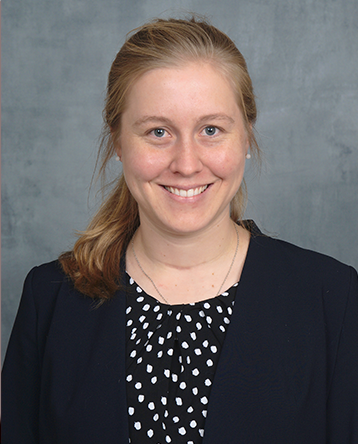
Assistant Professor
Katherine Flanigan is an Assistant Professor in the Department of Civil and Environmental Engineering at Carnegie Mellon University (CMU), with a courtesy appointment in the Department of Electrical and Computer Engineering. She holds a Ph.D. in Civil Engineering from the University of Michigan (2020) and earlier degrees from the same institution (M.S.E. in Electrical and Computer Engineering, 2018, and M.S.E. in Civil Engineering, 2016) and a B.S.E. in Civil and Environmental Engineering from Princeton University (2014). Her research focuses on transforming civil infrastructure and urban systems into intelligent cyber-physical systems (CPS) by integrating sensing, computing, and actuation technologies. Key areas include developing wireless sensor networks for smart cities, modeling infrastructure resilience, and leveraging digital twins for data-driven decision-making. She extends this work to cyber-physical-social systems (CPSS), emphasizing human-infrastructure interactions and equity in policy-making through community-driven data. Flanigan is particularly noted for projects combining technical and social dimensions, such as human-in-the-loop control solutions and privacy-preserving urban sensing technologies. Flanigan has received prestigious awards including the NSF Graduate Research Fellowship, the Towner Prize for Outstanding PhD Research, and the Wimmer Faculty Fellow award for teaching innovation. She advises PhD student Lindsay Graff, whose work addresses transportation equity and multimodal networks. Her research also involves collaborations with industry leaders via the Manufacturing Futures Institute, and she leads the Autonomous Infrastructure Systems Lab at CMU. Her teaching contributions include course redesigns focused on hands-on projects, such as constructing habitats for pollinators and Little Free Libraries to blend engineering with community impact. She emphasizes preparing students for real-world challenges through project courses that teach sensing, data analysis, and infrastructure system design under constraints like risk and resource limitations.