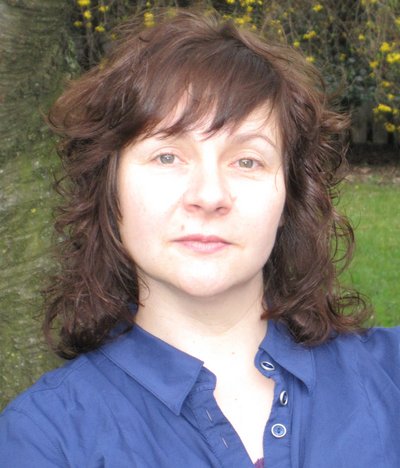
Rui Chang is an Associate Professor at Yale University School of Medicine , jointly appointed in the Department of Neuroscience and Department of Cellular and Molecular Physiology . His research focuses on organ-to-brain circuits and neurocardiology with specific interest in Parkinson's disease . He completed his B.S. in Biological Sciences at Tsinghua University (2005) Ph.D. in Neuroscience at University of Southern California (2011) Postdoctoral training in the lab of Stephen Liberles at Harvard Medical School (2017) Research Highlights: The Chang lab employs single-cell gene expression profiling , virus-based anatomical mapping , and optogenetics to investigate vagal interoceptive systems and their roles in cardiovascular regulation and gut-brain axis dysfunction in neurodegenerative diseases. Their work has revealed a multidimensional coding architecture for visceral sensory signals. Notable Scientific Awards: McKnight Neurobiology of Brain Disorders Award (2021) NIH Director’s New Innovator Award (2019) Kavli Faculty Innovative Research Award (2019) NIH K01 Mentored Research Scientist Award (2017) Keystone Symposia Future of Science Scholarship (2016) Collaborative Network: Chang collaborates with experts in neurodegeneration (David A. Hafler, MD), biostatistics (Hongyu Zhao, PhD), and neural imaging (Le Zhang, PhD). His work intersects with the Stephen & Denise Adams Center for Parkinson’s Disease Research and Kavli Institute for Neuroscience .
Michael Morris is the Associate Dean of Undergraduate Studies and Student Affairs and the John W. Fisher Professor of Innovative Learning at the Haslam College of Business , University of Tennessee, Knoxville. His career includes leadership roles such as Director of the Smith Global Leadership Scholars program and department head at Haslam, alongside corporate experience as a metallurgical R&D special projects engineer at Teledyne Firth Sterling. His research spans Human Centered Leadership , Strategic HR , Leadership Development , and Work-Life Harmony . His work, appearing in top-tier journals like Organizational Research Methods and Family Relations , integrates machine learning for disease forecasting, HRD theories, and interdisciplinary approaches to workplace wellness. His recent publications focus on infectious disease modeling , fMRI reliability , and socioemotional wealth in family firms. He serves on editorial boards for Academy of Management Learning & Education and contributes to certifications from the National Council on Family Relations and IDEO. Past President, Academy of Human Resource Development
Dr. Adrian Owen is a Professor of Cognitive Neuroscience & Imaging at Western University's Brain and Mind Institute, holding the Canada Excellence Research Chair. His work focuses on consciousness disorders, neurodegenerative diseases, and functional neuroimaging applications. He pioneered techniques like detecting residual cognition in vegetative patients using fMRI and fNIRS. Research Focus: Owen's research bridges cognitive neuroscience and clinical practice, emphasizing disorders of consciousness, Alzheimer's/Parkinson's mechanisms, and neurorehabilitation. He develops brain-computer interfaces for communication in non-responsive patients and investigates anesthesia effects on neural connectivity. Key Contributions: Pioneered covert cognition detection in vegetative patients, advanced fNIRS applications in ICU settings, and established international clinical cohorts for consciousness assessment. His work has appeared in Nature , Science , and The Lancet . Labs/Teams: Leads the Owen Lab at Western University, collaborating with clinicians, engineers, and neuroscientists to translate neuroimaging innovations into clinical tools. Grants/Industry Links: Receives funding for interdisciplinary projects linking brain imaging, neurology, and biomedical engineering, fostering industry partnerships for neurotech development.
Prof. Dr. Moritz Helias is a University Professor and leads the Theory of Multi-Scale Neuronal Networks group at the Institute for Advanced Simulation (IAS-6), Computational and Systems Neuroscience, Forschungszentrum Jülich. His research bridges biological and artificial neural networks, focusing on dynamics, information processing, and the physics of AI. The group is part of a larger interdisciplinary institute that integrates theory, simulation, and data analysis to understand the brain. Institution: Forschungszentrum Jülich School: Institute for Advanced Simulation Department: IAS-6, Computational and Systems Neuroscience Position: Professor and Group Leader Email: m.helias@fz-juelich.de His research interests lie at the intersection of statistical physics and neuroscience. He investigates how structure shapes dynamics in both biological and artificial networks, aiming to uncover general principles of information processing. Using methods from statistical physics, his work enables a unified framework for understanding collective phenomena, learning, and generalization. Key areas include spiking neural networks, renormalized field theory, and the theoretical foundations of AI. The recent publications reflect a strong trend toward multi-scale modeling of neural systems, integrating statistical physics with neuroscience. Topics include spiking network dynamics, mean-field theory, renormalization, and applications of machine learning in physics. The work spans biological realism and artificial intelligence, with implications for neuromorphic computing and brain-inspired AI architectures. While no scientific awards are listed in the provided texts, his group actively contributes to open science through tools like NEST and theoretical frameworks that influence both neuroscience and AI. Prof. Helias supervises a research group focused on theoretical and computational approaches, contributing to collaborative projects involving large-scale simulations and data analysis. His team works closely with experimentalists and theorists to validate models and advance understanding of brain function. The group is also involved in developing simulation technologies and theoretical tools that support reproducible neuroscience. The Theory of Multi-Scale Neuronal Networks group is embedded within a vibrant research environment at IAS-6, collaborating with teams in statistical neuroscience, computational neurophysics, and future simulation architectures. This fosters a loop between data, theory, and simulation, enabling cutting-edge research on brain function and artificial intelligence.
Emilia Barakova is an Associate Professor at the Industrial Design Department of Eindhoven University of Technology. She leads the Social Robotics Lab and Transdisciplinary Research & Design cluster, focusing on robotics for autism intervention and cognitive assistance. PhD in Mathematics & Natural Sciences (University of Groningen, 1999) MSc in Electronics & Automation Engineering (Technical University of Sofia, Bulgaria) Her research merges robotics, cognitive science, and AI to develop embodied agents for social skills training in autistic children and well-being enhancement for people with disabilities. She co-developed the TiViPE programming environment for customizable robot therapy scenarios. Key publication trends show emphasis on: Human-robot interaction for autism therapy Emotion recognition via movement analysis Visual programming frameworks for robot customization Multi-agent systems in social training She serves as Associate Editor for journals including International Journal of Social Robotics and Transactions of Human-Machine Systems , and has held academic positions at RIKEN Brain Science Institute and German-Japanese Robotics Research Lab.
Jure Leskovec is a Professor of Computer Science at Stanford University, affiliated with the Stanford AI Lab, Machine Learning Group, and the Center for Research on Foundation Models. He holds academic appointments in the Department of Computer Science and is a member of Bio-X, the Institute for Human-Centered Artificial Intelligence (HAI), and the Wu Tsai Neurosciences Institute. Leskovec earned his BSc from the University of Ljubljana (2004), PhD from Carnegie Mellon University (2008), and postdoctoral training at Cornell University. His research focuses on social networks, data mining, machine learning, and computational biomedicine, with contributions to graph neural networks, drug discovery, and AI applications in healthcare. His work has been applied to combat the COVID-19 pandemic and integrated into products at major tech companies. Leskovec’s publications reflect his expertise in network analysis, medical AI, and biological systems. His recent work includes foundational contributions to graph neural networks (e.g., PyG) and medical AI frameworks. His research has garnered numerous awards, including the Microsoft Research Faculty Fellowship and ICDM Research Contributions Award. Leskovec advises numerous doctoral and postdoctoral researchers, contributing to over 200 publications. His interdisciplinary collaborations span computational biology, healthcare analytics, and social systems, with a focus on leveraging AI to address real-world challenges.
Guanghan Meng is an Assistant Professor at the University of California, Berkeley , with dual appointments in the Herbert Wertheim School of Optometry and Vision Science and the Department of Electrical Engineering and Computer Science (EECS) . He leads the Visionary Optical Imaging Lab (VOILA) , focusing on interdisciplinary research combining optical physics and computational science to develop advanced microscopy technologies for eye and brain imaging. Education : PhD (2021, UC Berkeley), BE (2015, Shanghai Jiao Tong University) PhD Programs Affiliated With : Vision Science, Applied Science & Technology (AS&T), EECS His research integrates optical physics , computational biology , and artificial intelligence to create cutting-edge imaging tools. Recent work includes differentiable wave-optics libraries (Chromatix), super-resolution microscopy techniques, and high-speed neural imaging systems. Publications highlight applications in neuroscience (cerebral circulation, synaptic activity) and biomedical imaging (OCT, two-photon microscopy). VOILA is a highly interdisciplinary team spanning physics , engineering , and biology . In 2025, the lab will welcome 2 PhD students and 1 postdoc, though funding is currently at capacity for new members. Meng is affiliated with the Berkeley Artificial Intelligence Research Lab (BAIR) and Berkeley Center for Computational Imaging (BCCI) .
Marios Georgakis is a clinician-scientist and Junior Group Leader at the Institute for Stroke and Dementia Research (ISD) at LMU Munich. He also holds a Visiting Scientist position at the Broad Institute of MIT and Harvard. His research focuses on leveraging multi-omics data and causal inference methods (e.g., Mendelian randomization) to discover drug targets for atherosclerosis, develop personalized risk stratification tools for cerebrovascular disease, and identify in vivo biomarkers of disease activity. His work bridges human genetics, molecular biology, and clinical translation. Education : MD and PhD (Epidemiology) from the National and Kapodistrian University of Athens; doctoral studies in Systemic Neurosciences at LMU Munich. Honors : Emmy Noether Award (DFG), CHARGE Consortium Early Career Achievement Award, Hertie Network Fellowship, and multiple scholarships/fellowships. Research Themes : Drug target discovery for cardiovascular disease via multiomics integration Molecular phenotyping of atherosclerosis using single-cell RNA-seq and spatial transcriptomics Development of AI-driven tools for vascular imaging and aging Genetic studies of inflammation, cytokines, and stroke subtypes Causal inference in vascular risk prediction and post-stroke outcomes Recent Article Trends : His team's publications (2024-2020) emphasize: Proteogenomic and genetic studies of atherosclerosis Cytokine signaling pathways (e.g., IL-6, CCL2/CCR2) Polygenic and genomic risk scores for stroke Multi-omics biomarkers in cerebrovascular disease Clinical translation of Mendelian randomization findings Meta-analyses of population-based data Scientific Awards : Emmy Noether Group Leader Award (DFG, 2023) CHARGE Consortium Early Career Achievement (2023) Hertie Network Fellowship (2023) Walter-Benjamin Postdoctoral Fellowship (2021-2022) Team Leadership : Georgakis mentors multiple PhD students and postdocs in his lab. His group collaborates with vascular surgeons, neurologists, and computational biologists. Current projects include the AtherOMICS biobank and AI-driven vascular phenotyping tools.
Dr. Marios Georgakis is a Clinician-Scientist and Junior Group Leader at the Institute for Stroke and Dementia Research (ISD) at Ludwig-Maximilians-Universität München (LMU Munich). He also serves as a Visiting Scientist at the Broad Institute of MIT and Harvard and is completing his clinical residency in Neurology at LMU University Hospital. As Principal Investigator of the Georgakis Lab, he leads a research team focused on developing precision medicine approaches for cerebrovascular diseases. Education: Medical studies (M.D.): Medical School, National and Kapodistrian University of Athens, Greece (2009-2015) Master studies (M.Sc.): Molecular Physiology (Neurosciences), National and Kapodistrian University of Athens, Greece (2015-2017) Doctoral studies (D.Sc.) in Epidemiology, National and Kapodistrian University of Athens, Greece (2015-2019) Doctoral studies (Ph.D.) in Graduate School of Systemic Neurosciences (GSN), LMU Munich, Germany (2017-2020) Dr. Georgakis' research focuses on leveraging big data from epidemiological studies and human biobanks to develop precise and personalized preventive and therapeutic strategies for cerebrovascular diseases. His work spans biomedical neuroscience with particular emphasis on cerebrovascular disease, stroke, atherosclerosis, cerebral small vessel disease, multi-omics, data science, epidemiology, and population genetics. He employs innovative bioinformatic tools including genome-wide association studies, Mendelian randomization, multi-omics integration, single-cell transcriptomics, spatial transcriptomics, and machine learning to discover causal mechanisms, identify therapeutic targets, develop risk stratification tools, and create accurate biomarkers for cerebrovascular diseases. His laboratory has established the AtherOMICS biobank for human atherosclerotic plaque samples and developed computational pipelines for big data analyses. Recent publication trends show a strong focus on genetic architecture of stroke, inflammatory pathways in cerebrovascular disease, and development of polygenic risk scores for clinical application. Scientific Awards: Emmy Noether Independent Group Leader Award, German Research Foundation (DFG), 2023 Early Career Achievement Award, CHARGE Consortium, 2023 Fellow of the Hertie Network of Excellence in Clinical Neuroscience, 2023 Clinician-Scientist Fellow of the Excellence Munich Cluster for Systems Neurology (SyNergy), 2023 Walter-Benjamin Fellowship for postdoctoral research by German Research Foundation (DFG), 2021-2022 Dr. Georgakis actively mentors a diverse team of 12 current students and postdocs including PhD students, MD students, and clinician scientists, with several alumni who have completed their training in his lab. His research is supported by multiple grants including the Emmy Noether program from the German Research Foundation, focusing on multi-omics characterization of immune mechanisms driving human atheroprogression, dissecting cerebrovascular atherosclerosis with population genetics, and developing personalized biomarkers using deep learning. The Georgakis Lab operates two main research platforms: the AtherOMICS Biobank for human atherosclerotic plaque samples and the Big Data Lab for computational analyses. These platforms enable his team to conduct deep phenotyping of human atherosclerosis, develop in vivo diagnostics, discover therapeutic targets, and create personalized diagnostic and risk prediction tools for cardiovascular diseases.
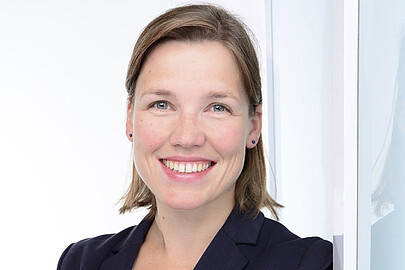
Prof. Dr. Melanie Krüger is a faculty member at Leibniz University Hannover , where she serves as Head of the Research Unit Sports and Cognition within the Institute of Sports Science. Her academic career spans institutions including the Technical University of Munich, University of Tasmania, and Ludwig Maximilian University. She leads research initiatives in embodiment, cognitive aging, motor decision-making, and the impact of physical activity on neurocognitive and motor functioning. Current Position: Professor, Institute of Sports Science, Leibniz University Hannover Prior Appointments: Post-doctoral roles at Technical University of Munich, University of Tasmania, and Pennsylvania State University Education: PhD in Systemic Neurosciences, Ludwig Maximilian University; Diploma in Sports Science, University of Leipzig Krüger's research focuses on: Embodiment Research: Systemic interactions between cognitive and motor development Cognitive Aging: Age-related changes in motor decision-making and coordination Human Locomotion: Collision avoidance, mixed reality interactions, and real-world movement studies Open Science: Advocacy for research data management in sports science Her recent publications explore mixed reality applications ( 2024 ), stress effects on motor function ( 2023 ), and methodological innovations in locomotion studies ( 2021-2025 ). Current projects include Moving Forward (2021-2022) and two Innovation Plus initiatives (2022-2024) developing experimental frameworks for human movement analysis. Krüger actively participates in academic governance: Spokesperson, German Society of Sport Science's Ad Hoc Committee on Research Data Management (since 2022) Board member, DVS Section 'Sports Motor Skills' (since 2022) Doctoral Committee, Faculty of Humanities Examination Board, MSc Sustainable Health Promotion in Sports Science
Claudio Ulises Cortes Garcia is a Professor at the Department of Computer Science , Technical University of Catalonia, and leads the IDEAI-UPC (Intelligent Data Science and Artificial Intelligence Research Group) and KEMLG (Knowledge Engineering and Machine Learning Group). He is affiliated with the Barcelona Supercomputing Center (BSC-CNS) and the Barcelona School of Informatics (FIB). With a Doctor en Informática (PhD in Computer Science) and Ingeniero Industrial y de Sistemas (Industrial and Systems Engineering) degrees, his work spans Artificial Intelligence , Intelligent Agents , and Assistive Technology . His research integrates European Programs and Internet with applications in Second Life and Software . His recent publications focus on Post-COVID cognitive effects , AI ethics , and agent-based modeling for urban water management. He received the Doctor Honoris Causa from Universitat de Girona in 2024 and has collaborated on projects like DIGITAfrica and HUB D'INNOVACIÓ PEDIÀTRICA . His work bridges Neuroscience , Environmental Modeling , and Digital Humanities , with over 650 activities recorded in his academic career. ORCID : 0000-0003-0192-3096 WoS Researcher ID : B-7284-2009 Scopus Author ID : 7004065770
Sheng Sang is an Assistant Professor in the Department of Engineering Sciences at Bethany Lutheran College. His research lies at the intersection of Mechanical Engineering and Biomedical Engineering, with a strong emphasis on machine learning applications in composite materials and elastic metamaterials. His research interests include: Mechanical & Biomedical Engineering Machine Learning on Composites Elastic Metamaterials and Composites Optimization of Medical Devices Finite Element Modeling and Simulation Dr. Sang's recent publications demonstrate a consistent focus on integrating deep learning techniques with mechanical systems, particularly in predicting composite microstructures, tracking particles in complex systems, and optimizing wave propagation in metamaterials. His work frequently employs 3D CNNs and other neural architectures to solve inverse problems in material science. Scientific awards and recognition include: Dr. Lehtola Fellowship Research Grant ($9,000, PI), 2021–2023 Graco Engineering Lab Development Grant ($60,000), 2020–2022 He has been actively involved in teaching a wide range of engineering courses such as Fluid Mechanics, Solid Mechanics, Thermodynamics, and Computer-Aided Design. His research is supported by external grants, indicating active supervision and project leadership. Dr. Sang has collaborated with researchers across disciplines, including neuroscience and medical imaging, particularly in studies involving deep brain stimulation and fMRI. He is affiliated with research teams working on: Active elastic metamaterials design Machine learning for material characterization Optimization of biomedical devices using swarm intelligence Development of advanced simulation tools for composite systems
Elena Tuzhilina is an Assistant Professor in the Department of Statistical Sciences at the University of Toronto, specializing in machine learning, applied statistics, and computational biology. Her research focuses on statistical tools for chromatin 3D spatial structure reconstruction and analyzing emotional disorders' impact on brain function. Ph.D. in Statistics from Stanford University Specialist's degree from Moscow State University Two-year Data Science program at Yandex School Her research spans high-dimensional data analysis , dimension reduction , and statistical modeling in biological contexts. She has developed novel algorithms for chromatin conformation reconstruction and pandemic trajectory modeling. Recent publications focus on canonical correlation analysis , low-rank matrix approximation , and 3D genome architecture , with applications in computational biology and neuroscience. Dorothy Shoichet Women Faculty in Science Award JSM Student Travel Award Outstanding Teaching Assistance at Stanford Stanford Teaching Assistant Award Elena supervises PhD students and postdoctoral fellows across disciplines including statistical sciences, biochemistry, and applied mathematics. She has secured multiple grants including a NSERC Discovery Grant and University of Toronto Accelerator Grant .
Alvaro Fernandez Quilez is an Associate Professor in Artificial Intelligence at the Department of Electrical Engineering and Computer Science, Faculty of Science and Technology, University of Stavanger. He leads the Stavanger AI Laboratory (SAIL), fostering interdisciplinary AI research with a focus on healthcare and education applications. Research Interests: His work centers on responsible AI, emphasizing ethics, fairness, transparency, and uncertainty in AI systems. He applies deep learning and machine learning techniques to medical imaging, particularly in prostate cancer and neurodegenerative diseases like Alzheimer’s and Parkinson’s. His research integrates algorithmic innovation with clinical relevance, addressing challenges in data scarcity, bias, and model interpretability. The recent publications highlight a strong trend in developing and evaluating AI models for diagnostic support in radiology and neurology. Key themes include uncertainty quantification, self-supervised learning, synthetic data generation via GANs, and fairness analysis across gender and centers. The work spans from foundational AI methods to their clinical translation in multi-center studies. Teaching and Academic Leadership: He coordinates the course DAT105 - AI for everyone and has contributed as a guest lecturer in bioinformatics, technological foundations, and PhD ethics, particularly on AI and ethics. He is also enrolled in a PhD supervisory qualification program, underscoring his growing role in graduate education. Advising and Grants: While specific students and grants are not listed in the text, his leadership of SAIL and active publication record suggest involvement in research supervision and project funding. His collaborations span multiple institutions and disciplines, indicating strong team-based research efforts. Laboratories and Teams: He leads the Stavanger AI Laboratory (SAIL), which serves as the central hub for AI research at the University of Stavanger, promoting collaboration across departments and with external partners in healthcare and technology.
Pier Cesare Rivoltella is a Full Professor of Educational Technology at the University of Bologna's Department of the Arts. He holds leadership roles in academic organizations such as the Italian Society of Pedagogy (SIREM) and the Accademia Nazionale dei Lincei. His academic career spans over three decades, including roles as Associate Professor (2000–2005) and Full Professor (2005–2023) at the Catholic University of the Sacred Heart before joining Bologna in 2023. He earned a Philosophy degree from the Catholic University of the Sacred Heart and a PhD in Social Communication Sciences from the Pontifical Salesian University. His research focuses on media literacy, education technology, and pedagogical innovation, with notable contributions to neurodidactics and AI in education. Rivoltella founded the CREMIT research center (2006–2023) and co-leads editorial initiatives like REM – Research on Education and Media . He has received prestigious awards, including the Italian Pedagogy Prize (2014) and the REN Award for Educational Neuroscience (2021). His teaching includes courses on Media and Technologies for Teaching at the University of Bologna. He actively collaborates with institutions worldwide, including Brazilian universities through CNPq-funded projects.