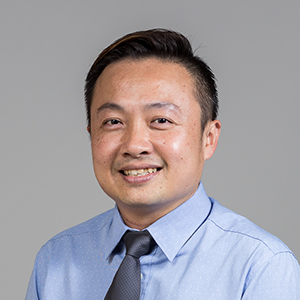
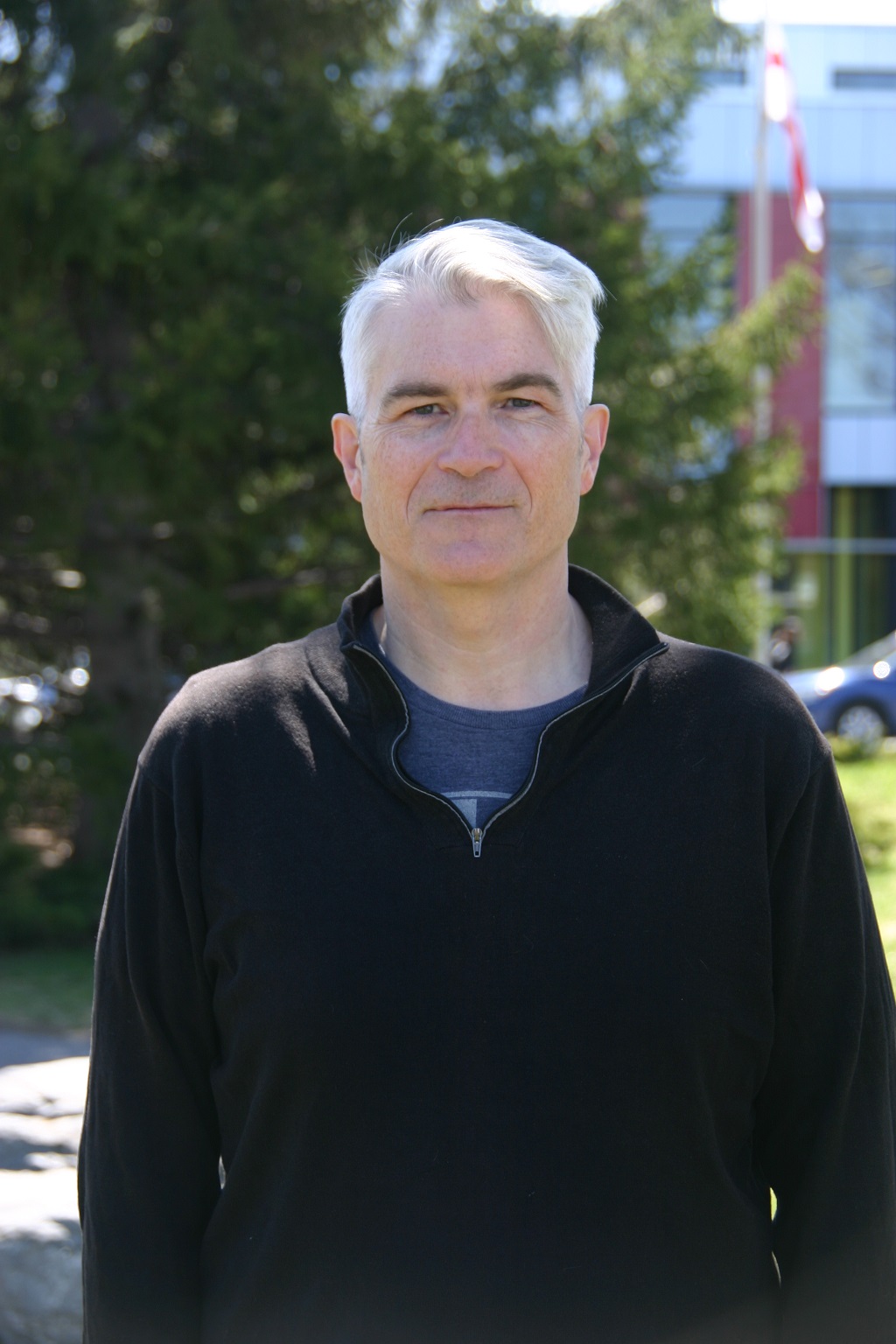
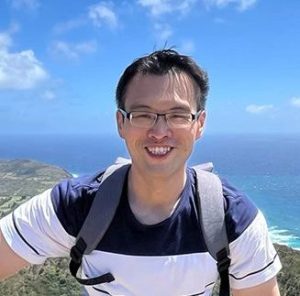
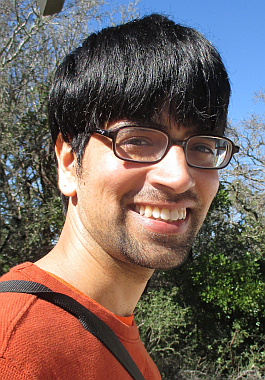
Dr. Jingyun Wang is an Assistant Professor in the Department of Computer Science at Durham University. Previously, she held an Assistant Professor position at Kyushu University, Japan. Her primary affiliations include the Centre for Neurodiversity & Development and the Artificial Intelligence and Human Systems Group (AIHS), as well as the Pedagogical Innovation in Computer Science Group (PICS). She is a Fellow of the Higher Education Academy and has led or contributed to research projects funded by JSPS, JST, NICT, Innovate UK, and industry partners. Her research focuses on AI-driven educational technologies, including AI-based feedback systems, computational thinking education, game-based learning, and ontology techniques. She actively contributes to editorial boards (e.g., Computers & Education: Artificial Intelligence ) and serves as a conference chair for AIED, ICCE, and LTLE. Current research includes adaptive learning systems for mathematics education, serious games for cybersecurity training, and visualization tools for e-learning. Her scientific contributions span over 50 peer-reviewed publications, with recent work emphasizing learning analytics, multimodal systems, and digital health interventions. She advises multiple PhD students and mentors in professional recognition pathways. Key projects include developing the BETTER speech training system, the MEMORABLE cybersecurity game framework, and ontology-based language learning platforms.
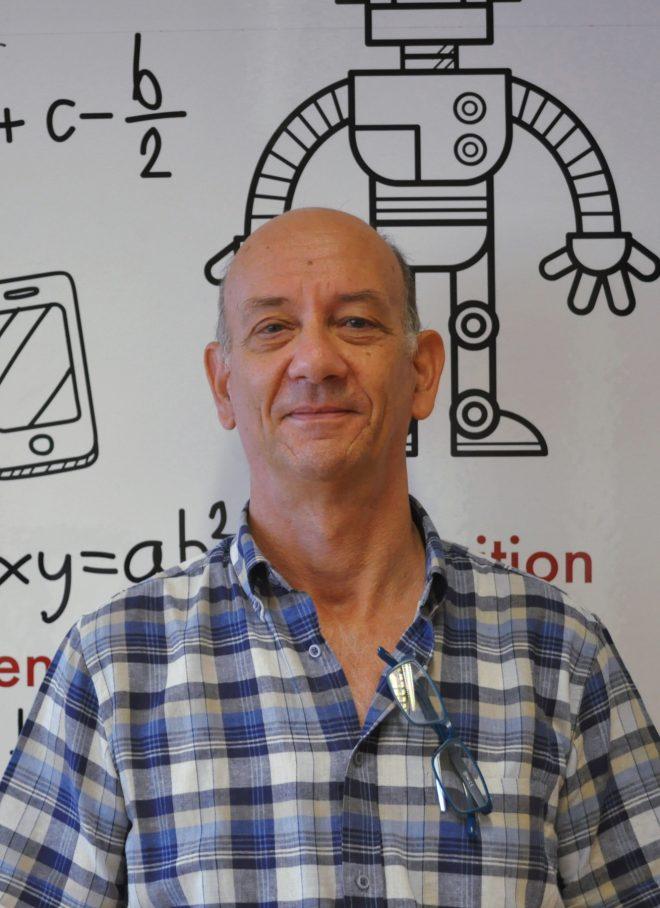
Dr. Victoria C. P. Chen is a Professor in the Industrial, Manufacturing, and Systems Engineering (IMSE) department at The University of Texas at Arlington (UTA), where she has served since 2002. She previously held positions at the Georgia Institute of Technology from 1993-2001. Dr. Chen has held several leadership roles at UTA, including Interim Department Chair (2012-2014), Director of the Center on Stochastic Modeling, Optimization, & Statistics (COSMOS) (2008-2012, and again from 2017-present), and Director of Doctoral Studies (2019-present). She was also the George & Elizabeth Pickett Professor from 2015-2017 and was inducted into the UT Arlington Academy of Distinguished Teachers in 2019. Dr. Chen is actively involved with INFORMS (Institute for Operations Research and the Management Science), where she currently serves as Secretary on the Executive Board. Dr. Chen earned her B.S. in Mathematical Sciences from The Johns Hopkins University, and her M.S. and Ph.D. in Operations Research and Industrial Engineering from Cornell University. Her academic journey includes visiting professorships at the University of Genoa, Italy, and Iowa State University. Dr. Chen's research utilizes statistical perspectives to create new methodologies for operations research problems appearing in engineering and science. Her expertise includes the design of experiments, statistical modeling, and data mining, particularly for computer experiments and stochastic optimization. Through her statistics-based approach, she has developed computationally-tractable decision-making methods for many high-dimensional complex systems. Her work spans multiple domains including sustainability, energy, water management, healthcare, and law enforcement. Specific application areas include inventory forecasting, airline optimization, water reservoir networks, wastewater treatment, air quality monitoring, green building design, nurse assignment systems, and pain management programs. Her recent publications demonstrate continued innovation in mixed integer programming for electric vehicle charging stations, vacuum ultraviolet spectroscopy prediction, and sustainable building education. Senior Member, Institute for Operations Research and the Management Sciences (INFORMS) (2024) Data Mining Prize (Lifetime Achievement Award), INFORMS Society on Data Mining (2023) College of Engineering Teaching Award, UT Arlington (2021) Third Place Award, C3.ai COVID-19 Grand Challenge (2020) Academy of Distinguished Teachers, University of Texas at Arlington (2019) George & Elizabeth Pickett Professorship (2015-2017) As an educator and mentor, Dr. Chen has advised over 25 doctoral students across diverse research topics in operations research and systems engineering. She has secured substantial research funding from multiple sources including the National Science Foundation (over $1.5 million in active projects), Environmental Protection Agency, National Institute of Justice, and industry partners like Luminant and Dallas-Fort Worth International Airport. Her current research projects focus on decision analytics for sustainable urban environments, optimization for Texas water management, and statistical methods for pain management programs. She has served as Principal Investigator or Co-PI on more than 20 externally funded research projects totaling over $3 million in funding. Dr. Chen co-founded the Center on Stochastic Modeling, Optimization, & Statistics (COSMOS) at UTA with Dr. H. W. Corley. This research center brings together faculty and students from multiple disciplines to address complex problems through advanced statistical and optimization methods. She also leads interdisciplinary research teams working on projects related to sustainable infrastructure, energy systems, and healthcare optimization, frequently collaborating with researchers from civil engineering, environmental science, and medical fields.
Yolanda Vidal Segui is an Associate Professor in the Department of Mathematics at the Universitat Politècnica de Catalunya (UPC), affiliated with the Escola d'Enginyeria de Barcelona Est (EEBE). Her research focuses on wind energy systems, predictive maintenance, and structural health monitoring of wind turbines. She leads projects in the CoDAlab and WinTurCoM research groups, specializing in data-driven models, condition monitoring, and failure prognosis. Her work integrates machine learning, mathematical modeling, and sensor technology to enhance turbine reliability and energy efficiency. Dr. Vidal holds a PhD in Applied Mathematics and has authored over 350 publications. Her contributions include advancements in SCADA data analysis, vibration-based diagnostics, and AI-driven condition monitoring systems. She has received several accolades, including the WindEurope Technology Workshop recognition and the IFIT Distinction in Mechanism and Machine Science. Her research bridges academia and industry, addressing challenges in offshore wind turbine integrity and maintenance strategies. Active in professional service, she serves on conference committees and editorial boards (e.g., Mechanical Systems and Signal Processing, Wind Energy). Her work emphasizes sustainable energy solutions and has been applied in real-world scenarios like the Alpha Ventus wind farm. She also contributes to educational initiatives, developing innovative teaching materials for engineering students.
Mustafa Bilgic is a Professor and Chair of the Computer Science Department at Illinois Institute of Technology, where he also directs the Master of Artificial Intelligence program and the Machine Learning Laboratory. His research focuses on machine learning, active learning, explainable AI, and probabilistic graphical models, with applications in healthcare, social media analysis, and biomedical engineering. He has received funding from NSF, NIH, and Samsung, among others. Education: PhD in Computer Science, University of Maryland at College Park (2010) M.S. in Computer Science, University of Maryland at College Park (2006) B.S. in Computer Science, University of Texas at Austin (2004, with High Honors and Special Honors) Research Highlights: Dr. Bilgic's work emphasizes AI ethics, algorithm transparency, and interactive machine learning systems. Notable projects include analyzing political news engagement dynamics and developing frameworks for eliminating explanation noise in AI models. His lab explores tools like OrganoID for tracking organoid growth and IDGI for improving model interpretability. Awards: NSF CAREER Award (2014) ACM SIGKDD Best Student Paper Award (2008) Illinois Tech College of Computing Teaching Excellence Award (2021) Teaching and Leadership: Bilgic teaches advanced courses in AI, machine learning, and data mining. He leads initiatives to bridge AI theory and practical applications, emphasizing interdisciplinary collaboration. His administrative roles include overseeing the AI master’s program and fostering innovation in computing education.
Jann Spiess is an Associate Professor of Operations, Information & Technology at Stanford University's Graduate School of Business and holds a courtesy appointment as Associate Professor of Economics in the School of Humanities and Sciences. He is also a Center Fellow at the Stanford Institute for Economic Policy Research and a Faculty Affiliate of the Golub Capital Social Impact Lab. PhD in Economics (Harvard University, 2018) AM in Economics (Harvard University, 2015) MPP in Public Policy (Harvard University, 2013) MASt in Mathematics (University of Cambridge, 2011) BSc in Mathematics (Technical University of Munich, 2010) Jann's research integrates machine learning with econometric methods to advance causal inference and data-driven decision-making . He explores high-dimensional and robust causal inference, synthetic control methods, and algorithmic fairness, while addressing challenges in human-AI collaboration and policy design. His publications span econometrics, behavioral economics, and data science, focusing on experimental design, robust statistical techniques, and applications of machine learning to public policy. Key themes include replicable inferences from big data, human-AI interaction, and ethical algorithmic design. Philip F. Maritz Faculty Scholar, 2021–22 David A. Wells Prize for best dissertation, Harvard Economics, 2018 Restud Tour, 2018 Jann's work bridges microeconometric methods , statistical decision theory , and mechanism design to enhance analytical frameworks for data-driven policy. He has contributed to robust inference in panel data and synthetic control methods, alongside studies on nudges for vaccination and financial aid renewals. As Faculty Affiliate at the Golub Capital Social Impact Lab, Jann collaborates on projects applying data science to social policy challenges, merging technical rigor with societal impact.
Bryan Kian Hsiang Low serves as Associate Professor in the Department of Computer Science at the National University of Singapore's School of Computing, while simultaneously holding leadership positions as Director of AI Research at AI Singapore and Deputy Director of the NUS AI Institute. His academic journey includes a B.Sc. (2001) and M.Sc. (2002) in Computer Science from NUS, followed by a Ph.D. in Electrical & Computer Engineering from Carnegie Mellon University (2009). His research spans probabilistic machine learning, multi-agent systems, and trustworthy AI, with particular focus on Bayesian optimization , federated learning , and data-efficient methodologies . The Low Lab develops frameworks for collaborative AI, automated machine learning, and AI applications in scientific domains through the Group of Learning and Optimization Working in AI (GLOW.AI), which maintains a multi-disciplinary approach bridging computer science, mathematics, and engineering disciplines. Analysis of his recent publications reveals a consistent emphasis on data valuation , privacy-preserving collaborative learning , and robust optimization techniques , with increasing integration of large language models into his research framework. His work demonstrates strong theoretical foundations coupled with practical applications in computational sustainability and robotics. Andrew P. Sage Best Transactions Paper Award (2006) NUS Overseas Graduate Scholarship (2004-2009) Faculty Teaching Excellence Award (2017-2018) IEEE RAS Distinguished Lecturer (2019) World Economic Forum Global Future Councils Fellow (2016-2018) Dr. Low actively mentors PhD students including Rachael Sim, Quoc Phong Nguyen, and Zhongxiang Dai, while leading major initiatives like the AI Phenome Platform for plant breeding optimization. His research group GLOW.AI operates at the intersection of theory and practice, with strong industry engagement through AI Singapore. Current projects focus on scalable AI systems for scientific discovery and developing frameworks for equitable collaborative machine learning with robust privacy guarantees.
David A. Stephens is a Professor in the Department of Mathematics and Statistics at McGill University, Montreal. He served as Chair of the Department from 2015 to 2019 and as Vice-Dean in the Faculty of Science from 2019 to 2025. His research focuses on Bayesian inference, biostatistics, causal inference, bioinformatics, and statistical genetics. He holds prestigious fellowships: International Statistical Institute (2015), American Statistical Association (2019), and Royal Society of Canada (2024). His work addresses challenges in epidemiology, HIV transmission dynamics, and clinical trial design. Key research themes include: Bayesian hierarchical modeling for infectious diseases (e.g., SARS-CoV-2, HIV) Causal inference in dynamic treatment regimes Survival analysis and censored data methods Statistical genomics and epigenetics His publications analyze public health trends, such as HIV transmission clusters in Quebec and SARS-CoV-2 seroprevalence in Canada. Methodologically, he develops novel techniques for time-series analysis, recruitment forecasting in clinical trials, and computational statistics. Notable contributions include: Advancing phylogenetic cluster inference in HIV studies Optimizing warfarin dosing strategies via SMART trials Modeling gut microbiota impacts on growth faltering in infants His academic leadership includes roles at McGill and prior experience at Imperial College London. His work bridges statistical theory and practical healthcare applications, emphasizing interdisciplinary collaboration.
Dr. Laura B. Balzer is an Associate Professor of Biostatistics at the University of California, Berkeley. Her work focuses on causal inference, machine learning, and addressing methodological challenges in both randomized trials and observational studies, particularly in global health contexts. She leads collaborations in East Africa, focusing on HIV elimination and community health in rural regions. Her research emphasizes translating academic findings into real-world impact. Education: PhD in Biostatistics, UC Berkeley (2015) MPhil in Computational Biology, University of Cambridge (2009) BS in Applied Mathematics, University of Vermont (2008) Research Interests: Dr. Balzer’s work addresses causal inference in complex settings, including semi-parametric methods, measurement challenges, and dependence structures. Her global health projects target HIV prevention, tuberculosis transmission, and hypertension management in sub-Saharan Africa. She designs interventions like the SEARCH Dynamic Choice model, which offers flexible HIV prevention options, and evaluates community health worker programs. Publications highlight her contributions to HIV/AIDS research, including studies on PrEP uptake, viral suppression in adolescents, and tuberculosis-HIV co-infection. Methodologically, she advances causal inference frameworks to handle missing data and clustered designs. Awards: While no specific awards are listed, her work has been funded by initiatives like the SEARCH trials, reflecting its scientific and public health significance. Advising & Grants: Balzer collaborates with multidisciplinary teams in Uganda and Kenya, focusing on translational research. Her grants support interventions linking statistical innovation to healthcare delivery improvements in resource-limited settings. Labs/Teams: Her research is embedded within global health partnerships, particularly within the SEARCH trials network, which integrates biostatistics with clinical and community-based implementation.
Subhabrata Sen is an Assistant Professor of Statistics at Harvard University, located in Science Center 713, Cambridge. His research focuses on Applied Probability, Statistics of Networks, Signal Detection, and Machine Learning. He holds a PhD from Stanford University (2017), advised by Amir Dembo and Andrea Montanari, and prior degrees from the Indian Statistical Institute, Kolkata. His work bridges statistical theory, high-dimensional data analysis, and applications in networks and physics-inspired methods. Key contributions include foundational studies on spin glasses, community detection, and causal inference in complex systems. His research often employs mean-field techniques and explores universality principles in estimation problems. Selected awards and recognition are not explicitly mentioned in the provided text. His advising and grants include postdoctoral mentoring at Microsoft Research and MIT (2017-19). He collaborates on projects involving spectral methods, random matrix theory, and multi-layer network analysis. Labs/teams: Active in Harvard's Statistics Department research groups focused on statistical theory and network science. Maintains an academic website with preprints and resources.
Yang Zhang is a Visiting Assistant Professor in the Department of Mathematics at the University of California, Irvine (UCI), working under Prof. Katya Krupchyk. His research focuses on inverse problems in imaging sciences, nonlinear hyperbolic equations, and medical imaging applications. He previously held a postdoctoral position at the University of Washington, Seattle, under Prof. Gunther Uhlmann. His work integrates microlocal analysis and partial differential equations to address challenges in wave propagation, nonlinear acoustics, and elasticity. Education & Career: PhD from Purdue University (advisor: Prof. Plamen Stefanov) Postdoc: University of Washington, Seattle (2020–2024) Research Interests: Dr. Zhang's work spans inverse problems for nonlinear hyperbolic equations, acoustic imaging, and integral transforms in medical contexts. He develops novel methodologies using multi-fold linearization, wave interactions, and advanced calculus techniques. His studies on Rayleigh and Stoneley waves in elasticity further demonstrate his expertise in microlocal analysis. Key Contributions: His research bridges theoretical mathematics and applied imaging, with notable publications on inverse scattering, damping effects in wave equations, and Compton camera imaging. He is an active member of the Inverse Problems International Association (IPIA). Grants & Collaborations: Collaborations with prominent figures like Prof. Gunther Uhlmann and Prof. Katya Krupchyk highlight his network in inverse problems. His work often involves both analytical and computational approaches, with applications in medical diagnostics and geophysics.
Sofya Raskhodnikova is a Professor in the Department of Computer Science at Boston University, part of the College of Arts and Sciences. She holds a Ph.D. from MIT and has held positions at Penn State University and postdoctoral fellowships at the Hebrew University of Jerusalem and the Weizmann Institute of Science. Her research focuses on sublinear-time algorithms, data privacy, approximation algorithms, and complexity theory. She is a recipient of the NSF CAREER Award and has contributed significantly to the theoretical foundations of privacy-preserving computation and algorithm design. Education: Ph.D. in Computer Science from MIT (2003), postdoctoral research at Hebrew University of Jerusalem and Weizmann Institute of Science (2003–2006). Visiting positions at UCLA, Harvard University, and the Simons Institute for the Theory of Computing. Research Interests: Sofya’s work bridges theoretical computer science and practical applications, emphasizing algorithms that operate efficiently on large datasets. Key areas include property testing (e.g., monotonicity, sortedness), differential privacy, and sublinear-time algorithms. She explores how algorithms can analyze data while preserving privacy guarantees and minimizing computational resources. Publications: Over 50 peer-reviewed articles in top venues such as STOC, FOCS, and SODA, with recent contributions focusing on dynamic graph algorithms under privacy constraints and robust property testing against adversarial noise. Professional Activities: Editor for ACM Transactions on Computation Theory and Algorithmica ; program committee chair for WOLA 2021 and CSR 2022; active in mentoring initiatives like Sigma Camp and Artemis. Advising & Students: Current advisees include Ephraim Linder and Debanuj Nayak. Notable alumni include Iden Kalemaj (Meta Research) and Nithin Varma (Max Planck Institute). She has supervised over 15 Ph.D. students and postdocs, fostering a collaborative research environment.
Ye Wang is an Assistant Professor in the Department of Political Science at the University of North Carolina at Chapel Hill since 2022. He previously held postdoctoral and predoctoral research positions at UC San Diego’s School of Global Policy and Strategy (2020–2022). His research bridges political methodology and comparative politics, focusing on statistical tools for policy spillover effects, research transparency, and social learning under non-democratic regimes. He also explores electoral dynamics in contentious political contexts. Ye earned a PhD in Political Science from New York University (2021), with a committee including Nathaniel Beck, Matthew Blackwell, Adam Przeworski, Cyrus Samii, and Joshua Tucker. He holds an MA in Economics from Peking University (2014) and a BS in Mathematics from Fudan University (2011). He withdrew voluntarily from a concurrent PhD in Economics at the University of Wisconsin-Madison (2014–2015). His research interests emphasize causal inference methodologies and their application to understanding political phenomena in non-democratic settings. He develops statistical techniques to address interference in temporal, spatial, and networked data, while also studying how protests and international tensions impact political systems and scientific collaboration. Recipient of the John T. Williams Dissertation Prize (2020), Chiang Ching-kuo doctoral fellowship (2020), and NYU’s MacCracken fellowship (2015–2020). In advising and teaching, Ye has served as a teaching assistant for courses in political methods, comparative politics, and quantitative methods at NYU and the City University of Hong Kong. He has also taught workshops on quantitative methods at Renmin University and contributed to academic seminars at institutions like Yale and Tsinghua. His programming skills include C++, R, Python, GIS, and Stata, complementing his work in methodological research.
Ke Xu is an Assistant Professor at the Department of Finance, Faculty of Business and Economics, University of Victoria. His research bridges finance, econometrics, and cryptocurrency, focusing on market microstructure, high-frequency trading, and price discovery mechanisms. He has extensively studied Bitcoin ETFs, fractional cointegration models, and machine learning applications in financial markets. Key Research Areas: Market Microstructure High-Frequency Trading Cryptocurrency Dynamics Price Discovery Machine Learning in Finance Financial Econometrics Article Trends: Xu’s work spans empirical analyses of Bitcoin ETFs, volatility modeling (e.g., affine GARCH), and algorithmic trading strategies. His recent papers explore mini flash crashes using machine learning, regulatory impacts on market quality, and sustainable crypto portfolios.
Jay Pujara is a Research Associate Professor in the Department of Computer Science at the University of Southern California (USC), affiliated with the Viterbi School of Engineering and the Information Sciences Institute (ISI). He directs the Center on Knowledge Graphs and leads research in artificial intelligence, specializing in knowledge graph construction, scalable machine learning, and probabilistic models. Education : PhD in Computer Science (University of Maryland, 2016), MS and BS in Computer Science from Carnegie Mellon University (2005 and 2004), with minors in Robotics, Mathematical Sciences, and Logic & Computation. Research Interests : His work focuses on probabilistic models for dynamic data, knowledge graph construction, entity resolution, and applications in NLP and social network analysis. He emphasizes scalable algorithms and real-world impact in domains like finance, climate science, and healthcare. Awards : Includes the SWSA Ten-Year Award (2023), Best Paper Awards at IUI 2019 and ISWC 2013, and grants totaling over $9M from DARPA, NSF, and industry partners. Grants & Mentorship : Principal Investigator on projects like "Artificial Domain-Understanding and Collaborative Agency" (DARPA) and "Explainable and Robust AI Agents" (NSF). Mentored over 50 students in PhD, MS, and undergraduate programs, focusing on knowledge graphs, NLP, and machine learning. Labs & Teams : Leads ISI’s Knowledge Graph and Neurosymbolic AI teams, coordinating the Open Knowledge Network (OKN) and tools like KGTK. Active in academic service, including roles on PhD admissions committees and ISI’s Space Management Committee.
João Paulo Costeira is an Associate Professor at the Department of Electrical and Computer Engineering, Instituto Superior Técnico (IST), Lisbon. He holds a PhD in Electrical and Computer Engineering from IST (1995) and was a Visiting Scientist at Carnegie Mellon University's Robotics Institute (1991–1995). His research focuses on Computer Vision, 3D Reconstruction, and Structure from Motion, with contributions to object recognition, robotics, and multimedia analysis. Education: PhD in Electrical and Computer Engineering, IST (1995); Visiting Scientist, CMU Robotics Institute (1991–1995). Roles: Coordinator of the Signal and Image Processing Group (SIPg), Co-director of the Carnegie Mellon|Portugal Dual PhD Program in ECE and Robotics (2007–2018), and Scientific Director of Carnegie Mellon|Portugal (2014–2018). Research Interests: João's work emphasizes 3D reconstruction from video, rigid and non-rigid motion analysis, and applications in robotics and urban surveillance. He has pioneered methods for motion segmentation and robust correspondence problems in computer vision. Publications: His recent work includes advancements in apple counting systems, rotation averaging for robotics, and domain adaptation for traffic density estimation. These contributions highlight his expertise in real-world computer vision challenges. Awards: None explicitly listed. However, his extensive publication record and academic leadership reflect significant scholarly impact. Advising & Grants: Supervised 13 PhD students, many co-advised with CMU faculty. Active in projects like CityCam (vehicle counting) and MultiDrone (robotics collaboration). Funded by FCT, EU, and industry partnerships. Labs/Teams: Leader of the Signal and Image Processing Group (SIPg) at ISR. Involved in NETSyS program for networked systems and robotics.