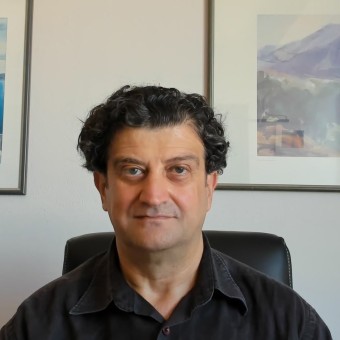
Dr Gatheeshgar Perampalam is a Senior Lecturer in Civil Engineering at Teesside University's School of Computing, Engineering and Digital Technologies. He holds a PhD in Structural Engineering (2021) from Northumbria University and a BEng (Hons) in Civil Engineering (2017) from the University of Peradeniya, Sri Lanka. His research focuses on advanced structural analysis of cold-formed steel systems, modular construction optimization, and fire/thermal performance of building materials. PhD: Structural Engineering, Northumbria University (2021) BEng: Civil Engineering (First Class), University of Peradeniya (2017) Key research areas include steel structures, numerical modeling, sustainable construction practices, and energy-efficient building designs. His recent work explores machine learning applications in structural performance prediction and thermal efficiency improvements in light-gauge steel panels. He has contributed 68 research outputs and collaborated with industry partners like Intelligent Steel Solutions. Current affiliations include Teesside University and active participation in research networks related to structural engineering and sustainability.
Albert Cerrone serves as Research Assistant Professor in Civil and Environmental Engineering and Earth Sciences at the University of Notre Dame and Senior Research Fellow at UT Austin's Oden Institute. His work bridges coastal hydrodynamics and materials science through Digital Twin frameworks. His academic credentials include: PhD in Civil Engineering, Cornell University (2014) BSCE in Civil Engineering, University of Notre Dame (2009) Research focuses on two interconnected domains: (1) Coastal hydrodynamics where he develops probabilistic storm surge guidance systems using high-fidelity hydrodynamic modeling (STOFS-2D-Global) and transformer-based real-time correction methods; (2) Materials durability investigating both inorganic systems (additively manufactured metals via crystal plasticity modeling and fatigue testing) and organic systems (biofilm response to ultrasound for cystic fibrosis therapies). His Notre Dame Computational Hydraulics Laboratory collaborations with Joannes Westerink and Clint Dawson drive operational NOAA modeling improvements. Publication trends reveal increasing integration of machine learning with hydrodynamic modeling for real-time forecasting, alongside growing biomedical applications of materials science in ultrasound-mediated therapies. Scientific Awards: No awards documented in source materials. Advising and Grants: Source texts contain no student listings or grant acknowledgments. Labs and Teams: Leads research within Notre Dame's Computational Hydraulics Laboratory and Computational Hydraulics Group, with active collaboration between Trinity College Dublin on cystic fibrosis treatments and NASA Langley on additive manufacturing durability.
Albert To is a Professor at the Swanson School of Engineering, University of Pittsburgh, where he holds the William Kepler Whiteford Professorship. He serves as Director of both the MOST-AM Consortium and the ANSYS Additive Manufacturing Research Laboratory. Since joining Pitt in 2008, he has advanced from assistant to associate (2014) and full professor (2019). Education: BS, MS, and PhD from UC Berkeley; MS from MIT Postdoctoral Research: Northwestern University with Wing Kam Liu Dr. To's primary research interests center around design optimization for additive manufacturing, multiscale methods, and computational mechanics. His work focuses on fast process modeling and topology optimization for metal additive manufacturing. He directs the ANSYS Additive Manufacturing Research Laboratory, which houses advanced metal 3D printers including EOS DMLS, Optomec LENS, and ExOne binder jetting systems. In 2016, he founded the MOST-AM Consortium, which now includes over 30 member companies and research labs collaborating on additive manufacturing research. His research has been consistently supported by major funding agencies including NASA, DOD, DOE, NSF, America Makes, and industry partners like ANSYS. The recent publications demonstrate a strong focus on addressing key challenges in metal additive manufacturing processes, particularly laser powder bed fusion and wire-arc directed energy deposition technologies. His work spans from fundamental process modeling to practical applications in materials science and mechanical engineering. NSF BRIGE Award (2009) Air Force Summer Faculty Fellowship (2009) Board of Visitors Faculty Award (2016) Carnegie Science Award (2018) Best Student Paper Award, 46th Acoustic Emission Working Group Meeting (2003) Dr. To has secured substantial research funding from government agencies and industry partners to advance additive manufacturing technologies. His MOST-AM Consortium facilitates collaboration between academia and industry, accelerating the translation of research findings into practical applications. He has advised numerous graduate students who have contributed to his extensive publication record in top journals. His laboratory at the University of Pittsburgh is equipped with state-of-the-art metal 3D printing systems, enabling both fundamental research and applied development in additive manufacturing. The MOST-AM Consortium provides a framework for industry collaboration, ensuring research addresses real-world challenges in the field.
Tamás Lovas serves as Associate Professor at the Department of Photogrammetry and Geoinformatics, Faculty of Civil Engineering, Budapest University of Technology and Economics. He teaches advanced courses in Building Information Modeling, Laser Scanning, Remote Sensing, and Intelligent Transportation Systems while supervising diploma theses in Surveying and Geoinformatics Engineering. Education: 1994: High school graduation, Városmajor High School, Budapest 1999: Certified Surveyor and Geoinformatics Engineer, Budapest University of Technology, Faculty of Civil Engineering 2005: PhD (Earth Sciences), Budapest University of Technology and Economics, Faculty of Civil Engineering Research Interests: Dr. Lovas specializes in laser scanning technologies and geospatial data processing with emphasis on airborne and terrestrial point cloud analysis. His work bridges civil engineering applications and computational methods, particularly in infrastructure monitoring and digital representation. Processing, classification, and modeling of airborne laser scanned data Accuracy testing of terrestrial laser scanning Processing and modeling of terrestrial laser scanned data Comparative study of spatial data acquisition technologies His 2022-2025 publications demonstrate accelerating integration of artificial intelligence in point cloud processing, with significant contributions to road surface extraction, urban land cover classification, and BIM automation. Current research trends show strong focus on digital twin development for autonomous vehicles and infrastructure management. Scientific Awards: Republic Scholarship (1998-1999) Karlsruhe Chancellor's Scholarship (1999) ERASMUS scholarship (2000) Korányi Fellowship (2001-2002) János Bolyai Research Scholarship (2008-2011) OHV 1st place (2008) Dean's commendation for ERASMUS committee work (2014) For Students Award - Teaching Department (2017) Advising and Grants: Dr. Lovas mentors students through diploma theses and TDK research projects on topics including object survey with amateur sensors and hull modeling. His research funding includes the prestigious János Bolyai Research Scholarship and international fellowships supporting collaborations with institutions like The Ohio State University. Labs and Teams: As founding member and supervisory board member of the Hungarian BIM Association, he drives industry-academia collaboration. His leadership roles include Deputy Dean of Education at the Faculty of Civil Engineering and responsibility for English language training programs, facilitating international academic exchange.
Rachid Cherif is a Teacher-Researcher at the University of Limoges, France, affiliated with the E3-TDVM team. His work bridges civil engineering, materials science, and musicology, with a focus on chloride ion transport modeling in cementitious materials and musical discourse analysis in Tunisian traditional and modern music. Key research areas: Concrete durability, multi-ion transport, recycled aggregates, AI applications in construction, ethnomusicology, and music pedagogy. Email: rachid.cherif@univ-lr.fr His publications (2010–2025) span 15+ articles on topics like: Chloride migration models with thermodynamic equilibria Predictive AI frameworks for recycled concrete properties Non-invasive corrosion diagnostics Ethnomusicological studies of Tunisian popular music Hygrothermal behavior of bio-based concretes Collaborations include researchers like Abdelkarim Aït-Mokhtar, Carmen Andrade, and Emilio Bastidas-Arteaga. No scientific awards or students are explicitly mentioned. His work also explores music education in Tunisian primary schools and interplay between authenticity and modernity in Tunisian music.
Prof. Dr.-Ing. Volker K. S. Feige is a Professor at the Faculty of Electrical Engineering & Information Technology at Düsseldorf University of Applied Sciences (Hochschule Düsseldorf), where he has been teaching since March 2012. He teaches Electronic Components, Circuit Design, Sensor Systems & Signal Processing, and Manufacturing Measurement and Testing Technology. His research focuses on non-destructive testing methods using electromagnetic Terahertz waves, enabling more resource-efficient and sustainable manufacturing processes. Since August 28, 2023, Prof. Feige has also served as a member of the University Council of Düsseldorf University of Applied Sciences. Education: Vocational training as Energieelektroniker - Betriebstechnik (1988-1992) College entrance qualifications and bridge courses (1992-1993) Diploma in Electrical Engineering, Bergische Universität Wuppertal (1993-1998) Doctorate at Bergische Universität Wuppertal (2003) Prof. Feige's research centers on Terahertz technology applications for non-destructive testing and quality control. His work spans electronic components, circuit design, sensor systems, and signal processing with practical applications in corrosion protection of steel bridges and quality control of industrial coatings. He has developed innovative approaches for multilayer thickness measurements using reflection-mode Terahertz time-domain spectroscopy, particularly for challenging industrial environments. His research addresses real-world manufacturing challenges through precise, non-contact measurement techniques that improve sustainability and resource efficiency. Analysis of Prof. Feige's publication history reveals a clear research evolution from fundamental Terahertz measurement techniques toward integrated industrial solutions. His recent work increasingly incorporates robotics and machine learning for automated quality inspection systems, with growing applications in additive manufacturing and 3D printing. The consistent theme across his publications is the development of practical non-destructive testing methods that solve specific industrial challenges, particularly in coating thickness measurement across various substrates and multi-layer systems. Research Leadership: Principal investigator for multiple Terahertz technology research projects Contributor to VDI/VDE guidelines on Terahertz systems standardization Collaborator with industry partners on practical measurement solutions Lead on patents for 3D interferometric position measurement systems Prof. Feige directs research in the Electronics Laboratory at Düsseldorf University of Applied Sciences, where his team develops semi-mobile robotized Terahertz systems for automated quality inspection. His research group maintains strong industry connections, translating fundamental measurement technology into practical industrial applications for non-destructive quality control in manufacturing processes.
Sebastian Maerkl is an Associate Professor at École Polytechnique Fédérale de Lausanne (EPFL) in the Laboratory of Biological Network Characterization , part of the School of Engineering (STI) and the Institute of Bioengineering (IBI-STI). He holds a joint appointment in the EDBB-GE PhD Program Committee and leads the SEL-ENS teaching initiative. His academic journey began with dual B.Sc. degrees in Biology and Chemistry from Fairleigh-Dickinson University (2001) before earning a Ph.D. in Biochemistry and Molecular Biophysics from Caltech (2008). Prof. Maerkl's research lies at the intersection of microfluidics , cell-free synthetic biology , transcription factor biophysics , and molecular diagnostics . His lab has pioneered microfluidic platforms for high-throughput characterization of gene regulatory networks, protein-DNA interactions, and cellular processes. Recent work focuses on artificial cell systems using the PURE cell-free translation system, self-regenerating protein networks, and sustainable biomolecular material design via circular economy principles. His 15 most recent articles (2022-2025) reveal consistent innovation in microfluidic reactor design for cell-free systems, with 2025 studies on tRNA synthesis and protein-ligand deep learning tools. He has secured major funding including an ERC Consolidator Grant (2016) and multiple Swiss National Science Foundation grants, supporting work that has yielded over 50 peer-reviewed publications and 6 patents. Honors : 2005: Innovator’s Challenge – 1st Place (Caltech/Stanford/Berkeley) 2008: Demetriades-Tsafka-Kokalis Prize – Best Caltech PhD Thesis in Biotechnology 2012: Prix SSV – Ambition – EPFL Teaching Excellence Award 2016: ERC Consolidator Grant (€2M+) 2019: iGEM Grand Prize Winner (Overgrad Category) – First Swiss Team Victory As founder and advisor of the EPFL iGEM team (2008-2020), he mentored teams that won 8 Gold, 2 Silver, and 1 Bronze medals. His lab hosted international fellows including one Fulbright Scholar and two Whitaker Fellows, while developing microfluidic devices for applications ranging from cancer diagnostics to SARS-CoV-2 antibody detection.
Maurice Fallon is a Professor of Engineering Science at the University of Oxford and a Royal Society University Research Fellow, leading the Dynamic Robot Systems Group (Perception) at the Oxford Robotics Institute. His research focuses on robust probabilistic methods for localization and mapping in challenging environments through advanced sensor fusion. Education: Electronic Engineering, University College Dublin PhD in Acoustic Source Tracking, University of Cambridge Research Interests: Dr. Fallon specializes in probabilistic state estimation , legged robot navigation , and dynamic motion planning for autonomous systems operating in vision-denied or complex natural environments. His work emphasizes robustness through multi-sensor integration , with applications spanning disaster response, forestry, and industrial inspection. Key innovations include terrain-aware locomotion and long-term autonomy frameworks. Publication Trends: Recent work (2024-2025) demonstrates a strategic shift toward forest robotics and long-term industrial inspection , leveraging legged and aerial platforms. There is strong emphasis on vision foundation models for place recognition, scalable 3D reconstruction using neural radiance fields, and open-vocabulary scene understanding . The research consistently addresses real-world challenges like lighting variations, sensor dropout, and environmental dynamics. Scientific Awards: Royal Society University Research Fellowship 4x Best Paper Awards at ICRA Nominations at Intelligent Vehicles, AAAI, and Humanoids conferences Advising and Grants: Dr. Fallon has secured major funding as PI/Co-I for EU/UK projects including ORCA, RAIN, THING, MEMMO, and the DARPA SubT-winning CERBERUS team. Current initiatives include the Horizon Europe DigiForest project and UKAEA collaborations. He mentors PhD students and postdocs in robotics systems development, though specific advisees aren't listed in source materials. Labs and Teams: He directs the Dynamic Robot Systems Group, which achieved global recognition through DARPA Robotics Challenge participation and SubT Challenge victory. The team operates specialized facilities for legged robot testing and maintains partnerships with nuclear energy and forestry sectors for field deployment.
Marcela Munera is an Associate Professor in Assistive Robotics at the University of the West of England (UWE Bristol). Her research focuses on robotic devices for rehabilitation, human-robot interaction, biomechanics, and movement analysis, with a particular emphasis on user-centered design approaches. Bioengineer, Universidad de Antioquia (Colombia) MSc in Mechanics and Materials, Ecole Nationale de Metz (France) PhD in Mechanics and Biomechanics, Université de Reims Champagne Ardenne (France) Key research areas include socially assistive robotics, rehabilitation robotics, and biomechanical modeling. She has led projects involving exoskeletons, smart walkers, and wearable sensors, often integrating participatory design and multimodal feedback mechanisms. Her publications highlight interdisciplinary applications in neurological rehabilitation (e.g., stroke, Parkinson's disease), autism therapy, and occupational health. Recent work explores smart upper-limb exoskeletons for construction workers, stress classification via novel sensors, and adaptive control systems for mobility assistance. FEDER, Region Champagne Ardenne Doctoral Grant Her doctoral research focused on industrial biomechanical assessments for sports performance and injury prevention, later expanding to human-centered rehabilitation robotics. She has collaborated on projects involving brain-computer interfaces, serious games, and cloud robotics frameworks like PoundCloud.
Nikolaos Samaras is a Full Professor at the Department of Applied Informatics, School of Information Sciences, University of Macedonia in Thessaloniki, Greece. He has been serving as director of the Computational Methodologies & Operations Research (CMOR) Laboratory since April 2016. His academic career includes positions as Assistant Professor (2007-2012) and Lecturer (2003-2007) at the same institution, and earlier as an adjacent Lecturer at the Technological Institute of Western Macedonia (1998-2000). Dr. Samaras earned his Diploma in Applied Informatics from the University of Macedonia in 1996 and his Ph.D. in Applied Informatics from the same university in 2001. His educational background forms the foundation for his extensive research in computational optimization and operations research. Professor Samaras's research focuses on the interface between computer science and operations research, with particular expertise in linear and nonlinear optimization, network optimization, integer optimization, and scientific computing including HPC and GPU programming. His work has resulted in the development of new algorithmic families for optimization problems, efficient GPU implementations of the revised simplex algorithm, and novel algorithms and software for operations research. His research spans theoretical algorithm development, practical implementation, and real-world applications across various engineering and scientific domains. His extensive publication record includes over 35 journal papers in prestigious venues such as Computers and Operations Research, European Journal of Operational Research, and Journal of Artificial Intelligence Research, more than 85 conference papers, and four textbooks (two in English and two in Greek). His work has been recognized through citations and the Thomson ISI/ASIS&T Citation Analysis Research Grant in 2005. ACM Senior Member (2016) Thomson ISI/ASIS&T Citation Analysis Research Grant (2005) Editorial board member of Operations Research: An International Journal Reviewer for numerous top journals including Mathematical Programming Computation and European Journal of Operational Research Professor Samaras has supervised four current Ph.D. students working on hybrid simplex algorithms, large-scale optimization using Apache Hadoop, algorithmic procedures in matrix theory, and smoothed complexity analysis. He has successfully guided five Ph.D. students to completion, including Nikolaos Ploskas who won the 2014 HELORS Doctoral Dissertation Award. Additionally, he has supervised 45 master's theses and 84 bachelor's theses. His research group has secured funding from diverse sources including the European Union, Greek Secretariat of Research and Technology, and industry partners like Veltio Greece LTD. The Computational Methodologies & Operations Research (CMOR) Laboratory, which he directs, focuses on developing and implementing optimization algorithms with applications in transportation, energy systems, and business process design. The lab has produced notable software tools including Euclides and Visual LinProg, which have educational applications in linear programming.
Hassan Shirvani is a Professor of Engineering Design and Simulation at the School of Engineering and the Built Environment, Anglia Ruskin University. He serves as Director of the Engineering Analysis Simulation and Tribology (EAST) Research Group, focusing on industry collaborations to solve engineering challenges. PhD in Mechanical Engineering, University of Bath MSc in Mechanical Engineering, University of Birmingham Member, Institute of Mechanical Engineers (IMechE) His research spans mechanical engineering, artificial intelligence, and biomedical applications, including: Thermal system optimization Machine learning in clinical decision-making Composite metal foil manufacturing Virtual reality medical training systems Flow dynamics in heat exchangers and nozzles AI-assisted diagnostics Hybrid manufacturing processes Hassan's publications reflect expertise in computational modeling, multi-physics simulations, and industrial applications. Notable areas include deep learning for suicide prediction, thermodynamic analysis of sustainable energy systems, and tribology in mechanical components.
Professor Luming Shen is a distinguished academic in the School of Civil Engineering at The University of Sydney. With over two decades of experience in mechanical behavior of materials research, he leads cutting-edge investigations at the intersection of civil engineering, materials science, and computational mechanics. His work spans multiple scales from nano to macro, focusing on fundamental understanding that can be applied to real-world engineering challenges in water purification, structural safety, and sustainable infrastructure. Professor Shen's educational background includes: Bachelor's degree in Building Engineering from Tongji University, China Master's degree in Structural Engineering from Tongji University, China PhD in Civil Engineering from the University of Missouri-Columbia, USA Professor Shen's research focuses on the mechanics and behaviors of materials across multiple scales. His primary interest lies in understanding both brittle materials (concrete, rock, glass) and ductile materials (aluminum, titanium, metals). Two major thrusts of his work include nano-mechanics and materials research, particularly developing carbon nanotube membranes for water purification, and studying novel composite materials under impact and extreme loading conditions for applications in blast-resistant structures and vehicle safety. He employs high-performance computing for molecular and macro-level analyses, complemented by physical laboratory testing. Professor Shen's extensive publication record demonstrates a consistent focus on multiscale modeling of materials behavior, with recent work emphasizing granular materials dynamics, carbon nanotube applications, 3D-printed concrete technology, and energy storage systems. His research shows a clear evolution toward increasingly complex multiphysics problems that integrate mechanical, thermal, and fluid dynamics phenomena at multiple scales. The interdisciplinary nature of his work bridges civil engineering, materials science, computational mechanics, and environmental engineering, with applications spanning from fundamental material science to practical civil infrastructure solutions. Professor Shen actively supervises multiple research students, including Yifang Cao working on 3D printing concrete, Jiangshuai Meng studying granular materials under impact loads, and Runda Wang applying machine learning to rock burst prediction. His research is supported by access to advanced computational resources and laboratory facilities at The University of Sydney, particularly through his membership in The University of Sydney Nano Institute. The university has provided specialized space and equipment necessary for conducting physical tests on materials under high-speed impact conditions. Professor Shen maintains active laboratory facilities for conducting physical tests on materials under various loading conditions, particularly high-speed impact testing. His work is supported by computational resources for molecular dynamics and multiscale modeling. As a member of The University of Sydney Nano Institute, he collaborates with interdisciplinary researchers working at the nanoscale, particularly in applications related to water purification technologies using carbon nanotube membranes.
Dr. Siobahn Day Grady is an Assistant Professor of Information Science/Systems at North Carolina Central University (NCCU) and serves as the Founding Director of the Institute for Artificial Intelligence and Emerging Research (IAIER), which she established in 2025. She also holds leadership roles as Co-Director of The Center fOr Data Equity (CODE), Program Director of the Information Science Program, and Faculty Fellow in the Office of Faculty and Professional Development. Dr. Grady reports to the Provost with oversight of a $1M+ annual budget and $3M+ grant portfolio, managing a staff of 5 plus advisory boards. Ph.D. in Computer Science, North Carolina Agricultural & Technical State University (2018) M.S. in Computer Science, North Carolina Agricultural & Technical State University (2018) M.S. in Information Science, North Carolina Central University (2009) B.S. in Computer Science, Winston-Salem State University (2005) Dr. Grady's research focuses on the ethical implementation of artificial intelligence, with particular emphasis on fairness, bias mitigation, and equity in AI systems. Her work bridges technical AI development with social justice considerations, especially in healthcare applications and educational contexts. She has pioneered initiatives to increase AI literacy at HBCUs and developed frameworks for operationalizing fairness in AI governance. Her research interests include natural language processing, machine learning applications for social good, digital literacy programs for marginalized communities, and strategies to increase diversity in STEM fields through her STEM-It-Yourself program. Analysis of Dr. Grady's recent publications reveals a strong trajectory toward practical applications of AI ethics in real-world settings, particularly in healthcare and education. Her work demonstrates a consistent focus on creating frameworks that translate theoretical AI ethics principles into actionable guidelines for practitioners. There's a clear progression from technical AI research toward more interdisciplinary work that bridges computer science with social sciences, nursing, and education. Her publications increasingly address the needs of underrepresented communities and focus on practical implementation strategies rather than purely theoretical contributions. Winston-Salem State University 2023 Distinguished Alumni Award Durham Section of the National Council of Negro Women 2024 Distinguished Educator Sigma Iota Omega Chapter of Alpha Kappa Alpha Sorority, Incorporated® 2022 Soaring to Greater Heights in Science Technology Engineering Arts Mathematics Honoree The Links, Inc., Raleigh (NC) Chapter 2022 Emerald Award Honoree Association for Educational Communications and Technology (AECT) Culture, Learning, and Technology (CLT) Division 2023 Outstanding Publication Award Dr. Grady has secured significant grant funding totaling over $3 million, including a $1 million Google.org investment, $100K+ from Cisco, $15K from FICO, and funding from NTIA and NIH. She serves as Principal Investigator for the Digital Equity Leadership Program (DELP) and the Genomic Research and Data Science Center for Computation and Cloud Computing (GRADS-4C). Her mentoring extends to numerous students through programs like STEM-It-Yourself, which focuses on cultivating STEM identity among adolescent girls. Dr. Grady has established three endowed scholarships supporting economically disadvantaged students at multiple HBCUs, demonstrating her commitment to educational access. As Founding Director of the Institute for Artificial Intelligence and Emerging Research (IAIER), Dr. Grady leads North Carolina Central University's strategic vision for AI education, research, and policy. The institute includes the AI Emerging Scholars and Leaders Programs, which engage students, faculty, and staff in cross-disciplinary AI innovation. She has developed NCCU's first AI minor (pending approval) and serves as co-facilitator for the UNC AI Faculty Learning Community. Dr. Grady also holds leadership positions on the Governor's AI Council and multiple advisory boards, positioning NCCU as a national leader in responsible AI development and implementation.
Dr. Mohammad-Sadegh Taskhiri is a Lecturer in Business Analytics at La Trobe University, Australia. He holds a PhD from Georg August Universität Göttingen, Germany, with a focus on logistics networks for wood flows and cascade utilization. His expertise spans circular economy, industrial ecology, and operations research, with a strong emphasis on integrating business analytics into environmental and supply chain challenges. He has secured over $1.2 million in research grants for projects in precision forestry, transportation, waste management, and energy systems. Education: PhD (Dr. rer. pol) in Economic Sciences, Georg August Universität Göttingen, Germany (2012–2016) Research Interests: Dr. Taskhiri's work focuses on circular economy metrics, sustainable forestry management through AI-driven technologies, and optimizing supply chains for decarbonization. He has published in leading journals such as Annals of Operations Research , Journal of Industrial Ecology , and Remote Sensing , emphasizing interdisciplinary approaches to environmental and operational challenges. Grants & Projects: He has led impactful projects, including modeling biomass utilization for energy plants and developing tools for forest structural complexity analysis. His work bridges academic research with practical applications, such as UAV-based forest canopy sampling and discrete-event simulation for port terminal optimization. Labs/Teams: Collaborates with interdisciplinary teams in circular economy, remote sensing, and precision forestry, fostering innovation in sustainable resource management.
Prof. Dirk Heberling is a Universitätsprofessor at RWTH Aachen University, leading the Institute for High Frequency Technology. His research focuses on advanced antenna systems, radar technology, and electromagnetic field exposure assessment in 5G/6G networks. He specializes in high-frequency components, including leaky-wave antennas, reconfigurable intelligent surfaces, and robot-based antenna measurement systems. His work addresses challenges in antenna design, signal processing, and environmental compliance for next-generation communication infrastructure. Key research areas include: Development of wideband antennas for IoT and smart building applications Numerical analysis of near-field antenna measurements and phase recovery techniques Assessment of radio frequency exposure from massive MIMO base stations using digital twins Integration of radar systems with automotive technologies for self-localization and object detection Optimization of antenna arrays to mitigate grating lobes and phase synchronization issues His lab operates a state-of-the-art robot-based mm-wave test system capable of spherical near-field measurements and real-time auralization of aircraft noise. This infrastructure supports both fundamental research and industry collaborations in telecommunications, automotive radar, and environmental monitoring. Current projects emphasize: Exposure modeling for 6G networks considering increased base station utilization Generative adversarial networks for radar data synthesis Calibration techniques for polarimetric radar systems