Kurt SchwehrView profile
Adjunct Associate Professor
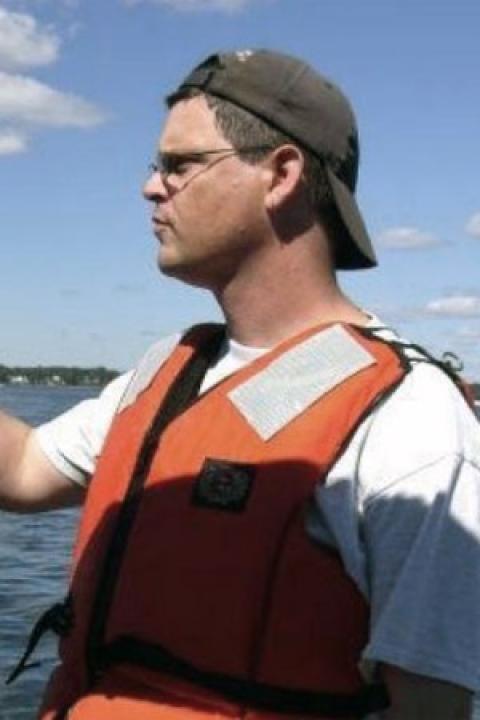
Kurt Schwehr serves as Affiliate Associate Research Professor at the University of New Hampshire's Center for Coastal and Ocean Mapping (CCOM) while concurrently holding the position of Head of Ocean Engineering at Google. His distinguished career spans NASA's Jet Propulsion Laboratory, NASA Ames Research Center, Carnegie Mellon University's Robotics Institute, and the United States Geological Survey, demonstrating exceptional cross-disciplinary expertise in marine and space systems. His educational foundation includes a Ph.D. in Marine Geology and Geophysics from Scripps Institution of Oceanography and a B.S. in Geology from Stanford University. These qualifications underpin his innovative approach to solving complex environmental challenges through technological integration. Dr. Schwehr's research program uniquely bridges computer science, geology, and geophysics to develop robotic systems and real-time visualization tools for extreme environments. His work focuses on applying computer graphics and autonomous systems to marine conservation and planetary exploration, with signature projects including the Chart-of-the-Future initiative, maritime Automatic Identification System applications, and Mars mission visualization software. The Right Whale AIS Project exemplifies his commitment to practical conservation, using acoustic networks to prevent ship-whale collisions in Boston Approaches. Analysis of his publication trajectory reveals a strategic evolution from Mars exploration software (2000s) toward ocean-focused geospatial technologies. Recent work emphasizes cloud-based big data processing (Google Earth Engine), high-resolution land cover mapping, and AIS-driven marine spatial planning, reflecting his dual focus on environmental monitoring infrastructure and actionable conservation tools. His publications consistently integrate open-source methodologies with real-world maritime safety applications. As a mission-critical contributor to NASA's Mars exploration program, Dr. Schwehr developed visualization systems for Pathfinder through Mars Science Laboratory missions. His leadership of the Right Whale AIS Project demonstrates applied innovation in marine conservation technology. An active open-source advocate, he develops and maintains software libraries using Python, C++, and Emacs org-mode while contributing to major geospatial projects like GDAL and Google Earth Engine.