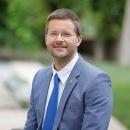
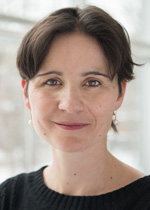
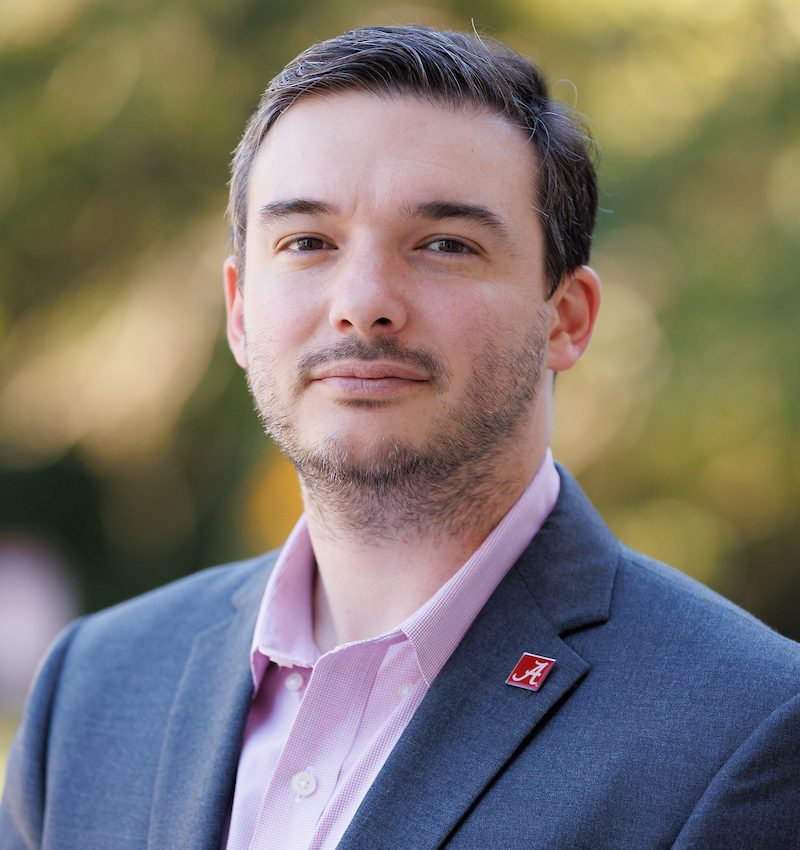
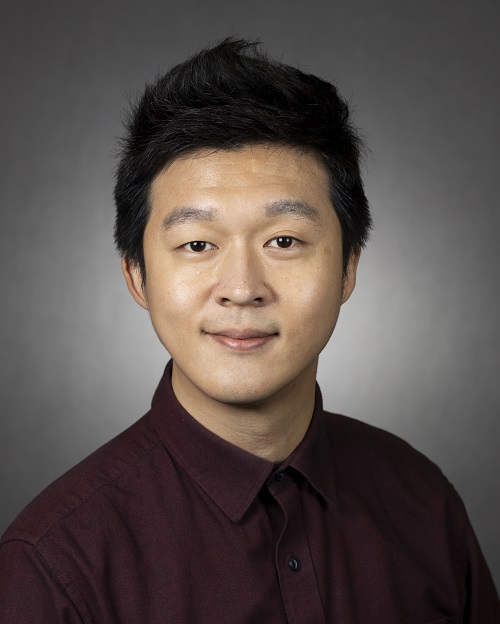
Niels Richard Hansen is a Professor at the Department of Mathematical Sciences , University of Copenhagen, leading research at the intersection of Artificial Intelligence and Statistics . He co-founded the Copenhagen Causality Lab and focuses on automating causal explanation discovery from data using Bayesian networks, stochastic processes, predictive models, and machine learning. His work emphasizes creating interpretable and robust AI systems capable of generalizing across domains. His research has produced over 56 publications spanning causal inference , graphical modeling , stochastic processes , and machine learning . Recent work includes: Predictive and causal learning (2018 keynote) High-dimensional regression solutions (2016 lecture) Interdisciplinary applications in actuarial science , environmental statistics , and neuroscience He actively contributes to scientific communication through media appearances and public explanations of statistical concepts, including analyses of: Gaussian correlation inequality proofs Daylight saving time and blood clots Mathematical approaches to lotteries Climate change vs lunar effects
Dr. Zhenyu Zhang is a Lecturer in Surveying and Spatial Science at the School of Surveying and Built Environment , University of Southern Queensland (Springfield Campus). With over 20 years of tertiary teaching experience, he specializes in geomatic engineering, GIS programming, remote sensing, and machine learning applications for geospatial data analysis. His work focuses on LiDAR technologies (terrestrial and airborne) for environmental management, 3D modeling, and high-resolution DEM generation. Member of Surveying and Spatial Science Institute (SSSI), Australia Member of Modelling and Simulation Society of Australia and New Zealand Member of International Global Navigation Satellite Systems (IGNSS) His research integrates geomatics with environmental geoscience, emphasizing forest biomass estimation, carbon accounting, and BIM development using laser scanning. He teaches foundational and advanced courses in surveying, geodetics, GIS programming, and research projects at both undergraduate and postgraduate levels.
Agustín Zaballos Diego is an Assistant Professor in the Department of Computer Engineering at University Ramon Llull (URL), Barcelona, Spain, since 1999. He serves as Research Coordinator in the Department of Engineering at La Salle Campus Barcelona and leads the R&D Networking and Security Area since 2002. His academic background includes a PhD in Data Networks and Internet Technologies (2012), an International MBA (2014), and an M.S. in Electronic Engineering (2000). University: University Ramon Llull (URL) Department: Department of Computer Engineering Research Group: GRITS Research Focus: Real-time QoS-aware routing protocols in Smart Grids, Ubiquitous Sensor Networks, and IoT communications. His work bridges telecommunications, computer science, and energy systems through projects like OPERA (FP6), INTEGRIS (FP7), and FINESCE (FP7). Publication Trends: Recent articles highlight advancements in HF communications for Antarctic research, hybrid genetic algorithms for traffic engineering, IPv6 testing, and Industry 4.0-related networking solutions. Keywords span Smart Grids, IoT, Sensor Networks, and QoS optimization. Collaborative Projects: Key initiatives include the Antarctica Project , ATHIKA (ICT in healthcare), ENVISERA (environmental sensor networks), HOTSUP (online teaching innovation), PLANET4 (AI/ML in industry), and XIoT (IoT scalability challenges).
Dr. Yongchao Huang is a Lecturer (Assistant Professor) in the School of Natural and Computing Sciences at the University of Aberdeen, where he has been employed since August 2023. He also holds affiliations with the University of Oxford and the University of Cambridge through past postdoctoral and collaborative roles. He is actively involved in research, teaching, and academic service, and is currently accepting PhD students. His educational background includes: DPhil in Engineering Science, University of Oxford (2013–2017) Additional training in Machine Learning at Oxford (2015–2019) Dr. Huang's research focuses on fundamental and physics-informed machine learning, with core interests in Bayesian inference, variational methods, generative modeling (especially score-based), reinforcement learning, and interdisciplinary AI applications in mechanics, biology, energy, climate, and finance. A central theme of his work is the inference and sampling of probability densities, particularly through innovative particle-based and physics-inspired computational frameworks. He founded the Computational and Physical Learning (CPL) lab at Aberdeen in 2023. His recent publications (2020–2025) reflect a strong trend in probabilistic machine learning, with increasing focus on physics-based inference methods such as electrostatics, fluid dynamics, and material point methods. These works bridge machine learning with applied mathematics and physical simulation, demonstrating a unique interdisciplinary approach. Topics span Bayesian neural networks, acoustic wave propagation, mortality modeling, and adversarial cybersecurity. Dr. Huang has received academic recognition through invitations to serve on program committees and editorial roles: Program Committee Member, ECAI 2024 Organizing Committee, Bioinference 2024 Guest Editor, Journal of Theoretical Biology Senior Scientific Advisor to a UK firm He has supervised 57 MSc theses independently and currently supervises one PhD student. He has secured research engagement through collaborations with institutions including Oxford, Cambridge, and industry partners. His teaching includes courses such as Introduction to Software Engineering , Software Process and Management , and Computational Intelligence at Aberdeen, as well as practicals in inference at Cambridge. Dr. Huang leads the Computational and Physical Learning (CPL) lab at the University of Aberdeen, a curiosity-driven research group focused on foundational advances in machine intelligence. Though currently a solo researcher due to limited resources, the lab emphasizes end-to-end research and open collaboration. He encourages student mobility and interdisciplinary exploration.
Jake M. Yang is a Lecturer in Physical Chemistry at the School of Chemistry, University of Leicester, where he leads an interdisciplinary research group focused on electrochemistry and sustainable material processing. He holds a DPhil and MChem from the University of Oxford and was awarded an EPSRC Doctoral Prize in 2020 for developing electrochemical sensors to monitor oceanic 'blue carbon'. His research integrates operando electrochemistry with spectroscopic and fluorescent imaging to investigate chemical reactions at electrode interfaces and their environmental applications. He is particularly known for pioneering green recycling methods for lithium-ion batteries and fuel cell membranes. Electroanalysis and Sensor Instrumentation Operando opto/spectro-electrochemical instrumentation Recycling of Technological Critical Materials Monitoring Microplastics and Ocean Ecosystems Fundamental electrochemistry Finite difference simulations The recent publications highlight a strong trend toward sustainability-driven electrochemistry, with a focus on recycling technologies using ultrasound and vegetable oil nanoemulsions. These works bridge fundamental science with industrial applications, particularly in the circular economy of electronics and energy systems. Award Highlights: EPSRC Doctoral Prize Award RSC Horizon Prize 2024 (Faraday Institute ReLIB project) University of Leicester Chemistry Image of Research Competition, 1st Prize Jake actively mentors students and offers funded PhD opportunities. His work is supported by institutional and industry-aligned grants, particularly in sustainable battery and fuel cell recycling. He collaborates across disciplines, including Earth Sciences and engineering, and promotes knowledge transfer through public engagement and media outreach. He is a key member of the Centre for Sustainable Material Processing and leads research on techno-economic analysis of recycling processes, ensuring scientific innovation meets real-world industrial and environmental needs.
Brian Ingalls is a Professor in the Department of Applied Mathematics and cross-appointed to Biology at the University of Waterloo. His research applies mathematical and control-theoretic approaches to biological systems, including genetic regulatory networks, microbial communities, and cellular metabolism. Institutional Affiliation: Faculty of Mathematics, University of Waterloo Contact: bingalls@uwaterloo.ca His work focuses on systems biology and synthetic biology , particularly sensitivity analysis of biochemical networks, optimal experimental design, and mathematical modeling of cellular processes. Research funding comes from NSERC and CIHR . Notable contributions include the textbook Mathematical Modeling in Systems Biology (MIT Press, 2013) and the Ingalls Quantitative Cell Biology Lab , which investigates intracellular and intercellular network dynamics through computational and experimental methods. Key Collaborations: iGEM Waterloo, Chemical Engineering, and international synthetic biology networks Advising: Mentored 15+ graduate students and postdocs across applied math, biology, and engineering fields
Andrea Burattin is an Associate Professor at the Department of Applied Mathematics and Computer Science, Technical University of Denmark. His work bridges formal methods and practical process analysis, focusing on process mining, business process management, and hybrid modeling techniques. He actively contributes to research in healthcare process optimization, streaming data analysis, and system verification through Petri nets and CCS transformations. UN Sustainable Development Goals: Poverty eradication, environmental protection, and prosperity for all (via process optimization) Active projects: Immersive Process Mining (2024-2027), Usability and Understandability of Hybrid Process Models (2018-2021) His research explores large language model integration with process mining, proposing frameworks like Tiramisù for multi-faceted process visualization and PN2CCS for formal model translation. Recent work emphasizes real-time monitoring, conformance checking, and IoT-driven process analytics. Key trends in his publications include: 1) Streaming process mining pipelines (2022-2025); 2) LLM-plan generation frameworks (2024); 3) Formal verification techniques (Petri nets, CCS); 4) Healthcare process modeling (2019-2023); 5) Behavioral pattern analysis in process compliance. Scientific Awards Best Demo Award (2022, 2016) Best Process Mining Dissertation Award (2014) Best Workshop Paper (EDBA and PODS4H, 2023) As advisor, he supervises PhD projects on process mining and hybrid modeling. His editorial roles include Information Systems reviewer (2024-2025) and past editor for Engineering Applications of AI (2022-2023). Collaborations span Denmark, Italy, and the Netherlands.
Aurélie Labbe is a Full Professor in the Department of Decision Sciences at HEC Montréal, holding the prestigious FRQ-IVADO Chair in Data Science. Appointed as Co-Scientific Director – Academic Partnerships at IVADO in October 2023, she plays a key leadership role in establishing connections between IVADO and partner universities. Her academic journey includes a PhD in Statistics from the University of Waterloo, a Master's degree in Statistics from the University of Montreal, and dual Bachelor's degrees in Applied Mathematics and Social Sciences from Paris-Dauphine University and Pure Mathematics from Versailles-St Quentin University. Her research spans multiple interdisciplinary domains with a focus on developing advanced statistical and machine learning methodologies for big data analysis. Labbe's work bridges theoretical statistics with practical applications across diverse fields including genomics, neuroscience, transportation systems, and health informatics. She has made significant contributions to kernel methods, matrix factorization techniques, random forest applications, and spatiotemporal data analysis, with publications appearing in top journals across multiple disciplines. Analyzing her recent publications reveals a clear trend toward methodological innovation applied to complex real-world problems. Her work demonstrates expertise in handling high-dimensional data from diverse sources including neuroimaging, transportation networks, and genomic studies. The interdisciplinary nature of her research connects statistical theory with applications in healthcare, transportation safety, and biological sciences, reflecting her ability to develop methods that address domain-specific challenges while advancing statistical methodology. Holder of the FRQ-IVADO Chair in Data Science Member of the Center for Mathematical Research Training Professor Labbe actively mentors the next generation of data scientists, supervising numerous doctoral and master's students. Her supervision portfolio includes 1 doctoral thesis (2023), 4 master's theses (2022-2024), and 32 supervised projects spanning 2019-2025. Her students' work covers diverse applications including transportation safety, healthcare analytics, financial modeling, and environmental analysis. Through her leadership of the FRQ-IVADO Chair in Data Science, she coordinates research activities that integrate mathematical, statistical, and computer science expertise with domain knowledge from various data-generating fields. As Co-Scientific Director at IVADO, Professor Labbe leads efforts to establish connections with faculties and departments across five partner universities, integrating them into IVADO's research and knowledge transfer activities. Her leadership role positions her at the forefront of advancing data science research and applications in Quebec's academic ecosystem.
Aleksandar Mihajlovic is a researcher and Art Director at Singidunum University, Serbia. With a doctoral degree in Contemporary Business Decision-Making (2022), a master's in Business Economics (2014), and a bachelor's in Computer Graphics and Design (2008), he combines academic rigor with creative leadership in the university's marketing strategy. Doctoral studies: Contemporary Business Decision-Making, Singidunum University (2022) Master studies: Business Economics, Singidunum University (2008–2014) Undergraduate: Computer Graphics and Design, Faculty of Informatics and Management (2005–2008) High school: Robotics and Flexible Production Systems Technician, Polytechnic Academy (1995–1999) His research spans visual communication , digital marketing , and artificial intelligence applications in creative industries. Key contributions include Co-authoring 11 academic papers (2015–2025) on topics like Instagram ad effectiveness, techno-feudalism, and responsive logo design. Developing the scientific research portal 'Singipedia' and international magazine 'SingiLogos'. Participating in 7 global projects including Erasmus+ and TEMPUS initiatives. His scientific awards include the JISA Discobolos Special Award (2010), IT Globus Award (2010), and Grafima Fair Special Award (2025). He serves on the organizing committee for conferences like Sinteza and Sitcon , and has judged marketing competitions while volunteering for NGOs like the City Organization of the Deaf of Belgrade.
Dr. Xiaopeng Li is the Harvey D. Spangler Professor in the Department of Civil and Environmental Engineering at the University of Wisconsin-Madison, with an affiliation in the Department of Electrical and Computer Engineering. He leads the USDOT Rural Autonomous Vehicle Program and previously directed the National Institute for Congestion Reduction. He earned his B.S. in Civil Engineering from Tsinghua University (2006), M.S. in Civil Engineering (2007), M.S. in Applied Mathematics (2010), and Ph.D. in Civil Engineering (2011) from the University of Illinois at Urbana-Champaign. His research focuses on modeling and field experiments for connected, electric, and automated vehicles (CAVs), infrastructure systems analysis, and interdependent network modeling. He has pioneered physics-enhanced machine learning frameworks for vehicle control and developed simulation tools for CAV deployment. His 2025-2024 publications highlight advancements in Connected vehicle trajectory modeling Energy consumption optimization Edge computing for autonomous operations Residual learning control systems Equity analysis in AV deployment Communication technologies for V2X Awards include: TRB Best Paper Award (2025) NSF CAREER (2015) ASCE Fellow (2024) IEEE Senior Member (2022) Multiple institution-specific fellowships He has advised 15+ graduate students, secured $35M+ in grants from NSF, USDOT, and industry partners, and chairs the IEEE ITSS Emerging Transportation Technology Testing committee. His work addresses real-world AV implementation, safety validation, and sustainable transportation systems.
Dr. Patrick Shane Crawford serves as Assistant Professor in the Department of Civil, Construction and Environmental Engineering at the University of Alabama's College of Engineering. Affiliated with the Center for Sustainable Infrastructure and Alabama Water Institute, his research focuses on enhancing community resilience to tornadoes, floods, and hurricanes through interdisciplinary engineering approaches integrating social science and policy perspectives. His educational background includes: B.S. in Civil Engineering (2012, University of Alabama) M.S. in Civil Engineering (2014, University of Alabama) Ph.D. in Civil Engineering (2018, University of Alabama) Dr. Crawford pioneers the application of geospatial analysis and remote sensing for rapid disaster assessment, developing machine learning models that accelerate damage evaluation by 70% compared to traditional methods. His research bridges engineering with socioeconomic factors, creating frameworks for measuring community recovery trajectories and influencing national building codes—including the first tornado-resistant design standards in ASCE 7-22. Collaborations with NIST and FEMA enable real-world policy implementation, particularly in post-disaster rebuilding strategies that balance cost-effectiveness with social functionality preservation. Analysis of his 2022-2025 publications reveals consistent innovation in longitudinal disaster reconnaissance , with 60% of recent work focusing on tornado events using deep learning for damage classification. Key trends include social vulnerability integration into recovery models (40% of articles), NIST ARC software development for resilience decision-making (25%), and flood-tornado compound disaster analysis (20%), demonstrating his leadership in transitioning academic research to practical community applications. Active in federal partnerships, Dr. Crawford's 2025 feature Confident but Exposed: How Prepared Are U.S. Homeowners for Extreme Weather? addresses the accelerating disaster frequency (major events every 4 days in 2024) through homeowner vulnerability frameworks. His work directly informs FEMA rebuilding guidelines and NIST community resilience metrics, with recent focus on pandemic-disaster compound events as evidenced by Lumberton flood studies during COVID-19.
Yuanyuan Shi is an Assistant Professor in the Electrical and Computer Engineering Department at the University of California, San Diego (UCSD), with affiliations at the Center for Energy Research and the MICS. Her research integrates machine learning with control theory, focusing on energy systems, cyber-physical systems, and PDE-governed systems, aiming to provide reliable and efficient decision-making in complex environments like power grids and buildings. Assistant Professor, UCSD (2021–present) Postdoctoral Fellow, Caltech (2020–2021) Ph.D., Electrical and Computer Engineering, University of Washington (2020) M.Sc., Electrical Engineering and Statistics, University of Washington B.Eng., Nanjing University, China Her work spans machine learning, optimization, and control theory, with applications in power systems, PDEs, and intelligent systems. She develops algorithms that combine learning with control guarantees, enabling robust solutions for energy management and grid stability. Recent publications highlight her focus on neural operators for PDE and delay systems, stability-constrained reinforcement learning, and multi-agent control in sustainability contexts. These works advance physics-informed models, grid frequency regulation, and commercialized energy storage integration. She has received prestigious awards, including: NSF CAREER Award (2025) Schmidt Sciences AI2050 Early Career Fellowship (2025) Hellman Fellowship (2023) Jacobs School Early-Career Faculty Acceleration Award (2024) MIT Rising Star in EECS (2018) Clean Energy Institute Scientific Achievement Award (2020) At UCSD, her lab collaborates on projects like FedNeMO (federated neural operators) and BEAR-Data (multi-zone building dataset). She co-organized Control Meets Learning seminars and serves as guest co-editor for the Applied Energy special issue on Trustworthy Machine Learning.
Associate Professor Chengguo Zhang is a researcher at the University of New South Wales (UNSW Sydney) specializing in Mining Engineering and Geomechanics . His work focuses on improving mining safety and sustainability through fundamental and applied research on dynamic rock mass failures , groundwater-mining interactions , and data-driven visualization technologies . He currently serves as the Postgraduate Research Coordinator for the School of Mining Engineering. PhD in Mining Engineering from UNSW Sydney (2015) Coordinates postgraduate research programs Recipient of multiple teaching and research awards Research Interests: Zhang's work addresses critical mining industry challenges through: Quantification of energy sources and dissipation in rock masses for rockburst management Integration of AI data analytics and 3D visualization for geotechnical risk assessment Mine subsidence and coupled hydro-mechanical behavior of rock discontinuities Development of digital ground control management systems Article Trends: His recent publications demonstrate expertise in: Numerical modeling of rock fracturing mechanisms Nonlinear fluid flow analysis in fractured rock masses Shotcrete and ground support system evaluation Hydro-mechanical coupling during shear processes Energy-based coal burst risk classification Scientific Awards: Tim Shaw Award for Innovation in Teaching (2024) International Outstanding Young Scholar Award (2023) UNSW Education Excellence Award (2021) UNSW Research Excellence Award (2018) Research Supervision: Supervises 12 active PhD students (9 as primary/joint supervisor) and has guided 11 PhD completions (7 as primary/joint supervisor), including 3 Dean's Award recipients. Focuses on numerical modeling, data visualization, and machine learning applications in mining geomechanics.
Joonhyuk Suh is an Assistant Professor in the Department of Food Science & Technology at the University of Georgia's College of Agricultural & Environmental Sciences. His research focuses on applying analytical chemistry and metabolomics/flavoromics to enhance food flavor, quality, and safety. Research Interests : Multidisciplinary food chemistry analysis Metabolite and flavor profiling Nut and fruit quality evaluation Dairy product flavor chemistry Food safety biomarkers Recent Publication Trends (2025-2022) show expertise in: Metabolomic evaluation of agricultural products Flavor chemistry in tropical fruits and nuts Food processing safety and contaminant analysis Plant-based food characterization Microbiome and nutritional interventions
Yeonghyeon Gu serves as Assistant Professor in the Department of Artificial Intelligence Data Science at Sejong University, South Korea, a position held since 2022 after progressing from Principal Researcher (2014-2019) to Acting Professor (2019-2022). He maintains active affiliation with the university's AI Convergence Research Center and has produced 84 research outputs with 795 Scopus citations and an h-index of 14. His academic credentials include: B.A. from Sejong University (2004) M.A. from Sejong University (2006) Ph.D. from Sejong University (2014) Dr. Gu's research centers on Artificial Intelligence with specialization in Meta Learning, Transfer Learning, and Deep Learning methodologies. His work demonstrates strong interdisciplinary application across robotics, agricultural technology, energy systems, and meteorology. Key contributions include district heater load forecasting using parallel CNN-LSTM attention, image-based hot pepper disease diagnosis, and potato late blight prediction models. Analysis of his 2024-2025 publications reveals concentrated innovation in hybrid AI architectures, particularly combining graph networks with reinforcement learning for blockchain security and integrating physical models with deep learning for weather prediction. His work consistently addresses real-world engineering challenges through novel neural network applications while maintaining strong theoretical foundations in transfer learning frameworks. No scientific awards were documented in the source materials. While specific student advisees and grant details weren't listed, his extensive publication record (29 outputs in 2025 alone) and international collaborations suggest active mentorship and research funding. His work shows particular strength in cross-institutional projects with researchers from Turkey, Nigeria, Saudi Arabia, and South Korea. As a core member of Sejong University's AI Convergence Research Center, Dr. Gu contributes to institutional initiatives bridging AI theory with practical implementation across multiple sectors. The center's structure facilitates his interdisciplinary approach, connecting computer science with engineering, agriculture, and environmental science domains through shared computational infrastructure and collaborative research frameworks.