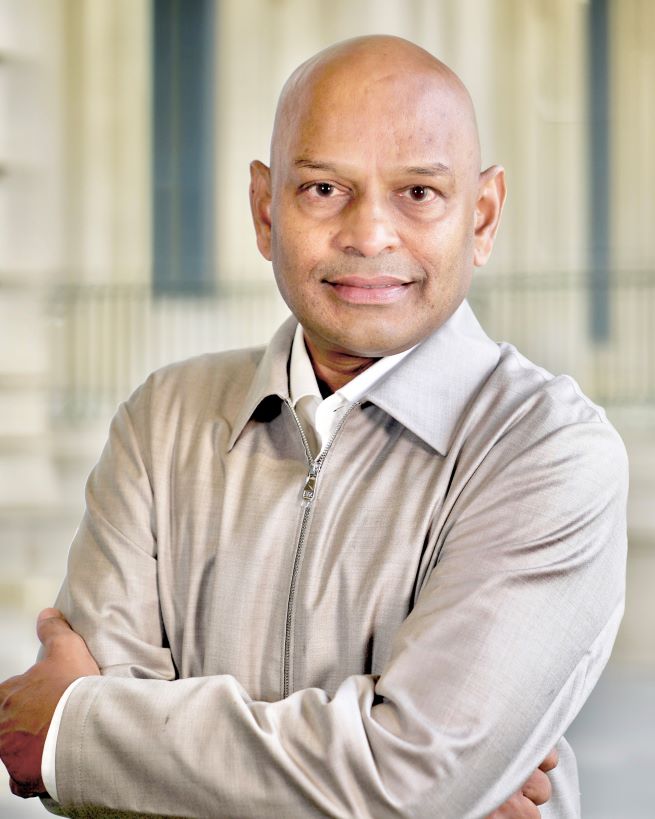
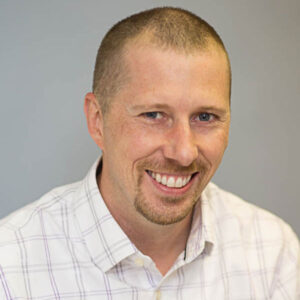
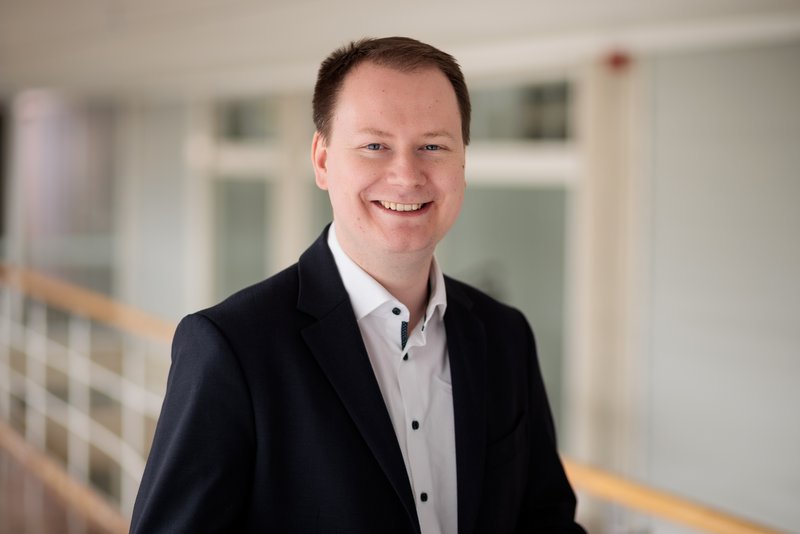
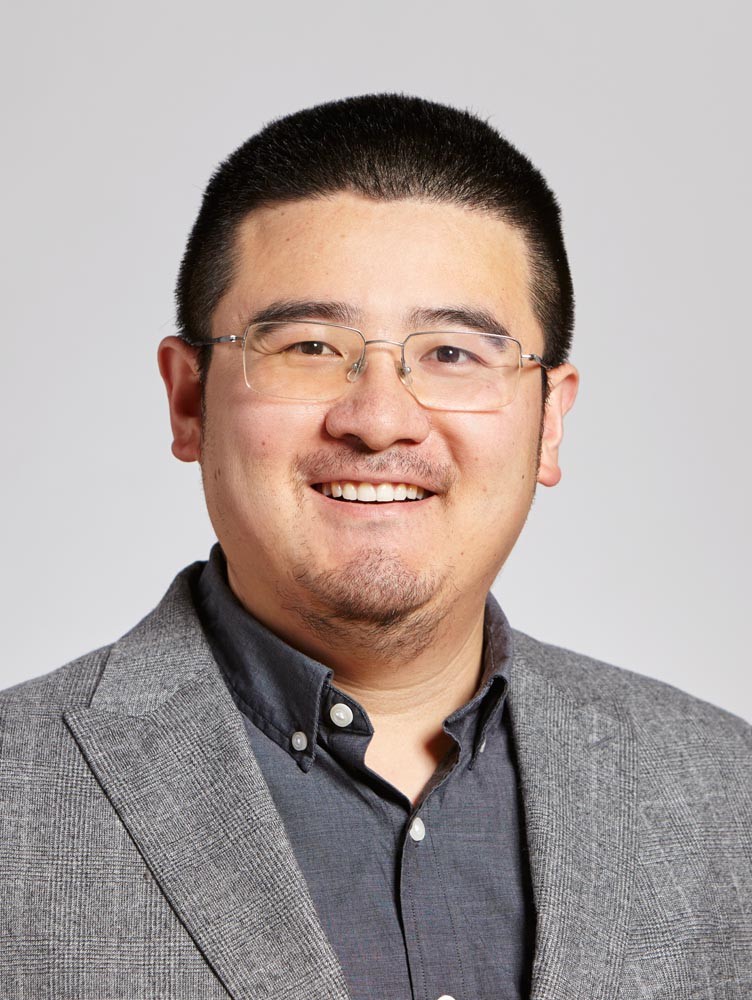
Andrea Appolloni is an Associate Professor at the Department of Management and Law, University of Rome Tor Vergata. His academic career focuses on Management with emphasis on Sustainable Supply Chain Management , Digital Transformation , and Circular Economy . His research explores the intersection of technological innovation and sustainability, particularly through topics like AI in Logistics , Green Procurement , and Policy Optimization . Publications span both theoretical frameworks and empirical studies in China, Italy, and Malaysia, with a strong focus on environmental impact and organizational performance. Recent work includes digital twin applications for human-AI collaboration, blockchain integration in sustainable supply chains, and analyzing barriers to circular economy adoption. His 15 most recent articles (2025-2022) demonstrate a trend toward combining Artificial Intelligence , Operations Management , and Environmental Governance .
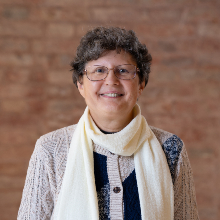
Dr. Nai-Ching Chi is a tenured Associate Professor at the University of Iowa College of Nursing. She is a nurse scientist and informaticist conducting pioneering research at the intersection of data science, technology, and health, focusing on dementia care, multimorbidity management, pain management, family caregiving, and healthy aging. PhD in Biobehavioral Nursing and Health Informatics (University of Washington) MS in Clinical Informatics and Patient-Centered Technologies (University of Washington) MSN (University of California, San Francisco) BSN (Tzu Chi University, Taiwan) Dr. Chi's research integrates advanced data science and AI to develop digital interventions for vulnerable populations. Notable projects include the PACE-app for dementia caregiver pain management, AI-powered nursing communication tools, and NIH-funded studies on multimorbidity patterns in Alzheimer's patients. Her work informs clinical guidelines and leverages predictive modeling for early risk detection. Recent publications focus on AI-driven pain assessment, machine learning in multimorbidity analysis, usability of caregiving apps, and rural age-friendly ecosystems. Her work spans comorbidity indices, geriatric pain, and health informatics innovations. National Academy of Medicine Emerging Leader Forum nomination NIA Butler-Williams Scholar NIA Aging Initiative MCCs Scholar Hospice and Palliative Nurses Association Emerging Leader Award Dr. Chi mentors students in aging research and technology-driven healthcare. She serves on editorial boards, grant review panels, and university committees, while volunteering in nursing homes and international medical missions.
Seeram Ramakrishna is a Professor of Materials Engineering at the Department of Mechanical Engineering, National University of Singapore (NUS), affiliated with the College of Design and Engineering. He holds a PhD from the University of Cambridge and a TGMP from Harvard University. His research focuses on circular economy, nanotechnology, and sustainable materials engineering, with notable contributions to electrospinning, biomaterials, and energy storage systems. Key educational background includes: PhD in Materials Science (University of Cambridge) TGMP in Advanced Manufacturing (Harvard University) Research interests span cross-disciplinary areas such as: Development of eco-friendly nanocomposites Electrospun nanofiber applications in healthcare and energy Circular economy frameworks for sustainable materials Advanced manufacturing techniques for biomedical devices His publications highlight innovations in: High-efficiency solar steam generation via core-shell fibers Flexible wearable sensors for health monitoring Green synthesis of supercapacitor materials Plastic waste circularity through informatics-driven approaches Notable projects include books on circular economy fundamentals and biomaterials. His work bridges material science with environmental sustainability, addressing global challenges in energy, healthcare, and pollution control.
Roberto Rojas-Cessa is a Professor in the Department of Electrical and Computer Engineering at New Jersey Institute of Technology (NJIT), affiliated with the School of Applied Engineering and Technology. His research focuses on networking, blockchain applications in smart cities, energy systems, wireless communications, and high-performance switching. He has led multiple National Science Foundation (NSF)-funded projects, including initiatives on controlled delivery power grids and next-generation network quality of service. Notably, his work explores blockchain for energy metering, sustainable environmental measures, and smart grid optimization. He is also a Senior Member of the National Academy of Inventors (2024). His research interests span network protocols, distributed systems, and IoT applications. Recent projects include AMI-Chain (a blockchain-based power metering system) and studies on indirect free-space optical communications for vehicular networks. He has contributed to advancements in medium access control for crowded networks and energy packet switches for digital microgrids. Rojas-Cessa’s work integrates machine learning for network management and flood impact analysis. He has developed tools for time-lapse analysis of urban data and agent-based models to evaluate electric vehicle adoption. His publications emphasize scalability, security, and efficiency in both traditional and emerging technologies. Grants: Collaborative Research on Power Grids (NSF, 2016–2018), NeTS-NR: Quality of Service Networks (NSF, 2004–2008) Awards: Senior Member of the National Academy of Inventors (2024) His lab activities include experimental evaluations of digital microgrids and blockchain implementations for carbon footprint tracking. He actively collaborates on projects addressing emergency communications and resilient energy distribution systems.
Antonella Basso serves as a Full Professor in the Department of Economics at Ca' Foscari University of Venice, specializing in mathematical methods of economics and actuarial and financial sciences (STAT-04/A). She is affiliated with the Research Institute for Complexity and maintains her office in the San Giobbe building where she holds regular office hours on Tuesdays from 2:00 pm to 5:00 pm CET. Professor Basso's research expertise spans multiple domains of quantitative finance and economics, with particular emphasis on Financial Mathematics , Quantitative and Computational Finance , and Ethical Finance including ESG investments and green finance. She has pioneered the application of Data Envelopment Analysis (DEA) across diverse contexts from mutual funds and pension funds to museum evaluation. Her work increasingly explores the integration of Artificial Intelligence and Machine Learning techniques for economic applications, alongside traditional risk assessment methodologies. She also maintains significant research interests in art as a financial asset and alternative investment class. Her recent publications (2019-2025) reveal a consistent research trajectory with growing emphasis on sustainable finance, alternative investments including art, and performance measurement in cultural institutions. Her work demonstrates sophisticated methodological approaches to portfolio optimization with volume-based liquidity constraints, ethical fund evaluation using metafrontier approaches, and innovative integration of DEA with Balanced Scorecard and AHP methodologies for comprehensive performance assessment. As an educator, Professor Basso actively supervises undergraduate and master's theses on topics spanning financial mathematics, computational finance, insurance, and ethical finance applications. She requires preliminary discussions with students to ensure appropriate thesis topic alignment with research objectives and methodological capabilities. Through her affiliation with the Research Institute for Complexity, she contributes to interdisciplinary research examining complex economic and financial systems through quantitative lenses, bridging theoretical mathematical approaches with practical financial applications across multiple sectors.
Matthew Fagan is an Associate Professor in the Department of Geography & Environmental Systems at the University of Maryland, Baltimore County (UMBC), holding a Ph.D. from Columbia University (2014). His research integrates remote sensing, landscape ecology, and conservation biology to study forest dynamics across tropical and temperate ecosystems. His primary research interests focus on: Landscape-scale habitat degradation and restoration Remote sensing applications for forest monitoring Policy effectiveness in tropical conservation corridors Socio-ecological drivers of agricultural expansion Connectivity and reforestation processes Recent publication trends reveal increasing emphasis on machine learning integration with high-resolution satellite imagery for tropical forest monitoring, particularly in assessing degradation patterns, carbon sequestration potential, and the distinction between natural regeneration versus plantation forestry. His work increasingly addresses the intersection of climate change mitigation, biodiversity conservation, and poverty reduction through land use studies in Africa and Latin America. Dr. Fagan leads the "Earth from Above" research laboratory, which conducts field and remote sensing work in Costa Rica, Maryland, and the Caribbean, with specific projects examining timber plantation impacts, riparian forest connectivity using LiDAR, and conservation of endangered species like the Bahama Oriole.
Dr. Michael Chang is a Senior Lecturer and Program Director of Spatial Information Sciences at Macquarie University's School of Natural Sciences. He specializes in remote sensing and GIS applications for environmental monitoring, including vegetation dynamics, land use change, and disaster mitigation. His affiliations include the Data Horizons, Smart Green Cities, and Lifespan Health and Wellbeing Research Centres. Research Interests: Earth observation data integration 3D modeling and change detection Biodiversity conservation and wetland monitoring Spatial analysis of multilingualism and transport planning Awards: 2017 BHERT Award for Outstanding Collaboration 2019 Faculty Teaching Excellence Award 2017 Research Excellence Recognition Projects: Leads multi-sensor fusion initiatives for vegetation monitoring and collaborates on disaster resilience frameworks. Active in interdisciplinary work spanning ecology, geophysics, and urban planning. Labs/Teams: Core member of Macquarie's Planetary Research Centre and collaborates internationally on port city resilience projects in Africa.
Kshirasagar Naik is a Professor in the Department of Electrical and Computer Engineering at the University of Waterloo, Ontario. He is actively involved in graduate research supervision and has been a member of IEEE since 1994. His academic career spans decades, with a focus on wireless communication, energy efficiency, and cybersecurity. 1992, Doctorate in Computer Engineering from Concordia University, Ontario 1988, Master of Mathematics in Computer Science from University of Waterloo, Ontario 1983, MTech in Computer Engineering from Indian Institute of Technology, Kharagpur, India 1981, BScEng in Electronics and Telecommunication from Sambalpur University, India His research interests include Mobile and Ad Hoc Networks , Cybersecurity , Internet of Things (IoT) , and Intelligent Transportation Systems . He has published extensively on energy optimization in wireless devices, delay-tolerant networks, and security protocols for vehicular systems. Recent publications highlight the integration of Machine Learning and IoT in environmental monitoring, particularly forest fire detection and prediction. Other works focus on cybersecurity , vehicular networks , and energy optimization in data centers and handheld devices. Professor Naik is currently accepting graduate students for research in mobile systems, network protocols, and green computing at the University of Waterloo.
Monika Kuffer is a Full Professor at the University of Twente's Faculty of Geo-Information Science and Earth Observation (ITC), holding additional roles as Associate Professor in the Department of Urban and Regional Planning and Geo-Information Management. She leads research in urban remote sensing, deprived area monitoring, and sustainable urban development. Her work integrates spatial statistics, machine learning, and citizen science to inform inclusive city planning. Education: PhD in Human Geography & GIS from the University of Twente MSc in Human Geography (TU Munich) MSc in Geographic Information Science (University of London) Research Interests: Urban Remote Sensing Slum and Deprivation Mapping Climate Adaptation Strategies Citizen Science for Urban Inequalities Earth Observation Policy Support Articles Trends: Recent work emphasizes multi-city climate adaptation analyses, thermal inequality assessments in African slums, and scalable deprivation modelling frameworks like IDEAMAPS. Projects like ONEKANA and NightWatch highlight fusion of EO data with community-driven methods. Awards: 2022 EO4all Prize for innovative Earth Observation applications Advising & Grants: Supervised 3 PhD/MSc projects. Active in global initiatives like the EU's Knowledge Centre on EO and the UN's SDG frameworks. Leads datasets on deprivation (e.g., IDeAMapSudan). Labs/Teams: Core member of ITC's Urban Remote Sensing and GeoAI teams. Collaborates with the Digital Society Institute for interdisciplinary urban research.
Brandon A. Jones is an Associate Professor in the Department of Aerospace Engineering and Engineering Mechanics at the University of Texas at Austin. He holds the Charles Elmer Rowe Fellowship in Engineering and leads the Texas Spacecraft Laboratory (TSL) and the Controls, Autonomy, Estimation, and Learning for Uncertain Systems (CAELUS) Laboratory. His research focuses on space situational awareness, spacecraft navigation, and uncertainty quantification, with applications to orbital mechanics, multi-target tracking, and autonomous systems. Dr. Jones received his Ph.D. in Aerospace Engineering from the University of Colorado Boulder and has held roles at NASA Johnson Space Center and as a Research Assistant Professor. He is an Associate Fellow of the AIAA and former chair of the American Astronautical Society's Space Surveillance Technical Committee. His work includes NASA-funded projects like the SCOPE-1 CubeSat mission for terrain-relative navigation and the Crater-based Navigation and Timing (CNT) system for lunar missions. Key research areas include: Multi-source information fusion for space object tracking Machine learning for crater detection and autonomous navigation Uncertainty propagation in cislunar and highly perturbed orbits Event-based sensor systems for harsh-lighting environments Recent achievements include the 2023 W. A. 'Tex' Moncrief Grand Challenge Award and leadership in collaborative projects with NASA, JPL, and academia. His labs emphasize student-driven CubeSat missions and cutting-edge algorithms for space domain awareness.
Scott E. Crouter is a Professor in the College of Education, Health, and Human Sciences at the University of Tennessee, Knoxville. He serves as director of the Applied Physiology Laboratory and is a Fellow of the American College of Sports Medicine. His research focuses on improving physical activity and energy expenditure measurement using wearable monitors and machine learning algorithms, with applications in youth, adults, and special populations like pregnant individuals and cancer survivors. Education: Postdoctoral in Nutritional Sciences (Cornell, 2005-07), PhD in Exercise Physiology (University of Tennessee, 2005), MS in Cardiac Rehabilitation/Adult Fitness (University of Wisconsin, 2000), BS in Exercise Science (Linfield College, 1998) Dr. Crouter's work spans physical activity assessment , sedentary behavior analysis , and technology validation . He has developed machine learning models for energy expenditure estimation using ActiGraph GT9X and Cosmed K5 devices. His recent studies examine pregnancy hyperglycemia interventions, urban environment impacts on activity patterns, and robotic exercise aids. He has secured significant NIH funding for projects including digital health weight management , pediatric obesity treatment translation , and fall risk factors in the elderly . As associate editor for Medicine and Science in Sports and Exercise and Journal for the Measurement of Physical Behaviors , he contributes to methodological advancement in activity monitoring. Scientific Awards: Fellow, American College of Sports Medicine Editorial Leadership National Physical Activity Plan Alliance Participation CDC/National Collaborative on Childhood Obesity Research Contributions National Academy of Sciences Committee Member Dr. Crouter's student collaborations include works with Natalie Butte on youth compendiums, Allan Opotowsky in cardiac rehabilitation trials, Patrick Hibbing in metabolic equivalent research, and Sara LaMunion in consumer monitor validation. His lab has produced over 100 publications and 15 recent articles focusing on sensor technology and population health.
Muhammad Waqas is a researcher affiliated with COMSATS University Islamabad , where he holds a position in the Department of Meteorology under the School of Applied Sciences and Humanities . His academic collaborations span institutions like Bahria University, National University of Technology, and University of Bahrain, indicating a multidisciplinary approach. Research interests include Mechanisms for integrating fuzzy logic and machine learning in health monitoring Application of deep learning to medical imaging and clinical diagnostics Development of smart sensors for wearable technology in biomechanics Analysis of social media data for public health surveillance and sentiment analysis Investigation of digital citizenship and ICT leadership in educational contexts Trends in his 15 most recent publications (2025-2024) reveal a focus on medical diagnostics (e.g., monkeypox, breast cancer), smart infrastructure (e.g., sensor placement, structural health monitoring), and social media analytics for health and behavioral insights. These works leverage machine learning , fuzzy systems , and multi-objective optimization .
Prof. Dr.-Ing. Michael Möhring is a Professor of Data Science at Reutlingen University's Faculty of Informatics. He serves as Prodekan for the Herman Hollerith Zentrum (HHZ) and leads research in data analytics, Industry 4.0, and process mining. Previously, he held roles as an IT consultant, project manager at Bosch Group/BSH, and academic researcher. Education: Dr.-Ing. (PhD) in Business Informatics M.Sc. in Business Informatics B.Sc. in Business Informatics Research Interests: Focuses on leveraging structured/unstructured data for industrial applications, enterprise architecture management, digital twins integration, and AI-driven decision support. Specializes in bridging technical systems with organizational processes in manufacturing and service industries. Lab Affiliations: AI-Real Lab AIDA Future Mobility Lab Internet of Things Lab Virtual Reality Lab Articles Trends: Recent work emphasizes practical implementations of AI in production failure analysis (language models), energy optimization systems (HollerithEnergyML), and technical debt management in SMEs. Consistently explores data integration challenges across manufacturing, service ecosystems, and digital twin frameworks. Grants & Collaborations: Active in EU-funded projects like 5G-PreCiSe and bwHealthApp. Collaborates with industry partners on digital transformation initiatives through HHZ's applied research programs.
Mutian Niu serves as an Assistant Professor at the Department of Environmental Systems Science, ETH Zurich, where he leads the Professorship for Animal Nutrition. His research addresses critical sustainability challenges in livestock production through innovative approaches to methane mitigation and precision animal nutrition. His primary research domains include Animal Nutrition , Dairy Science , and Methane Mitigation , with specific expertise in feed additives (3-nitrooxypropanol, microalgae), rumen fermentation dynamics, and physiological responses in dairy cattle. He integrates computational methods including machine learning for respiratory monitoring and video-based behavioral analysis, bridging animal science with environmental sustainability. Analysis of his recent publications reveals a strong interdisciplinary trajectory focused on practical methane reduction solutions. Key trends include methodological advancements in methane measurement validation, meta-analyses of feed additive efficacy, and emerging applications of computer vision for non-invasive health monitoring in dairy operations. His work consistently emphasizes environmental impact reduction while maintaining production efficiency in ruminant systems.
Professor Matt Garratt is a faculty member at the University of New South Wales (UNSW Canberra), School of Engineering and IT, serving as AI theme lead for the Defence Trailblazer Universities initiative with over $200 million in funding. His primary research focuses on sensing, guidance, and control for autonomous systems within robotics and unmanned aerial vehicles. Garratt's research spans robotics, swarm intelligence, and autonomous systems with emphasis on bio-inspired navigation techniques and adaptive flight control. His work addresses critical challenges including terrain following using vision systems, landing UAVs on moving platforms, and developing self-organizing swarms. He integrates artificial intelligence, computer vision, and machine learning to advance unmanned systems capabilities in complex environments. Analysis of his recent publications reveals strong trends in bio-inspired UAV navigation (particularly honeybee behavior modeling) and swarm robotics applications. His work increasingly incorporates deep learning for perception tasks while addressing real-world challenges like gas plume detection and adversarial robustness in 3D vision systems. The research demonstrates consistent progression toward practical implementation of autonomous systems in dynamic environments. Professor Garratt has secured over $7.7 million in external research funding as Chief Investigator on 33 grants. He actively mentors graduate students with scholarships available for Masters and PhD research in robotics and AI, focusing on: UAV path planning and adaptive control systems Swarm robotics collective motion optimization Bio-inspired autonomous navigation techniques Computer vision for robotic perception He co-founded the UNSW Canberra AIR (AI and Robotics) Group (AIR Lab), which drives research in trusted autonomy, swarm intelligence, and AI integration for defense applications. The lab develops practical solutions for autonomous systems operating in complex, real-world environments while maintaining ethical AI frameworks.