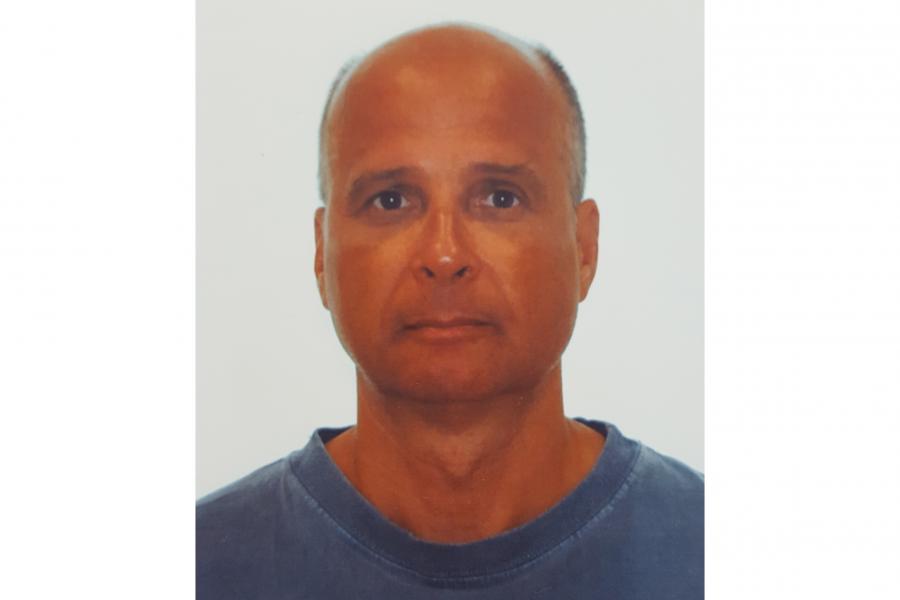
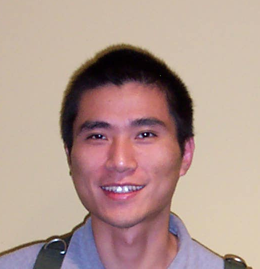
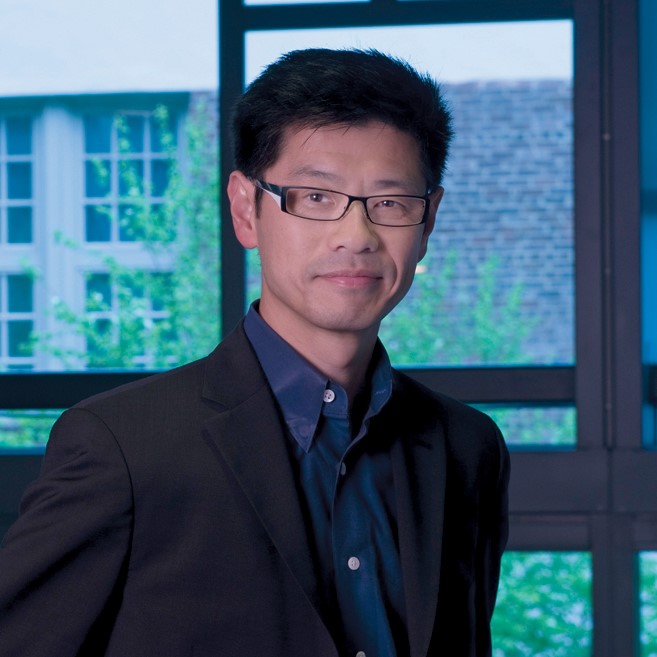
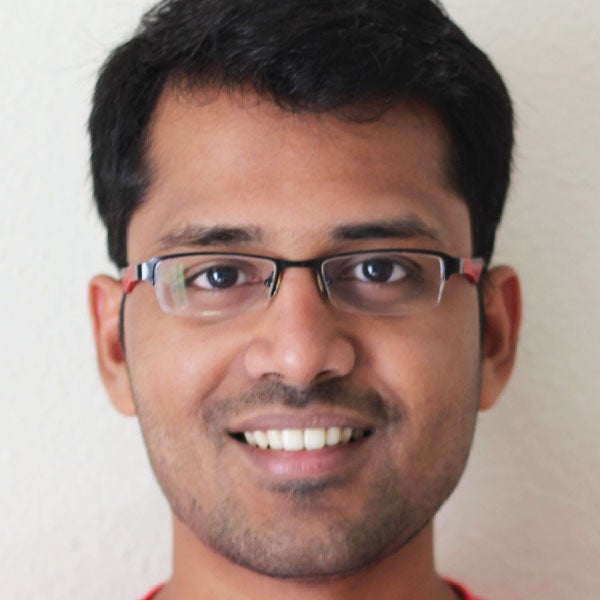
Dr. Gary Glover is a Professor of Radiology (Radiological Sciences Lab) at Stanford University , with courtesy appointments in Psychology and Electrical Engineering. His work focuses on the physics and mathematics of MRI, particularly rapid scanning methods using spiral k-space trajectories for functional brain imaging and multimodal neuroimaging (fMRI/EEG/fPET/fNIRS) combined with neuromodulation techniques like TMS and transcranial ultrasound. Academic Appointments: Radiology, Psychology, Electrical Engineering Professional Affiliations: Bio-X, Stanford Cancer Institute, Wu Tsai Neurosciences Institute Research Interests include: Development of blood oxygen level-dependent (BOLD) and viscoelastic contrast in MRI Functional MR Elastography for brain activation mapping Optimization of MR-ARFI for transcranial ultrasound guidance Automated spinal cord segmentation (EPISeg) using machine learning Scientific Awards : National Academy of Engineering (2013) Gold Medal, ISMRM (2000) Steinmetz Award, General Electric (1985) Lauterbur Lecture, ISMRM (2018) Recent Publications analyze: Fast fMRI sampling and spurious signal correction Dissociated patterns in default mode network anti-correlations Neural correlates of collaborative behavior in triadic fMRI Salience network contributions to depression pathophysiology
Dr. Ken Ferens is an Assistant Professor in the Department of Electrical and Computer Engineering at the Price Faculty of Engineering, University of Manitoba. He serves as the Computer Engineering Champion in the Centre for Engineering Professional Practice and Engineering Education and directs the Applied Cognitive Intelligence (ACI) Research Group. Dr. Ferens is a senior member of the Institute of Electrical & Electronics Engineers (IEEE), Chair of the EduManCom Chapter of the IEEE, Vice-Chair of the Computer and Computational Intelligence Chapter of the IEEE, and Chair of the Industry, Teaching Assistants, and Student Forums for Engineering Curriculum Review and Improvement. Ph.D. (Computer Engineering), University of Manitoba, 1996 M.Sc. (Computer Engineering), University of Manitoba, 1991 B.Sc. (Electrical Engineering), University of Manitoba, 1989 Dr. Ferens has over 33 years of research experience in computational intelligence, focusing on cognitive machine learning, artificial intelligence, cognitive computational intelligence, chaos theory applications, agent-based models, and various optimization algorithms including simulated annealing, genetic algorithms, artificial neural networks, and particle swarm optimization. His research applies these techniques to develop software and hardware intrusion detection systems for cybersecurity applications. He teaches graduate-level courses on Computer Network Security and Applied Computational Intelligence, providing students with theoretical background and hands-on experience in state-of-the-art security methods. Analysis of Dr. Ferens' recent publications reveals a strong focus on applying cognitive and chaotic computational techniques to cybersecurity challenges, particularly malware detection and network intrusion detection. His work increasingly integrates complexity theory, fractal analysis, and hybrid optimization approaches to enhance security systems' effectiveness. There's a clear progression toward more sophisticated machine learning architectures applied to increasingly complex security scenarios, with growing emphasis on real-world IoT and network security applications. Best Paper Award at IEEE International Conference on Cognitive Informatics and Cognitive Computing (ICCI*CC 2022) Best Paper Award at IEEE International Conference on Cognitive Informatics and Cognitive Computing (ICCI*CC 2015) Best Journal Paper Award for 2013 (Journal of ICT Research and Applications) Best Poster Award at 12th International Conference on e-Health Networking, Application & Services (2010) Best Paper Award at IASTED International Conference on Computer, Electronics, Control, and Communication (1991) Dr. Ferens collaborates with national and international industry partners including the Department of Advanced Information Management, Content Technology Canadian Tire Corporation (CTC), and Magellan Aerospace. His research group has received funding supporting the Cyber-security Research Program, developing practical applications of computational intelligence for security systems. He has supervised numerous graduate students in the Electrical and Computer Engineering department, focusing on research at the intersection of machine learning and cybersecurity. Dr. Ferens leads the Applied Cognitive Intelligence (ACI) Research Group within the Department of Electrical and Computer Engineering, which focuses on applying cognitive, chaotic, and computationally intelligent algorithms to build intrusion detection systems. The group collaborates with industry partners to develop practical security solutions while providing students with hands-on research experience in cutting-edge security technologies. Their work spans both theoretical algorithm development and practical hardware implementation for real-world security applications.
Xiaoning Qian is a Professor in the Department of Electrical and Computer Engineering at Texas A&M University, where he also serves on the Faculty Advisory Committee for the Texas A&M Institute of Data Science (TAMIDS) and the Executive Committee for the Texas A&M TRIPODS Research Institute for Foundations of Interdisciplinary Data Science (FIDS). He holds a joint appointment in the Applied Math group within the Computational Science Initiative at Brookhaven National Laboratory (BNL). Previously, he was an Associate Professor (2018-2022) and Assistant Professor (2013-2018) at Texas A&M, and an Assistant Professor in the Department of Computer Science and Engineering at the University of South Florida (2009-2013). Dr. Qian received his B.S.E. and M.S.E. degrees from Shanghai Jiaotong University, China, and his M.Ph. and Ph.D. degrees in Electrical Engineering from Yale University. Dr. Qian's research focuses on developing mathematical models and computational algorithms in signal processing, machine learning, and Bayesian methods, particularly in learning, uncertainty quantification, and experimental design. His work spans multiple disciplines, with applications in life sciences and materials science. His research group, the Biomedical Imaging, Sensing, and Genomic Signal Processing Group, actively applies probabilistic models and optimization algorithms to solve complex problems in interdisciplinary domains. His research has evolved from foundational work in bioinformatics and biomedical image processing to more recent applications in materials science and broader AI for science initiatives. Dr. Qian has received numerous scientific awards and recognitions including: National Science Foundation (NSF) CAREER Award Segers Family Dean's Excellence Professorship II in the College of Engineering TEES (Texas A&M Engineering Experiment Station) Senior Faculty Fellow Montague-Center for Teaching Excellence Scholar J. T. Oden Faculty Fellow at the University of Texas, Austin Finalist of the 2023 INFORMS QSR Best Paper Faculty Impact Fellow from the Department of Electrical & Computer Engineering As an advisor , Dr. Qian has mentored numerous graduate students through their PhD and MS programs, with many of his alumni securing positions at prestigious institutions and companies including NIH/NCBI, Microsoft, Baidu Research Lab, and Qualcomm. His research has been supported by multiple grants, including an NSF CAREER award and collaborative research funding from the Information Integration and Informatics program. He is actively recruiting postdoc and graduate student research assistants for projects in machine learning and optimization methods with applications in bioinformatics and materials science. Dr. Qian is involved with several research initiatives including the Objective-Based Uncertainty Quantification (ObjectiveUQ) project, which provides a mathematical framework for integrating prior knowledge and data while enabling effective operational and experimental design under uncertainty. He also co-organizes the Bio-Seminar series for the Biomedical Imaging, Sensing & Genomic Signal Processing group at Texas A&M.
Professor Ali Yapar is a faculty member at Istanbul Technical University in the Electronics and Communication Engineering department. His research focuses on Electromagnetics , Microwave Engineering , and Antenna Technologies , with a particular emphasis on inverse scattering problems and microwave imaging for biomedical applications. He has supervised numerous graduate students and led projects related to breast cancer treatment and rough surface imaging. PhD in Electronics and Communication Engineering from Istanbul Technical University (1997) MSc in Electronics and Communication Engineering (1995) His recent publications analyze advanced techniques for microwave hyperthermia systems, reverse time migration methods, and Newton-based solutions for electromagnetic inverse scattering. Key projects include TUBITAK-funded initiatives on microwave tomography and brain stroke imaging. He serves as a project investigator and executive for electromagnetic research programs. Research areas span Electromagnetic Wave Propagation , Green's Function Applications , and Dielectric Material Analysis . Collaborations include IEEE members and international researchers in computational electromagnetics.
Massimo Canale is a Tenured Associate Professor at the Department of Electronics and Telecommunications (DET) of Politecnico di Torino , and a member of the CARS@PoliTO Interdepartmental Center for Automotive Research and Sustainable Mobility. His academic career spans over two decades, focusing on control systems engineering with applications in automotive technology. Scientific Branch: Systems and Control Engineering (IINF-04/A) ERC Sectors: Automotive Engineering, Control Engineering, Control Theory Dr. Canale's research bridges theoretical advancements in Model Predictive Control (MPC) with practical applications in autonomous vehicles , hybrid/electric propulsion , and active suspension systems . His work integrates reinforcement learning and dynamic programming for optimizing vehicle performance and energy efficiency. Recent publications demonstrate trends in autonomous driving architectures (2024), sliding mode control for highway scenarios (2024), and energy management for sustainable mobility (2023-2024). He has developed patented solutions for semi-active suspension control and autonomous vehicle guidance. Award: IEEE Transactions on Control Systems Technology Outstanding Paper Award (2011) Editorial Roles: Associate Editor, IEEE Open Journal of Control Systems (2022–present) Dr. Canale supervises PhD students like Francesco Cerrito and teaches courses on digital control technologies , automatic control , and reinforcement learning at Politecnico di Torino. His research is funded through competitive grants (e.g., MPC4AVP 2021-2022) and commercial contracts (AD Shuttle 2024).
Hamid Nazaripouya is an Assistant Professor at the School of Electrical and Computer Engineering, Oklahoma State University. His research focuses on modernizing power systems through interdisciplinary approaches combining control theory, power electronics, and AI for smart grid applications. Ph.D., Smart Grids, University of California, Los Angeles (2017) M.S., Manufacturing and Design, University of California, Los Angeles (2015) M.S., Power Systems, Louisiana State University (2013) M.S., Power Electronics, Sharif University of Technology (2010) B.S., Electrical and Computer Engineering, University of Tehran (2007) His research expertise spans cyber-physical power systems , power electronics , and smart grid optimization . Specific interests include mathematical modeling, control systems, and AI-driven solutions for grid resilience, renewable energy integration, and EV infrastructure. Hamid leads the Power Grid Modernization Lab (PGML) , focusing on projects like power system resilience, situational awareness, and power electronics control. He currently seeks PhD candidates with strong backgrounds in power systems, data science, and control theory. Scientific Awards: Distinguished Fellow of Electrical and Computer Engineering His lab offers funded PhD positions starting Spring 2025, emphasizing hands-on research and multidisciplinary collaboration.
James C. Gee is a Professor of Radiologic Science in Radiology at the University of Pennsylvania's Perelman School of Medicine. He serves as Director of the Penn Image Computing and Science Laboratory and Co-Director of the Translational Biomedical Imaging Center , with affiliations in Bioengineering and Applied Mathematics graduate groups. His research focuses on biomedical image analysis, specialization in segmentation, registration, and morphometry applied to neurodegenerative diseases and multi-organ systems. Education : B.S. in Computer Science/Electrical Engineering (University of Washington, 1987), Ph.D. in Computer and Information Science (University of Pennsylvania, 1996) Research : Quantitative medical imaging methods, brain connectomics, neurodegeneration mapping, and translational imaging technologies Publications : 15+ recent works on AI-driven image analysis for Alzheimer's disease, cardiac amyloidosis, and radiomics applications Leadership : Directs MSE-DS Online Degree Program, co-chairs Radiology DCOAP Committee, and founded RISE (Radiology Initiative to Support Inclusive Excellence) His laboratory develops advanced computational tools like ITK-SNAP for biomedical imaging, with applications in both in vivo clinical imaging and ex vivo histology . The work spans cross-disciplinary collaborations in computer science, neuroscience, and clinical medicine.
Vivek Boominathan is an Assistant Research Professor in the Department of Electrical and Computer Engineering at Rice University. He is affiliated with the GLEE lab (Geometry, Light, & Imaging lab). His research focuses on computational imaging, combining computer vision, machine learning, applied optics, and nanofabrication to develop innovative imaging systems for applications such as robotics, medical sensing, and virtual/augmented reality. He has contributed to projects like PhlatCam (a lensless camera) and NeuWS (neural wavefront shaping). His work bridges optics, algorithms, and materials science to overcome traditional limitations in imaging systems. Boominathan's research interests include lensless imaging, optical meta-devices, turbulence mitigation, and bio-inspired imaging systems. He has developed systems like Foveated thermal imaging prototypes and real-time lensless microscopes. His lab emphasizes interdisciplinary approaches, integrating hardware design with machine learning. Key projects include: NeuWS: Neural wavefront shaping for imaging through scattering media CoIR: Compressive implicit radar for sensing applications FlatCam and PhlatCam: Ultra-thin lensless imaging devices Bioluminescence imaging in marine species His work has been published in top venues like Science Advances, Optica, and IEEE TPAMI. He collaborates with institutions like NASA JPL and industry partners on applied imaging solutions. Current research trends emphasize sensor-algorithm co-design and high-speed imaging systems for AR/VR applications. Boominathan holds a PhD in Electrical Engineering and has extensive postdoctoral experience in computational imaging. He advises projects in the GLEE lab and mentors students in hardware-software co-design for imaging systems. His lab focuses on translating theoretical innovations into practical devices with commercial potential.
Tridas Mukhopadhyay is the Deloitte Consulting Professor of e-Business at Carnegie Mellon University's Tepper School of Business, where he has served on the faculty since 1986. His academic journey at CMU progressed from Instructor of Information Systems (1986-1987) to Assistant Professor (1987-1993), Associate Professor (1993-1997), Professor (1998-present), and Deloitte Consulting Professor of e-Business (2000-present). He also served as Director of the MS in Electronic Commerce program from 1999-2004. Ph.D. in Computer and Information Systems, University of Michigan–Ann Arbor, 1987 M.B.A. in Computer and Information Systems, Indian Institute of Management Calcutta, 1981 B. Tech. in Electrical Engineering, Indian Institute of Technology Kharagpur, 1978 Professor Mukhopadhyay's research spans multiple critical areas in information systems and technology management. His work on strategic IT use examines how organizations derive business value from information technology investments. He has conducted extensive research on business-to-business commerce, particularly focusing on e-procurement systems, web-based marketplaces, and electronic intermediation models. His cybersecurity research investigates the economic aspects of cyber security, including liability mechanisms and patch release strategies. In software engineering, he has studied productivity, quality metrics, and offshore software development contracts. His most recent publications reveal several key trends in his research trajectory. There's a growing focus on digital platform economics, examining advertising models, virtual currency systems in gaming, and sharing economy dynamics. His work increasingly incorporates behavioral aspects, studying how users respond to personalized content and how backers exert control in crowdfunded projects. Methodologically, his research employs sophisticated analytical approaches including hierarchical Bayesian models, structural equation modeling, and natural experiment designs. CART Research Frontier Award, Carnegie Mellon, 2005 Distinguished Ph.D. Alum, Michigan Business School, 2004 Best Paper, International Conference on Information Systems, 2001 Best Paper, MIS Quarterly, 1995 Xerox Research Chair, Tepper School of Business, 1988-1989 Information Systems Society Distinguished Fellow, 2012 Professor Mukhopadhyay has served on numerous editorial boards including Information Systems Research (1994-2003), Management Science (1999-2003), and MIS Quarterly (1997-1999), demonstrating his significant contributions to the field. His consulting work with major organizations including Alcoa, Chrysler, Ford, General Motors, IBM, and governmental agencies like the United States Post Office and Pennsylvania Turnpike has provided practical insights that inform his academic research. He has been actively involved in university governance through committee service including the Business Technology Faculty Search Committee and the CMU Faculty Senate. His research has been supported through various industry partnerships and academic grants, though specific grant details aren't provided in the source material. His teaching focuses on Business Computing and Strategic IT courses, reflecting his expertise in both foundational information systems concepts and strategic applications of technology in business contexts.
Kwan-Wu Chin is a Professor in the School of Electrical, Computer and Telecommunications Engineering at the University of Wollongong, where he also serves as Head of Postgraduate Studies (HPS) and co-directs the Wireless Technologies Lab (WTL). His research focuses on resource allocation problems in Internet of Things (IoT) systems, maritime networks, edge computing platforms, and integrated sensing-communication systems. Chin leads an active research group currently supervising five PhD students working on UAV networks, edge computing, maritime systems, and metaverse resource allocation. He has graduated over 20 PhD students who now hold positions in academia and industry. Chin serves as editor for Elsevier Computer Communications and IEEE Internet of Things Journal. His work develops optimization techniques using graph theory, stochastic processes, and machine learning for next-generation wireless systems.
Dr. Victoria C. P. Chen is a Professor in the Industrial, Manufacturing, and Systems Engineering (IMSE) department at The University of Texas at Arlington (UTA), where she has served since 2002. She previously held positions at the Georgia Institute of Technology from 1993-2001. Dr. Chen has held several leadership roles at UTA, including Interim Department Chair (2012-2014), Director of the Center on Stochastic Modeling, Optimization, & Statistics (COSMOS) (2008-2012, and again from 2017-present), and Director of Doctoral Studies (2019-present). She was also the George & Elizabeth Pickett Professor from 2015-2017 and was inducted into the UT Arlington Academy of Distinguished Teachers in 2019. Dr. Chen is actively involved with INFORMS (Institute for Operations Research and the Management Science), where she currently serves as Secretary on the Executive Board. Dr. Chen earned her B.S. in Mathematical Sciences from The Johns Hopkins University, and her M.S. and Ph.D. in Operations Research and Industrial Engineering from Cornell University. Her academic journey includes visiting professorships at the University of Genoa, Italy, and Iowa State University. Dr. Chen's research utilizes statistical perspectives to create new methodologies for operations research problems appearing in engineering and science. Her expertise includes the design of experiments, statistical modeling, and data mining, particularly for computer experiments and stochastic optimization. Through her statistics-based approach, she has developed computationally-tractable decision-making methods for many high-dimensional complex systems. Her work spans multiple domains including sustainability, energy, water management, healthcare, and law enforcement. Specific application areas include inventory forecasting, airline optimization, water reservoir networks, wastewater treatment, air quality monitoring, green building design, nurse assignment systems, and pain management programs. Her recent publications demonstrate continued innovation in mixed integer programming for electric vehicle charging stations, vacuum ultraviolet spectroscopy prediction, and sustainable building education. Senior Member, Institute for Operations Research and the Management Sciences (INFORMS) (2024) Data Mining Prize (Lifetime Achievement Award), INFORMS Society on Data Mining (2023) College of Engineering Teaching Award, UT Arlington (2021) Third Place Award, C3.ai COVID-19 Grand Challenge (2020) Academy of Distinguished Teachers, University of Texas at Arlington (2019) George & Elizabeth Pickett Professorship (2015-2017) As an educator and mentor, Dr. Chen has advised over 25 doctoral students across diverse research topics in operations research and systems engineering. She has secured substantial research funding from multiple sources including the National Science Foundation (over $1.5 million in active projects), Environmental Protection Agency, National Institute of Justice, and industry partners like Luminant and Dallas-Fort Worth International Airport. Her current research projects focus on decision analytics for sustainable urban environments, optimization for Texas water management, and statistical methods for pain management programs. She has served as Principal Investigator or Co-PI on more than 20 externally funded research projects totaling over $3 million in funding. Dr. Chen co-founded the Center on Stochastic Modeling, Optimization, & Statistics (COSMOS) at UTA with Dr. H. W. Corley. This research center brings together faculty and students from multiple disciplines to address complex problems through advanced statistical and optimization methods. She also leads interdisciplinary research teams working on projects related to sustainable infrastructure, energy systems, and healthcare optimization, frequently collaborating with researchers from civil engineering, environmental science, and medical fields.
Yolanda Vidal Segui is an Associate Professor in the Department of Mathematics at the Universitat Politècnica de Catalunya (UPC), affiliated with the Escola d'Enginyeria de Barcelona Est (EEBE). Her research focuses on wind energy systems, predictive maintenance, and structural health monitoring of wind turbines. She leads projects in the CoDAlab and WinTurCoM research groups, specializing in data-driven models, condition monitoring, and failure prognosis. Her work integrates machine learning, mathematical modeling, and sensor technology to enhance turbine reliability and energy efficiency. Dr. Vidal holds a PhD in Applied Mathematics and has authored over 350 publications. Her contributions include advancements in SCADA data analysis, vibration-based diagnostics, and AI-driven condition monitoring systems. She has received several accolades, including the WindEurope Technology Workshop recognition and the IFIT Distinction in Mechanism and Machine Science. Her research bridges academia and industry, addressing challenges in offshore wind turbine integrity and maintenance strategies. Active in professional service, she serves on conference committees and editorial boards (e.g., Mechanical Systems and Signal Processing, Wind Energy). Her work emphasizes sustainable energy solutions and has been applied in real-world scenarios like the Alpha Ventus wind farm. She also contributes to educational initiatives, developing innovative teaching materials for engineering students.
Vassilios Tzerpos is an Associate Professor at the Lassonde School of Engineering, York University, where he has been since 2001. He holds a Ph.D. in Computer Science from the University of Toronto (2001). His research focuses on audio processing for musical applications, deep learning, digital signal processing, machine listening, and software engineering education. He directs the APTLY lab exploring music-technology intersections and leads the LaSSoftE lab developing socially-oriented software solutions. Education: Ph.D. in Computer Science, University of Toronto, 2001 Research Highlights: Dr. Tzerpos' work spans music information retrieval (e.g., automatic music classification), synthetic speech detection using neural networks, and software engineering pedagogy. His recent projects include Music-STAR for audio re-instrumentation and OER-based learning path creation systems. He has pioneered methods in design pattern detection and software clustering evaluation. Grants & Labs: Leads two research groups: APTLY (music-tech) and LaSSoftE (social impact software). Active in developing adaptive cybersecurity solutions against DoS attacks and refining software architecture recovery techniques. Key Themes in Publications: Recent work emphasizes machine learning applications in music technology and cybersecurity, with foundational contributions to software clustering methodologies and design pattern detection algorithms. His work bridges theoretical computer science with practical applications in education and creative industries.
Huazhen Fang is an Associate Professor in the Department of Mechanical Engineering at the University of Kansas School of Engineering, where he joined in 2014. He leads the Information & Smart Systems Laboratory (ISSL) and holds a courtesy appointment in the Department of Electrical Engineering & Computer Science. His research focuses on enabling intelligence for complex systems through information-driven approaches. Dr. Fang received his Ph.D. in Mechanical Engineering from the University of California, San Diego in 2014, following an M.Sc. from the University of Saskatchewan and a B.Sc. in Computer Science & Technology from Northwestern Polytechnic University in China. He was a Visiting Faculty Fellow at Mitsubishi Electric Research Laboratories in 2022. His research interests span Systems and Control, Advanced Battery Management, Energy Storage Systems, and Robotics, with particular focus on system modeling, estimation, control design, machine learning and numerical optimization. Dr. Fang's work has significant applications in energy management, cooperative robotics, and environmental observing systems. His research has been supported by the National Science Foundation, Department of Energy, Army Research Laboratory, and Mitsubishi Electric Research Laboratories. His extensive publication record shows a clear trend toward increasingly sophisticated integration of physics-based modeling with machine learning approaches, particularly in battery management systems and autonomous vehicle control. Recent work demonstrates a growing emphasis on Bayesian inference methods, distributed control architectures, and safety-critical applications of intelligent control systems. Faculty Early Career Award from National Science Foundation (2019) University Scholarly Achievement Award (2024) Miller Professional Development Award (2022) Miller Faculty Scholar Award (2018, 2019, 2023) Wesley G. Cramer Outstanding Mechanical Engineering Faculty Award (2016) Big XII Faculty Fellowship (2015) IEEE Transactions on Transportation Electrification Prize Paper Award (2024) Dr. Fang has successfully mentored numerous graduate students through the Information & Smart Systems Laboratory, with many receiving awards for their research. His research has attracted significant funding from prestigious organizations including the National Science Foundation, Department of Energy, Army Research Laboratory, and Mitsubishi Electric Research Laboratories. He currently serves as an Associate Editor for multiple prestigious journals including Information Sciences, IEEE Transactions on Industrial Electronics, and IEEE Control Systems Letters. The Information & Smart Systems Laboratory (ISSL) under Dr. Fang's leadership has established itself as a center for cutting-edge research in information-driven smart systems. The lab focuses on pushing the frontiers of information extraction, analysis and exploitation for dynamic systems to deal with system complexity and enable system intelligence. The lab actively collaborates with industry partners and local communities, emphasizing research that serves societal needs.
Bryan Kian Hsiang Low serves as Associate Professor in the Department of Computer Science at the National University of Singapore's School of Computing, while simultaneously holding leadership positions as Director of AI Research at AI Singapore and Deputy Director of the NUS AI Institute. His academic journey includes a B.Sc. (2001) and M.Sc. (2002) in Computer Science from NUS, followed by a Ph.D. in Electrical & Computer Engineering from Carnegie Mellon University (2009). His research spans probabilistic machine learning, multi-agent systems, and trustworthy AI, with particular focus on Bayesian optimization , federated learning , and data-efficient methodologies . The Low Lab develops frameworks for collaborative AI, automated machine learning, and AI applications in scientific domains through the Group of Learning and Optimization Working in AI (GLOW.AI), which maintains a multi-disciplinary approach bridging computer science, mathematics, and engineering disciplines. Analysis of his recent publications reveals a consistent emphasis on data valuation , privacy-preserving collaborative learning , and robust optimization techniques , with increasing integration of large language models into his research framework. His work demonstrates strong theoretical foundations coupled with practical applications in computational sustainability and robotics. Andrew P. Sage Best Transactions Paper Award (2006) NUS Overseas Graduate Scholarship (2004-2009) Faculty Teaching Excellence Award (2017-2018) IEEE RAS Distinguished Lecturer (2019) World Economic Forum Global Future Councils Fellow (2016-2018) Dr. Low actively mentors PhD students including Rachael Sim, Quoc Phong Nguyen, and Zhongxiang Dai, while leading major initiatives like the AI Phenome Platform for plant breeding optimization. His research group GLOW.AI operates at the intersection of theory and practice, with strong industry engagement through AI Singapore. Current projects focus on scalable AI systems for scientific discovery and developing frameworks for equitable collaborative machine learning with robust privacy guarantees.