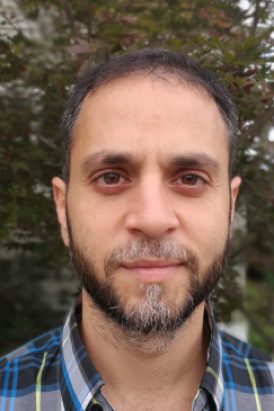
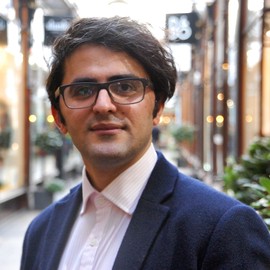
Sebastien Nicolas Gros is a Professor at the Department of Engineering Cybernetics, Norwegian University of Science and Technology (NTNU). His research focuses on safe reinforcement learning (RL) and data-driven model predictive control (MPC), with applications in energy systems, biomedical engineering, and autonomous vehicles. Institution: Norwegian University of Science and Technology Department: Engineering Cybernetics His work emphasizes AI-driven optimization for domestic energy storage, battery integration, and smart building management. Collaborations include Equinor, DNV, Kongsberg, Volvo, and CorPower Ocean. Key themes in his publications include: Control theory for renewable energy systems (wave energy converters, buildings) Biomedical applications (artificial pancreas, glucose monitoring) Transportation systems (electric vehicles, autonomous ships) Machine learning integration with physical models He supervises 6 PhD students and co-supervises projects on multi-rotor wind turbines and industrial PhD collaborations. The articles demonstrate a convergence of RL, MPC, and uncertainty quantification across energy, biomedical, and transportation domains.
Fotios Petropoulos is a Professor at the University of Bath, holding the Management Chair in Management Science within the School of Management's Information, Decisions & Operations department. He also served as the Spyros Makridakis Chair in Forecasting at the University of Nicosia (2023–2023). His research focuses on time series forecasting, judgmental approaches, and integrating statistical and human judgment in decision-making processes. He has contributed to improving forecasting accuracy through temporal aggregation and hierarchical methods. Petropoulos holds a Doctor of Engineering (2012) and Bachelor of Engineering (2007) from the National Technical University of Athens. Editor of the International Journal of Forecasting (2020–present) Associate Editor of Foresight: The International Journal of Applied Forecasting (2015–2022) Director of the International Institute of Forecasters (2016–2018) His research interests emphasize forecasting processes, model selection, and the role of judgment in statistical models. Key areas include temporal aggregation, forecast reconciliation, and behavioral operations analytics. He has published over 100 peer-reviewed articles, focusing on topics like computational cost optimization, probabilistic forecasting, and scalable reconciliation methods. His work contributes to Sustainable Development Goals related to education and innovation. Recent articles highlight advancements in univariate forecasting efficiency, forecast selection criteria, and dynamic reconciliation. Petropoulos is a member of the Smart Warehousing and Logistics Systems group and actively participates in editorial boards of leading forecasting journals. His academic and professional roles bridge theoretical research and practical applications in operational decision-making.
Xiao Han is a Senior Lecturer (Assistant Professor) in Finance at the Bayes Business School , part of the City, University of London . His research focuses on investor expectations, asset pricing, and the application of machine learning in finance. He holds a PhD in Finance from the University of Edinburgh and a Higher Education Fellowship in the UK. Education: PhD in Finance, University of Edinburgh (2017-2021) MSc Finance with Risk Management, University of Bath (2016-2017) B.A. in Accounting, Dongbei University of Finance and Economics & Curtin University (2012-2016) His research interests include subjective investor expectations , financial institutions and demand-based pricing , and machine learning applications in Fintech . He has held visiting positions at the Wharton School, Peking University, and Shanghai University of Finance and Economics. His recent work explores topics such as return decomposition in financial markets, machine learning-driven earnings analysis, and the impact of investor sentiment on mispricing. His research has been published in top journals like the Journal of Financial Economics and Review of Financial Studies . Awards: Best Paper Award in Investments (Eastern Finance Association) Jacobs Levy Center Research Best Paper Prize 2023 Marshall Blume Prize in Financial Research 2023 Xiao Han serves as a referee for journals including Journal of Financial Economics , Review of Financial Studies , and Management Science . His work bridges theoretical finance with practical applications in Fintech and behavioral economics.
Steven Haberman is a Professor of Actuarial Science at Bayes Business School, City, University of London. He has held senior leadership roles, including Deputy Dean, Director, and Dean of Bayes Business School until 2015. Prior to this, he was Dean of the School of Mathematics (1995–2002). His academic journey began at the University of Cambridge (BA in Mathematics), followed by PhD and DSc in Actuarial Science from City University. He has served as a Lecturer in Actuarial Science since 1974 and worked part-time at the Government Actuary's Department (1986–2006). He is a Fellow of the Institute of Actuaries and Royal Statistical Society. Research focuses on mortality modeling (e.g., the Renshaw-Haberman model), longevity risk, pensions, and annuities. He has authored/co-authored 5 books and over 180 papers, and edited journals like Journal of Pension Economics and Finance . Awards include an honorary doctorate from the University of Haifa (2018) and research prizes from the Institute of Actuaries. He has supervised 33 doctoral students and served on professional bodies like the Institute and Faculty of Actuaries and the Financial Reporting Council’s Board for Actuarial Standards. Current roles include Editor-in-Chief of Risks and Chair of the Board of Governors of the London Foundation for Banking and Finance.
Aviad Rubinstein is an Assistant Professor of Computer Science at Stanford University, specializing in theoretical computer science with a focus on algorithms, complexity, and game theory. He has taught courses such as Design and Analysis of Algorithms (CS161), Incentives in Computer Science (CS269i), and Topics in Intractability (CS354). His research interests include approximation algorithms, computational complexity, and fair division, with notable work on envy-free cake-cutting and prophet inequalities. He advises several PhD students including Joshua Brakensiek and Ruiquan Gao, and mentors postdocs like Soheil Behnezhad. His undergraduate mentoring includes students from Tsinghua and Berkeley. Rubinstein has received the Kalai Prize from the Game Theory Society and a FOCS Best Paper Award for his work on inapproximability of Nash equilibria. Rubinstein co-authored Algorithms for Toddlers with Mary Wootters, a book simplifying computational concepts for younger audiences. He also organizes workshops on topics like fine-grained complexity and early career mentoring in computer science. Beyond academia, he consults part-time for the blockchain startup Lava. His research frequently bridges theoretical foundations with practical implications, such as developing algorithms with real-world applications in auctions, mechanism design, and optimization under constraints.
Asaf Cohen is an Associate Professor in the Department of Mathematics at the University of Michigan, Ann Arbor, affiliated with the College of Literature, Science, and the Arts. He holds a B.Sc., M.Sc., and Ph.D. from Tel-Aviv University (2005–2013). His research focuses on applied probability, stochastic processes, and control theory, with emphasis on mean-field games, mathematical finance, actuarial science, diffusion and large deviation analysis, machine learning, and risk-sensitive control. His work also addresses applications in stochastic networks, energy markets, epidemiology, and economics. Key research areas include diffusion approximations, large deviations, queueing theory, and partial differential equations. Dr. Cohen has contributed to the analysis of multiclass queueing systems, optimal dividend strategies, and strategic server behavior in heavy traffic regimes. His methods often involve advanced stochastic control techniques and game-theoretic models. He has published extensively on topics such as mean-field games, SIR models for epidemics, and Bayesian sequential testing. His academic contributions span theoretical advancements and practical applications in finance, insurance, and operations research.
Prof. Dr. Heike Schinnenburg is a Professor of Business Administration with a focus on Human Resource Management at the Faculty of Economics and Social Sciences, Osnabrück University of Applied Sciences. She directs the Master's program in Business Management and specializes in talent management, international HRM, career research, and change management. Her research explores AI's impact on jobs, gender dynamics in careers, and organizational resilience in global contexts. She holds a PhD from Leibniz University Hannover and has extensive industry experience as a consultant and HR director. Her academic career includes guest professorships at Shanghai University of International Business and Economy. Key research projects include inclusive education's impact on workforce development and cultural factors in change management. Her publications span over 50 articles in journals like Employee Relations and Personalquarterly , addressing topics such as frontline work challenges, virtual leadership, and global talent strategies. She frequently presents at international conferences and collaborates on EU-funded research initiatives.
Klaus Moeltner is a Professor in the Department of Agricultural and Applied Economics at Virginia Tech since 2015. He previously held positions at the University of Nevada, Reno, including Associate and Assistant Professor roles. His expertise lies in environmental economics, natural resource valuation, and applied econometrics. He has secured over $6 million in grants as PI or Co-PI and contributes to interdisciplinary research through the Global Change Center and Remote Sensing Program at Virginia Tech. Education: Ph.D., Economics, University of Washington, 2000 M.A., Economics, University of Washington, 1998 M.A., International Policy Studies, Monterey Institute of International Studies, 1994 M.S., Environmental Planning & Engineering, University of Agriculture and Forestry, Vienna, Austria, 1990 Research Interests: Dr. Moeltner’s work focuses on environmental and natural resource economics, including water quality valuation, wildfire health impacts, urban water use, and coastal flooding risks. His research employs advanced econometric methods, such as Bayesian modeling and meta-regression, to inform policy decisions. Current projects include analyzing the economic benefits of stream restoration, harmful algal bloom forecasts, and offshore wind farm co-location opportunities. Awards: 2023: Distinguished Graduate Teaching Award (AAEA) 2014: Best Paper in Environmental and Resource Economics (EAERE) 2004: CABNR Outstanding Instructor Award Advising & Grants: Advised 6 Ph.D. students and secured over $6 million in grants. Research collaborations include USDA-NIFA, EPA, and the European Union. Labs & Teams: Active in interdisciplinary groups like the Global Change Center and Remote Sensing Program at Virginia Tech.
Dr. Jose Escribano is a Lecturer in Aviation & Logistics at the Department of Civil and Environmental Engineering within the Faculty of Engineering at Imperial College London. His research focuses on humanitarian logistics optimization, AI-driven airspace management, and urban resilience strategies. He holds a First Class Honours bachelor’s degree (2015) and a PhD (2021) from Imperial College London. Dr. Escribano is affiliated with the Centre for Transport Engineering and Modelling and the Transport Systems and Logistics Project D-Risk SHIFT. His academic qualifications include a BEng in Engineering and a PhD in Civil Engineering, both from Imperial College London. His professional affiliations include the Institution of Civil Engineers, Chartered Institute of Logistics and Transport, and the American Institute of Aeronautics and Astronautics. He has received the 2023 Transportation Research Board Best Paper Award and a JSPS Fellowship for urban evacuation modelling. Dr. Escribano’s research integrates stochastic modelling, machine learning, and simulation to address challenges in humanitarian response, UAV coordination for disaster relief, and airspace safety. His work emphasizes endogenous value-of-information analysis and the application of cutting-edge technologies to enhance societal resilience. He has collaborated with the United Nations World Food Programme on UAV deployment models for humanitarian contexts. His recent publications span topics like air traffic network resilience, autonomous vehicle optimization, and last-mile delivery mechanisms. He advises doctoral candidates in transportation systems, logistics, and air traffic management, offering opportunities for PhD research in these domains.
Bill Howe is an Associate Professor at the University of Washington's Information School, with adjunct appointments in Computer Science & Engineering and Electrical Engineering. He serves as Founding Program Director and Faculty Chair of the UW Data Science Masters Degree, Founding Associate Director and Senior Data Science Fellow at the UW eScience Institute, Director of the Urbanalytics Lab, and Co-Founding Director of the Center for Responsible AI Systems and Experiences. He also co-founded Urban@UW and created the first Data Science MOOC through Coursera. His research focuses on making data science accessible in public sector applications with emphasis on equity, privacy, and compliance. Current interests include: Algorithmic fairness in urban and social contexts Privacy-preserving synthetic data generation Machine learning for heterogeneous data Database systems and high-performance computing Human-computer interaction for data systems Responsible AI development and deployment Publication analysis reveals strong focus on responsible data science, with recent work emphasizing differential privacy, COVID-19 data equity, urban mobility fairness, and relational data systems. Earlier foundational work established contributions to scientific workflow systems and data pricing models. Awards and Honors: Runner-up Best Paper Award (VLDB 2023) Best Paper Award (SIGMOD 2019) Best Paper Award (VIs 2019) Best Paper Award (InfoVis 2018) He leads the Urbanalytics Lab and advises multiple students including An Yan (fairness in urban mobility), Sean Yang (machine learning embeddings), and Dominik Moritz (visualization systems). His projects span EZLearn for automatic claim validation, privacy-preserving synthetic data, and Myria middleware for polystores.
Bahman Rostami-Tabar is Professor of Analytics and Decision Sciences at Cardiff Business School, Cardiff University, UK. He is the founder and director of the Data Lab for Social Good and the founder and chair of the Forecasting for Social Good (F4SG) initiative sponsored by the International Institute of Forecasters. He also leads the 'Uncertainty & the Future' theme at the Digital Transformation Innovation Institute. His research spans probabilistic forecasting, operational research, and data science with applications in healthcare, humanitarian logistics, and sustainable development. Research Interests: His work emphasizes transforming data into insights for decision-making under uncertainty. His research is structured into three pillars: (1) Conceptual work on forecasting for social good and the UN Sustainable Development Goals; (2) Methodological innovations in temporal aggregation, hierarchical forecasting, and machine learning for time series; and (3) Applications in healthcare operations, global health, and humanitarian supply chains. He has collaborated with organizations such as the NHS, USAID, ICRC, and JSI. Publication Trends: His recent publications (2023–2025) focus on probabilistic forecasting in healthcare (e.g., emergency department arrivals, trauma networks), hybrid machine learning models for humanitarian demand, and the societal role of forecasting. There is a strong emphasis on real-world impact, with applications in public health, supply chain resilience, and data-driven policy. Scientific Awards: Goodeve Medal, Operational Research Society, UK (2024) Fellowship, Institute of Advanced Studies, Montpellier, France (2024) Public Value Fellow, Cardiff Business School (2021) Associate Fellow, NHS-R community (2021) MIM best paper award (IFAC, 2013) Best Track Paper Award, International Symposium on Industrial Engineering and Operations Management (2017) Supervision and Grants: He actively supervises PhD students in forecasting, healthcare systems, and supply chains. He leads the 'Democratising Forecasting' project, delivering free R-based forecasting training in developing countries. He also chairs the F4SG Research Grant program, awarding $5,000 to researchers in low- and lower-middle-income countries for socially impactful forecasting research. Labs and Teams: He founded and directs the Data Lab for Social Good at Cardiff Business School and leads the international Forecasting for Social Good network, which includes learning labs, hackathons, and a forecasting book club to foster global collaboration.
Nathan Lassance is a Lecturer at the Louvain School of Management (LSM), Université catholique de Louvain (UCLouvain), and a member of the Louvain Finance (LFIN) research division. His work bridges financial theory, statistical modeling, and data-driven portfolio optimization, with a focus on addressing parameter uncertainty and improving risk-return tradeoffs in asset allocation. Research Interests: Portfolio management, covariance matrix estimation, financial econometrics, risk analysis, quantitative finance, and non-Gaussian return distributions. Publications: His recent work explores shrinkage methods for high-dimensional portfolio selection, sentiment-aligned covariance matrices, and the economic value of statistical metrics like mean squared error. He has also contributed to understanding the limitations of factor-based mispricing models and the statistical properties of mean-variance portfolios. Labs/Teams: Affiliated with the Louvain Institute of Data Analysis and Modeling (LIDAM) and the Louvain Finance (LFIN) group.
Professor Carsten Rudolph serves as Deputy Dean at Monash University's Faculty of Information Technology and directs the Oceania Cyber Security Centre (OCSC). He holds a PhD in Information Security from Queensland University of Technology (2002) and a Diplom in Computer Science from Goethe University Frankfurt (1997). His interdisciplinary research focuses on cybersecurity foundations, including cryptographic protocols, AI-driven security, human factors, and national cybersecurity policy. Key areas include securing smart grids, digital health systems, and transnational energy networks. Notable contributions include establishing the OCSC, leading Pacific region cybersecurity maturity reviews with Oxford University, and advancing frameworks for firmware security in virtual power plants. He chairs major projects like RAI4IoE (Responsible AI for Energy) and Post-Quantum Cryptography initiatives. Teaching responsibilities include cybersecurity modules like FIT3173 and FIT3168. Rudolph's research outputs (137+ publications) emphasize phishing detection via AI, blockchain-based energy trading, and resilient smart grid systems. He collaborates internationally on policy development and has advised 12 major research projects funded by agencies like the U.S. Bureau of East Asia and Pacific Affairs.
Maurizio Ramanzin is a Full Professor at the University of Padova , affiliated with the School of Animal Science and Department of Agronomy, Animals, Food and Natural Resources (DAFNAE) . His research focuses on Agricultural Sustainability , Environmental Impact Assessment , and Precision Livestock Farming . Academic Field : AGR/19 Email : maurizio.ramanzin@unipd.it Address : Agripolis - Viale dell'università, 16 - Legnaro (Padova) – ITALY His work explores the interactions between livestock systems and ecosystem services in mountainous regions, with emphasis on: Grazing Management and biodiversity conservation Life Cycle Assessment (LCA) of dairy and beef systems Climate Change Adaptation in Alpine ungulates Animal Welfare in small-scale farms Technological Tools (GPS, NIRS) for monitoring grazing behavior Key trends in his recent publications include: Quantifying environmental drivers of wolf predation on livestock Developing low-cost biologging systems for dairy cows Analyzing social-ecological trade-offs in mountain agriculture Assessing microbial dynamics in alpine soils
Giovanni Compiani is an Associate Professor at the University of Chicago Booth School of Business, specializing in Marketing. His research bridges industrial organization and quantitative marketing, focusing on advanced econometric methods. PhD, MPhil, MA in Economics from Yale University BSc, MSc in Economics from Bocconi University Previous Assistant Professor at Haas School of Business His work explores unstructured data integration in demand estimation, consumer search behavior on online platforms, risk preferences in cryptocurrency markets, and time perception in behavioral economics. He has published in top journals including Journal of Political Economy , Marketing Science , and Review of Economic Studies . Recent publications emphasize machine learning applications in econometrics, equilibrium modeling of lotteries, and crypto mining's economic impact. His research portfolio spans demand analysis, structural modeling, and behavioral insights. Editor's Choice Award, The Review of Asset Pricing Studies (2024) Developed nonparametric demand estimation frameworks Advances dynamic model identification with instrumental variables Compiani teaches Data Science for Marketing Decision Making at Booth and maintains active collaborations with researchers across econometrics, computer science, and behavioral disciplines.