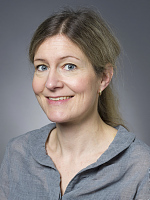
Ida Scheel is an Associate Professor in Statistics and Data Science at the University of Oslo , Department of Mathematics. She specializes in Bayesian hierarchical modeling, recommendation systems, and stochastic processes on networks. Her research interests include: Bayesian statistics and model diagnostics Data science applications in environmental and health domains Network-based machine learning Uncertainty quantification in predictive modeling Recent publication trends show a focus on Bayesian model validation, machine learning for product adoption prediction, and real-estate analytics. She contributes to interdisciplinary projects like BigInsight and CELS . Scientific awards : Sverdrup Prize for Young Researchers (2011) Advising : Supervised 8 PhD students (main/co-supervisor) in areas spanning Bayesian causal effects, neural network survival analysis, and model conflict detection. Key grants include participation in the Data Science@UiO and Integreat projects. Labs/teams : Active member of the Center for Computational Inference in Evolutionary Life Science (CELS) and the BigInsight center.
David Ardia is a Full Professor in the Department of Decision Sciences at HEC Montréal, promoted to this position on June 1, 2025. Previously, he served as an Associate Professor from June 2020 to May 2025. He holds the Research Professorship in Sentometry and is a member of the Study and Research Group on Decision Analysis (GERAD) and the International Statistical Institute. Ardia is also an elected member of the ISI Louis Bachelier Fellow and serves as Associate Editor for both the International Journal of Forecasting and the Journal of Statistical Software. His educational background includes a Ph.D. in Financial Econometrics from the University of Fribourg, a Master of Applied Sciences in Quantitative Finance from the Swiss Federal Institute of Technology Zurich and University of Zurich, and a Master of Science in Financial Engineering from the University of Neuchâtel. Ardia's research focuses on the intersection of quantitative finance, machine learning, and natural language processing, with particular emphasis on sentometrics (textual sentiment analysis in finance), risk management, and climate finance. His work spans financial econometrics, volatility modeling, and the application of advanced statistical methods to asset allocation and economic forecasting. He has pioneered methods for analyzing climate change concerns in financial markets and has made significant contributions to understanding green versus brown stock performance. His publication record shows a strong trajectory in high-impact finance and statistics journals, with recent work examining Robinhood trading patterns, cryptocurrency markets, climate finance, and innovative methodological approaches to financial time series analysis. His research demonstrates increasing focus on sustainability applications within quantitative finance. Prix de la qualité des données ouvertes 2024 (Canadian Open Data Community) Prix de recherche pour les professeures et professeurs agrégés (HEC Montréal, 2024) Prix pour l'excellence en pédagogie (HEC Montréal, 2022) Best Paper Award at the 38th International Conference of the French Finance Association Best Paper Award 2018-2019 from International Journal of Forecasting eRum 2020 COVID19 contest winner for the COVID-19 Data Hub Ardia actively supervises numerous graduate students, with over 70 mentorship activities documented in the past five years, spanning both thesis supervision and supervised projects. His research is supported by collaborations with institutions including IVADO, the R Consortium, and the University of Lugano. He co-created the influential COVID-19 Data Hub platform, which integrates epidemiological data with policy measures and spatial databases to analyze pandemic impacts. His research group focuses on developing computational tools for financial analysis, particularly through R packages like MSGARCH for Markov-switching GARCH models and sentometrics for textual sentiment analysis. This work bridges academic research with practical applications in financial institutions and policy analysis.
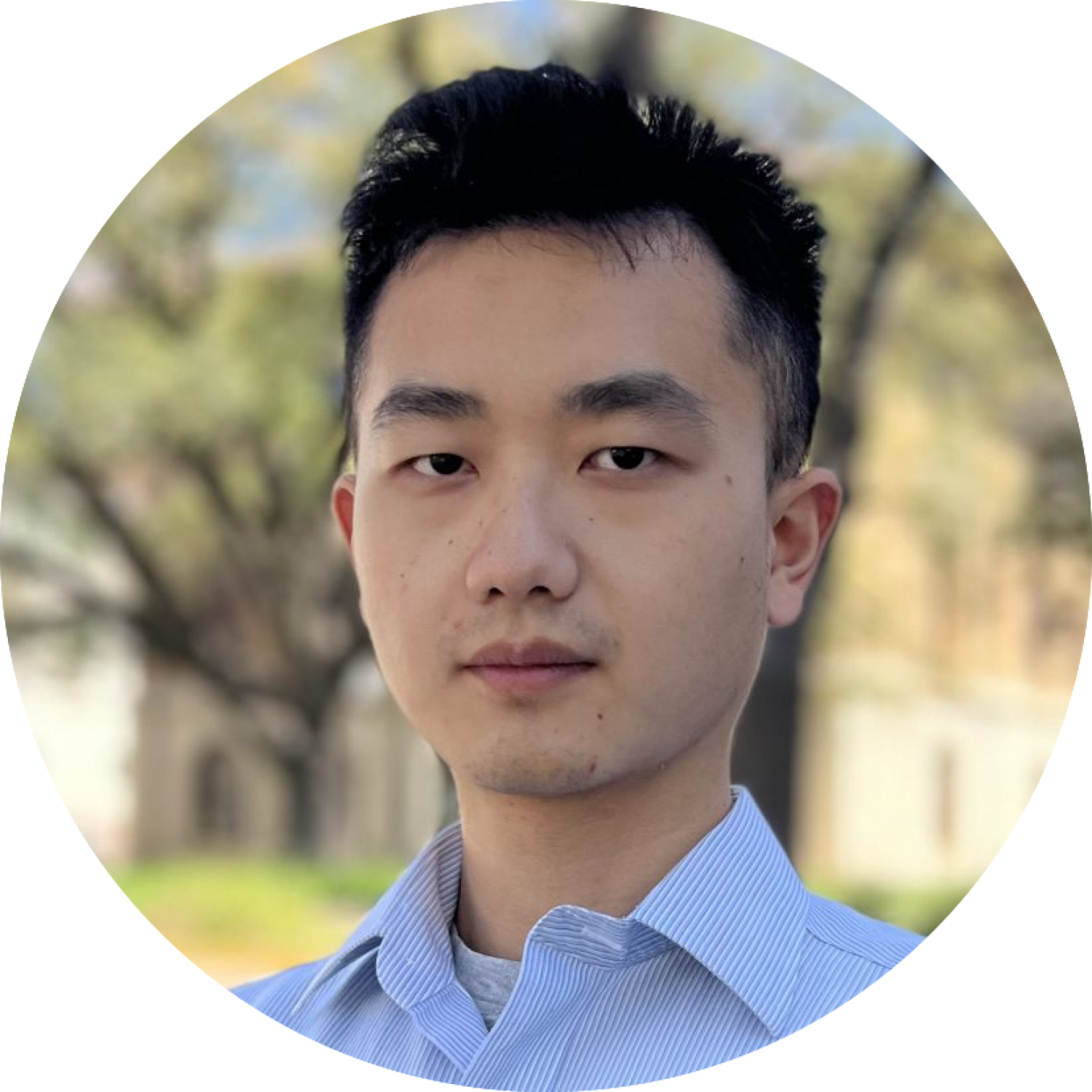
Zhi Li is an Assistant Professor at the University of Colorado Boulder's College of Engineering and Applied Science, Department of Civil, Environmental and Architectural Engineering. He leads the newly established Flood Lab, focusing on flood prediction and monitoring through remote sensing and coupled hydrologic-hydraulic models. Joined CU Boulder in Fall 2025 Former Dean's Postdoc Fellow at Stanford University PhD in Civil Engineering & Environmental Science from University of Oklahoma (2022) His research spans hydrological modeling , extreme events , and AI4Science applications, particularly in deep learning and intelligent agents for flood risk assessment. Li’s work also connects floods with public health and economic systems , aiming to develop the Flood-Agriculture-Climate-Economics-Disease (FACED) framework. Key Themes: High-resolution flood modeling Climate change impacts on hydro-meteorology Remote sensing integration Flood-agriculture interdependencies Global health implications Scientific Awards: Dean's Postdoc Fellow, Stanford Doerr School of Sustainability (2023) Hoving Fellowship, University of Oklahoma (2019) Li’s recent publications emphasize improved precipitation estimation (IMERG V07), Brown Ocean Effect studies, and Fourier neural operators for rapid flood forecasting. His collaborative work with NOAA and NASA focuses on comparing ground-based and spaceborne radar systems for extreme event analysis.
Dr Francesca Pianosi is an Associate Professor in Water & Environmental Engineering at the University of Bristol 's School of Civil, Aerospace and Design Engineering. She contributes to the Cabot Institute for the Environment and leads research on data analysis, mathematical modelling, and uncertainty quantification for hydrology and water engineering. Specialises in simulation and optimisation methods for water resource management Focuses on uncertainty propagation in natural hazard models Developed the open-source SAFE Toolbox for sensitivity analysis Research Trends Her recent publications (2023-2025) demonstrate expertise in: Groundwater flow and recharge in data-scarce regions Digital Twin applications for watershed management Climate change impact on landslides and droughts Multi-objective optimisation for reservoir operations Integration of machine learning with hydrological models Scientific Awards Arne Richter Award for Outstanding Young Scientists (2015) Best Research Oriented Paper - Journal of Water Resources Planning and Management (2024) Early Career Research Excellence (ECRE) award (2014) Francesca leads the Water Management and Adaptation based on Watershed Digital Twins project (2024-2027) and contributes to the USARIS project on uncertainty quantification for infrastructure systems (2023-2025).
Dawei Han serves as Professor of Hydroinformatics at the University of Bristol's School of Civil, Aerospace and Design Engineering, leveraging advanced computational techniques to address hydrological challenges. Holding a B.Eng. and M.Sc. from Huabei alongside a Ph.D. from Salford, he is recognized as a Chartered Engineer (C.Eng.) and Fellow of the Chartered Institution of Water and Environmental Management (FCIWEM). His academic credentials include: Bachelor of Engineering (B.Eng.) from Huabei Master of Science (M.Sc.) from Huabei Doctor of Philosophy (Ph.D.) from University of Salford Professor Han's research focuses on integrating hydroinformatics with practical water management solutions, particularly in urban environments. His work pioneers applications of machine learning for rainfall nowcasting, radar-based hydrological monitoring, and climate change impact assessment. Key innovations include DREE-RF for rainfall energy estimation and frameworks for urban flood resilience, emphasizing data-driven approaches to enhance prediction accuracy and risk mitigation strategies. Analysis of his 2024-2025 publications reveals dominant themes in urban hydrology (40%), flood risk management (30%), and climate-remote sensing integration (30%). His research spans global contexts from UK catchments to Iraqi rainfall systems, consistently employing computational methods like neural networks and WRF modeling to address data-scarce environments and extreme weather events. Professional recognition includes: Fellow of the Chartered Institution of Water and Environmental Management (FCIWEM) While specific student supervision details are unavailable, his extensive publication record indicates active mentorship in hydroinformatics. Research grants likely support his work on radar remote sensing and urban climate adaptation, though explicit funding sources aren't documented in the source material. His affiliation with Bristol's engineering school positions him within interdisciplinary teams addressing infrastructure resilience, though laboratory-specific information remains unreported.
Paulo Jorge Freitas de Oliveira Novais is a Full Professor of Computer Science at the Department of Informatics, School of Engineering, Universidade do Minho, where he also holds a Habilitation in Computer Science. He leads the Synthetic Intelligence Lab at ALGORITMI Centre and coordinates the research line on Ambient Intelligence for Well-Being and Health Applications. His research spans Intelligent Systems, Machine Learning, Multi-Agent Systems, and their applications in Smart Cities, Health Informatics, and AI Ethics. PhD in Computer Science, Universidade do Minho, 2003 Habilitation in Computer Science, Universidade do Minho, 2011 Research interests include Ambient Intelligence, Ambient Assisted Living, Intelligent Environments, AI and Law, Conflict Resolution, and Explainable AI. His work focuses on enhancing system intelligence and reliability through novel architectures and ethical frameworks. Recent publications highlight applications in wastewater energy prediction, violence detection, student risk modeling, and urban logistics. Awards include multiple Best Paper and IBM Excellence recognitions across 2015–2023, plus a 2022 Career Recognition Award from the Ibero-American Society of Artificial Intelligence. Senior IEEE Member Chair of IEEE Computational Intelligence Chapter, Portugal IFIP TC 12 Artificial Intelligence Working Group Leadership He has supervised 132 PhD and Master’s students and contributed to editorial boards of journals like JAISE and ComSIS . His leadership roles include coordinating LASI – Intelligent Systems Associate Laboratory and serving as former president of APPIA.
Andang Sunarto is an Associate Professor affiliated with the State Islamic Institute (IAIN) Bengkulu, Indonesia and the Lepage Research Institute, Slovakia . His work bridges Numerical Analysis , Computational Mathematics , and Algorithm Design with applications in Robotics , Image Processing , and Sharia-Compliant Systems . Research Focus: Fractional Calculus, Nonlinear PDEs, GPU-Accelerated Algorithms Collaborations: International institutions including Union of Czech Mathematicians and Physicists and University of Prešov His recent publications (2021–2025) emphasize Iterative Methods for solving Time-Fractional Diffusion Equations and Porous Medium Models . He also explores Digital Islamic Education and Halal Tourism Development . Despite no listed awards, his work spans diverse domains like Mobile Banking Evaluation , Environmental Pollution Analysis , and Ethnobotanical Applications . Andang actively designs EdTech tools (e.g., Wordwall-based modules) and contributes to computational methods in Climate Modeling and Nonlinear Diffusion .
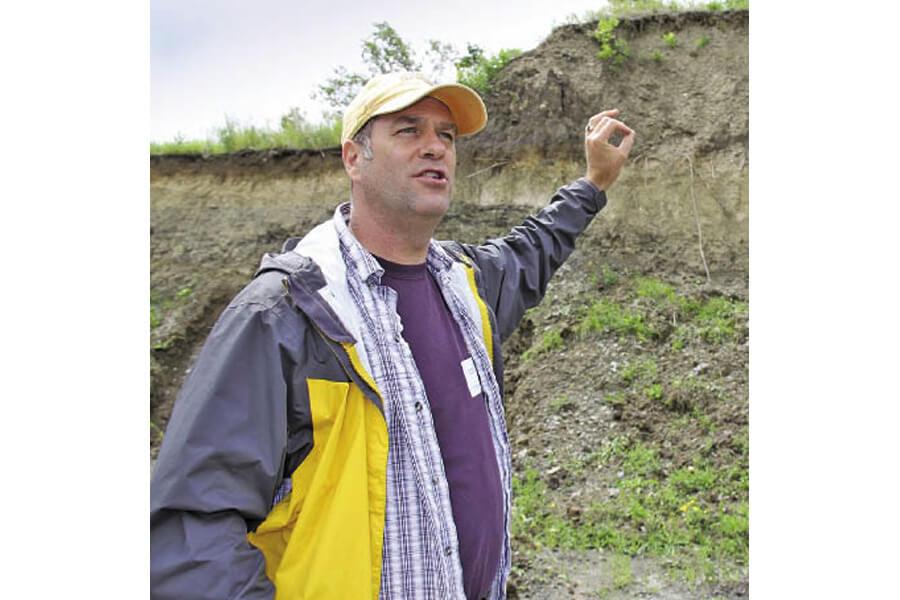
David Lobb is a Professor in the Department of Soil Science at the University of Manitoba, affiliated with the Faculty of Agricultural and Food Sciences. His research focuses on biophysical processes within landscapes, particularly soil movement by tillage and tillage erosion, with international recognition for advancements in experimental methods and modeling. PhD in Soil Science, University of Guelph MSc in Soil Science, University of Guelph BSc in Biophysical Systems, University of Toronto Research Interests: Soil Erosion and Conservation , Tillage Systems , Sediment Fingerprinting , Wetland Carbon Dynamics , and Precision Agriculture . His work addresses soil redistribution, agri-environmental indicators, and soil-landscape variability. Recent articles highlight his expertise in soil erosion mechanisms, carbon sequestration in wetlands, and innovative measurement techniques using radiometric methods and smartphone technology. Collaborations with international organizations like the UN FAO, IAEA, and OECD underscore his global impact.
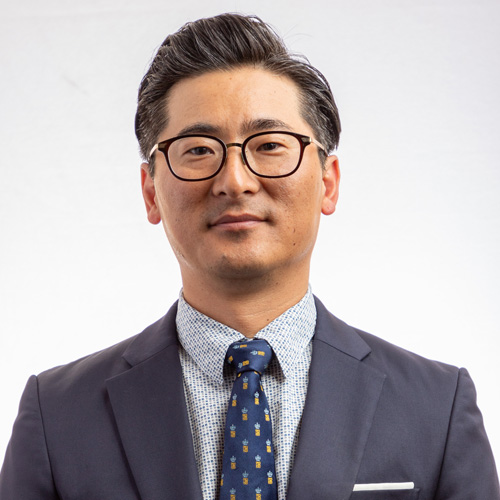
Sangmin Shin is an Assistant Professor in the Department of Civil Engineering at the Southern Illinois University College of Engineering. His research focuses on integrated water resources management, critical interdependent infrastructure modeling, water cyber-physical-social systems, artificial intelligence applications, urban water sustainability and resilience, socio-environmental hydrology, multi-objective optimization, and systems analysis. PhD: Civil and Environmental Engineering, University of Utah (2016-2020) MS: Civil and Environmental Engineering, Korea Advanced Institute of Science and Technology (KAIST) (2008) BS: Civil Engineering, Pusan National University (2006) Shin leads the SciWater Lab, which investigates smart and connected infrastructure for water systems under uncertainty. Key strategies include: increasing infrastructure variety, building cyber-physical-social networks, and integrating feedback interactions between critical systems. The lab aims to transform water infrastructure through interdisciplinary approaches involving communities, engineers, and policymakers. His research portfolio demonstrates trends in: climate change adaptation (14% of publications), infrastructure resilience (22%), AI applications (18%), socio-hydrology (12%), and systems thinking (16%). Notable methodologies include system dynamics modeling, modern portfolio theory, and cyber-physical attack simulations. Postdoc Travel Assistance Award (University of Utah, 2019) Best Paper Presentation Award (Korean Society of Disaster & Security, 2015) Contact: Engineering B, Room 34, 1230 Lincoln Drive, Carbondale, IL 62918, USA | Phone: 618-453-3325 | Email: sangmin.shin@siu.edu
Professor Richard Bailey is Professor of Environmental Systems at the University of Oxford's School of Geography and the Environment. He serves as a Tutorial Fellow and Dean of St Catherine's College, a Senior Research Fellow at the Institute for New Economic Thinking, and a member of the Oxford Biodiversity Institute. Bailey co-directs the Oxford Luminescence Dating Laboratory and leads the CoHESys-lab research group focused on complex human-environmental systems. Richard's research centers on the dynamics of natural environmental systems and coupled human-environment interactions across various timescales. His work employs mathematical modeling, numerical simulations, and empirical data analysis to understand complex systems, with a strong focus on sustainability applications, particularly in ocean systems. The CoHESys-lab develops models that integrate machine learning methods to explore implementable policies for environmental challenges. His recent publications demonstrate a strong trend toward interdisciplinary research combining environmental science, computational modeling, and sustainability. Bailey's work spans from theoretical explorations of complex systems to applied projects addressing pressing issues like plastic pollution, fisheries management, and climate change impacts on marine ecosystems. His research increasingly incorporates agent-based modeling and machine learning approaches to tackle coupled human-environment challenges. Co-Director of Oxford Martin School Programme on Sustainable Oceans Co-Director of Oxford Luminescence Dating Laboratory Leader of CoHESys-lab research group Professor Bailey currently supervises graduate students Maike Nowatzki (focusing on dunefield morphology using deep learning) and Thomas Youngman (working on macroeconomic modeling for UK climate transition). His recent advisees include Emily Neil (rewilding impacts at Knepp Estate) and Diana Bailey (LM OSL analysis techniques). His research is supported through collaborations with organizations including Ocean Conservancy, Stanford University, George Mason University, and the University of California at Santa Barbara, with computational support from Amazon Web Services. Bailey leads the CoHESys-lab (Complex Human Environmental Systems Simulation Laboratory), which develops sophisticated models for understanding coupled human-environment systems. His OSIRIS framework (Ocean Systems Interactions, Risks, Instabilities and Synergies) represents a significant contribution to analyzing multiple stressors on marine systems. The lab maintains strong collaborations with environmental organizations and academic institutions worldwide to address sustainability challenges through innovative computational approaches.
Shaghayegh Abtahi (Shay) serves as an Assistant Professor in the Department of Civil and Environmental Engineering within the Faculty of Engineering at the University of Alberta. She is the sole female faculty member in the Structures group, actively promoting diversity while driving innovation in infrastructure resilience research and engineering education. Her academic credentials include a Ph.D. in Structural Engineering from the University of Alberta (2022), an M.Sc. in Structural Engineering from Sharif University of Technology (2016), and a B.Sc. in Civil Engineering from Sharif University of Technology (2014). Professional experience encompasses postdoctoral research at UAlberta and structural engineering practice in Iran. Dr. Abtahi's research pioneers next-generation infrastructure systems through cutting-edge integration of computational mechanics, AI, and risk analysis. Her work addresses critical climate adaptation challenges by developing: ML-powered physics-based modeling frameworks Digital twin systems for post-disaster infrastructure assessment Uncertainty-quantified performance evaluation methodologies AI-assisted infrastructure inventory and condition monitoring tools Resilience-focused design protocols for hazard-exposed structures She teaches core courses including Structural Analysis I (CIV E 372) and Advanced Topics in Civil Engineering (CIV E 789), emphasizing practical applications of computational modeling and performance-based design principles. Dr. Abtahi maintains an inclusive research group actively recruiting graduate students with expertise in computational mechanics, risk analysis, and AI applications. She particularly encourages applications from underrepresented minorities in engineering, valuing diverse perspectives in solving complex infrastructure challenges.
Saptarashmi Bandyopadhyay is a Tenure-Track Assistant Professor of Computer Science at the City College of New York and the Graduate Center at the City University of New York (CUNY). Her research focuses on Artificial Intelligence Agents and Autonomous Decision Making, with special emphasis on Multi-Agent Reinforcement Learning, Multi-Agent Imitation Learning, and related paradigms. She has established significant collaborations with leading institutions including Google DeepMind, Carnegie Mellon University, Oxford University, and MIT. Dr. Bandyopadhyay received her PhD from the University of Maryland, College Park, where she was advised by Professor John Dickerson and Professor Tom Goldstein. Prior to that, she graduated from Penn State in 2020 with a thesis on Multimodal Computer Vision in Medical Domain advised by Prof. William Evan Higgins. Her research expertise spans multiple domains of AI including Multi-Agent Systems, Reinforcement Learning, Imitation Learning, and Multimodal Perception. She specializes in developing AI agents for applications in climate conservation, economic systems, and AI safety. Her work integrates techniques from computer vision, natural language processing, and robotics to create more robust and explainable AI systems that can operate effectively in complex, real-world scenarios. Current work includes improving explainable AI, developing Multimodal LLM/VLM/Robotic Agents, and creating libraries to speed up Multi-Agent evolutionary training with JAXMARL. Analysis of Dr. Bandyopadhyay's publication record reveals a clear progression from foundational work in medical imaging and natural language processing toward increasingly sophisticated multi-agent AI systems. Her recent publications demonstrate a strong focus on Multi-Agent Reinforcement Learning frameworks like JAXMARL, with applications spanning from supply chain orchestration to climate conservation. The interdisciplinary nature of her work is evident in publications spanning computer vision, NLP, and multi-agent systems conferences including AAAI, NeurIPS, AAMAS, EMNLP, and ACL. DoGood Fellow (2022) UMD Dean's Summer Fellow (2021) Dr. Bandyopadhyay has been actively involved in securing research funding from major agencies including NSF, NIH, DoD, and ARL. She served as the lead PhD student RA in a DoD project for Multi-Agent Explainable AI to improve AI trustworthiness. Her service to the academic community includes membership on program committees for major conferences including IJCAI 2024, KDD 2024, ACL 2024, and AAMAS 2023-2024. She has also created the AI Agents Seminar Series at UMD in 2022 with over 1,000 participants from six continents. Currently, Dr. Bandyopadhyay leads research on improving explainable AI, developing Multimodal LLM/VLM/Robotic Agents, and creating libraries to speed up Multi-Agent evolutionary training with JAXMARL. Her lab collaborates prominently with researchers from Google DeepMind, Carnegie Mellon University, Oxford University, University of Sheffield, Waymo, Meta AI, and MIT, with special focus on Dr. Jakob Foerster's and Dr. Robert Loftin's groups.
Dr. Jonathan Frame is an Assistant Professor of Artificial Intelligence/Machine Learning in Geological Sciences at the University of Alabama (2024–present) and a Faculty Fellow at the Alabama Water Institute (2024–2027). He holds a PhD in Geological Sciences from the University of Alabama (2022), an MS in Civil Engineering from the University of California, Irvine (2011), and a BS in Earth Systems Science, Technology, and Policy from California State University, Monterey Bay (2010). His research focuses on advancing hydrologic modeling through machine learning, including deep learning for streamflow forecasting, geospatial modeling, and flood prediction systems. Notable projects include improving the National Water Model with LSTM networks and developing rapid inundation mapping techniques using satellite data. He has contributed to over 30 peer-reviewed publications and actively participates in conferences like AGU and NeurIPS. His engineering experience spans flood risk mitigation, groundwater analysis, and pipeline transient modeling across California, Texas, and Washington. Research Interests Machine learning integration in hydrological systems Operational flood forecasting and inundation mapping Data-driven approaches for ungauged basins Climate nonstationarity and model adaptability Hydraulic transient analysis in water infrastructure Recent Contributions Frame’s recent work emphasizes NextGen water modeling frameworks, combining physics-based models with AI to enhance predictive accuracy. His 2025 paper on heterogeneous water modeling frameworks and 2024 studies on rapid inundation mapping highlight innovations in integrating satellite observations with hydrologic models. He also explores topics like mass conservation constraints in rainfall-runoff models and evapotranspiration prediction using deep learning. Grants & Projects FEMA partnership for near-real-time flood damage prediction systems NOAA-funded research on AI in environmental sciences NASA snowpack analysis for water resources forecasting Development of the Tarsier environmental modeling framework Labs & Collaborations Frame collaborates with the Alabama Water Institute and contributes to interdisciplinary teams advancing hydrologic AI. His work intersects with climate science, environmental engineering, and computational hydrology to address global water challenges.
Prof. Alfred Stein is a Full Professor in Spatial Statistics and Image Analysis at the Department of Earth Observation Science, Faculty ITC, University of Twente. He earned his MSc in Mathematics and Information Science from Eindhoven University of Technology and a PhD in Spatial Statistics from Wageningen University. His career spans roles at Wageningen University (1988–2002), ITC (2002–present), including leadership positions as department head, vice-rector research, and portfolio holder for education. Education: MSc (Eindhoven University of Technology), PhD (Wageningen University) Leadership: Department Head (Earth Observation Science), Vice-Rector Research (2008–2012), Portfolio Holder Education (2012–) His research focuses on Spatial and Spatio-Temporal Statistics , emphasizing Bayesian inference , data quality , image analysis , and fuzzy techniques . Key application domains include agriculture, health, urban land use, coastal systems, hazards, and wildlife. He has mentored over 30 PhD students since 1998, with 11 currently under supervision. Recent research trends highlight AI-driven remote sensing for glacier mapping, urban livability, and disease modeling. Publications span Deep Learning for SAR tomography, Bayesian hierarchical models for health data, and multitemporal SAR analysis for environmental monitoring. Awards include the Best Paper Award (2019) and ISARA Founder's Award (2020) . Scientific Awards Best Paper Award (2019) ISARA Founder's Award (2020) As Editor-in-Chief of Spatial Statistics and associate editor for multiple journals, he leads academic discourse. Collaborations include the University of Cape Town and University of Pretoria as Honorary Professor. His work contributes to UN Sustainable Development Goals, particularly in climate action and sustainable cities.
Professor Ronny Pini is a Professor of Multiphase Systems at Imperial College London's Department of Chemical Engineering within the Faculty of Engineering. His research focuses on sustainable industrial processes, particularly carbon capture and storage (CCS), porous media dynamics, and imaging-based process design. He holds a PhD in Mechanical and Process Engineering from ETH Zurich and has held academic positions including Senior Lecturer and Reader at Imperial College since 2015. His educational background includes a Postdoctoral fellowship at Stanford University (2010-2013) and prior roles at the Colorado School of Mines. Research interests span multiphase flow mechanics, adsorption science, and environmental engineering applications. Key projects include the InFUSE Prosperity Partnership and Digital Rocks Lab, leveraging X-ray tomography, positron emission tomography, and computational models to study subsurface CO2 storage and sustainable materials. Professor Pini's work integrates chemical engineering with material science and earth sciences, addressing global challenges like industrial decarbonisation. He collaborates on developing advanced imaging techniques to characterise porous media behavior and optimise processes for energy transition. Current focus areas include direct air capture technologies and enhancing oil recovery via CO2 utilisation. His research outputs include over 150 peer-reviewed articles, with recent emphasis on adsorption-based CO2 capture systems, pore-scale transport phenomena, and sustainable process design frameworks. He is actively involved in training early-career researchers through Imperial College's Chemical Engineering programs and international collaborations.