Professor Parisa A. Bahri is the Pro Vice Chancellor for the College of Science, Technology, Engineering and Mathematics at Murdoch University . She holds a PhD in Chemical Engineering from Sydney University and serves as a Professor of Engineering. Her research focuses on systems engineering, sustainability, and algal systems, with applications in energy, waste treatment, and techno-economic modeling. Research Interests : Microalgal bioremediation of industrial effluents Decarbonization strategies for energy and transport systems Techno-economic analysis of bioprocesses Integration of renewable energy with water systems Education : Doctor of Philosophy in Chemical Engineering, Sydney University Recent Publications highlight advancements in microalgal cultivation techniques, critical mineral supply chains, and sustainable energy-transport nexus. Key tools include computational fluid dynamics, scenario planning, and life cycle assessments.
Florian Doster is a Professor at Heriot-Watt University, affiliated with the School of Energy, Geoscience, Infrastructure and Society and the Institute for GeoEnergy Engineering. He leads the MuPhi Research Group, focusing on multi-scale modeling of subsurface flow phenomena, particularly in porous media and fractured reservoirs. His work addresses challenges in CO2 storage, hydrocarbon production, and groundwater management. He actively supervises PhD students, including Amanzhol Kubeyev, and collaborates with industry and research councils. Research interests include multi-scale simulation, reactive transport, and AI-driven uncertainty quantification, with applications to geological carbon sequestration and reservoir engineering. His group develops open-source tools, such as the Carbonate Reservoir Group HWU code. Notable projects include regional screening of saline aquifers in Malaysia and fracture mechanics studies. Publications highlight advancements in AI for subsurface modeling, CO2 leakage risk assessment, and pore-scale interactions. Funding sources include industry partnerships and research councils. The MuPhi Group’s activities span geomechanics, fracture network analysis, and environmental sustainability.
Haoshui Yu is an Associate Professor in the Department of Chemistry and Bioscience at Aalborg University’s Faculty of Engineering and Science in Esbjerg, Denmark. His research focuses on sustainable energy systems, decarbonization, and process systems engineering with a strong emphasis on energy storage, waste heat recovery, and renewable integration. He holds a visiting researcher experience at KU Leuven (June–August 2019) and has led significant projects like the 2022 initiatives on zero-emission energy systems and methane production using offshore infrastructure. His work bridges chemical engineering with environmental sustainability, addressing challenges in energy efficiency, carbon capture, and system optimization. Key research interests include Organic Rankine Cycles, compressed air energy storage (CAES), LNG cold energy utilization, and AI-driven process modeling. Over 68 publications since 2014 highlight contributions to energy systems, with recent work emphasizing machine learning applications in reactor design and system integration. Yu received the 2019 Excellent Researcher Award and has been actively involved in interdisciplinary collaborations, including visits to SLB (Schlumberger) in 2025. His lab’s projects often involve multi-objective optimizations and sustainability assessments, aiming to transition energy systems toward net-zero emissions.
Nicole Riemer is a Professor at the University of Illinois Urbana-Champaign, affiliated with the Department of Climate, Meteorology and Atmospheric Sciences, Civil and Environmental Engineering, and the National Center for Supercomputing Applications (NCSA). Her research focuses on aerosol particles' creation, transport, and transformation, with applications to climate, health, and pollution mitigation. She develops advanced simulations to study aerosol impacts on weather patterns, climate change, and human health. Education : Not explicitly stated in the provided texts. Affiliations : Multiple roles across climate, engineering, and supercomputing departments. Her work integrates observational data, satellite information, and computational models to address global challenges like air pollution and climate feedback loops. Key areas include aerosol mixing state, black carbon dynamics, and aerosol-cloud interactions. Dr. Riemer has received prestigious awards, including the Atmospheric Sciences Ascent Award (2021) and the NSF CAREER Award (2013). Her research outputs span aerosol chemistry, climate modeling, and computational methods. Notable datasets include work on particle-resolved modeling and machine learning applications in environmental science. She actively mentors graduate students and collaborates internationally on climate and atmospheric science projects.
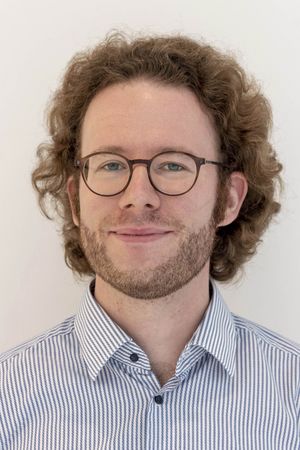
Leonhard Möckl is a Professor of Nano-optical Imaging at Friedrich-Alexander-Universität Erlangen-Nürnberg (FAU) and an Associated Group Leader at the Max Planck Institute for the Science of Light. He holds a PhD from LMU Munich (2015) and completed postdoctoral research at Stanford University (2016–2020), focusing on glycocalyx dynamics using super-resolution microscopy and deep learning. His research integrates biophysics, nanotechnology, and computational methods to study cell membrane organization and disease mechanisms. Key research areas include glycocalyx architecture, single-molecule imaging, and nano-optical techniques for biomedical applications. He leads the Physical Glycosciences Research Group, developing tools like XLuminA for automated microscopy design and novel drug delivery systems. Notable contributions include studies on RNA-binding proteins in leukemia treatment and glycocalyx-based drug targeting. Publications span high-impact journals like Nature Biotechnology , Cell , and Nature Communications , reflecting his expertise in imaging, glycobiology, and molecular pharmacology. His work bridges fundamental science and translational medicine, addressing challenges in cancer therapy, infectious diseases, and cell engineering.
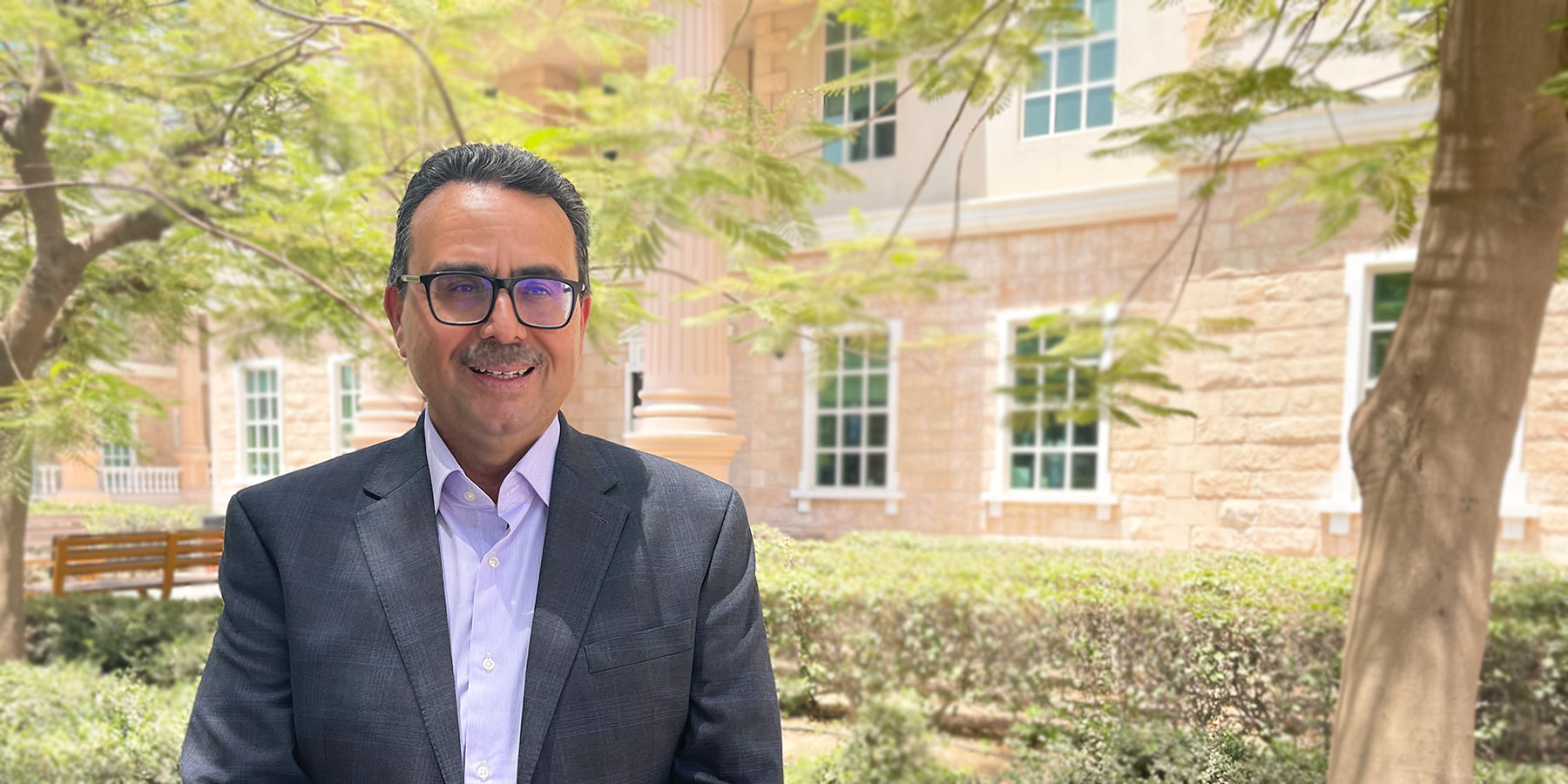
Dr. Nejib Ben Hadj-Alouane is a Professor of Computer Engineering and Program Director for the Master of Science in Artificial Intelligence at AUD's School of Engineering. He previously held professorial roles at Tunisia's National Engineering School of Tunis (ENIT) and National School of Computer Sciences (ENSI), where he contributed to program modernization and PhD/Master’s program development. His industry experience includes R&D roles at Dow Chemical Corporation and software development for traffic simulation systems. He is an entrepreneur, co-founding a software startup focused on human resource management for mining operations. Education: Ph.D. in Computer Engineering, University of Michigan, Ann Arbor, USA MSE in Computer Engineering, University of Michigan, Ann Arbor, USA BSE in Computer Engineering, Syracuse University, USA Research Focus: Dr. Alouane's work spans cybersecurity concepts like non-interference and opacity, optimization of software and cloud/fog infrastructure (e.g., genetic algorithms for game server placement), and machine learning applications in smart agriculture. He emphasizes water conservation through adaptive irrigation systems and has authored over 90 peer-reviewed publications. Advising & Entrepreneurship: Mentor to over 20 PhD/Master’s graduates and founding member of a Canadian mining HR software startup. His entrepreneurial efforts include architectural leadership for industrial ERP integration in Tunisia.
Dr. Janis Timoshenko is a Professor and Director of the Interface Science group at the Fritz Haber Institute of the Max Planck Society. His research focuses on operando hard X-ray spectroscopy and machine learning-driven analysis of catalytic processes, particularly for energy-related reactions like CO₂ electroreduction, methanol synthesis, and oxygen evolution. His work emphasizes real-time characterization of catalyst structure-function relationships under working conditions. Key areas include development of synchrotron-based techniques (XAS, XRD, SAXS), advanced data analysis methods, and nanostructured catalyst design for applications in renewable energy systems. He leads a team of postdocs and PhD students (e.g., Martina Rüscher) and collaborates extensively with institutions like DESY and ALBA Synchrotron. Recent contributions include the OperandoCat beamline P63 at PETRA III and breakthroughs in understanding catalyst restructuring during electrochemical reactions. His research bridges fundamental materials science with industrial catalysis applications.
Phillip Taylor is an Assistant Professor in the Department of Chemical Engineering at the University of Virginia. His research focuses on computational materials science, polymer physics, biomaterials, and peptide self-assembly, using molecular simulations and machine learning to engineer soft materials such as hydrogels and nanoparticles. Education: B.S.E. and M.S.E. in Chemical & Biomolecular Engineering from the University of Pennsylvania; Ph.D. in Chemical & Biomolecular Engineering from the University of Delaware (under Professors Arthi Jayaraman and April M. Kloxin). Postdoctoral research at Sandia National Laboratories' Center for Integrated Nanotechnologies with Drs. Gary Grest and Mark Stevens. Research interests include bio-inspired polymers for medical applications (e.g., drug delivery, tissue engineering), dynamic covalent hydrogels, and machine learning-driven coarse-grained models for self-healing materials. His work emphasizes computational guidance for synthesizing responsive soft materials. Awards: UVA Rising Scholars Postdoctoral Fellowship (2022) Chemical Engineering Teaching Fellowship (University of Delaware, 2022) AIChE 8B Biomaterials First Place Graduate Talk Award (2021) Best Talk Prize (MRS Spring Meeting, 2021) Lab activities: Taylor Lab develops biomaterials and soft materials via computational design. Collaborates on hydrogel synthesis and stimuli-responsive nanoparticles with controllable viscoelastic properties.
Thomas Hoffmann is a senior researcher at the Leibniz Institute for Agricultural Engineering and Bioeconomy (ATB) in Potsdam, Germany, where he has served as Head of the Department of Post Harvest Technology since 2008. He holds a Diplom in mechanical engineering from TU Dresden (1991) and a Doctorate (Dr. rer. agr.) from Humboldt University Berlin (1998). Research Focus: Hydrothermal biomass processing, biochar production, biogas optimization, and sustainable bioeconomy. Leadership: Leads the Leibniz Innovation Farm for Sustainable Bioeconomy and chairs the VDI LAND.TECHNIK advisory board. His work integrates process engineering with environmental science to address challenges in biomass valorization, including: Hydrothermal humification (HTH) for artificial humic acid production Phytotoxicity mitigation in hydrochar applications Carbon recovery strategies for circular agriculture Climate-resilient soil amendment using biochar Recent publications demonstrate expertise in transforming cow manure digestate and agricultural residues into value-added products while enhancing biomethane yields. Key techniques include: FTIR and UV–vis spectroscopic characterization ICP-OES elemental analysis Van Krevelen diagram interpretation Biogas yield optimization Collaborative projects span Kenya food security initiatives , European circular agrifood systems , and Brandenburg historical garden preservation .
Jian Lin is an Associate Professor in the Department of Mechanical and Aerospace Engineering at the University of Missouri (MU), with courtesy appointments in Electrical Engineering & Computer Science (EECS) and Chemical Engineering (ChBME). He leads an interdisciplinary research group focused on advanced manufacturing and materials for biomedical and energy applications. His work is supported by major funding agencies including the National Science Foundation, National Institutes of Health, U.S. Department of Energy, and U.S. Department of Agriculture. Education: PhD in Mechanical Engineering, University of California, Riverside MS in Electrical Engineering, University of California, Riverside BS in Mechanical and Automation Engineering, Zhejiang University Dr. Lin's research spans three core areas: smart manufacturing powered by artificial intelligence , soft materials and 3D/4D printing , and biomanufacturing . His group explores innovative fabrication techniques such as humidity-assisted 3D printing, VPP sustainability, and direct integration of electronics into everyday objects. The lab also develops medical devices for vital sign monitoring and soft tissue regeneration. His recent publications highlight a strong trend toward interdisciplinary innovation , combining materials science, AI, robotics, and biomedical engineering. Themes include sustainable manufacturing, smart implants, wearable health sensors, and autonomous inspection systems—reflecting a convergence of engineering disciplines to solve real-world challenges in healthcare and energy. Scientific Awards and Honors: 2015 ORAU Ralph E. Powe Junior Faculty Enhancement Award 2016 Emerging Investigator, Journal of Materials Chemistry 2019 Dean William R. Kimel and Mila Kimel Faculty Fellow, College of Engineering, MU Dr. Lin actively advises graduate students and leads the Advanced Manufacturing Lab at MU. His research is funded by multiple federal grants, enabling high-impact projects in biomanufacturing, smart materials, and sustainable fabrication. He mentors students in cutting-edge research, many of whom contribute to publications and innovations featured in university news. Current initiatives include AI-driven manufacturing systems, 4D-printed medical implants, and wearable health technologies.
Dr. Liang Yu is an Assistant Professor and Graduate Coordinator in the Department of Biological and Agricultural Engineering at Kentucky State University, within the College of Agriculture, Health, and Natural Resources. He holds dual Ph.D. degrees in Biological Systems Engineering from Washington State University and Chemical Engineering from the Chinese Academy of Sciences, and is a licensed Professional Engineer (PE) in Washington. His research bridges engineering, agriculture, and sustainability, with a focus on biorefinery-based industrial symbiosis and the circular economy . Dr. Yu applies advanced modeling techniques such as computational fluid dynamics (CFD), molecular simulation, techno-economic analysis (TEA), life cycle assessment (LCA), and machine learning to optimize systems for organic waste management, renewable energy production, and sustainable water reuse. His recent publications reveal a strong trend toward integrating anaerobic digestion with hydrothermal pretreatment for enhanced biogas and renewable natural gas (RNG) production from animal manure, food waste, and biosolids. His work also emphasizes nutrient recovery, process control via machine learning, and techno-economic and environmental sustainability assessments of bioenergy systems. Scientific Contributions and Leadership: Principal Investigator (PI), Co-PI, and Key Personnel on USDA and DOE-funded projects Guest Editor for Fermentation and Frontiers in Bioengineering and Biotechnology Published over 70 peer-reviewed articles in high-impact journals including Applied Energy , Bioresource Technology , Chemical Engineering Science , and AIChE Journal Holds five granted patents in bioenergy and waste conversion technologies Dr. Yu actively mentors graduate students as Graduate Coordinator and leads a research program focused on scalable, sustainable solutions for waste-to-energy and resource recovery. His lab integrates experimental work with multi-scale modeling to support technology development and policy decisions in renewable energy and circular systems.
Andrea Boni is an Associate Professor in the Department of Information Engineering at the Faculty of Engineering, University of Parma, where he has been a faculty member since 1999. He leads the Analog IC Design research group and teaches core electronics courses including Analog Design, Amplifier Design, and Electronics 2 at both undergraduate and graduate levels. His research focuses on analog and mixed-signal integrated circuits, with emphasis on high-speed and ultra-low-power designs in CMOS and BiCMOS technologies. Key areas include Analog-to-Digital Converters (ADCs), low-voltage reference circuits, RF oscillators, frequency synthesizers, and their applications in wireless sensors, UWB radars, and RFID systems. The recent publications highlight a strong trend toward low-power, wireless, and intelligent sensing systems, particularly in structural health monitoring, precision agriculture, and food authenticity. These works reflect a convergence of analog circuit innovation with embedded intelligence and IoT applications. Dr. Boni serves on the technical committee of the Custom Integrated Circuits Conference and is a reviewer for IEEE Journal of Solid-State Circuits and IEEE Transactions on Circuits and Systems – II. He advises no listed students in the provided text and has not been awarded any scientific prizes mentioned. His group receives both public and private funding. He leads the Analog IC Design group, which has been active for over a decade in cutting-edge analog circuit research.
R. Byron Pipes is the John L. Bray Distinguished Professor of Engineering at Purdue University's College of Engineering, holding affiliations with the Departments of Aeronautics and Astronautics, Chemical Engineering, and Materials Engineering. His research focuses on advanced composite materials, additive manufacturing, polymer processing, and the development of novel manufacturing techniques for high-performance materials. He is particularly known for contributions to composite structure optimization, thermoplastic composites, and material characterization via computational and experimental methods. Dr. Pipes' work integrates multi-scale modeling, digital thread integration, and machine learning to address challenges in composite manufacturing, including fiber orientation control, thermal management, and defect prediction. His research bridges fundamental material science with applied engineering solutions, emphasizing sustainability through upcycling strategies and energy-efficient processes. He has pioneered methodologies for compression molding of prepreg platelet composites, stamp forming of thermoplastics, and embedded heating systems in additive manufacturing. His academic leadership includes roles on committees such as the Dean's Awards Committee, reflecting his institutional contributions. Scientific recognition includes the prestigious John L. Bray Distinguished Professorship, underscoring his impact on engineering education and research. His lab focuses on translating innovations from computational simulations to real-world manufacturing applications, with a strong emphasis on aerospace and automotive material systems.
Zoltan Nagy is the Arvind Varma Professor of Chemical Engineering at Purdue University's Davidson School of Chemical Engineering. He joined Purdue in 2012 and holds a B.S. (1994) and Ph.D. (2001) from Babeș-Bolyai University, Romania. His research focuses on process systems engineering for pharmaceutical, biotechnology, and agrochemical industries, emphasizing crystallization systems, control engineering, and process analytical technologies. Research highlights include developing model-based control approaches for crystallization systems, integrating PAT technologies, and advancing continuous manufacturing processes. His work aims to optimize product quality (e.g., crystal size/shape, purity) while reducing costs and variability. Collaborations include the University of Loughborough and the UK's Innovative Manufacturing Research Center. Awards: IChemE Innovator of the Year (2011/2010), EFChE Membership (2010), Tudor Tanasescu Award (2008), and multiple journal best paper awards. Editorial Roles: Associate Editor of Journal of Process Control (2011–), Control Engineering Practice (2008–), and Asia-Pacific Journal of Chemical Engineering (2012–). His research group includes postdocs, visiting scholars, and 13 graduate students (listed in full description). Key projects involve intelligent manufacturing systems, real-time process monitoring, and decision support tools like the Crystallization Process Informatics System (CryPRINS).
Dr. Trong Toan Tran is a Senior Lecturer (equivalent to Associate Professor in the US) at the School of Electrical and Data Engineering , University of Technology Sydney (UTS). He leads the Nanoscale Electro-Thermo-Optical (NETO) laboratory and holds prestigious fellowships including the DECRA and UTS Chancellor's Postdoctoral Research Fellowship. His research focuses on quantum optics, nanophotonics, solid-state physics, and nanofabrication, with breakthroughs in quantum light sources and thermal sensing technologies. Dr. Tran earned his Ph.D. in Material Science and Chemical Engineering, completing a thesis on quantum emission from hexagonal boron nitride. His work in Nature Nanotechnology (2016) introduced room-temperature ultra-bright quantum emitters, now cited over 1,600 times. He has secured over $2M in grants, including leadership in the Quantum Challenge 2032 and DECRA projects. His team develops advanced photonic devices, thermal sensors, and quantum technologies. Key research themes include quantum emitters in 2D materials , nanoscale thermometry , and optical architectures . He has advised three PhD students and serves on editorial boards for top journals like Physical Review Letters and Nature Communications . Recognition includes an h-index of 34, 6,100+ citations, and awards such as the AIP Postgraduate Excellence Award (2017). Beyond academia, he engages in science communication, advocating for quantum technologies and nanomaterial applications.