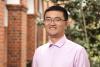
Tianhao Wang is an Assistant Professor in the Department of Computer Science at the University of Virginia School of Engineering and Applied Science. His work focuses on advancing differential privacy and machine learning privacy, with particular expertise in privacy-preserving technologies for data synthesis, adversarial machine learning, and secure AI systems. His research interests span differential privacy mechanisms, secure data sharing, and mitigating privacy risks in modern AI systems. He explores how to protect sensitive information in machine learning models, synthetic data generation, and network analysis while maintaining utility. Recent work highlights include developing benchmarks for private image synthesis (DPImageBench), safeguarding text data from misuse (ExpShield), and analyzing privacy threats in pre-trained language models. His publications reflect a strong emphasis on both theoretical foundations and practical applications of privacy-preserving techniques. Dr. Wang's contributions address cutting-edge challenges in AI ethics, secure machine learning, and privacy engineering, with implications for healthcare, cybersecurity, and data-driven decision-making systems.
Alan Kaptanoglu is a Professor leading the Plasma Physics Group at New York University's Courant Institute. His research focuses on the intersection of applied mathematics, scientific machine learning, and nuclear fusion. He develops theoretical and computational tools for plasma modeling, control, and optimization in complex dynamical systems. Key areas include stellarator design optimization, machine learning-driven MHD simulations, and reactor-scale plasma confinement solutions. His work advances fusion energy research through innovations in magnetic field shaping, coil optimization, and data-driven modeling of plasma behavior. Research interests span plasma turbulence analysis, magnetohydrodynamics, and the application of physics-informed neural networks (PINNs). He explores how magnetic geometry influences plasma stability and turbulence using machine learning techniques. His team addresses challenges in fusion reactor design, such as minimizing Lorentz forces in electromagnetic coils and optimizing permanent magnet configurations for stellarators. Recent work emphasizes data-driven methods for discovering interpretable models in fluids and plasmas, including reduced-order modeling and sparse regression approaches. He collaborates on projects like the DIII-D tokamak and ITER, advancing fusion energy solutions through interdisciplinary computational and experimental efforts. His group's contributions bridge plasma physics with advanced mathematics and machine learning to tackle grand challenges in energy and astrophysical systems. Advising and grants are not explicitly detailed in the provided texts, but his leadership role suggests active mentorship in graduate research. The NYU Plasma Physics Group serves as a hub for cutting-edge research, hosting internships, summer schools, and collaborations with industry/academic partners.
Stephen Lee is an Assistant Professor in the Department of Computer Science at the University of Pittsburgh, affiliated with Pitt Cyber. His research focuses on distributed systems, cyber-physical systems, and sustainability, emphasizing energy efficiency and cost optimization. Dr. Lee holds a PhD from the University of Massachusetts Amherst, a Master’s from Chennai Mathematical Institute, and a Bachelor’s from St. Stephen’s College, Delhi. He actively seeks students for his research group. Education: PhD, Computer Science, University of Massachusetts Amherst Master’s, Chennai Mathematical Institute Bachelor’s, St. Stephen’s College, Delhi Research Interests: Dr. Lee’s work integrates distributed systems, machine learning, and optimization to enhance sustainability. Key areas include IoT-enabled energy systems, emission-aware computing, and privacy-preserving frameworks. He leads projects like GreenWhisk (serverless emission reduction) and Sat2map (3D building modeling from satellite imagery). Recent Achievements: Best Paper Award in IEEE TPS 2024 DOE-funded Cyber Energy Center (2024) MCSI Seed Grant for Pitt building sustainability (2024) NSF Grant on sustainable distributed infrastructures (2023) Grants & Advising: Secured over $2M in grants, including NSF and DOE funding. Advises on energy-efficient systems and IoT security. Teaches CS 2510 (Operating Systems) and CS 1699 (Systems & Sustainability). Labs & Teams: Directs the Sustainable Systems Research Group, focusing on decarbonizing IT and optimizing renewable energy systems. Collaborates with industry partners on smart grid solutions and edge-cloud systems.
Marcus Botacin is an Assistant Professor in the Department of Computer Science & Engineering at Texas A&M University (TAMU), USA. Previously, he held positions as Visiting Assistant Professor (2022-2024) and Lecturer at the Federal University of Paraná (Brazil). His research focuses on malware analysis, hardware-assisted security, and antivirus technology. He earned his Ph.D. in Computer Science from UFPR (2021), M.Sc. from UNICAMP (2017), and B.Sc. in Computer Engineering from UNICAMP (2015). Education: Ph.D., Computer Science, Federal University of Paraná, Brazil (2021) M.Sc., Computer Science, University of Campinas, Brazil (2017) B.Sc., Computer Engineering, University of Campinas, Brazil (2015) Research Interests: Botacin's work addresses challenges in malware detection (static/dynamic methods, sandboxing), hardware-enhanced security mechanisms (e.g., branch monitoring), and antivirus internals. He emphasizes practical solutions and ethical considerations in cybersecurity, advocating for culturally aware threat models (e.g., Brazilian financial malware studies). Publications & Trends: His recent work explores adversarial ML attacks on malware detectors, HPC-based detection frameworks, and automated malware generation risks. He frequently publishes in top venues like ACM CCS, USENIX Security, and IEEE TDSC. Awards: Top-3 Best Ph.D. Thesis in Computer Security (Brazilian Computer Society, 2022) Best PhD Thesis Award from UFPR (2022) MLSec Evasion Challenge 1st place (2021/2020) Advising & Grants: Supervises 15+ students at TAMU and leads NSF-funded projects (e.g., $523K grant for HPC malware detection frameworks). Serves on 21+ conference program committees and reviews for over 50 journals. Lab & Projects: Develops Corvus (public malware analysis sandbox) and explores hardware-accelerated AV solutions like Terminator and HEAVEN.
Dr. Andrey Molotnikov is an Associate Professor in Additive Manufacturing and Director of the RMIT Centre for Additive Manufacturing at RMIT University's School of Engineering. His expertise spans additive manufacturing, computational materials science, and multi-material 3D printing. He leads a research team of 8 academics, multiple postdocs, and 10 PhD students, focusing on innovations like multi-material printing, high entropy alloys, and in-process quality assurance. Key research themes include architectured materials, computational modeling of solidification processes, and fatigue analysis of additively manufactured components. His work has resulted in over 80 publications (h-index 29) and several patents, with industry collaborations driving technology adoption. Recent publications (2022–2025) emphasize advancements in laser-based processes, defect detection via machine learning, and biomedical applications of additive manufacturing. He actively supervises research projects on topics such as hierarchical lattice structures and hybrid materials, supported by ARC grants and industry partnerships. Dr. Molotnikov’s labs and teams prioritize cross-disciplinary collaboration, aiming to bridge computational modeling with practical manufacturing solutions. His research addresses challenges in material compatibility, process optimization, and structural integrity of AM components.
Professor Peter Chin is a Professor of Engineering at Dartmouth College and Director of the Learning, Intelligence + Signal Processing (LISP) Lab. He holds affiliations with the Thayer School of Engineering and serves as Associate Editor of IEEE Transactions on Computational Social Systems. His research bridges signal processing, machine learning, game theory, and differential geometry, with applications in cybersecurity, healthcare, and network analysis. Education: Bachelor of Science in Electrical Engineering, Computer Science, and Mathematics from Duke University (1993) Doctor of Philosophy in Mathematics from MIT (1998) Research Interests: Chin’s work focuses on fundamental questions at the intersection of machine learning, game theory, and signal processing. His lab explores topics like adversarial defense mechanisms, topological machine learning, and computational neuroscience. Recent projects include cybersecurity resilience modeling, medical imaging enhancements via GANs, and multi-agent reinforcement learning frameworks. Publications Trends: His most recent articles address cutting-edge challenges in cybersecurity (e.g., autonomous defense systems), medical AI (e.g., Alzheimer’s classification), and adversarial robustness. A notable 2025 focus is on quantitative resilience modeling for cyber defense, reflecting growing demand for AI-driven security solutions. Awards: Faculty Scholar Award, Duke University George Sherred III Award, Duke University Julia Dale Memorial Award, Duke University Grants & Leadership: Recipient of DARPA cybersecurity research grants Co-chair for SPIE/DSS Cyber Sensing Conference (2013–2020) Developed novel compressive sensing microscope for biological imaging LISP Lab: This interdisciplinary lab pioneers projects like nFlip (multiplayer security game models) and topological machine learning frameworks, emphasizing practical applications of theoretical advancements.
Soledad Villar is an Assistant Professor in the Department of Applied Mathematics and Statistics and a member of the Mathematical Institute for Data Science at Johns Hopkins University. She also contributes to the Data Science and AI Institute . Her research focuses on computational methods for extracting information from data, emphasizing optimization for data science, machine learning, equivariant representation learning, and graph neural networks. Dr. Villar holds a PhD in Mathematics from the University of Texas at Austin and has been a research fellow at New York University and the Simons Institute at UC Berkeley. Her work bridges theoretical foundations with practical applications in fields like scientific computing and political analysis. Awards include the National Science Foundation CAREER Award (2024). Her research has addressed topics such as gerrymandering detection, fluid dynamics modeling, and graph representation learning. She collaborates on interdisciplinary projects and organizes academic events like the One World MINDS Seminar and the Cibercoloquio Latinoamericano de Matemáticas . Her research interests span computational methods, equivariant machine learning frameworks, and graph neural networks, with applications in physics, engineering, and data-driven decision-making. She actively engages in advancing machine learning techniques for scientific and engineering challenges.
Natalia Andrienko is a Professor of Computer Science at City University London and Lead Scientist in the Knowledge Discovery department at Fraunhofer-Institut für Intelligente Analyse- und Informationssysteme. Her work bridges visual analytics with mobility data science and machine learning, focusing on human-in-the-loop systems for pattern discovery and spatiotemporal data exploration. Professor, Computer Science, City University London (2013-present) Lead Scientist, Knowledge Discovery, Fraunhofer Institute (1997-present) Research interests center on visual analytics methodology for spatiotemporal data, human-centered machine learning, and mobility pattern analysis. She develops frameworks for interactive dashboards, trust visualization in ML, and semantic exploration of location-based data, with a focus on scalable and privacy-respecting techniques. Her recent publications investigate hybrid human-machine discovery of movement patterns, contextual visual analytics for multivariate events, and the integration of temporal periodization with spatial analysis. Articles emphasize applications in sports analytics, transportation systems, and collaborative visual analysis workflows. Key collaborations include work with Gennady Andrienko and Salvatore Rinzivillo. She has contributed to journals like Visual Informatics , IEEE Transactions on Visualization and Computer Graphics , and International Journal of Cartography , maintaining active research output across visual analytics, mobility science, and geospatial data modeling.
Arpan Gujarati is a Sessional Lecturer in the Department of Computer Science at the University of British Columbia (UBC), affiliated with the Systopia Lab. He teaches graduate and undergraduate courses such as CPSC 538G (Distributed Systems), CPSC 416 (Operating Systems), and CPEN 432 (Real-Time System Design). He holds a PhD from the Max Planck Institute for Software Systems and TU Kaiserslautern, where he was supervised by Björn B. Brandenburg. PhD: Max Planck Institute for Software Systems & TU Kaiserslautern (2020) Undergraduate: Birla Institute of Technology and Science (BITS Pilani) Postdoctoral Researcher: MPI-SWS Research Associate: UBC Software Development Engineer: Citrix R&D, India His research focuses on real-time and distributed systems, with applications in cyber-physical systems, fault tolerance, and machine learning reliability. He investigates scheduling algorithms, reliability analysis, and the integration of learning-enabled components into safety-critical systems. His work combines theoretical analysis with practical system implementations, often involving real-world testbeds and open-source tools. His recent publications span top-tier venues including RTSS, OSDI, ECRTS, DSN, and Middleware, with a strong emphasis on performance predictability, resilience of ML systems, and real-time communication. His work frequently addresses challenges in timing guarantees, fault tolerance, and system reliability in both cloud and embedded environments. SIGBED Paul Caspi Memorial Dissertation Award Best Paper Award at RTSS 2022 Distinguished Artifact Award at OSDI 2020 Best Student Paper Award at Middleware 2017 Outstanding Paper Award at RTCSA 2025 He advises several PhD students and undergraduate researchers at UBC, including Heng Zhao, Aida Aminian, Zainab Saeed Wattoo, and Philip Schowitz. He has led multiple research projects involving robotic arms, NVIDIA Holoscan, FreeRTOS, and distributed key-value stores. His lab work emphasizes reproducibility, open datasets, and practical system building. He has served on program committees for RTSS, RTAS, ECRTS, and Middleware, and contributes to journals such as Real-Time Systems and JSys.
Ameya Jagtap is an Assistant Professor (Tenure-Track) in the Department of Aerospace Engineering at Worcester Polytechnic Institute (WPI), USA. Prior to this, he served as an Assistant Professor of Applied Mathematics (Research) at Brown University from 2021 to 2024. He holds a Ph.D. and M.E. in Aerospace Engineering from the Indian Institute of Science (IISc), and completed postdoctoral research at TIFR-CAM (India) and Brown University's Division of Applied Mathematics. His research bridges mechanical/aerospace engineering, applied mathematics, and computation, focusing on scientific machine learning algorithms that integrate data and physics. Key areas include physics-driven deep learning, uncertainty quantification, multi-scale simulations, and novel neural network architectures like quantum and graph networks. He serves on editorial boards for Neural Networks , Neurocomputing , and others. His work emphasizes interpretable neural operators for PDE solutions, domain decomposition methods, and adaptive activation functions to enhance PINN convergence. Notable contributions include XPINNs (extended physics-informed neural networks) and causal sweeping frameworks for PDEs. His research has been widely cited, particularly for PINN applications in supersonic flows and high-dimensional PDEs. Jagtap has delivered invited talks at institutions like Los Alamos National Laboratory, Tsinghua University, and the Alan Turing Institute. He is also recognized as a Top 2% World Scientist by Stanford University.
James Salamy is a part-time Lecturer in the Department of Electrical and Computer Systems Engineering at the College of Engineering, Monash University. He actively contributes to both research and teaching initiatives, with a focus on photonics and engineering education. His work bridges technical innovation with pedagogical advancements, ensuring holistic development of educational strategies. Current Affiliation: Monash University, College of Engineering Academic Role: Lecturer Status: Part-time faculty member His research spans two primary domains: photonics and engineering education . In photonics, he investigates laser stabilization techniques using microring resonators for dense wavelength-division multiplexing (WDM) systems, aiming to improve optical network scalability and reliability. In education, he explores factors influencing student success, including mental health literacy, onboarding experiences, and the role of failure in academic growth. Additionally, he has contributed to cloud-based machine learning infrastructure optimization. Recent research trends emphasize interdisciplinary collaboration, particularly between Monash University and the University of Warwick, focusing on scalable automated feedback systems for cross-campus education. His technical work on self-injection locking mechanisms has implications for temperature-stable laser systems, while his educational studies address equity and pedagogical innovation. While no scientific awards are documented in the provided material, his 2024-2025 projects include research on Research Cross Campus Peer Instructions and scalable feedback systems, demonstrating his commitment to enhancing engagement in information engineering education.
Jilles Vreeken is a Professor of Computer Science at Saarland University and tenured faculty at the CISPA Helmholtz Center for Information Security, where he leads the Exploratory Data Analysis research group. He is also an ELLIS Fellow and Faculty of the Saarbrücken Unit on AI and ML. His work bridges theoretical foundations with practical applications in causal inference, unsupervised learning, and exploratory data analysis. Dr. Vreeken's research focuses on developing theory and algorithms for answering fundamentally exploratory questions about data: "what is going on in my data?", "what causes what and how?", and "what can we learn from this model?" without making unnecessary or unjustified assumptions. He takes a principled approach based on information theory to identify what is worth knowing, then develops efficient algorithms for extracting useful interpretable results. His work spans causal inference under realistic conditions (including hidden confounding, selection bias, and non-i.i.d. data), summarizing complex data and models in understandable terms, and combining these threads to create more robust and useful models across diverse data types. His recent publications demonstrate a strong trend toward causal discovery in increasingly realistic settings, including non-stationary time series, event sequences, and scenarios with hidden confounders. He has made significant contributions to federated learning, interpretable machine learning, and pattern mining. His work consistently applies information-theoretic principles to develop methods that are both theoretically sound and practically useful for extracting insights from complex data. Dr. Vreeken has received numerous prestigious awards including: IEEE ICDM'18 Tao Li Award for Excellence in Research IEEE ICDM'18 Best Paper Award UdS-CS'15 Busy Beaver Teaching Award ACM SIGKDD'11 Best Student Paper Award ACM SIGKDD'10 Doctoral Dissertation Runner-Up Award ECML PKDD'09 Best Student Paper Award As an advisor, Dr. Vreeken has mentored numerous doctoral researchers to completion, including Dr. Osman Ali Mian, Dr. David Kaltenpoth, Dr. Boris Wiegand, Dr. Sebastian Dalleiger, Dr. Janis Kalofolias, Dr. Jonas Fischer, Dr. Alexander Marx, Dr. Panagiotis Mandros, Dr. Kailash Budhathoki, Dr. Roel Bertens, Dr. Koen Smets, and Dr. Michael Mampaey. He has secured significant research funding as PI for multiple projects including "AI for Prediction and Therapy Guidance in Acute Stroke" (HAICU, 2025-2028), "Neuro-Explicit Models of Language, Vision and Action" (RTG, DFG, 2023-2028), and "Crushing Antimicrobial Resistance using Explainable AI" (HAICU, 2021-2024). Dr. Vreeken leads the Exploratory Data Analysis (EDA) research group at CISPA, which focuses on developing theory and algorithms for discovering novel insights from data, learning inherently interpretable models, and drawing reliable causal conclusions. The group has produced numerous influential algorithms and frameworks in causal inference, pattern mining, and exploratory data analysis, with applications spanning healthcare, materials science, and cybersecurity.
Ludovic Vetea Mompelat is an Assistant Professor at the University of Miami 's College of Arts and Sciences . His research focuses on linguistics, natural language processing (NLP), and computational analysis of creole languages such as Martinican and Haitian Creole. He specializes in integrating artificial intelligence into language education and exploring syntactic typology, ellipsis constructions, and linguistic barriers in healthcare. Research Interests Dr. Mompelat investigates: POS tagging and error analysis in creole languages AI-driven solutions for linguistic barriers in healthcare Computational approaches to ellipsis constructions and syntactic finiteness Corpus development for discourse analysis (e.g., conspiracy theories) and event sequencing Publications & Trends Recent articles highlight his work on NLP for under-resourced creole languages, contrasting classical NLP with modern LLMs, and leveraging AI to address linguistic challenges in healthcare and education. His studies often involve comparative syntax analysis across Martinican, Haitian, and French languages, alongside creating annotated corpora for machine learning applications.
Matti Minkkinen is a Docent at the Turku School of Economics (University of Turku) and a Postdoctoral Researcher in Information Systems Science at the Department of Management and Entrepreneurship. His work bridges futures studies with ethics, privacy, and socio-technical systems in digital transformation. Recent roles focus on responsible AI governance and foresight methodologies. University: University of Turku School: Turku School of Economics Department: Department of Management and Entrepreneurship His research explores how digital technologies reshape organizational practices, emphasizing Futures Consciousness as a human capacity. Key themes include responsible AI , privacy protection , and causal layered analysis in scenario planning. Publications highlight ethical governance frameworks and EU policy debates. Recent articles address generative AI ethics , ML system integration , and AI auditing across journals like Communications of the Association for Information Systems and Information and Management . Topics cluster around socio-technical systems, digital ethics, and institutional adaptation to AI. Teaching and editorial roles include co-curating student research collections at Finland Futures Research Centre. No explicit scientific awards are listed, but his work contributes to foresight theory and practice.
Travis B. Thompson, Ph.D. is an Assistant Professor in the Department of Mathematics and Statistics at Texas Tech University, leading the TM4 (Texas Tech Translational and Theoretical Mathematical Modeling and Machine Learning in Medicine) research group. His academic journey includes postdoctoral work at Rice University, Simula Research Laboratory, and the University of Oxford, focusing on mathematics applied to neurodegenerative diseases. Education: Ph.D. in Mathematics from Texas A&M University (2013) Dr. Thompson develops theoretical mathematical models and applies scientific computing and machine learning to study neurological pathologies, particularly Alzheimer’s disease. His work explores complex biological processes on networks, translational healthcare applications, and nutritional security implications. Current research trends integrate neuroimaging data with finite element simulations to model tau progression , amyloid beta dynamics , and glymphatic clearance in age-related diseases. Scientific awards and honors were not explicitly mentioned in the provided materials. Dr. Thompson’s interdisciplinary approach connects computational neuroscience with biomedical engineering , utilizing techniques like diffusion tensor imaging and level set methods to analyze pathological protein spread and brain tissue mechanics . The TM4 research group focuses on network neurodegeneration , personalized medicine , and machine learning diagnostics . Their work spans from microfluidic cancer detection to computational modeling of brain clearance mechanisms , addressing challenges in both neurodegenerative diseases and biomedical engineering through rigorous mathematical frameworks.