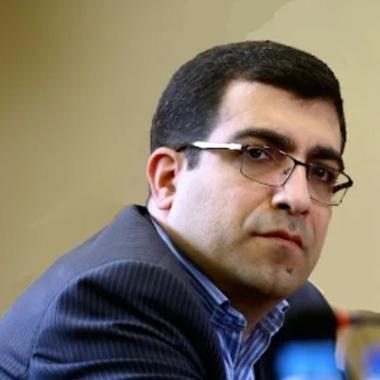
Professor Mahdi Mahfouf holds the Chair in Intelligent Systems at the University of Sheffield's School of Electrical and Electronic Engineering . He obtained his MPhil (1988) and PhD (1991) in Control Systems from the same institution. After postdoctoral research (1992-1996) on Leverhulme-funded projects in Model-Predictive Control and Fuzzy Logic, he progressed through academic ranks at Sheffield to Full Professor (2005). Recipient of the IEE Hartree Premium Award (1992) and MEDIPEX Innovation Award (for ICU Decision Support Systems) Over 370 publications, including 130+ journal papers Head of the Intelligent Systems Research Laboratory Research Themes His work spans fundamental research in Fuzzy Logic (modelling, control), Neural-Fuzzy Systems, Self-Organising Control, and Evolutionary Optimization, alongside applied domains in pharmaceutical manufacturing, aerospace systems, biomedical engineering (ICU monitoring), and intelligent transportation. Recent publications focus on hybrid AI for pharmaceutical processes , type-2 fuzzy control systems , and machine learning in manufacturing metrology . Lab initiatives include multistage process monitoring and human-machine interaction systems for stress management.
Professor Robin Purshouse is a leading academic at the University of Sheffield , currently serving as Professor of Decision Sciences in the Department of Automatic Control and Systems Engineering within the School of Electrical and Electronic Engineering . With a career spanning academia and industry, his work bridges computational modelling , optimization , and systems science to address complex challenges in public health and engineering. His research has been pivotal in developing mechanisms for agent-based modelling and evolutionary multi-objective optimization . Education: PhD in Control Systems (2004), MEng in Control Systems Engineering (1999) from the University of Sheffield Professor Purshouse's research focuses on computational modelling of complex social systems , decision analytics for population health policy , and Bayesian optimization . He has pioneered the integration of machine learning and uncertainty quantification in social science simulations, with notable projects like the Sheffield Alcohol Policy Model and CASCADE initiative. His work spans interdisciplinary domains, including health economics , policy evaluation , and engineering design . Recent publications highlight his expertise in agent-based modelling for smoking/vaping dynamics , intersectional disparities in alcohol consumption , and inclusive economy frameworks . He has secured substantial funding (exceeding £16 million) through grants from NIH , CRUK , UKPRP , and MRC , including his role as co-PI in the HealthMod cluster. His contributions to multi-objective optimization and evolutionary algorithms have advanced methodologies in both engineering and public health domains. Scientific Awards: ESRC Future Research Leaders Award (2012-2015) As a co-developer of the Liger optimization environment , Purshouse has fostered open-source tools for complex decision-making. He leads the SIPHER consortium for systems science in public health and serves on editorial boards for journals like Environmental Modelling & Software . His teaching includes Agent-Based Modelling (ACS6132), and he maintains professional memberships in the Association for Computing Machinery and Research Society on Alcohol .
Dr. Xiaoli Ma is a Senior Research Fellow at the University of Hull, affiliated with the Energy and Environment Institute and the Centre for Sustainable Energy Technologies under the Faculty of Science and Engineering. Her research focuses on sustainable building services, renewable/sustainable energy systems, energy efficiency technologies, and instrumentation technologies. She has secured over £2.7 million in research funding from bodies such as the EU, EPSRC, Innovate UK, and the National Science and Technology Committee of China, leading or co-leading 26 projects. Her research interests include innovative cooling systems for data centers (e.g., super-performance dew point cooling achieving 90% energy savings), solar-driven energy systems, waste heat recovery, and thermoelectric technologies. Notable projects include the development of a novel Loop-Heat-Pipe-based data center cooling system funded by the EU FP7 and a solar façade hot water heating system supported by the EU FP7 Programme. Dr. Ma has published over 90 journal articles, two books, and three book chapters, with recent works focusing on machine learning-driven energy optimization, solar cooking systems with energy storage, and advanced heat pump technologies. She holds two patents and actively supervises PhD students in renewable energy, energy efficiency, and built environment applications. Her lab and team are part of the Energy and Environment Institute, collaborating on projects like the pioneering near-zero-carbon air conditioning system using atmospheric latent heat and natural light energy (EPSRC-funded). Key grants include a £814k EPSRC project and a £692k IEEA initiative for data center cooling advancements.
Dr. Zhiyuan Tan is an Associate Professor in the School of Computing at Edinburgh Napier University (ENU), specializing in cybersecurity research. He holds a PhD in Computer Systems from the University of Technology Sydney (UTS), Australia (2014), an MEng from Beijing University of Technology, China (2008), and a BEng with high distinction from North-eastern University, China (2005). Before joining ENU in 2016, Dr. Tan held research positions at the University of Twente (Netherlands), University of Technology Sydney (Australia), and La Trobe University (Australia). Dr. Tan's research focuses on cybersecurity, machine learning, data analytics, virtualisation, and cyber-physical systems. His work has resulted in over 44 scholarly publications with an H-Index of 13 and more than 830 citations according to Google Scholar. His recent publications demonstrate a continued focus on network security, intrusion detection systems, and the application of machine learning techniques to cybersecurity challenges, with publications spanning from 2022-2025 in top venues including IEEE Transactions and international conferences. Dr. Tan has received significant research funding, including AUD 27,800 from CSIRO and UTS for autonomous network intrusion detection research and £6,987 from ENU for securing future 5G health care systems. His research has been recognized with awards including the National Research Award 2017 from the Research Council of the Sultanate of Oman, a Best Paper Award, and the Kaspersky Lab's Annual Student Cyber Security Conference Finalist Award. National Research Award 2017 from the Research Council of the Sultanate of Oman Best Paper Award Kaspersky Lab's Annual Student Cyber Security Conference Finalist Award Dr. Tan has mentored 9 PhD students over the past 5 years, with 6 successfully completing their studies. His students have produced 12 journal and 10 conference publications. He has also served as an editorial board member for international journals, organized special issues, and participated as a technical program committee member for major international conferences. Dr. Tan is currently recruiting PhD students for research projects on network security, adversarial machine learning for anomaly/malware detection, virtualization security, and IoT security.
Dr. Francesco Baldini is a Senior Lecturer at the University of Glasgow, coordinating the Vector Biology and Disease Group within the School of Biodiversity, One Health and Veterinary Medicine. He holds affiliations with the Ifakara Health Institute and contributes to the VectorsGlasgow initiative. His research focuses on malaria vector biology, with expertise in mosquito ecology, insecticide resistance, and innovative surveillance tools using spectroscopy and AI. He completed a PhD in Medical Entomology across Harvard University, Perugia University, and Imperial College London. Key research areas include developing non-invasive diagnostic methods (mid-infrared/quantum spectroscopy), understanding vector population genetics, and exploring biocontrol strategies. His work bridges field studies in Africa with lab-based molecular analyses. Recent projects emphasize insecticide resistance in Anopheles species, cryptic taxa discovery, and age-grading techniques. Grant support includes Bill and Melinda Gates Foundation funding for malaria vector surveillance, and collaborations with global health institutions. Supervised PhD topics include AI-driven mosquito analysis, tsetse fly trypanosomiasis surveillance, and avian malaria epidemiology. Scientific awards include an AXA ISSF Fellowship (2015–2017) and an Academy of Medical Sciences award (2022–2024). Key publications address genomic studies of Anopheles funestus, quantum cascade laser spectrometry, and Wolbachia symbiont impacts on vector competence.
Dr. Emili Balaguer-Ballester is an Associate Professor in Computational Neuroscience at Bournemouth University, UK. He co-champions the Interdisciplinary Neuroscience Research Centre and serves as Senior Fellow of the Higher Education Academy. His research spans computational neuroscience, machine learning, and virtual reality applications, with collaborations across Europe (University of Barcelona, Heidelberg University, IDIBAPS, Polyra) and North America (Indiana Purdue University, University of British Columbia). PhD in Physics (Cum Laude) from University of Valencia (2001) MSc in Neuroscience and Biology of Behaviour from University of Seville (2004) Research focuses on cortical network dynamics, mesoscopic auditory cortex modeling, top-down modulation in cognition, and affective computing in VR. His work combines nonlinear time series analysis with neurodynamic modeling to study spontaneous and task-related brain activity states. Recent publications demonstrate expertise in causal inference, neuroevolutionary optimization, and affective state detection using EMG/PPG sensors in VR environments. Collaborators include neuroscience labs (Sanchez-Vives, Durstewitz) and tech companies (Sony London, Emteq). PhD thesis award - Culture Institute 'Juan Gil-Albert', Spain (2001) Senior Fellow Higher Education Academy (2020) Secured major grants including Royal Society funding for cortical network modeling (2022), Human Brain Project ERC support for neuromorphic hardware (2022), and Santander Bank research travel grants (2016). Supervised 14 PhD students through projects involving data streams, VR immersion, and cortical dynamics. Labs include Balaguer Lab (GitHub), Interdisciplinary Neuroscience Research Centre, and collaborations with Human Brain Project. Teaching encompasses doctoral-level neuroscience, MSc data analytics, and undergraduate systems design courses.
Emily Jefferson is a Professor of Health Data Science at the University of Dundee, currently serving as CTO of Health Data Research (HDR) UK and Interim Director of DARE UK. She holds an honorary professorship in Population Health and Genomics. With a PhD in Bioinformatics and industry experience in Big Data and project management, her career spans academia, finance, and solo global travel. Her research focuses on Trusted Research Environments (TREs), data governance, and machine learning applications in healthcare. She led the Health Informatics Centre (2013–2022), managing a 60-person team supporting over 100 projects. Key achievements include ISO27001 certification and Scottish Government-accredited Safe Haven infrastructure. Since 2014, she has secured over £120M in grants as PI/Co-I, delivering £28M. Notable projects include HT-ADVANCE (hypertension biomarkers), Alleviate (chronic pain data hub), and GRAIMATTER (TRE disclosure control guidelines). She chairs boards at Swansea University and European Bioinformatics Institute. Awards include the 2016 Farr Institute Future Leader. Her work addresses SDG 3 (Good Health) and 9 (Industry/Innovation). Recent publications emphasize TRE innovation, hypertension subtyping, and pandemic data infrastructure (e.g., CO-CONNECT for COVID-19).
Peter Ross is a Researcher at the Edinburgh Napier University , affiliated with the School of Computing Engineering and the Built Environment and the Centre for Algorithms, Visualisation and Evolving Systems . He collaborates with academics like Emma Hart, Alistair Lawson, and Andrew Webb on projects involving evolutionary swarm robotics , artificial immune systems , and optimisation algorithms . His research focuses on applying bio-inspired computing to robotics, including work on perceptual aliasing , adaptive scheduling , and swarm intelligence . He has supervised postgraduate research, notably serving as Director of Studies for Dr Neil Urquhart’s thesis on evolutionary machine learning in metamorphic malware analysis (1999-2003). His publications span 1998-2003 and explore intersections between immunology , sparse distributed memory , and robotic systems . Recent projects like VanFill Innovation Voucher (2025) indicate ongoing involvement in AI-driven solutions and human-robot interaction research.
Arnold Polanski is an Associate Professor in Economics at the School of Economics, University of East Anglia (UEA), where he is an active member of the Applied Econometrics and Finance, Economic Theory, and Statistics research groups. He is currently accepting PhD students and supervising research in socio-economic networks, game theory, financial economics, and financial tail risk. His academic journey includes a PhD from the University of Alicante, postdoctoral research at the University of Minnesota, and prior teaching at Queen’s University Belfast. PhD in Economics, University of Alicante (2004) Postdoctoral Studies, University of Minnesota (2005) Postgraduate Certificate in Higher Education Teaching, Queen’s University Belfast (2007) Arnold Polanski's research focuses on socio-economic networks , game theory , information economics , and financial tail risk , with a growing emphasis on integrating machine learning into economic modeling. His work explores how network structures influence cooperation, information diffusion, and financial interdependencies, particularly during extreme market events. He investigates the role of homophily, influence, and strategic behavior in shaping economic outcomes. His recent publications (2019–2025) reveal a consistent trend toward analyzing tail risk interdependence , network stability , and information flows using advanced econometric and computational methods. Many of his articles apply machine learning and axiomatic frameworks to bargaining and financial risk, published in journals like Journal of Economic Theory , Journal of Applied Econometrics , and Computational Economics . His work bridges theoretical economics with empirical and computational approaches. Arnold Polanski has received research funding from prestigious institutions including the British Academy and the Institut Europlace de Finance Louis Bachelier . He leads the Economic Theory Group at UEA and serves in key administrative roles such as Plagiarism Officer and Chair of the Faculty Appeals and Complaints Panel. He actively contributes to the academic community as co-organizer of an annual international workshop on the economics of networks. His research supervision includes PhD projects on socio-economic networks, game theory, and financial tail risk. He collaborates with scholars such as E. Stoja, F. Vega-Redondo, and J. Sikora, and his work often involves interdisciplinary methods combining economics, statistics, and computer science. Arnold Polanski is involved in the Economic Theory Group and contributes to collaborative research within UEA’s School of Economics. His projects emphasize network-based modeling, financial risk analysis, and the application of machine learning in economic contexts. He fosters academic exchange through organizing international workshops and leading research initiatives focused on the intersection of networks and economic behavior.
Professor Kenneth Payne is a Professor of Strategy at King's College London's Defence Studies Department, part of the Faculty of Social Science & Public Policy. His research focuses on the intersection of political psychology, strategic studies, and artificial intelligence. He has authored influential books like I, Warbot (2021) and Strategy, Evolution, and War (2018), exploring AI's transformative impact on conflict and decision-making. Payne has advised governments, NATO, and appeared before parliamentary committees in the UK and Netherlands. His work bridges evolutionary theory, modern warfare, and AI ethics, with recent contributions to debates on autonomous weapons and reliable AI in defense. Key affiliations include the Cyber Security Research Group (CSRG) and King's Cybersecurity Centre. His awards include a Visiting Fellowship at Oxford University's Department of International Relations (2008). He teaches strategic studies, AI's role in conflict, and has supervised PhD students in related fields. Payne's research projects include studies on geopolitics, post-traumatic stress in combat troops, and counterinsurgency strategies in Iraq.
Dr. Zia Ush Shamszaman is a Senior Lecturer in Computer Science at Teesside University's School of Computing, Engineering & Digital Technologies (SCEDT). He holds a PhD in Computer Science from the University of Galway and a Master's from Hankuk University of Foreign Studies. His research focuses on Cybersecurity, AI Ethics, IoT Resilience, and Game Theory applications, with a strong emphasis on bridging academic research with industry applications. Teaching responsibilities include postgraduate modules on AI Ethics, Cyber Risk Management, and Ethical Hacking, alongside undergraduate courses in Secure Data Acquisition and Ethical Hacking. He actively supervises five PhD students in cybersecurity and AI, advocating for inclusive technology education and societal impact. Professional memberships include IEEE (Senior Member), Elsevier Advisory Panel, and W3C. He has organized conferences like the International Conference on Suitable Technologies 4.0 and served on program committees for major events. Recognized for exceptional peer reviewing, he has received awards from leading journals like the Journal of Network and Computer Applications and Future Generation Computer Systems. Current projects funded by Innovate UK include CyberPathway (diversity in cybersecurity education), SafeSCMS (AI-driven supply chain security), and Opera-CyberThemis (trustworthy AI frameworks). Past industry roles include technical leadership in Bangladesh's government projects like the Machine Readable Passport system and World Bank-funded Bangladesh Automated Clearing House initiative. Shamszaman's work spans industry collaborations, academic leadership, and community engagement, with recent media contributions on GenAI governance and cyber resilience strategies. His research integrates theoretical advancements with practical solutions for SMEs, healthcare systems, and underserved communities.
Dr. Vahid Rafe is Lecturer and co-program lead for Computer Science at Goldsmiths, University of London. His research focuses on search-based software engineering and blockchain technology, with additional expertise in formal verification and model transformation. Research integrates artificial intelligence with software engineering practices including automated testing techniques, bug localization, and formal verification. Recent work applies machine learning to software quality assurance, combinatorial testing optimization, and blockchain security analysis. Publications demonstrate consistent innovation in AI-enhanced software engineering methods, particularly hybrid algorithms for test generation and deep learning approaches for software maintenance. Recent work addresses security vulnerabilities in cryptographic systems.
Sahar Validi serves as Senior Lecturer and Deputy Head of the Strategy, Operations and Entrepreneurship (SOE) group at Essex Business School, University of Essex since June 2024, following her role as Associate Director of Education from October 2023 to June 2024. She joined the institution in October 2022 after eight years at the University of Huddersfield. Her academic credentials include: PhD in Management Science (Dublin City University) Master's in Industrial Management-Operational Research Postgraduate Certificate in Higher Education Bachelor's in Business Management Validi's research bridges Operational Research and Supply Chain Management with a critical focus on sustainability-driven digital transformation. Her work integrates evolutionary algorithms, AI, and multi-criteria decision analysis to develop low-carbon logistics systems and intelligent decision support frameworks. She emphasizes real-world impact through industry collaboration, particularly in supply chain risk management and net-zero transition strategies. Analysis of her 15 most recent publications reveals a dominant trajectory toward AI-enhanced sustainable supply chain design, with 73% of works since 2018 focusing on carbon reduction, circular economy integration, and resilience engineering. Her research increasingly combines metaheuristic optimization with real-time data analytics for dynamic decision support in complex logistics networks. Validi has secured over £2 million in research funding through competitive grants: AI for Net Zero (UKRI, 2023, PI) Management KTP for ERP Implementation (Innovate UK, 2022, PI) Cloud-Based Supply Chain Control Tower (Huddersfield, 2021, PI) Net Zero Innovation Programme (UCL, 2022, PI) Multiple Innovate UK Knowledge Transfer Partnerships She maintains active industry partnerships with Local Enterprise Partnerships, SMEs, and manufacturing firms including Wealmoor Limited and Swann Engineering Group, driving knowledge transfer in digital transformation and sustainable operations.
Tim Blackwell is a Senior Lecturer in the Computing Department at Goldsmiths, University of London. He holds a BSc in Physics (1980), a DPhil in Theoretical Physics (1984), and an MSc in Computer Science (2001). His research focuses on swarm intelligence, computational music, and optimization algorithms, with notable contributions to particle swarm optimization and tomographic reconstruction. Education: BSc Physics, 1980 DPhil Theoretical Physics, 1984 MSc Computer Science, 2001 His work bridges computational methods with artistic and scientific applications, including projects like 'A Sound You Can Touch' and 'Swarm Techtiles.' Recent research explores optimization benchmarks, environmental applications (e.g., illegal fishing detection), and evolutionary algorithms. Key publications span journals like IEEE Transactions on Evolutionary Computation and conferences such as GECCO. His work emphasizes interdisciplinary approaches, integrating computational techniques with fields like music, image processing, and environmental science.
Dr. Jiayan Qiu is a Lecturer (Assistant Professor) at the University of Leicester's College of Computing and Mathematical Science. Previously, he was a postdoctoral research fellow collaborating with Prof. Zhou Wang at the University of Waterloo's Department of Electrical & Computer Engineering. He holds a Ph.D. from the University of Sydney (USYD), advised by Prof. Dacheng Tao, and completed his MPhil and Honorable B.S. at the Australian National University (ANU). His research focuses on computer vision, machine learning, and artificial intelligence, with notable contributions to visual relationship modeling, image outpainting, depth estimation, and generative models. His work has been published in top-tier venues like IEEE TPAMI, CVPR, ECCV, and ACM KDD. Professional service activities include serving as a reviewer for prestigious journals (e.g., IEEE T-PAMI, T-IP) and conferences (CVPR, ICCV, NeurIPS), as well as a member of program committees for leading AI conferences. He also contributes to academic leadership as a Guest Editor for Frontiers in Signal Processing and MDPI-Electronics .