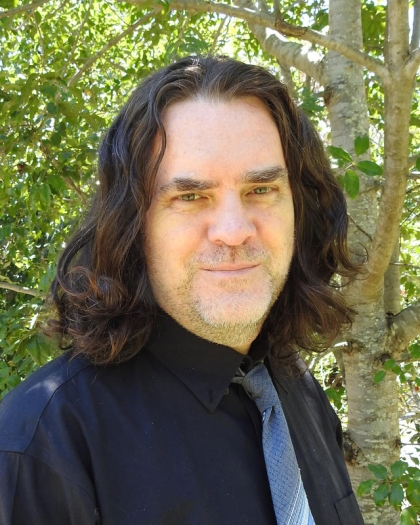
Xuan Zhang is an Associate Professor at the Department of Information and Communication Technology, University of Agder. His research focuses on Tsetlin Machines, learning automata, and their applications in machine learning, computer vision, and hyperspectral imaging. Research Trends: Zhang’s recent work includes developing interpretable machine learning models (e.g., Tsetlin Machines), optimizing convolutional architectures for image processing, and applying automata theory to solve multi-armed bandit problems and channel selection in cognitive networks. His field spans theoretical analysis and practical implementations in AI, remote sensing, and health informatics. Scientific Contributions Co-developed advanced Tsetlin Machine variants for XOR/NOT operator convergence, disease forecasting, and image restoration Published in journals like IEEE Transactions on Pattern Analysis and Machine Intelligence , Information Sciences , and Applied Intelligence Explored Bayesian pursuit algorithms, hierarchical learning automata, and particle swarm optimization techniques Contact: xuan.zhang@uia.no
Elisabeth Wetzer is an Associate Professor in Machine Learning at the Department of Physics and Technology, UiT The Arctic University of Norway. Her research bridges artificial intelligence with healthcare applications, focusing on multimodal image registration, bias mitigation in AI, and physics-informed learning models. Current Role: Associate Professor, Machine Learning Group Research Themes: AI ethics, medical imaging, cross-modal representations, algorithmic fairness Her recent work explores technical challenges in PET imaging analysis and societal implications of AI bias. Collaborative projects span medicine, mathematics, and computer science disciplines. Key scientific contributions include: Physics-informed deep learning for PET image data Studies on multi-task learning efficacy in medical classification Research on gender bias in algorithmic systems She actively participates in diversity initiatives and public outreach, including presentations at Nobel laureate conferences and media engagements on AI ethics.
Sebastien Nicolas Gros is a Professor at the Department of Engineering Cybernetics, Norwegian University of Science and Technology (NTNU). His research focuses on safe reinforcement learning (RL) and data-driven model predictive control (MPC), with applications in energy systems, biomedical engineering, and autonomous vehicles. Institution: Norwegian University of Science and Technology Department: Engineering Cybernetics His work emphasizes AI-driven optimization for domestic energy storage, battery integration, and smart building management. Collaborations include Equinor, DNV, Kongsberg, Volvo, and CorPower Ocean. Key themes in his publications include: Control theory for renewable energy systems (wave energy converters, buildings) Biomedical applications (artificial pancreas, glucose monitoring) Transportation systems (electric vehicles, autonomous ships) Machine learning integration with physical models He supervises 6 PhD students and co-supervises projects on multi-rotor wind turbines and industrial PhD collaborations. The articles demonstrate a convergence of RL, MPC, and uncertainty quantification across energy, biomedical, and transportation domains.
Hans Jonas Fossum Moen is an Associate Professor with a 20% appointment at the Department of Technology Systems, University of Oslo (UiO), and holds a 100% position as a researcher at the Norwegian Defence Research Establishment (FFI). His primary affiliation is with the Section for Autonomous Systems and Sensor Technologies. He is based at the Kjeller campus, with a visiting address at Gunnar Randers Road 19 and a postal address at Postboks 70. His research focuses on advancing autonomous systems and sensor technologies, particularly in the domains of swarm robotics, multi-agent coordination, and optimization algorithms. Key areas include UAV navigation, distributed localization in IoT networks, radar detection enhancement, and adaptive control systems for multi-functional swarms. He emphasizes the integration of biological principles into robotic systems, as evidenced by his participation in the ICRA 2018 Workshop on Swarms. His publications consistently highlight contributions to swarm intelligence, with a focus on improving data quality and efficiency in robotics applications. He has collaborated extensively with colleagues such as Kyrre Glette, Oleg Yakimenko, and Jan Dyre Bjerknes, exploring topics ranging from task allocation in multi-agent systems to evolutionary algorithms for filter optimization. His work bridges theoretical computer science with practical engineering challenges in autonomous systems. No scientific awards have been explicitly mentioned in the provided texts. Moen’s advising and grants narrative indicates no listed advisees or active grant projects, though his 20% UiO position suggests potential involvement in academic supervision. His primary research activities are embedded within FFI and the Autonomous Systems section at UiO, contributing to interdisciplinary efforts in sensor technologies and robotic systems.
Eirin Olaussen Ryeng is a Professor at the Department of Civil and Environmental Engineering, Norwegian University of Science and Technology (NTNU). Her work focuses on transportation engineering, road safety, and human behavior in urban and rural mobility contexts. Key research themes: winter road conditions, autonomous vehicles, cyclist/pedestrian safety, route familiarity, and sustainable transport infrastructure Active in transnational studies and multidisciplinary collaborations Recent publications analyze pedestrian gait in winter, cargo bike efficiency, driver risk perception, and geometric road design impacts. She employs advanced methodologies like sensor technology, survey analysis, and crash-based modeling. Teaching includes courses on road engineering, traffic safety, and transport infrastructure. She has presented at major European Transport Conferences and Nordic Traffic Safety Academy seminars.
Marco Seeber is a Professor at the University of Agder's Department of Political Science and Management. He holds a PhD from the University of Chieti Pescara (Italy) and has previously worked at the University of Lugano (Switzerland) and Ghent University (Belgium). His research focuses on public policy, governance, and management with specialization in higher education systems, research evaluation, and science policy. Professor Seeber's research examines policy implementation, research metrics, peer review systems, academic careers, internationalization, and interdisciplinarity in higher education. He employs comparative and quantitative methodologies to analyze governance structures and policy impacts across different educational systems. He has received significant recognition including the Swiss Prize for Research in Education (2019) and fellowships from IEEE, AIUM, and AIMBE. As Co-Editor-in-Chief of the European Journal of Higher Education, he shapes scholarly discourse in his field. He currently coordinates the Horizon CSA project IANUS (2025-) and leads courses in organizational theory, research methodology, and leadership.
Hakan Basarir is a Professor in the Department of Mining Engineering at the Norwegian University of Science and Technology (NTNU), Trondheim, Norway. His research and teaching focus on mining rock mechanics, rock mass characterization, underground support systems, and the application of soft computing methods in mining engineering. PhD in Mining Engineering (2002) 20+ years of research and teaching experience 60+ publications in journals and conferences Research Interests include rock mass property prediction using measurement while drilling (MWD) techniques, numerical modeling of mining structures, optimization of mine support systems, and sustainable material development. His work integrates machine learning and computational methods to address challenges in mining geomechanics and backfill design. Recent Publications highlight advancements in AI-driven lithology prediction, eco-concrete formulation, and backfill mixture optimization. He has also contributed to tunnel stability analysis and seismic rock slope modeling. Teaching includes advanced courses in mining engineering, mineral production modeling, and specialization projects in geotechnology.
Børge Rokseth is an Associate Professor at the Department of Engineering Cybernetics , Norwegian University of Science and Technology (NTNU). His work focuses on integrating advanced methodologies for safety and risk control in autonomous maritime systems. He has held academic positions since at least 2014, with a consistent record of research collaboration and publication. Research Areas: Maritime risk analysis, autonomous ship systems, safety engineering, dynamic positioning systems, systems-theoretic process analysis (STPA) Key Publications: 15 most recent articles cover topics like trajectory prediction for autonomous vessels, hybrid power systems safety, machine learning in risk assessment, and dynamic positioning system reliability His publications (2014-2025) emphasize safety-critical systems in marine environments. Common themes include: Application of STPA for hazard analysis in autonomous shipping Development of risk-informed control systems Integration of machine learning with engineering risk assessment Comparative studies of different ship autonomy levels As a supervisor, Rokseth has guided master's students including Ane Joramo Stokke and Ludvig Vik Løite. His work has been presented at international conferences such as the European STAMP Workshop, International Conference on Conceptual Modeling, and the International Seminar on Safety and Security of Autonomous Vessels.
Jason Nelson is a Professor of Digital Culture in the Department of Linguistic, Literary and Aesthetic Studies at the University of Bergen, Norway. He is a creator of digital poems and fictions, builder of surrealist and politically focused art games and digital creatures. His work is exhibited widely in galleries and journals around the globe at FILE, ACM, LEA, ISEA, SIGGRAPH, ELO and numerous other venues. Nelson serves on organizational boards including the Australia Council Literature Board and the Electronic Literature Organization. Nelson's research focuses on the intersection of digital technology, creative writing, and artistic expression. He explores how AI and machine learning can be harnessed for creative purposes, developing new forms of digital literature and interactive art. His work often involves building expansive visual worlds through collaborative AI processes, creating interactive digital poetry, and developing novel approaches to digital narrative. Nelson's research spans digital humanities, electronic literature, AI-generated art, and interactive media, with particular emphasis on how these technologies transform creative processes and experiences. Over the past decade, Nelson's work has increasingly focused on the creative potential of AI technologies, especially in the areas of text-to-image generation and multimodal authorship. His projects often blend game engines with poetic expression, creating immersive experiences that challenge traditional boundaries between human and machine creativity. Recent works explore themes of multispecies futures, time perception, and the transformation of physical spaces through augmented reality. Nelson has received numerous scientific awards and fellowships including: Fulbright Fellowship at the University of Bergen Moore Fellowship at the National University of Ireland Winner of the Digital Writing Prize, Queensland Literary Awards (15,000 AUD) Winner of the Woollahra Library Digital Poetry Prize (5,000 AUD) Runner-Up Prize at the Videomedeja digital art exhibition Finalist for the Turn-on Literature Prize Finalist for the Queensland Literary Awards, Digital Writing Category Multiple finalist nominations for the New Media Writing Prize Nelson actively participates in academic advising and has secured significant research funding, including a 125,000 AUD grant from the Australia Council of the Arts, Literature Board for his project "Cube Cryptext and Nomencluster," which was recognized as the world's largest interactive art-game. His work "Nine Billion Branches" received multiple awards including the Digital Writing Prize from the Queensland Literary Awards. He has also received a 75,000 NOK grant for the "Flood Mosaic Artwork" project featured in the Floodlines Exhibition at the State Library of Queensland. Nelson is affiliated with the Center for Digital Narrative at the University of Bergen, where he collaborates with researchers like Scott Robert Rettberg and Alinta Krauth. Together they form EphemerLab, exploring new creative processes that move beyond simple "ask and generate" AI methods. Their work involves stitching together hundreds of individual image fragments and components into cohesive visual and narrative concepts, pushing the boundaries of what's possible with current AI technologies.
Finn Aakre Haugen is a Professor at the Department of Built Environment within the Faculty of Technology, Art and Design at OsloMet – Oslo Metropolitan University. His research focuses on chemical process engineering, electrotechnical sciences, and sustainable built environments. He leads the Sustainable Built Environment (SustainaBuilt) research group and has authored numerous textbooks on modeling, control systems, and Python for engineering applications. Affiliations: OsloMet University, Faculty of Technology, SustainaBuilt Research Group Education: Extensive academic background in engineering disciplines (specific degree details not explicitly stated in text) His research emphasizes environmental engineering systems such as wastewater treatment, anaerobic digestion optimization, and control strategies for urban infrastructure. Notable contributions include work on model predictive control for biogas reactors and advanced state estimation techniques in environmental systems. Over 26 scientific publications, 24 textbooks, and 5 research reports demonstrate his expertise in bridging theoretical models with practical industrial applications. Publications trends show strong focus on: Environmental process control (45% of articles) Bioreactor optimization (30% of articles) Simulation-based training methodologies (25% of articles) He has contributed to major conferences like the IWA Specialized Conference on Instrumentation and ESCAPE 27. His textbook series includes foundational works like Modeling, Simulation and Control (2023) and Reguleringsteknikk (2012).
Alexander Refsum Jensenius is a Professor of Music Technology and Director of the RITMO Centre for Interdisciplinary Studies in Rhythm, Time and Motion at the University of Oslo. He also leads the fourMs Lab and co-founded the MishMash Centre for AI and Creativity. His work bridges musicology, psychology, and technology, focusing on embodied music cognition, human motion analysis, and creative applications of AI. Notably, he pioneered research on air guitar motion and human micromotion through projects like the Oslo Standstill Database . Educated at the University of Oslo (BA in Music and Mathematics, MA in Musicology) and Chalmers University of Technology (MSc in Applied IT), Jensenius holds a PhD in Music Technology from UiO. He has held visiting researcher roles at UC Berkeley, McGill University, and KTH. Leadership roles include Department of Musicology Head (2013–2016) and Steering Committee Chair for the International Conference on New Interfaces for Musical Expression (NIME, 2011–2022). Research interests span music-related body motion, AI in creative contexts, and open research practices. Key contributions include the Music Moves and Motion Capture MOOCs, the Musical Gestures Toolbox software, and monographs like Sound Actions and Sonic Design . His work emphasizes interdisciplinary collaboration, with projects addressing ventilation systems' acoustic properties and cell culture vibrational effects. Awards include the European Open Data Champion recognition. He advocates for open science and maintains extensive digital archives of research materials, emphasizing institutional web pages as critical research infrastructure.
Per-Arne Andersen is an Associate Professor at the Department of Information and Communication Technology within the University of Agder . His research focuses on artificial intelligence , reinforcement learning , Tsetlin machines , and deep learning , with applications in real-time strategy games , industrial environments , and IoT systems . Projects: RESTORE Research Groups: CAIR - Center for Artificial Intelligence Research, CIEM - Center for Integrated Crisis Management, Intelligent Mechatronics (iTron) His work explores safe and sustainable reinforcement learning , interpretable AI , and generative environment modeling . He has developed frameworks like CaiRL and CostNet for high-performance RL environments and goal-directed learning. Recent publications include advancements in Tsetlin automaton analysis , GNSS jamming classification , and road quality detection . Articles from 2025-2016 span machine learning , computer vision , and environmental modeling . He contributes to IEEE , Springer , and LNCS publications, with a focus on interdisciplinary AI applications in crisis management , cybersecurity , and industrial optimization .
Fedor V. Fomin is a Professor in the Department of Informatics at the University of Bergen, Norway, where he leads the Algorithms Research Group. His work is central to theoretical computer science and combinatorics, with significant contributions to algorithm design and analysis. His primary research interests include: Parameterized Algorithms and Kernelization Exact (Exponential Time) Algorithms Graph Algorithms and Graph Minors Approximation Algorithms and Treewidth Matroid Algorithms and Metric Embedding Algorithmic Fairness and Pursuit-Evasion Problems The selected publications reflect a strong trend in foundational algorithmic techniques, particularly in parameterized complexity, kernelization, and exact algorithms. His work often bridges theoretical depth with practical applicability, especially in graph-theoretic problems and preprocessing methods. His scientific recognition includes: EATCS Nerode Prize 2015 EATCS Nerode Prize 2017 Fedor V. Fomin has made substantial contributions through major textbooks such as Parameterized Algorithms (2015) and Kernelization (2019), which have become essential resources in the field. He has collaborated with leading researchers including Daniel Lokshtanov, Saket Saurabh, and Dieter Kratsch. While specific advising roles are not listed, his publications and books suggest extensive mentorship and collaboration. He is actively involved in organizing academic events like FPT Fest and GRASTA, indicating leadership in the research community. He is affiliated with the Algorithms Research Group at the University of Bergen, contributing to a vibrant research environment focused on discrete algorithms and complexity.
Professor Ole-Christoffer Granmo is a distinguished academic at the University of Agder, Norway, where he serves as Professor in the Department of Information and Communication Technology. He is the Founding Director of the Centre for Artificial Intelligence Research (CAIR) at the University of Agder, leading cutting-edge research in artificial intelligence and machine learning. Dr. Granmo obtained his master's degree in 1999 and his PhD in 2004, both from the University of Oslo. His academic journey has been marked by significant contributions to the field of AI, most notably the creation of the Tsetlin machine in 2018, for which he received the AI research paper of the decade award from the Norwegian Artificial Intelligence Consortium (NORA) in 2022. Professor Granmo's research primarily focuses on logical and causal world modeling across multiple modalities including images, sound, and natural language. His work spans logical auto-encoding, convolution, regression, transformer architectures, and reinforcement learning, all with the overarching goal of creating ultra-low-power artificial general intelligence through transparent logical learning and reasoning. His publications reveal a strong emphasis on interpretable AI systems, hardware implementations, and applications across diverse domains including cybersecurity, healthcare, social media analysis, and bioinformatics. AI Research Paper of the Decade (2022) - Norwegian Artificial Intelligence Consortium (NORA) Eight paper awards in machine learning Professor Granmo has coordinated over seven research projects and mentored 55+ master's students and nine PhD students. His leadership extends to co-founding the Norwegian Artificial Intelligence Consortium (NORA) and establishing two companies: Anzyz Technologies AS and Tsense Intelligent Healthcare AS. As an advisor at Literal Labs, he actively bridges academic research with practical industry applications, demonstrating his commitment to translating theoretical innovations into real-world solutions that address complex challenges across multiple sectors.
Eirik Valseth is an Associate Professor of Scientific Computing at the Norwegian University of Life Sciences (NMBU), Department of Data Science. He holds concurrent roles as a research associate at the Oden Institute, University of Texas at Austin, and an affiliated researcher at Simula Research Laboratory (Department of Numerical Analysis and Scientific Computing). His expertise lies in advanced finite element methods for PDEs with applications in flood modeling and hydropower systems. Current Affiliation: NMBU (Norwegian University of Life Sciences) Secondary Affiliations: Oden Institute (UT Austin), Simula Research Laboratory Research interests span numerical methods for challenging PDE systems, including: Stabilized finite element formulations Hurricane storm surge and riverine flood modeling Hydropower infrastructure analysis Computational mechanics and applied mathematics His recent publications (2024–2025) emphasize flood risk assessment (compound flooding, dam breaks, dredging impacts), advanced numerical methods (isogeometric analysis, stochastic finite elements, graph-grammar algorithms), and environmental applications (pollution transport, pathogen distribution, mosquito population dynamics after hurricanes). Key trends include cross-disciplinary integration of physics-aware machine learning and robust hydrodynamic simulation tools. Valseth's work extends to software development (e.g., WAVEx for spectral wave models, SWEMniCS for coastal circulation) and large-scale modeling frameworks like the ADCIRC unstructured mesh model for US coasts. Collaborative projects involve institutions such as University of Texas at Austin, Simula, and NOAA.

/hjmoen/j.png)