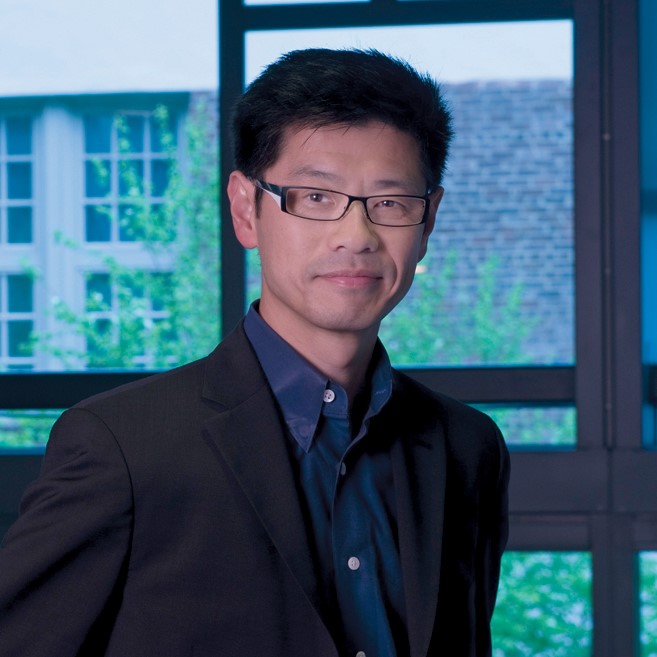
Theodora Varvarigou is a Professor in the Department of Electrical and Computer Engineering at the National Technical University of Athens (NTUA). She holds a B.Eng. from NTUA and M.Eng. and Ph.D. degrees from Stanford University. Her career includes research at AT&T Bell Labs and roles at the Technical University of Crete. From 2008-2012, she served as director of NTUA's 'Technoeconomic Systems' postgraduate program. Her research focuses on Cloud Computing, Multimedia Content Processing, Social Networking Technologies, and emerging areas like blockchain, edge computing, and cybersecurity. She has published over 200 papers and led numerous European research projects, emphasizing scalable systems, data management, and smart infrastructure applications. Her work spans technical innovations such as intrusion detection systems, edge resource optimization, and blockchain-based solutions for IoT, healthcare, and smart cities. Recent publications highlight advancements in AI-driven resource allocation, privacy-preserving blockchain designs, and predictive analytics for edge computing environments. Professor Varvarigou has contributed to interdisciplinary initiatives, including cohort data harmonization in biomedical research and social media analytics for urban planning. Her teaching includes courses on digital systems, network programming, and fault-tolerant systems.
Daniel M. Roy is a Professor at the University of Toronto with cross-appointments in the Departments of Computer Science and Electrical and Computer Engineering. He serves as Associate Chair, Statistics, and is a Research Director at the Vector Institute and a CIFAR Canada AI Chair. His research focuses on foundational principles of prediction, inference, and decision-making under uncertainty, spanning machine learning, statistics, mathematical logic, applied probability, and computer science. He has contributed to learning theory, statistical network analysis, probabilistic programming, and Bayesian nonparametric statistics. Education: Ph.D. in Computer Science from MIT (2011), advised by Leslie Kaelbling. Postdoctoral fellowships at the University of Cambridge (Newton International Fellow and Research Fellow). His research explores information theories of learning , online learning , and nonstandard foundations for decision theory . Recent work includes best paper awards at ICML 2024 and advancements in probabilistic programming systems like Church. His publications address problems in generalization bounds, causal bandits, neural network theory, and exchangeable random structures. Scientific Awards include the MIT/EECS George M. Sprowls Doctoral Dissertation Award and the ICML 2024 Best Paper Award. He advises students and postdocs across statistics, computer science, and machine learning, with alumni now holding positions at institutions like Princeton, Imperial College London, and the University of Chicago.
Jean Walrand is a Professor in the Department of Electrical Engineering and Computer Sciences (EECS) at the University of California, Berkeley. His research focuses on communication networks, performance evaluation, game theory, and stochastic networks. He has authored several influential books, including Communication Networks: A Concise Introduction and Probability in Electrical Engineering and Computer Science , and holds numerous patents in network resource management. Ph.D. in EECS from UC Berkeley IEEE Fellow and recipient of the Stephen O. Rice Prize INFORMS Lanchester Prize for operations research contributions His research interests span communication networks, queueing theory, congestion control, wireless network scheduling, and economic models for network resource allocation. Walrand's work has significantly impacted network design and optimization, particularly in distributed algorithms and game-theoretic approaches. His recent publications emphasize network architecture, delay variability reduction, and distributed optimization algorithms. Walrand has mentored over 20 Ph.D. students, including notable contributors to wireless networks and network economics. IEEE Koji Kobayashi Award (2012) ACM Sigmetrics Achievement Award (2013) INFORMS Lanchester Prize for Communication Networks book As advisor to students like Libin Jiang and Hoi-Sheung Wilson So, Walrand has shaped research in wireless MAC protocols, bandwidth trading, and network security. His technical reports and patents address practical challenges in switch fabric design, bandwidth allocation, and power management.
Ke Wu is a Professor in the Department of Computer Science and Engineering at the University of Michigan. Their research focuses on the intersection of machine learning, biostatistics, and healthcare technology, with an emphasis on mobile health interventions, causal inference, and Bayesian methods. They lead a small, hands-on research group mentoring PhD students and postdocs. Key interests include developing predictive models for health outcomes, improving treatment effect estimation, and leveraging mobile technology for caregiver support. Their work has addressed critical challenges in clinical decision-making, public health surveillance, and healthcare innovation. Research projects span synthetic data generation for electronic health records, mHealth app development for care partners of traumatic brain injury patients, and algorithmic fairness in reinforcement learning. Ke Wu emphasizes interdisciplinary collaboration and has contributed to global health studies, including analyses of pneumonia etiology in low-resource settings and the PERCH study. Their group's methodologies often integrate wearable sensor data and machine learning to address real-world health challenges. Advising priorities include fostering student independence while maintaining close mentorship, with expectations for consistent research productivity and professional development. Students are encouraged to pursue teaching roles (e.g., GSI positions) and internships aligned with career goals. Funding support for conference participation is available through institutional and external grants. Ke Wu's contributions extend to statistical methodology, including Bayesian latent class models and dynamic risk prediction frameworks. They actively engage in translational research, bridging computational methods with clinical and public health applications, and prioritize open-source software development to advance reproducible research practices.
Ben Green is an Assistant Professor in the University of Michigan School of Information and a courtesy Assistant Professor in the Gerald R. Ford School of Public Policy. He holds a PhD in Applied Mathematics from Harvard University with a secondary focus on Science, Technology, and Society. His research examines algorithmic ethics, fairness, and governance, aiming to reduce harms and advance social justice. Notable works include The Smart Enough City (2019) and his forthcoming Algorithmic Realism . He is affiliated with the Berkman Klein Center for Internet & Society at Harvard and the Center for Democracy & Technology. Education: PhD in Applied Mathematics, Harvard University (with secondary field in Science, Technology & Society) BS in Mathematics & Physics, Yale University Research Interests: Algorithmic fairness in public policy Human-algorithm interaction dynamics Regulatory frameworks for AI Equity-centered data science practices Urban technology policy His recent publications explore themes like the limitations of human oversight in algorithmic systems, the sociotechnical challenges of implementing ethical AI, and the intersection of legal reasoning with computational systems. His writing emphasizes actionable solutions to systemic biases in algorithmic governance. Ben’s current projects include advancing algorithmic realism – a framework for grounding data science in socially just practices – and analyzing how counterfactual explanations influence judicial decisions. He serves on multiple interdisciplinary advisory boards and frequently collaborates with policymakers to translate research into actionable strategies.
Paul-Eric DOSSOU is a Researcher at ICAM’s Grand Paris Sud campus, specializing in Societal and Technological Transitions of Companies. His work focuses on Industry 5.0, decision-aided systems, logistics optimization, and digital twin applications. He leads projects like Plateforme Life, Urban Logistics, and Healthcare 4.0, aiming to enhance SME efficiency through sustainable digital transformation. Expertise includes AI-driven supply chain management, cybersecurity for legacy systems, and robotic solutions for archaeology. He collaborates with industry partners to bridge theoretical research and practical applications, emphasizing human-centric automation and environmental sustainability. Contact: paul-eric.dossou@icam.fr | Mobile: +33 6 17 81 33 43 Research contributions span over 30 peer-reviewed articles since 2003, addressing topics from energy audits in the nautical industry to multi-agent systems in supply chain optimization.
Felipe Meneguzzi is a Professor of Computing Science at the University of Aberdeen, where he leads research in automated planning, goal and plan recognition, multiagent systems, BDI agents, and machine learning. He also holds a Bridges Professorship at the Pontifical Catholic University of Rio Grande do Sul (PUCRS) in Brazil and leads the Group on Artificial Intelligence at PUCRS. He is a Senior Member of the ACM and AAAI. PhD in Artificial Intelligence (2009) from King's College London Postdoctoral Fellowship at Carnegie Mellon University His research spans theoretical and applied artificial intelligence, with a focus on automated planning, decision-making in autonomous agents, and AI applications in neuroscience. He has contributed to landmark-based methods in plan recognition, generalized decision-making in BDI agents, and clinical AI for autism spectrum disorder detection. Key publications include: Landmark-based approaches for goal recognition as planning (IJCAI 2024) Empowering BDI Agents with Generalised Decision-Making (AAMAS 2024) Identification of autism spectrum disorder using deep learning (Neuroimage: Clinical, 2017) Visually-impaired accessibility application via CNNs (IJCNN 2017) Norm conflict identification with deep learning (AAMAS 2017 workshop) Scientific honors include: Best SPC member at AAMAS 2021 Blue-Sky Paper award at AAMAS 2024 Google Research Awards for Latin America (2016, 2019) Runner-up for Microsoft Research Faculty Fellowship (2013) CNPq Highly Productive Researcher Fellowship (Brazil) As an advisor, he supervised Ramon Pereira's MSc dissertation and PhD thesis, both recognized as top works in Brazilian AI. He actively mentors students in automated planning, machine learning, and multiagent systems through projects like the final year project repository and the graduate student repository .
Inigo Flores Ituarte is a Research Professor at Tampere University's Faculty of Engineering and Natural Sciences, affiliated with the Automation Technology and Mechanical Engineering department. He leads the Digital Design and Manufacturing (D2M) research lab, focusing on sustainable manufacturing and twin-transition strategies integrating digital and green technologies. His work emphasizes optimization-driven design, additive manufacturing innovations, and AI-driven expert systems to enhance energy efficiency and reduce environmental impacts. Key research pillars include: Pillar 1: Twin-transition in Engineering Design and Manufacturing Processes, addressing sustainable manufacturing and intelligent systems Pillar 2: Development of open D2M systems and Process-Structure-Property-Performance (PSPP) linkages in advanced materials His research explores multi-disciplinary optimization combining model-based simulations and data-driven techniques. Notable contributions include generative AI integration in CAD systems, cognitive manufacturing systems, and cost-effective process monitoring using CNN-based methods. Inigo's work emphasizes environmental sustainability, with a focus on reducing manufacturing's energy consumption (54% of global use) and CO2 emissions. He advocates for interconnected material systems, smart manufacturing processes, and AI-assisted decision-making to achieve cognitive intelligence in industrial operations. His D2M lab's overarching goal is to maximize product/process performance while improving cost-effectiveness and minimizing environmental footprints. Recent projects include railway bogie demonstrators via multi-material deposition and sensor systems leveraging IoT and ChatGPT integration.
Professor Chee Yew Wong is a leading academic in supply chain management at Leeds University Business School (LUBS), where he holds the position of Professor and serves as Director for Research & Innovation in the Analytics, Technology and Operations department. He previously held a Chair in Logistics and Supply Chain Management at Hull University Business School and has served as a visiting professor in Thailand and China. His work bridges academia and industry, with over nine years of professional experience in operations and supply chain roles across multinational corporations and SMEs. His educational background includes a PhD in Supply Chain Management from Aalborg University, Denmark; an MSc in Manufacturing Management from Linköping University, Sweden; a BEng in Mechanical Engineering from the University of Technology, Malaysia; and a PG Certificate in Higher Education from Hull University, UK. Professor Wong's research centers on intelligent, responsible, and sustainable solutions for global supply chains. Key interests include digital supply chains, supply chain analytics, green logistics, human rights in supply chains, resilience, and circular economy models. He leverages technologies such as blockchain, machine learning, and IoT to enhance transparency, integration, and performance in complex supply networks. The analysis of his recent publications reveals a strong trend toward digital transformation, sustainability, and ethical governance in supply chains. His work increasingly emphasizes data-driven decision-making, environmental and social risk assessment, and the role of technology in enabling responsible global sourcing. Many projects focus on real-world applications in industries such as healthcare, fashion, retail, and manufacturing, often through Knowledge Transfer Partnerships with industry leaders. Best Reviewer Award, Operations and Supply Chain Management Division, Academy of Management Conference, Chicago, USA (2018) Prof. Xiande Zhao's Best Paper Award, International Conference on Operations and Supply Chain Management, Kaifeng, China (2017) Finalist for the Jack Meredith Best Paper Award, Academy of Management Conference, Anaheim, USA (2016) Emerald Best Paper Award, Supply Chain Management: an International Journal (2006) Professor Wong has successfully supervised 10 PhD students and 4 post-doctoral researchers, and has examined over 15 PhD dissertations internationally. He leads multiple research grants, including projects funded by Innovate UK, UKRI, ESRC, and the British Council, focusing on digital transformation, human rights, and green supply chain innovation. His collaborations span academia, government, and industry, demonstrating a strong commitment to impactful, applied research. He is actively involved in the Centre for Operations and Supply Chain Research, the Adaptation Information Management and Technology group, and the Centre for Decision Research at LUBS. These research groups support interdisciplinary work in analytics, digital technologies, and sustainable operations, fostering innovation and knowledge exchange across sectors.
Gustavo Vulcano is an Adjunct Professor in the Department of Information, Operations and Management Sciences at the Leonard N. Stern School of Business, New York University, where he has been affiliated since 2002. He served as Assistant Professor (2002–2010), Associate Professor (2010–2017, tenured in 2012), and has held an adjunct role since 2017. His academic work bridges theoretical and applied operations management with strong industry engagement. Education: Ph.D. in Operations Management, Columbia University, 2003 M.Phil. in Operations Management, Columbia University, 2000 M.S. in Computer Science, University of Buenos Aires, 1997 B.S. in Computer Science, University of Buenos Aires, 1994 His research focuses on revenue and pricing analytics , retail operations , and supply chain management , particularly emphasizing customer choice modeling , data-driven optimization , and computational methods in network revenue management . He integrates stochastic modeling and behavioral insights to develop practical pricing and operational strategies. His work is deeply rooted in real-world applications across airlines, retail, and financial services. The analysis of his publications reveals a consistent trend in leveraging data-driven decision-making under uncertainty, with a focus on dynamic pricing, demand learning, and robust optimization. His articles span premier journals such as Operations Research and Management Science , reflecting a strong theoretical foundation combined with empirical and computational rigor. Key thematic areas include customer behavior modeling, network revenue management, and stochastic optimization for service industries. Scientific Awards and Leadership: Chair, INFORMS Revenue Management and Pricing Section (2016–2017) Associate Editor, Operations Research and Management Science Prof. Vulcano has advised numerous PhD and master’s students and has secured research grants through industry collaborations. His consulting projects with Delta Airlines, Sabre Holdings, Aerolíneas Argentinas, and ICBC demonstrate a strong commitment to translating academic research into practical solutions. He has taught core courses such as Operations Management , Pricing and Revenue Management , and Dynamic Programming across undergraduate, MBA, PhD, and MSBA programs, shaping future leaders in data-driven decision-making. He is actively involved in research labs and teams focused on operations analytics and pricing strategy , often collaborating with interdisciplinary groups at NYU Stern and industry partners. His ongoing editorial roles and consultancy reflect sustained engagement in advancing the field of revenue management and operations science.
Dr. Radu Jianu is a Lecturer in the Department of Computer Science at City, University of London , where he has been a faculty member since 2016. He is affiliated with the giCentre , a leading research group in information visualization. He earned his PhD and MSc in Computer Science from Brown University, USA, and a Diploma in Engineering from the Polytechnic University of Timisoara, Romania. His academic career includes a previous role as Assistant Professor at Florida International University (2012–2016). His research focuses on Data Visualisation, Visual Analytics, and Human-Computer Interaction . He conducts interdisciplinary collaborations with domains such as biology, food policy, and energy decarbonisation, aiming to develop interactive visual tools that enhance data understanding and decision-making. His methodological approach includes user studies, eye-tracking, and the design of novel visualization techniques. Dr. Jianu teaches Programming in Java and Cognition and Technologies , and he coordinates the Programming Bootcamp. He also holds administrative responsibilities as the Progression and Support Director in the Computer Science Department and is a member of its Executive Committee (ExCo). His recent publications reflect a growing interest in LLM-assisted visual analytics, gaze-aware systems, and collaborative human-AI analytical frameworks . He has published in top venues such as IEEE TVCG, CHI, EuroVis, and Nature Immunology, with several best paper awards. His work on the RAMPVIS project highlights his contributions to visualization in public health emergencies. Scientific Awards: Best Paper Award, Symposium on Graph Drawing (2018) Best Short Paper Award, EuroVis (2020) Advising and Grants: Dr. Jianu supervises multiple PhD and MSc students, including Dany Laksono (Energy Decarbonisation) and Maeve Hutchinson (NLP-mediated Visualization). His students have co-authored high-impact, award-winning papers. He has been involved in funded research initiatives such as RAMPVIS, which received support from UKRI/EPSRC for developing visual analytics infrastructure during the COVID-19 pandemic. Labs and Teams: He is an active member of the giCentre at City, University of London, a hub for visualization research. He also collaborates with interdisciplinary teams in epidemiology, immunology, and computer science, contributing to large-scale projects like the Immunological Genome Project and RAMPVIS.
Jonn Axsen is a Professor in the School of Resource & Environmental Management at Simon Fraser University (SFU), where he directs the Sustainable Transportation Research Team (START). With an academic career focused on mitigating transportation emissions, he bridges individual decision-making, social systems, technology, and public policy to advance sustainable mobility solutions. BBA, Business Administration (First Class Honours), Simon Fraser University MRM, Resource Management, Simon Fraser University PhD, Transportation Technology and Policy, University of California, Davis His research identifies solutions for decarbonizing road transportation, examining electric vehicles, alternative mobility systems, and policy frameworks. He emphasizes interdisciplinary approaches to understand consumer behavior, organizational transitions, and policy effectiveness in achieving zero-emissions vehicle adoption. Recent publications focus on policy mixes for ZEV adoption, automobility reduction, and consumer perceptions of emerging mobility technologies. Key trends include analyzing subsidy effectiveness, automaker responses to regulation, and cross-cultural differences in mobility preferences. His work appears in top venues like Nature Climate Change and Transportation Research Part D . Royal Society of Canada Fellow (2021) International Transport Forum Award (2012) Securing $2M+ in grants from SSHRC, Translink, Tesla, and PICS, Axsen collaborates with organizations including the UN, Transport Canada, and environmental NGOs. He serves as Senior Associate Editor for Energy Research & Social Science and sits on the US National Academies’ Transportation Research Board. The START team at SFU conducts applied research on sustainable transportation, integrating stakeholder insights with academic rigor. Axsen's lab focuses on bridging technical and social dimensions of mobility transitions through mixed-method studies.
Sriram Subramanian is an Assistant Professor at the School of Computer Science in Carleton University since July 2025. He holds affiliations with the Vector Institute for Artificial Intelligence and the Schwartz Reisman Institute for Technology and Society in Toronto, and serves as a mentor in the Indigenous Black Engineering and Technology (IBET) PhD Project . Ph.D. in Electrical and Computer Engineering, University of Waterloo (2022) MASc in Electrical and Computer Engineering, University of Waterloo (2018) BE in Geomatics Engineering, Anna University (2016) His research focuses on advancing Multi-agent Systems and Reinforcement Learning through intersections with Game Theory , with applications in generative AI , robotics, finance, and autonomous driving. Recent work emphasizes cooperation mechanisms, constraint learning, and theoretical robustness in large-scale environments. Articles demonstrate cross-disciplinary impacts in chemistry (ChemGymRL) and societal systems. Notable awards include the MITACS Globalink Research Award , Pasupalak Fellowship in AI , and the CAIAC Best Doctoral Dissertation Award (2023) . Publications span top venues like AISTATS, ICML, AAAI, IJCAI, JAIR , and TMLR . He has collaborated with Microsoft, Royal Bank of Canada, Denso, ESRI, and Borealis AI. As a Distinguished Postdoctoral Fellow at the Vector Institute (2022-2025), he advanced algorithmic frameworks while maintaining active roles in conference reviewing and committee work. His advocacy for equity and diversity drives mentorship initiatives in Canadian institutions.
Alex Arenas is a Full Professor in the Department of Computer Engineering and Mathematics at Universitat Rovira i Virgili (URV), Tarragona, Spain. He is also an External Faculty member at the Complexity Science Hub in Vienna and Chief of Complex Systems Science at the Pacific Northwest National Laboratory, USA. His research spans complex systems, network science, computational epidemiology, and multilayer dynamics, with applications in public health, neuroscience, and social systems. Research Interests: His work focuses on the physics of multilayer networked systems, particularly the interplay between structure and function in complex networks. Key areas include synchronization, epidemic modeling, network medicine, the physics of the microbiome, and higher-order interactions in spreading processes. He investigates dynamic transitions using functional multilayer frameworks and develops models for real-world systems like urban mobility and misinformation diffusion. The recent articles highlight a strong trend in computational epidemiology, especially post-COVID modeling of vaccination strategies, rebound dynamics, and wastewater surveillance. There is also significant work on synchronization in oscillator networks, chimera states, and higher-order network effects, reflecting a deep engagement with nonlinear dynamics and theoretical network science. Applications span medicine, urban planning, and social systems. Scientific Awards: Fellow, American Physical Society (2018) Fellow, Network Science Society (2020) ICREA Academia (2011, 2017, 2022) Narcís Monturiol Medal (2022) Web Science Trust Test of Time Award (2024) Complex Systems Society Senior Award (2024) Advising and Grants: Arenas has supervised numerous PhD students and postdoctoral researchers, though specific names are not listed. He has been Principal Investigator on 47 research projects, including EU FP7 projects, a James S. McDonnell Foundation grant, and Horizon Europe's CREXDATA project. He has served as an editor for Physical Review E , Journal of Complex Networks , and Network Neuroscience , and has reviewed for major funding agencies including ERC, MINECO, and international bodies. Labs and Teams: He leads the Alephsys Lab at URV, which develops tools like Radatools for network analysis and community detection. His team focuses on interdisciplinary modeling of real-world complex systems using data-driven and theoretical approaches.
James C. Gee is a Professor of Radiologic Science in Radiology at the University of Pennsylvania's Perelman School of Medicine. He serves as Director of the Penn Image Computing and Science Laboratory and Co-Director of the Translational Biomedical Imaging Center , with affiliations in Bioengineering and Applied Mathematics graduate groups. His research focuses on biomedical image analysis, specialization in segmentation, registration, and morphometry applied to neurodegenerative diseases and multi-organ systems. Education : B.S. in Computer Science/Electrical Engineering (University of Washington, 1987), Ph.D. in Computer and Information Science (University of Pennsylvania, 1996) Research : Quantitative medical imaging methods, brain connectomics, neurodegeneration mapping, and translational imaging technologies Publications : 15+ recent works on AI-driven image analysis for Alzheimer's disease, cardiac amyloidosis, and radiomics applications Leadership : Directs MSE-DS Online Degree Program, co-chairs Radiology DCOAP Committee, and founded RISE (Radiology Initiative to Support Inclusive Excellence) His laboratory develops advanced computational tools like ITK-SNAP for biomedical imaging, with applications in both in vivo clinical imaging and ex vivo histology . The work spans cross-disciplinary collaborations in computer science, neuroscience, and clinical medicine.