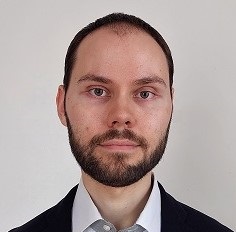
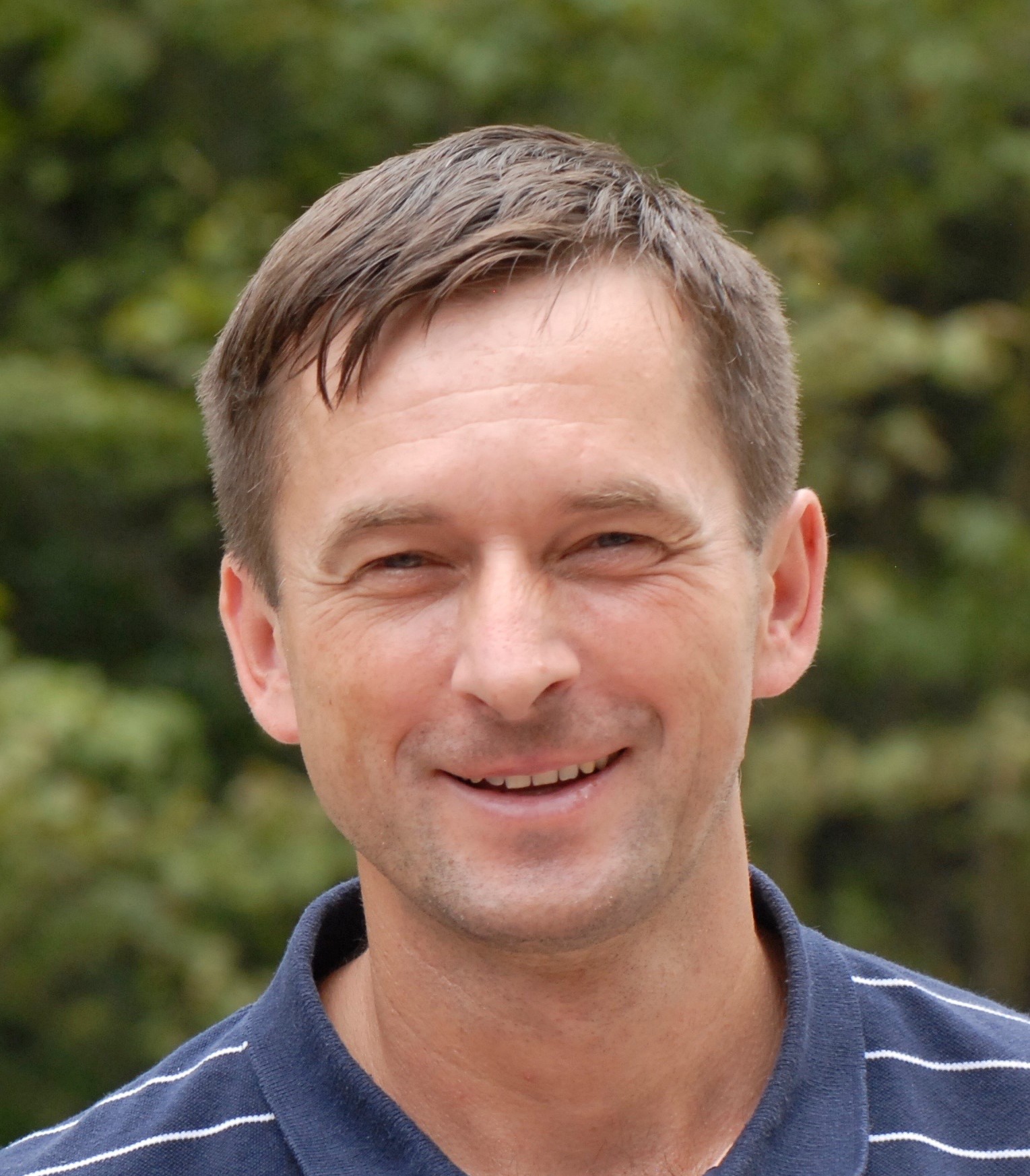
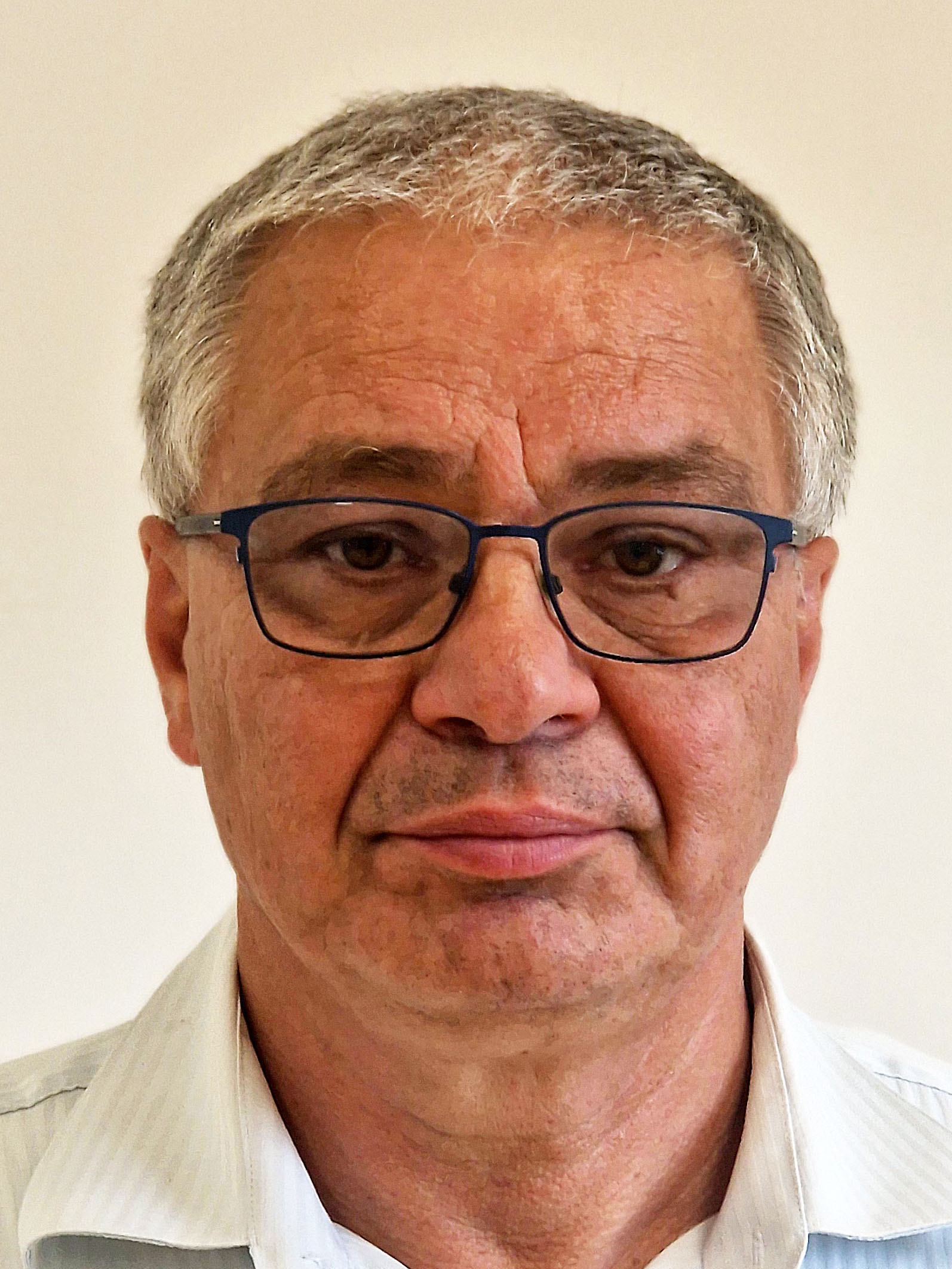
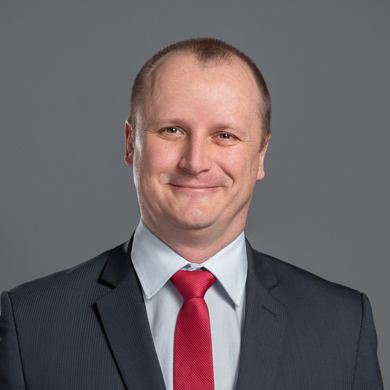
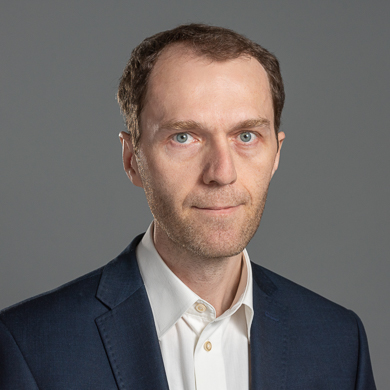
Jan Křetínský is a Professor at the Department of Computer Science, Faculty of Informatics, Masaryk University. His research focuses on formal verification, probabilistic systems, and artificial intelligence. He leads projects funded by the European Union and Masaryk University, including initiatives on robust AI and controller synthesis. Key roles include membership in academic boards for theoretical computer science and doctoral supervision. Awards include the 2023–2028 MUNI Award in Science and Humanities. His work bridges theoretical foundations with practical applications in autonomous systems and safety-critical technologies. Education: Habilitation in Informatics (Masaryk University, 2019), PhD (Dr. rer. nat.) Projects: EU Horizon Europe grants (2025–2030), MUNI-funded research on verification and generative AI Labs/Teams: Live-Lab at FI MU Research emphasizes scalable verification techniques for probabilistic models, integration of neural and symbolic AI, and ethical AI frameworks. Current grants address explainability and robustness in generative AI systems.
Erik Derner is an ELLIS Postdoctoral Researcher at the ELLIS Unit Alicante, focusing on human-centric AI and ethical LLMs. He collaborates with Prof. Robert Babuška's Machine Learning team at the Czech Institute of Informatics, Robotics, and Cybernetics (CIIRC) and contributes to the VIVES project under the PERTE of New Language Economy. His work addresses biases in LLMs, AI safety, and security, while also exploring symbolic regression for robotics and reinforcement learning. Education: Ph.D. in Robotics and Machine Learning (2022) from Czech Technical University in Prague, with B.Sc. and M.Sc. in Open Informatics. Erik's research spans human-centric AI , large language models , robotics , computer vision , and reinforcement learning . He emphasizes ethical and secure AI development, particularly for underrepresented languages. His work integrates symbolic regression with neural networks to create interpretable and efficient models for robotics. Recent publications highlight his focus on LLM security , gender bias analysis , and symbolic regression for dynamic systems. Notable trends include ethical AI, multimodal red-teaming, and physics-informed modeling. Scientific Awards: Werner von Siemens Award (2023) for his Ph.D. thesis. CTU FEE Dean's Award (2023) for a prestigious dissertation. Erik supervises student projects in robotics, AI ethics, and LLM security, including internships and theses on topics like mental health risks, toxicity evaluation, and real-time assistance for the visually impaired.
Tomáš Bureš is a Professor at the Department of Distributed and Dependable Systems , Faculty of Mathematics and Physics , Charles University . His work focuses on adaptive software architectures for smart cyber-physical systems (CPS) and IoT, leveraging machine learning (neural networks) for self-adaptation, edge-cloud systems, and model-driven development. Research Groups: Leader of the SmartArch research group. Projects: Involved in ExtremeXP , ESTABLISH , AFarCloud , FitOptiVis , Trust 4.0 , ASCENS , RELATE ITN , Q-ImPrESS . Publications span topics like performance regression testing, ML workflow optimization, confidentiality analysis under uncertainty, and edge-cloud continuum modeling. Key subfields include self-adaptive architectures, adaptation rules, component ensembles, and statistical methods in software engineering. His work bridges theoretical models (e.g., DEECo, SOFA) with practical tools (e.g., ExpEngine, Robin) for CPS and cloud applications. Co-Authors include P. Hnětynka, M. Abdullah, R. Heinrich, and others. Publications appear in venues like IEEE Transactions on Autonomic Computing , ACM/SPEC ICPE , and ECSA Workshops .
Roman Modlinger is a Researcher at the Faculty of Forestry and Wood Technology (Czech University of Life Sciences Prague) with primary academic focus in Forest Entomology , Forest Protection , and Remote Sensing Applications in Forestry . His work addresses critical forest health challenges, particularly bark beetle ( Ips typographus ) infestations in Central European spruce forests. His research integrates: Entomology : Behavioral and genetic studies of bark beetles Remote Sensing : UAV-borne multispectral imagery and LiDAR for forest monitoring Microbial Ecology : Gut microbiome analysis in forest pests Chemical Ecology : Application of semiochemicals for pest control Forest Resource Management : Impact assessment and mitigation strategies Roman Modlinger has contributed to 15 recent articles (2023-2024) focusing on: Bark beetle outbreak modeling and prevention Machine learning applications for multispectral forest analysis Microbial community dynamics in forest pests Wood quality assessment post-infestation Chemical repellent formulations Sniffer dog applications in forest monitoring He has also developed innovative software (PHENIPS) for bark beetle development prediction and leads practical forest protection methodologies. His work includes significant collaboration with European researchers on climate change impacts on forest ecosystems.
Doc. RNDr. Martin Štěpnička, Ph.D. , Associate Professor at the Institute for Research and Applications of Fuzzy Modeling, University of Ostrava, serves as Vice-Rector for Research and Artistic Activities. His work bridges applied mathematics and fuzzy modeling. Research focuses on fuzzy relational compositions, inference systems, and time series analysis Developed software tools like lfl (Linguistic Fuzzy Logic in R) Organized international conferences (IFSA, EUSFLAT) Research Interests Štěpnička explores theoretical foundations and practical implementations of: Fuzzy relational equations and dragonfly operations Extensional fuzzy numbers and their applications Ensemble techniques for time series prediction Projects & Leadership Principal investigator for Czech Science Foundation grants Co-organizer of Czech-Japan seminars on data analysis Contributes to fuzzy logic software development
Peter Surový is an Associate Professor at the Czech University of Life Sciences Prague (CZU), where he serves in the Department of Forest Management and Forest Conservation within the Faculty of Forestry and Wood Technology. He also holds the position of Vice-Chairman of the Academic Senate Dean's Board of the Faculty of Law at CZU, demonstrating his cross-disciplinary engagement within the university. Dr. Surový's research focuses on the application of advanced remote sensing technologies in forest management and conservation. His work spans multiple areas including: Utilization of satellite imagery and UAV/drone technology for forest health monitoring Bark beetle detection and forest disturbance assessment Forest fire risk modeling and assessment Drought impact analysis on forest ecosystems Development of innovative methods for forest inventory and mensuration His recent publications highlight a strong emphasis on integrating artificial intelligence with remote sensing data to address pressing forest management challenges. Dr. Surový has been particularly active in developing early warning systems for forest disturbances and creating practical tools that can be implemented by forest managers. His research often involves international collaborations, with projects extending to tropical forests in Ghana and Angola, demonstrating the global relevance of his work. Dr. Surový has been involved in several significant research projects including: "Mapping of forest health status, tree species, and forest risks using innovative ICT data and approaches" (TA0 2021-2024) "Monitoring the status and development of bark beetle-damaged stands after the bark beetle calamity" (MZE 2021-2023) "Frameworks and possibilities of forestry adaptation measures and strategies related to climate change" (EHP 2015-2016) His methodological contributions include certified methodologies for UAV-based forest monitoring and damage assessment, which have been adopted by forest enterprises in the Czech Republic. Dr. Surový's work bridges the gap between cutting-edge technology and practical forest management applications, making significant contributions to sustainable forestry practices.
Zdenek Hanzalek is a professor at the Czech Technical University in Prague, affiliated with the Industrial Informatics Department within the Czech Institute of Informatics, Robotics and Cybernetics (CIIRC). His research focuses on scheduling algorithms, real-time systems, robotics, optimization, embedded systems, and automation. He leads projects such as ROBOPROX and CERTICAR, addressing advanced industrial production and autonomous vehicle certification. Notable contributions include work on periodic scheduling for time-sensitive networks, energy-efficient robotic systems, and trajectory planning for autonomous vehicles. Research Interests : - Development of efficient scheduling algorithms for real-time and embedded systems. - Optimization techniques for manufacturing systems and robotic applications. - Autonomous driving technologies, including trajectory planning and control systems. - Energy consumption reduction in production and robotic processes. - Time-triggered communication protocols and network scheduling. Recent Trends in Articles : Recent publications emphasize integration of machine learning with scheduling, optimization of charging infrastructure for electrified transportation, and robust scheduling under uncertainty. Key areas include reconfigurable manufacturing systems, mixed-criticality scheduling, and pandemic-resilient workforce planning. Awards & Grants : - Best Student Paper Award (ICORES 2023) for work on analog circuit placement. - Best Paper Award (ICORES 2022) for incremental scheduling algorithms. - Multiple Grade 1 Application Results in national evaluations. - Supported by EU, TAČR, and industry grants (e.g., Horizon 2020, ECSEL). Advising & Teams : Supervised over 20 PhD and master’s students in scheduling, robotics, and embedded systems. Collaborates with industry partners like Porsche Engineering, Skoda Auto, and Honeywell. Leads the CERTICAR project for autonomous vehicle certification and the HERCULES project on many-core systems for autonomous driving. Labs & Infrastructure : - Develops tools like TORSCHE scheduling toolbox and autonomous driving demonstrators (e.g., Porsche Panamera Turbo). - Engages in hardware-software co-design for real-time embedded systems.
Associate Professor Martin Pospíšilík is affiliated with the Department of Electronics and Measurement at the Faculty of Applied Informatics, Tomas Bata University in Zlín. His contact details include email pospisilik@utb.cz, phone +420 576 035 273, and office U51/810, with consultation hours on Tuesdays from 9:00–11:00. His academic background features: Docent (2023–2024) in Machine and Process Control at Tomas Bata University Ph.D. in Engineering Informatics (2008–2013) from Tomas Bata University Ing. degree in Microelectronics (2002–2008) from Czech Technical University in Prague Research focuses on electromagnetic phenomena in computer science, electromagnetic compatibility, and electronic circuit design, with significant international engagement including internships at Portugal’s UbiNET laboratory (Computer Security and Cybercrime), Universität Innsbruck, University of York, and teaching roles at Middle East Technical University under Erasmus programs. Professional trajectory: Associate Professor (2024–present) and Assistant Professor (2018–2024) at Department of Electronics and Measurement Assistant Professor/Assistant (2011–2018) at Institute of Computer and Communication Systems External lecturer (2008–2010) and industry experience at Sitronics Telecom Solutions (2006–2007) Service roles include Czech Science Foundation P102 panel membership (2019–2022) and Academic Senate representation for the Faculty of Applied Informatics (2022–2024). No scientific awards or student advising details are documented.
Dr. Jakub Yaghob is a researcher at the Faculty of Mathematics and Physics , Charles University , specializing in computer science and parallel computing. He teaches advanced programming topics including Compiler Principles , Parallel Programming , and Cloud Computing . Research Interests : Parallel data stream processing, virtualization technologies, semantic web infrastructures, and performance optimization Teaching : Advanced C++ programming, virtualization administration, and computer systems architecture Technical Expertise : Design of parallelization frameworks, astrophysical data analysis, and hybrid CPU-GPU systems His publications focus on: Optimizing stream data processing across distributed architectures Developing domain-specific languages like Bobolang Performance evaluation in educational programming contexts Applications of parallel computing in astrophysics
Lubomír Bulej serves as an Associate Professor at the Department of Distributed and Dependable Systems within the Faculty of Mathematics and Physics at Charles University, Prague. His office is located in room S 205 in the historic Lesser Town district, with contact details including email bulej@d3s.mff.cuni.cz and phone +420 951 554 189. He maintains an active research profile through platforms like Google Scholar, DBLP, and GitHub. His research centers on dynamic program analysis and software performance evaluation , with specific focus on analysis composition, program instrumentation, profiling accuracy, and observability in managed platforms. He develops methods for automatic performance evaluation during development, performance change detection, and testable documentation of performance assumptions. Additional interests span object-oriented programming, programming languages, operating systems, and computer architectures, reflected in his teaching of courses like Computer Architecture and Operating Systems. Analysis of his 2021-2025 publications reveals a consistent trajectory in performance-aware software development , with increasing emphasis on compiler technologies (particularly GraalVM), self-adaptive systems for cloud/edge environments, and cost-optimized performance testing methodologies. His work bridges theoretical program analysis with practical industrial applications, especially in avionics and distributed systems. Dr. Bulej actively contributes to major research projects including GraalVM compiler evaluation, FitOptiVis (avionics systems), ASHLEY (aircraft demonstrators), Ferdinand (model-driven design evaluation), Q-ImPrESS (service-oriented systems), and CoCoME (component modeling). He maintains critical software infrastructure such as the Renaissance Benchmark Suite, DiSL instrumentation framework, and Java Performance Measurement Framework.
Martin Kruliš is an associate professor in the Department of Distributed and Dependable Systems at the Faculty of Mathematics and Physics, Charles University , Prague, Czech Republic. His primary roles include research, teaching, advising, and leading projects that bridge high-performance computing, GPU programming, and self-adaptive systems. Education: While exact details of his own degrees are not provided, Dr. Kruliš’s extensive publication record and faculty position at Charles University indicate advanced training in computer science with specialization in parallel and distributed computing. Research Interests: High-Performance GPU Computing: Deep investigation into CUDA kernel optimization, memory bandwidth utilization, and workload dispatching for massively parallel accelerators. Self-Adaptive & Self-Optimizing Systems: Designing ensemble-based abstractions that integrate machine-learning estimators to enable runtime adaptation in component architectures. Parallel Algorithms & Data Structures: Development of cache-friendly, SIMD-aware, and GPU-accelerated algorithms for clustering, dimensionality reduction, and similarity search. Software Engineering for Parallelism: Creation of C++ libraries, DSLs (e.g., Bobolang), and educational tools (ReCodEx) that simplify parallel programming and automated evaluation. Publication Trends: Across 2011–2025, Kruliš’s articles reveal a clear trajectory from foundational GPU-accelerated indexing and multimedia retrieval toward sophisticated self-adaptive systems that leverage machine learning. Recent works (2023–2025) increasingly focus on integrating LLMs and neural networks into compiler and runtime optimization loops, reflecting a convergence of AI and systems research. Scientific Awards & Recognition: No specific awards or fellowships are mentioned in the provided text; however, sustained publication in top-tier venues (JPDC, IPDPS, Euro-Par, SEAMS) and active involvement in program committees and tool development indicate strong peer recognition. Teaching & Student Supervision: Teaches Programming in Parallel Environment (NPRG042) , Advanced Programming in Parallel Environment (NPRG058) , Computer Systems (NSWI170) , and Software Projects . Supervises numerous bachelor’s and master’s theses; exact student names are not listed in the text. Labs, Projects & Tools: ReCodEx: A widely used platform for semi-automated evaluation of programming assignments at Charles University. Simdex: A modular simulator of the ReCodEx backend that enables realistic experimentation with self-adaptive job dispatching and machine-learning controllers. Active contributor to open-source repositories on GitHub, focusing on GPU kernels, benchmarking frameworks, and educational tooling.
Václav Hlaváč is a Professor of Engineering Cybernetics at the Czech Institute of Informatics, Robotics and Cybernetics (CIIRC), part of the Czech Technical University in Prague (CTU). He serves as Head of the Department of Robotics and Machine Perception, Deputy Director of CIIRC, and holds roles in university governance. His work bridges academic leadership with cutting-edge research. PhD in Control Engineering (CTU, 1987) Professor at CTU (1998–present) Founder of the Center for Machine Perception (1996) Research Interests Hlaváč specializes in: Computer Vision – 3D scene reconstruction, video sequence analysis, and image processing Pattern Recognition – Statistical and structural methods, ordinal classification Autonomous Robotics – Manipulation of soft materials and industrial applications His recent work focuses on robotic cable segmentation , digital twins for manufacturing, and event camera technology . Publications span journals like Information Sciences and IEEE Robotics and Automation Letters , with over 18,000 Google Scholar citations. Scientific Awards Research fellowship, Institute of Control Problems (Moscow, 1986) Research fellowship, University of Sussex (1989) Visiting professorships at TU Vienna (1993, 1995) Teaching & Publications He authored the textbook Image Processing, Analysis, and Machine Vision (4th ed, 2015) and maintains teaching resources in English and Czech . His Center for Machine Perception has been active since 1996.
Tomáš Brázdil is an Associate Professor at the Department of Machine Learning and Data Processing, Faculty of Informatics, Masaryk University. He also holds positions at the Department of Computer Science and the Centre for Biomedical Image Analysis within the same faculty. His research focuses on formal methods, stochastic systems, machine learning, and biomedical image analysis. He has supervised doctoral theses on topics such as explainable AI in digital pathology, termination time analysis of vector addition systems, and applications of machine learning in information security. Education & Qualifications: He holds a Ph.D., MBA, and the title RNDr. (Czech academic degree). He完成了 habilitation process in 2013 with a thesis titled *How To Efficiently Play With Infinitely Many States*, reviewed by prominent international experts including Prof. Mihalis Yannakakis (Columbia University) and Prof. Igor Walukiewicz (Université Bordeaux). Roles & Committees: He serves on the Board for Studies for programs like Artificial Intelligence and Data Processing (master's) and Informatics (bachelor's). He is also part of the Doctoral Committee for Computing Technology and Methodology and the Scientific Board of the Faculty of Informatics. Research & Labs: His work spans formal analysis of discrete-event systems, controller synthesis for resource-aware systems, and biomedical image analysis through the Centre for Biomedical Image Analysis. Current research interests include explainable AI and neural network interpretability.
Assoc. Prof. Jiří Vojtěšek, Ph.D. is an Associate Professor at the Institute of Process Management , Faculty of Applied Informatics, Tomas Bata University in Zlín. He serves as Dean of the Faculty since 2022 and held roles including Vice-Dean for Bachelor's and Master's Studies (2014-2022) and Assistant Professor (2007-2015). His work bridges automation, control systems, and applied informatics. Education : Habilitation in Machine and Process Control (2015), Ph.D. in Applied Informatics (2002-2007), Bc. in Automation and Control Technology (1997-2002). International Experience : 1-week teaching stays at Université D'Angers (France), University of Minho (Portugal), Universita di Cagliari (Italy), and others across Europe via Socrates/Erasmus. Research collaboration with Politecnico di Milano (Italy) and University of Applied Science Cologne (Germany). Academic Leadership : Chair of the Scholarship Committee, member of the Dean's College, and organizer of study programs like Engineering Informatics.
Assoc. Prof. František Gazdoš, Ph.D., serves as Associate Professor and Director of the Institute of Process Management at the Faculty of Applied Informatics, Tomas Bata University in Zlín. Previously holding roles as Institute Secretary (2012-2016) and Assistant Professor (2006-2012), he has maintained continuous academic engagement since 2004 within the university's Faculty of Applied Informatics structure. His educational background includes: Habilitation in Machine and Process Control, Tomas Bata University in Zlín, Faculty of Applied Informatics (2012) Ph.D. in Technical Cybernetics, Tomas Bata University in Zlín, Faculty of Technology, Department of Technical Cybernetics (1999-2004) Ing. in Automation and Control Technology, Brno University of Technology, Faculty of Technology (1994-1999) Prof. Gazdoš's research centers on advanced control engineering methodologies, with particular expertise in direct/indirect controller design, adaptive systems for technological process simulation, and stabilization techniques for unstable systems. His work bridges theoretical control theory with industrial applications through iterative identification frameworks. He maintains significant administrative responsibilities including Director of the Institute of Process Management (since 2017), membership in the Dean's College, and participation in the Study Program Council for Engineering Informatics. International engagement includes Erasmus teaching appointments at Politecnico di Milano, University of Strathclyde, Ruhr-Universität Bochum, and multiple Portuguese institutions between 2003-2016.