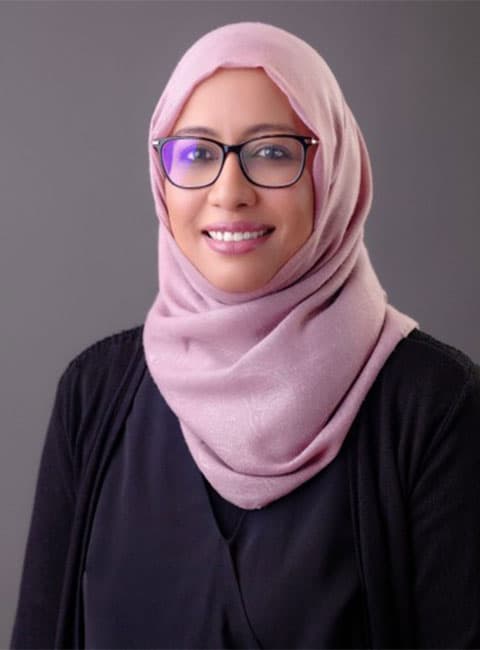
Erisa Karafili is an Associate Professor in Cybersecurity at the University of Southampton. She leads Teaching Methods Innovation at the GCHQ/EPSRC Academic Centre of Excellence for Cyber Security Education (ACE-CSE) and is a Champion in Security by Design at ACE-CSR. A Fellow of the Higher Education Academy, she joined the University in 2020 after roles including a Marie Curie Fellowship at Imperial College London, where she investigated cyber-attack attribution techniques. Her research focuses on formal methods applied to security, IoT threat models, and secure data sharing frameworks. Education: PhD in non-classical logics applied to multi-agent systems security from the University of Verona. Previous positions include PostDoc at Technical University of Denmark and Researcher at Imperial College London. Research Interests: Cyber-attack attribution, IoT security, formal methods in cybersecurity, data privacy, and argumentation-based reasoning for security. Awards: Higher Education Academy Fellowship. Current PhD Students: Betul Gokkaya, Mohammed Homaid Alquliti, Peter Geoffrey Williams, Steve Johnson. Active Projects: Heterogeneous Material Integrated MEMS/NEMS-Photonics Platform for Secure Communication (collaborative with Jize Yan and others).
Professor Harold Chong is a Professor of Electronic Engineering at the University of Southampton's School of Electronics and Computer Science (ECS), specializing in nanoelectronics and photonics within the Department of Electronics and Electrical Engineering. His work focuses on advancing semiconductor devices, particularly zinc oxide thin-film transistors (ZnO-TFTs), nanoelectromechanical systems (NEMS), and integrated photonic technologies for applications in sensing, healthcare, and low-power computing. His research spans: Nanoelectronic device physics and fabrication Solution-processed semiconductor materials for flexible electronics Quantum device engineering and dopant spin control Mid-infrared photonics using germanium and silicon platforms Biosensor development via nanowire and oxide nanostructures Recent publications (2023-2025) reveal a concentrated effort on optimizing zinc oxide-based devices for ion sensing and energy-efficient switching, alongside innovations in silicon photonics for infrared applications. His work consistently bridges materials science with practical electronic engineering, emphasizing scalable fabrication techniques like atomic layer deposition and solution processing to enhance device stability and performance. Professor Chong actively supervises 12 PhD students across diverse projects including nanoelectromechanical relays, laser-induced graphene sensors, and polycrystalline silicon waveguides. His research is primarily funded by EPSRC grants such as the UKRI Centre for Doctoral Training in Machine Intelligence for Nano-electronic Devices and Systems, Capability for Wafer-Level Sub-Nanometre Scale Imaging, and the MIGRATION project for mid-infrared germanium photonics. He is a core member of the Sustainable Electronic Technologies and Centre for Health Technologies research groups at Southampton, collaborating extensively with the Optoelectronics Research Centre (ORC) and international partners to develop next-generation electronic-photonic convergence platforms.
Professor David Moran is Professor of Advanced Semiconductors in the School of Engineering at the University of Glasgow, specializing in Electronic & Nanoscale Engineering. He leads the Advanced Semiconductor Materials and Devices research group, focusing on cutting-edge semiconductor technologies for next-generation electronic applications. His research spans multiple areas of semiconductor physics and engineering, with particular emphasis on diamond-based electronics and wide bandgap materials. His work includes significant contributions to understanding surface transfer doping mechanisms, developing high-performance diamond FETs, and exploring applications of materials like GaN, AlGaN, Ga2O3, and 2D dichalcogenides in power electronics, quantum technologies, and radiation detection systems. Professor Moran has published extensively on diamond surface science, hydrogen termination processes, and the development of novel semiconductor devices. His recent work demonstrates a strong focus on advancing diamond electronics while expanding into 2D materials for energy applications. His research bridges fundamental materials science with practical device engineering. He leads an active research group at the University of Glasgow, collaborating with researchers internationally to develop next-generation semiconductor technologies that overcome limitations of traditional silicon-based devices. His laboratory likely includes advanced capabilities for semiconductor device fabrication, materials characterization, and electrical testing.
Professor Liudi Jiang is a leading academic at the University of Southampton's School of Engineering, specializing in wearable sensors, healthcare technologies, and musculoskeletal biomechanics. She serves as the Engineering Lead for the EPSRC Centre for Doctoral Training in Prosthetics & Orthotics and Quantum Technology Engineering, while heading the Engineering Materials Research Group. BEng and MSc in Applied Physics PhD in Physics, University of Dundee (2002) Her interdisciplinary research bridges biomechanics, digital health, and micro/nano systems. Recent projects focus on pressure monitoring systems, diabetic foot ulcer prevention, and advanced prosthetic interfaces, with over £20M in UKRI and industry funding. Publications span journals like Sensors , Clinical Biomechanics , and Scientific Reports . Scientific accolades include: IET William James Award (2015) IMechE Healthcare Technology Early Career Award (2019) Best Paper Prize at ISPO World Congress (2017) She actively supervises PhD students in Engineering & Environment and Health Sciences, integrating research-led teaching in modules like Advanced Sensors and Mechanical Systems Analysis. Her work emphasizes user-centred design and real-world impact through collaborations with clinical stakeholders.
Dr. Yifan Li is an Associate Professor at Northumbria University in the Mechanical and Construction Engineering Department, specializing in micro-/nano-electro-mechanical systems (MEMS/NEMS) for sensors and actuators. PhD in Microsystems Engineering, University of Edinburgh (2008) BEng in Electrical and Electronic Engineering, Shanghai Jiao Tong University (2003) His research spans microfluidics, surface wetting, materials micro-engineering, flexible electronics, and sensing/actuation technologies. Recent work focuses on hydrogen microbubbles, strain-gated transducers, and wrinkle-patterned surfaces for advanced applications. Scientific contributions include 45 peer-reviewed articles (h-index 23), a US patent application, and collaborations addressing UN Sustainable Development Goals in education and advanced manufacturing. He currently supervises PhD students and explores future directions in flexible electronics and sustainable technologies. US Patent Application: US20130252847
Dr. Yoshishige Tsuchiya is an Associate Professor at the University of Southampton, specializing in nanoelectromechanical systems, quantum dots, and silicon-based nanotechnology. His research focuses on energy-efficient computing, MEMS/NEMS-Photonics integration, and spintronics, with active involvement in EPSRC-funded projects such as NOEMIA and quantum technology engineering initiatives. He leads or collaborates on projects like 'Nano-Opto-Electro-Mechanical Integrated Oscillator Arrays' and 'Sensor-integrated Nano-opto-electro-mechanical resonator arrays'. His work bridges fundamental physics with engineering applications, emphasizing nonlinear resonance analysis, spin transport in silicon devices, and high-frequency nanoelectromechanical systems. Research Groups: Smart Electronic Materials and Systems Current Students: Supervising 6 PhD candidates in Electronic Engineering and Quantum Technology. Key Projects: EPSRC CDT in Quantum Technology Engineering, Heterogeneous Material Integrated MEMS/NEMS-Photonics Platform. Publications span topics like NEMS resonance modeling, quantum dot stability, and spintronic sensing, with contributions to journals like Micro and Nano Engineering and Nanotechnology .
Amal Hajjaj is a Senior Lecturer in Electromechanical Systems and Dynamics at Loughborough University. She holds a PhD in Mechanical Engineering from KAUST (2019), an MSc in Computational Mechanics from Ecole Polytechnique of Tunisia (2013), and a BSc in Mechanical Engineering from Tunisia Polytechnic School (2012). Her research focuses on theoretical and experimental characterization of linear/nonlinear dynamics of NEMS/MEMS resonators, with applications in sensors/actuators. Key contributions include gas sensors, vibration energy harvesters, and nonlinear modal interactions in resonator systems. Research Background: Hajjaj’s work emphasizes exploiting nonlinear phenomena for enhanced sensor sensitivity and energy harvesting efficiency. She has pioneered techniques involving internal resonance coupling in micromachined structures, leading to advancements in pressure sensors, gas detectors, and wind turbine blade dynamics. Her methodologies span analytical modeling, multiphysics simulations, and experimental validation. Awards: Best Research Paper Award at ASME IDETC 2017 (Cleveland, USA) Full PhD Scholarship from KAUST (2014-2019) Advising & Grants: While no advisees are listed, her research has been supported by institutional funding at Loughborough University. She collaborates on projects involving MEMS/NEMS design and vibration analysis. Lab/Team: Her research group focuses on interdisciplinary applications of microelectromechanical systems, integrating mechanical engineering with materials science and applied physics.
Gizem Acar is a Research Associate and Research Student in the Department of Physics at Lancaster University. She is affiliated with the Quantum Nanotechnology group led by Prof. Manus Hayne. Her research focuses on MEMS/NEMS, semiconductor technology, and optoelectronics devices, particularly telecoms-wavelength GaSb quantum ring single-photon LEDs. She is conducting her PhD under the EU Innovative Training Network QUANTIMONY program. Her work bridges quantum nanotechnology with practical applications in optoelectronics and wearable devices. Key projects include developing graphene-based wearable electrodes for cardiac monitoring and integrating sensors with microfluidic systems. Her expertise spans semiconductor fabrication, nanomaterials, and device engineering. Academic contributions include studies on light-emitting transistors, pH-sensing micromixers, and flexible textile electrodes. Her research emphasizes translating nanotechnology into functional devices for healthcare and communication systems.
Hamed Farokhi is a Senior Lecturer in Mechanical Engineering at Northumbria University since 2018. Prior to this role, he was a Post-doctoral Research Associate at Imperial College London (2017–2018), working on a European Project focused on probabilistic optimization of composite structures. He obtained his PhD in Mechanical Engineering from McGill University in 2017. Education: PhD in Mechanical Engineering, McGill University, 2017 Research Interests: His research focuses on nonlinear vibration and dynamic analysis of mechanical systems across macro/micro/nano scales, with applications in energy harvesting and structural design optimization. His work emphasizes experimental validation, reduced-order modeling, and fluid-structure interaction. Key areas include cantilever dynamics, composite structures, and MEMS/NEMS devices. Publications & Awards: With over 90 peer-reviewed publications, Hamed is recognized for contributions to nonlinear dynamics and structural mechanics. He has been invited as a peer-reviewer for 25+ journals and received the Outstanding Reviewer award from Elsevier. The Royal Academy of Engineering endorsed him as an exceptional promise in Mechanical Engineering. Expertise: His research bridges theory and experiment, addressing challenges in extreme nonlinear vibrations, probabilistic optimization, and energy harvesting systems. Recent work includes validated models for curved panels, cantilevered pipes, and wind turbine aeromechanics.
Professor Richard Syms, FREng, is a Professor in the Department of Electrical and Electronic Engineering at Imperial College London's Faculty of Engineering. His research focuses on interdisciplinary fields including metamaterials, medical imaging, MEMS/NEMS, and advanced signal processing. He is affiliated with both the Department of Electrical and Electronic Engineering and the Optical and Semiconductor Devices group. His research interests span a wide range of topics, including optical physics, communications technologies, and medical device development. Notable contributions include innovations in magnetic resonance imaging (MRI), microelectromechanical systems (MEMS), and acoustic filter design. His work often integrates engineering principles with biomedical applications, such as developing catheter-based MRI systems and advanced imaging techniques for cancer diagnostics. Professor Syms has authored numerous publications in high-impact journals, with recent work emphasizing metamaterial-based communication systems, NEMS actuators, and sustainable healthcare technologies. His research has been recognized through prestigious awards, including his fellowship in the Royal Academy of Engineering (FREng). His academic contributions also include advancements in microfabrication techniques, parametric amplification of magneto-inductive waves, and the design of high-performance filters for acoustic and electromagnetic applications. He collaborates widely across disciplines to address challenges in medical imaging, energy-efficient systems, and smart materials.
Professor Aravind Vijayaraghavan is a Professor of Nanomaterials at the School of Materials, The University of Manchester. His research focuses on graphene and 2D materials, with applications in composites, sensors, biomedical engineering, and nanoelectromechanical systems (NEMS). He leads the Polymers Composites and Carbon research group and collaborates on projects like the Manchester Bioelectronics Network and the Graphene Doctoral Training Center. Education: PhD in Materials Science (Rensselaer Polytechnic Institute, 2005), M.Eng. (Rensselaer Polytechnic Institute, 2002), and B.Tech in Engineering (Indian Institute of Technology Madras, 2000). He held postdoctoral roles at MIT (2019–2020) and the Karlsruhe Institute of Technology (2017–2019). Research interests include graphene-based composites for energy, biomedical applications, and advanced materials. His work contributes to UN SDG 9 (Industry, Innovation, and Infrastructure) and SDG 3 (Good Health and Well-being). Notable achievements include the Alexander von Humboldt Research Fellowship (2006) and the Joshua Phillips Award for Innovation in Science Engagement (2013). Advising: Supervises PhD students in graphene composites, NEMS, and biomedical applications. Collaborates on projects funded by EPSRC, Newton Fellowships, and industry partnerships. His lab develops graphene-enhanced elastomers, aerogels for water purification, and biosensors. Key impacts include graphene-reinforced sports footwear (in collaboration with Inov-8) and biohybrid hydrogels for tissue engineering. He actively promotes science engagement and open-source instrumentation.
Professor Lijie Li is a faculty member in the Electronic and Electrical Engineering department at the School of Aerospace, Civil, Electrical and Mechanical Engineering, Swansea University. With expertise spanning MEMS/NEMS technologies, sensors, and optoelectronic devices, Professor Li leads research at the intersection of microsystems engineering and applied physics. Professor Li's research focuses on several key areas: Microelectromechanical Systems (MEMS) and Nanoelectromechanical Systems (NEMS) Optical MEMS and RF MEMS devices Biosensors and biological/medical transducers Micro-batteries and energy harvesting devices Piezotronics and piezo-phototronics for solar cell applications Thermal management of semiconductor materials, particularly Ga 2 O 3 /diamond interfaces Analysis of Professor Li's recent publications reveals a strong focus on semiconductor interfaces, particularly Ga 2 O 3 /diamond and AlN/diamond heterostructures, with applications in thermal management for high-power electronics. There's also significant work on piezo-phototronic effects in perovskite solar cells and development of ionic polymer sensors for various applications. The research spans fundamental materials science to practical device applications. Professor Li is available for postgraduate supervision and leads a research group working on MEMS/NEMS devices, sensors, and related technologies. The research involves collaborations with multiple institutions as evidenced by the co-authorship patterns in publications.
Dr. Hadi Madinei is a Lecturer in the Department of Aerospace Engineering at Swansea University's School of Aerospace, Civil, Electrical and Mechanical Engineering. He specializes in nonlinear structural dynamics, focusing on MEMS/NEMS devices and energy harvesting technologies. His research involves advanced modeling techniques for MEMS sensors and actuators, with particular emphasis on vibration-based energy harvesters and biosensors. Research Interests: Dr. Madinei's expertise spans MEMS/NEMS design, nonlinear structural dynamics, vibration energy harvesting, and experimental studies. His work addresses challenges in optimizing energy harvester efficiency, mitigating manufacturing uncertainties, and enhancing system performance through advanced control strategies. Publications: His recent work includes studies on bifurcation dynamics in micro-ring resonators (2025), stochastic model updating in structural dynamics (2025), and efficiency improvements in tunable MEMS energy harvesters (2022). These contributions highlight advancements in MEMS design, nonlinear analysis, and energy conversion mechanisms. Teaching: He instructs modules on dynamics and flight dynamics/control, integrating theoretical and practical approaches to engineering systems. His availability for postgraduate supervision underscores his commitment to mentoring early-career researchers.
Dr. Ali Mohammadi is a Senior Lecturer in the Department of Electronic & Electrical Engineering within the Faculty of Engineering & Design at the University of Bath. He leads innovative research in Micro-electromechanical Systems (MEMS) and serves as an Associate Editor for IEEE Sensors. His work is supported by multiple EPSRC-funded research projects with strong industry collaboration, totaling over £1.5 million across five projects. Dr. Mohammadi is embedded within several key research units: Electronics Materials, Circuits & Systems Research Unit (EMaCS), The Foundry: Centre for Digital, Manufacturing & Design, Centre for Bioengineering & Biomedical Technologies (CBio), and the Bath Institute for the Augmented Human. Dr. Mohammadi's academic background includes postdoctoral research at the Department of Engineering Science, University of Oxford (2016-2017) and the Department of Electrical and Computer Systems Engineering, Monash University, Australia (2014-2016). This foundation has enabled his interdisciplinary approach to micro/nano-electromechanical systems and electronic circuit design. His research program addresses fundamental challenges in micro/nano-electromechanical transducers and electronic interface circuits, with specific innovations in on-chip atomic force microscopy, implantable energy harvesters, and high precision coupled resonator sensors. These contributions span multiple UN Sustainable Development Goals, particularly advancing clean energy technologies and healthcare solutions. Dr. Mohammadi's work uniquely bridges electrical engineering, mechanical systems, and materials science to develop next-generation sensing and energy harvesting technologies with real-world applications. Analysis of his 48 research outputs reveals a clear trajectory from fundamental MEMS device development toward integrated sensor systems with practical applications. His most recent publications (2023-2025) demonstrate increasing integration of machine learning with precision sensing technologies, particularly for manufacturing condition monitoring and biomedical applications. The research shows progression from individual components to complete systems, with growing emphasis on real-time data processing at the sensor edge and human-machine interfaces. Dr. Mohammadi's professional standing includes: Member of the Institute of Electrical and Electronics Engineers (IEEE) Associate Editor of IEEE Sensors Journal As a doctoral supervisor, Dr. Mohammadi actively mentors students in Microelectromechanical Systems and Electronic Integrated Circuits. His research portfolio includes two active EPSRC projects: 'Transforming the use of Ansys simulation software within engineering curricula' and 'SENSYCUT- Sensor Enabled Systems for Precision Cutting,' demonstrating strong industry-academic collaboration. These projects focus on practical engineering solutions for manufacturing optimization, condition monitoring, and human-computer interaction, with direct applications in industrial settings. Dr. Mohammadi's research ecosystem spans multiple interdisciplinary centers at Bath. Within EMaCS, he advances fundamental electronic materials and circuit design. Through The Foundry, he contributes to digital manufacturing innovation. His CBio affiliation enables medical applications of his sensor technologies, while the Bath Institute for the Augmented Human provides context for human-centered applications of his tactile display research. This multi-faceted institutional integration allows his work to progress from laboratory prototypes to real-world implementations across healthcare, manufacturing, and human augmentation domains.