Dr.-Ing. Sebastian Vorköper is affiliated with the Institute of Communications Engineering at the University of Rostock , part of the Faculty of Computer Science and Electrical Engineering . His research focuses on orthogonal/non-orthogonal relay networks , information theory , channel coding , time/frequency synchronization , and hardware implementation of transmission schemes . He has supervised numerous theses, including: Bachelor Theses: Peter Bartmann (2011): Implementation of route-finding algorithms in meshed networks Rabee Yasin (2011): AM transmitter implementation Master/Diploma Theses: Robert Amling (2008): OFDM performance analysis in relay networks Rana Al-Salim (2010): Carrier frequency offset in OFDM relay networks Mike Rogge (2011): Wireless MIMO-OFDM FPGA/DSP implementation His work emphasizes practical applications of communication theory, including MATLAB/Simulink prototyping and FPGA-based system design.
Stefano Berrone is a Full Professor in the Department of Mathematical Sciences "G.L. Lagrange" (DISMA) at the Polytechnic University of Turin, where he also holds key administrative roles as Vice-Rector for Quality and President of the University Quality Assurance Committee. He is a member of the Interdepartmental Center SmartData@PoliTO and the University Committee for Research, Technology Transfer and Services to the Territory. Department of Mathematical Sciences "G.L. Lagrange" (DISMA), Polytechnic University of Turin Interdepartmental Center SmartData@PoliTO - Big Data and Data Science Laboratory Scientific leadership in EU, national, and commercial research projects Teaching assignment at Turin Polytechnic University in Tashkent (2012–2014) His research lies at the intersection of numerical analysis, scientific computing, and machine learning, with a strong emphasis on the development and analysis of advanced numerical methods. He specializes in the Virtual Element Method (VEM), mesh adaptivity and generation, high-performance computing (HPC), physics-informed neural networks, and deep learning for engineering problems. His work contributes to computational engineering, data science, and sustainable development (aligned with SDGs 4, 9, and 13). He leads multiple research groups and projects focused on numerical optimization, PDE discretization on polygonal meshes, and simulation of complex physical systems. The recent publications (2023–2025) reveal a strong trend toward hybrid computational methodologies, combining classical numerical techniques like VEM with machine learning, particularly physics-informed and neural-approximated models. There is a clear focus on stabilization-free formulations, mesh optimization, and applications in energetic materials, fluid dynamics, and subsurface modeling. The work spans high-impact journals in scientific computing, computational mechanics, and algorithms. Scientific Participations and Memberships: Full Member, SIAM (Society for Industrial and Applied Mathematics) (2020–present) Full Member, Italian Society of Applied and Industrial Mathematics (2020–present) Full Member, Italian Mathematical Union (2020–present) Full Member, National Institute of Higher Mathematics - National Group for Scientific Computing (1999–present) Research Leadership and Grants: Scientific Responsible, In-Deep (EU Horizon Europe, 2024–2028) Scientific Responsible, PYGEOM (PRIN, 2023–2026) Scientific Director of Structure, SHIMMER (Clean Hydrogen JTI, 2023–2026) Scientific Director of Structure, HPC-Spoke 6 (PNRR, 2022–2025) Scientific Responsible, AdPolyMP (PRIN, 2022–2025) Scientific Responsible, Virtual Element Methods: Analysis and Applications (PRIN, 2019–2022) Scientific Responsible, IDEA (PRIN, 2013–2015) Scientific Responsible, AIRTOLYMI (Regional, 2007–2011) Scientific Responsible, Engine Health Monitoring (Commercial, 2024–2025) Advising and Doctoral Supervision: Supervising multiple PhD students in Pure and Applied Mathematics and Mathematical Sciences Member of Doctoral Colleges in Pure and Applied Mathematics at Politecnico di Torino and University of Turin (2013–2023) Key advisor in research areas including energetic materials, computational fluid dynamics, and numerical PDEs Laboratories and Research Groups: Numerical Analysis and Scientific Computing (DISMA) Interdepartmental Center SmartData@PoliTO - Big Data and Data Science Laboratory Lead in developing computational tools like HEMSim for energetic materials simulation
Lucian Maticiuc is an Associate Professor at the Faculty of Mathematics of 'Alexandru Ioan Cuza' University in Iasi, Romania. His academic career spans over two decades, with roles including Lecturer and Associate Professor at both 'Alexandru Ioan Cuza' University and 'Gheorghe Asachi' Technical University. He holds a PhD in Mathematics (2008) focusing on Viability and Optimal Control in Infinite Dimensional Spaces. Research Interests: His work centers on stochastic analysis, particularly backward stochastic differential equations (BSDEs), stochastic variational inequalities, and their applications to partial differential equations (PDEs) and control theory. He has extensively studied reflected BSDEs, viability theory, and stochastic processes with discontinuities. His research bridges probabilistic methods with deterministic PDEs, often yielding novel existence and uniqueness results for complex systems. Teaching & Collaboration: Maticiuc has taught advanced courses in Probability Theory, Mathematical Software (LaTeX/MATLAB), and Integral Calculus. He has collaborated internationally, including visiting positions at universities in France, Italy, Germany, and Poland. He contributed to European Union-funded projects like the Marie Curie ITN program on Stochastic Control and Applications. Professional Activities: He organizes international conferences (e.g., Controlled Deterministic and Stochastic Systems), serves on grant management teams (e.g., FP7/ERC projects), and participates in workshops on stochastic analysis. His work emphasizes interdisciplinary applications of stochastic methods in finance, engineering, and mathematical physics.
Professor Rubén Sevilla is a Computational Engineering academic at the Faculty of Science and Engineering , Swansea University . He holds a Chair in Civil Engineering and has held leadership roles including President of the UK Association for Computational Mechanics and Chief Editor of the European Journal of Computational Mechanics . PhD in Civil Engineering (2009), UPC-BarcelonaTech Postdoctoral Researcher (2009-2012), Zienkiewicz Centre for Computational Engineering Lecturer (2012), Senior Lecturer (2015), Associate Professor (2016), Full Professor (2021) Research Interests focus on high-order numerical methods for engineering problems, including: Face-Centred Finite Volume Methods (FCFV) Hybridizable Discontinuous Galerkin (HDG) NURBS-Enhanced Finite Element Methods (NEFEM) Reduced Order Modeling Machine Learning for Mesh Optimization Computational Fluid and Electromagnetic Dynamics Geometrically Parametrized Problems Article Trends show a focus on hybrid numerical methods for fluid-structure interaction, geometrically accurate mesh generation using NURBS, machine learning integration for flow simulations, and parametric modeling of complex systems. His work bridges CAD and FEM through NEFEM while advancing reduced-order models for real-time engineering applications. Scientific Awards include: European Association for Computational Methods in Applied Sciences award Spanish Association for Computational Methods in Engineering award Birkhauser-Verlag Best Thesis award (Spain/Europe) EMERALD award SIAM award Welsh Government recognition Teaching & Supervision spans modules like Finite Element Computational Analysis and Problem Solving with MATLAB . He supervises PhD students in computational mechanics and co-led the International MSc in Computational Mechanics since 2012. Grants & Projects include: EPSRC-funded "Feature-Independent Mesh Generation" (2020-2023, £427,929) ELEMENT - Exascale Mesh Network (2020-2021, £245,611) EPSRC Solar Absorber Project (2017-2020, £315,556) H2020 Advanced Model Reduction (2015-2019, €2,080,164.96)
Karsten Reichold is an Assistant Professor at TU Wien, affiliated with the Institute of Statistics and Mathematical Methods in Economics within the Faculty of Mathematics and Geoinformation. His research bridges econometrics, time series analysis, and statistical learning, with a focus on robust inference in cointegrating regressions and forecasting applications in macroeconomics. His research interests include: Econometrics and time series modeling Statistical learning methods in economics Bootstrap and resampling techniques Empirical macroeconomic forecasting Stochastic processes and cointegration Panel data and polynomial cointegration The recent publication trend indicates a strong methodological focus on bootstrap inference, particularly self-normalized test statistics in cointegrating regressions, with implementation provided through open-source MATLAB code. His work emphasizes practical, ready-to-use econometric tools for robust statistical inference. Karsten Reichold has not been mentioned as receiving any scientific awards in the provided material. He is actively involved in teaching, offering courses such as Selected Topics in Econometrics, Stationary Processes and Time Series Analysis, and Introduction to Stochastic Processes. No information is available regarding student advisement or external research grants. He contributes to the academic community by sharing reproducible research code on GitHub. He leads and maintains research software repositories related to cointegration and panel FM-OLS estimation, promoting open science and computational reproducibility in econometrics.
Pablo A. Parrilo is the Joseph F. and Nancy P. Keithley Professor of Electrical Engineering and Computer Science at the Massachusetts Institute of Technology (MIT). He serves as Associate Director of the Laboratory for Information and Decision Systems (LIDS) and maintains affiliations with the Operations Research Center (ORC), as well as connections to multiple research centers including the Simons Institute programs in Geometry of Polynomials and Bridging Continuous and Discrete Optimization. His extensive academic journey includes previous positions as Assistant Professor at ETH Zurich's Automatic Control Laboratory and Visiting Associate Professor at Caltech, with research visits to UC Santa Barbara, Lund Institute of Technology, and UC Berkeley. Parrilo received his Electronics Engineering undergraduate degree from the University of Buenos Aires and earned his PhD in Control and Dynamical Systems from the California Institute of Technology. His foundational education in engineering and dynamical systems established the basis for his subsequent research contributions in optimization and control theory. Professor Parrilo's research spans optimization methods for engineering applications, control and identification of uncertain complex systems, robustness analysis and synthesis, and the development of computational tools based on convex optimization and algorithmic algebra. His work bridges theoretical mathematics with practical engineering problems, particularly through sum of squares (SOS) optimization techniques. He has pioneered applications in semidefinite programming, algebraic geometry, and polynomial optimization, creating powerful frameworks for solving challenging non-convex problems. His influential SOSTOOLS MATLAB toolbox has become a standard resource for researchers working in sum of squares optimization. Analysis of his recent publications reveals a consistent focus on advancing convex optimization techniques, with particular emphasis on sum of squares methods, graph-based optimization, and applications to robotics and control systems. His work increasingly integrates algebraic geometry with optimization theory, developing novel approaches for polynomial optimization problems and exploring connections between continuous and discrete optimization paradigms. Recent publications demonstrate growing interest in robotics applications, particularly in motion planning and manipulation through convex relaxations. Among his notable distinctions are the Finmeccanica Career Development Chair, the Donald P. Eckman Award from the American Automatic Control Council, the SIAM Activity Group on Control and Systems Theory Prize, the IEEE Antonio Ruberti Young Researcher Prize, the Farkas Prize from the INFORMS Optimization Society, and recognition as an IEEE Fellow. These awards reflect his significant contributions to optimization theory, control systems, and their applications across multiple disciplines. Professor Parrilo has advised numerous PhD students and postdoctoral researchers who have gone on to prominent positions in academia and industry. His research has been supported by multiple National Science Foundation grants, including the AF "Algebraic Proof Systems, Convexity, and Algorithms" project and the FRG "Semidefinite Optimization and Convex Algebraic Geometry" project. He has organized influential workshops and programs that have shaped research directions in optimization and control theory. Within MIT, Parrilo leads a vibrant research group focused on optimization theory and applications, working closely with the Laboratory for Information and Decision Systems. His group develops both theoretical foundations and practical computational tools, maintaining strong connections with researchers across mathematics, computer science, and engineering disciplines. The group's work on SOSTOOLS and other software packages has created valuable resources for the broader optimization community.
Diane Fribance is a Professor and Associate Chair of Undergraduate Programs in the Department of Marine Science at Coastal Carolina University. As a coastal observational physical oceanographer, her research spans tidal creeks, estuaries, and shelf-wide systems, focusing on physical transport, mixing dynamics, and their ecological impacts on temperate reefs and coastal environments. Ph.D., University of Connecticut, Oceanography, 2010 M.S., University of Connecticut, Oceanography, 2008 B.A., Williams College, Computer Science, 2003 Her work integrates observational field studies and technology to analyze coastal ocean physics. Key research areas include tidal and residual circulation patterns, river plume effects on nearshore productivity, and environmental health monitoring of estuarine systems. She teaches foundational marine science, physical oceanography, and an instrumentation course emphasizing software tools like MATLAB for data processing and scientific communication. Recent publications reflect her expertise in coastal dynamics. The 2022 study examines supercritical plume mixing under upwelling winds, the 2019 paper investigates dissolved oxygen variability in tidal creeks, and the 2017 article reviews long-term hypoxia in temperate embayments. These works underscore her focus on circulation, stratification, and ecological linkages in coastal zones. Professor Fribance’s methodological skills include hydrographic techniques, field instrumentation, and computational analysis. As Associate Chair, she contributes to undergraduate program development, blending hands-on fieldwork with advanced data analysis to enhance marine science education.
Omar Alzaabi is an Assistant Professor in the Department of Electrical Engineering at Khalifa University, College of Engineering, Abu Dhabi, United Arab Emirates. He specializes in applied electromagnetics, power electronics, and renewable energy systems, with a focus on electromagnetic characterization techniques and their applications in electrified transportation and radar cross-section analysis. Education: PhD, MSc, and BSc in Electrical Engineering from Pennsylvania State University, USA. His research involves collaborations with institutions such as Pennsylvania State University's Millennium Science Complex, Ohio State University's Electro-Science Laboratory, and Tongji University in China, supported by agencies like the National Science Foundation (NSF) and Department of Energy (DOE). He has led initiatives in semiconductor testing, microwave dielectric characterization of entomological targets, and the development of a startup specializing in special-purpose antenna design. Omar Alzaabi teaches courses including Electronic Circuits & Devices (ECCE312) , Introduction to Computing using Matlab (ENGR112) , and Introduction to Computing using Python (ENGR114) . He is affiliated with the Advanced Power and Energy Center at Khalifa University.
Russ Herman is a Professor in the Mathematics and Statistics Department at the University of North Carolina Wilmington (UNCW). He has taught in the Department of Physics and Physical Oceanography, Computer Science, Honors Program, School of Education, and Marine Science Program, reflecting his interdisciplinary approach. With advanced degrees in mathematics and physics, Herman's career bridges computational tools like MATLAB with pedagogical innovation. Teaching Philosophy : Emphasizes high expectations, accessibility, and using technology (course websites, multimedia) to enhance learning, with a focus on student engagement and critical thinking. Leadership : Served as Chair of the Technology Committee, contributed to SACS Self Study, and co-founded the first hypermedia classroom at UNCW. Awards & Recognition : Cahill Award (1991) for instructional technology Faculty Member of the Year (1998-1999) Exemplary post-tenure review (2003) Consistently praised by students for fairness, knowledge, and innovative teaching.
Dr. Holger Heitsch is a Researcher at the Weierstrass Institute for Applied Analysis and Stochastics in Berlin, Germany. He works in the research group Nonlinear Optimization and Inverse Problems under Prof. Dietmar Hömberg's leadership. Currently, he is a research associate in the collaborative project SFB Transregio 154 focused on mathematical modeling and optimization of gas networks. Research Interests : His work centers around stochastic optimization , particularly in energy systems and gas network modeling . Key areas include probabilistic constraints , scenario tree generation , and uncertainty quantification . He has developed computational methods like the Matlab-based spherical cap discrepancy code for academic use. Publications : Spanning 2003–2025, his research addresses Stochastic modeling in energy portfolios Scenario reduction algorithms Probabilistic capacity planning for gas networks Computational methods for quasi-Monte Carlo integration Labs & Teams : Collaborates with Prof. Römisch, Prof. Henrion, and international researchers on gas network optimization and stochastic programming. His work is applied in power management , energy economics , and network flow problems.
Timo Terasvirta is the Ladislaus von Bortkiewicz Professor of Statistics at the School of Business and Economics , Humboldt University of Berlin. His research focuses on financial econometrics, time series analysis, and dynamic risk management. Key affiliations: International Research Training Group 1792, Center for Applied Statistics and Economics (CASE), Collaborative Research Center 649 (Economic Risk). Research areas: Financial econometrics, quantile regression, copula models, climate risk, high-dimensional time series. Recent publications emphasize tail risk modeling, hidden Markov structures, and nonparametric methods for financial and environmental applications. His work has been presented at institutions like Princeton University, Cambridge University, and London School of Economics.
Prof. Dr. Norbert Marwan is Deputy Head of the Research Department Complexity Science at the Potsdam Institute for Climate Impact Research (PIK) and holds additional affiliations with the Institute of Geosciences and Institute of Physics and Astronomy at the University of Potsdam. His work spans interdisciplinary applications of complex systems analysis in Earth science, paleoclimatology, and biomedical modeling. Dr. Marwan’s research focuses on: Nonlinear time series analysis using recurrence plots and complex networks High-dimensional climate data modeling and tipping point detection Development of tools for paleoclimate proxy records and monsoon system analysis Applications in cave science, speleothem dating, and planetary boundaries His recent publications (2024–2025) demonstrate cross-disciplinary impact across climate science , neuroscience , geohazards , and nonlinear dynamics , with methodological innovations in recurrence networks , ordinal pattern measures , and spatiotemporal modeling . Dr. Marwan also leads cave research expeditions globally and maintains rigorous technical standards for collaborators, requiring proficiency in Unix systems, MATLAB/Python/Julia, and LaTeX. He contributes to PIK-wide seminars on nonlinear data analysis and paleoclimate research, while developing frameworks for climate resilience and disease modeling through network approaches.
Peter Rupprecht, PhD, leads a research group at the University of Zurich under the SNF Ambizione fellowship. His work bridges physics, biology, and computational neuroscience, focusing on neuronal plasticity and astrocyte signaling in mice and zebrafish models. University of Zurich (2019-present, postdoc and group leader) University of Basel (PhD, 2014-2019) ENS Lyon (2013, research collaboration) University of Bayreuth (Diploma, 2009-2013) Research interests center on behavioral timescale synaptic plasticity , closed-loop neuroscience , and self-organization of neural networks . Key methods include two-photon calcium imaging , optogenetics , and deep learning for spike inference . His group develops tools for 3D cell detection and gradient-based refinement in large brain samples. Recent publications highlight innovations in GCaMP8-based spike inference , hypothalamus-habenula circuits , and computational modeling of neuronal assemblies . Collaborative work spans optogenetic stimulation, synaptic event analysis, and behavioral paradigms in head-fixed mice. SNF Ambizione fellowship (2023) Prominent publications in Nature Neuroscience , Cell Reports , and eLife PhD student Shinjini Ghosh is currently part of his team, working on astrocytic calcium imaging data analysis and algorithm development. The group emphasizes Python/Matlab proficiency and spends significant time on data analysis rather than large-scale experiments.
Matheus R. Grasselli is a Professor of Financial Mathematics at McMaster University's Department of Mathematics and Statistics. He currently serves as Deputy Provost at McMaster University, a position he began in July 2022. Additionally, he is a co-leader of Systemic Risk Analytics at the Fields Institute, where he previously served as Deputy Director from 2012 to 2016 and Director of the Centre for Financial Industries from 2017 to 2020. Grasselli's research interests span Financial Mathematics, Economic Modeling, Systemic Risk, Climate Economics, and Macroeconomics. His work combines mathematical rigor with practical applications to complex financial and economic systems. He has developed sophisticated models for understanding business cycles, financial stability, and the intersection between climate science and economics. His recent publications show a strong trend toward interdisciplinary research that bridges finance, economics, and climate science. Many of his 2020-2022 papers focus on the economic impacts of the COVID-19 pandemic, climate change economics, and the evolving landscape of monetary policy. His work frequently employs agent-based computational models and stock-flow consistent macroeconomic frameworks to analyze complex economic phenomena. Grasselli has led significant research initiatives including the PhiMac group at McMaster University and has been actively involved with the Fields Institute. His work has practical implications for central banking, financial regulation, and climate policy. He has developed numerous computational models with publicly available code implementations in MATLAB, Python, and R, demonstrating his commitment to open scientific practice.
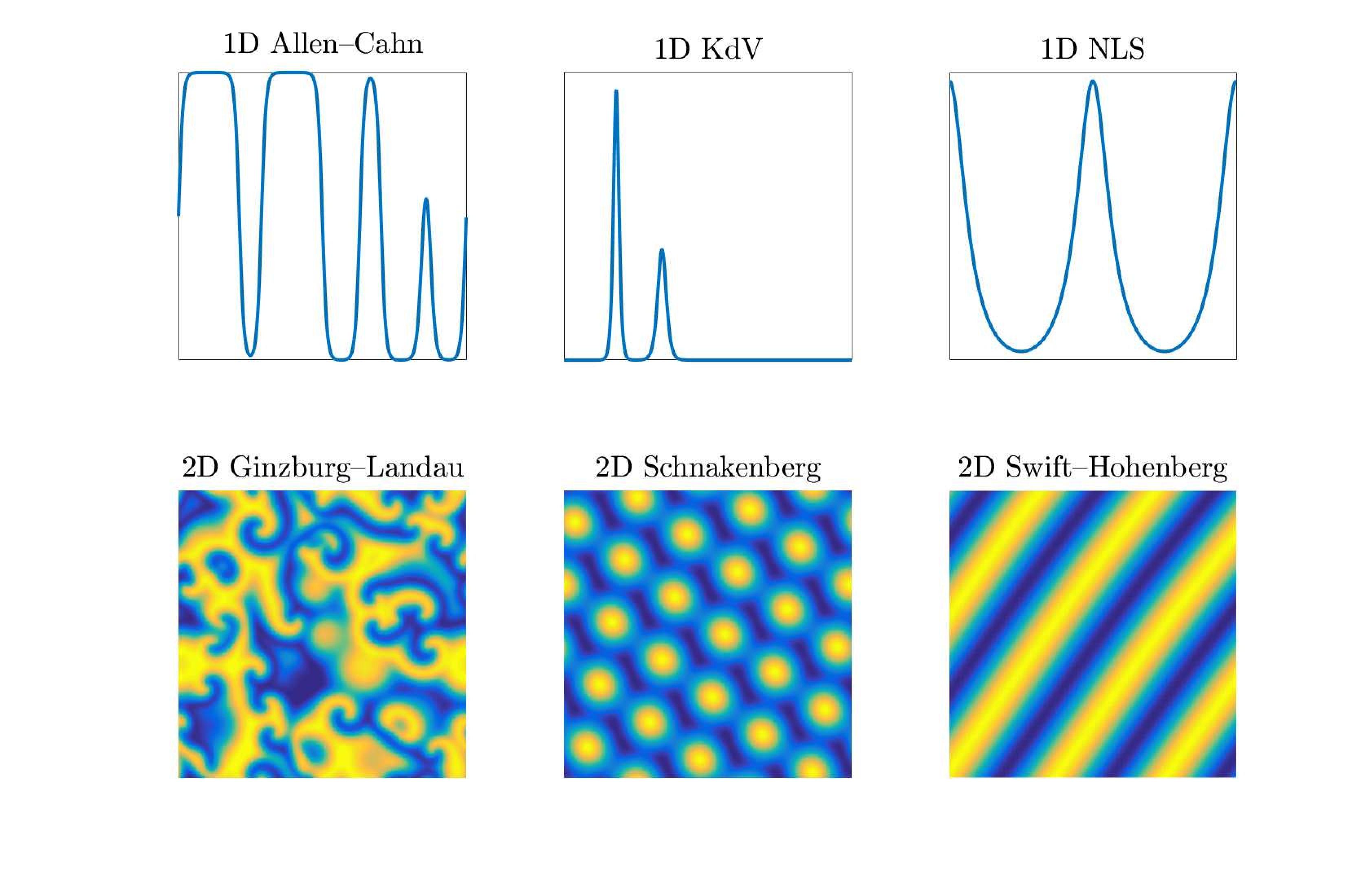
Hadrien Montanelli is a Researcher in applied mathematics at Inria with the IDEFIX team and a Lecturer at École Polytechnique . His work bridges numerical methods, scientific machine learning, and approximation theory, with applications in wave propagation, cell polarization modeling, and quantum computing theory. His research explores: Numerical solutions for stiff PDEs and nonlocal operators Deep ReLU networks' ability to overcome dimensionality challenges Computer-assisted proofs for PDE existence Quantum logic gates and Schrödinger equation implementation Pattern formation on spheres with applications in developmental biology Recent publications focus on SciML (Scientific Machine Learning), nonlocal calculus on spheres, and advanced numerical methods for inverse problems. Collaborations include prominent researchers like Houssem Haddar , Qiang Du , and Stanislav Shvartsman .