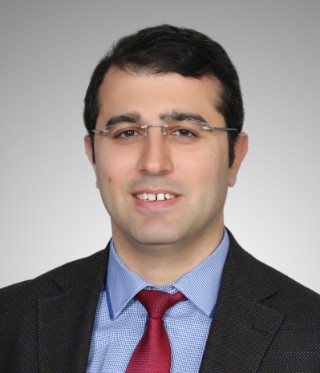
Hüsnü Dal is a Professor at Middle East Technical University (METU) in Ankara, Turkey, specializing in computational mechanics of materials. His research bridges engineering and biomedical applications through advanced computational modeling techniques. Education: Bachelor's Degree, Middle East Technical University, 2001 Master's Degree, University of Stuttgart, 2005 PhD, Dresden University of Technology, 2011 Research Focus: Prof. Dal's work centers on computational micromechanics, multiscale and multifield problems, and materials theory. He investigates fracture in multiphysics media with applications in lithium-ion batteries and tissue mechanics, developing novel constitutive models for complex material behaviors under extreme conditions. His research integrates thermomechanical coupling, viscoplasticity, and data-driven approaches to solve engineering challenges in both synthetic polymers and biological systems. Publication Trends: Recent publications (2023-2025) reveal a dominant focus on data-driven constitutive modeling and phase-field fracture methods. His work spans rubber mechanics, polymeric foams, biological tissues, and battery materials, characterized by strong interdisciplinary connections between materials science, biomechanics, and computational engineering. Key themes include anisotropic hyperelasticity, thermo-viscoplastic fracture, and spatial property variations in additively manufactured materials.
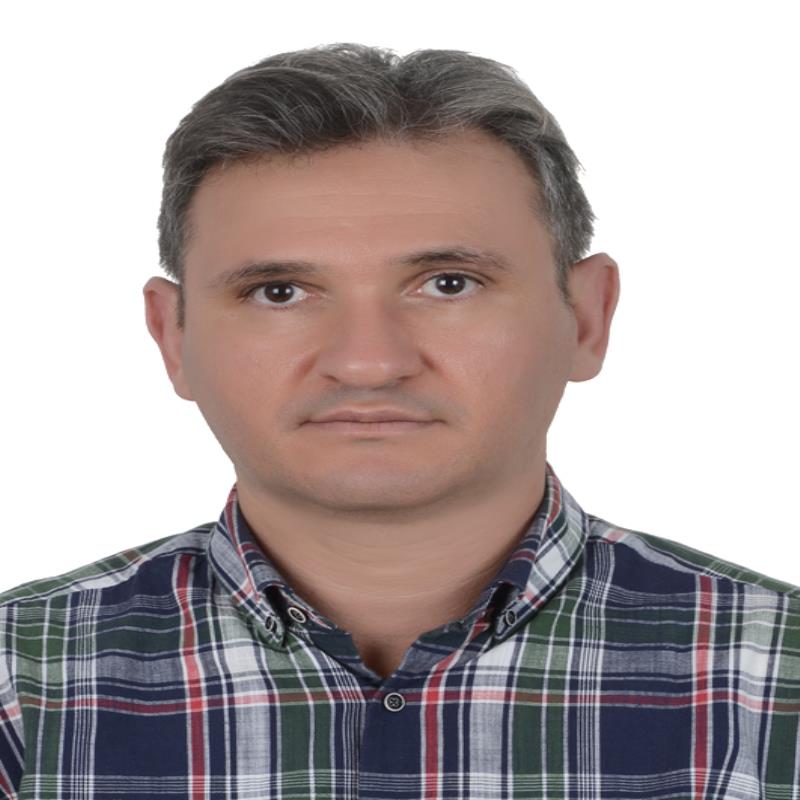
Prof. Fikri Serdar Gokhan is a faculty member at Rafet Kayış Faculty of Engineering, Department of Electrical and Electronic Engineering. His academic journey spans institutions such as Alanya Aladdin Keykubat University, Harran University, and Hasan Kalyoncu University, where he held progressive roles from Lecturer to Associate Professor before attaining his current rank as Professor. Education: Doctorate and Masters in Electronics Engineering from Uludag University (2010, 2003), Licence in Electrical and Electronics Engineering from Uludag University (1998). Prof. Gokhan's research focuses on Optics and Photonics , particularly Brillouin and Raman fiber amplifiers, quantum tunneling in plasmon sources, and thermal sensing in CMOS-MEMS technology. His work includes analytical modeling, numerical simulations, and applications in optical communication and sensing. His publications highlight expertise in Brillouin amplification, fiber optics, quantum photonics, and terahertz imaging. Notable contributions include innovative guess functions for Raman amplifiers, SBS management in Yb fibers, and electrical-driven plasmon sources on silicon. Administrative roles include Head of Department and Deputy Director of the Institute at Hasan Kalyoncu University. Students mentored include Güneş Yılmaz (PhD) and Arzu Babaev (Masters thesis).
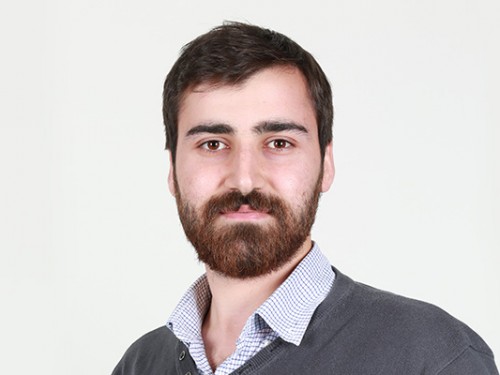
Zühal Aslan Akyol is a Lecturer at the Department of Computer Technologies within Cide Rifat Ilgaz Vocational School at Kastamonu University, Turkey . She has been serving full-time since 2013 and was promoted to Department Head in 2025. Her academic journey includes a PhD in Information Systems (2018-2023) and a Master's in Electronics and Computer Education (2010-2013) from Gazi University , and a BSc in Computer Engineering (2017-2021) from Kastamonu University . PhD: Gazi University, Informatics Institute, Information Systems (2018-2023) Master's: Gazi University, Informatics Institute, Electronics and Computer Education (2010-2013) BSc: Kastamonu University, Faculty of Engineering and Architecture, Department of Computer Engineering (2017-2021) Her research focuses on Computer Science and Optical Engineering , particularly in fiber optic systems , database management , and programming education . Her publications emphasize data mining applications in optical amplifiers, remote laboratory design , and software tools for engineering education . She has contributed to projects like the Real-Time Remote Accessible Fiber Optic Systems Laboratory and the Bilgisayar Donanımı Mobil Destekli Eğitim Simülatörü (BDMES) . While she has co-authored articles on topics like noise figure enhancement in EDFA and temperature-dependent gain analysis , no explicit scientific awards are listed in the provided data.
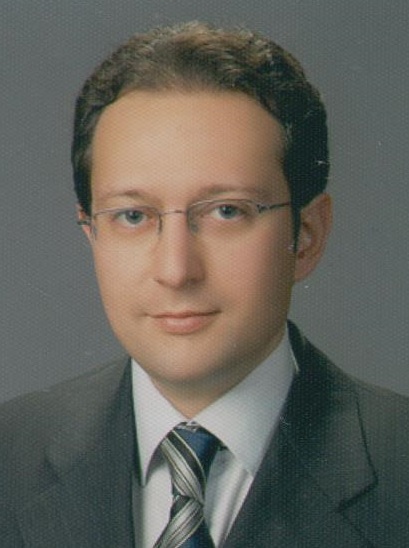
Prof. Dr. Raif Bayır is a Turkish academic at Karabük University's College of Engineering, Department of Mechatronics Engineering. With a career spanning 2000-2024, he has held continuous full-time faculty positions from Assistant Professor to Professor. His research focuses on Robotics, Hybrid/Electric Vehicles, and Artificial Intelligence. Doctorate: Gazi University (2005) - Electronics & Computer Education Postgraduate: Gazi University (1998) - Electronics & Computer Education Undergraduate: Gazi University (1995) - Electronics & Computer Education His work integrates Artificial Intelligence techniques into Electric Vehicle systems, Robotics, and Agricultural Engineering applications. Recent publications emphasize Deep Learning for Mask Detection, Real-Time Battery Monitoring, and Autonomous Navigation Systems. Scientific awards include: 2017 METU Line-Following Robot 1st Prize 2016 TÜBİTAK Domestic Product Award 2015 TÜBİTAK Electromobil Best Design Prize He has advised over 20 graduate theses on topics spanning Electric Vehicle Components, Beehive Monitoring Systems, and Intelligent Control Applications. His research teams have developed multiple TÜBİTAK-supported projects including Automotive Test Stands and Battery Management Systems.
Professor Yaprak Yalçın is affiliated with Istanbul Technical University as a faculty member in the Department of Control and Automation Engineering. With an h-index of 7, her research has generated significant academic impact. She has published extensively in control systems and automotive engineering domains. PhD in Control and Automation Engineering from Istanbul Technical University (2004-2010) Research Interests: Specializing in control theory and mechatronics, her work focuses on: Model Predictive Control systems Vehicle dynamics and path tracking Energy management optimization Nonlinear control methodologies Adaptive control applications Automotive automation technologies Research Trends: Recent publications demonstrate technical expertise in: Developing explicit nonlinear MPC for vehicle path tracking Implementing Kalman filters for autonomous motorcycle control Advancing energy management systems for electric buses Optimizing trajectory following in heavy-duty vehicles Integrating deep learning with control systems Improving computational efficiency in real-time control Grants & Projects: Currently leading three BAP-funded projects including: Virtual MATLAB laboratory for control systems Probabilistic MPC for autonomous vehicles Consensus control with adaptive MPC
Ömer Cihan Kıvanç is a faculty member at the Faculty of Engineering and Natural Sciences, İstanbul Okan University, specializing in electrical engineering and power electronics. His research focuses on advanced motor control systems, energy management strategies, and smart grid technologies. He has contributed to innovative solutions in electric vehicles, renewable energy integration, and optimization algorithms. His work spans the design of high-efficiency electric motors (e.g., brushless DC and PMSM drives), hybrid energy storage systems, and intelligent energy management systems leveraging AI techniques like deep reinforcement learning and neural networks. He has also explored regenerative braking systems and V2G (Vehicle-to-Grid) technologies to enhance grid stability and energy efficiency. Key research trends include optimizing energy storage systems for industrial vehicles, improving prosumer comfort in smart grids, and developing cost-effective home energy management solutions. His studies often combine experimental validation with advanced modeling in tools like MATLAB/Simulink. Notably, his projects emphasize real-world applications, such as energy-efficient chargers using GaN semiconductors, crimping techniques for high-power plugs, and sensorless motor control methodologies. He has collaborated on interdisciplinary initiatives, including unmanned ground vehicle development and electro-hydraulic power steering systems. His advising and grants focus on fostering innovation in electric propulsion, energy systems, and automation. He has contributed to the development of laboratories and research centers at the university, though specific lab affiliations are not detailed in the provided texts.
Dr. Mehmet Günhan Aksoylu is a Researcher at the Department of Civil Engineering within the Faculty of Civil Engineering at Istanbul Technical University. He has been affiliated with the university since 1995 and holds a PhD in Structural Engineering from the same institution. Educational Background: PhD (2006): Structural Engineering, Istanbul Technical University MSc (1997): Structural Engineering, Istanbul Technical University BSc (1994): Civil Engineering, Istanbul Technical University His research focuses on Earthquake Engineering , Steel Structures , and Reinforced Concrete Structures , with specific interests in seismic design, buckling analysis of functionally graded materials, nonlinear structural behavior, and strain hardening effects in concrete systems. His work addresses challenges in asymmetric setback buildings, load distribution, and plastic strain vector dynamics. Article trends highlight his contributions to seismic safety , material stability , and nonlinear modeling techniques . He has co-authored textbooks on structural statics and MATLAB applications for civil engineers. Dr. Aksoylu has no documented scientific awards. He has participated in a scientific research project (2015–2016) on Multi-Component Earthquake Calculations of Tall Buildings supported by higher education institutions.
Professor Ali Tolga Bozdana is a faculty member at Gaziantep University, Faculty of Engineering, Department of Mechanical Engineering. He has served as Professor since 2022, following positions as Associate Professor (2017-2022), Doctor Lecturer (2008-2017), and Research Assistant (2006-2008) at the same institution. His academic career also includes research assistant positions at the University of Nottingham (2001-2006) and Gaziantep University (1997-2001). Professor Bozdana earned his Doctorate from the University of Nottingham (2001-2006), Master's degree from Gaziantep University (1997-1999), and Bachelor's degree from Gaziantep University (1992-1997), all in Mechanical Engineering. He has also served as Dean Assistant (2018-present) and Department Vice Chair (2010-2013) at Gaziantep University. His research focuses on advanced manufacturing processes, particularly deep drawing technologies, electrical discharge machining, and servo press systems. Professor Bozdana has made significant contributions to ultrasonic-assisted manufacturing processes, developing novel techniques to improve forming quality and efficiency. His work bridges theoretical modeling with practical applications in aerospace and industrial manufacturing, with particular emphasis on precision manufacturing technologies for difficult-to-machine materials. Professor Bozdana's publication record shows consistent focus on precision manufacturing technologies, with recent work emphasizing ultrasonic-assisted deep drawing, servo press applications, and advanced electrical discharge machining techniques. His research demonstrates progression from fundamental process understanding to innovative system design and implementation, with strong emphasis on both numerical simulation and experimental validation. Kamu Yayın Teşvik Ödülü (TÜBİTAK) in 2018 (twice), 2017, 2016, and 2014 En İyi Sanayi İşbirliği Bildirisi Ödülü Finalisti (2015) Emerald Literati Network Awards for Excellence (2005) Türk Plastik Sanayicileri Araştırma, Geliştirme ve Eğitim Vakfı (PAGEV) Mansiyon Ödülü (2005) PhD Studentship Bursary from Rolls-Royce University Technology Centre (2001) Public Overseas Research Scholarship (2001) Professor Bozdana has supervised numerous graduate students including PhD candidates Sadik Olguner, Abdullah Gazi Firat, and Nazar Kais Al Karkhi. He has led significant research projects including a TÜBİTAK 3001 project on 'Servo Krank Pres ile Ultrasonik Destekli Derin Çekme İşlemi' (2016-2018) and a TÜBİTAK 1001 project on electrical discharge drilling of aerospace alloys (2008-2010). His work has resulted in a national patent for an ultrasonic-assisted deep drawing system. Professor Bozdana's laboratory work focuses on advanced manufacturing systems, particularly servo press technology and ultrasonic-assisted manufacturing processes. His team has developed experimental setups for implementing ultrasonic vibrations in deep drawing processes and created novel die systems for improved manufacturing quality. His research group maintains strong industry connections, particularly in aerospace manufacturing applications.
Hatice Lale Zeynelgil is an Assistant Professor at Istanbul Technical University's Faculty of Electrical and Electronics Engineering, Department of Electrical Engineering. She has been active since at least 1996 and continues to contribute to her field. Education: PhD in Electrical Engineering (1990–1994), Master's in Electrical Engineering (1982–1985), Licence in Electrical Engineering (1976–1982), all from Istanbul Technical University. Her research focuses on electrical installations, power systems, and control theory. She has applied optimization algorithms to voltage regulation, power system stabilizers, and PID controller design. Recent work includes Harris Hawks Optimization for automatic voltage regulators and improved slime mold algorithms for DC motors. Key trends in her publications involve metaheuristic optimization techniques (e.g., Slime Mould Algorithm, Sine Cosine Algorithm) applied to power systems and industrial control. Collaborations include researchers from Turkey and international partners like J. Hedley from the UK. Notable Contributions: Over 20 research outputs (as of 2024) h-index of 15 with 863 total citations Development of educational tools like PowSysGUI (MATLAB/Simulink-based stability analysis platform) She has supervised at least one thesis student and contributed to multidisciplinary research through symposiums and educational initiatives.
Prof. Dr. Gökhan Apaydin is a full Professor at the Department of Electrical and Electronics Engineering, Faculty of Engineering and Natural Sciences, Uskudar University. He holds a PhD from Bogazici University (2007) and has held academic positions at institutions including the University of Technology Zurich and a visiting role at the University of Illinois at Urbana-Champaign. His research focuses on computational electromagnetics, radio wave propagation, and numerical modeling techniques. Education: BSc (2001), MSc (2003), PhD (2007) in Electrical and Electronics Engineering from Bogazici University Research Interests: Electromagnetic diffraction modeling, MATLAB-based simulations, numerical methods (FDTD, MoM), surface wave propagation, and renewable energy systems. His work emphasizes practical applications in radio wave modeling and environmental impact assessments. Publications: His articles focus on diffraction phenomena, waveguide analysis, and tool development (e.g., PETOOL). Recent trends include hybrid numerical methods and real-world terrain modeling for radiowave prediction. Awards: Received TÜBİTAK Publication Incentive Awards (2021). Administration & Leadership: Serves as Deputy Head of the Electrical Engineering Department, chairs international committees (URSI), and oversees projects like the Electromagnetic Wave Propagation Package. Active in academic governance and Bologna Process coordination. Labs/Teams: Leads the Electromagnetic Research Group, focusing on wave propagation and measurement validation.
Abdullatif Baba is an Assistant Professor in the Department of Computer Engineering at Turkish Aeronautical Association University. His research focuses on interdisciplinary applications of artificial intelligence, robotics, and sustainable energy systems. He develops solutions for smart infrastructure, including AI-driven energy forecasting, autonomous drones for grid maintenance, and hyperspectral imaging techniques. His research interests span: AI/ML Systems : Neural networks, probabilistic forecasting, and FPGA-accelerated deep learning Robotics : Autonomous drones with computer vision for industrial and energy applications Sustainable Energy : Solar-based systems, smart grid optimization, and consumption prediction Security : Chaos-based cryptographic systems for secure communications Recent publications (2020-2024) demonstrate strong trends in practical AI implementations. Key themes include energy forecasting using adaptive neural networks (11 papers), robotics for infrastructure maintenance (4 papers), computer vision for biometrics and imaging (3 papers), and cryptographic systems (2 papers). Methodologies frequently involve hybrid approaches combining ANN, fuzzy logic, and hardware acceleration. No awards, students, or grant details were mentioned in the source material. Research collaborations include institutions in Turkey and the Middle East.
Mehmet Demir is an Assistant Professor at Gaziantep University, Faculty of Engineering, specializing in Electrical and Electronics Engineering. His research focuses on signal processing, image processing, and machine learning with applications in synthetic aperture radar (SAR) imaging and compressed sensing. Education: PhD (2013-2019), MSc (2009-2012), and BSc (2004-2009) in Electrical and Electronics Engineering at Gaziantep University Academic Positions: Assistant Professor (2021-present), Research Assistant (2013-2021), and Research Assistant (2009-2013) at Gaziantep University Demir's research explores advanced algorithm development for SAR imaging systems, particularly in handling quantized data and signal-translation errors. His work leverages computational methods like ADMM, FISTA, and spectral conjugate gradient techniques, with applications in remote sensing and signal reconstruction. Recent publications focus on 1-bit compressive sensing in SAR imaging (2018, 2019, 2020, 2021), demonstrating his ongoing contributions to data-efficient image reconstruction algorithms. His research has received recognition through TÜBİTAK Publication Incentive Awards in 2019 and 2014. Demir actively engages in scientific communities as a member of TMMOB-EMO (Chamber of Electrical Engineers) since 2009, and contributes to engineering education with courses like EEE439 Introduction to Remote Sensing, emphasizing practical algorithm development in MATLAB/Python.
Res. Asst. Dr. Nedim Gökhan Aydın is affiliated with the Department of Geophysical Engineering at Istanbul Technical University. His academic focus lies in applied geophysics, with expertise in gravity modeling, resistivity methods, and geophysical data processing. He holds a PhD in Geophysical Engineering from ITU (2018), following a Master's (2017) and Bachelor's degree (2015) in the same field from the same institution. Education: PhD: Geophysical Engineering, Istanbul Technical University (2018) Master's: Geophysical Engineering (with thesis), Istanbul Technical University (2015–2017) Bachelor's: Geophysical Engineering, Istanbul Technical University (2010–2015) His research interests include sedimentary basin analysis, boundary detection using gravity anomalies, and the application of MATLAB-based tools for geophysical data interpretation. His work contributes to understanding geological structures in regions like Thrace Basin, Eastern Anatolia, and the Menderes Massif. Recent studies involve innovative techniques such as 2D/3D gravity modeling and ground-penetrating radar for subsurface imaging. Publications span gravity modeling, resistivity applications in tree defect detection, and development of software tools like GravPack. His work emphasizes bridging computational methods with field geophysics. No scientific awards are listed. Advising and grants details are not explicitly provided in the text. He is part of the Geophysical Engineering Department at ITU’s Ayazaga Campus, contributing to both research and academic activities in applied geophysics.
Mehmet İzzeddin GULER is a full-time Researcher at Karabük University's Faculty of Engineering and Natural Sciences, Department of Mechatronics Engineering. He earned his PhD in Electrical and Electronics Engineering in 2024, following an MSc (2022-2024) and dual BSc degrees in Electrical and Electronics Engineering (2017-2022) and Management Information Systems (2017-2023). Education: PhD in Electrical and Electronics Engineering (2024), Karabük University MSc in Electrical and Electronics Engineering (2022-2024), Karabük University BSc in Electrical and Electronics Engineering (2017-2022), Karabük University BSc in Management Information Systems (2017-2023), Anadolu University His research focuses on semiconductor technologies, nanotechnology, and microelectronics, with applications in intelligent transportation systems. He contributed to a 2024 study comparing antenna design methodologies using CST-HFSS-MATLAB software for 5.8 GHz microstrip antennas, addressing optimization and performance metrics in transportation contexts. This work aligns with his broader interest in integrating nanotechnology with RF engineering solutions. He has 4 citations and participated in 2 projects, including TEKNOFEST competition support (2024-2025) and comparative antenna design research (2023-2024).
Assoc. Prof. Dr. Ali AĞÇAL is an academic at Yildiz Technical University's Department of Electrical and Electronics Engineering, Faculty of Engineering and Natural Sciences. He holds a PhD (2018) and Master's (2014) in Electrical Machines and Power Electronics from the same institution. His research focuses on wireless power transfer systems for UAVs, electric vehicles, underwater applications, and medical implants. He has published extensively in SCI-Expanded journals and led projects like the 'Optimum Coil Design for Safe Wireless Charging of Unmanned Aerial Vehicles.' Education: BSc (2011), MSc (2014), PhD (2018) in Electrical Engineering from Yildiz Technical University. Research Interests: Resonant Wireless Power Systems High-Efficiency Charging Solutions Biomedical Energy Transfer Aerospace Power Applications His work emphasizes safety (e.g., magnetic exposure limits) and system optimization (frequency control, coil design). Collaborative projects include STATCOM-based grid improvements and intra-body implant charging systems.