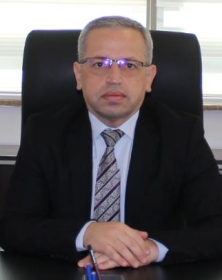
Lecturer Gökhan BAHADIR is affiliated with Kastamonu University , where he works at the Tosya Vocational School in the Department of Electricity and Energy . He has held administrative roles including Deputy Director of Tosya Vocational School (2017–2019, 2025–) and Department Head (2023–). Education : PhD in Electrical and Electronics Engineering (2022, Düzce University), MSc in Energy Systems Engineering (2014, Karabük University), MSc in Occupational Health and Safety (2018, Kastamonu University), BSc in Electrical and Electronics Engineering (2009, Karadeniz Technical University; 2013, Cumhuriyet University). Research Interests focus on: Electrical Machines and Energy Conversion – Induction/synchronous motors, transformer systems, power electronics Control Theory and Applications – Direct torque control, field-oriented control, programmable controllers Computational Methods – MATLAB simulations, Runge-Kutta numerical analysis, SCADA systems Industrial Automation – Electromechanical systems, hydraulic-pneumatic controls, industrial drivers His publications analyze motor stability in power grids, control methodologies for electric vehicles, and educational approaches to electrical concepts. Collaborations include work with colleagues at Kastamonu and Karabük Universities.
Mehmet Hanifi Doğru is an Associate Professor at Gaziantep University, Faculty of Aviation and Aeronautics, Department of Pilotage. He has been serving in this position since 2020, following his appointment as Doctor Lecturer (2016-2020) and Lecturer (2014-2016) at the same institution. Prior to that, he worked as a Research Assistant in the Department of Mechanical Engineering at Gaziantep University's Faculty of Engineering (2011-2014). Dr. Doğru has held significant administrative roles including Department Chair (2016, 2018-2019, 2020) and Vice Dean (2016) at Gaziantep University. He is also a member of the Chamber of Mechanical Engineers since 2009. His educational background includes: Doctorate (2012-2015) from Gaziantep University, Institute of Science, Department of Mechanical Engineering Master's degree (2008-2012) from Gaziantep University, Institute of Science, Mechanical Engineering (With Thesis) Bachelor's degree (2004-2008) from Atatürk University, Faculty of Engineering, Department of Mechanical Engineering Dr. Doğru's research spans multiple areas in aerospace engineering and materials science. His primary focus is on composite materials, particularly their behavior under ballistic impact and various loading conditions. He has conducted extensive research on aerodynamics, including airfoil optimization, morphing wings, and VTOL aircraft design. His work also encompasses structural analysis of aircraft components, rotorcraft design, and propulsion systems. His approach typically combines experimental testing with computational analysis to address complex engineering problems. His publication record shows a strong emphasis on practical applications of aerospace engineering principles. Recent works focus on improving the performance of composite materials for aerospace applications, optimizing aircraft components for better aerodynamic efficiency, and developing control systems for VTOL aircraft. His research often bridges theoretical concepts with practical implementation, demonstrating a commitment to real-world engineering solutions. Dr. Doğru has received several academic awards: 2017 Best Reviewer Award from Osmaniye Korkut ATA University 2017 Best Presentation Award from Selçuk University 2017 Best Paper Award from Selçuk University As an advisor, Dr. Doğru has supervised 14 master's theses on diverse topics including single-seat aircraft design, VTOL systems, rotorcraft design, composite structures, and missile aerodynamics. His teaching portfolio includes courses on rotorcraft design, computer programming (C and Matlab), and statics. He has led three research projects related to projectile impact analysis and multicopter design and control. His work demonstrates a strong commitment to both theoretical understanding and practical application in aerospace engineering. Dr. Doğru is a prolific inventor with 13 patents to his name, primarily focused on aircraft components, landing gear systems, and rotor designs. His patent portfolio includes innovations in thermal fatigue devices, cervical dislocators, wing profiles, walking orthoses, ducted fan systems, and specialized landing gear for various aircraft types. These inventions reflect his comprehensive understanding of aerospace engineering challenges and his ability to develop innovative solutions.
Ozlem Ozgun is a Professor in the Department of Electrical and Electronics Engineering at Hacettepe University, Ankara, Turkey. She serves as Vice Dean of the Faculty of Engineering (2021-present) and previously held leadership roles including Department Vice Chair (2017-2020) and Chair of the Electromagnetic Fields and Microwave Techniques Division (2021-2024). Her academic journey includes positions at TED University as Founding Department Chair (2012-2015) and at Middle East Technical University-Northern Cyprus Campus as Assistant Professor (2008-2012). Education: Ph.D (2007): Middle East Technical University, Dept. of Electrical and Electronics Engineering M.Sc (2001): Bilkent University, Dept. of Electrical and Electronics Engineering B.Sc (1998): Bilkent University, Dept. of Electrical and Electronics Engineering Professor Ozgun's research focuses on computational electromagnetics with emphasis on transformation electromagnetics, finite element methods, and radio wave propagation. Her work bridges theoretical electromagnetics with practical applications in radar systems, antenna design, and wireless communications. She has pioneered techniques using coordinate transformations to solve complex electromagnetic problems, developing innovative methods for modeling scattering phenomena, wave propagation, and metamaterial applications. Her research has significant implications for radar cross-section reduction, microwave imaging for medical applications, and 5G communication systems. Analysis of her recent publications reveals a consistent focus on advancing computational techniques in electromagnetics, particularly through transformation optics and domain decomposition methods. Her work shows increasing integration of machine learning approaches with traditional electromagnetic modeling, especially in radar cross-section analysis and inverse synthetic aperture radar techniques. There's also a strong emphasis on practical tools development, with multiple software packages released for public use including PETOOL, GO+UTD, and VectGUI. Scientific Awards: Hacetepe Science Award (2024) IEEE Antennas and Propagation Society Distinguished Lecturer (2025-2027) Top 2% of the 'career-long impact' category in the world's most influential scientists list (2023-2024) URSI elevation to senior membership (2020) IEEE elevation to senior membership (2013) Prof. Dr. Leopold B. Felsen Award for Excellence in Electromagnetics (2009) Professor Ozgun has supervised 15 graduate students to completion, with research spanning radar cross-section computation, electromagnetic scattering, and microwave imaging. She has secured multiple research grants including TÜBİTAK-TEYDEB and TÜBİTAK-ARDEB projects focused on high-frequency radar analysis and electromagnetic modeling. Her professional service includes significant editorial roles and leadership positions in URSI-Turkey where she served as President of the Steering Committee (2018-2023). She is actively involved in developing computational tools for electromagnetic education and research, with several MATLAB-based applications available for public use. Her research group maintains strong collaborations with international institutions including Penn State University, and she has established a productive research environment focused on advancing computational electromagnetics through innovation in numerical methods and practical applications.
Mehmet Fatih ÖZLÜK is a full-time Lecturer at Karabuk University's Eskipazar Vocational School, specializing in the Department of Motor Vehicles and Transportation Technologies. He holds a PhD in Electrical and Electronics Engineering (2019) from Karabuk University, a Master's in Electrical Education (2011) from Gazi University, and a BSc in Electrical and Electronics Engineering (2014) from Selçuk University. Education: PhD (2019), MSc (2011), BSc (2014, 2007) Professional Experience: Lecturer since 2018 His research focuses on Power Electronics , Electrical Energy Systems , and Electronics , particularly in converter design, control strategies, and industrial safety systems. Collaborative work includes performance evaluations of Lyapunov control methods with colleagues like Mustafa Gökdağ and Ozan Gülbudak. Key article trends include innovations in power factor correction converters (2025) and applications of control systems in mining safety (2024). Early career work involved MATLAB-based PID controller design for DC motors (2013).
Abdurrahman ÖZBEYAZ is an Associate Professor and Department Head of the Electrical and Electronics Engineering Department at Adıyaman University. He holds a PhD from Çukurova University (2015) and has extensive academic experience including visiting research at the University of Surrey (UK) under the TÜBİTAK 2219 program. His research focuses on Optimization Algorithms, Biomedical Signal Processing, Machine Learning, and Deep Learning applications. He has authored/co-authored over 24 peer-reviewed articles and actively participates in academic committees and editorial boards. Education: BSc in Computer Engineering, Erciyes University (2005) MSc in Electrical and Electronics Engineering, Kahramanmaraş Sütçü İmam University (2010) PhD in Electrical and Electronics Engineering, Çukurova University (2015) Research Interests: His work integrates computational intelligence with real-world applications like neuromarketing, environmental monitoring, and biomedical signal analysis. Notable projects include EEG-based brand impact studies and machine learning models for drought prediction. Professional Highlights: ERASMUS teaching mobility: Debrecen University (2010), Polytechnic Institute of Porto (2016) Over 8 academic awards including TÜBİTAK publication incentives Supervised projects on biogas optimization, solar energy modeling, and smart system design Awards: University of Surrey Postdoctoral Research Fellowship (2021-2022) Academic Incentive Award (Adıyaman University, 2022) Grants & Labs: Lead researcher in TÜBİTAK-funded projects and actively involved in university initiatives like the Land Consolidation Optimization research group. His lab focuses on developing smart environmental monitoring systems and neuromarketing tools.
Yusuf BAŞOĞUL is an Associate Professor at Adiyaman University's Faculty of Engineering, Department of Mechanical Engineering. He holds a PhD in Mechanical Engineering from Suleyman Demirel University (2014) and has been actively involved in academic duties since 2014. His research focuses on geothermal energy systems, exergy analysis, thermal insulation optimization, materials science, and tribology. He has contributed to over 17 peer-reviewed articles, two books, and several conference presentations. His work emphasizes sustainable energy solutions, industrial automation, and environmental impact mitigation. Education: PhD in Mechanical Engineering, Suleyman Demirel University (2008–2014) MSc in Mechanical Education, Afyon Kocatepe University (2005–2008) BSc in Metal Education, Afyon Kocatepe University (1997–2002) Research Interests: Geothermal power plants, exergy-based optimization, thermal energy systems, micro-arc oxidation coatings, industrial energy efficiency, carbon footprint analysis, and sustainable manufacturing. Publications Trends: His recent work emphasizes renewable energy applications (geothermal, solar), advanced material coatings, and energy-saving technologies. Notable contributions include studies on insulation optimization for district heating systems and exergetic performance analysis of refrigeration systems. Grants & Projects: He led the 'Mechanical Research and Development Laboratory Infrastructure Project' (2017–2020). Active in teaching courses like Thermal Insulation Techniques, Tribology, and Advanced Manufacturing Processes. Labs/Teams: Member of the Mechanical Engineering Department's research group focusing on energy systems and materials engineering.
Alp Kağan AÇAN is an Assistant Professor at the Department of Materials Science and Engineering at Middle East Technical University (METU) in Ankara, Turkey. His research focuses on mechanics of materials, mechanical characterization, and data-driven modeling of complex materials such as polymeric foams and biological tissues. He obtained his B.Sc. from Izmir Institute of Technology in 2018 and was supervised by Prof. Hüsnü DAL during his academic journey. His work emphasizes developing constitutive models using data-driven techniques, with applications in biomechanics, polymer science, and computational mechanics. Recent contributions include frameworks for anisotropic soft biological tissues and hyperelasticity modeling of rubberlike materials. Dr. AÇAN’s research also explores phase-field approaches for ductile-brittle failure in polymers and validation of viscoelastic models for myocardium. He has developed the Hyper-Data software for data-driven hyperelasticity analysis using MATLAB. His research spans computational tools, material characterization, and interdisciplinary applications in biomedical engineering. No scientific awards are listed. His advising record and grants are not detailed in the provided information. He is affiliated with METU’s Ankara campus, with office locations D-103/D-112 and contact number 0312 210 5216.
Recep Durna is a Researcher at Middle East Technical University (METU), holding dual degrees in Mechanical Engineering (2022) and Physics (Double Major, 2023). His work focuses on mechanics of materials, continuum mechanics, and data-driven inelasticity, with an emphasis on bridging computational methods and material behavior. B.Sc., Mechanical Engineering, METU (2022) B.Sc., Physics (Double Major), METU (2023) His research explores the interplay between data-driven methodologies and material modeling. Recent publications highlight advancements in hyperelastic optimization software, constitutive modeling for rubber-like materials, and frameworks for complex material simulations. Key publication trends include applications of MATLAB-based optimization in hyperelasticity, amplitude-dependent dynamic response analysis, and data-driven approaches to material inelasticity. Collaborations with Assoc. Prof. Hüsnü DAL focus on computational mechanics and material characterization.
Emre Kahramanoğlu serves as an Assistant Professor in the Department of Marine Engineering at Istanbul Technical University, focusing on advanced marine hydrodynamics and control systems for naval vessels. His research bridges computational fluid dynamics with practical marine vehicle applications. His primary research interests include ship motion control, maneuvering derivatives, interceptor mechanisms for planing hulls, and scale effects in hydrodynamic modeling. He specializes in numerical prediction methods and applies control engineering techniques like Model Predictive Control and Linear Quadratic Regulators to solve stability challenges in marine environments. His work particularly addresses roll motion control, submarine dynamics, and drag reduction through innovative hull design. Analysis of his 2023-2024 publications reveals a strong emphasis on computational approaches to marine vehicle dynamics, with consistent focus on numerical validation of control systems and hydrodynamic interactions. Key trends include integration of state estimation techniques with control algorithms, investigation of scale effects across vessel types, and optimization of interceptor systems for planing craft. As Principal Investigator for the 2024 project 'Development of a MATLAB-based Software to Evaluate Ship Stability Performance' (SRP), he leads research in computational tools for marine stability assessment. His collaborative network spans multiple institutions, with frequent co-authorship on hydrodynamics and control engineering topics.
Prof. Cuneyt Sert is a faculty member in the Department of Mechanical Engineering at Middle East Technical University (METU), where he teaches courses such as Fluid Mechanics, Numerical Methods, and Computational Fluid Dynamics (CFD). His academic rank is Professor, reflecting his extensive contributions to research and education. He actively supervises graduate students, including PhD candidate Burcu Ramazanlı, whose work on abdominal aortic aneurysm hemodynamics led to a 2024 publication in the Journal of Thermal Science and Technology. Prof. Sert's research focuses on CFD, fluid dynamics, and biomedical applications. His studies on hemodynamics, turbulence, and material response in aerospace systems have produced influential papers since 2000. He is known for developing innovative numerical methods, such as adaptive discontinuous Galerkin techniques and CUDA-based parallel CFD solvers. His work bridges engineering education and industry, with projects on cryocooler optimization, metro aerodynamics, and grid fin aerodynamics. In teaching, Prof. Sert is praised for his student-centered approach, detailed lecture notes, and rigorous assignments. He emphasizes practical skills like MATLAB and C programming, though some students note concerns about workload and attendance policies. His courses, such as ME 310 (Numerical Methods) and ME 485 (CFD), are recognized for their rigor and real-world relevance. Prof. Sert’s contributions extend to interdisciplinary collaborations, including biomedical acoustics and material science. He has pioneered GPU-accelerated CFD tools and contributed to the design of microchannel heat exchangers. Despite no explicit awards listed, his peer reviews highlight his dedication to fostering critical thinking and problem-solving in students, earning him recognition as one of METU’s most respected educators.
Burak Kılıç is a Ph.D. candidate in Mechanical Engineering at Istanbul Technical University and a full-time Research Assistant at Işık University's Faculty of Engineering and Natural Sciences. His work bridges materials science, smart manufacturing, and AI through projects in computer vision, IoT, and big data applications. Ph.D. Candidate, Mechanical Engineering, Istanbul Technical University (2022–Present) M.Sc., Materials and Manufacture, Istanbul Technical University (2016–2022) B.Sc., Mechanical Engineering, Bulent Ecevit University (2008–2014) His research focuses on AI-driven solutions for real-world engineering challenges, including: Medical image segmentation (Swin-Unet, PyTorch) Smart agriculture systems (IoT, ESP32, MQTT) Industrial quality inspection (U-Net, Apache NiFi/Kafka) Big data analytics for earthquake correlations Recent publications highlight his work on Swin-Unet for MRI segmentation, age regression models for neurodegenerative analysis, and AI-powered marble slicing optimization. He collaborates across disciplines to connect industry needs with innovative research. Scientific awards include: TensorFlow Developer Certificate (2023) Google Machine Learning Bootcamp (2023) IBM Big Data Certification (2023) PADI Advanced Open Water Diver (2023) He mentors students through GitHub repositories and course materials development, while contributing open-source tools like MOOZE for AI assistant management. His work remains active in AIoT and precision manufacturing domains.
Abdulaziz Ceylan is a Lecturer in the Department of Electronics and Automation at Adıyaman University's Besni Ali Erdemoğlu Vocational School, where he has served since February 18, 2014. He also holds the position of Deputy Director at the vocational school. Born in Malatya in 1979, he completed his primary education in Malatya and secondary education in Adıyaman before attending Gaziantep M. Rüştü Uzel Industrial Vocational High School for telecommunications. His research interests focus on Electronic Circuits , Information Technologies , and Mechatronic Systems , with particular emphasis on Control Systems and Automation technologies. His teaching portfolio spans numerous technical courses including Analog Electronics, Circuit Analysis, Microcontroller Applications, and Computer-Aided Electronic Circuit Design. Dr. Ceylan's academic work includes research on quadrotor aircraft modeling, demonstrating his application of computational methods to advanced electronics problems. His publication record, while modest, shows engagement with practical engineering challenges in the field of unmanned aerial systems. 11th INTERNATIONAL MEB ROBOT COMPETITION award recipient As an educator, Dr. Ceylan has developed significant experience teaching a diverse range of electronics and automation subjects. His career progression from high school teacher to university lecturer while pursuing advanced degrees demonstrates his commitment to both education and professional development in the field of electrical and electronics engineering. He currently leads the Department of Electronics and Automation at Besni Ali Erdemoğlu Vocational School, overseeing curriculum development and educational delivery in this specialized technical field.