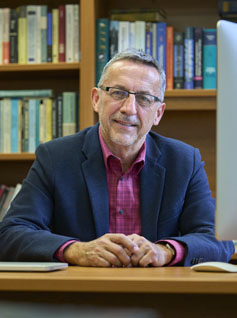
Jiayi Wang is an Assistant Professor of Statistics in the Department of Mathematical Sciences at the University of Texas at Dallas (UT Dallas), affiliated with the Erik Jonsson School of Engineering and Computer Science. He holds a PhD in Statistics from Texas A&M University (2022) and a B.S. in Statistics from Zhejiang University (2017). His research focuses on nonparametric statistics and machine learning, particularly in causal inference, functional data analysis, reinforcement learning, low-rank modeling, and matrix completion. He has contributed to methodological advancements in areas such as treatment effect estimation, offline reinforcement learning, and statistical theory for complex data structures. Key achievements include the ASA Section on Nonparametric Statistics Student Paper Award (2020). His work has been published in prestigious journals like the Journal of the American Statistical Association and conferences such as NeurIPS and ICML. He has also developed open-source code for methods like PCATE balancing weights, available on GitHub. Teaching experience includes instructing courses in statistical learning, probability, and applied statistics at both Texas A&M University and UT Dallas. His research group actively explores interdisciplinary applications, including climate science and criminal justice, demonstrating a commitment to bridging statistical theory with real-world problems.
Petar M. Djuric is a SUNY Distinguished Professor and Savitri Devi Bangaru Professor in Artificial Intelligence at the Department of Electrical and Computer Engineering, Stony Brook University. He previously served as Chair of the department from 2016 to 2023. His work focuses on machine learning, signal processing, and Bayesian methods, with applications in medicine and RFID. Education: B.S./M.S. in Electrical Engineering (University of Belgrade), Ph.D. in Electrical Engineering (University of Rhode Island). His research spans causal inference, Monte Carlo methods, distributed signal processing, and autonomous systems. He has published over 160 journal articles and 360 conference papers, advised over 40 PhD students, and lectured globally. Awards: IEEE/SPS Best Paper Award (2007), EURASIP Technical Achievement Award (2012). He has held leadership roles in IEEE, including Editor-in-Chief of IEEE Transactions on Signal and Information Processing over Networks (2015–2018). Currently mentors 10 PhD students and contributes to academic governance and international collaborations.
Jack Jewson is a Senior Lecturer in the Department of Econometrics and Business Statistics at Monash University’s Faculty of Business and Economics, a position he has held since April 2024. He previously conducted postdoctoral research and held a Juan de la Cierva Research Fellowship at Universitat Pompeu Fabra, Barcelona. He is actively accepting PhD students and supervising research in advanced statistical methodologies. Education: PhD in Statistics, University of Warwick (awarded June 2020), in collaboration with the University of Oxford via the Oxford-Warwick Statistics Programme (OxWaSP). Integrated Master’s in Mathematics, Operational Research, Statistics, and Economics, University of Warwick (awarded July 2015). His research focuses on Bayesian inference under model misspecification, particularly in the M-open world, where no true model is assumed to exist. He develops robust computational methods for variable and model selection, and investigates statistical inference under differential privacy constraints. His work integrates loss functions into Bayesian updating and explores graphical and structural modeling applications in economics and biology. These interests are driven by the need for reliable inference in complex, real-world scenarios where models are inherently imperfect. His recent publications span high-impact journals such as The Annals of Applied Statistics , Biometrics , and Bayesian Analysis , as well as top machine learning venues like NeurIPS. The research demonstrates a strong trend toward robust, privacy-aware Bayesian methods with applications in biostatistics, signal processing, and network modeling. His work bridges theoretical statistics with practical computational solutions for modern data challenges. Scientific Awards: No specific awards or fellowships mentioned in the provided text. Jack Jewson has not received explicit mention of grants or funding in the text, but his prior Juan de la Cierva Fellowship indicates competitive research support. He is actively mentoring PhD students and expanding his research group at Monash. His work involves collaboration with leading statisticians such as David Rossell, Piotr Zwiernik, Jim Q. Smith, and Chris Holmes. While no formal lab name is provided, his research group focuses on robust Bayesian computation and privacy-preserving inference.
Professor Anya M. Reading is a distinguished academic in the School of Natural Sciences at the University of Tasmania, where she serves as Professor of Physics. She leads the Compute Antarctic Group and holds key leadership positions including Program Lead for Circum Antarctic and East Antarctic at the Australian Centre of Excellence for Antarctic Science (ACEAS) since 2021, and Chair of the Coordinating Committee for East Antarctica at the International Lithosphere Program. Professor Reading earned her PhD from the University of Leeds (1997), BSc from the University of Edinburgh (1991), and a Diploma of Music from the Open University (1998). Her academic journey has positioned her as a world leader in computational geophysics and Antarctic research. Professor Reading's research spans three interconnected domains that have defined her 30+ year career in geophysics. Her primary focus is on computational data inference , where she pioneers advanced techniques in inverse theory and machine learning applied to earthquake seismology, plate tectonic structure, and environmental applications of seismology. She has made significant contributions to pioneer geophysical data collection , leading observational seismology and interdisciplinary field programs in remote environments including Antarctica and outback Australia. Her work on interdisciplinary insight generation focuses on East Antarctica, developing innovative computational strategies to optimize data collection in regions of societal relevance. Her research bridges geophysics, climate science, and computational methods to address critical questions about ice sheet dynamics and Earth systems. Professor Reading's recent publications reveal a strong trend toward integrating machine learning with traditional geophysics to study Antarctic ice sheets. Her work increasingly focuses on cryoseismology - using seismic signals to monitor glacial processes hidden from satellite observation. A significant portion addresses the ice-bedrock interface, examining how geothermal heat flow influences ice sheet stability. Her publications demonstrate growing emphasis on interdisciplinary approaches combining seismology, magnetotellurics, and computational modeling. Professor Reading's significant honors include: University of Tasmania College of Sciences and Engineering Research Award (Medal, 2021) Vice-Chancellor's Leadership Award (Medal, 2019) Fulbright Senior Scholar (2016/17) As an educator and mentor, Professor Reading has supervised over 15 PhD students since 1998. She has secured substantial research funding, with current projects totaling over $6.5 million including an ARC Discovery Project on Antarctic outlet glaciers and the GRIT Phase 3 project for continental-scale geophysical monitoring in Antarctica. Her leadership extends to directing major research infrastructure initiatives that have transformed Australia's capacity for Antarctic research. Professor Reading leads the Compute Antarctic Group, a dynamic research team focused on computational geophysics and Antarctic research. She also plays a central role in the Australian Centre of Excellence for Antarctic Science, coordinating interdisciplinary research across multiple institutions. Through these groups, she fosters a collaborative environment that integrates field observations, computational modeling, and machine learning to address pressing questions about Antarctic systems and their global implications.
Cyrus D. Samii is a Professor of Politics at New York University’s College of Arts & Science. His research focuses on causal inference, field experiments, and quantitative methodology, with a particular emphasis on political and development contexts. He holds a PhD and MA from Columbia University and a BA from Tufts University. Education: PhD in Political Science, Columbia University MA in Political Science, Columbia University BA in Political Science, Tufts University Research Interests: Samii’s work centers on rigorous research design and the application of experimental methods to study governance, conflict, and development. He explores topics such as causal mechanisms, statistical methods for complex data, and the evaluation of social policies. His recent focus includes spatial experiments, mediation analysis, and the design of randomized controlled trials (RCTs). Publications & Grants: His research spans diverse regions, including Liberia, Burundi, and Colombia, addressing questions of democratization, post-conflict reconciliation, and policy evaluation. He collaborates with institutions like EGAP and the World Bank, emphasizing methodological innovation and open science practices. Teaching & Advising: Samii teaches advanced quantitative methods courses (e.g., POLS GA 1251) and advises PhD students on experimental design and causal inference. His students engage in projects related to governance innovations and methodological research. Labs & Collaborations: He collaborates with researchers like Peter M. Aronow on tools like Data-NoMAD for data integrity and spatial analysis frameworks. His work often integrates interdisciplinary approaches to address real-world societal challenges.
Justin M. Wozniak is a computational scientist at Argonne National Laboratory’s Mathematics and Computer Science Division within the Computing, Environment and Life Sciences directorate. He is a key contributor to advanced scientific workflow systems such as Swift/T and Parsl, enabling scalable, distributed, and many-task computing for data-intensive science. His work supports major initiatives in cancer research (CANDLE), epidemiological modeling, and exascale computing (ExaWorks). He collaborates extensively with leading researchers including Ian T. Foster, Michael Wilde, and Kyle Chard. His research focuses on high-performance computing, scientific workflows, distributed systems, and machine learning applications in science. He has pioneered techniques in workflow automation, fault tolerance, in-situ data analysis, and performance optimization. His work enables robust, scalable execution of complex computational pipelines across heterogeneous environments, from supercomputers to cloud platforms. His recent publications (2021–2025) emphasize workflow interoperability, resilience, benchmarking, and applications in cancer and epidemic modeling. Themes include automated model comparison, job management portability (PSI/J), adaptive workflow steering, and exascale-ready workflow toolkits. These works reflect a strong trend toward reproducibility, scalability, and real-world scientific impact. Justin M. Wozniak has no listed scientific awards in the provided text. However, his leadership in major DOE-funded projects and high-impact publications in top venues (SC, HPDC, e-Science) underscores his significant contributions to computational science. He has mentored or collaborated with numerous researchers, though specific advisees are not listed. His work is supported by large-scale computing grants and initiatives such as the ExaWorks project and CANDLE, which aim to accelerate scientific discovery through advanced computing infrastructure. He contributes to open science through tools like Parsl and Swift/T, which are widely used in the scientific community. He is a core developer in the ExaWorks ecosystem and contributes to workflow frameworks that integrate with AI/ML pipelines, containerization, and real-time data analysis. His work on Braid-DB and provenance tracking supports AI-driven science with full reproducibility. These efforts are central to modern computational laboratories aiming for autonomous, data-intensive discovery.
Philipp Jonas Rösch is a Researcher and PhD Candidate at Bundeswehr University Munich, holding the position of Research Head for Artificial Intelligence at the Institute for Distributed Intelligent Systems (VIS). He is affiliated with the Chair of Data Science under Prof. Michaela Geierhos at the Research Institute CODE. He holds a Master's degree in Statistics from Ludwig-Maximilians-Universität München and has industry experience prior to academia. His research focuses on Vision-Language systems, Multimodal Deep Learning, and Damage Recognition, with notable contributions to datasets like dacl10k and InpaintCOCO . He co-organizes the Machine Learning Interest Group (MLIG), a platform for researchers at UniBw M and HSU focusing on ML/AI topics. Rösch manages the GPU cluster 'Monacum One' and advises students on Bachelor's/Master's theses in Deep Learning or Vision-Language domains. His work emphasizes real-world applications in infrastructure inspection and military vehicle detection, leveraging both academic and industrial perspectives.
David Lobell is the Benjamin M. Page Professor in the Department of Earth System Science at Stanford University's School of Earth, Energy & Environmental Sciences. He serves as the Gloria and Richard Kushel Director of the Center on Food Security and the Environment and holds senior fellow positions at the Stanford Woods Institute for the Environment, the Freeman Spogli Institute for International Studies, and the Stanford Institute for Economic Policy Research. Dr. Lobell's educational background includes a PhD in Geological and Environmental Sciences from Stanford University (2005) and a Sc.B. in Applied Mathematics from Brown University (2000). Prior to his Stanford appointment, he was a Lawrence Post-doctoral Fellow at Lawrence Livermore National Laboratory. His research focuses on agriculture and food security, specifically on generating and using unique datasets to study rural areas throughout the world. Early research centered on climate change risks and adaptations in cropping systems, where he served as lead author for the IPCC Fifth Assessment Report food chapter. More recent work develops new techniques to measure progress on sustainable development goals and study impacts of climate-smart practices in agriculture. His research integrates remote sensing, climate science, and agricultural economics to address pressing food security challenges. Analysis of Dr. Lobell's recent publications reveals a strong focus on applying satellite imagery and causal machine learning to evaluate agricultural practices globally. Key themes include cover crop adoption effects, climate change impacts on crop productivity, field-scale water management, and the use of AI for poverty and wealth measurement in data-scarce environments. His work spans multiple continents with particular attention to the US Corn Belt, southern Africa, and India. Dr. Lobell's scientific contributions have been recognized with numerous prestigious awards: Macelwane Medal from the American Geophysical Union (2010) MacArthur Fellowship (2013) National Academy of Sciences Prize in Food and Agriculture Sciences (2022) Election to the National Academy of Sciences (2023) As director of the Center on Food Security and the Environment, Dr. Lobell oversees multiple research initiatives and advises PhD students from diverse backgrounds including ecology, statistics, remote sensing, and computer science. His lab has secured significant funding for projects related to crop mapping, cover crop analysis, and climate-smart agriculture, often collaborating with international organizations and government agencies. The Lobell Lab maintains a strong focus on translating scientific findings into actionable insights for policymakers and practitioners. Current research priorities include developing field-scale crop productivity mapping, evaluating sustainable land management practices, and advancing methods for measuring agricultural impacts using satellite data. The lab actively collaborates with organizations including Atlas AI and contributes to global initiatives like the NASA Acres Consortium.
Kijung Shin is an Associate Professor at KAIST (Korea Advanced Institute of Science and Technology), holding dual appointments in the Kim Jaechul Graduate School of AI and the School of Electrical Engineering (Computer Division). He leads the Data Mining Lab and teaches multiple courses including Graph Mining and Social Network Analysis, Data Mining and Search, and other foundational courses in electrical engineering and AI. Education Ph.D. in Computer Science, Carnegie Mellon University (February 2019) M.S. in Computer Science, Carnegie Mellon University (December 2017) B.S. in Computer Science and Engineering, Seoul National University (August 2015) B.A. in Economics (Double Major), Seoul National University (August 2015) Research Interests Professor Shin's research primarily focuses on data mining, graph algorithms, and network science, with particular expertise in hypergraph analysis, tensor decomposition, and graph neural networks. His work bridges theoretical foundations with practical applications, developing algorithms that can efficiently analyze complex real-world networks. His recent research has expanded into multimodal learning, integration of large language models with graph neural networks, and applications in recommendation systems, satellite imagery analysis, and biological data analysis. His approach combines rigorous mathematical analysis with practical implementation, resulting in numerous open-source software tools that have been widely adopted in both academia and industry. His research has significant implications for social network analysis, fraud detection, recommendation systems, and scientific discovery in various domains. Research Trends Professor Shin's recent publications show a clear trajectory toward more complex network structures, particularly hypergraphs that capture higher-order interactions beyond simple pairwise relationships. His work increasingly integrates traditional graph algorithms with deep learning approaches, especially focusing on how graph neural networks can be improved and made more interpretable. There's also a growing emphasis on practical applications in areas like satellite imagery analysis, medical data, and recommendation systems that address real-world challenges. Scientific Awards Received the PAKDD Best Survey Paper Award for 'Multi-Behavior Recommender Systems: A Survey' (2025) Selected as one of the best short paper candidates of ACM RecSys 2024 (top 7) for 'Revisiting LightGCN' (2024) Selected for oral presentation (2.6% of accepted papers) at AAAI 2024 for 'VITA: 'Carefully Chosen and Weighted Less' Is Better in Medication Recommendation' (2024) Received the IEEE ICDM Best Student Paper Runner-up Award for 'TensorCodec: Compact Lossy Compression of Tensors without Strong Data Assumptions' (2023) Received the SIGKDD Best Research Paper Award and CogX Award for Best Student Paper in AI for 'FRAUDAR: Bounding Graph Fraud in the Face of Camouflage' (2016) Received the Best Senior Thesis Award from Seoul National University (2015) Received the Samsung Humantech Paper Award (1st in Computer Science) (2015) Teaching and Mentoring Professor Shin has taught multiple graduate and undergraduate courses at KAIST since 2019, including Graph Mining and Social Network Analysis, Data Mining and Search, and foundational courses in electrical engineering. He has also co-organized tutorials at major conferences including AAAI, KDD, ICDM, and CIKM on advanced topics in hypergraph neural networks and real-world hypergraph analysis. As the leader of the Data Mining Lab, he mentors numerous graduate students and postdoctoral researchers, fostering a collaborative research environment that has produced significant contributions to the field of data mining and network analysis. Research Leadership Professor Shin leads the Data Mining Lab at KAIST, which focuses on developing novel algorithms for analyzing complex networks and high-dimensional data. The lab has produced numerous influential software tools including D-Cube, M-Zoom, CoreScope, and DenseAlert, which are widely used in both academic research and industry applications. His research group maintains active collaborations with institutions worldwide and has received funding from various sources to support their innovative work in data mining and network analysis.

-square-medium.jpg)