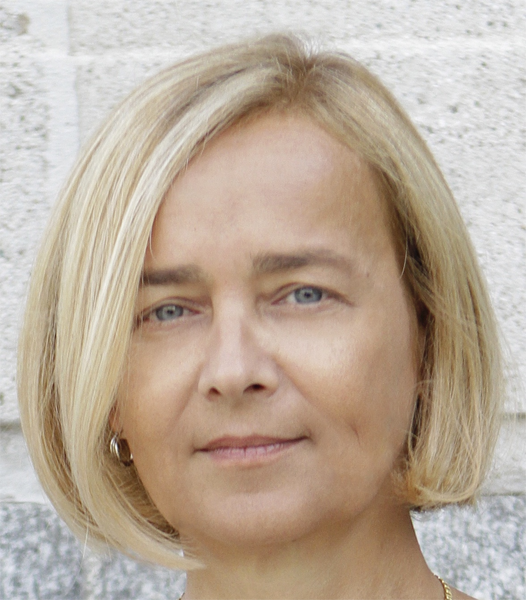
Valeria Castellucci is a Senior Lecturer and Associate Professor in the Department of Electrical Engineering at Uppsala University, Sweden, affiliated with the Division of Electricity. She holds the title of Docent in Engineering Science with Specialisation in Science of Electricity, reflecting her advanced academic standing and research contributions. Her research focuses on renewable energy systems, particularly wave energy and the integration of electric vehicles into power grids. Key areas include demand-side flexibility, peak load management, load shifting, and the optimization of wave energy parks. Her work combines theoretical modeling with real-world applications, often based on case studies in Uppsala, such as microgrid operations and EV charging infrastructure in parking garages. The recent publications highlight a strong trend toward smart grid technologies, grid stability, and the role of distributed energy resources in modern power systems. Her research emphasizes practical solutions for integrating variable renewable sources and managing electricity demand efficiently. Docent in Engineering Science with Specialisation in Science of Electricity Valeria Castellucci is actively involved in research collaboration, particularly with colleagues such as Carl Flygare, Alexander Wallberg, and Rafael Waters. Her work has been cited in policy sources and referenced in Wikipedia, indicating broader impact beyond academia. She contributes to both journal publications and conference proceedings, maintaining a high level of scholarly output in energy and electrical engineering. She is based at Ångströmlaboratoriet in Uppsala and is a key contributor to Uppsala University's wave energy research, including work at the Lysekil Research Site. Her doctoral thesis, Sea Level Compensation System for Wave Energy Converters (2016), laid the foundation for much of her ongoing research in marine renewable energy systems.
Luciano Castillo is a Professor at the School of Mechanical Engineering within the College of Engineering at Purdue University . His research spans turbulent boundary layers, wind energy, renewable energy integration, and bio-inspired engineering, with a focus on societal impacts such as energy-water nexus and social equality. Turbulent Flow Modeling with emphasis on initial conditions and micro-surfaces Wind Energy optimization and boundary layer interactions Renewable Energy Integration with water and thermal storage Biomedical Engineering applications in respiratory flow studies His recent publications explore robotics for classroom safety, mangrove-inspired erosion prevention, and renewable-powered desalination. Awards include the Alumni Distinguished Career Award (2023), ASME Fellow (2013), and multiple best paper awards. He leads initiatives like the US-Mexico Energy Corridor and contributes to interdisciplinary labs focusing on energy and societal challenges.
Prof. Dr.-Ing. Robert Baumgartl is a faculty member at the Dresden University of Applied Sciences , affiliated with the Faculty of Computer Science/Mathematics . He teaches courses on Operating Systems , Real-Time Systems , and Information Security , with a focus on practical implementations and system-level programming. Research Interests: Real-time task scheduling and resource management Operating system design and optimization Embedded systems and hardware-software co-design Security protocols for distributed systems Low-level programming with Rust and safety-critical applications Contact: Room Z357, HTW Dresden. Office hours: Thursdays, 10:00-11:00 a.m. (SS 2025). Email: robert.baumgartl@htw-dresden.de .
Lauren Steimle is the Harold R. and Mary Anne Nash Early Career Professor and an Assistant Professor in the H. Milton Stewart School of Industrial and Systems Engineering at the Georgia Institute of Technology. Her expertise applies operations research and industrial engineering to public health challenges through optimization, simulation, and predictive modeling for disease prevention and healthcare system design. Dr. Steimle's educational background includes: Ph.D. in Industrial and Operations Engineering (2019), University of Michigan M.S.E. in Industrial and Operations Engineering (2016), University of Michigan B.S. in Systems Science and Engineering (2014), Washington University in St. Louis Her research focuses on operations research applications for infectious disease control (polio, COVID-19), maternal healthcare access, and medical decision making. She develops equity-centered models addressing population-level disease prevention and individual clinical strategies, with recent work emphasizing facility location, network analysis, and Markov decision processes for health system optimization. Analysis of her 15 most recent publications reveals strong thematic continuity in applying operations research to maternal health systems and infectious disease outbreaks, particularly using facility location modeling for obstetric access and simulation for polio eradication. Her work consistently integrates patient behavior and cost-awareness in low-resource settings. Dr. Steimle has received significant recognition: Best Paper of IISE Transactions Focus Issue on Operations Engineering & Analytics INFORMS Service Science Best Cluster Paper Award (Finalist) National Science Foundation Graduate Research Fellowship Georgia Tech ISyE Outstanding Teaching Award (Early Career) She actively mentors PhD students including Jingyu Li, Meghan Meredith, Abel Sapirstein, Yuming Sun, and Amaya McNealey, whose work has earned multiple conference awards including Outstanding Oral Presentations and First Place Posters at the Southeast Regional Clinical and Translational Science Conference. Her research is supported by competitive grants enabling real-world health system interventions. Dr. Steimle collaborates extensively with the Georgia Tech Center for Health and Humanitarian Systems and Emory University on maternal/child health initiatives, leveraging interdisciplinary teams to translate optimization models into actionable public health strategies for vulnerable populations.
Professor Craig Radford at the University of Auckland's Faculty of Science specializes in Marine Science with a focus on sensory systems and underwater soundscapes. Holding a PhD from Auckland , MSc from Canterbury , and BSc from Waikato , his research examines sensory physiology in fish and crustaceans, vocal communication mechanisms, and anthropogenic sound impacts. Current teaching includes Marine 702 Techniques in Marine Science and BioSci 334 - The Biology of Marine Organisms Postgraduate supervision topics span lateral line function, multisensory processing, ontogenetic hearing changes, and ecoacoustic indices His work on passive acoustic monitoring (149+ outputs) reveals trends in marine bioacoustics, particularly in shark hearing physiology , crustacean sound detection , and anthropogenic noise mitigation . Key collaborations exist with marine technologists and statisticians for developing machine learning boat classification systems and ecoacoustic biodiversity metrics. Research extends to auditory evoked potential thresholds across elasmobranchs, shark sleep electrophysiology , and global soundscape synthesis projects. Current projects include analyzing recreational boat noise impacts in Hauraki Gulf and investigating directional hearing mechanisms in sharks using advanced bioimaging techniques.
Andrea L. Pierce is an Associate Professor and Director of Undergraduate Studies at the University of Delaware's Biden School of Public Policy and Administration and the Department of Geography. Her research focuses on urban governance, climate policy, carbon footprints, and renewable energy. She holds affiliations with the Delaware Environmental Institute, Disaster Research Center, and the Water Science and Policy Program. Pierce earned a PhD in Public Policy (George Washington University) and a B.S. in Natural Resources (Cornell University). Education: PhD in Public Policy & Public Administration, George Washington University (2006) MPP, George Washington University (2003) B.S. in Natural Resources, Cornell University (1999) Research Interests: Climate resilience and urban sustainability Equitable transportation and energy policy Shrinking cities and suburban dynamics Food-water-energy nexus governance Affiliations: Delaware Environmental Institute Disaster Research Center Community Engagement Initiative Water Science and Policy Program Pierce emphasizes applied policy research and community engagement, often using participatory methods. Her work bridges academia and practice, addressing real-world challenges like climate adaptation and sustainable resource management.
Donatella Sciuto is a Full Professor of Computer Science and Engineering at Politecnico di Milano, serving as Executive Vice Rector overseeing research strategies. She holds a PhD from the University of Colorado, Boulder and an MBA from Bocconi University. Her research focuses on embedded systems design, low-power electronics, and cyber-physical systems, with contributions to smart cities and ICT infrastructure. Education: Bachelor's in Electronic Engineering, Politecnico di Milano (1984) PhD in Electrical and Computer Engineering, University of Colorado, Boulder MBA, SDA Bocconi School of Management Research Interests: Embedded systems, multiprocessor architectures, hardware/software co-design, power-efficient computing, and building automation via IoT technologies. She leads the Embedded Systems Design research group at Politecnico di Milano and coordinates EU-funded projects in smart cities and reconfigurable systems. Awards: IBM Women Leaders in AI (2021) IEEE Fellow (2011) EDAA Fellow (2010) Outstanding Contribution Award, IEEE Computer Society (2009) Professional Roles: Board Member: Bank of Italy, Istituto Italiano di Tecnologia, STM, Avio Former President, IEEE Council of Electronic Design Automation (2011-2013) Executive Committee Member, Design Automation and Test in Europe (DATE) conference Labs/Teams: Leads the Embedded Systems Design and Design Methodologies group at Politecnico di Milano, collaborating with CEFRIEL on executive education programs in embedded systems and IoT.
Jimmy McGibney is a Lecturer in the Department of Computing and Mathematics at Waterford Institute of Technology (WIT), now part of South Eastern Technological University (SETU). He holds a Master of Engineering from Dublin City University (1995) and a Bachelor of Engineering (Electronic) from University College Dublin (1992). His research focuses on network security, AI-driven cybersecurity solutions, trustworthiness in service compositions, and resource-constrained environments. External roles include serving as a Researcher at the Telecommunications Software and Systems Group (2000), a Research Assistant at Dublin City University (1996–1997), and a Systems Engineer at Aldiscon (1994–1996). His work emphasizes applied research in intrusion detection systems, network forensics, and trust management frameworks. Key research interests include AI applications in cybersecurity, trust metrics for service compositions, and securing edge computing environments. He has organized workshops on digital forensics and incident response, and his recent work explores AI methodologies for resource-limited systems. McGibney’s publications span over 38 works, including peer-reviewed chapters and conference contributions. Notable areas include network forensic readiness frameworks, deep learning-based intrusion detection, and trust overlays for spam protection. He has contributed to projects funded by industry and academic collaborations, focusing on practical cybersecurity solutions.
Mohammad Hassan Khooban is an Associate Professor at the Department of Electrical and Computer Engineering, specializing in Electrical Energy Technology at Aarhus University . His research emphasizes advanced control strategies for power systems, renewable energy integration, and smart grid technology. While specific educational background details are not explicitly stated, his work demonstrates expertise in power electronics, control systems, and machine learning applications. His projects include pioneering initiatives like QuantumEcoCircuits (2024–2027) and Smart Synergy Mechanism (2023–2025), focusing on sustainable energy systems, electric vehicle charging dynamics, and resilient grid operations. His research interests span adaptive control methodologies, grid resilience under cyber threats, and the optimization of energy storage systems. He has contributed to peer-reviewed journals such as IET Renewable Power Generation and IEEE Transactions on Smart Grid , exploring topics ranging from PID controllers to fractional-order sliding mode control for unmanned aerial vehicles. No scientific awards are listed, but his work is supported through grants and collaborative projects. He is actively involved in lab initiatives related to power systems and renewable energy technologies.
Jonathan Balkind is an Assistant Professor in the Department of Computer Science at the University of California, Santa Barbara (UCSB). His research focuses on the intersection of computer architecture, programming languages, and operating systems, with an emphasis on pragmatic system design and open-source hardware. He leads the ArchLab at UCSB and is affiliated with the OpenPiton project, an open-source manycore research framework. Education includes a PhD and MA in Computer Science from Princeton University (adviser: Prof. David Wentzlaff), an MSci in Computing Science from the University of Glasgow (advisers: Prof. Joseph Sventek and Dr. John O'Donnell), and exchange studies at UCSB. His work has been supported by awards such as the NSF Early CAREER Award (2023) and the Open Hardware Trailblazer Fellowship (2022). Research interests span heterogeneous computing, cache-coherent systems, FPGA integration, and domain-specific architectures. Notable projects include the 25-core Piton chip, the CIFER SoC with embedded FPGA, and the DECADES manycore processor. Recent publications address fused-kernel operating systems (Stramash), control logic synthesis, and hyperloop data-center architectures. His awards reflect contributions to open-source hardware and academic mentorship, including Siebel Scholarship (2018), Gordon Y.S. Wu Fellowship (2013–2017), and multiple teaching/research recognitions. He actively collaborates with industry (e.g., Microsoft Research, ARM) and advises on open-source projects.
Dr. Chen Xihan is an Associate Professor in the Department of Mechanical and Energy Engineering at the Southern University of Science and Technology (SUSTech) . Since 2021, he has led a vibrant research group focused on ultrafast spectroscopy , solar energy conversion , and photocatalytic mechanisms . He is a principal investigator on the National Youth Project and a Shenzhen Overseas High-Level Talent (Category B). Education: Ph.D. in Physical Chemistry, University of California, Berkeley (2012–2017) B.S. in Chemistry, Hong Kong University of Science and Technology (2008–2012) Research Focus: Dr. Chen’s research integrates advanced ultrafast transient spectroscopy to probe and control energy-conversion processes at material interfaces. His group investigates ultrafast interface carrier dynamics , quantum spin control , and photocatalytic kinetics in perovskites, 2D materials, and hybrid systems. These studies provide real-time insights into surface recombination, charge separation, and reaction intermediates—knowledge critical for designing next-generation solar cells, solar-fuel devices, and spin-optoelectronic components. Publication Impact & Trends: With more than 60 peer-reviewed papers in journals such as Science , Nature Catalysis , Nature Communications , Energy & Environmental Science , and Journal of the American Chemical Society , Dr. Chen’s work has accumulated over 6,000 citations (h-index 36). Recent articles (2023–2024) emphasize hot-carrier extraction , spin-polarized lifetime tuning , and interface passivation strategies that push perovskite solar-cell efficiencies beyond 27 % and enable stable, metal-free photocatalytic fuel production. Scientific Awards: Shenzhen Overseas High-Level Talent (Category B), 2021 NREL Postdoc Publication Award, 2020 NREL Director’s Award, 2019 Overseas High-Caliber Personnel (Level B), Shenzhen, 2018 Funding & Team Leadership: Dr. Chen is PI on the National Youth Project and multiple provincial grants. His group presently includes postdoctoral researchers, PhD and MSc students, and visiting scholars working on three synergistic thrusts: (1) in-situ ultrafast reflectance spectroscopy of solar-cell surfaces, (2) transient spin-polarization studies of low-dimensional perovskites, and (3) time-resolved mechanistic studies of photocatalytic water splitting and CO₂ reduction. The team operates state-of-the-art femtosecond pump-probe and transient absorption laboratories at SUSTech’s Engineering Building North 312 .
Pinar Okumus serves as Associate Professor in the Department of Civil, Structural and Environmental Engineering at the University at Buffalo's School of Engineering and Applied Sciences. Her research focuses on advancing infrastructure resiliency through low-damage seismic systems, prefabricated concrete structures, and high-performance materials for rapid construction and repair of bridges and buildings. Her academic credentials include: PhD in Civil Engineering, University of Wisconsin, Madison (2012) MS in Civil Engineering, University of Wisconsin, Madison (2008) BS in Civil Engineering, Middle East Technical University (2006) Dr. Okumus' research integrates nonlinear structural analysis, material-scale testing, and in-situ monitoring to develop rapidly deployable infrastructure solutions. Her work emphasizes practical applications of pre-tensioned, post-tensioned, and reinforced concrete components for extreme event resilience, with particular focus on coastal infrastructure vulnerability and seismic retrofitting. The Dr. Okumus Research Group employs advanced methodologies including machine learning for structural assessment and optical fiber technologies for long-term monitoring. Recent publications (2023-2025) reveal strong thematic trends in corrosion effects on coastal infrastructure, 3D-printable cementitious composites for rapid repair, and tessellated structural-architectural systems. Her work increasingly incorporates machine learning for shear strength prediction and crack pattern analysis while maintaining core expertise in post-tensioned systems and seismic retrofit solutions. Research funding is secured through competitive grants from the National Science Foundation and Federal Highway Administration, supporting experimental validation of novel concepts like self-centering shear walls and ultrahigh-performance concrete retrofits. The group actively collaborates with transportation agencies to translate laboratory findings into field applications for bridge and building systems. The Dr. Okumus Research Group operates as an interdisciplinary team investigating structures that enable rapid reoccupation after extreme events. Current projects focus on modular systems with interlocking components, optical sensing integration for tendon force monitoring, and material innovations for climate-resilient infrastructure, maintaining strong connections with industry partners for practical implementation.
Alexey Vladimirovich Khoroshilov is an Associate Professor at the Faculty of Computer Science of the National Research University Higher School of Economics (HSE), affiliated with the Basic Department "System Programming" of the Institute for System Programming named after V.P. Ivannikov of the Russian Academy of Sciences (ISP RAS). He joined HSE in 2015, bringing 20 years of scientific and teaching experience to his position. His academic background includes a Candidate of Physical and Mathematical Sciences degree (2006) and a specialty in Applied Mathematics and Computer Science from Moscow State University named after M.V. Lomonosov (2001), with the qualification of Mathematician and Systems Programmer. His primary research interests focus on formal methods of software engineering, particularly in the verification and validation of critical systems. He specializes in methods for designing and developing critical systems, formal verification techniques, model-based testing, and requirements analysis. His work has significant applications in operating systems security, real-time systems, and safety-critical software development. His recent publications demonstrate a strong focus on operating system verification, with particular emphasis on abstract model-based runtime verification, security policy integration, and multi-level requirements compliance. His research often combines theoretical formal methods with practical applications in operating system security and verification. The recurring themes across his work include component-based verification approaches, thread-modular analysis techniques, and formal modeling of security policies. Khoroshilov maintains a strong connection with the Institute for System Programming of the Russian Academy of Sciences, where he has worked since 1999 and held the position of leading research fellow as of 2014. He also teaches at Moscow State University's Department of System Programming within the Faculty of Computational Mathematics and Cybernetics since 2009. His teaching focuses on operating system development, particularly courses on the design of operating system kernels for both bachelor's and master's programs. His technical expertise includes verification of operating system components, security policy implementation, and requirements management for critical systems. He has contributed to significant projects related to aviation real-time operating systems, formal security models, and Linux kernel verification.
Keiji Kimura is a Professor in the Department of Computer Science and Engineering at Waseda University's Faculty of Science and Engineering, School of Fundamental Science and Engineering. He earned his Doctor of Engineering from Waseda University and has held academic positions at the university since 1999, progressing from Research Associate to Assistant Professor (2004-2005), Associate Professor (2005-2012), and Professor (2012-present). He is affiliated with multiple professional organizations including ACM, IEEE Computer Society, The Institute of Electronics, Information and Communication Engineers, and Information Processing Society of Japan. His research focuses on computer architecture, particularly parallel computing systems and compiler technology. Kimura has made significant contributions to the development of the OSCAR (Optimally Scheduled Advanced Multiprocessor) automatic parallelizing compiler framework. His work spans multiple areas including multicore processor architecture, power reduction techniques for embedded systems, non-volatile memory systems, and parallelization methods for heterogeneous architectures. His research interests specifically include Multiprocessor Architecture and Parallelizing Compiler development, with applications in real-time systems and energy-efficient computing. Analysis of his recent publications reveals a strong focus on practical implementations of parallel computing technologies across diverse hardware platforms including RISC-V, ARM, and heterogeneous multicore systems. His work demonstrates a consistent trajectory from theoretical compiler development toward practical applications in embedded systems, security, and non-volatile memory technologies. The publications show increasing emphasis on RISC-V architecture, persistent memory programming, and power-efficient computing solutions. MEXT Award for Science and Technology (Research category), 2014.04 Ministry of Education, Culture, Sports, Science and Technology (MEXT) Kimura has served on numerous prestigious conference program committees including PACT, IPDPS, HPCA, and LCPC. His research has been supported through collaborations with major technology companies and government initiatives such as the METI/NEDO project entitled "Multicore Technology for Realtime Consumer Electronics." His work with the OSCAR compiler framework has demonstrated significant performance improvements and power reductions in real-world applications. He leads research in the APAL laboratory (http://www.apal.cs.waseda.ac.jp/) at Waseda University, focusing on advanced parallel processing technologies. His team works on compiler-directed approaches to solve challenges in heterogeneous multicore architectures, with particular emphasis on making parallel programming more accessible while optimizing for both performance and power efficiency. Current research directions include RISC-V secure boot verification, non-volatile memory systems, and GPU-based persistent memory solutions.
Patanjali Sristi is an Assistant Professor at Augusta University's School of Computer and Cyber Sciences, specifically within the Department of Cybersecurity Engineering. Located at 100 Grace Hopper Lane in Augusta, Georgia, Dr. Sristi joined the university in January 2025 after previously working as a Postdoctoral Researcher at the University of Florida with Dr. Swarup Bhunia. Their academic journey began with a B.Tech in Electrical and Electronics Engineering from Pondicherry University in 2011, followed by both MS and Ph.D. in Computer Engineering from the Indian Institute of Technology (IIT Madras). Dr. Sristi's educational background demonstrates a strong foundation in electrical engineering and computer science, with advanced specialization in hardware security. Their Ph.D. research at IIT Madras was supervised by Dr. Kamakoti Veezhinathan, focusing on critical aspects of hardware security that would form the basis of their future research career. Dr. Sristi's research program centers on addressing one fundamental question: "How can we design, measure and build efficient and affordable security assurances for a given hardware design in the context of an untrusted supply chain while respecting the design constraints at each level of abstraction?" This research vision spans three interconnected domains: AI for System Design: Developing data models and AI techniques for next-generation hardware systems AI for Hardware Security: Creating AI models for vulnerability detection, countermeasure evaluation, and mitigation of supply chain threats Cybersecurity for AI: Establishing metrics and algorithms for secure development, deployment, and operation of AI systems Dr. Sristi's scholarly output reveals a consistent focus on hardware security challenges within the modern distributed electronics supply chain. Their work demonstrates a progression from foundational research on hardware trojans and side-channel attacks toward comprehensive frameworks addressing the emerging "zero trust" paradigm in hardware security. A notable trend is the integration of AI/ML techniques with traditional hardware security approaches, reflecting the evolving nature of security threats and countermeasures. Their publications span prestigious venues including IEEE Transactions on VLSI Systems, IEEE Transactions on Computers, and various IEEE conferences, indicating strong recognition within the hardware security community. While specific awards aren't detailed in the available information, Dr. Sristi's research impact is evident through multiple US patents (including US Patent 11,899,827 and US Patent App. 17/392,376) and invitations to deliver talks at prominent organizations including Sony Finishing School, Northrop Grumman, and IEEE events. Their work on Netflix Privacy Analysis was featured in Wired, demonstrating real-world relevance and impact. Dr. Sristi actively engages with students through courses including CSCI 8940 (Dissertation Research), CSCI 8720 (Problems in Computer & Cyber), and CSCI 7900 (Research Colloquium). Their research program appears well-supported through collaborations with major institutions and industry partners, as evidenced by workshops conducted for the Indian Army in conjunction with Pravartak and IIT Madras. These partnerships suggest substantial research funding and collaborative opportunities that enhance the educational experience for students. Though specific lab information isn't provided in the available text, Dr. Sristi's research scope suggests involvement with hardware security laboratories equipped for VLSI design, testing, and security evaluation. Their work on IoT security, hardware trojans, and supply chain security would require facilities for physical device testing, side-channel analysis, and hardware emulation. The focus on "zero trust" implementation for hardware security indicates a research environment that bridges theoretical security models with practical implementation challenges.