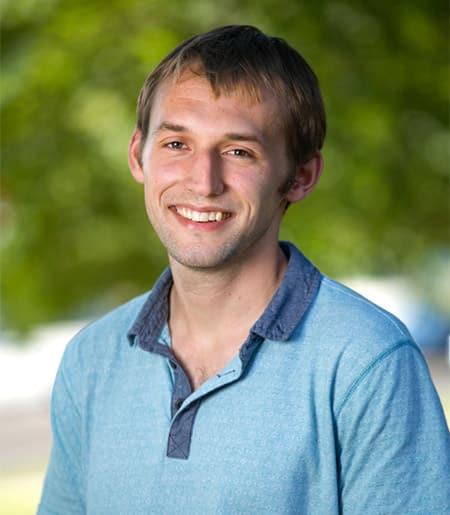
Tim Twardzik is a Researcher at the Chair of Integrated Systems within the School of Computation, Information and Technology at the Technical University of Munich . His work focuses on hardware acceleration techniques for Linux systems, particularly in optimizing inter-process communication (IPC), event notification mechanisms, and synchronization primitives through FPGA-based and MPSoC architectures. His research explores: Hardware-assisted scheduling for Linux Low-latency system-on-chip (SoC) design User-space event notification acceleration Thread synchronization mechanisms MPSoC-based embedded computing Performance analysis through simulation frameworks Publications highlight his contributions to hardware acceleration trends, with a focus on improving operating system primitives (e.g., futex, epoll) through custom silicon implementations.
Nectarios Koziris is a Professor at the Department of Computer Science , National Technical University of Athens (NTUA) , and former Dean of the School of Electrical and Computer Engineering . His research focuses on Parallel and Distributed Systems , Computer Architecture , and Cloud Computing . Key Research Themes: Compiler-OS-Architecture Interaction, Datacenter Hyperconvergence, Sparse Matrix Optimization, Quantum Computing, FPGA Virtualization Leadership: Founder of ~okeanos (Europe's largest public Cloud IaaS), Co-founder of GFOSS , Member of IEEE Computer Society Greece, Advisor to Arrikto Inc. His work has led to over 180 publications with 5800+ citations (h-index 33) , including two Best Paper Awards (IPDPS 2001, CCGRID 2013) and Intel Recognition (2015). He has supervised 12 PhD students and participated in 15+ EU projects as coordinator or consortium partner. Scientific Leadership: Program Co-Chair for Europar 2012 , Organizer for IPDPS , ICPP , SC conferences, and active member in Cloud Computing Expert Groups for the European Commission.
Edwin Barnes is a Professor in the Department of Physics at Virginia Tech, affiliated with the College of Science and the Virginia Tech Center for Quantum Information Science and Engineering (VTQ). He holds the Roger H. Moore and Mojdeh Khatam-Moore Dean's Faculty Fellow title. His research focuses on theoretical condensed matter physics and quantum information science, with particular emphasis on quantum computing, control, communication, algorithms, and many-body dynamics. He earned his Ph.D. in Physics from the University of California, San Diego. His work bridges mathematical constructs with experimental quantum systems, addressing challenges in quantum error correction, quantum repeaters, and scalable quantum architectures. Barnes leads the Barnes group, which explores topics like dynamically corrected gates, photonic graph states, and quantum resource optimization. Recent research highlights include developing adaptive variational quantum algorithms (e.g., ADAPT-VQE), improving quantum gate fidelity in superconducting and spin qubit systems, and analyzing quantum thermalization in driven systems. His publications span top journals like Physical Review X , npj Quantum Information , and PRX Quantum . Key awards include the Dean’s Faculty Fellowship. Barnes collaborates widely, contributing to national initiatives in quantum education and workforce development. His lab’s work on quantum control and error mitigation aims to advance practical quantum technologies.
Tanvir Arafin serves as an Assistant Professor in the Department of Cyber Security Engineering at George Mason University, where his research focuses on hardware security and trust mechanisms for emerging computing platforms. With publications in premier venues including IEEE Transactions on Very Large Scale Integration Systems, IEEE Transactions on Computers, and ACM International Conference on Computer-Aided Design, he addresses critical security challenges in next-generation systems through rigorous hardware-software co-design approaches. His research portfolio spans Hardware Security, Trusted Computing, and IoT Security, with specialized expertise in Side-Channel Attacks and Secure Hardware Design. Dr. Arafin investigates electromagnetic side-channel vulnerabilities in O-RAN networks, develops countermeasures for autonomous vehicle cybersecurity, and pioneers RRAM-based security solutions for memory-constrained devices. His work bridges theoretical security models with practical implementations, emphasizing real-world applicability in edge computing environments and autonomous navigation systems. Current projects explore machine learning integration for anomaly detection in connected vehicles and secure acceleration of cryptographic operations. Analysis of Dr. Arafin's 2022-2025 publications reveals strategic focus areas: electromagnetic fingerprinting for radio units in O-RAN (2025), spatial acceleration of Kolmogorov-Arnold Networks (2025), and NTT-based cryptography accelerators (2024). His research demonstrates consistent innovation in securing autonomous navigation systems and edge devices, with emerging work on in-memory computing architectures using resistive memory technologies. Key trends include hardware-centric defense against model inversion attacks, voltage overscaling for lightweight authentication, and robust multi-robot coordination in dynamic environments. Scientific Awards: No scientific awards, fellowships, or medals were documented in the source materials. Dr. Arafin leads significant collaborative research, including the NSF CISE-MSI grant (DP: CNS) for edge-based robust multi-robot systems. His educational initiatives feature Capture-the-Flag competitions targeting underrepresented students in cybersecurity. Current grant activities emphasize practical security solutions for autonomous navigation, multi-robot coordination, and IoT edge devices, with demonstrated focus on translating research into deployable countermeasures for real-world threats in dynamic operational environments.
Denny Yu is an Associate Professor at the Edwardson School of Industrial Engineering, Purdue University. His work bridges human factors, neuroergonomics, and healthcare safety through advanced sensor systems and AI. Primary Affiliation : Edwardson School of Industrial Engineering, Purdue University Research Themes : Surgical ergonomics, autonomous vehicle human factors, cognitive workload assessment, multimodal physiological sensing Dr. Yu's research focuses on neuroergonomics and human-robot interaction , particularly in surgical and transportation contexts. His team develops sensor-based systems for workload monitoring, including: EEG-eye tracking fusion for situation awareness Wearable exoskeletons for surgical posture support Computer vision tools for lifting task risk analysis Smart infusion pump usability frameworks AI-driven surgical coaching systems Recent publications emphasize deep learning applications in soft tissue deformation estimation and real-time adaptive systems for robotic surgery augmentation. His work spans both occupational health (veterinary surgeons, airport workers) and medical device innovation domains.
Marius Paraschivoiu is a Professor in the Department of Mechanical, Industrial and Aerospace Engineering at Concordia University, within the Faculty of Engineering and Computer Science. His research focuses on computational fluid dynamics (CFD), finite element methods, and aerodynamic simulations with applications to wind energy systems, acoustic simulations, and turbulence modeling. He holds a PhD in engineering and has expertise in parallel computing and urban wind energy potential assessment. His work emphasizes optimizing vertical axis wind turbine (VAWT) performance in urban environments, including roof-mounted installations, wake interactions, and turbulence effects. Paraschivoiu has extensively studied the impact of building geometry, corner placements, and fluid-structure interactions on turbine efficiency. His CFD-based analyses address challenges like mesh adaptation, multiphase flows, and real-gas modeling for hydrogen systems. Key research themes include improving wind energy harvesting through innovative turbine designs, mitigating aerodynamic noise, and enhancing flow uniformity in complex configurations. Paraschivoiu’s contributions span over 50 peer-reviewed articles, with recent focus on urban microclimate effects, VAWT array optimization, and turbine blade morphing concepts. He maintains an active research website at Concordia University and collaborates on applied projects involving CFD validation and industrial gas turbine combustor emissions.
W. Michael Petullo is an Assistant Professor in the Department of Comp Sci & Comp Engineering at the University of Wisconsin-La Crosse. He holds a Ph.D. in Computer Science from the University of Illinois at Chicago, and prior academic degrees from DePaul University and Drake University. Before academia, he served a 20-year career in the Army, including roles teaching in the Department of Electrical Engineering and Computer Science and leading cyber operations software development. His research focuses on software and network security, operating systems, and open-source software development. Education: Ph.D. in Computer Science, University of Illinois at Chicago M.S. in Computer Science, DePaul University B.S. in Computer Science, Drake University Research Interests: His work emphasizes secure operating system design, network security protocols, and open-source tool development. Recent efforts include the Aquinas Learning System for courseware automation and PivotWall for SDN-based information flow control. He also explores user behavior in cybersecurity contexts and educational applications of cyber defense exercises. Teaching: Currently instructs CS120 (Software Design I), CS410/510 (Open Source Development), and CS455/555 (Fundamentals of Information Security). Past courses include operating systems concepts and secure software development. Labs & Projects: Maintains the Aquinas Learning System project and contributes to Ethos operating system research. Active in developing minimal-latency networking solutions and secure kernel interfaces.
François Brémond is a Research Director (DR1) at INRIA Sophia Antipolis, where he leads the STARS research team, which he founded on January 1, 2012. He was previously head of the PULSAR team starting September 2009. He is also a co-founder of the CoBTeK team at Nice University in collaboration with Nice Hospital, focusing on behavioral disorders in elderly patients with dementia. His research is centered on dynamic scene interpretation using video and sensor data, with applications in surveillance, healthcare, transportation, and ambient intelligence. Research Interests: Computer Vision: video processing, object detection and tracking, motion analysis, pattern recognition Cognitive Vision: video understanding, scene understanding, event recognition, behavior analysis, multi-sensor fusion, multimedia interpretation Machine Learning: deep learning architectures, self-attention, knowledge distillation, contrastive learning, self-learning, lifelong learning, knowledge-based systems, spatio-temporal reasoning Autonomous Systems: real-time systems, system evaluation, parameter tuning, system design, 3D visualization His work bridges low-level pixel data with high-level semantic behavior modeling, enabling systems to detect and interpret complex human and vehicle activities in real-world environments. Applications include crowd monitoring, fraud detection, airport operations, homecare for the elderly, and biological monitoring. He has authored or co-authored over 200 scientific papers and has (co-)supervised 18 PhD theses. He has participated in 12 European projects (e.g., FP6, FP7), 12 French national projects (ANR, DGE), and numerous industrial collaborations with companies such as Thales, SNCF, RATP, STMicroelectronics, and Alstom. He also serves as an expert reviewer for ANR and the European Commission. Scientific Leadership and Technology Transfer: Co-founder of Keeneo (acquired by Digital Barriers), Ekinnox, and Neosensys — startups in intelligent video monitoring and business intelligence Reviewer for top-tier journals (PAMI, CVIU, AIJ) and conferences (CVPR, ICCV, AVSS) Contributor to the ARDA workshops on video event ontology He has taught numerical classification at Nice University and video understanding at a Master’s level engineering school. His research program emphasizes generic, scalable systems for behavior modeling and long-term activity mining. Research Projects: Stress ID dataset (ECG and video for stress detection) Toyota Smarthome (Activities of Daily Living) SafEE2 (Homecare for elderly with autonomy loss) Praxis dataset (RGB-D upper-body gestures) GER'HOME, CARETAKER, RATP Project, ETISEO, AVITRACK, CASSIOPEE, ADVISOR, PASSWORDS
Per Gunnar Kjeldsberg is a Professor at the Department of Electronic Systems, Norwegian University of Science and Technology (NTNU), and currently serves as acting head of the institute. His research focuses on embedded heterogeneous multi-processor systems , particularly in multimedia and digital signal processing applications . He has led and participated in numerous national and international projects, including EU Horizon 2020 initiatives like READEX (as work package leader) and Tulipp (as principal researcher), and supervises the MSCA-IF project Palmera . Kjeldsberg is a Senior Member of IEEE and part of the European Network of Excellence HiPEAC . Education : Sivilingeniør (MSc) in Electrical Engineering (1992), PhD (2001) from Norwegian Institute of Technology (NTH)/NTNU His work spans energy-efficient computing , radiation-hardened memory design for space applications, and dynamic hardware management . Publications include co-authoring three books and over 150 peer-reviewed articles in journals and conferences. He leads the Circuit and Radio Systems group and drives a strategic NTNU initiative on Energy Efficient Computing Systems . Kjeldsberg has held visiting researcher roles at imec (Belgium), University of California, Irvine, imec Netherlands (Holst Centre), and University of New South Wales (Australia). Scientific Awards : Senior Member of IEEE Mikroelektronikkprisen (2006–2015)
Professor Arokia Nathan is affiliated with the Department of Engineering at the University of Cambridge , where he holds the Chair in Photonic Systems and Displays. His work bridges semiconductor device engineering, flexible electronics, and intelligent systems. Specializes in Thin-Film Transistors (TFTs) for displays and sensors Key contributions to digital microfluidics and neuromorphic computing Focus on ultra-low-power and high-frequency CMOS circuits Advances in oxide semiconductor materials and hybrid electronics Recent publications highlight trends in neuromorphic perception , flexible battery technologies , and RF/wireless communication systems . His research also emphasizes bioinspired robotics , wearable electronics , and intelligent IoT devices .
Cécile Münch-Alligné is a Professor in Hydraulic Energy at the University of Applied Sciences and Arts Western Switzerland (HES-SO) in Sion, where she serves as the Head of the Hydroelectricity Research Group and the Renewable Energy Program. She leads the Hydro Alps Lab, which conducts applied research in hydropower combining experimental and numerical approaches. Her work focuses on enhancing the flexibility of both small and large hydropower plants, with particular emphasis on adapting these systems to the evolving energy landscape and integration of renewable energy sources. Her educational background includes a BSc in Energy and Environmental Techniques, an MSc in Engineering, and a BSc in Industrial Systems, all from HES-SO Valais-Wallis. Her research spans multiple domains within hydraulic engineering and renewable energy systems, with particular expertise in CFD simulation, numerical methods, and hydraulic machine design. Münch-Alligné's research interests primarily center around improving hydropower flexibility through innovative approaches such as hydraulic short-circuit operating modes, variable speed operation, and energy recovery systems in water networks. She investigates both large-scale pumped storage power plants and micro-hydropower systems for urban water networks, with a strong focus on practical implementation and commercialization of research findings. Her work bridges theoretical modeling with experimental validation to address real-world challenges in the energy transition. Her research has been published extensively in leading journals, covering topics from Pelton turbine dynamics and Francis turbine vortex analysis to micro-turbine implementations in drinking water networks. The publications reveal a clear trend toward enhancing operational flexibility of hydropower systems to better integrate with intermittent renewable energy sources, with increasing emphasis on practical demonstration projects and commercial applications. As Principal Investigator, she has led multiple significant research projects including the SCCER 4 WP 3.2.0 2017-2020 (Supply of Electricity), Hydrolienne pour canaux artificiels Centrale de Lavey, and SOLUTION DE TRANSFERT D'ENERGIE PAR POMPAGE-TURBINAGE A PETITE ECHELLE. These projects, totaling over 2 million CHF in funding from sources including CTI, OFEN, and industrial partners, demonstrate her ability to secure substantial research funding and collaborate effectively with both academic and industry partners. Münch-Alligné leads the Hydro Alps Lab research team, which includes numerous researchers such as Steiner Amandus, Walpen Olivier, Vaccari Aldo, and others. Her collaborative approach extends to partnerships with institutions like Stahleinbau GmbH and The Ark Energy, facilitating the transfer of knowledge from research to industry application. The lab's work spans from fundamental fluid dynamics research to full-scale demonstration projects, creating a comprehensive pipeline from theory to practical implementation.
Prof. Dr. Andreas Herkersdorf is a Full Professor and Chair of Integrated Systems at the Technical University of Munich (TUM) School of Computation, Information and Technology. His research focuses on application-specific multicore processors (MPSoC), FPGA-based prototyping, fault-tolerant systems, and energy-efficient architectures, with applications in IP packet processing, automotive systems, and visual computing. He has received multiple IBM innovation awards and serves on editorial boards including the DFG Review Board for computer architecture. Education: Dipl.-Ing. Electrical Engineering (TUM, 1987), Dr. techn. Electrical Engineering (ETH Zurich, 1991) Research: MPSoC architectures, autonomic computing, NoC resilience, FPGA acceleration, and self-optimizing systems. Awards: IBM Master Inventor (1998), IBM Outstanding Technical Achievement Award (2001), multiple IBM Innovation Achievement Awards (1996-2003) His recent publications emphasize hardware/software co-design, machine learning integration for runtime optimization, and network-on-chip innovations. He collaborates on projects involving 6G systems, smartNICs, and automotive communication protocols.
Professor Sophia Drossopoulou is a Professor of Programming Languages in the Department of Computing at Imperial College London, part of the Faculty of Engineering. Her affiliations include the Centre for Cryptocurrency Research and Engineering and the Sound Programming Languages research group. She holds a visiting researcher position at Microsoft Research (UK) from May 2019 to May 2020. Her research focuses on foundational programming language design and formal methods, emphasizing concurrency, type systems, and program verification. Key areas include concurrent program reasoning (e.g., TaDA framework), memory management (reference capabilities, garbage collection), and secure systems (smart contracts, cyber-physical systems). She explores practical language extensions for performance optimization (e.g., cache locality) while maintaining safety guarantees through formal verification techniques. Her work spans theoretical contributions (formal semantics, logical frameworks) and applied systems (compilers, runtime verification tools like Zeno). Recent trends show strong engagement with actor-based models (Pony language), digital twins, and cybersecurity challenges in modern software systems. Awards and recognitions are not explicitly listed in the provided text, but her extensive publication record in top venues (ECOOP, POPL, TOPLAS) indicates academic impact. Her advising focuses on graduate students in systems programming and formal methods, though specific student names are not mentioned here. Labs and collaborations involve the Sound Programming Languages group at Imperial College, emphasizing interdisciplinary work between formal methods and practical language implementation. Current projects include improving concurrency semantics and verifying complex systems through compositional reasoning techniques.
Alex Townsend is an Associate Professor of Mathematics at Cornell University, affiliated with the College of Arts and Sciences. He holds the Stephen H. Weiss Junior Fellowship and has been recognized for both research and teaching excellence. His research focuses on numerical analysis, scientific computing, and theoretical aspects of deep learning, with contributions to spectral methods, low-rank techniques, and computational algebraic geometry. Education: Townsend earned a DPhil (PhD) in Mathematics from the University of Oxford in 2014. Research Interests: Townsend's work spans several areas: novel spectral methods for differential equations, low-rank matrix and tensor techniques, theoretical foundations of deep learning, and computational algebraic geometry. His research emphasizes developing fast, accurate, and robust numerical algorithms with applications in science and engineering. Teaching & Mentoring: Townsend is a dedicated educator, having taught courses at MIT and Cornell on topics ranging from linear algebra and numerical analysis to advanced graduate-level subjects like kernel-based learning and top-ten algorithms of the 20th century. He has mentored numerous PhD students and postdocs, many of whom now hold academic and industry positions. Awards & Honors: 2022 Stephen H. Weiss Teaching Award 2022 Simons Fellowship in Mathematics 2018 SIAG/LA Early Career Prize 2015 Leslie Fox Prize in Numerical Analysis Grants & Funding: Townsend has secured significant funding, including an NSF CAREER grant (2021), to support his work on operator learning and spectral methods. Labs & Collaborations: While not tied to a specific lab, his research frequently intersects with computational mathematics and machine learning communities. He collaborates widely, contributing to open-source tools like Chebfun and Diskfun.
Massimo Poncino is a Full Professor at the Department of Control and Computer Science (DAUIN) within the Faculty of Engineering at Politecnico di Torino. He serves as Scientific Advisor for the STMicroelectronics partnership and coordinates basic engineering subjects. A Senior Member of IEEE since 2012 and Fellow since 2012, he has served on editorial boards for IEEE Transactions on Computer-Aided Design, IEEE Design & Test of Computers, and ACM Transactions on Design Automation. Education: Laurea in Electronic Engineering (1989) and PhD in Computer and Systems Engineering (1993) from Politecnico di Torino Academic Career: Visiting Scientist University of Colorado (1993-1994), Researcher at Politecnico di Torino (1995-2001), Associate Professor at University of Verona (2001-2004), Full Professor at Politecnico di Torino (2006-present) His research focuses on energy-efficient digital systems , including design automation of SoCs, hardware-aware AI, battery management, cyber-physical systems, and embedded systems. Recent publications highlight advancements in digital twins for batteries , low-power neural network deployment , and IoT privacy . Scientific Awards: Recognition of Service Award - ACM (2013) Certificate of Appreciation - IEEE Circuits and Systems Society (2006, 2008, 2009) IEEE Fellow (2012-) Research Involvement: EU H2020, VI/VII Framework Programs evaluator Scientific Director for projects: Approxim@ction, EMBAI, DISLO-MAN, DAMASCO Member of EDA research group Teaching: Course director for Energy Management for IoT (2019-2025) Lecturer for Computer Science courses (2003-2025)