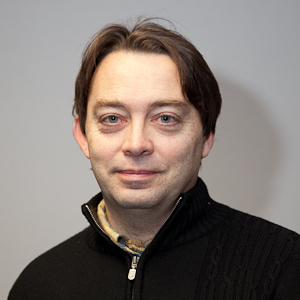
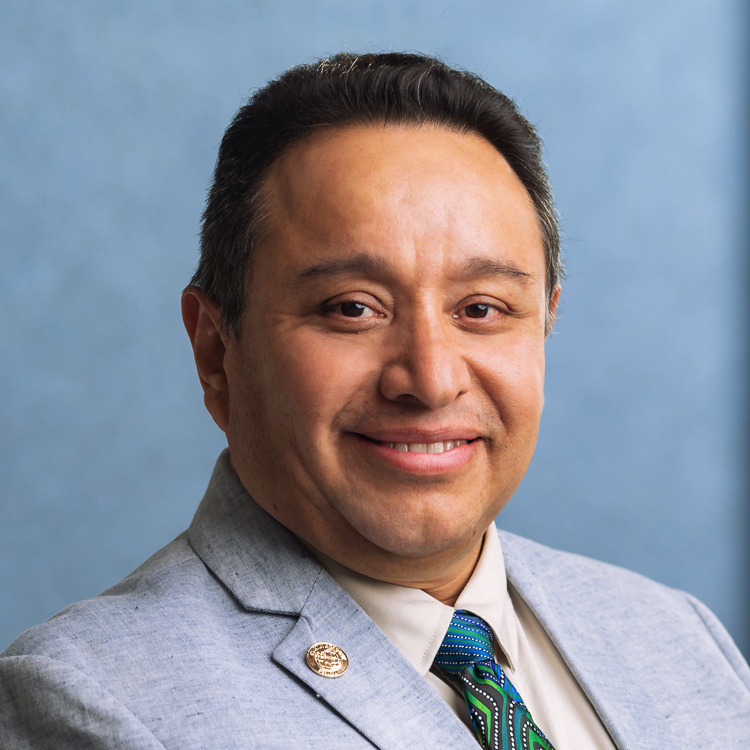
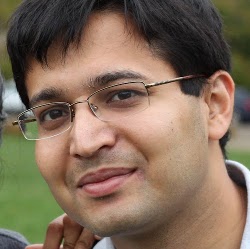
Dr. Park Ki-ho is an Associate Professor at the Department of Computer Engineering, Sejong University. His research focuses on computer architecture, embedded systems, IoT systems, and low-power design methodologies. Academic Background: PhD in Computer Science from Yonsei University Professional Experience: Senior Engineer at Samsung Electronics, Post-Doctoral Research Associate at University of Utah Research Interests: Develops innovative solutions for sensor hub design , memory systems , and machine learning hardware acceleration . Key areas include: Non-Volatile Memory (NVM) management 3D Integrated Circuit memory bandwidth optimization Intelligent Edge Device architectures Hybrid Cache Architectures Model Compression Techniques On-Device AI Processing Recent Publications demonstrate expertise in in-memory acceleration , sparse matrix representation , and large language model inference . His work bridges theoretical advancements with practical implementations for IoT and AI applications.
Adrian Sampson is an Associate Professor in the Department of Computer Science at Cornell University, where he is part of the Computer Systems Laboratory and the programming languages group. He joined Cornell in 2016 as an Assistant Professor and was promoted to Associate Professor in 2022. Prior to Cornell, he was a Visiting Researcher at Microsoft Research (2015-2016). He received his Ph.D. from the University of Washington in 2015 under advisors Luis Ceze and Dan Grossman, with a dissertation on Hardware and Software for Approximate Computing. His research focuses on breaking down abstraction barriers and rethinking the hardware-software interface. He is particularly known for his work on approximate computing, which explores how computers can be more efficient by allowing them to make controlled mistakes. He leads the Capra research group at Cornell, which investigates programming languages and computer architecture. Sampson's recent publications demonstrate a strong focus on hardware acceleration, FPGA programming, compiler design, and programming language theory. His work often bridges the gap between high-level programming abstractions and low-level hardware implementation, with particular attention to predictability, verification, and energy efficiency. He has made significant contributions to geometry types for graphics programming, timeline types for modular hardware design, and virtual machines for FPGA programming. Among his notable recognitions are the IEEE TCCA Young Computer Architect Award (2021), NSF CAREER award (2019), and multiple Distinguished Artifact Awards at major conferences. He has advised numerous Ph.D. students who have gone on to positions at institutions like Wellesley College, Northwestern University, and Amazon. Sampson is actively involved in academic service, serving on program committees for major conferences including PLDI, ASPLOS, and ISCA. He has also held leadership roles such as ACM SIGARCH Board of Directors (2023-2025) and SIGPLAN Information Director. His teaching at Cornell includes courses on computer systems, programming languages, and advanced compilers.
Tanguy Risset is Professor in the Telecommunication Department at Insa-Lyon, specializing in embedded systems, compilation, and software-defined radio. As head of Inria's Socrate project, he coordinates research on cognitive radio networks integrating signal processing, communications, and computer science. His research develops FPGA-based solutions for real-time audio processing and wireless systems, emphasizing compilation techniques for hardware acceleration. Recent publications focus on low-latency audio transmission, spatial sound implementation, and open-source toolchains for FPGA audio DSP.
Maurizio Valle serves as Full Professor and PhD Program Coordinator at the Department of Naval, Electrical, Electronic and Telecommunications Engineering (DITEN) of the University of Genoa. His teaching portfolio includes graduate-level courses such as Digital Systems and Electronic Devices for the Master's program in Electronic Engineering, with active instruction scheduled through the 2025-2026 academic year. His research program centers on embedded machine learning systems for tactile sensing applications, with particular emphasis on FPGA implementations of neural networks for real-time sensor data processing. Key focus areas include neuromorphic engineering approaches to tactile texture classification, PVDF sensor analysis for slippage detection, and hardware-efficient implementations of convolutional networks for hand-gesture recognition in prosthetic systems. This work bridges electronic engineering, robotics, and biomedical applications through the development of electronic skin technologies and sensor fusion methodologies. Analysis of his 15 most recent publications (2024-2025) reveals a concentrated research trajectory in real-time embedded solutions for tactile perception systems. Dominant themes include hardware acceleration of neural networks on FPGA/microcontroller platforms, biomimetic sensor design inspired by cutaneous mechanoreceptors, and practical implementations for the Hannes prosthetic hand. The publications demonstrate methodological rigor in sensor characterization while prioritizing computational efficiency for resource-constrained embedded deployment. As PhD Program Coordinator at DITEN, Professor Valle oversees doctoral research in electronic engineering disciplines, mentoring students in specialized areas including embedded AI systems and tactile sensor development. His academic leadership extends to curriculum development for graduate engineering programs at the University of Genoa. His laboratory work focuses on integrated electronic skin systems for prosthetic applications, featuring custom sensor arrays, embedded processing units, and neuromorphic computing architectures. Current projects involve multimodal sensory feedback systems for upper-limb prostheses and real-time object recognition frameworks using wearable sensor gloves, indicating active collaboration with biomedical engineering and robotics research groups.
Michael Kirkedal Thomsen is an Associate Professor in the Department of Informatics at the University of Oslo's Faculty of Mathematics and Natural Sciences. His office is located in room 10461 at Gaustadalléen 23B, 0373 Oslo, with postal address PO Box 1080 Blindern 0316 Oslo. His research focuses on programming languages and security, with particular expertise in reversible computing and programming language theory. Thomsen's research spans multiple interconnected domains within computer science. His primary focus is on reversible computing - investigating how to design programming languages, compilers, and hardware that minimize energy consumption through reversible operations. He has developed Jeopardy, an invertible functional programming language, and has made significant contributions to reversible circuit design, reversible arithmetic operations, and energy-efficient computation. His work bridges theoretical computer science with practical hardware implementation concerns, particularly examining how reversible programs behave on conventional irreversible hardware. An analysis of his recent publications reveals a clear evolution in his research trajectory. Starting with foundational work on reversible circuits and arithmetic operations (2008-2014), he has progressed toward higher-level programming language constructs for reversible computation. His 2022-2024 publications demonstrate a shift toward practical applications, educational tools, and energy analysis of reversible systems. The recurring themes across his work include invertibility, energy efficiency, formal methods, and the relationship between high-level programming abstractions and low-level hardware implementation. While specific grant information isn't detailed in the available text, Thomsen's research program clearly involves significant collaboration with colleagues at the University of Oslo and international partners. His publications show consistent work with researchers including Holger Bock Axelsen, Robert Glück, Joachim Tilsted Kristensen, and Robin Kaarsgaard across multiple years, suggesting ongoing collaborative projects and likely sustained funding support. Though not explicitly stated in the available information, Thomsen's work on reversible processor architecture, Jeopardy programming language, and energy analysis strongly suggests involvement with research groups focused on energy-efficient computing, programming language design, and potentially quantum-inspired computing architectures at the University of Oslo's Department of Informatics.
Julián Viejo Cortés is an Associate Professor at the University of Seville, affiliated with the Department of Electronic Technology in the School of Computer Engineering. His professional focus revolves around hardware design, embedded systems, and microelectronics, with notable contributions to secure IoT devices, FPGA-based systems, and time synchronization protocols. He has led or participated in multiple research projects such as USECHIP: Chair in Microelectronics and NanoFS: a hardware-oriented file system . Research Interests: - IoT Security and Embedded Systems - FPGA and Hardware Design Methodologies - Time Synchronization Protocols - Low-Power CMOS Circuit Design - Membrane Computing and Formal Systems - System-on-Chip (SoC) Integration His publications emphasize practical hardware solutions, including secure boot mechanisms ( IRIS ), efficient time server cores, and energy-efficient CMOS gate designs. He has directed doctoral research, such as Juan Quirós Carmona's thesis on membrane computing hardware implementations. Grants & Projects: USECHIP: Chair in Microelectronics (TSI-069100-2023-001) Advanced Initiation Systems for IoT (TIN2017-89951-P) Incentive Grants for TIC-204 Research Group (2017–2010) Labs/Teams: Active contributor to the Digital Research and Development group, focusing on innovative embedded systems and FPGA applications.
Associate Professor Cesar Ortega-Sanchez is affiliated with Curtin University's School of Electrical Engineering, Computing and Mathematical Sciences (EECMS), where he holds the role of Associate Professor since 2005. He has served in leadership roles including Academic Lead of the Engineering Foundation Year (2015-2022), Associate Dean of Teaching and Learning (2013-2014), and Chair of IEEE WA Section (2016-2017). His expertise spans bio-inspired systems, embedded systems, robotics, and engineering education. Education: BEng (Hons) from the Metropolitan Autonomous University (Mexico), MSc from Brunel University (UK), and PhD from the University of York (UK). Specializes in curriculum design, assessment methodologies, and promoting student employability. Mentor of Curtin Robotics Club and IEEE Curtin Student Branch since 2009. Research Interests: Embedded systems, bio-inspired architectures, educational pedagogy, and indigenous content integration in engineering curricula. Over 60 publications in areas like FPGA-based assistive technologies, smart home systems, and energy storage monitoring. Awards include the 2015 Australian Office of Learning and Teaching Citation and M.K. Stott Prize (2000). Teaching roles include leading ELEN1000 (Electrical Systems) and ENGR1000 (Engineering Connections), with a focus on innovative teaching methods like project-based learning (e.g., 'Crazy Machine' lab projects). Active in educational committees at university and national levels.
Brice Goglin is a Researcher at Inria and leads the TADaaM Inria team at the Inria Bordeaux - Sud-Ouest Research Centre. He is affiliated with the Laboratoire Bordelais de Recherche en Informatique (LaBRI) and the University of Bordeaux. His primary research focuses on modeling hierarchical and multicore platforms, I/O in NUMA systems, high-performance communication, and memory management for parallel architectures. University of Bordeaux Inria Bordeaux - Sud-Ouest Research Centre LaBRI (CNRS UMR 5800) Satanas Team Research Interests : His work centers on optimizing hardware locality in high-performance computing (HPC) through tools like hwloc and KNEM . He explores memory migration, cache-aware models, and communication strategies for NUMA and heterogeneous architectures, collaborating with institutions like AMD, Intel, Oak Ridge National Lab, and RWTH Aachen University. Major projects include the H2M ANR-DFG and TEXTAROSSA European initiatives. Scientific Awards : He received the 2024 Inria – Académie des sciences – Dassault Systèmes Innovation Award for his contributions to HPC software. His paper on adaptive MPI multirail tuning won the Best Paper Award at EuroMPI 2010. Advising & Collaborative Work : He supervises PhD students such as Méline Trochon, Charles Goedefroit, and Clément Gavoille. His software projects, including hwloc (which helps systems like Frontier achieve exaflop performance), are widely recognized. He actively participates in program committees for conferences like SuperComputing, EuroMPI, and ISC, and contributes to the Open MPI consortium alongside Intel, Cisco, and AMD.
Adam Chlipala is the Arthur J. Conner Professor of Computer Science at the Massachusetts Institute of Technology (MIT). His work bridges programming languages, formal methods, computer systems, and security, with a focus on building practical systems verified end-to-end using the Coq proof assistant. He has advised numerous PhD and Master’s students and leads research into verified compilers, hardware-software stacks, and dependent types for real-world applications through his startup Nectry. Undergraduate: Carnegie Mellon University, 2003 PhD: University of California, Berkeley, 2007 Postdoc: Harvard University, through 2011 His research revolves around verified compilers , hardware-software co-verification , and dependent types for enterprise software . Recent work explores high-performance parallel computing stacks and end-to-end machine-checked proofs for cryptographic systems. His publications span conferences like PLDI, POPL, and ICFP, emphasizing formal verification, optimization, and security. Current research trends highlight verified cryptographic code , concurrent hardware verification , and DSLs with formal guarantees . His students work on topics from state machines to network switches and parallel computing frameworks. Coq Proof Assistant Verified Compilation Cryptographic Security Dependent Types Hardware Verification High-Performance Computing Chlipala has served on program committees for CoqPL, Dafny, CPP, and PLDI. He co-created the MIT course Formal Reasoning About Programs and authored two books: Certified Programming with Dependent Types and Formal Reasoning About Programs .
David Christopher Balderas-Silva serves as a Research Professor at Tecnológico de Monterrey's Institute for Advanced Materials for Sustainable Manufacturing in Mexico City. His interdisciplinary work bridges biomedical engineering, computer science, and advanced manufacturing with emphasis on sustainable industrial solutions and accessibility. His educational credentials include: B.Eng. in Mechatronics Engineering from Universidad Panamericana MSc in Biomedical Engineering from Delft University of Technology PhD in Engineering Sciences from Tecnológico de Monterrey Dr. Balderas-Silva's research centers on computer vision , artificial intelligence , and brain-computer interfaces , with applications in healthcare accessibility, robotics, and Industry 4.0. His work on EEG-based speech decoding and 3D-printed assistive devices demonstrates commitment to inclusive technology, while metaheuristic optimization research advances sustainable manufacturing. Recent publications reveal strong focus on neural signal processing (40% of 2022-2024 output) and computer vision for robotics (30%), with growing emphasis on UN Sustainable Development Goals related to disability inclusion and clean energy. His recognition includes: Mexican Researcher Certification - Level 1 As a member of the Mexican National Researchers System, he has co-authored over 20 publications and multiple inventions. His Education 4.0 pedagogy initiatives for machine learning and neurotechnology training highlight academic leadership. While specific grant details aren't provided, his Institute affiliation indicates active participation in collaborative research addressing sustainable manufacturing and assistive technology gaps. He contributes to the Institute for Advanced Materials for Sustainable Manufacturing through projects integrating brain-computer interfaces with industrial robotics, developing low-cost eye-tracking systems, and optimizing PCB manufacturing via digital twins. His lab work emphasizes cross-disciplinary teams focused on translating AI research into practical solutions for Industry 4.0 challenges.
Sebastian Köhler is a Research Fellow and Postdoctoral Research Associate in the Department of Computer Science at the University of Oxford, leading research in wireless and physical-layer security within the Systems Security Lab. His work spans critical infrastructure security for space systems, autonomous vehicles, and electric vehicles. He holds a DPhil from the University of Oxford (2021), an MSc in Computing & Security from King’s College London (2018, best performance award), and a BEng in Computer Science from Technical University of Applied Sciences Würzburg-Schweinfurt, Germany. His doctoral work exposed vulnerabilities in EV charging protocols, earning him the EPSRC Doctoral Prize. Research interests focus on system-level security challenges including satellite communication resilience, embedded systems vulnerabilities, and wireless protocol weaknesses. His work combines theoretical analysis with practical attacks against real-world systems like EV charging stations and spacecraft communication. Key contributions include揭露电动汽车充电协议漏洞、卫星通信指纹攻击防御、以及空间系统的自适应编码安全性评估。His articles highlight interdisciplinary approaches bridging hardware-software interfaces and cryptographic protocols. Advising and grants: Primary investigator on EPSRC-funded projects exploring EV charging security. Collaborates with automotive industry partners on embedded system hardening. Active in developing biometric authentication for charging infrastructure (CableAuth). Labs/teams: Leads the Systems Security Lab’s embedded systems security subgroup. Collaborates closely with Oxford’s Cyber Physical Systems group and industry partners like Porsche AG.
Garrett S. Rose is a Professor and Department Head in the Department of Electrical Engineering and Computer Science at the University of Tennessee, Knoxville. His research focuses on nanoelectronic circuit design, neuromorphic computing, and hardware security. He holds a PhD in Electrical Engineering from the University of Virginia (2006) and has held roles at AFRL and NYU Polytechnic School of Engineering. His work explores emerging nanoscale devices like memristors for neuromorphic systems and security applications. Education: BS in Computer Engineering (Virginia Tech, 2001), MS and PhD in Electrical Engineering (University of Virginia, 2003/2006). His research areas include memristor-based neuromorphic architectures, hardware security primitives, and nanoelectronic device modeling. He leads the SENECA Research Group, which develops neuromorphic systems for applications like robotics and edge computing. Research highlights include memristive neural networks, PUF-based security systems, and cross-disciplinary projects funded by agencies like AFRL and DARPA. His recent work emphasizes co-design methodologies for neuromorphic hardware and applications such as spiking neural network implementations and sensor-integrated systems. He has advised multiple postdoctoral and graduate researchers and collaborates on grants related to neuromorphic computing and hardware security. His lab develops tools like the DANNA neuromorphic architecture and the RAVENS neuroprocessor, emphasizing real-world applications through hardware-software integration.
Dominik Haneberg serves as a Senior Researcher at the Institute for Software & Systems Engineering within the Faculty of Applied Computer Science at the University of Augsburg. His work spans formal methods, software architecture, and IT security with a focus on verified systems. His educational background includes a Diploma in Informatics from the University of Ulm (2000) and a Doctorate in Informatics (2006). His research centers on software quality assurance , formal verification techniques , and security-critical systems , particularly for electronic payment applications and flash memory systems. His methodology emphasizes mathematically provable correctness in software design. Haneberg's publication trends reveal consistent focus on formal verification of storage systems (flash file systems, UBIFS), security protocols for electronic purses (Mondex case studies), and educational approaches to agile methodologies . His work bridges theoretical formal methods with industrial applications in embedded systems. Awards include: Award of the Swabian Economy 2007 (IHK Schwaben) Best Paper Award at Second International Conference on Software Engineering Advances 2007 Administrative contributions include serving on the faculty board, coordinating the elite Master's program in Software Engineering, student counseling for Computer Science in Engineering, and membership in multiple admission and examination boards. He has taught courses ranging from Formal Methods to Software Engineering and supervised numerous student theses. Haneberg works within the Institute for Software & Systems Engineering directed by Prof. Wolfgang Reif, contributing to both fundamental and applied research in software engineering while developing verification tools like KIV for industrial applications.
Rodolfo Zunino serves as a Full Professor in the Department of Naval, Electrical, Electronic and Telecommunications Engineering (DITEN) at the University of Genoa. His teaching portfolio includes core electronics courses across multiple degree programs including Master's in Electronic Engineering and undergraduate programs in Electronics Engineering and Information Technology. His research focuses on the intersection of embedded systems and neural networks, with particular emphasis on hardware-aware optimization for resource-constrained environments. Key areas include traffic classification for cybersecurity, affordance segmentation for robotics, energy-efficient structural health monitoring, and in-sensor computing architectures. His work consistently addresses the Pareto optimization between computational efficiency and accuracy in embedded AI applications. Analysis of his recent publications (2023-2025) reveals a strong trend toward hardware-software co-design for neural networks, with increasing specialization in wearable robotics and structural monitoring systems. The research demonstrates consistent innovation in neural architecture search techniques specifically tailored for microcontrollers and sensor-embedded systems. Professor Zunino maintains active research supervision with multiple advisees (though specific names aren't listed in available materials) and collaborates on projects involving hardware implementation of neural networks for security and monitoring applications. His work receives consistent publication in relevant engineering venues. His laboratory activities center around embedded electronic systems development, with focus areas in neural network acceleration for microcontrollers, sensor data processing, and real-time system implementation for robotics and infrastructure monitoring applications.
Deepak Garg is a tenured faculty member at the Max Planck Institute for Software Systems and an Honorary Professor of Computer Science at Saarland University. His research focuses on programming languages, software security, formal verification, and information flow control. Research Interests: Programming Languages and Type Theory Software Security and Secure Compilation Information Flow Control and Access Control Formal Verification of Low-Level Programs Probabilistic Programming and Security Compiler Correctness and Runtime Systems Scientific Contributions: He has authored over 40 publications with notable awards including the Dr.-Eduard-Martin-Prize for thesis supervision, Distinguished Paper and Distinguished Artifact awards at PLDI 2021, and the Internet Defense Prize for ERIM 2019. His work spans foundational research (e.g., logics for authorization) and practical systems (e.g., Groundhog, RefinedC, ERIM). Advising: Supervised 12 PhD students to completion and currently advising 7 PhD candidates across institutions like Saarland University, MPI-SWS, and Penn State University. His group includes co-advised students with researchers such as Derek Dreyer and Peter Druschel. Service: Active in program committees for top conferences including CSF , LICS , and OOPSLA , with leadership roles in workshops like PLMW and Dagstuhl Seminars on Secure Compilation.