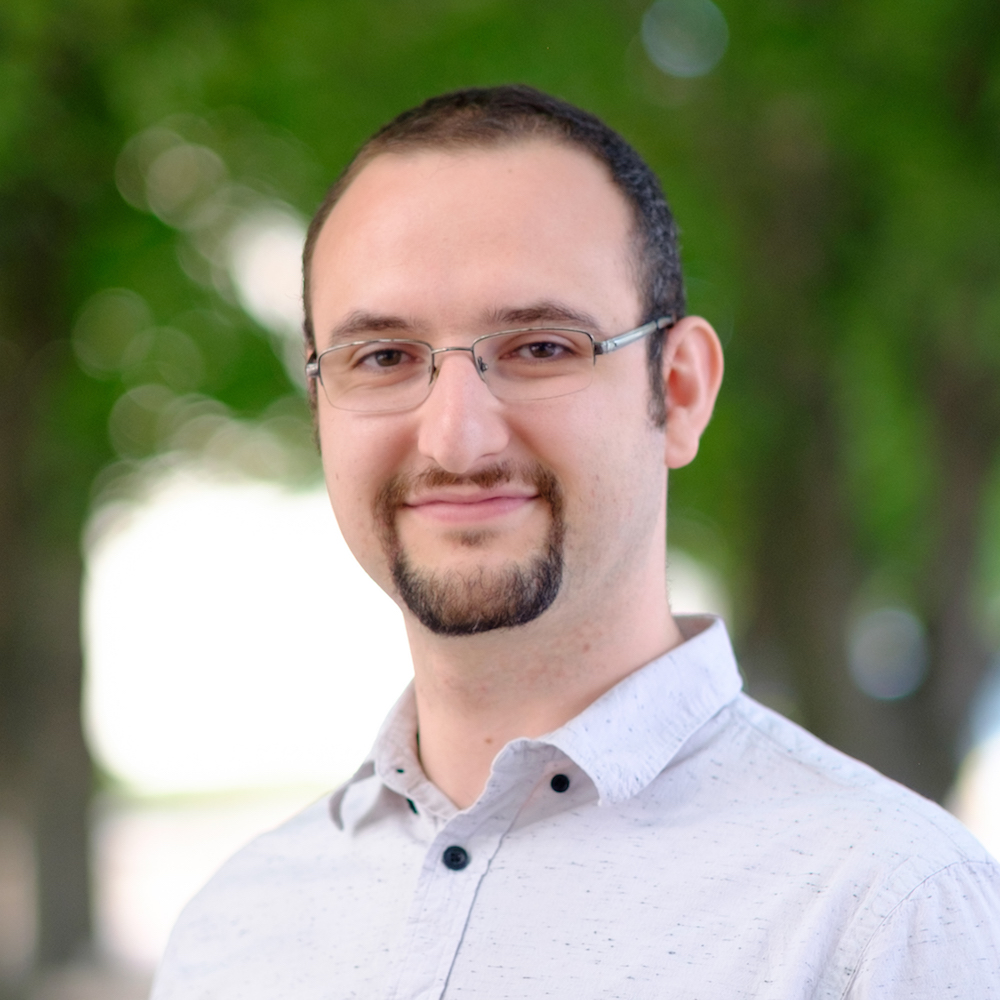
Joakim Nivre is a Professor at Uppsala University's Department of Linguistics and Philology. He is a leading researcher in computational linguistics, with a focus on dependency parsing, Universal Dependencies (UD) framework development, and multilingual NLP applications. His recent work explores LLMs in climate change discourse analysis, pharmacovigilance explainability, and historical text processing. Key research areas: Dependency parsing theory, Universal Dependencies standardization, LLM evaluation Collaborations: SweSAT-1.0 benchmark development, ClimateEval project, PARSEME integration His 2025-2023 publications demonstrate expertise in explainable AI for healthcare, synthetic data generation for idioms, and multilingual benchmark design. Notably, he co-developed SweSAT-1.0 to evaluate Swedish LLMs and contributed to typology-informed UD revisions. Despite extensive work in NLP, no scientific awards are mentioned in available texts.
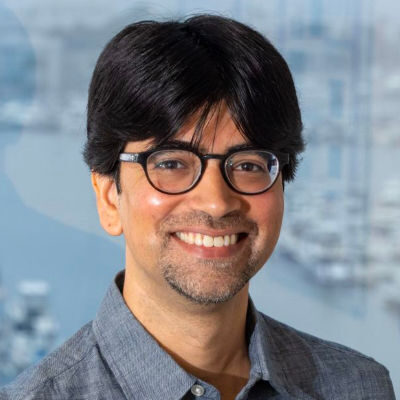
Dr. Jay Pujara is a Research Associate Professor of Computer Science at the University of Southern California (USC) and Director of the Center on Knowledge Graphs. He is also a Principal Scientist at the Information Sciences Institute (ISI) and leads research teams in data science and AI. Ph.D., University of Maryland, College Park (2016) M.S. and B.S. in Computer Science, Carnegie Mellon University Research Interests include artificial intelligence, probabilistic models, knowledge graph construction, statistical relational learning, NLP, and streaming inference. His work focuses on scalable algorithms for big data and uncertainty modeling in dynamic environments. Recent Publications highlight advancements in knowledge graphs, LLM reasoning, and table understanding. Notable topics include non-verbal abstract reasoning , faithful conversational datasets , and KGQA re-ranking . Scientific Awards : SWSA Ten-Year Award (2023), Outstanding Paper (IUI 2019), Top Reviewer (NeurIPS 2018), Best Paper (SRL Workshop 2016) Advising & Grants : Mentored 12+ graduate students, including Ph.D. advisees on topics like causal modeling and neuro-symbolic tasks. Secured NSF funding for table understanding in paleoclimate studies.
Carey E. Priebe is a Professor in the Department of Applied Mathematics and Statistics at the Whiting School of Engineering, Johns Hopkins University. He maintains strong affiliations with multiple research centers including the Johns Hopkins University Center for Imaging Science, the Mathematical Institute for Data Science, and the Human Language Technology Center of Excellence. His academic career spans several decades with significant contributions to statistical methodology and theory. Dr. Priebe's research focuses on computational statistics, statistical pattern recognition, and statistical inference for high-dimensional and graph data. His work bridges theoretical statistics with practical applications in areas such as brain connectome mapping, network analysis, and image processing. He has made significant contributions to spectral graph theory, graph matching, and vertex nomination, with applications ranging from neuroscience to national security. His publication record demonstrates consistent contributions to statistical methodology, with a notable emphasis on graph-based statistical methods. His research trajectory shows increasing focus on network data analysis, particularly in the last decade, with applications to brain mapping and connectome analysis as evidenced by his NSF BRAIN Initiative grant and Nature publication. 2013 Erskine Fellow (University of Canterbury) 2011 McDonald Award for Excellence in Mentoring and Advising 2010 ASA SDNS Distinguished Achievement Award 2009 Erskine Fellow (University of Canterbury) 2008 National Security Science and Engineering Faculty Fellow 2008 Pond Award for Excellence in Teaching NSF BRAIN EAGER grant recipient (2014) Professor Priebe has supervised an extensive number of doctoral students whose work spans statistical methodology, network analysis, and machine learning. His students have secured positions at prestigious institutions including academia (University of Wisconsin, Boston University), government research labs, and major technology companies (Microsoft, Facebook, Amazon). His research has been supported by significant grants from NSF, DARPA, and other agencies focused on national security applications and fundamental statistical methodology development. He maintains active collaborations across multiple disciplines and institutions, as evidenced by his numerous conference presentations and visiting appointments including at The Alan Turing Institute and The Isaac Newton Institute. His work bridges theoretical statistics with practical applications in neuroscience, security, and data science.
Desmond Elliott is an Associate Professor in the Natural Language Processing section at the Department of Computer Science, University of Copenhagen (UCPH). His research focuses on multimodal and multilingual models with specific emphasis on vision-language integration and tokenization-free NLP approaches. He teaches Bachelor and Master's level courses including Advanced Topics in Natural Language Processing (since 2019), Grundlæggende Data Science (since 2023), and previously Data Science (2021-2023). His research interests center on building and understanding multimodal and multilingual models , particularly exploring vision and language interactions through billion-parameter systems. Current work investigates cultural representation disparities in vision-language models, parameter-efficient captioning, and multimodal distributional semantics across diverse domains including food culture and medical imaging. His methodology emphasizes real-world applicability in non-English contexts and ethical considerations in multimodal systems. Elliott's recent publications (2025) demonstrate leadership in multimodal NLP, with significant contributions to vision-language pretraining, multilingual evaluation frameworks, and clinical NLP applications. His work spans theoretical advancements in model architectures and practical implementations addressing challenges in low-resource languages and domain adaptation. Best Long Paper Award at EMNLP 2021 Best Poster Award at COLING 2019 As an active educator, Elliott contributes to courses on Fair and Transparent Machine Learning and previously taught Information Retrieval. His research collaborations span international institutions with particular focus on European and non-English language contexts, reflecting UCPH's recognition as Europe's #1 institution for HCI research over the past decade.
John P. Spencer is a Professor of Psychology at the University of East Anglia , UK, and a member of its School of Psychology . He previously served as a Professor of Psychology and founding Director of the Delta Center at the University of Iowa. His research focuses on the development of executive function, working memory, attention, and word learning, with a pioneering emphasis on dynamical systems theory and dynamic neural field models of cognition and action. Sc.B. with Honors, Brown University (1991) Ph.D. in Experimental Psychology, Indiana University (1998) His work utilizes fMRI , fNIRS , and eye-tracking to explore neural-cognitive dynamics in infancy and childhood, particularly in low-resource settings. Recent articles highlight cross-situational word learning, air quality impacts on cognition, and brain network myelination studies. Scientific awards include: 2003 Early Research Contributions Award (Society for Research in Child Development) 2006 Robert L. Fantz Memorial Award (American Psychological Foundation) APA Fellow since 2007 Current projects include brain imaging centers, infant cognition in India, and theoretical advancements in dynamic systems. He leads the Developmental Dynamics Lab and collaborates with institutions worldwide.
Sewon Min is an Assistant Professor at UC Berkeley's Electrical Engineering and Computer Sciences (EECS) department and a research scientist at the Allen Institute for AI. Her research focuses on Natural Language Processing (NLP) and Machine Learning, particularly Large Language Models (LLMs), emphasizing data-centric approaches and ethical AI practices. She holds a Ph.D. from the University of Washington (2024) and a B.S. from Seoul National University (2018). Her work includes advancements in retrieval-based models, mixture-of-experts architectures, and data privacy in LLMs. Notable projects include FlexOlmo (flexible data use in LLMs) and OLMoE (open mixture-of-experts models). She has been recognized with the ACM Doctoral Dissertation Award Honorable Mention (2025) and WAGS/ProQuest Innovation in Technology Award. Recent articles highlight her contributions to reasoning models, data tracing (OLMoTrace), and scalable retrieval systems (MassiveDS). She leads the Berkeley NLP Group and collaborates with BAIR, exploring topics like model transparency and ethical data usage.
Anant Sahai is the Qualcomm Chair Professor in the Department of Electrical Engineering and Computer Sciences (EECS) at the University of California, Berkeley. He holds affiliations with the Berkeley Artificial Intelligence Research Lab (BAIR), Berkeley Laboratory for Information and System Sciences (BLISS), and the Berkeley Wireless Research Center (BWRC). His academic journey includes a BS from UC Berkeley (1994), and MS (1996) and PhD (2001) degrees from MIT. He previously worked at Enuvis, Inc., focusing on adaptive software radio techniques for low-SNR GPS environments. Research interests span machine learning, wireless communication, information theory, signal processing, and decentralized control, with a focus on intersections between these fields. Key areas include spectrum sharing, ultra-reliable low-latency wireless protocols, and the foundations of overparameterized machine learning. Recent work explores in-context learning in modern AI models. He has received awards such as the IEEE ComSoc Leonard G. Abraham Prize (2012) and teaching/mentorship accolades at Berkeley. He advises UC Berkeley’s Eta Kappa Nu chapter and coordinates machine learning efforts for NSF’s SpectrumX. Current teaching includes CS 182/282A on deep neural networks. His lab focuses on theoretical and applied challenges in communication systems, AI, and control theory. Awards: IEEE ComSoc Leonard G. Abraham Prize (2012), Teaching Excellence Awards (2015–2017) Grants: NSF Center for Spectrum Innovation (SpectrumX), multiple collaborative projects in wireless and AI Labs/Teams: BLISS, BAIR, BWRC
Barbara Plank is a full professor and chair for AI and Computational Linguistics at Ludwig Maximilian University of Munich (LMU), where she heads the Munich AI and NLP (MaiNLP) lab and co-directs the Center for Information and Language Processing (CIS). She additionally serves as a visiting full professor at the IT University of Copenhagen, maintaining active dual institutional affiliations in computational linguistics and NLP research. Her research focuses on human-centric natural language processing challenges, particularly learning under sample selection bias (domain adaptation, transfer learning) and annotation bias, learning with limited data through continual/semi-supervised/weakly-supervised methods, multimodal learning at language-vision-speech interfaces, and fortuitous supervision for variety-space aware language understanding. She pioneers methodologies addressing human label variation as a critical factor in model robustness rather than mere noise. Recent publications (2024-2025) reveal dominant trends in modeling human label variation across NLP tasks, especially natural language inference and entity recognition, alongside dialectal language processing and LLM evaluation frameworks. Her work systematically investigates how human disagreement in annotations can be leveraged to build more robust, adaptable systems rather than treated as errors. Scientific recognition includes: ERC Consolidator Grant for the DIALECT project advancing natural language understanding for non-standard languages and dialects ACL 2024 Area Chair Award for the paper 'VariErr NLI: Separating Annotation Error from Human Label Variation' Leading the MaiNLP lab at CIS (LMU), she directs research integrated with MCML (Munich Center for Machine Learning), Munich Intelligent Robotics, ELLIS Unit Munich, UniDive, and COST action. Current projects include ERC-funded DIALECT and KLIMA-MEMES, focusing on human-facing NLP solutions for real-world language diversity challenges. She actively shapes the field through ACL leadership as VP-Elect and numerous keynotes emphasizing human-centric approaches. The MaiNLP lab at Akademiestr. 7, 80799 Munich, drives innovation in computational linguistics through interdisciplinary collaboration, maintaining strong ties with European research networks while developing practical applications for language variation and robust NLP systems. The lab's work directly informs her teaching in LMU's Computational Linguistics programs, bridging research and education in cutting-edge NLP methodologies.
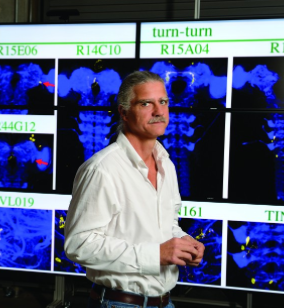
Dr. Lucy Hederman is an Associate Professor in Computer Science at Trinity College Dublin (TCD), affiliated with the O'Reilly Institute. Her research focuses on leveraging data and documents to support clinical decision-making, particularly in healthcare knowledge work. She has led interdisciplinary projects addressing data integration for rare diseases (e.g., ANCA-vasculitis, MND) and socio-technical challenges in adopting patient-generated health data (PGHD) into clinical practice. Dr. Hederman has secured over €xxxk in research funding and leads the Heterogeneity and Interoperability (H&I) challenge in the SFI-funded ADAPT 2 Centre. Her educational background includes advanced studies in computer science and healthcare informatics, though specific degree details are not explicitly stated in the text. She has supervised 4 PhDs, 2 research MScs, and co-supervised 6 PhDs, while currently mentoring 8 graduate students. Her career includes founding TCD spinouts PBOC and BIOLOGIT, which align with her research in health informatics and technology. Key research interests include: Interdisciplinary collaboration between clinicians, researchers, and technologists Data harmonization for multi-national clinical studies (e.g., FAIRVASC, Precision-ALS) Development of clinical decision support systems (CDSS) Design of mobile health (mHealth) tools for underserved populations Recent work emphasizes FAIR principles for healthcare data and socio-technical factors influencing PGHD adoption. She has contributed to over 70 peer-reviewed publications and actively participates in initiatives like the EU-funded TRANSFORM project and HRB Primary Care Research Centre. Dr. Hederman’s professional memberships include the Irish Computer Society, ACM, and Healthcare Informatics Society of Ireland. Her research has impacted healthcare practices in Ireland, with many MSc student projects influencing local health services.
Onur Varol is an Assistant Professor at Sabanci University's Computer Science Department and leads the VIRAL Lab, which focuses on computational social science, network science, and machine learning. He has affiliations with the Center of Excellence for Data Analytics. His research spans social bot detection, misinformation analysis, and online behavior modeling.
Kwantae Kim is an Assistant Professor at the Department of Electronics and Nanoengineering within Aalto University's School of Electrical Engineering . He leads the Tiny Systems and Circuits (TSirc) Group , focusing on power-efficient analog/mixed-signal ICs for biomedical and neuromorphic sensor systems. IEEE Senior Member (2025) Collaborates with institutions across Europe, Asia, and America Specializes in ultra-low-power AI-embedded IoT platforms His research emphasizes Tiny, Sensory, Intelligent, and Wireless IoT systems through: Development of energy-efficient IC architectures Democratizing access to advanced chip design Hardware-software co-design for edge computing Recent publications highlight innovations in: Spoken-language-understanding SoCs Temporal-sparsity-aware keyword spotting Open-source silicon frameworks Awards include: 2025 IEEE Senior Member 2023 Best Poster Award (AICAS) 2019 Samsung HumanTech Silver Award Research partnerships span: Prof. Tobi Delbruck (UZH/ETH Zurich) Prof. Hoi-Jun Yoo (KAIST) Prof. Shih-Chii Liu (UZH) Prof. Sohmyung Ha (NYU Abu Dhabi)
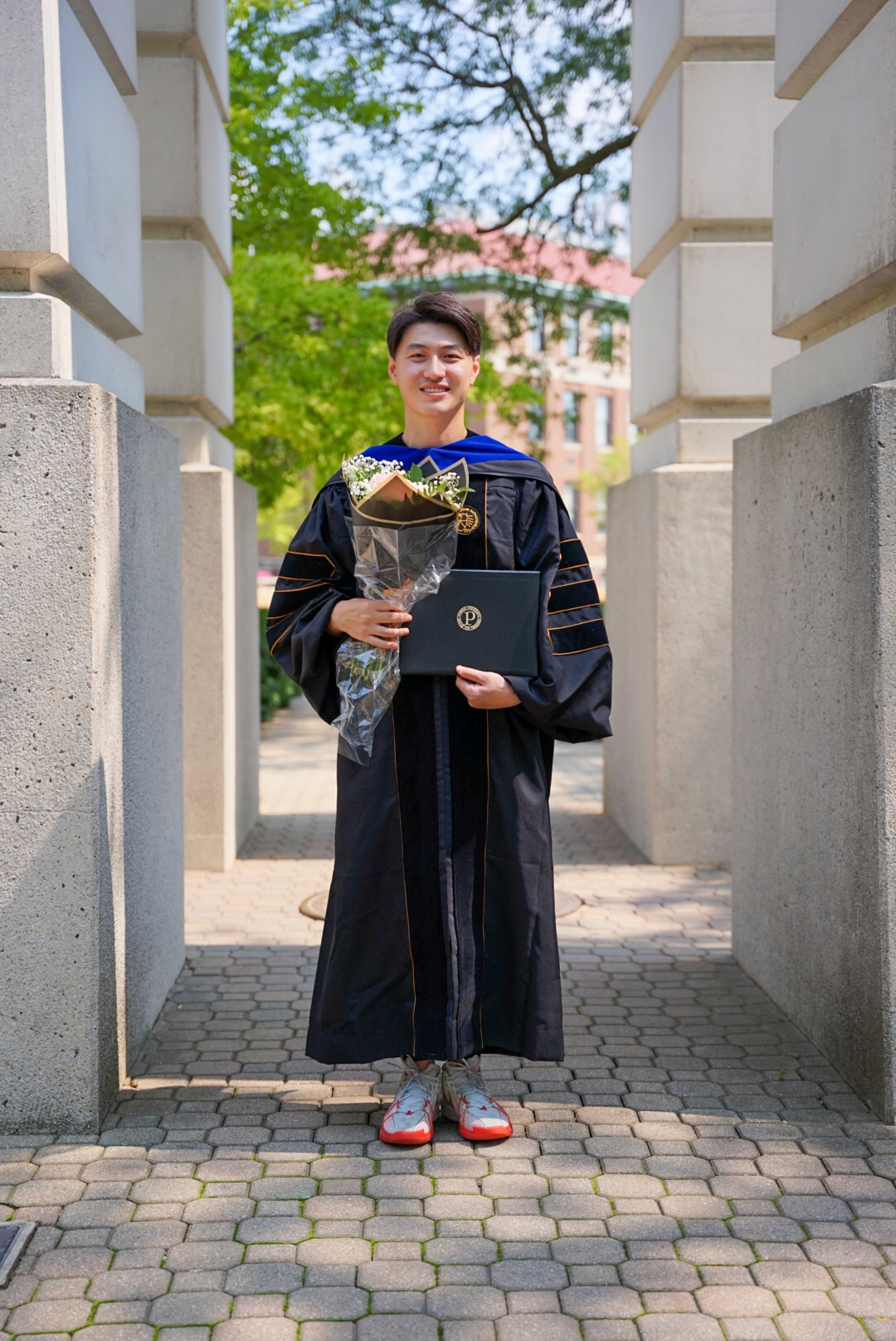
HaoYu Wang is an Assistant Professor of Computer Science at SUNY Albany. His research focuses on parameter-efficient and data-efficient deep learning, particularly in natural language processing and machine learning, aiming to democratize AI access. He holds a Ph.D. from Purdue University's School of Electrical and Computer Engineering, a B.Eng. from the University of Electronic Science and Technology of China, and an MS from SUNY Buffalo. His work includes innovations like RoseLoRA (sparse low-rank adaptation for knowledge editing), LightLT (lightweight quantization for long-tail data), and FedKC (federated knowledge composition for multilingual NLU). He has received awards such as the Future Leaders in Data Science (2024) and Bilsland Dissertation Fellowship. Key research areas include parameter efficiency, cross-lingual NLU, and model fairness. Recent publications span topics like federated learning optimization, robust retrieval-augmented generation, and mitigating token overfitting in LLMs. He advises students on Ph.D. and intern roles, emphasizing CVs and research interests in applications.
Francis Y. Yan is an Assistant Professor of Computer Science at the University of Illinois Urbana-Champaign (UIUC), holding an affiliate appointment in Electrical & Computer Engineering within the Grainger College of Engineering. He leads the Illinois Networked Systems and AI (NSAI) research group, focusing on building intelligent networked systems that are safe, robust, and performance-optimized through practical machine learning integration. Prior to joining UIUC in January 2025, he served as a Senior Researcher at Microsoft Research Redmond under Victor Bahl. His educational background includes: Ph.D. in Computer Science from Stanford University (2020), advised by Keith Winstein and Philip Levis B.S. in Computer Science (Yao Class) and B.A. in Economics from Tsinghua University (2015) Additional undergraduate studies at MIT Yan's research adopts a holistic approach to practical machine learning for networked systems, emphasizing judicious application rather than indiscriminate use. He builds real-world systems and research platforms to lay ML foundations, devises deployable algorithms using domain insights, and validates performance through extensive empirical evidence. His work consistently addresses operator concerns regarding ML deployment—focusing on safety, robustness, generalization, and efficiency—while strategically combining ML with classical networking and systems techniques. Analysis of his 15 most recent publications (2023-2025) reveals dominant themes in resource allocation for microservices (DeDe, Autothrottle), real-time video optimization (Mowgli, GRACE), and LLM-driven network algorithm design. His work bridges theoretical advances with industrial deployment, evidenced by platforms like Puffer (400,000+ users) and OpenNetLab that have become community standards for validating congestion control algorithms. His research has been recognized with top honors: USENIX NSDI Outstanding Paper Award (2024) for Autothrottle APNet Best Paper Award (2022) IRTF Applied Networking Research Prize (2021) USENIX NSDI Community Award (2020) USENIX ATC Best Paper Award (2018) for Pantheon Yan actively recruits master's and undergraduate researchers for his NSAI group, prioritizing self-motivated students for projects in networked systems and AI. His research is supported by industry collaborations (notably Microsoft) and manifests in deployable platforms like Puffer—which has enabled award-winning research at NSDI and SIGCOMM—and OpenNetLab for real-time communications. His work directly impacts production systems including Microsoft Teams and Bing. He founded and directs the Illinois Networked Systems and AI (NSAI) research group, which operates critical infrastructure including Puffer (a live TV service and research platform) and OpenNetLab. These platforms facilitate community-wide validation of novel algorithms, with Puffer alone supporting multiple best-paper awards at top conferences. Current workstreams span cloud resource management (Teal, Autothrottle, DeDe), low-latency video (Puffer, Tambur, Mowgli), and LLM-augmented systems (Nada, Designing Network Algorithms via LLMs).
Arrvindh Shriraman is an Associate Professor and Program Director of Software Systems at Simon Fraser University's School of Computing Science in Surrey. His research focuses on energy-efficient software, multicore memory systems, and optimizing hardware/software interfaces for parallel programming. He holds a Ph.D. (2010) and M.S. (2006) in Computer Science from the University of Rochester, and a B.Eng. (2004) from the University of Madras. He teaches courses on parallel programming and energy-conscious software design. His research interests include synchronization mechanisms for domain-specific architectures, cache optimization, and FPGA-based acceleration. He has contributed to frameworks like Mu-grind for HLS-generated RTL instrumentation and TAPAS for parallel accelerator generation. Notable projects include RANGE-BLOCKS for synchronization in domain-specific systems and TapeFlow for gradient computation in neural networks. His work emphasizes real-time verification of autonomous systems and safety-critical trajectory planning for underwater vehicles. Shriraman collaborates closely with the Tangent Lab, exploring cutting-edge solutions in hardware-software co-design and embedded systems. His teaching and research bridge theoretical computer science with applied engineering challenges, addressing scalability, efficiency, and safety in modern computing systems.
Golnoosh Farnadi is an Associate Professor at the Department of Computer Science and Operational Research at the University of Montreal and an Assistant Professor at the School of Computer Science at McGill University. She holds a Canada-CIFAR Chair in Artificial Intelligence and serves as a Senior Academic Member at Mila - Quebec Institute for Artificial Intelligence. Her interdisciplinary work bridges computer science, operations research, and ethical AI considerations. Her educational background includes a Ph.D. in Computer Science from KU Leuven and Ghent University (2017), followed by postdoctoral positions at the University of Montreal/MILA (2018-2020) and the University of California, Santa Cruz (2017-2018). Her research focuses on algorithmic fairness, responsible AI, deep learning, and probabilistic models, with applications spanning healthcare, recommender systems, and public policy. Farnadi's recent publications demonstrate a strong emphasis on addressing fairness in machine learning systems, with particular attention to cultural diversity in recommender systems, fairness in healthcare optimization (particularly kidney exchange programs), and mitigating hallucinations in large language models. Her work consistently combines theoretical rigor with practical applications, often employing novel mathematical frameworks to tackle complex ethical challenges in AI. Among her notable recognitions are the Google Scholar Award (2021), Facebook Research Award (2021), Google Award for Inclusion Research (2023), and being named one of the 100 Brilliant Women in AI Ethics (2023). She was also recognized as a Rising Star in AI Ethics in 2021. Farnadi supervises numerous graduate students through her EQUAL Lab (EQuity & EQuality Using AI and Learning algorithms), which focuses on developing AI systems that promote fairness and equity. Her teaching includes courses on Responsible AI, Machine Learning, and Trustworthy Machine Learning at both McGill University and HEC Montreal.


/prod01/channel_3/media/tcd/scss/headshots/Lucy-Hederman-BW-1.jpg)