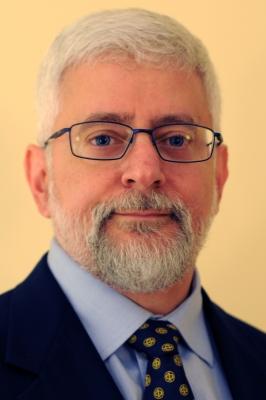
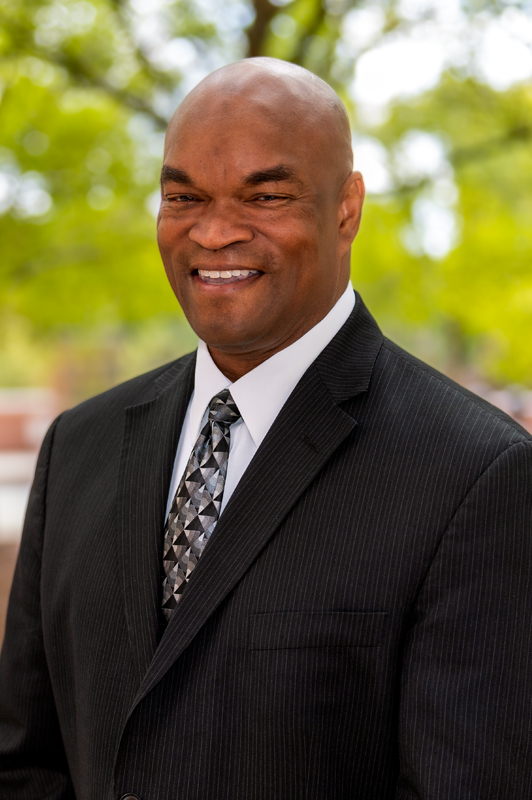
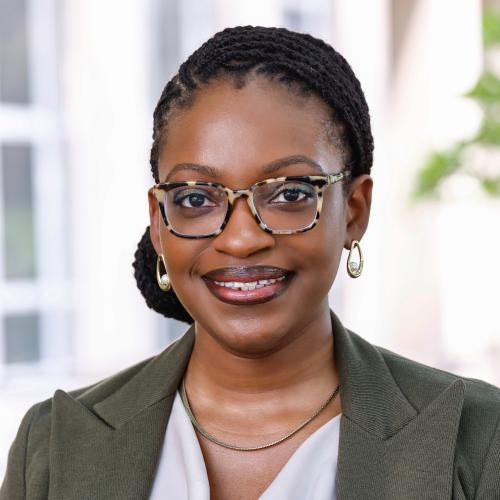
Malcolm von Schantz is a Professor and Deputy Faculty Pro Vice-Chancellor at Northumbria University, affiliated with the HLS Faculty Management and Administration. Previously, he held leadership roles at the University of Surrey, including Associate Dean (International) and acting Pro-Vice Chancellor (International Relations). He is also an Honorary Professor at the University of the Witwatersrand, South Africa. He holds a PhD in Zoology from an unspecified institution (awarded 10 Dec 1994). His research focuses on human circadian rhythms and sleep, their molecular determinants, and links to physical/mental health. He has secured over £6.4M in research funding from bodies like the MRC, Wellcome Trust, and NIH. Key research areas include sleep architecture, chronotype variability, HIV-related sleep disruptions, and cardiometabolic health correlations. His work has been published in high-impact journals and widely featured in media. He actively participates in international conferences and public outreach, including translating sleep education materials into multiple languages. Notable collaborations include the BioClocks UK initiative and the Baependi Heart Study in Brazil. His recent articles address daylight saving policies, gender-specific sleep-cardiovascular links, and light sensitivity in bipolar disorder. He supervises PhD students and engages in editorial roles across journals. Public impacts include translating educational comics and participating in community health events. His research emphasizes global health equity, particularly in low-resource settings.
Golnoosh Farnadi is an Associate Professor at the Department of Computer Science and Operational Research at the University of Montreal and an Assistant Professor at the School of Computer Science at McGill University. She holds a Canada-CIFAR Chair in Artificial Intelligence and serves as a Senior Academic Member at Mila - Quebec Institute for Artificial Intelligence. Her interdisciplinary work bridges computer science, operations research, and ethical AI considerations. Her educational background includes a Ph.D. in Computer Science from KU Leuven and Ghent University (2017), followed by postdoctoral positions at the University of Montreal/MILA (2018-2020) and the University of California, Santa Cruz (2017-2018). Her research focuses on algorithmic fairness, responsible AI, deep learning, and probabilistic models, with applications spanning healthcare, recommender systems, and public policy. Farnadi's recent publications demonstrate a strong emphasis on addressing fairness in machine learning systems, with particular attention to cultural diversity in recommender systems, fairness in healthcare optimization (particularly kidney exchange programs), and mitigating hallucinations in large language models. Her work consistently combines theoretical rigor with practical applications, often employing novel mathematical frameworks to tackle complex ethical challenges in AI. Among her notable recognitions are the Google Scholar Award (2021), Facebook Research Award (2021), Google Award for Inclusion Research (2023), and being named one of the 100 Brilliant Women in AI Ethics (2023). She was also recognized as a Rising Star in AI Ethics in 2021. Farnadi supervises numerous graduate students through her EQUAL Lab (EQuity & EQuality Using AI and Learning algorithms), which focuses on developing AI systems that promote fairness and equity. Her teaching includes courses on Responsible AI, Machine Learning, and Trustworthy Machine Learning at both McGill University and HEC Montreal.
Chicheng Zhang is an Assistant Professor in the Computer Science Department at the University of Arizona, where he conducts research in the theory and applications of interactive machine learning. He earned his Ph.D. in Computer Science from the University of California, San Diego (UCSD) in 2017 under the supervision of Professor Kamalika Chaudhuri, and was previously an undergraduate student at Peking University working with Professor Liwei Wang. From 2017 to 2019, he was a postdoctoral researcher at the Machine Learning Group at Microsoft Research NYC. His research lies at the intersection of learning theory and practical algorithm design, focusing on interactive machine learning paradigms such as reinforcement learning, contextual bandits, active learning, and imitation learning. He aims to develop algorithms that are data-efficient, computationally tractable, and robust, with applications in healthcare, wireless communication, and fair AI systems. His work emphasizes principled algorithm design with theoretical guarantees and empirical validation. The most recent publications reflect a strong trend in developing efficient, theoretically grounded methods for sequential decision-making and interactive learning. Key themes include sample efficiency, robustness to noise, fairness in algorithmic decisions, and application-driven research in domains like oral cancer detection and mmWave network optimization. His work frequently bridges theoretical analysis with real-world deployment considerations. While no scientific awards are mentioned in the provided text, Dr. Zhang actively mentors prospective PhD students and encourages collaboration. He has contributed to interdisciplinary projects involving fairness-aware bandit algorithms for network coexistence, interpretable classifiers for cancer detection, and LLM-based initialization for reinforcement learning. His lab focuses on developing intelligent agents that actively learn from environments and human experts. He can be reached at chichengz@arizona.edu .
Rachee Singh is an Assistant Professor of Computer Science at Cornell University, leading the sysphotonics research group. She concurrently serves as an Amazon Scholar within the SageMaker Hyperpod teams, specializing in large-scale machine learning infrastructure development for cloud environments. Her research focuses on photonic interconnect systems for server-scale, rack-scale, and long-haul communication networks, targeting performance optimization for distributed machine learning and planet-scale cloud workloads. Key specialties include optical network design, fault-tolerant WAN architectures, and energy-efficient datacenter interconnects, with strong emphasis on practical deployment in real-world systems. Her group bridges theoretical networking principles with applied AI infrastructure challenges. Recent publications demonstrate concentrated innovation in photonic network optimization for ML workloads, particularly in wavelength management, collective communication algorithms, and chip-to-chip photonic fabrics. This work spans optical physics, distributed systems, and machine learning, revealing a trajectory toward sustainable, high-performance AI infrastructure. Scientific recognition includes: Amazon Research Award (2023) Cisco Research Award Dr. Singh actively mentors graduate researchers including Jonathan Aimuyo, Byungsoo Oh, and Arjun Devraj, whose co-authored publications form the core of her group's output. Research funding is secured through competitive grants from the NSF (including a $1M award for chip-to-chip photonic fabrics), SRC/DARPA JUMP 2.0 program, Cisco, and Cornell's Atkinson Center for Sustainability. The sysphotonics group operates as Cornell's hub for photonic network systems research, developing programmable integrated photonics solutions and collaborating with Amazon on SageMaker Hyperpod for next-generation ML infrastructure.
Benoit Combemale is a Full Professor of Software Engineering at the University of Rennes , currently on leave as Research Director at Inria . He is affiliated with the DiverSE research team (joint between IRISA and Inria) and the SM@RT team at IRIT. He serves as Editor-in-Chief of the Springer-Nature journal Software and Systems Modeling (SoSyM) and holds leadership roles in academic conferences like ACM SIGPLAN Intl. Conference on Software Language Engineering and MODELS . Education : Habilitation (2015) and PhD (2008) in Software Engineering from University of Rennes and University of Toulouse, respectively. Research : Focuses on Model-Driven Engineering , Digital Twins , and ICT for Sustainability , with applications in cyber-physical systems, scientific computing, and industrial systems. Recent Publications highlight trends in digital twin modeling, energy-aware software engineering, polyglot programming, and formal verification for heterogeneous systems. His scientific awards include: Editor-in-Chief of SoSyM Steering Committee member of ACM SIGPLAN Intl. Conference on Software Language Engineering General Chair for ICT4S 2023 and MODELS 2016 PC Chair for MODELS 2024, ECMFA 2019, and SLE 2014 Coordinator of Dagstuhl Seminars and Bellairs workshops Advising includes 30+ students in topics ranging from digital twin engineering to software testing and language design. He leads the GEMOC Initiative and contributes to projects like SciHook and GEMOC Studio .
Dr. Sheila Castilho is an Assistant Professor at the School of Applied Language & Intercultural Studies, Dublin City University (DCU). She holds a PhD from DCU (2016) and a Master's from the University of Wolverhampton and University of Algarve. Her expertise lies in machine translation (MT), post-editing, and translation technology evaluation. She co-leads the New Trends in Translation Technology (NeTTT’22) conference and chairs DCU's Master in Translation Studies and Master in Translation Technology programs. Education: Licenciatura em Letras Inglês/Português (UNIOESTE University, Brazil) Master in Natural Language Processing (University of Wolverhampton & University of Algarve) PhD in Translation Technologies (Dublin City University) Research: Focuses on document-level MT evaluation, post-editing strategies, and user-centric MT assessment. Leads the DELA project and contributed to TraMOOC/iADAATPA initiatives. Published over 40 articles and co-edited 'Translation Quality Assessment: From Principles to Practice' (Springer, 2018). Grants & Projects: DCU PI for DELA (Document-level Evaluation) PRINCIPLE project (EU Low-resource MT) ELE (European Language Equality) initiative Labs/Teams: Active in ADAPT Centre (DCU) and collaborates with international NLP/MT communities (ACL, EMNLP, WMT).
Shih-Chii Liu holds the rank of Privatdozent (Associate Professor) in the Department of Information Technology and Electrical Engineering at ETH Zürich. He is affiliated with the Institute of Neuroinformatics , a joint institute between the University of Zurich and ETH Zurich. His research focuses on neuromorphic engineering, bio-inspired neural hardware, and edge computing systems, emphasizing energy-efficient algorithms and sensor technologies. Key research areas include neuromorphic sensors for real-time data processing, sparsity-aware neural networks, and adaptive computing architectures for edge devices. His work spans applications such as speech enhancement, wearable health monitoring, and bio-inspired keyword spotting systems. He leads the Sensors Research Group, which develops neuromorphic systems integrating novel sensors, spiking neural networks, and low-power hardware accelerators. Recent projects include the DeltaKWS low-power keyword spotting IC, EFLOP computational cost metrics for spiking networks, and NeuroBench benchmarking frameworks for neuromorphic systems. His contributions emphasize bridging biological neural principles with practical engineering solutions for IoT and embedded systems. Liu teaches courses such as Neuromorphic Engineering I and collaborates on cross-disciplinary projects involving neuroprosthetics, smart wearables, and multimodal sensor fusion. His work is characterized by hardware-software co-design approaches to tackle challenges in real-time, low-latency, and energy-constrained computing environments.
Benoît Sagot is a Senior Researcher in Natural Language Processing and Computational Linguistics at Inria , currently holding the 2023-2024 Informatics and Digital Sciences Annual Chair at Collège de France. He directs the ALMAnaCH research team and contributes to the PRAIRIE Institute for AI research. Research Focus: His work spans neural language models, machine translation, text simplification, multimodal NLP, and lexical resource development for French and low-resource languages. He explores computational morphology, etymology, and historical linguistics, with applications in opinion mining and computational oenology. Recent Articles emphasize language model interpretability, cross-lingual transfer, and multimodal integration (speech, image). Tools & Resources: He has developed morphological lexicons (Le fff, Alexina), corpora (OSCAR, CAMEMBERT), and parsing pipelines (SxPipe). Projects: Involved in initiatives like ANR BASNUM (Furetière's dictionary digitization) and 3IA PRAIRIE (AI research). His career combines foundational work in syntactic analysis with evolving deep learning approaches.
Tom Conte is an academic leader with a joint appointment in the School of Electrical & Computer Engineering and School of Computer Science at Georgia Institute of Technology. As the founding director of the Center for Research into Novel Computing Hierarchies (CRNCH), he specializes in computer architecture and compiler optimization. His work focuses on manycore architectures, energy-efficient microprocessor design, and embedded system architectures. Prior to Georgia Tech, he directed the Center for Embedded Systems Research at North Carolina State University. He holds IEEE Fellow status and served as 2015 President of the IEEE Computer Society, co-leading the IEEE Rebooting Computing Initiative since 2011. Dr. Conte earned his bachelor’s degree in Electrical Engineering from the University of Delaware (1986), followed by M.S. and Ph.D. degrees in Electrical Engineering from the University of Illinois at Urbana-Champaign (1988 and 1992). His research has been recognized with prestigious awards including the IEEE Computer Society’s Golden Core Member award and the National Science Foundation’s CAREER Award (1996). His research interests span quantum computing, 3D chip architectures, energy-efficient processing, and post-Moore computing innovations. He has pioneered initiatives like the Superstrider architecture and CREEPY energy-efficient processing frameworks. Recent work includes advancements in quantum programming languages (e.g., Qwerty) and hybrid quantum-classical systems. Awards: IEEE Fellow, Young Alumni Achievement Award, CAREER Award Leadership: IEEE Computer Society President (2015), CRNCH Director Key Projects: Rebooting Computing Initiative, Superstrider Architecture His lab’s contributions include novel compiler optimizations for manycore systems, smart NIC offloading techniques, and thermodynamically inspired computing models. Conte’s work bridges academic research with industry needs through interdisciplinary collaborations and standardization efforts.
Gerry Dozier is the Charles D. McCrary Eminent Chair Professor in the Department of Computer Science and Software Engineering at Auburn University's College of Engineering. His research focuses on artificial intelligence, computational intelligence, cybersecurity, identity science, and cyber identity protection. He leads initiatives like the Center for Artificial Intelligence and Cybersecurity Engineering and contributes to Alabama's AI policy through the state commission. Dr. Dozier holds a Ph.D. from North Carolina State University and has pioneered work in adversarial machine learning, biometric security, and low-resource language NLP. Education: Ph.D. Computer Science, North Carolina State University (Raleigh) M.S. Computer Science, North Carolina State University (Raleigh) B.S. Computer Science, Northeastern Illinois University Research Themes: Combines AI with cybersecurity to address modern digital challenges. Specializes in adversarial attacks/defenses, biometric authentication systems, and ethical NLP applications in multilingual contexts. Active in developing tools for sentiment analysis in underrepresented languages and mitigating biases in automated systems. Impact: Spearheaded Auburn's AI@AU initiative with lecture series and forums. Collaborates internationally on facial recognition, malware detection, and medical AI applications like bacterial vaginosis diagnosis. His work bridges theoretical CS advancements with real-world security and ethical considerations. Labs/Teams: Directs Auburn's AI & Cybersecurity Engineering Center and contributes to interdisciplinary groups like the McCrary Institute for Cyber and Critical Infrastructure Security.
Dr. Daphné Chopard is a Researcher affiliated with the Professorship for Medical Data Science at ETH Zürich. Her work focuses on advancing medical data science through machine learning, clinical informatics, and multimodal learning applications in healthcare. She specializes in areas such as time-series analysis in critical care, generative models for medical data, and natural language processing for clinical texts. Her research emphasizes improving healthcare outcomes through innovative data-driven approaches, including projects like the SwissPedHealth pediatric data network and foundational work on multimodal variational autoencoders. Dr. Chopard’s contributions span clinical decision support systems, adverse event detection in trials, and acronym disambiguation in medical narratives. Her recent projects include studies on ventilation protocols in pediatric critical care and weakly-supervised learning applied to medical imaging datasets like MIMIC-CXR. She collaborates on initiatives to enhance representation learning in multimodal healthcare contexts, reflecting her commitment to bridging AI advancements with practical clinical applications.
Olga Vechtomova is a Professor at the University of Waterloo, affiliated with the Information Systems research group and specializing in Search Engines and Natural Language Processing. Her work bridges computational creativity, multimodal systems, and AI-driven text generation. She leads projects like LyricJam , a real-time lyric generation system for live music, and explores applications in dynamic story generation, hate speech detection, and low-resource summarization. Her research emphasizes ethical AI, creative technologies, and leveraging large language models for diverse tasks. Research interests include natural language processing, machine learning, and multimodal interaction. Recent work focuses on artistic inspiration modeling, stylized text generation, and improving NLP efficiency through semi-supervised learning and distillation techniques. Her contributions span over 60 papers since 2000, with a strong emphasis on foundational NLP challenges and real-world applications. She collaborates on systems like Promptmix for model distillation and LyricJam sonic for music-audio lyric generation.
Roles and Affiliations : Dimitris Kolovos is a Professor of Software Engineering at the University of York's Department of Computer Science. He leads the Automated Software Engineering (ASE) research group and is an Eclipse Foundation committer, leading development of the Epsilon open-source platform. His roles include research leadership, teaching, and academic service. Education : PhD in Software Engineering - University of York MSc in Software Engineering with Distinction - University of York First Class Honours Degree in Informatics - Athens University of Economics and Business Research Interests : Kolovos focuses on advancing Model-Driven Engineering (MDE), GenAI integration in software development, low-code platforms, and data analytics. His work emphasizes scalable modeling tools, education technology (e.g., MDENet platform), and industry collaboration with organizations like NASA, BAE Systems, and Siemens. Labs and Projects : He leads the Epsilon project under the Eclipse Modelling initiative, developing tools for model transformation, validation, and code generation. His research group also explores AI-driven model transformations and hybrid graphical-textual editors.
Chinasa T. Okolo is a Research Fellow in the Governance Studies program and Center for Technology Innovation (CTI) at the Brookings Institution. A recent computer science PhD graduate from Cornell University, she focuses on AI governance, data policy, and equity issues in artificial intelligence, particularly as they relate to the Global Majority and Africa. B.A. in Computer Science from Pomona College M.S. in Computer Science from Cornell University Ph.D. in Computer Science from Cornell University Dr. Okolo's research critically examines global equity in AI, with a focus on how African governments can develop robust AI and data governance frameworks. She investigates the geopolitical impacts of AI in the Majority World and analyzes datafication and algorithmic marginalization in Africa. Her work incorporates ethnographic methods to understand how frontline health care workers in rural settings perceive and value AI, with particular emphasis on explainability in AI-enabled technologies deployed throughout the Majority World. She has conducted significant research on the effective adoption of AI in Africa, COVID-19 misinformation spread on social networks within African communities, and the impact of generative AI within Africa. Her recent publications explore cultural encoding of gender bias in language models for African languages, AI safety governance approaches in Southeast Asia, and the impacts of generative AI within Africa. Her work spans the intersection of artificial intelligence, international development, and social justice, with publications at top-tier venues including ACM's CHI, CSCW, COMPASS, EAAMO, and FAccT conferences. Scientific Awards Named one of TIME's top 100 most influential people in AI of 2024 Honored in the inaugural Forbes '30 Under 30' AI list Recognized as one of 100 Brilliant Women in AI Ethics™ Dr. Okolo has received research funding from the Social Science Research Council, MacArthur Foundation, McGovern Foundation, Kapor Center, National GEM Consortium, Oracle Corporation, North American Network Operators' Group (NANOG), National Science Foundation (NSF), and Google. She serves as editor-in-chief of ACM SIGCAS Computers and Society, is a Scientific Advisory Committee member of the Global Index on Responsible AI, and an inaugural member of the Partnership on AI's SAIGE Council. She has contributed to global AI governance efforts including serving as a consulting expert on the African Union AU-AI Continental Strategy, an expert contributing writer to the International AI Safety Report, and a drafting member of the Nigerian Federal Government's National AI Strategy. She also participates in the IEEE Standards Association working group on algorithmic bias and is a member of the ACM US Technology Policy Committee. As founder of Technēculturǎ, Dr. Okolo leads initiatives focused on critically examining global equity in AI. She recently launched the 'AI Safety and the Global Majority' series at Brookings, convening experts from Africa, the Caribbean, Latin America, Oceania, and Southeast Asia to counter Western-centric assumptions in AI safety. She is actively engaged in current policy discussions, with her most recent work including 'AI Safety Governance, The Southeast Asian Way' report and upcoming participation in the AI Safety Asia launch event on August 28, 2025.
Isabelle Augenstein is a Professor at the University of Copenhagen's Department of Computer Science, where she leads the Copenhagen Natural Language Understanding (CopeNLU) research group and the Natural Language Processing section. She became Denmark's youngest female full professor in 2022 and co-leads the Danish Pioneer Centre for Artificial Intelligence's Speech and Language collaboratory. ERC Starting Grant recipient DFF Sapere Aude Research Leader fellow Karen Spärck Jones Award winner Hartmann Diploma Prize recipient Her research focuses on fair and accountable NLP systems, with specific emphasis on explainability, factuality, bias detection, and social NLP. She investigates cultural biases in language models, develops frameworks for explainable fact checking, and explores uncertainty estimation in NLP systems. Recent publications demonstrate expertise in: Mechanistic analysis of cultural bias representations Context utilization techniques for LLMs Explainability metrics and attribution methods Cross-domain label adaptation Retrieval-augmented generation Fact checking uncertainty quantification Major scientific contributions include: Numerous EMNLP and ACL publications Foundational work on stance detection Development of fact checking benchmarks Multilingual model analysis AI ethics frameworks She supervises a team of researchers working on explainable AI and fact checking systems, with current projects including the ExplainYourself ERC-funded initiative on explainable fact checking. Her group recently presented multiple papers at EMNLP 2025 on topics spanning explainable AI and social NLP.