Li Wang is an Associate Professor in Mathematics at the University of Texas at Arlington. She holds a Ph.D. from UC San Diego (2014), M.S. from Xi'an Jiaotong University (2009), and B.S. from China University of Mining and Technology (2006). Her research focuses on optimization, data science, and machine learning. Current research includes polynomial optimization methods, low-rank tensor approximations for big data, and structure learning algorithms. She teaches courses in discrete mathematics, optimization, and data science.
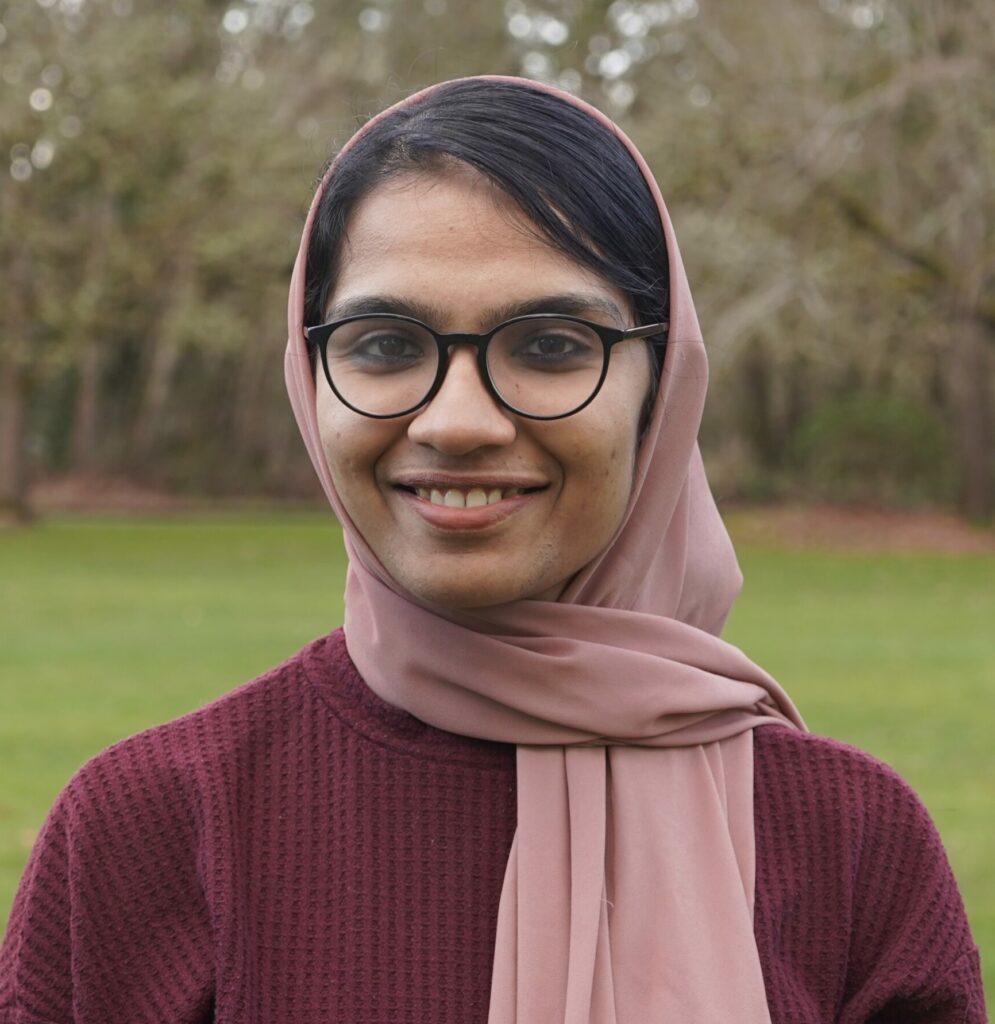
Shahana Ibrahim is a tenure-track Assistant Professor at the University of Central Florida under the AI Initiative, holding a joint appointment in the Department of Electrical and Computer Engineering and Computer Science. Her research develops provable methods for robust machine learning systems with applications in critical real-world scenarios. Education: Ph.D. in Electrical and Computer Engineering, Oregon State University (advised by Dr. Xiao Fu) Prior industry experience: System Validation Engineer at Texas Instruments (2012-2017) and NVIDIA GPU intern (2018) Her research spans machine learning, signal processing, and optimization with core expertise in weakly supervised learning, tensor decomposition, and stochastic algorithms. She focuses on enhancing AI reliability through theoretical guarantees for noisy data environments, particularly addressing label noise, incomplete annotations, and structured factorization challenges. Her work bridges signal processing theory with modern AI to solve practical problems in data quality and system robustness. Recent publications (2023-2025) reveal strong thematic consistency in handling imperfect supervision. Key trends include crowdsourced label modeling, instance-dependent noise characterization, and tensor/matrix completion techniques. Her approach uniquely integrates signal processing perspectives with deep learning, emphasizing identifiability conditions and geometric regularization to extract reliable patterns from corrupted data. Scientific Awards: Outstanding PhD Dissertation Award from EECS, Oregon State University (2024) Dr. Ibrahim actively mentors graduate researchers including Faizul and Grey, who co-authored her ICIP 2025 and IEEE CAMSAP 2023 publications. She secured the AI-BTO DARPA grant (December 2024) for physics-informed machine learning research on intrinsically disordered proteins. Current funding supports multiple RA/TA positions for PhD students in her lab. She serves on program committees for AISTATS, AAAI AI for Social Impact, and WiML at NeurIPS. Her research group develops end-to-end learning frameworks for noisy data environments, with active projects funded by DARPA focusing on biomedical applications and robust AI validation. The lab maintains strong industry connections through NVIDIA and Texas Instruments collaborations.
Davide Palitta is an Assistant Professor (tenure track) at the Department of Mathematics of the University of Bologna. His research focuses on numerical linear algebra, matrix equations, and their applications in fields like data assimilation, deep learning, and parallel computing. He holds a PhD in Mathematics from the University of Bologna (2018) and has held postdoctoral positions at the Max Planck Institute in Magdeburg (2018–2021) and a visiting fellowship at Brown University (2020). His work emphasizes the development of efficient numerical algorithms for large-scale matrix equations, including Sylvester, Lyapunov, and Riccati equations. Key contributions include Krylov subspace methods, randomized techniques, and time-parallel integration strategies. His recent publications span topics such as sketched Krylov methods, tensor-based solvers, and preconditioning strategies for weak-constraint data assimilation. Palitta collaborates actively with international institutions and organizes seminars like the Scube series on numerical linear algebra. He is involved in upcoming conferences on matrix equations, data assimilation, and parallel computing. No scientific awards are explicitly mentioned in the provided materials.
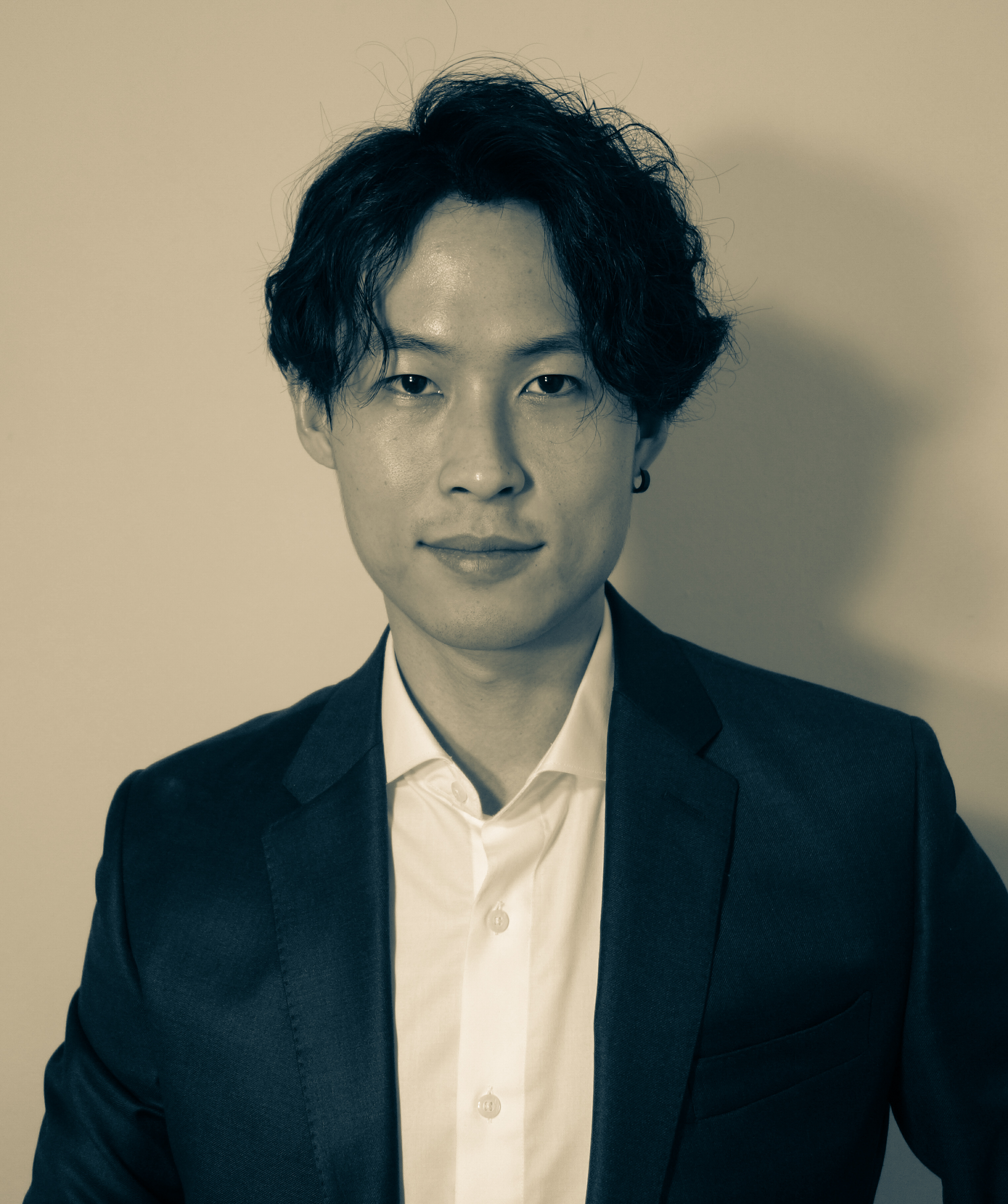
Hanbaek Lyu is an Assistant Professor in the Department of Mathematics at the University of Wisconsin-Madison, with an affiliation in the Department of Computer Science and membership in the Institute for Foundations of Data Science. His research spans discrete probability, matrix factorization, and machine learning, focusing on large discrete systems including interacting particle systems, networks, and structured random matrices. His educational background includes: Ph.D. in Mathematics, The Ohio State University (2018); Thesis: "Combinatorial and probabilistic aspects of coupled oscillators" (Advisor: David Sivakoff) B.S. in Mathematics, Seoul National University Lyu's research bridges theoretical probability and practical machine learning, with emphasis on optimization for dependent data and complex systems. His work develops foundational algorithms for matrix/tensor factorization while exploring synchronization phenomena in oscillator networks and phase transitions in particle systems. Recent publications highlight interpretable models for biological data and rigorous convergence guarantees for nonconvex optimization. Analysis of his 15 most recent publications reveals three dominant threads: (1) optimization theory for constrained nonconvex problems applied to dictionary learning, (2) interacting particle systems and random matrix theory with combinatorial aspects, and (3) interpretable latent models for network dynamics and genomics. His work consistently combines probabilistic methods with computational applications. Lyu leads two active NSF grants: DMS-2206296 (2022-2025): "Online Dictionary Learning for Dependent and Multimodal Data Samples: Convergence, Complexity, and Applications" DMS-2010035 (2020-2023): "Combinatorial and Probabilistic Approaches to Oscillator and Clock Synchronization" He currently mentors five doctoral students across Mathematics and Computer Science departments, organizes UW-Madison's probability seminar, and collaborates with over 30 researchers including Janko Gravner, Lionel Levine, and Wenpin Tang on interdisciplinary projects spanning genomics, network science, and statistical physics.
Nikolas Nüsken is a Lecturer in Mathematical Data Science and Computational Mathematics at King’s College London’s Department of Mathematics, part of the Faculty of Natural, Mathematical & Engineering Sciences. He holds a PhD from Imperial College London (2018) and previously worked at the Alan Turing Institute and the University of Potsdam’s Collaborative Research Centre 'Scaling Cascades in Complex Systems'. His research focuses on computational Bayesian inference, stochastic analysis, optimal control, and kernel methods. Key interests include interacting particle systems, optimal transport, and partial differential equations (PDEs). His work bridges theoretical mathematics with applications in machine learning and data science. Recent research trends involve advancing Monte Carlo methods, Stein variational gradient descent, and tensor-based discretization schemes for solving complex PDEs and stochastic systems. His studies often intersect with robust filtering, deep learning for boundary value problems, and geometric analysis of optimization algorithms. Nüsken’s contributions include 39 cited publications, with notable work on low-rank maximum likelihood estimation, robust regression for BSDEs, and controlled Monte Carlo diffusions. He collaborates extensively on topics like rough dynamics, ensemble Kalman filtering, and neural Schrödinger–Föllmer flows. He is affiliated with King’s Probability and Statistics research groups, contributing to experimental design, MCMC methods, and probabilistic modeling. His work emphasizes interdisciplinary applications, blending mathematical rigor with computational innovation.
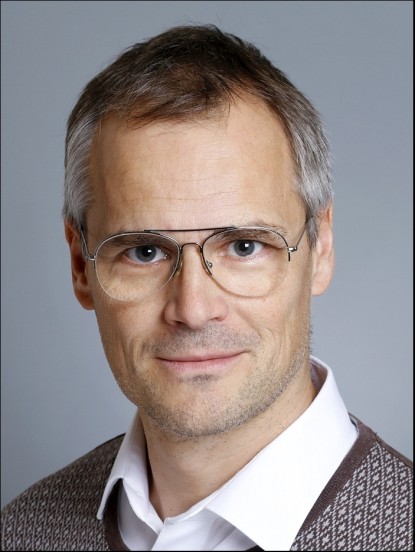
Prof. Marius Pesavento is a Full Professor at the Department of Electrical Engineering and Information Technology, Technische Universität Darmstadt, leading the Communication Systems Group. His research focuses on sensor array processing, MIMO communication systems, adaptive beamforming, and mathematical optimization in networks. He has held academic and industry roles since 2001, including positions at mimoOn GmbH and FAG Industrial Services. Education: PhD (Doktorate) in Electrical Engineering, Ruhr-Universität Bochum (2001–2005) Master of Engineering, McMaster University (1999–2000) Dipl.-Ing. in Electrical Engineering, Ruhr-Universität Bochum (1992–1999) His research interests span robust high-resolution sensor array processing, 4G/5G mobile networks, and network information theory. Notable projects include developing tensor models for ultrasonic sensor calibration and applying machine learning to anomaly detection in network flows. His work bridges theoretical optimization and practical applications in automotive radar, 6G networks, and medical imaging. Labs/Teams: Leads the Communication Systems Group at TU Darmstadt, focusing on interdisciplinary projects in signal processing and communication systems.
Prof. Dr. André Uschmajew is a full professor and holds the Chair of Mathematical Data Science at the Institute of Mathematics, Faculty of Mathematics, Natural Sciences, and Materials Engineering, University of Augsburg, Germany. He has held prominent research and academic positions at institutions including the Max Planck Institute for Mathematics in the Sciences (Leipzig), University of Bonn, and EPF Lausanne. 2022–present: Chair of Mathematical Data Science, University of Augsburg 2017–2022: Research Group Leader, Max Planck Institute MiS Leipzig 2014–2017: Bonn Junior Fellow Professorship, University of Bonn 2013: Ph.D. in Mathematics, TU Berlin His research centers on the theoretical and computational aspects of low-rank tensor and matrix approximations, with deep connections to Riemannian optimization, functional analysis, and high-dimensional scientific computing. He investigates the geometry of low-rank varieties, convergence of alternating algorithms, and applications in data science and dynamical systems. His work combines rigorous mathematical analysis with algorithmic innovation. The recent publications (2023–2025) reflect a strong focus on optimization methods for low-rank structures, dynamical low-rank approximation for PDEs like the Vlasov-Poisson equation, randomized SVD, Sinkhorn-type algorithms with overrelaxation, and Kronecker product operator approximation. Key themes include convergence analysis, algorithmic acceleration, and applications in scientific computing and signal processing. Although no specific awards are listed, his publication record in top-tier journals such as Numerische Mathematik , SIAM Journal on Optimization , and Foundations of Computational Mathematics indicates significant recognition in applied mathematics and numerical analysis. He advises students and researchers in mathematical data science and numerical analysis, though specific advisees are not named. He teaches courses such as Kernel Methods and Linear Algebra II. He has collaborated with leading researchers including Bart Vandereycken, Daniel Kressner, and Wolfgang Hackbusch. His work is supported through institutional affiliations and likely research grants, though specific grants are not listed. He is actively involved in the development of numerical methods for high-dimensional problems, particularly using tensor networks and manifold optimization. He is affiliated with research teams at the University of Augsburg and previously led a group at the Max Planck Institute MiS Leipzig, focusing on mathematical aspects of data science and tensor methods.
Laura Balzano is an Associate Professor of Electrical Engineering and Computer Science at the University of Michigan, with a courtesy appointment in the Department of Statistics within the College of Literature, Science, and the Arts. Her research focuses on optimization, machine learning, and signal processing, particularly in high-dimensional data analysis, subspace learning, and low-rank structures. She holds affiliations with the Department of Statistics and is located at 323 West Hall, Ann Arbor, MI. Contact information includes girasole@umich.edu . Her work bridges theoretical foundations and practical applications, addressing challenges in heterogeneous data, online learning, and robust algorithms. Key research areas include subspace clustering, tensor decomposition, and model compression for deep learning systems. Recent contributions explore dynamic networks, control theory integration, and energy-efficient algorithms for large-scale models. Laura Balzano's publications span topics like PCA variants for noisy data, optimization on Riemannian manifolds, and neural collapse analysis. Her methods emphasize scalable solutions for real-time applications, such as energy disaggregation and medical imaging. While no explicit awards are listed, her extensive publication record reflects recognition in her field. Advising and grant details are not provided in the available text.
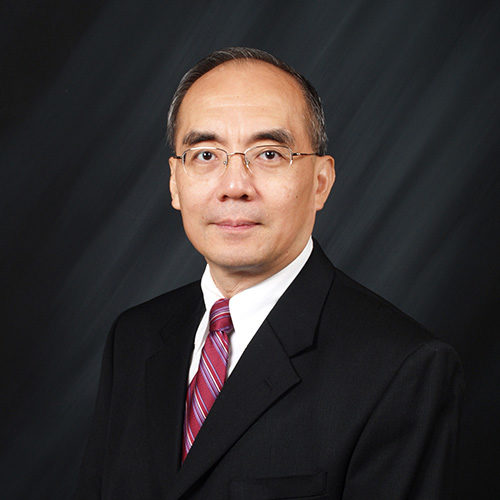
Moody T. Chu is a Professor in the Department of Mathematics at North Carolina State University since 1982, holding a PhD from Michigan State University. His research focuses on numerical linear algebra, dynamical systems, inverse problems, and quantum computing. He has received prestigious teaching awards including the Alumni Distinguished Undergraduate Professorship (2006) and multiple Board of Governors Awards (2010, 2013, 2014). His work bridges computational mathematics with applications in physics, engineering, and data science. Research interests include numerical methods for differential equations, tensor approximation, and quantum simulation. His articles explore topics like Cartan decomposition for quantum Hamiltonians, Lax dynamics, and low-rank tensor approximations. Over 200 publications span numerical analysis, inverse eigenvalue problems, and optimization techniques. Chu’s contributions also address algorithm design for matrix completion and structured low-rank approximations. He has advised numerous graduate students (details not listed here) and led projects on adaptive optics and stochastic processes. His work on nonnegative matrix factorization and Markov chain dynamics has influenced data mining and machine learning applications. Chu’s lab focuses on advancing computational frameworks for complex systems, emphasizing interdisciplinary collaboration.
Zhongyuan Lyu is a Research Fellow (Postdoctoral Research Scientist) at Columbia University's Data Science Institute, mentored by Professors Yuqi Gu and Kaizheng Wang. His research focuses on statistical methodology for latent structures in mixture models, graphical models, and tensor decompositions, with applications to heterogeneous data analysis. Prior to Columbia, he earned his PhD in Mathematics from the Hong Kong University of Science and Technology under Professor Dong Xia's supervision. His academic background includes advanced work in high-dimensional data analysis, latent variable modeling, and computational statistics. Research interests emphasize developing theoretically grounded algorithms for complex data types, particularly in network science and multilayer data frameworks. Recent publications highlight contributions to spectral clustering optimization, adaptive transfer learning frameworks, and tensor-based methodologies for higher-order networks. His work bridges statistical theory and practical applications, addressing computational limits and optimal estimation challenges in modern data science problems. No scientific awards or grants are explicitly mentioned in the provided data. His current position is full-time within the Data Science Institute's research team.
Bart Vandereycken is an Associate Professor in the Mathematics Department at the University of Geneva, specializing in numerical analysis and scientific computing. His research focuses on large-scale and high-dimensional problems solved using low-rank matrix and tensor techniques, with applications in numerical linear algebra, optimization, and nonlinear eigenvalue problems. He previously held positions as an instructor at Princeton University and postdoctoral researcher at EPF Lausanne and ETH Zurich, and earned his PhD from KU Leuven in 2010. His research interests include Riemannian optimization algorithms, multilevel preconditioning, and machine learning applications. He serves as an associate editor for SIAM Journal on Matrix Analysis and Applications and Linear Algebra and its Applications . Bart organizes the Numerical Analysis seminar with colleagues, and advises students interested in numerical analysis or numerical linear algebra. Recent work emphasizes convexity structures in matrix decompositions, robust preconditioning techniques, and scalable low-rank algorithms for high-dimensional PDEs. His 2024–2025 publications explore advancements in Riemannian optimization schemes, subspace iteration methods, and distributed computing applications of matrix decompositions. Key themes include improving convergence guarantees and developing geodesic-based optimization frameworks for challenging numerical problems.
Hiroyuki Kasai is a Full Professor at the School of Fundamental Science and Engineering, Waseda University, where he leads research in signal processing, machine learning, and optimization. He holds a B.Eng. (1996), M.Eng. (1998), and Dr.Eng. (2000) in Electronics, Information, and Communication Engineering from Waseda University. His career includes positions as Associate Professor and Professor at the University of Electro-Communications (2007-2019), Senior Policy Researcher at Japan's Cabinet Office (2011-2013), and visiting roles at Technical University of Munich and British Telecom. His research spans: Fundamental methodologies : Riemannian optimization, stochastic gradient algorithms, tensor decomposition Applied domains : Network analysis, multimedia systems, environmental sound processing, video coding Emerging areas : Low-rank modeling, manifold learning, and large-scale anomaly detection His publications focus on efficient algorithms for high-dimensional data, with recent work emphasizing Riemannian manifold optimization and real-time tensor analysis. This includes development of open-source tools like SGDLibrary (MATLAB) and McTorch (PyTorch) for optimization tasks. Awards include: IEEE ICCE Best Paper Award (2011) Yamashita Memorial Award (2003) Ericsson Young Scientist Award (2001) 電気通信普及財団賞 (2015) IEICE Service Recognition Award (2010) He maintains memberships in IEEE, IEICE, IPSJ, and JSIAM, and has contributed to over 100 peer-reviewed publications with significant citation impact (h-index 27 via Google Scholar).
Paul Breiding is a Professor for Mathematical Methods in Data Science at the University of Osnabrück, within the Faculty of Mathematics/Computer Science/Physics. He is part of the Applied Algebra and Data Analysis working group and the Research Unit Data Science. His research focuses on nonlinear algebra, metric algebraic geometry, and their applications in numerical methods and data science. He is a Fellow of the Junge Akademie Mainz and co-authored the book 'Metric Algebraic Geometry' with Kathlen Kohn and Bernd Sturmfels. His work includes developing the software HomotopyContinuation.jl (v.2.11), which is widely used for numerical algebraic geometry. His research interests span algebraic geometry, tensor decompositions, and computational methods. Recent publications investigate geometric properties of algebraic varieties, condition numbers in tensor approximations, and probabilistic aspects of algebraic structures. Key contributions include studies on the reach of algebraic manifolds, typical ranks of random tensors, and sensitivity analysis in numerical algorithms. His work bridges theoretical algebraic geometry with practical computational tools for data science applications. Software: HomotopyContinuation.jl (v.2.11) Labs/Teams: Applied Algebra and Data Analysis, Research Unit Data Science
Gen Li, PhD, is an Associate Professor in the Department of Biostatistics at the University of Michigan School of Public Health. He holds a PhD from the University of North Carolina at Chapel Hill (2015) and a BS from Beijing Normal University (2010). His research focuses on developing statistical methods for complex biomedical data, including high-dimensional data, tensor arrays, and multi-omics studies. Key interests include dimension reduction, predictive modeling, network analysis, and data integration in genomics, microbiome, and multi-omics contexts. His work has been supported by NIH grants and recognized through awards like the John G. Searle Assistant Professorship (2021). Education: PhD in Statistics, University of North Carolina at Chapel Hill, 2015 BS in Mathematical Sciences, Beijing Normal University, 2010 Research Interests: Low-rank models, tensor analysis, network analysis, longitudinal omics data, microbiome analysis, and data integration. His projects include developing methods for differential analysis of longitudinal omics data, network estimation for multi-omics, and nonlinear regression for microbiome data. Awards: John G. Searle Assistant Professorship (University of Michigan, 2021) Sigma Xi Inductee (2019) Sanford Bolton Faculty Scholar (Columbia, 2018) Calderone Junior Faculty Award (Columbia, 2016) Advising & Grants: Dr. Li’s NIH-funded research emphasizes multi-omics integration and microbiome-driven health studies. His grants support collaborations in cancer, chronic disease, and pediatric health. He advises students on statistical methods for biomedical data analysis. Labs/Teams: Active in the University of Michigan’s Biostatistics Research Group and collaborates with multi-disciplinary teams in genomics and public health.
Dr. William Erickson is a Postdoctoral Research Fellow in the Department of Mathematics at Baylor University, affiliated with the College of Arts & Sciences. He holds a Ph.D. from the University of Wisconsin-Milwaukee (2022) and a B.A. from the University of Notre Dame (2010). Before pursuing his doctorate, he taught middle/high-school mathematics and Latin for eight years, while also managing a local pool as a lifeguard and swim instructor. His research focuses on the representation theory of Lie groups from a combinatorial perspective, invariant theory, and algebraic statistics, with notable contributions to combinatorial algebra and geometric probability. Educations: Ph.D., Mathematics, University of Wisconsin-Milwaukee, 2022 (Advisor: Jeb Willenbring) B.A., Mathematics, University of Notre Dame, 2010 Research Interests: Dr. Erickson explores the intersection of algebra, combinatorics, and geometry, with a focus on Lie groups and their representations. His work often employs combinatorial tools to study invariant rings, Young tableaux, and algebraic statistics. Recent projects include analyzing the earth mover’s distance in probabilistic contexts and developing new methods for reconstructing Young tableaux via minors. Publications Trends: His articles span combinatorial algebra, representation theory, and applied statistics. Notable topics include Demazure products, palindromicity in generating functions, and geometric interpretations of statistical metrics. His work frequently bridges pure and applied mathematics, with applications ranging from optimization to geometric analysis. Scientific Awards & Grants: No awards or grants explicitly listed in the provided text. Advising & Teams: No formal advisees or lab teams explicitly mentioned. His collaborative work includes co-authors like Rebecca Bourn, Jan Kretschmann, and Markus Hunziker.