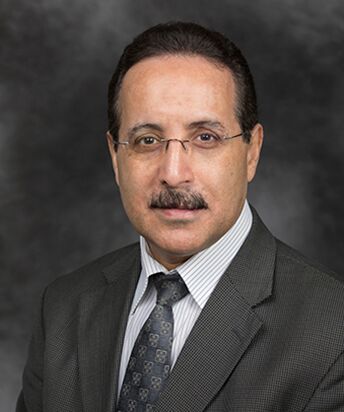
Poul Ejnar Sommer Sørensen is a Professor at the Department of Wind and Energy Systems , Technical University of Denmark (DTU). He specializes in wind power integration, control, and dynamic modeling, with a focus on power quality and system stability. His work spans grid-connected renewable hybrid power plants, offshore wind farms, and low-inertia power systems. Current roles: Guest lecturer in international workshops, supervisor of PhD projects on hybrid power plants, and participant in the NEST Facilities research infrastructure. Leadership: Project leader for IEC 61400-27 standardization and co-chair of the Megavind strategy group. Research trends: Recent articles highlight hybrid power plant optimization, voltage stability in converter-dominated grids, and market strategies for frequency restoration reserves. Scientific Awards : Recipient of the IEC 1996 Award (2012). IEEE Fellow (2021) and IEEE Senior Member (2007). Supervision : Mentors PhD candidates including Zhu, R., Das, K., and Pouraltafi-Kheljan, S. Active in projects like GREAT (Grid Enhancement for Ancillaries in Tomorrow’s power systems) and offshore wind feasibility studies in Mauritius.
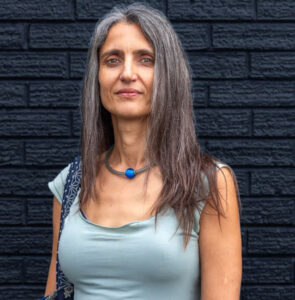
Zdravka Tzankova is an Associate Professor and Director of Undergraduate Studies in Climate and Environmental Studies at Vanderbilt University. She is affiliated with the College of Arts and Science and actively contributes to interdisciplinary research on private environmental governance, climate policy, and environmental justice. Ph.D., University of California, Berkeley, 2007 Her research focuses on the public policy and social equity implications of corporate environmental actions, particularly in decarbonization, supply chain sustainability, and carbon offsetting. She explores how market-based governance and strategic litigation can disrupt institutional inertia and advance environmental progress. Her work bridges academic scholarship with real-world policy impact, often engaging with public audiences through platforms like Fast Company and The Conversation . The recent publications highlight a strong trend toward integrating climate action with equity considerations, especially in urban sustainability, energy access, and biodiversity protection. Her research increasingly emphasizes innovative financial and policy mechanisms—such as monetizing energy efficiency in low-income housing through carbon offsets—that link environmental goals with social justice. Carbon offsetting as a tool for environmental justice Corporate influence on clean energy policy Public-private governance interactions in fisheries and energy Urban and suburban regenerative landscaping Nitrogen pollution impacts on endangered species Zdravka Tzankova advises undergraduate programs and leads curriculum development in Climate and Environmental Studies. While no formal students are listed, her role as Director of Undergraduate Studies suggests active mentorship and academic leadership. Her work is supported by interdisciplinary collaboration and engagement with policy stakeholders, though specific grants are not mentioned. She contributes to advancing frameworks that merge environmental governance with equity-centered solutions. She is involved in research teams focusing on socio-ecological systems, climate justice, and sustainable urban development. Her projects often integrate ecological, legal, and policy perspectives, working across disciplines to develop disruptive tools for persistent environmental challenges.
Pierre Hollmuller is a Lecturer and Scientific Assistant at the University of Geneva, leading the Energy Systems Group since 2017. His work focuses on energy systems analysis, renewable energy integration, and building energy efficiency. He manages a research partnership with Geneva Industrial Services (SIG) and has coordinated over 20 projects, yielding >100 publications. Education: PhD in Science (University of Geneva) and MAS in Energy (EPFL) Research interests include heat pumps, district heating, energy policy, and climate change mitigation. His work emphasizes real-world deployment and participatory approaches in energy projects. Key articles address GHG emissions quantification, heat pump efficiency in buildings, and renewable energy system design. He has advised numerous projects on energy transition and urban sustainability without listed awards. Lab affiliations include the Energy Systems Group at University of Geneva, collaborating with SIG and international partners. His work bridges academic research with practical implementation in energy infrastructure.
Andy Jordan is a Professor of Environmental Policy at the School of Environmental Sciences, University of East Anglia (UEA). He is a leading scholar in the politics of climate change and sustainable development governance, with a strong focus on policy dynamics in the EU and beyond. He is a Research Group Member at the Tyndall Centre for Climate Change Research and the Science, Society and Sustainability (3S) group, contributing to interdisciplinary and policy-relevant research. University: University of East Anglia School: School of Environmental Sciences Academic Rank: Professor Research Affiliations: Tyndall Centre, 3S Research Group His research explores the political dimensions of environmental governance, including policy innovation, feedback, coordination, and dismantling. He investigates how democratic politics shapes long-term climate responses and challenges simplistic views of politics as an obstacle to policy solutions. His work emphasizes the importance of interdisciplinary approaches that bridge academic and non-academic communities to generate actionable insights for societal transformation. Andy Jordan’s recent publications span topics such as greenhouse gas removal, policy durability, Brexit’s environmental implications, and emissions trends in developed economies. His research consistently engages with real-world policy challenges, contributing to debates on decarbonization, climate resilience, and institutional design. He leads major projects like the ERC-funded Deep Decarbonisation initiative and co-leads the ESRC Centre for Climate Change and Social Transformation (CAST), focusing on societal transformations toward net zero. Fellow of the Academy of Social Sciences (FAcSS) Fellow of the British Academy (FBA) Fellow of the Institute for Environmental Management and Assessment (FIEMA) He serves on the Scientific Committee of the European Environment Agency and DEFRA’s Science Advisory Council: Social Science Expert Group, demonstrating sustained policy impact. His advisory roles reflect his influence in shaping environmental governance at national and international levels. While no direct information on student supervision is provided, his leadership in large research projects suggests mentorship of early-career researchers. His work is deeply embedded in collaborative, interdisciplinary teams addressing the complex, intergenerational challenge of climate change.
Álvaro Ortega Manjavacas is an Assistant Professor at the Institute for Research in Technology (IIT), part of the School of Engineering at Comillas Pontifical University, Madrid, Spain. He has been a senior power systems researcher at IIT since September 2020, following prior research roles at LOYOLATech (Loyola Andalucía University) and University College Dublin. His academic background includes a PhD in Electrical Engineering from University College Dublin (2017) and a Bachelor's in Industrial Engineering from the University of Castilla-La Mancha (2013). His research focuses on the modeling, control, and stability of energy storage systems connected to transmission and distribution networks, frequency estimation and control in low-inertia power systems, and the design of advanced monitoring and control systems for flexible energy grids. His work bridges theoretical modeling with practical applications in renewable integration and grid resilience. The recent publications of Dr. Ortega span high-impact journals such as IEEE Transactions on Power Systems, Energy, and Sustainable Energy, Grids and Networks. These works predominantly center on virtual power plants (VPPs), robust optimization under uncertainty, frequency stability, and energy storage integration. Key themes include optimal bidding strategies in electricity markets, real-time operation of renewable-based VPPs, and coordinated control of energy storage with load shedding schemes. His research demonstrates a strong trend toward enhancing power system flexibility and stability in the context of increasing renewable penetration. 10th annual ISGAN Runner-up Award of Excellence Dr. Ortega advises PhD students including H. Nemati and O. Oladimeji, whose theses focus on the optimal operation of renewable virtual power plants. He has secured and contributed to significant research grants, including the Horizon 2020 POSYTYF project and the national PID2021-125628OB-C21 project on counteracting synchronous inertia reduction. He also participates in industry-funded projects with entities like Red Eléctrica de España and I-DE Redes Eléctricas Inteligentes. He is actively involved in the power systems research community, serving in IEEE and IEEE PES, and has organized scientific events such as the ICREPQ'23 conference. His work includes contributions to books and technical reports, further establishing his expertise in frequency control and energy storage modeling.
Dr. Kathrin Lauber is a Leverhulme Early Career Fellow at the Global Health Policy Unit within the School of Social and Political Science at the University of Edinburgh. Her research examines corporate power at the intersection of health policy and climate change, with specialization in food systems governance, advertising regulation, and meta-regulation. Her fellowship (2025-2027) focuses on 'Climate change, meat and inertia: examining strategic ignorance in global policy'. Education includes: PhD in Public Health from University of Bath (2018-2022) MSc in Health Psychology from University of Bath (2016-2017) BSc in Psychology from University of Fribourg (2013-2016) Her research explores how corporate actors influence health and climate policies through political activities, regulatory strategies, and framing techniques. Core themes include analyzing industry influence on food marketing regulations, tobacco control policies, and non-communicable disease governance at both EU and global levels. She employs qualitative methodologies including case studies, framing analysis, and policy evaluation. Publications demonstrate consistent focus on corporate political activity across health domains, with recent expansion into climate-food policy intersections. Article trends show progression from tobacco and alcohol industry tactics to food systems governance, with methodological innovation in regulatory analysis. The research consistently engages with policy implementation challenges in global health governance. Awards: Planetary Health Equity Future Leaders Fellowship (2024) Leverhulme Early Career Fellowship (2025-2027) Leads the Leverhulme-funded project 'Climate change, meat and inertia: examining strategic ignorance in global policy' (2025-2027). Collaborates internationally with researchers at Australian National University and maintains active engagement with policy bodies including WHO Europe. Member of the Global Health Policy Unit's research team examining power dynamics in health governance.
Marek Ciurys is a researcher at the Department of Electrical Machines, Drives and Measurements, Faculty of Electrical Engineering, Wrocław University of Science and Technology. His work focuses on permanent magnet electrical machines, particularly Brushless DC (BLDC) motors and automotive starter systems with integrated electric drives. Research interests: Marek Ciurys specializes in Permanent magnet machine analysis PWM speed control for BLDC motors Integration of electric drives with mechanical systems (e.g., vane pumps) Transient electromagnetic and mechanical behavior Finite element modeling of motors Automotive starter system design Article trends: His publications span 2005–2025, emphasizing BLDC motor dynamics Permanent magnet applications Electric-hydraulic system integration Automotive and renewable energy contexts Computational modeling techniques Experimental validation of designs
Peter Sauer is a Professor and Co-PI at the University of Illinois, holding the W. W. Grainger Chair in Electrical Engineering within the Department of Electrical & Computer Engineering. He serves as Site Director for the NSF-sponsored Power Systems Engineering Research Center and actively leads projects on power system operational reliability. His research specializes in modeling and simulation of power grid components including loads, generators, and smart grid infrastructure, with emphasis on dynamic modeling of renewable resources (wind/solar) and low-inertia generation impacts. Key investigations address contingency analysis, disturbance recovery, and automatic generation control challenges in modernized grids. Scientific Awards IEEE Power & Energy Lifetime Achievement Award Fellow of the IEEE Member of the U.S. National Academy of Engineering Sauer has secured major research funding through NSF initiatives including his role as Program Director for Power Systems (1991-1992) and leadership of the Power Systems Engineering Research Center. His industry impact includes co-founding PowerWorld Corporation (1996-2001) where he served as Chairman of the Board. He directs the Power Systems Engineering Research Center, a multi-institution collaboration advancing grid reliability through synchrophasor technology and resilience-focused projects under the CREDC initiative.
Petros Aristidou is an Assistant Professor in Sustainable Power Systems at the Cyprus University of Technology (CUT), where he directs the Sustainable Power Systems Lab. His academic journey includes a PhD in Engineering Sciences from the University of Liège (2015) and a Diploma in Electrical & Computer Engineering from the National Technical University of Athens (2010). Previously, he held positions as Lecturer at the University of Leeds and Postdoctoral Researcher at ETH Zurich. His research focuses on three primary areas: power and energy system informatics, control of hybrid dynamical systems, and modeling/simulation of large-scale power systems. He specializes in addressing challenges related to low-inertia power systems, renewable integration, and grid stability. Award trends show consistent recognition from IEEE societies, with honors spanning best paper awards (TPWRS, ISGT-Europe), technical report awards, and scholarships. His publications demonstrate a progression from fundamental simulation methods toward applied solutions for renewable integration and grid resilience. TPWRS Best Paper Award (2021) IEEE PES ISGT-Europe Best Paper (2021) IEEE PES PowerTech High Quality Paper (2021) IEEE SEST Best Paper (2020) IEEE Outstanding Technical Report (2018) He leads multiple grants including the Horizon Europe MSCA ITN project Dependable Energy Systems (PI) and industrial collaborations on power system simulation methods. As lab director, he oversees research on power system dynamics and control, participating in international working groups addressing low-inertia system challenges.
Mohsin Jamil is an Associate Professor in the Department of Electrical and Computer Engineering within the Faculty of Engineering and Applied Science at Memorial University of Newfoundland. His research specializes in power electronics, control systems, renewable energy integration, and smart grid technologies. Current projects focus on developing innovative power converters for electric vehicles, grid-forming converters for renewable integration, and AI-based control techniques for energy systems. Research spans several key areas: Advanced power electronic converters for energy storage and renewables Control strategies for community EV charging infrastructure Hybrid power systems for remote applications Neural network applications in power management Funded by NSERC, Mitacs, and university grants, his work has resulted in over 150 publications. Recognized as a Senior Member of IEEE and named to Stanford's World's Top 2% Scientists list in 2024, Jamil serves as Associate Editor for IEEE Access and other journals. Courses taught include Power Electronics, Power Systems Protection, and Grid Integration of Energy Systems. Research supervision includes 12+ graduate students working on projects in power converters, microgrid control, and renewable energy systems. Awards include the Best Teacher Award (2016) and Sidney D. Drell Academic Award (2021).
Hossein Salehfar is Professor at the University of North Dakota's School of Engineering and Applied Science (SEECS), specializing in power electronics, renewable energy integration, and smart grid technologies. His research encompasses electric vehicles, microgrid stability, and machine learning applications in energy systems. Recent publications focus on solar power forecasting, robust control of motor drives, EV-grid integration, and microgrid resilience. His work demonstrates strong emphasis on practical solutions for renewable energy adoption and grid modernization, with consistent application of advanced control strategies and computational methods across power systems.
Dr. Shuting Li is a Postdoctoral Researcher at Aalborg University's Faculty of Engineering and Science within the Applied Power Electronic Systems group. Her research focuses on advanced control strategies for renewable energy integration, particularly in microgrid applications and virtual synchronous generator technologies. Her research interests span Microgrids , Virtual Synchronous Generators , Harmonics Control , and Wind Power Forecasting . She develops innovative control architectures addressing harmonic mitigation, stability enhancement, and energy management in systems with high renewable penetration. Her work bridges theoretical control design with practical implementation challenges in modern power systems. Dr. Li's publication record demonstrates consistent output with 15 research items between 2020-2024, including 7 publications in 2024 alone. Her work shows strong focus on harmonic control ( 46% fingerprint match ), virtual synchronous generators ( 46% ), and energy management systems ( 46% ), with significant contributions to wind power integration ( 30% ) and regenerative braking applications ( 30% ). She has secured research funding through the Harmonic Control Architectures for Virtual Synchronous Generator-based Distributed Generation Systems project (2021-2024), supervised by Professors Guerrero and Vasquez. This PhD project established her expertise in harmonic mitigation for distributed generation systems. Her laboratory work centers on the Applied Power Electronic Systems facility at Pontoppidanstræde 111, where she develops and tests control algorithms for microgrid applications using advanced simulation and hardware-in-loop platforms.
Adria Junyent-Ferre is an Associate Professor in Power Electronics at Imperial College London's Department of Electrical and Electronic Engineering, part of the Faculty of Engineering. He holds a PhD from Universitat Politècnica de Catalunya (UPC) and has extensive experience in power electronics, HVDC transmission, and renewable energy integration. His research focuses on grid-forming inverter control, HVDC grids, and low-voltage distribution systems. He leads the RENGA project, addressing mini-grid expansion in developing regions. He is a Senior Member of IEEE and serves as an Associate Editor for IEEE Transactions on Power Delivery and Sustainable Energy. He teaches control of power electronic converters and real-time signal processing, and directs the Electrical and Electronic Engineering undergraduate program. Education: PhD (2011), MEng (2007) in Electrical Engineering from UPC. Affiliations: Control and Power Research Group, Energy Futures Lab, IEEE PES/CSS. Grants: RENGA project (Global Challenges Research Fund), multiple industry collaborations. Research interests span HVDC systems, modular multilevel converters, and grid resilience. He has authored over 100 publications, focusing on power electronics control, DC microgrids, and renewable integration. His work emphasizes practical applications in smart grids and sustainable energy distribution.
Fabio Mandrile is a Fixed-term Tenured Assistant Professor at the Department of Energy (DENERG) of the Polytechnic University of Turin. He is part of the Interdepartmental Center PEIC - Power Electronics Innovation Center. His research focuses on power electronics converters, electrical machines and drives, with emphasis on grid stability, e-mobility, and wide bandgap semiconductor applications. He teaches courses in power electronics for grid applications, e-mobility, and automotive engineering at the MSc and PhD levels. PhD Supervision: 5 current students researching topics like GaN-based power electronics for BEV/FCEV, modular multilevel shipboard storage systems, and virtual synchronous generators. Research Projects: Leads studies on ultra-fast bidirectional chargers, WBG inverter optimization, and grid-tied inverter control strategies. His work addresses challenges in energy systems integration, including grid support services, fault ride-through strategies, and high-power inverter design. Key contributions include innovative control algorithms for virtual synchronous machines and modular torque control of multiphase motors. Patents include methods for brake actuator control in electro-actuated systems, real-time grid impedance estimation, and integrated electric vehicle chargers. His publications span over 50 peer-reviewed articles and conference papers, with recent focus on GaN-based inverters, grid-forming inverters, and e-mobility applications.
Mohamed Abouyehia is a Researcher in the Department of Electronic and Electrical Engineering at the University of Strathclyde. He holds a Doctor of Philosophy (PhD) in Electronic and Electrical Engineering and can be reached at mohamed.abouyehia@strath.ac.uk. His work aligns with UN Sustainable Development Goals related to affordable and clean energy. Research interests center on power systems, control algorithms, and renewable energy integration. Key areas include inertia estimation in low-inertia grids, analytic hierarchy process applications, wavelet analysis for frequency-domain studies, and system stability. His methodologies bridge electrical engineering principles with computational tools like signal processing and optimization. Recent publications (e.g., 2025) explore inertia mapping via wavelet analysis and comparative reviews of estimation techniques. No scientific awards are listed, but his contributions to energy systems innovation are notable. Advising and grant details are not explicitly provided. Ongoing research likely focuses on advancing grid stability solutions amid renewable energy integration challenges.