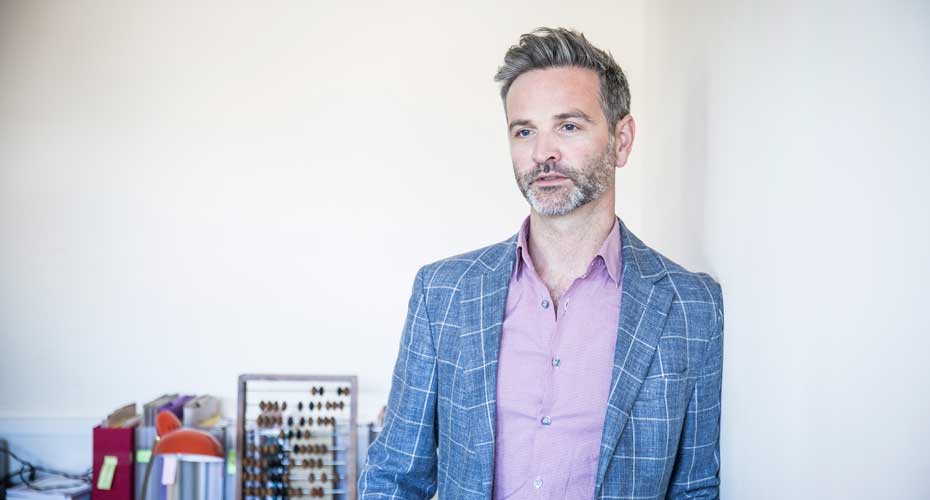
Dr. Juan Diego Rodriguez-Blanco is an Ussher Associate Professor in Nanomineralogy at Trinity College Dublin. His research focuses on experimental mineralogy, particularly mineral nucleation, growth, and interactions with environmental systems. He leads a research group addressing challenges in carbon capture and storage, water decontamination, and strategic metal recycling. His work combines geochemistry with advanced microscopy and interdisciplinary approaches. His research interests include mineral formation mechanisms, pollutant removal via mineral surfaces, and the design of sustainable resource management strategies. Key areas include carbonate mineralization for carbon sequestration, rare earth element recovery from waters, and energy-efficient separation of critical metals. Notable achievements include over €900K in grants as Principal Investigator, supervision of 7 PhD students, and equipment acquisitions. Awards include the 2021 European Association of Geochemistry Distinguished Lecturer and 2014 Distinguished Service Award. Current projects involve collaborations on nanomineral-based filters, geochemical modeling of mineral-water reactions, and advanced microscopy techniques. He has published over 60 peer-reviewed articles and edited special issues on mineral dynamics and rare-earth carbonates.
Dr. Minh Phuoc Huynh is an Assistant Lecturer in the Department of Built Environment at the Faculty of Engineering and Built Environment, South East Technological University (SETU) Carlow, Ireland. He holds a PhD from University College Dublin and has extensive academic and professional experience in structural engineering and computational modeling. Bachelor of Engineering in Civil/Structural Engineering, Ho Chi Minh City University of Technology (2003) MSc in Mechanics of Construction, University of Liège (2007) PhD in Modelling of Crack Propagation in Concrete, University College Dublin (2013) His research focuses on computational modeling with experimental validation in areas such as fracture mechanics, finite element analysis (FEM/X-FEM), development of novel low-carbon and geopolymer concretes, and the mechanical characterization of materials. He investigates the non-linear behavior of brittle materials in the fracture process zone and specializes in intermeshed steel connections and surface contact optimization. The recent publications reflect a strong trend in digital and advanced manufacturing for structural applications, particularly in steel construction and additive manufacturing. His work bridges computational simulation with physical testing, focusing on innovative connection systems and smart material integration. Scientific Awards: Marie Skłodowska-Curie Individual Fellowship Seal of Excellence (91.6%, 2020) Dr. Huynh has been involved in significant research projects related to structural steel assembly and sensor-embedded 3D printed components. He is actively accepting PhD students and contributes to advancing sustainable and efficient construction technologies. His collaborations span institutions in Ireland and internationally, particularly in the domain of structural innovation and digital fabrication. His research group and network focus on advanced manufacturing for construction, including work on the intermeshed steel connection system and sensor integration in metal 3D printing, contributing to smarter and more resilient infrastructure.
Dr. Oliver Kinnane is a Researcher at University College Dublin's School of Architecture, Planning & Environmental Policy within the College of Engineering and Architecture. His research focuses on developing high-performance building materials, particularly innovative concrete technologies for energy-efficient building skins. As a principal investigator on the European Horizon 2020 IMPRESS project, he collaborates with industry partners including Firebird and Techrete to create sustainable solutions for both new construction and building retrofit applications. Dr. Kinnane's research interests center on sustainable building materials, energy efficiency in construction, and reducing the carbon footprint of the built environment. His work addresses critical challenges in building physics, particularly the hygrothermal properties of traditional and innovative materials. He specializes in developing thin, ultra-high-strength concrete skins that improve thermal performance while reducing material usage. His research spans from fundamental material science to practical applications in social housing and commercial buildings, with particular emphasis on Ireland's building stock and climate conditions. Analysis of Dr. Kinnane's recent publications reveals a strong focus on the hygrothermal properties of traditional building materials, particularly Irish stone and brick construction. His work bridges historic building conservation with modern energy efficiency requirements, investigating how traditional materials perform under contemporary climate conditions. A significant portion of his research examines retrofit strategies for existing buildings, with emphasis on accurate material characterization for reliable performance prediction. His publications consistently address the environmental impact of construction, particularly embodied carbon analysis and life cycle assessment of building materials and systems. Dr. Kinnane has secured significant research funding including from the Sustainable Energy Authority of Ireland (SEAI) for the nZEB_101 project monitoring near zero energy buildings in social housing. As principal investigator on the Horizon 2020 IMPRESS project, he leads a 16-partner European collaboration developing innovative prefabricated building panels. His industry partnerships with companies like Firebird and Techrete demonstrate the applied nature of his research, translating academic findings into practical building solutions. Dr. Kinnane's laboratory work focuses on developing and testing novel concrete technologies incorporating phase change materials, cement replacements, and alternative reinforcement systems. His research group collaborates with architects, construction companies, and local authorities to implement sustainable building practices in Ireland. The IMPRESS project demonstration units represent a key aspect of his team's work, validating new prefabricated technologies under real-world conditions.
Dr. Ciaran McNally is an Associate Professor in the School of Civil Engineering at University College Dublin (UCD). He holds a PhD in Civil Engineering from UCD (2001) and a Professional Diploma in Teaching & Learning (2015). His research focuses on advanced materials, including concrete durability, asphalt technology, fiber-reinforced polymers (FRP), and digital design methods like 3D printing and BIM. He has secured over €2 million in research funding, leading EU projects such as the Marie Curie Initial Training Network TEAM (€3.2M). Education: BE, PhD (Civil Engineering, UCD); Prof Dip University Teaching & Learning (UCD) Affiliations: Irish Concrete Society (Treasurer), Engineering Graduates Association Committees: College Executive Board, Safety Committee (School/College), UCD Covid-19 Consultative Committee His research interests span low-carbon concrete, eco-engineering for marine structures, and infrastructure asset management. Notable contributions include studies on reclaimed asphalt in pavements, bio-inspired optimization, and durability of GGBS blends. He coordinates modules like Advanced Materials and Group Design Projects, emphasizing practical engineering and sustainability. Recent articles highlight innovations in 3D-printed concrete, low-carbon materials, and steel stud behavior. McNally’s work bridges academic research with industry applications, promoting sustainable construction practices and lifecycle thinking.