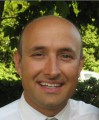
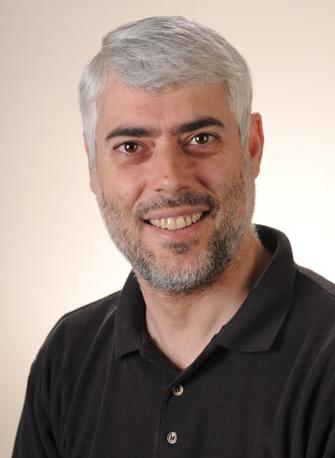
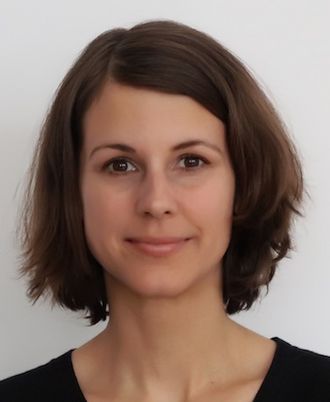
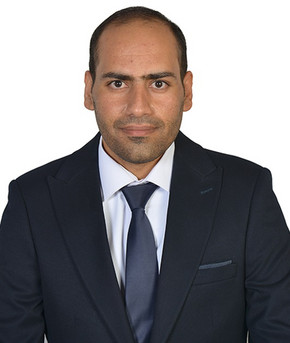
Jean-Marie Bonnin is a Researcher at IMT Atlantique , affiliated with the Network Systems, Cyber Security and Digital Law department. His work spans autonomous industrial vehicles, vehicular networks, and cooperative systems, with a focus on energy management, task allocation, and safety protocols. IMT Atlantique, Rennes Campus Research in Industry 4.0 and Smart Mobility Research Interests : Autonomous Industrial Vehicle Fleets Fuzzy Logic for Multi-Agent Systems V2X Communication Protocols Scientific Contributions include: Modeling energy consumption in extreme-edge IoT nodes Decentralized task allocation for autonomous vehicles Collision avoidance in industrial environments
Prof. Dr. Kumru Didem Atalay is a distinguished academic at Başkent University, specializing in Industrial Engineering . With a PhD in Statistics from Ankara University (2007), she has made significant contributions to Operations Research , Fuzzy Logic , and Decision Support Systems . Her work bridges statistical analysis with real-world applications in healthcare logistics, pandemic response, and manufacturing optimization. Education: PhD (2007), MS (2000), BS (1998) in Statistics from Ankara University Current Role: Professor in Industrial Engineering at Başkent University Her research focuses on stochastic processes , fuzzy modeling , and healthcare operations , particularly in pandemic-era service quality and microchannel manufacturing. She has developed innovative methods for project scheduling , risk analysis , and multi-criteria decision-making . Recent publications examine Covid-19's impact on education quality and fuzzy linear programming for project scheduling . She applies intuitionistic fuzzy models to optimize manufacturing systems and hesitant fuzzy regression for pandemic death count estimation. Scientific recognition includes a Runner-up Prize at the 15th ICMSEM (2021) and a Bronze Medal at ISIF21 (1970). She supervises advanced research on topics like multi-trip home healthcare routing and fuzzy quality function deployment .
Dr. Michelle Ghert is a Professor in the Department of Orthopaedics at the University of Maryland School of Medicine , with a distinguished career in orthopaedic oncology . She completed her residency at Duke University and fellowship at University of Toronto , and previously held academic appointments at McMaster University from 2005–2017 before joining Maryland in 2024. Education : B.A.S. from Stanford University (1992), MD from Vanderbilt University (1996) Leadership : Principal investigator in international trials like PARITY and SAFETY , shaping sarcoma care standards Her research focuses on musculoskeletal tumor management and complex limb reconstruction , with expertise in randomized controlled trials for surgical and oncology protocols. She has received prestigious awards including the 2023 Kappa Delta Ann Doner Vaughan Award and 2019 J. Édouard Samson Award , and holds active grants from NIH , DOD , and the Canadian Cancer Society .
Quincy K. Tran is a Professor in the Department of Emergency Medicine at the University of Maryland School of Medicine. A physician-scientist with dual MD and PhD degrees in Biochemistry, he practices in the Critical Care Resuscitation Unit (CCRU) at the University of Maryland Medical Center, specializing in neurological injuries and critical care processes. Education: BS in Biochemistry (UC San Diego, 1996), PhD in Biochemistry (Virginia Commonwealth University, 2002), MD (Virginia Commonwealth University School of Medicine, 2008). Clinical Expertise: Emergency Medicine, Critical Care, and Resuscitation of transfer patients with spontaneous intracranial hemorrhage and stroke. His research focuses on blood pressure management and improving outcomes for transferred critically ill patients, leveraging clinical data from the CCRU. He founded the Research Associate Program in Emergency Medicine and Critical Care to train future physician-scientists through mentorship and productivity-based learning. Publications highlight innovations in interhospital transfer systems, blood pressure variability analysis, and critical care logistics. His work bridges clinical practice and translational research. Scientific Awards: Excellence for Resident Research (2012) Hero Award (2017, R Adam Cowley Shock Trauma Center) Distinguished Reviewer of the Year (2020, Western Journal of Emergency Medicine) Bronze Snapshot Abstract (2021, Society of Critical Care Medicine) As an editorial board member for multiple journals, he contributes to advancing emergency medicine research. His clinical and academic work emphasizes system-wide improvements in critical care delivery.
Constantin Grigo is a PhD researcher at the Technical University of Munich (TU Munich), actively engaged in the Continuum Mechanics group. His work focuses on Uncertainty Quantification (UQ) and Machine Learning (ML), particularly for applications in maritime safety, bicycle traffic modeling, and stochastic systems. He has presented his research at major conferences like SIAM UQ and WCCM, and has been recognized with Student Travel Awards from SIAM UQ 2018 and SIAM CSE 2019. Education: Master of Science in Physics, LMU Munich (2015) Bachelor of Science in Physics, LMU Munich (2012) Year abroad at Grenoble INP (2010-2011) Research Interests: Probabilistic machine learning for coarse-graining high-dimensional systems Bayesian model and dimension reduction Stochastic differential equations in heterogeneous media Microscopic traffic simulation for bicycles and autonomous vehicles Digital twin applications for maritime and urban mobility Reduced-order modeling of random materials Selected Awards: SIAM UQ 2018: Student Travel Award Winner SIAM CSE 2019: Student Travel Award Winner His publications span topics such as data-driven scenario specification for autonomous vehicles, bicycle maneuver prediction using neural networks, and physics-constrained surrogates for UQ. He also contributes to open-source simulation tools like SUMO for traffic modeling.
Thomas Schnabel is a Research Group Leader and Senior Researcher in Design and Green Engineering at Salzburg University of Applied Sciences, where he heads the Green Materials and Processing research group and leads the Salzburg Center for Smart Materials 2.0 initiative. His work bridges academic research with practical industrial applications in sustainable materials science. His research focuses on: Valorization of wood byproducts, particularly tree bark extracts for multiple applications Development of natural fiber insulation materials from recycled wood residues Life cycle assessment of sustainable material production processes Application of bioactive compounds from bark for biomedical uses Green chemistry approaches to material processing and purification Dr. Schnabel's publication record shows a cohesive research trajectory focused on extracting maximum value from wood processing byproducts. His recent articles demonstrate increasing sophistication in characterizing bark extracts and developing practical applications across construction, biomedical fields, and sustainable manufacturing. The research directly contributes to UN Sustainable Development Goals related to responsible consumption, climate action, and industry innovation. He leads multiple significant research initiatives including: NETTLE: Cross-border cooperation for alpine plant bioactive compounds (2024-2026) DRWO4.0: Danube Region Wood Industry Transformation toward Industry 4.0 (2024-2025) SCSM 2.0: Salzburg Center for Smart Materials 2.0 (2023-2026) User-centered teaching materials development in forestry and bioeconomy (2023-2026) His collaborative network spans the Danube region and beyond, reflecting the international significance of his work in advancing sustainable materials science and engineering practices.
Bertrand VIGNERON is a Professor at the French School of Public Health (EHESP), teaching in the Institute of Management. His career spans biomedical engineering leadership roles at CH Elbeuf (1999-2015) and contractual engineering at CHU Amiens (1997-1999). He specializes in medical logistics, information systems, and project management, with a focus on Agile methodologies. Education: General Engineering Diploma (ENIB, 1996), Specialized Master's in Biomedical Equipment (UTC/EHESP, 1997), EEA License (University of Lille, 1993) Research interests include hospital technical platforms (operating rooms, imaging), healthcare information systems, medical supply chain optimization, and health safety protocols. He has developed international training programs in medical logistics across Ivory Coast, Congo, Algeria, Lebanon, Mongolia, and Vietnam. Key publications cover topics such as business intelligence in healthcare, endoscope sterilization, and radiology equipment digitalization. He has also contributed to national biomedical engineering guidelines and delivered oral presentations at major French medical engineering conferences.
Antonio Miguel Piecho de Almeida Santos is a Coordinator Researcher (Investigador Coordenador) at the Portuguese Institute for the Ocean and the Atmosphere (IPMA) and a member of the Oceanography and Climate Changes Group (OC2) at the Center of Marine Sciences (CCMAR) of the University of Algarve. With over 35 years of research experience, he serves as the Portuguese National Focal Point for the IOC-UNESCO Argo Programme, IPMA's representative in EuroGOOS, EuroGOOS Argo Task Team co-chair, and President of the Portuguese Oceanography Society. His research focuses on physical-biological interactions in the ocean through an end-to-end approach to understanding climate change impacts. His expertise spans fisheries oceanography, fish ecology, and applications of satellite remote sensing to marine fisheries. His recent work emphasizes innovative ocean observing systems, particularly through fishing vessel networks and autonomous technologies. His publication record includes more than 100 papers with 2996 citations and an h-index of 28 (Scopus). Recent research trends show a strong emphasis on DNA-based monitoring approaches, autonomous observation systems, and collaborative global ocean observing networks that bridge the gap between fisheries operations and scientific data collection. Certificate of Outstanding Contribution in Reviewing (2018) Most Cited Progress in Oceanography Articles (2007-2011) (2012) Second most cited Deep-Sea Research I paper in the last 5 years (2005-2009) (2010) Continental Shelf Research Most Cited Paper 2003-2007 Award (2008) Public praise from IPMA (2024) Dr. Santos has supervised numerous PhD and Master's students and currently mentors several doctoral candidates. He has been involved in over 40 national and international research projects (10 as coordinator or PI), including major European Commission initiatives such as Next Generation of Fishing and Aquaculture Services (2021-2024) and Euro-Argo Research Infrastructure Sustainability and Enhancement (2019-2022). His leadership extends to coordinating the Agenda do Mar (Sea Agenda) for the Portuguese Government and serving on scientific councils for state laboratories. He leads the Oceanography and Climate Changes research group at CCMAR, which focuses on developing integrated approaches to monitor and understand marine ecosystem dynamics under changing environmental conditions, with particular emphasis on the Iberian upwelling system and small pelagic fish populations.
Joel Sokol is the Harold E. Smalley Professor in the H. Milton Stewart School of Industrial and Systems Engineering at Georgia Tech. He serves as Director of the interdisciplinary Master of Science in Analytics (MSA) degree, offered both on-campus and online. His academic journey began with a Ph.D. in Operations Research from MIT (1999), followed by bachelor's degrees in Mathematics, Computer Science, and Applied Sciences in Engineering from Rutgers University (1994). Education Ph.D. in Operations Research (MIT, 1999) B.S./B.A. in Mathematics, Computer Science, Applied Sciences in Engineering (Rutgers, 1994) Dr. Sokol's research focuses on Sports Analytics , Health Informatics , and Supply Chain Optimization . He pioneered the LRMC (Logistic Regression/Markov Chain) method for NCAA basketball tournament predictions, which has become an industry standard. His work extends to organ transplantation logistics, maritime shipping networks, and semiconductor manufacturing optimization, blending machine learning with traditional operations research techniques. The articles reflect his interdisciplinary expertise: 2025 introduced a Smart Stadium Testbed for real-time sports analytics, while 2024 addressed Language Model Safety . Earlier publications (2023–2018) focused on transplant survival modeling, vaccine scheduling, and maritime logistics, showcasing his ability to apply analytics to diverse domains. Scientific Awards EURO Management Science Strategic Innovation Prize (2008) Cozzarelli Prize finalist (non-sports research) Georgia Tech's highest teaching awards (multiple years) INFORMS and IISE recognitions for curriculum development As a leader in analytics education, Sokol co-founded the INFORMS Sports Operations Research section and served as INFORMS Vice President of Education. His work has practical applications in professional sports, healthcare, and industry, with methodologies adopted by teams, medical institutions, and global logistics networks.
Sophie N. Parragh is Professor and Head of the Institute of Production and Logistics Management at Johannes Kepler University Linz, where she also serves as program director of the master's degree program in Economic and Business Analytics. She received her PhD from the University of Vienna in 2009 and completed her habilitation in 2016, following postdoctoral research at the IBM Center for Advanced Studies in Porto and a visiting professorship at the Vienna University of Economics and Business. Her research focuses on developing exact and heuristic optimization algorithms for complex logistics and transportation problems. Key areas include vehicle routing, green logistics, disaster relief distribution planning, scheduling, and multi-objective optimization. She has particular expertise in branch-and-bound, branch-and-price, column generation, and metaheuristics approaches to solve challenging combinatorial optimization problems. Dr. Parragh's publication record shows a consistent trend toward increasingly complex multi-objective problems, with recent work focusing on electric vehicle routing, multi-echelon production planning under uncertainty, and bi-objective facility location problems with applications in disaster relief. Her research bridges theoretical optimization methods with practical applications in logistics and transportation. Scientific Awards: ÖGOR (Austrian Society for Operations Research) dissertation prize doc.award from the University of Vienna Hertha Firnberg Postdoc fellowship from the Austrian Science Fund (FWF) Dr. Parragh has served as department editor for OR Spectrum and as associate editor for Transportation Science, Transportation Research Part B: Methodological, INFORMS Journal on Computing, and Networks. She has led and participated in numerous third-party funded research projects in operations research, including work in healthcare logistics, field staff routing, production planning, and electric vehicle routing. In 2021-2022, she co-organized the monthly VeRoLog webinar series, demonstrating her active engagement with the international operations research community. She maintains strong research collaborations across Europe, evidenced by her co-authored publications with researchers from institutions in Austria, France, Portugal, Denmark, and beyond. Her work consistently addresses both theoretical challenges in optimization and practical applications in industry and public service contexts.
Aitor Goti Elordi is a Professor in the Department of Mechanics, Design and Industrial Management at the Faculty of Engineering, University of Deusto. His extensive research portfolio spans industrial engineering, maintenance optimization, Industry 4.0 implementation, and sustainable manufacturing practices. He leads multiple EU-funded and industry-collaborative research projects focused on digital transformation in manufacturing sectors. His research interests center around the intersection of industrial engineering and digital transformation, with particular focus on maintenance optimization using evolutionary algorithms, predictive maintenance systems, and the development of future skills requirements for evolving industrial sectors. His work bridges theoretical research with practical industrial applications, particularly in the Basque manufacturing ecosystem. Analysis of his recent publications reveals a strong trend toward interdisciplinary research addressing Industry 4.0 challenges across multiple sectors. His work consistently focuses on practical applications of data science and AI in industrial contexts, with growing emphasis on sustainability and circular economy principles. A distinctive pattern in his research is the development of competency frameworks to identify future skills requirements across various industrial sectors including steelmaking, renewable energy, and supply chain logistics. Professor Goti Elordi leads multiple significant research projects including SUSTASKILLS (2023-2025) focused on industrial symbiosis skills, REshaping Supply CHAins for Positive social impact (2022-2025), and Real-time acoustic sensorS and artificial Intelligence appLications (2023-2026). His work has secured funding from the European Commission, Basque Government, and major industrial partners including SIDENOR, NEMAK, and ETXE-TAR. He actively supervises student projects, particularly in the area of machinery redesign and additive manufacturing applications. His teaching and research integrate practical industrial experience with academic rigor, emphasizing the development of both technical and transversal skills needed for future industrial challenges.
Dr. Adel Aazami is an Assistant Professor at the Institute of Transport Economics and Logistics at Vienna University of Economics and Business (WU Vienna) since 2023. His academic journey began with a B.Sc. in Industrial Engineering from University of Tehran (2010-2014), followed by an M.Sc. (2014-2016) and Ph.D. (2016-2021) from Iran University of Science and Technology (IUST), Tehran. Prior to his current position, he worked as a Postdoctoral Researcher at Sharif University of Technology (2021-2022) and was a Visiting Researcher at the University of Toronto (2020). His educational background includes: Ph.D. in Industrial Engineering (2016-2021) - Iran University of Science and Technology (IUST), Tehran, Iran M.Sc. in Industrial Engineering (2014-2016) - Iran University of Science and Technology (IUST), Tehran, Iran B.Sc. in Industrial Engineering (2010-2014) - University of Tehran, Tehran, Iran Dr. Aazami's research spans multiple interconnected domains within operations research and supply chain management. His primary focus areas include Operations Research and Optimization, Supply Chain and Logistics, Production and Distribution/Transportation Planning, Competition and Game Theory, Stochastic Programming, and Decomposition Algorithms. His work demonstrates a strong emphasis on developing mathematical models and optimization algorithms for complex supply chain problems, particularly those involving perishable goods, competitive environments, and sustainability considerations. He has made significant contributions to integrating environmental factors into traditional logistics problems and developing robust optimization approaches for supply chain networks. Analysis of Dr. Aazami's publication record reveals a consistent trajectory of increasingly sophisticated research in supply chain optimization. His work shows a clear progression from foundational mathematical optimization techniques to increasingly complex integrated problems involving multiple stakeholders, uncertainty, and environmental considerations. A notable trend is his focus on perishable products within supply chains, developing models that account for limited product lifetimes while optimizing across multiple echelons of the supply chain. More recently, his research has expanded to incorporate green logistics considerations, developing algorithms that balance economic and environmental objectives in transportation and distribution problems. His notable scientific achievements include: Winner of the 'Best Student' award among nationwide students evaluated by the Iranian Ministry of Science (2020) Winner of the Iranian Nobel Prize (known as the Alborz National Foundation Prize) (2019) Winner of the Best Student Award at IUST (2018) Winner of the Top Researcher Award at IUST (2018) Annual Awards of the National Elites Foundation Iran (2015-2020) Dr. Aazami has extensive teaching experience across multiple Iranian universities including Tehran University, Amirkabir Technical University, Isfahan University, Yazd University, Zanjan University, Damghan University, Abrar University and Iran Technical University. His peer review activities include reviewing for prestigious journals such as Soft Computing, Expert Systems with Applications, and Annals of Operations Research. While specific grant information isn't detailed in the provided text, his research output suggests active engagement with complex optimization problems relevant to transportation and logistics industries. At WU Vienna, Dr. Aazami is part of the research team at the Institute of Transport Economics and Logistics, working alongside other faculty members including Prof. Kummer and Prof. Wakolbinger. His research integrates theoretical optimization methods with practical applications in transportation and logistics, contributing to the institute's focus on sustainable and efficient supply chain solutions.
Dr. Wolfram Groschopf is a researcher at the Institute of Transport Economics and Logistics at Vienna University of Economics and Business (WU Vienna). His work focuses on sustainability and digitalization in transport, logistics, and supply chain management, with expertise in quantifying greenhouse gas emissions and traffic congestion impacts.
Chad M. Laux is an Associate Professor at Purdue University's Department of Computer and Information Technology within the Purdue Polytechnic Institute. He serves as the Graduate Education Chair for Computer & Information Technology and Co-Lead of Purdue University's Circular Economy Systems initiative at the Purdue University Institute for a Sustainable Future. Dr. Laux is also President-Elect of IISE SEMS (Institute of Industrial and Systems Engineers - Service Enterprise Management Society). Dr. Laux earned his Bachelor of Science and Master of Science degrees in Industrial Technology from Purdue University in 1995 and 1999 respectively, followed by a PhD in Industrial and Agriculture Technology from Iowa State University in 2007, where he received the Silvius-Wolansky Fellowship for Outstanding Dissertation. As an internationally recognized expert in Lean Sustainability and Six Sigma Systems, Dr. Laux's research integrates Lean principles with sustainability practices to address environmental challenges through circular economy models. His work spans Operations Excellence, Industry 4.0, and Quality 5.0 applications across manufacturing, healthcare, and higher education sectors. His publications demonstrate how organizations can achieve both operational efficiency and environmental responsibility through systematic process improvements. Dr. Laux's scholarly contributions have earned him numerous prestigious awards including the American Society for Quality's Crosby Medal, the Walter E. Masing Book Prize, and multiple International Book Awards. His recent book "Lean Sustainability: A Pathway to a Circular Economy" (2023) received the International Book of the Year Award from the International Lean Six Sigma Institute. With over 200 published works and experience chairing or serving on more than 100 graduate student committees, Dr. Laux maintains active roles as Associate Editor of the International Journal of Lean Six Sigma and Education Chair for the American Society for Quality. His professional affiliations include the American Society for Quality (ASQ), American Society for Engineering Education (ASEE), Association of Technology, Management, and Applied Engineering (ATMAE), and the Institute for Industrial and Systems Engineers (IISE). As a Certified Six Sigma Black Belt with industry experience from General Electric and Caterpillar Inc., Dr. Laux bridges academic research with practical industry applications, focusing on sustainable business practices that enhance both performance and environmental outcomes.
Dominik Moser is a lecturer at the Swiss Distance University of Applied Sciences (FFHS), a postdoctoral researcher at the University of St. Gallen, and a division head at GZO Hospital Wetzikon/Zurich. He is also a PhD candidate at the Technical University Berlin and a visiting researcher at the University of St. Gallen's School of Medicine. His research focuses on health systems and policy , healthcare management , and climate change impacts on health systems . He leads the research group 'Performance and Resilience of Health Systems' at the Chair of Health Economics, Policy and Management. Health Economic Evaluation of healthcare systems Planetary Health and climate resilience in healthcare Digital transformation in healthcare governance Recent publications include studies on cost efficiency in hernia and bariatric surgery , quality indicators in obstetrics and breast cancer treatment , and governance models for sustainable healthcare systems . His work often involves interdisciplinary collaboration with institutions like the IHSRC International Health Systems Research Collaborative and the HSG Swiss Institute for Empirical Economic Research.