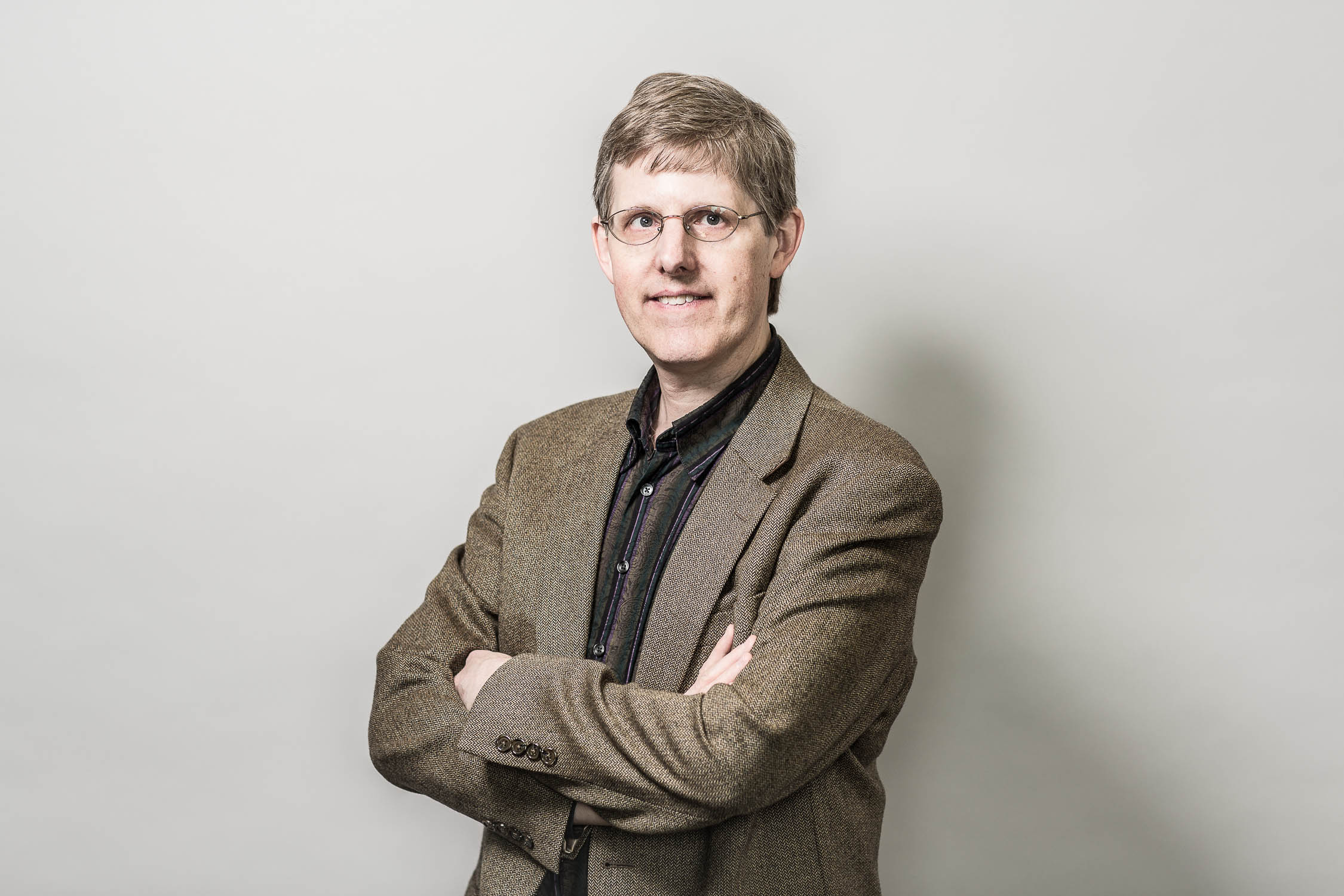
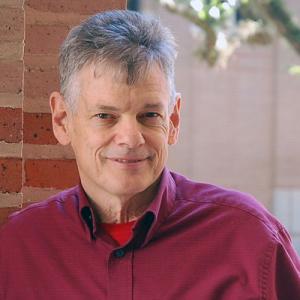
Parke Godfrey is an Associate Professor in the Department of Electrical Engineering & Computer Science at York University. His research focuses on databases, data mining, and artificial intelligence, particularly cooperative query answering, skyline queries, and logic-based query optimization. PhD in Computer Science from University of Maryland, College Park (1999) MS in Information and Computer Science from Georgia Institute of Technology BS in Mathematical Sciences from University of North Carolina at Chapel Hill His current research endeavors include: SPQL (Skyline-based Preference Query Language) for extending SQL Understanding properties of skyline sets Relational algorithms for skyline computation Pareto Search for effective web search Optimizing RDBMS for data mining and scientific applications He has affiliations with: Laboratory for Computer Systems Research at York University IBM Visiting Research Scientist at IBM Toronto Laboratory
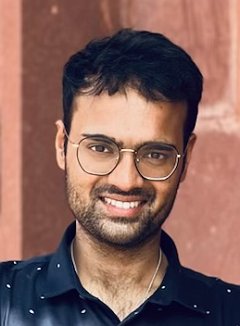
Daniel McKenzie is an Assistant Professor in the Department of Applied Mathematics and Statistics at the Colorado School of Mines. His research focuses on derivative-free optimization, implicit neural networks, and geometric methods in data science. He holds a B.Sc.(hons) and M.Sc. in Mathematics from the University of Cape Town (2010, 2014) and a PhD in Mathematics from the University of Georgia (2019). B.Sc.(hons): Mathematics and Applied Mathematics, University of Cape Town, 2010 M.Sc.: Mathematics, University of Cape Town, 2014 PhD: Mathematics, University of Georgia, 2019 His research explores the intersection of optimization theory and machine learning, with applications in spatial data modeling, geometric data analysis, and high-dimensional clustering. Recent work emphasizes curvature-aware algorithms, comparison-based optimization, and implicit network architectures like LatticeVision. His methods address challenges in non-stationary spatial data and convex game equilibria prediction. Key contributions include Fermat distance metrics for clustering, Jacobian-Free Backpropagation (JFB) for implicit networks, and zeroth-order algorithms for black-box optimization. While no scientific awards are listed, his publications reflect a strong focus on advancing optimization techniques for modern data science problems. No specific grants or advising roles are detailed in the provided text. His work bridges computational mathematics and applied AI, with potential applications in robotics, spatial statistics, and algorithmic game theory.
Richard L. Tieszen is a Professor of Philosophy at San José State University, where he has been teaching since 1989, achieving the rank of Professor in 1998. His academic career spans over three decades with significant contributions to the fields of philosophy of mathematics, phenomenology, and logic. Education: Ph.D. in Philosophy, Columbia University, 1986 M.A. in Philosophy, Graduate Faculty, New School for Social Research, 1978 B.A. with Honors in Philosophy, Colorado State University, 1975 Professor Tieszen's research focuses on the intersection of phenomenology, logic, and the philosophy of mathematics, with particular emphasis on the works of Kurt Gödel, Edmund Husserl, and other key figures in the foundations of mathematics. His scholarship bridges the analytic and continental philosophical traditions, exploring how phenomenological approaches can illuminate fundamental questions in mathematical logic and epistemology. Tieszen has made significant contributions to understanding Gödel's philosophical turn to Husserl's transcendental phenomenology, arguing that this perspective offers valuable insights into the nature of mathematical intuition and objectivity beyond the limitations of formalism and logicism. His work examines the connections between mathematical intuition, consciousness, and the ontology of mathematical objects, challenging purely formal or computational accounts of mathematical reasoning. Tieszen's research also extends to the philosophy of time, exploring the relationship between phenomenological accounts of time consciousness and physical theories of time. Professor Tieszen's publications reveal a consistent focus on bridging continental and analytic philosophical traditions through rigorous examination of mathematical and logical concepts. His work on Gödel's philosophical development, particularly the mathematician's turn to Husserl's phenomenology, has been influential in reshaping scholarly understanding of Gödel's philosophical position beyond the caricature of simple Platonism. Tieszen's scholarship demonstrates how phenomenological methods can contribute to contemporary debates in the philosophy of mathematics, particularly regarding mathematical intuition, evidence, and the nature of mathematical objects. Scientific Awards: University President's Scholar, 2007-08 (highest award at San José State University) National Endowment for the Humanities (NEH) Fellowship, 2006-07 Outstanding Research Award, College of Humanities and Arts, San José State University, 2001-2002 Dutch National Science Foundation (NWO) Fellowship, 1994-95 Faculty Development Assigned Time Award, San José State University, 1990-91 Meritorious Performance and Professional Promise Award, San José State University, 1989-90 National Endowment for the Humanities (NEH) Summer Seminar Fellowship, 1988 Professor Tieszen has served as Associate Chair of the Philosophy Department at San José State University (1992-1999, 2005-2009) and has held numerous visiting positions at prestigious institutions including Stanford University, Universiteit Utrecht, and various research centers in Paris. He has been an active member of the philosophical community, serving on the editorial board of Philosophia Mathematica since 1991 and participating in major research projects such as the transcription and publication of Gödel's unpublished philosophical notebooks ("Max-Phil"). His work has been recognized with the CELJ certificate for "Best Special Issue of 2006" for his guest-edited issue of Philosophia Mathematica on "Gödel on Mathematics and Logic." Throughout his career, Professor Tieszen has developed an extensive research program connecting phenomenological approaches with foundational questions in mathematics and logic, establishing himself as a leading scholar in bridging the analytic and continental philosophical traditions through rigorous engagement with mathematical and logical concepts.
Kevin Kelly is a Professor of Philosophy at Carnegie Mellon University and the Director of the Center for Formal Epistemology. His work bridges formal epistemology, computational learning theory, and philosophy of science, with a focus on Ockham's razor, belief revision, and the topology of inquiry. Key Research Areas: Ockham's Razor, Epistemology, Formal Learning Theory, Modal Epistemic Logic, and Interdisciplinary Applications of Topology. Grants: John Templeton Foundation grant for research on truth-finding efficiency and scientific simplicity. Scientific Awards: John Templeton Foundation grant (2018–2021) Kelly's publications emphasize connections between probabilistic reasoning and qualitative belief, solutions to the lottery paradox, and computational models of knowledge acquisition. His recent work explores lighting design, human-centric ergonomics, and machine learning epistemology, reflecting a deep interdisciplinary engagement with technology and science.
Manuel Rigger is an Assistant Professor at the National University of Singapore in the School of Computing and leads the Trustworthy Engineering of Software Technologies (TEST) Lab . His research focuses on improving data-centric systems , particularly their reliability, having found over 1,000 unique bugs in database systems. Education : PhD in Computer Science (2019) and MSc in Software Engineering (2015) from Johannes Kepler University Linz; MPhil in Chinese Philosophy (2015) from Xiamen University Research Highlights : Developed SQLancer – an automated testing framework that found 500+ bugs in DBMSs; created Query Plan Guidance (QPG) for efficient logic bug detection; received best paper awards at ICSE '23 and EuroSys '24 Scientific Awards : Recipient of 6 distinguished artifact/reviewer awards Major industry support from Google, AWS, and Microsoft Developed tools adopted by Oracle GraalVM and SQLite Teaching : Lecturer for CS3213 Foundations of Software Engineering and CS6223 Advanced Topics in Software Testing . Supervises multiple PhD/MSc theses on database testing and compiler reliability.
Prof. Rineke Verbrugge is a Professor in Artificial Intelligence at the University of Groningen's Faculty of Science and Engineering, affiliated with the Bernoulli Institute. Her research focuses on computational theory of mind, multi-agent systems, hybrid intelligence, and logical frameworks applied to social networks and legal reasoning. She holds additional roles on the Institute Advisory Board of CWI (Dutch National Research Institute for Mathematics and Computer Science) and several ERC/NWO selection committees. Her work bridges cognitive science and AI, emphasizing human-agent collaboration, belief formation in groups, and ethical AI design. Recent projects include developing computational models for theory of mind in negotiations and scenario-based Bayesian networks for legal evidence analysis. She has authored over 220 publications and supervised multiple PhD candidates in AI and logic. Key research themes include higher-order theory of mind applications, zero-one laws in provability logic, and agent-based policy evaluation for sustainable technologies. Her contributions span conferences like AAMAS, ICAIL, and HHAI, addressing topics from lie detection mechanisms to privacy conflicts in multi-user systems.
Paul Franzon is the Cirrus Logic Distinguished Professor and Associate Department Head for Graduate Affairs at the Department of Electrical and Computer Engineering, North Carolina State University. He holds a PhD and Bachelor's in Electrical Engineering and a Bachelor's in Physics/Mathematics from the University of Adelaide, Australia. His research focuses on quantum information science, machine learning-driven hardware design, 3D integration, and high-speed systems. Education: PhD in Electrical Engineering, University of Adelaide (1988) Bachelor's in Electrical Engineering, University of Adelaide (1984) Bachelor's in Physics and Mathematics, University of Adelaide (1982) Research Interests: Quantum computing and algorithm optimization AI-driven design automation for 3D integrated circuits High-speed communication systems Hardware security and FPGA acceleration Awards & Honors: IEEE Fellow (2006) Alcoa Foundation Distinguished Engineering Research Award (2005) NC State Alumni Distinguished Undergraduate Professor Award (2003) NSW Australia Expatriate Scientist Award (2003) Advising & Grants: Advised PhD student Priyank Kashyap (2023 graduate) Recipient of NSF Young Investigators Award (1993) Labs & Collaborations: Center for Advanced Electronics Through Machine Learning (CAEML) IEEE EPS Society (Associate Editor)
Prof. Dr. Markus List is a Professor of Data Science of Systems Biology at the TUM School of Life Sciences, Technical University of Munich (since 2023). He previously served as Group Leader at the Chair of Experimental Bioinformatics (2018–2023) and held a PostDoc position in Computational Biology at the Max-Planck Institute for Informatics (2015–2018). His educational background includes a PhD in Molecular Oncology, an MSc in Bioinformatics from the University of Southern Denmark, and BSc and further studies in Bioinformatics at Eberhard-Karls Universität Tübingen. Current Role: Professor of Data Science and Systems Biology Previous Roles: Group Leader, PostDoc, and Academic Researcher His research focuses on interdisciplinary applications of data science to systems biology, bioinformatics, and molecular oncology. He also explores organizational theory, innovation processes, and the dynamics of routines in management contexts. His work bridges computational methods and organizational challenges, addressing topics like digital twins, distributed innovation, and strategic adaptation. Key contributions include studies on organizational imprinting, digital transformation in firms, and the role of routines in institutional dynamics. His research has been published in top-tier journals and presented at international conferences.
Robert 'Corky' Cartwright is a Professor of Computer Science at Rice University, specializing in programming languages and software engineering. His research focuses on parallel programming extensions for Java/Scala/Swift, smart programming environments for error-free code, pedagogic tools like DrJava, and intent-driven programming in the FAST language. He has contributed to cyber-physical systems modeling through frameworks like Acumen and DrHJ. Education: PhD (Computer Science, Stanford University, 1976), BA (Applied Mathematics, Harvard College, 1971). Awards include ACM Fellow (1998). Teaching emphasizes principles of programming languages and program design. His work bridges theoretical foundations (domain theory, formal semantics) with practical tools for education and industry.
Jasmin Blanchette is a Professor of Theoretical Computer Science and Theorem Proving at the Institute for Informatics, Ludwig-Maximilians-Universität München (LMU), where he also serves as Dean of Studies for Computer Science since January 2024. He is additionally affiliated as a guest researcher with the VeriDis group at Loria in Nancy, France. His research lies at the intersection of automated and interactive theorem proving, with a focus on higher-order logic and proof automation. Key projects include the development of tools like Sledgehammer, Nitpick, and Zipperposition, and foundational work on (co)datatypes and higher-order superposition. His recent publications reflect a strong trend in formalizing and verifying automated reasoning techniques, especially in higher-order logic, with applications in proof automation, SMT solving, and logical verification. Articles frequently appear in top venues such as CADE, ITP, and the Journal of Automated Reasoning. CADE 2023 Best Paper Award for 'Verified given clause procedures' FroCoS 2023 Best Paper Award (with Visa Nummelin and Sander Dahmen) IPA Dissertation Award (awarded to his student Petar Vukmirović) Dutch 'cum laude' distinction (awarded to his student Anne Baanen) Dutch Prize for ICT Research 2022 Blanchette has advised numerous PhD and postdoctoral researchers, many of whom are now active contributors to the formal methods community. He has received significant research grants through projects like Matryoshka and Nekoka. He is also the editor-in-chief of the Journal of Automated Reasoning and plays a central role in organizing key conferences such as ITP, CADE, and CPP. He leads an active research group at LMU, consisting of postdocs and PhD students working on topics such as higher-order superposition, formalization of voting systems, categorical logic, and proof search heuristics. The team collaborates closely with international groups, including those at Inria and TU Wien.
Umang Mathur is an Assistant Professor at the National University of Singapore's School of Computing, where he leads the FOCS Lab and is affiliated with PLSE@NUS. His research focuses on Formal Methods , Concurrency , and Decidability in Programming Languages and Software Engineering . PhD in Computer Science from the University of Illinois at Urbana-Champaign (advisor: Prof. Mahesh Viswanathan) Former Research Scientist at Facebook Inc. and Research Fellow at the Simons Institute Recipient of Google PhD Fellowship, 2024 CPP Distinguished Paper Award, 2023 ACM SIGPLAN Award, and ASPLOS 2022 Best Paper Award His recent work explores algorithmic techniques for detecting concurrency bugs , decidable program verification , and synthesis , with a focus on weak memory models, predictive monitoring, and automata-theoretic approaches. Articles span topics like causal concurrency, tree clock data structures, and probabilistic counting algorithms, reflecting interdisciplinary intersections of logic and systems research. Scientific Awards Google PhD Fellowship 2024 CPP Distinguished Paper 2023 ACM SIGPLAN Distinguished Paper 2022 ASPLOS Best Paper 2018 ESEC/FSE Distinguished Paper He advises PhD students in Formal Methods and supervises teams in the FOCS Lab. Teaching includes advanced modules on Automata Theory, Logic, and Verification at NUS.
Dr. Valentina Tamma is a Lecturer in the Department of Computer Science at the University of Liverpool. Her research focuses on ontologies in open and distributed environments, including Semantic Web, Multi-Agent Systems, and Knowledge Graphs. She leads the Knowledge-Based Agents research group and serves as Area Editor for the Transactions on Graph Data and Knowledge journal. Her recent work explores the intersection of Generative AI and Semantic Web technologies, including competency question engineering, ontology alignment, and knowledge evaluation frameworks. She has co-authored 15+ publications (2023-2025) on topics like ontology reuse, question difficulty prediction, and autonomous agent governance. Dr. Tamma has held significant editorial and organisational roles, including Programme Co-Chair for ISWC 2020 and co-chair of the Alan Turing Institute's Knowledge Graphs Interest Group. She teaches modules such as Ontologies and Semantic Web (COMP598) and Planning Your Career (COMP221). Scientific contributions include: Ontology modularization techniques Negotiation protocols for semantic alignment Knowledge evaluation frameworks AI-driven competency question generation Knowledge Graph applications in life sciences
L. Thomas van Binsbergen is a Professor in the Department of Computer Science & Computer Engineering at the University of Wisconsin-La Crosse, affiliated with the College of Science & Health. His work focuses on language design, formal methods, and policy-based systems. His research explores Executable formal specifications of programming languages Modular meta-language frameworks (e.g., iCoLa+, eFLINT) Data-dependent grammars for network protocols Purpose-based access control derived from GDPR Functional parsing algorithms (GLL, Happy-GLL) Policy enforcement in distributed systems Recent publications (2020-2025) demonstrate trends in language parametric design, security policy formalization, and exploratory programming environments. Notable collaborations include Damian Frölich, Tim Müller, and Tom M. van Engers. Van Binsbergen earned his PhD from Royal Holloway, University of London (2019) and contributes to conferences like GPCE, SLE, and workshops on programming language theory and data security.
Steven O. Kimbrough is a Professor of Operations, Information and Decisions at the Wharton School, University of Pennsylvania. His research spans artificial intelligence, computational rationality, and strategic optimization with applications to political science, economics, and service innovation. He teaches courses like Agents, Games, and Evolution and Thinking With Models , focusing on experimental approaches to bounded rationality and uncertainty in decision-making. Primary Email: kimbrough@wharton.upenn.edu Office: 3730 Walnut Street, 565 Jon M. Huntsman Hall, Philadelphia, PA 19104 His research interests include: Artificial intelligence and metaheuristics for constrained optimization Evolutionary computation in electoral redistricting Agent-based modeling of market dynamics Logic modeling for normative reasoning Text mining applications in event analysis Publications demonstrate expertise in computational economics, political modeling, and service analytics. Recent work focuses on: Empirical validation of electoral compactness Strategic learning in oligopolies Multi-objective matching algorithms Feasible-infeasible solution spaces Service network optimization Teaching emphasizes: Game-theoretic approaches to strategic behavior Modeling life-cycle for energy sustainability Computational experiments in social science
Juho Leinonen is an Academy Research Fellow at Aalto University's Department of Computer Science, Finland, specializing in AI-enhanced computing education. His work focuses on leveraging large language models (LLMs) to transform programming instruction through personalized learning analytics and educational technology. Education Background: PhD in Computer Science, University of Helsinki (2019) Docent (Adjunct Professor) in Computer Science, University of Helsinki Postdoctoral research at The University of Auckland, Aalto University, and University of Helsinki Research Focus: Leinonen's work centers on three interconnected pillars: (1) developing fine-grained learning analytics to decode student programming behavior; (2) applying LLMs to create adaptive educational tools for diverse learners; and (3) implementing learnersourcing strategies for scalable resource generation. His research particularly addresses challenges in multilingual programming education and responsible AI integration, with emphasis on non-native English speakers and novice programmers. Publication Trends: Recent publications (2024-2025) reveal a concentrated exploration of generative AI in computing education, with 85% focused on LLM applications. Key themes include synthetic data generation for educational research, multilingual prompting systems, and ethical frameworks for AI feedback. His work demonstrates both practical implementations (e.g., autocompletion quizzes) and critical analyses of AI limitations in educational contexts. Awards & Recognition: ACE2024 Best Paper Award for LLM-generated worked examples study UKICER 2023 Best Paper Award for achievement goals research ACE 2023 Best Practitioner Paper ICER 2022 Best Paper Award for programming exercise generation SIGCSE TS 2022 Best Paper in Computing Education Research ACE 2021 Best Paper Award for contextualized problem descriptions Research Leadership: As principal investigator of the Academy of Finland-funded project 'Advanced Student Modeling and Tailored LLMs for Personalized Learning', Leinonen supervises PhD students and postdocs while leading international collaborations with institutions including The University of Auckland and University of Helsinki. His grant portfolio focuses on ethical AI deployment in education and cross-cultural computing pedagogy. Collaborative Networks: He maintains active partnerships with leading computing education researchers like Paul Denny (Auckland), Arto Hellas (Aalto), and Andrew Luxton-Reilly (Auckland), evidenced by 90% co-authored publications. His work appears consistently in top venues including ACM SIGCSE, ICER, and ACE conferences.