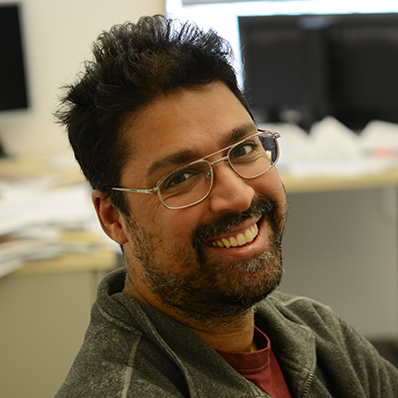
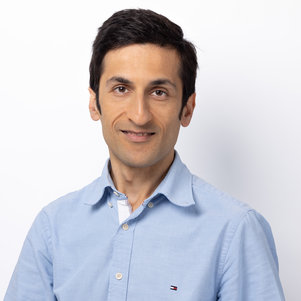
Assoc. Prof. Feza Buzluca is affiliated with Istanbul Technical University as an Associate Professor in the Faculty of Computer and Informatics, Department of Computer Engineering . His academic career spans over two decades at ITU, including administrative roles like Vice Dean (2015-2018) and Faculty Board Membership (2016-). PhD in Control and Computer Engineering from Istanbul Technical University Fields: Computer Software, Communication Networks, Object-Oriented Modeling, Microservices His research focuses on software quality assessment , particularly for microservices architectures using fuzzy logic and code metrics. He explores object-oriented systems through machine learning for defect prediction, module extraction, and design pattern analysis. Recent work includes embedded software testing prioritization and cognitive radio network optimization . Key projects: Personal website and ORCID profile highlight 41 research outputs (2001-2024) and 1 project on microservices-based e-payment systems . Collaborations span IEEE/ACM conferences and journals like Journal of Systems and Software . Contact: Office 4318, Ayazaga Campus, 34000 Istanbul | buzluca@itu.edu.tr
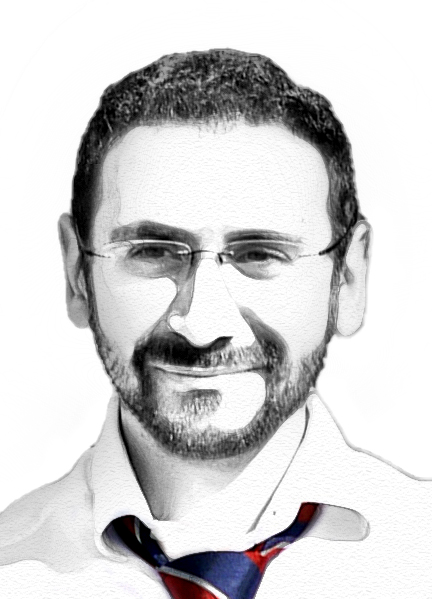
Dr. Neel Krishnaswami is a University Lecturer at the Department of Computer Science and Technology, University of Cambridge. His research focuses on programming languages, type systems, and formal verification. Institution: University of Cambridge Department: Department of Computer Science and Technology Academic Rank: Lecturer His research spans type theory, formal verification, and functional programming. Key contributions include work on refinement types, bidirectional typechecking, and separation logic for systems programming. Recent work trends include bidirectional type systems (2023), formal verification of C code (2023), higher-order automatic differentiation (2022), and comonadic effect systems (2020). Earlier work covers reactive programming (2021), Datalog extensions (2019-2020), and foundational type theory (2013-2015).
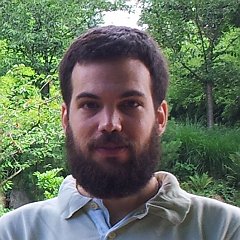
Saverio Giallorenzo is an Assistant Professor (tenure-track) at the Department of Computer Science and Engineering, University of Bologna. He is also a member of the Microservices Community communication group, OLAS team at INRIA (France), and the Italian National Laboratory for Cybersecurity (Bologna node). Previously, he was associated with the Focus team at INRIA (France), Concurrency and Logic group, DISI Jolie Lab, and SPACES groups. Dr. Giallorenzo's research spans multiple areas in computer science with a focus on distributed systems and programming languages. His primary research interests include: Programming Languages Process Calculi Choreographic Programming Microservices Session Types Dynamic Adaptability Security His work bridges theoretical foundations with practical applications, particularly in the areas of serverless computing, microservice architectures, and secure distributed systems. Analysis of Dr. Giallorenzo's recent publications (2024-2026) reveals a strong focus on serverless computing, microservices, and choreographic programming. His research demonstrates a consistent trajectory toward optimizing distributed systems through formal methods. Key themes include topology-aware function scheduling in serverless environments, energy-aware cloud-edge deployments, ransomware investigation frameworks, and formal models for choreographic programming. His work often combines theoretical rigor with practical implementations, as evidenced by tools like the tAPP OpenWhisk extension and SAFARI framework. Dr. Giallorenzo actively contributes to the academic community through teaching and research supervision. He teaches courses including Network Analysis, Programming Languages, and Social Network Analysis at both undergraduate and graduate levels. His teaching spans the First Cycle Degree in Computer Science and Second Cycle Degrees in Artificial Intelligence, Computer Science, and Digital Humanities and Digital Knowledge. His research activities are supported by collaborations with several institutions including INRIA in France and participation in the Italian National Laboratory for Cybersecurity. He has been involved in developing the Jolie programming language and related tools for microservice development and verification.
Associate Professor Bart Jacobs is affiliated with the Department of Computer Science at KU Leuven (University of Leuven) in Belgium, where he is a member of the imec-DistriNet research group. His research focuses on Program Verification and Programming Languages , with a significant emphasis on modular verification techniques for concurrent and object-oriented programs. He has served on program committees for international conferences such as ESOP , POPL , and ECOOP , and has authored numerous papers on topics including separation logic , prophecy variables , VeriFast , and termination analysis . His work addresses theoretical foundations (e.g., category-theoretic approaches to ultra-metric spaces) and practical applications in programming languages like C, Java, and Rust. Scientific Awards: No scientific awards or honors are mentioned in the provided text. Advising & Mentorship: No students are listed in the scraped data. Labs & Teams: Active member of the imec-DistriNet research group, focusing on distributed systems and formal verification.
Carsten Fuhs is a Senior Lecturer at the School of Computing and Mathematical Sciences, Birkbeck, University of London, where he leads the Logical Methods research group (since 2023). His research focuses on automated reasoning for program analysis, including termination/complexity analysis (via the AProVE tool), program equivalence, verification, term rewriting, and SAT solving. He contributes to the SAT4J library and has benchmarked SAT encodings for international competitions. Fuhs's work bridges theoretical foundations and practical tools, with recent emphasis on higher-order rewriting, parallel complexity, and equivalence checking. His publications consistently appear in premier venues (e.g., ESOP, IJCAR, JAR), demonstrating innovations in automating program analysis. He holds significant service roles: Trustee for CADE, Executive Committee member for ACM SIGLOG, Publicity Chair for FSCD, and Co-Chair of IFIP WG 1.6 on Rewriting. He organized the 10th S-REPLS workshop and lectures at international schools (e.g., ISR, SAT/SMT/AR). At Birkbeck, he teaches core programming courses (e.g., Java, Software Programming I/II) and previously taught Compilers at UCL and Term Rewriting at RWTH Aachen.
Catherine Dubois is a Professor at the National School of Computer Science for Industry and Business (ENSIIE) . She has contributed extensively to formal methods, type theory, and functional programming. Her research focuses include the FoCaLiZe project, geometric modeling, and formal verification of software systems. Member of the Samovar laboratory since 2016 Former head of the CPR team at Cedric until 2015 Collaborated with INRIA 's Deducteam Her work in formal methods includes Coq proof assistant applications for ML type safety, partial functions, and general logic formalization. She co-organized conferences like TAP 2018 and SETS 2018 , and co-authored publications spanning type theory , rewriting systems , and compiler verification .
Francesco Maria Puglisi serves as Associate Professor of Electronics at the University of Modena and Reggio Emilia since 2018, leading research in semiconductor device physics with emphasis on emerging memory technologies and neuromorphic systems. His expertise spans characterization, physics-based modeling, and reliability analysis of next-generation electronic devices. His research portfolio prominently features: Resistive Random-Access Memory (RRAM) for non-volatile storage and neuromorphic computing Random Telegraph Noise (RTN) mechanisms in FinFETs and memristors Compact modeling frameworks for device simulation Reliability assessment of 2D materials and III-V semiconductor devices Memory-in-logic architectures enabling non-Von Neumann computation Hardware security applications leveraging device physics Analysis of his 2023-2025 publications reveals a pronounced shift toward in-memory computing solutions, particularly SIMPLY architecture implementations using RRAM/STT-MRAM, alongside deep investigations into ferroelectric device dynamics and RTN-based cryptographic primitives. His work consistently bridges fundamental device physics with practical circuit design for energy-efficient computing. Notable scientific recognitions include: IEEE ICICDT 2013 Best Paper Award for Resistive Memories modeling IEEE ESSDERC 2016 Best Paper Award for RTN in FinFETs IEEE ESSDERC 2019 Best Paper Award for advanced memory characterization Dr. Puglisi has additionally received multiple national awards for academic excellence and research impact. While his advisory activities and grant portfolio aren't detailed in available sources, his extensive publication record demonstrates significant contributions to semiconductor device engineering through both theoretical modeling and experimental validation.
Wouter Swierstra is a professor at Utrecht University , Netherlands, actively contributing to functional programming, formal verification, and type systems. He has served on multiple program committees for conferences like POPL, ICFP, PLDI, and TyDe. His research focuses on functional programming (particularly Haskell), type systems , formal verification , and data structure design . His work bridges theoretical insights with practical implementations, including certified compilers and efficient algorithms. Key article trends include: (1) certifying compiler architectures integrating formal verification, (2) type-safe structural diffing and in-place functional programming innovations, (3) algebraic representations applied to program correctness, and (4) smart contract verification using formal methods. He maintains open-source projects like hbral (heterogeneous binary random-access lists) and Bird (formalized algorithms in Coq), available on GitHub. His contributions span both theoretical papers (e.g., lambda calculus to combinatory logic) and practical tools for functional programming communities.
Viktor Vafeiadis is a tenured researcher at the Max Planck Institute for Software Systems (MPI-SWS) in Germany. He received his BA and PhD from the University of Cambridge (2004, 2008) and worked as a postdoctoral researcher at Microsoft Research Cambridge and the University of Cambridge before joining MPI-SWS in 2010. His research focuses on concurrency , verification of concurrent programs, weak memory consistency , weak persistency , and formal semantics of programming languages. Research Areas: Weak Memory Models, Program Verification, Persistent Programming, Automated Model Checking Key Tools: Cave (automated verification tool), GenMC (model checker), Kater (consistency checker) His recent work explores linearizability under relaxed memory , mixed-size memory accesses , and formalizing ARMv8 persistency . Awards include the ACM SIGPLAN John C. Reynolds Award (2008), ERC Consolidator Grant (2020), and Robin Milner Young Researcher Award (2022). Selected Awards: ACM SIGPLAN John C. Reynolds Doctoral Dissertation Award (2008) ERC Consolidator Grant (2020) ACM SIGPLAN Robin Milner Young Researcher Award (2022) Distinguished Paper Awards: PLDI'17, OOPSLA'21, ECOOP'17 He has mentored numerous PhD students including Ellen Arlt , Pavel Golovin , and Aristotelis Koutsouridis , while alumni advisees include Soham Chakraborty and Michalis Kokologiannakis . His collaborative work spans institutions like University of Cambridge , Microsoft Research , and ETH Zürich .
Professor Jennifer L.M. Rupp is Chair of Solid-State Electrolyte Chemistry at the Technical University of Munich (TUM), School of Natural Sciences, Department of Chemistry. She joined TUM as Full Professor in June 2023 after serving as Associate Professor at MIT's Department of Materials Science and Engineering and Department of Electrical Engineering and Computer Science. Prior to MIT, she was Assistant Professor at ETH Zurich (2012-2016) where she held prestigious externally funded career fellowships including an ERC Starting Grant (SNSF) and an SNF-Förderungsprofessur. Professor Rupp's research focuses on solid-state electrochemical materials and devices, with particular emphasis on processing of ceramic and glass materials, solid-state material design, and tuning structure-property relations for novel energy and information devices. Her team's work spans from alternative energy storage via solid-state batteries, solar-to-synthetic fuel conversion, to novel types of neuromorphic memories and computing logic entities for data storage and transfer beyond transistors, along with new sensing functions to track chemicals in the environment. She takes a comprehensive approach from material design through novel processing techniques to create ceramics, cermets, or glassy-type ceramic structures, up to novel device prototypes and their operation characteristics. Her publication record shows remarkable productivity with over 150 publications spanning from 2002 to the present, with particularly strong output in recent years (8 publications in 2024, 3 in 2025 so far). Her work demonstrates expertise across solid-state batteries, ceramic electrolytes, lithium-ion transport mechanisms, and materials for sustainable energy applications. Her fingerprint analysis shows strong activity in Thin Films, Oxide Compounds, Cerium Oxide, Garnet materials, and All-solid-state batteries. Professor Rupp has received significant recognition including Fellowship in the Royal Society of Chemistry (FRSC), an ERC Starting Grant, and an SNF-Förderungsprofessur. Her research contributes to UN Sustainable Development Goals related to clean energy and sustainable materials. She teaches courses including Solid-State Electrochemistry & Ceramics, Current Results in Solid-State Batteries, and Materials Science at TUM, continuing her commitment to educating the next generation of materials scientists and electrochemists.
Olivier Curé is a faculty member affiliated with Université Paris Est in France, specializing in semantic web technologies and knowledge engineering. His research focuses on distributed RDF processing, knowledge graph management, and edge computing adaptations of semantic technologies. Research Focus: Dr. Curé leads significant work in RDF stream processing systems (Strider engine), knowledge graph compression (LiteMat encoding), and privacy-preserving semantic data management. His recent work explores edge computing adaptations of knowledge graphs, real-time stream reasoning, and distributed SPARQL query processing. Key innovations include privacy frameworks for RDF anonymization and resource-efficient knowledge representation for IoT environments. Publication Trends: His 15 most recent publications (2020-2025) demonstrate a strong focus on: 1) Scalable RDF processing architectures, 2) Knowledge graph optimization for edge devices, 3) Privacy-enhancing techniques for semantic data, and 4) Distributed reasoning systems. This reflects an evolution from foundational RDF storage research toward adaptive, privacy-aware semantic systems for decentralized computing. Research Infrastructure: Dr. Curé contributes to multiple open-source projects including Strider (distributed RDF processing) and ZodiacEdge (Datalog engine), indicating leadership in semantic technology tooling development.
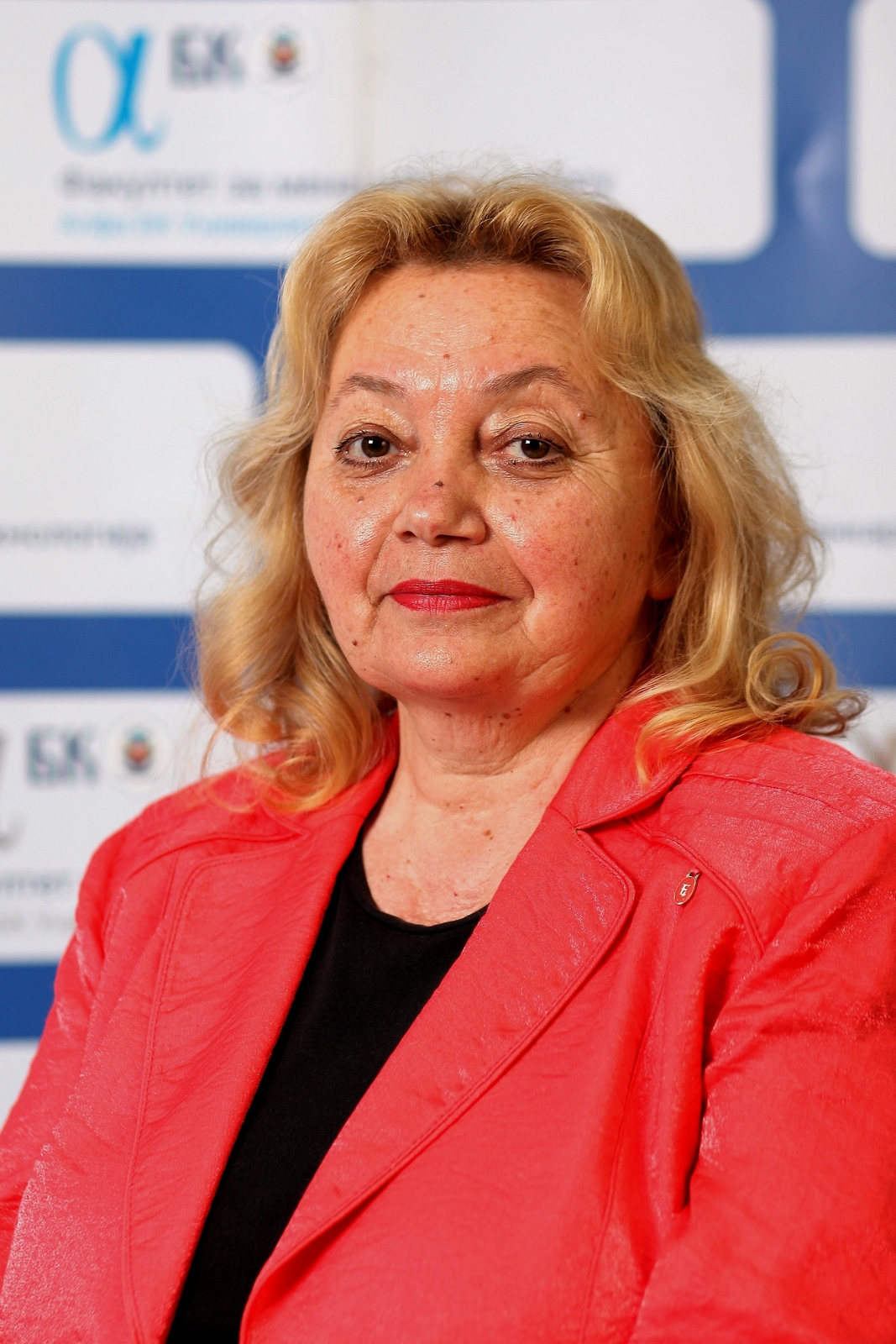
Miroslava Mihajlov Carević is an Assistant Professor at the Faculty of Mathematics and Computer Sciences at Alfa BK University in Belgrade. She holds a doctoral degree in Mathematics and Computer Science, with a thesis on figurate numbers as mathematical models. Her academic journey includes specialist, master's, and doctoral studies at the Faculty of Mathematics in Belgrade and Alfa BK University. Education : Specialist degree in Mathematics Teaching (2001) Master's in Mathematics Teaching (2007) Doctoral degree in Mathematics and Computer Science (2020) Her research focuses on figurative numbers , constructive thinking , and the integration of modern teaching technologies in mathematics education. She has published extensively in international and national journals, as well as conferences, on topics like dominating sets in networks , generating functions , and visual-logical approaches to mathematical problems. Recent publications highlight her work in applied mathematics , statistical evaluation of teaching , and geometric modeling . She has collaborated on studies involving GeoGebra software for educational purposes and network analysis of cactus chains. Despite no explicitly listed awards, her research output and teaching innovations are notable.
Qian Xu is a Sherman Fairchild Postdoctoral Scholar Research Associate at the Walter Burke Institute for Theoretical Physics, California Institute of Technology (Caltech), supervised by John Preskill. Their research focuses on quantum error correction and fault-tolerant quantum computing within Caltech's theoretical physics ecosystem. Education: Ph.D. in Quantum Science and Engineering, University of Chicago (2024), advised by Liang Jiang. Thesis: 'Towards Practical Fault-Tolerant Quantum Computing'. B.S. in Physics, Nanjing University (2019). Research Interests: Xu pioneers approaches to minimize space-time overhead in fault-tolerant quantum systems through novel error-correcting codes and noise-robust processor design. Their work integrates quantum error correction, quantum control, and reservoir engineering to develop practical quantum computing architectures. Key innovations include tailored codes for biased noise environments and hardware-efficient protocols for bosonic qubit systems. Current investigations span quantum LDPC codes, homological product codes, and cat qubit stabilization techniques. Publication Trends: Xu's 12 publications (2021-2024) reveal three dominant research thrusts: (1) Low-overhead fault tolerance using quantum LDPC and homological product codes; (2) Hardware-efficient bosonic qubit systems (cat/squeezed cat codes); (3) Noise-adaptive topological code design. This work demonstrates consistent focus on reducing physical resource requirements while maintaining fault tolerance, with increasing emphasis on experimental feasibility through collaborations with quantum hardware groups. Labs and Teams: As a member of Caltech's Walter Burke Institute for Theoretical Physics, Xu collaborates extensively with the Preskill research group and experimental teams at Harvard/MIT. Their work bridges theoretical quantum information science and near-term quantum device engineering through the Institute's cross-disciplinary framework.
Georgios Meditskos is an Assistant Professor at the Department of Informatics, Aristotle University of Thessaloniki , where he has worked since 2021. Previously, he was a postdoctoral researcher at the Information Technologies Institute (ITI), CERTH (2012–2021) and a lecturer at multiple Greek institutions. Education: PhD (2009), MSc (2007), and BSc (2004) in Informatics from Aristotle University of Thessaloniki. His research focuses on Symbolic AI and Semantic Web technologies, including: Knowledge representation and reasoning (RDF/OWL, rule-based ontology reasoning) Combination of Description Logic and rule paradigms for scalable reasoning Semantic Web services (discovery, composition) Context-based multi-sensor reasoning and data fusion in pervasive environments His publications (over 100) span topics like: Rule-based OWL reasoning systems (e.g., O-DEVICE, DLEJena) Semantic data fusion for healthcare monitoring Hybrid frameworks combining ontologies with production rules Contact details: Office: New Building of School of Sciences, Office 4.18, Aristotle University of Thessaloniki Email: gmeditsk@csd.auth.gr Phone: +30 2310998896
Dr. Iman Esmaeil Zadeh is an Assistant Professor at Delft University of Technology's Faculty of Applied Sciences , specifically affiliated with the Department of Imaging Physics and the Optics Research Group . After completing his PhD in applied physics (2016) at TU Delft, he gained industrial experience at Single Quantum B.V. before returning to academia as a postdoctoral researcher. Academic Background: B.Sc. in Electrical Engineering (Iran), dual M.Sc. in System-On-Chip & Material Physics/Nanotechnology (Sweden) Current Role: Assistant Professor in quantum nano-photonics Research Interests center on: Developing ultrahigh-efficiency single-photon detectors with superconducting nanowires Reconfigurable quantum nano-photonics for hybrid integration His work spans cryogenic technology, photonic circuit design, and quantum device characterization. Recent publications highlight advancements in: Attojoule-scale superconducting memory systems Heterogeneous integration of silicon carbide and lithium niobate Statistical tomography for detector optimization The Optics Research Group focuses on disruptive optical technologies, and Dr. Zadeh contributes through: Quantum photonics experiments Single-photon spectroscopy Superconducting bioimaging applications