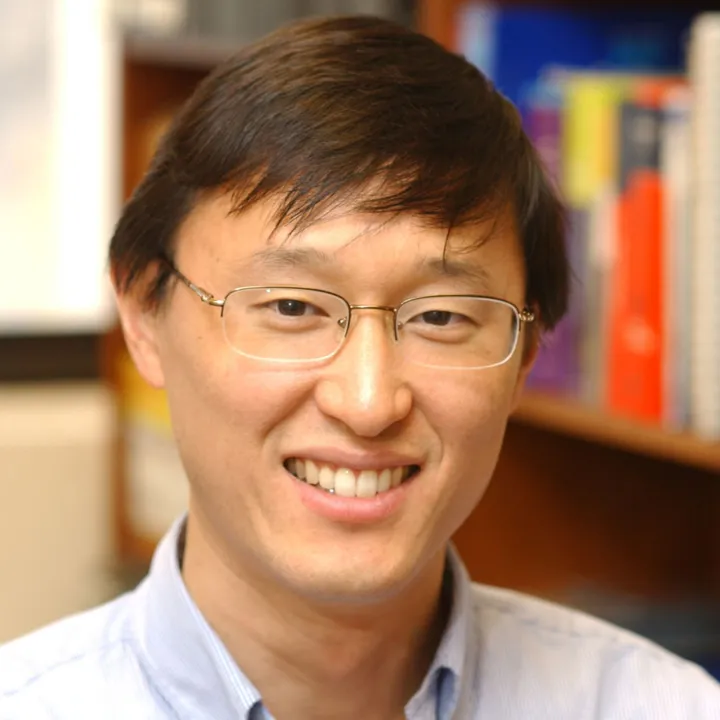
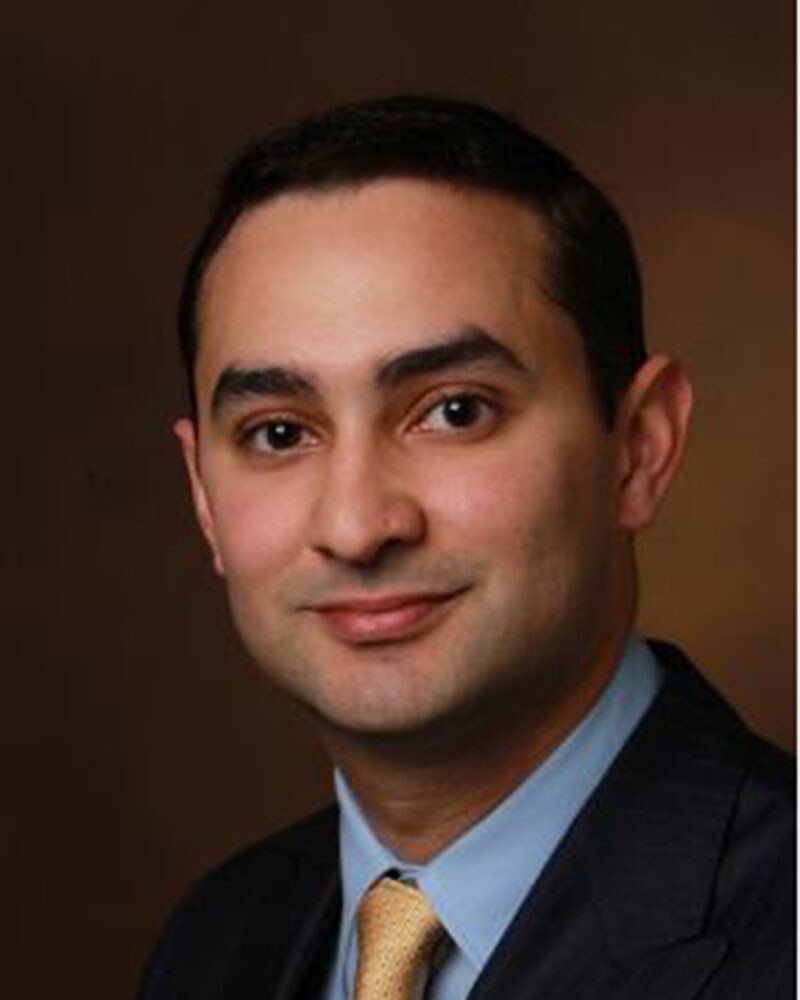
Alexei Kitaev is the Ronald and Maxine Linde Professor of Theoretical Physics and Mathematics at the California Institute of Technology (Caltech). His research focuses on quantum computation, topological quantum phases, anyons, topological insulators and superconductors, and the black hole information paradox. He has pioneered the concept of topological quantum computation, where quantum information is protected through topological properties of many-body systems. His recent publications explore quantum error correction, scrambling dynamics, and holographic principles in SYK-like models, reflecting his interdisciplinary impact on quantum physics, computer science, and condensed matter. His work on the Sachdev-Ye-Kitaev model has advanced understanding of quantum chaos and gravitational phenomena. Kitaev has received numerous accolades, including the MacArthur Award (2008), Breakthrough Prize in Fundamental Physics (2012), Dirac Medal (2015), and Oliver Buckley Condensed Matter Prize (2017). He has taught advanced courses such as 'Quantum Computation' and 'Advanced Condensed-Matter Physics' at Caltech. Scientific Awards: MacArthur Award (2008) Breakthrough Prize in Fundamental Physics (2012) Dirac Medal (2015) Oliver Buckley Condensed Matter Prize (2017)
Chris J. Maddison is an Assistant Professor at the University of Toronto, holding joint appointments in the Department of Computer Science and the Department of Statistical Sciences. He is also a CIFAR AI Chair at the Vector Institute and a member of the ELLIS Society. Maddison earned his DPhil from the University of Oxford and previously worked as a Senior Research Scientist at Google DeepMind and a member at the Institute for Advanced Study. His research focuses on advancing machine learning methodologies, particularly in leveraging data’s natural structure for efficient learning, with applications in drug discovery, causal inference, and AI safety. Education: DPhil in Computer Science, University of Oxford His research interests span machine learning, AI safety, reinforcement learning, and the integration of logical reasoning into large language models. Maddison has contributed to foundational work on gradient estimation techniques and was a key member of the AlphaGo project. He actively explores how statistical structures in real-world data influence AI capabilities. Recent publications emphasize evaluating conversational agents, mitigating AI safety risks, and enhancing logical reasoning in LLMs. His work bridges theoretical advancements with practical applications, such as code generation and multi-agent systems. Awards: NeurIPS Best Paper Award (2014), Open Philanthropy AI Fellowship Maddison advises multiple PhD students and postdoctoral researchers, fostering collaborations across academia and industry. His former advisees now hold roles at institutions like OpenAI, Stanford, and Magic AI. He teaches advanced courses in machine learning and statistical methods, including CSC 2541 (Large Models) and STA 314 (Machine Learning). Maddison is affiliated with the Schwartz Reisman Institute for Technology and Society, extending his impact to societal implications of AI. His lab’s interdisciplinary approach combines algorithmic innovation with real-world problem-solving.
Antonio González is a full Professor at the Barcelona School of Informatics (FIB), Universitat Politècnica de Catalunya (UPC), where he is affiliated with the Department of Computer Architecture. He leads the Microarchitecture and Compilers (ARCO) research group, focusing on robust and energy-efficient computing systems, including general-purpose processors, GPUs, and cognitive computing architectures. His research spans computer architecture, microarchitecture, compilers, GPU design, and deep learning acceleration, with a strong emphasis on energy efficiency and memory optimization. His work integrates hardware and compiler techniques to enhance performance in modern computing systems. The recent publications highlight a strong trend in energy-efficient DNN acceleration, GPU microarchitecture, memory systems, and near-data processing. His team explores novel quantization methods, adaptive caching, and architectural extensions for vision and AI workloads, published in top-tier venues such as MICRO, ISCA, and IEEE/ACM journals. ACM Fellow (2020) ICREA Academia Award (2014, 2019, 2024) UPC Duran Farell Award (2008) HiPEAC 2024 Paper Award (twice) González has supervised several PhD students and leads competitive R&D+i projects, including those funded by ICREA and the European Research Council. His research group collaborates extensively within UPC and with international institutions. He is actively involved in advancing computer architecture through innovation in simulation, hardware design, and AI acceleration. He is a member of IEEE and ACM, and his work continues to influence both academic and industrial developments in high-performance and energy-efficient computing.
Prof. Bryan Ford leads the Decentralized/Distributed Systems (DEDIS) lab at EPFL. He focuses on secure decentralized systems, including blockchain technology, privacy, and systems security. He earned his Ph.D. from MIT and held faculty positions at Yale University and EPFL. His work spans distributed consensus protocols, peer-to-peer networking, and privacy-preserving systems. Key projects include QuePaxa (timeout-free consensus), UIA (global connectivity for mobile devices), and MedCo (secure healthcare data sharing). He advises numerous PhD students and contributes to open-source projects like Bitcoin collective signing and privacy networks like Riffle. Education: Ph.D., MIT; Postdoctoral work at Yale Research interests include blockchain scalability, consensus algorithms, and cryptographic privacy. His lab develops systems like TRIP for coercion-resistant voting and F3B to mitigate blockchain front-running. His work on NAT traversal and peer-to-peer protocols (e.g., STUN/ICE) remains foundational in network architecture. He emphasizes practical, auditable security solutions such as CertiKOS and atomic cross-chain transactions (Atom). Notable contributions: CoSi (collective signing), OmniLedger (sharded blockchain), and privacy-preserving protocols like PURBs (Protected Unsealable Recursive Boxes). His lab collaborates with Swiss Post to audit e-voting systems and designs democratic cryptocurrencies like PoPCoin.
Soheil Salehi is a tenure-track Assistant Professor in the Department of Electrical and Computer Engineering at the University of Arizona, with a joint appointment in Systems and Industrial Engineering. He is the Director of the Privacy-preserving, Intelligent, and Secure Computing (PRISM) Lab, established in August 2022. Prior to this, he was an NSF-Sponsored Computing Innovation Fellow and Postdoctoral Research Fellow at the University of California, Davis. Ph.D., Electrical and Computer Engineering, University of Central Florida, 2020 M.S., Electrical and Computer Engineering, University of Central Florida, 2016 B.S., Isfahan University of Technology, Iran, 2014 Dr. Salehi's research focuses on the intersection of hardware, AI, and security. His work spans hardware and AI-enabled security in IoT , Generative AI for hardware design and security , neuromorphic and biologically-inspired AI hardware , emerging spin-based devices , reconfigurable architectures , low-power VLSI circuits , and digital twins and mixed reality for semiconductor workforce development . He also explores the application of Generative AI in personalized education . His recent publications, spanning 2023–2025, reveal a strong trend toward integrating AI and machine learning into hardware security and design. Key themes include automated secure IC design flows , AI-driven hardware obfuscation , firmware and side-channel attack analysis , security in neuromorphic and spiking neural networks , and educational frameworks using digital twins and generative models . His work appears in top venues like DAC, ICCAD, USENIX Security, IEEE TCAS-I, and ISCAS. Outstanding Reviewer Award, IEEE/ACM Design Automation Conference (DAC), 2023 Best Presentation of the Symposium Award, UC Davis Postdoctoral Research Symposium, 2021 UCF Excellence by a Graduate Teaching Assistant (University-Level), 2016 Nominated for 30-under-30 Award, UCF, 2020 Nominated for Postdoctoral Research Excellence Award, UC Davis, 2022 Dr. Salehi has secured significant research funding as PI and Co-PI, including a $300K NSF SaTC EAGER grant on Generative AI-based Personalized Cybersecurity Tutor, a $174,000 University of Arizona PIF Award, and multiple RII grants totaling over $198K. He has also received industry funding from CHEST. He actively mentors students and leads the PRISM Lab, which focuses on privacy-preserving and intelligent secure computing. His service includes roles as Technical Program Committee (TPC) Member and Session Chair at premier conferences such as DAC, ICCAD, CCS, NDSS, and GLSVLSI. The PRISM Lab, under his direction, conducts cutting-edge research in secure and intelligent hardware systems, with applications in IoT, edge computing, and workforce development. The lab emphasizes interdisciplinary collaboration and innovation in both research and education.
Gordon Plotkin is a Professor at the School of Informatics, University of Edinburgh, where he is affiliated with the Laboratory for Foundations of Computer Science (LFCS). His research lies at the intersection of theoretical computer science and programming language semantics, with a profound influence on the formal understanding of computation. His research interests include Programming Language Theory, Semantics of Programming Languages, Domain Theory, Operational Semantics, Lambda Calculus, Type Theory, Concurrency Theory, and Algebraic Effects. His seminal work on structural operational semantics and domain theory has laid the foundation for modern semantics of programming languages. His publications span over five decades, showing a sustained and evolving research trajectory from foundational work in lambda calculus and domain theory to recent contributions in algebraic effects, probabilistic computation, and biochemical systems modeling. The articles demonstrate a consistent focus on formal methods, mathematical rigor, and the algebraic structure of computational effects. He has collaborated with leading researchers including Martín Abadi, John Power, Glynn Winskel, and John Reynolds. His work continues to influence both theoretical and practical developments in programming languages and systems. Gordon Plotkin has made foundational contributions to computer science, particularly through his development of structural operational semantics and domain-theoretic models of computation. He has advised numerous researchers and supervised many influential PhD theses, though specific student names are not listed in the provided text. His work has been supported by long-standing affiliations with the Laboratory for Foundations of Computer Science and the University of Edinburgh, and he has contributed to major collaborative projects in programming language design and verification. He is associated with several research groups and labs, most notably the Laboratory for Foundations of Computer Science (LFCS), which serves as a hub for theoretical research in programming languages, semantics, and logic at the University of Edinburgh.
Prof. Baker Mohammad serves as Professor and Director of the System on Chip Lab in the Department of Computer and Information Engineering at Khalifa University. With over 15 years of industrial experience at Intel and Qualcomm designing microprocessors and DSP chips, he bridges academic research with real-world engineering challenges in high-performance computing and low-power systems. His educational background includes: Ph.D. in Electrical and Computer Engineering, University of Texas at Austin (2008) M.S. in Electrical and Computer Engineering, Arizona State University B.S. in Electrical Engineering, University of New Mexico Dr. Mohammad's research spans cutting-edge domains where VLSI design converges with AI acceleration and emerging memory technologies . His work pioneers Memristor applications in environmental sensing (radiation, vacuum, glucose) and neuromorphic computing, while advancing energy harvesting systems for wearable electronics. The integration of in-memory computing with security primitives represents a paradigm shift in hardware design, moving beyond traditional CMOS limitations. His publication trajectory reveals accelerating focus on self-powered neuromorphic systems and RRAM-based architectures, with recent work (2021-2023) emphasizing hardware-software co-design for edge AI. Over 75% of his recent publications involve cross-disciplinary collaborations spanning materials science, chemistry, and biomedical engineering. Notable scientific recognition includes: IEEE TVLSI Best Paper Award 2016 IEEE MWSCAS Myrill B. Reed Best Paper Award Qualcomm Qstar Award for Performance Leadership KUSTAR IP Excellence Award Multiple SRC Techon Best Session Papers As a dedicated mentor, he has supervised over 15 graduate students while securing competitive funding from Khalifa University, ADEK, Qualcomm, Tii, and UAE space agencies. His grant portfolio demonstrates exceptional translational impact, converting fundamental research in memristive devices into drone flight computers and medical sensors. Current projects integrate academic rigor with industrial deployment timelines. The System on Chip Lab operates as a multidisciplinary hub where semiconductor physicists collaborate with AI researchers to develop RISC-V-based secure processors and piezoelectric nanogenerator systems. Recent expansions include partnerships with Tii for aerospace applications and medical device startups for glucose monitoring technology.
Jonathan M. Baker is an Assistant Professor in the Department of Electrical and Computer Engineering at The University of Texas at Austin, holding the Advanced Micro Devices Chair in Computer Engineering. His research centers on quantum computer architecture with emphasis on practical quantum error correction implementation across the quantum computing stack. His educational background includes a Ph.D. in Computer Science from the University of Chicago (advised by Fred Chong) and dual B.S. degrees in Mathematics and Chemistry and Computer Science from the University of Notre Dame. Baker's research spans quantum compilation, logic synthesis, multi-radix architectures, and error mitigation for both near-term and fault-tolerant quantum systems. His work addresses critical challenges in quantum hardware-software co-design, with particular focus on optimizing quantum circuits for real-world hardware constraints and noise characteristics. Current projects emphasize qudit-based computing, neutral atom architectures, and efficient error correction implementations. His publication record shows strong focus on quantum architecture innovations, with recent work exploring qudit advantages, modular chiplet designs, and dynamic noise adaptation. Key trends include hardware-aware compilation techniques, communication optimization across quantum systems, and practical approaches to fault tolerance. Best Paper Award Runner Up, MICRO 2020 IEEE Micro Top Pick, 2020 (Virtualized Logical Qubits) IEEE Micro Top Pick, 2020 (Extending Frontier with Qutrits) IEEE Micro Top Pick, 2021 (Emerging Technologies) Best Poster Award, MICRO 2018 Baker actively mentors graduate students in quantum computing architecture research and serves on conference review committees including MICRO and ASPLOS. His teaching includes specialized quantum systems courses at UT Austin and online EdX modules covering quantum computation fundamentals and architecture. He collaborates with the Duke Quantum Center and maintains strong industry connections through the AMD Chair position, focusing on bridging academic research with practical quantum computing implementations.
Charles Ahn is the John C. Malone Professor of Applied Physics & Materials Science at Yale University. His research focuses on fabricating and studying novel complex oxide materials using advanced techniques like molecular beam epitaxy and synchrotron x-ray scattering. His work addresses multifunctional oxides, nanofabrication, and nonvolatile logic switches for post-CMOS computing. Key research areas include electronic control of complex order parameters in correlated oxides and scanning probe microscopy-based nanofabrication. Education: Ph.D. in Applied Physics from Stanford University. Research interests span the physics and technology of complex oxides, with emphasis on electronic and structural control at the nanoscale. His group develops next-generation materials for computing and electronics, leveraging interdisciplinary approaches in materials science and condensed matter physics. Notable awards include Fellow of the American Physical Society, AVS Peter Mark Memorial Award, David and Lucile Packard Fellowship, and Alfred P. Sloan Fellowship. His lab (Ahn Lab) actively explores cutting-edge applications in oxide electronics and quantum phenomena. Grants and patents include innovations in magnetoelectronic devices and ferroelectric-based technologies. He collaborates widely, bridging experimental materials science with theoretical modeling to advance functional oxide systems.
Andras Kis is a Full Professor at the École Polytechnique Fédérale de Lausanne (EPFL), affiliated with the School of Engineering (STI) across multiple institutes including the Institute of Electrical Engineering (IEL), Institute of Materials Science (IMX), and teaching programs in Electrical Engineering (SEL-ENS). He leads the Laboratory of Nanoscale Electronics and Structures (LANES) and serves on the PhD program committee for Microsystems and Microelectronics. PhD, EPFL (2003) MS, Physics, University of Zagreb (1999) Baccalaureate, MIOC High School Research Focus: Pioneering work on 2D materials for electronic and optoelectronic devices, particularly transition metal dichalcogenides like MoS2 and PtSe2. His research spans: Transistor design with atomically thin semiconductors Excitonic devices and valleytronics Nanofluidics and ionic logic Optical properties of 2D heterostructures Scalable fabrication of 2D materials Defect engineering and doping techniques Scientific Impact: Based on analysis of 15 most recent publications, his work focuses on advancing 2D materials for next-generation electronics through innovations in: Van der Waals heterostructures Thermoelectric and optoelectronic applications Nanofabrication techniques Spintronic and quantum transport phenomena Memristive and neuromorphic devices Characterization of electronic and optical properties Awards & Recognition: Fellow of the Institute of Electrical and Electronics Engineers (IEEE) Lotfi A. Zadeh Award for Emerging Technologies (2024) Highly Cited Researcher (Clarivate Analytics) Teaching & Academic Leadership: Currently teaching courses including Lab in Nanoelectronics , Physical Models for Micro and Nanosystems , and Semiconductor Devices II . He has supervised over 20 PhD students in his research group at EPFL. Laboratory & Collaborations: Directs the Laboratory of Nanoscale Electronics and Structures (LANES) which focuses on fundamental and applied research in 2D materials and nanoelectronic devices. His work bridges materials science, condensed matter physics, and microelectronics engineering.
Andrew Ollett is an Associate Professor and Director of Graduate Studies in the Department of South Asian Languages and Civilizations at the University of Chicago , where he has taught since 2019. His research focuses on the literary and intellectual traditions of South and Southeast Asia, particularly through works in Sanskrit, Prakrit, Apabhramsha, and Kannada from the first millennium CE. Co-founder and editor of NESAR (New Explorations in South Asia Research) Director of NEH-funded edition/translation of the Kavirājamārga (earliest Kannada literary manual) Expert in Prakrit and Kannada literary traditions His work explores the 'question of language'—examining how language choice shaped cultural production and change in premodern India. Current projects include a monograph on context-sensitivity in Indian language theories and a study of manuscript technology's impact on early South Asian knowledge communities. He has authored The Mirror of Ornaments (Naples: Unior Press, 2025) and Language of the Snakes (UC Press, 2017), and co-authored Lilavai (Harvard, 2021). Recent publications include interdisciplinary studies on: Sanskrit-Prakrit campū genre reevaluation Pragmatics in Mīmāṁsā interpretive concepts Manuscript literacy's influence on literary forms Historical linguistics of Middle Indic syllable reduction Philosophy of language in Śālikanātha and Kumārila Bhaṭṭa Awarded the NEH 'Scholarly Editions and Translations' grant , he teaches classical South Asian literature courses covering Sanskrit, Prakrit, and Tamil traditions. He maintains digital resources including a Prakrit Digital Texts Project and Mīmāṁsādigdarśinī digital text repository, and actively contributes to open-access scholarship.
Daniel Balasubramanian is an Adjunct Associate Professor of Computer Science and Research Scientist at Vanderbilt University's School of Engineering. His research focuses on cybersecurity, software verification, and cyber-physical systems, with expertise in symbolic execution, code analysis, and formal methods. He contributes to advancing secure systems through frameworks like RAMPART for adversarial defense and Syntheto for formal verification. His work intersects edge computing, hardware security, and autonomous systems resilience. Research Interests: Cybersecurity (including ethical hacking, network defense), formal methods (verification, theorem proving), edge computing (tinyML, cloud integration), and cyber-physical systems (emulation, testbeds). His recent work emphasizes assurance provenance in software documentation and adversarially robust autonomous systems. Publications since 2019 highlight contributions to cybersecurity testbeds, reinforcement learning for penetration resistance, and hardware security against rowhammer attacks. He has explored domain-specific languages (Syntheto), incremental modeling techniques (differential-formula), and cloud-edge service resilience against adversarial perturbations. Labs/Teams: Affiliated with the Institute for Software-Integrated Systems (ISIS), focusing on integrating software with physical systems through model-driven approaches and cybersecurity innovations.
Professor Nick Chater is a leading figure in the field of Behavioural Science, affiliated with the University of Warwick at Warwick Business School since 2010. He has held previous chairs in psychology at Warwick and UCL. His research spans cognitive and social foundations of rationality, with applications to business and public policy, and he has authored over 200 papers and six books. He is a fellow of the British Academy, Cognitive Science Society, and Association for Psychological Science. His research interests include cognitive science, behavioral economics, decision making, and computational psychology, with a focus on reasoning, language, and mathematical modeling of mental processes. He has been recognized with prestigious awards such as the Spearman Medal, Experimental Psychology Society Prize, and the David E Rumelhart Prize for lifetime achievement in cognitive science. His work extends to practical applications through co-founding Decision Technology and advising the UK government's Climate Change Committee and the Behavioural Insight Team. Recent publications highlight his interdisciplinary approach, bridging economics, cognitive science, computational modeling, and behavioral public policy. Topics include thermal macroeconomic theory, Bayesian sampling, paradoxes in cognition, and language emergence via social interaction. These works emphasize probability judgments, moral cognition, and computational limitations in human inference. British Psychological Society's Spearman Medal (1996) Experimental Psychology Society Prize (1997) David E Rumelhart Prize (2023) PROSE Award (2019) Chater's academic contributions include collaborations with researchers like Adam N. Sanborn, Hossam Zeitoun, and Morten H. Christiansen, focusing on Bayesian inference, behavioral public policy, and cognitive modeling. He has also been a resident scientist on BBC Radio 4's The Human Zoo.
Danqi Chen is an Associate Professor in the Department of Computer Science at Princeton University's School of Engineering and Applied Science. Their research focuses on advancing large language models (LLMs), with emphasis on model alignment, safety, and long-context reasoning capabilities. Key research areas: LLMs, AI safety, retrieval systems, and model optimization Recent work explores theorem proving, context encoding, and ethical content generation Their 2025 publications highlight innovations in formal verification scaffolding, attention mechanism efficiency, and copyright-aware generation. 2024 studies investigate continual memorization, rule-based chatbot representations, and scientific literature retrieval benchmarks. Current projects demonstrate commitment to improving model robustness, interpretability, and security compliance in multimodal systems.
Jelle Hellings is an Assistant Professor in the Department of Computing and Software at McMaster University , Canada. His research focuses on high-performance large-scale data management systems with a strong theoretical and algorithmic component, including resilient systems (blockchains) , graph databases , and external-memory algorithms . He previously worked as a Postdoc Scholar at the University of California, Davis and earned his PhD from Hasselt University in Belgium. Education: Doctor of Sciences in Computer Science (2018), Hasselt University Master of Science in Computer Science and Engineering (2011), Eindhoven University of Technology His research interests include scalable resilient systems with Byzantine fault tolerance, database theory, graph query languages, constraints on graph data, and external-memory algorithms for large graph datasets. He has authored numerous high-impact publications on blockchain-based resilient systems, query optimization in graph databases, and theoretical advancements in relation algebra expressiveness. Hellings actively contributes to academic service through program committee memberships and tutorial organization, and he currently teaches courses on future resilient databases and foundational computer science topics.