Robin Bauwens is an Assistant Professor at the Department of Human Resource Studies , Tilburg School of Social and Behavioral Sciences , Netherlands. He earned his PhD in Business Economics from Ghent University, focusing on performance management in higher education. Research Focus: Technology's impact on employee well-being and performance, particularly through HRM and leadership in digitizing organizations His recent work explores Digital Leadership , Artificial Intelligence in HRM , and Strengths-Based Coaching , with publications appearing in top journals like Human Resource Management Review and BRQ-Business Research Quarterly. Key Awards include the H2020-MSCA-IF Fellowship (2020) and the Review of Public Personnel Administration Best Article Award (2022). External Role: Owner of TalentMetrics consulting firm
Charles E.H. Berger serves as Professor by Special Appointment in Criminalistics at Leiden University's Institute for Criminal Law and Criminology since November 2011, a position funded by the Stichting Leerstoel Criminalistiek. He concurrently holds a principal scientist position at the Netherlands Forensic Institute (NFI), where he contributes to education, R&D strategy, and research on forensic evidence interpretation. His research program centers on logically sound interpretation of forensic evidence through probability theory and computational methods. Berger specializes in applying Bayesian statistics to forensic anthropology, personal identification, and evidential evaluation. His work emphasizes moving forensic science toward activity-level interpretations while managing contextual information to prevent bias. Berger plays a pivotal international role as member of ISO technical committee TC272, serving as lead editor for Part 4 (Interpretation) of the ISO-21043 Forensic Sciences standard. His scholarly contributions focus on improving forensic reasoning frameworks and establishing objective evaluation methodologies. His publications demonstrate consistent engagement with foundational forensic science challenges, particularly in developing statistically rigorous approaches to evidence interpretation that maintain scientific integrity within legal contexts. Berger actively promotes scientifically sound practices across the criminal justice system, emphasizing the importance of clear communication between forensic scientists, legal professionals, and other stakeholders to ensure proper understanding and application of forensic evidence.
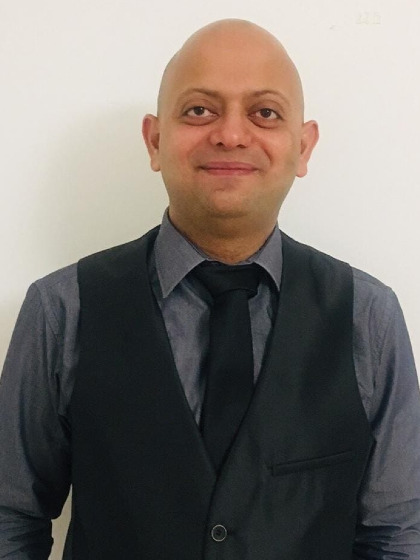
Dr. Farhad Merchant is an Assistant Professor of Innovative Computer Architecture at the Bernoulli Institute, University of Groningen, since July 2024. Previously, he served as a Lecturer (Assistant Professor) at Newcastle University (2022–2024) and held research roles at Bosch Research, NTU, and RWTH Aachen University. His research focuses on emerging technology-based computing and hardware-oriented security, including neuromorphic architectures, in-memory computing, and secure hardware design. Education: PhD in Electronics Engineering from the Indian Institute of Science, Bangalore, with a DAAD-funded visit to RWTH Aachen University. He also holds industry experience from Bosch Research. Research Interests : - Hardware Security - Neuromorphic Computing - Algorithm-Architecture Co-design - Reconfigurable Computing - Computer Arithmetic Projects : - Coordinator for the REACT project (2025–2029): Focuses on self-aware neuromorphic architectures. - Principal Investigator for Privacy-Preserving Computer Architectures (CogniGron, 2025–2029). - Completed BioNanoLock project (DFG-funded, focusing on bio-nanoelectronic security). Awards : - Best Paper Awards at ISQED 2022, NEWCAS 2023, and VLSI-DAT 2024. - Minerva Fellowship (Technion, Israel), HiPEAC Technology Transfer Award (2019). He co-founded the SeHAS workshop (since 2019) and serves on editorial and program committees for major conferences like DAC, ISLPED, and VLSI-SoC.
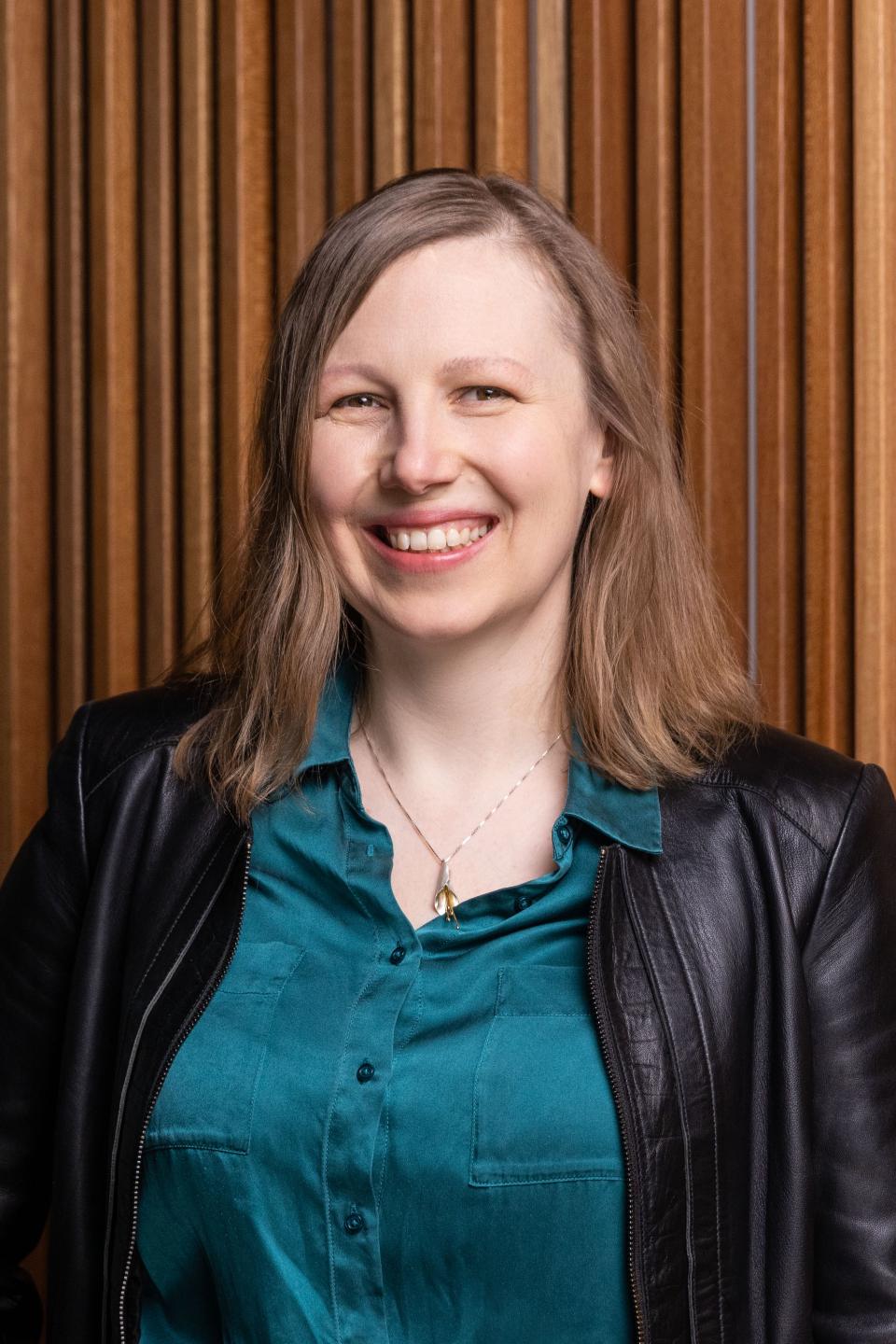
Annemarie Kalis is an Associate Professor in Theoretical Philosophy at the Department of Philosophy and Religious Studies, Faculty of Humanities, Utrecht University. Her academic career spans over fifteen years with significant contributions to philosophy of psychology, action theory, and philosophy of mind. She maintains an active research profile with numerous publications in leading philosophy and interdisciplinary journals. Dr. Kalis's research primarily focuses on agency, normativity, and reasoning , with particular emphasis on self-control, akrasia (weakness of will), and the philosophical implications of ecological psychology. Her work often employs a neo-Wittgensteinian approach to mind-related phenomena and has increasingly engaged with Gilbert Ryle's ideas on reasoning and perception. She has developed a situated perspective on self-control that challenges traditional mechanistic understandings. Her scholarly output demonstrates a consistent trajectory from early work on akrasia and irrational behavior through to her current situated approach to self-control. The articles reflect a deep engagement with interdisciplinary perspectives, bridging philosophy with psychology, cognitive science, and even applications to mental health conditions like eating disorders. Her work shows increasing attention to ecological and situated approaches to philosophical problems. Dr. Kalis has received significant research funding, including an NWO-VENI grant (2014) for her project on the metaphysics of psychological attitudes and an NWO-VIDI project (2019-2024) titled 'Shaping our action space: a situated perspective on self-control.' These competitive grants from the Netherlands Organization for Scientific Research highlight the significance and innovation of her research program. She has contributed to major debates in philosophy of mind and psychology, including discussions on implicit bias, folk psychology, and the network approach to psychopathology. Her work often challenges reductionist approaches while developing nuanced philosophical frameworks for understanding human cognition and behavior. Dr. Kalis's research demonstrates how philosophical analysis can provide valuable insights for empirical research in psychology and cognitive science.
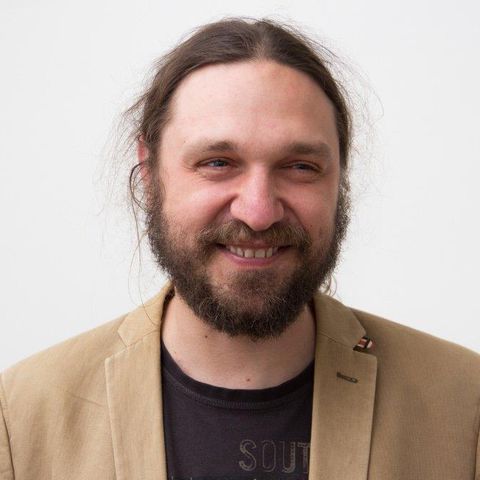
Madis Talmar is an Assistant Professor of Innovation and Entrepreneurship at Eindhoven University of Technology (TU/e) , affiliated with the Industrial Engineering and Innovation Sciences (ITEM) Group . He holds a Ph.D. from TU/e and a D.Sc. from Aalto University (2018), focusing on organizing innovation in transitioning domains. His teaching includes the Introduction to Technology Entrepreneurship course (425+ students) and the Data Entrepreneurship in Action III at the Jheronimus Academy of Data Science. He has been nominated for the Industria Teaching Award three times (2017–2019). His research centers on innovation ecosystems , open innovation programs , and energy transition dynamics . He pioneered the Ecosystem Pie Model (published in Journal of Business Venturing Design ), a tool for analyzing innovation ecosystems. He supervises 2 PhD students and 1 PDEng, contributing to projects like the SMART-SPACE Interreg initiative . His sectoral expertise spans energy and mobility, with consultancy work for corporations in Spain, Germany, Sweden, and Belgium. Madis has authored over 70 student theses across levels and co-founded three startups. His awards include a nomination for the Best TU/e PhD Dissertation Award (2019) and a Best Paper Award nomination (2019). He also chairs entrepreneurship education initiatives like the 4TU Entrepreneurship Research Network and organizes conferences on topics like regional energy strategy.
Oktay Türetken is a Full Professor at Eindhoven University of Technology (TU/e) in the Industrial Engineering and Innovation Sciences school, specializing in Information Systems . He chairs the Industrial Engineering Bachelor Program and contributes to the European Research Center for Information Systems (ERCIS) in Münster, Germany. PhD in Information Systems Research Fellow at European Research Institute in Service Science (2008-2012) Adjunct Lecturer at METU’s Software Management program (pre-2008) His research focuses on digital innovation and collaborative business models , particularly in urban mobility. He develops methods for operational design , business process management , and data analytics maturity models . Key projects include MobilitEU and EU-funded initiatives in smart mobility. Recent publications address KPI frameworks for business models, platform design for shared mobility, and maturity models for organizational capabilities. He leads multi-disciplinary teams and has co-authored over 129 research outputs, including 2025 articles in Production Planning & Control and Business & Information Systems Engineering . 2021 : 1st Prize at DESRIST for paper prototype 2022 : 1st Prize for MaaS Platform Features research He supervises PhD candidates Ginger Korsten , Yasmin Rettab , and Stella Lo Giudice , and teaches courses like Digitalization and Enterprise Systems and Green and Digital Transformation . His work bridges academic research with industry consultancy via Cogniton Business Engineering Consultancy.
Tom F.A. de Greef is a Full Professor at Eindhoven University of Technology's Biomedical Engineering department, leading pioneering research at the intersection of synthetic biology, molecular computing, and engineered living systems. He founded the Center of Living Technologies and serves as a Core Professor at the Institute for Complex Molecular Systems (ICMS). Key research areas: Biological Computing Devices, DNA-based Data Storage, Engineered Living Materials, Synthetic Cell Engineering, Digital Chemistry, and Protocell Communication. His work has resulted in over 100 publications in Nature , Nature Chemistry , and Nature Nanotechnology , supported by prestigious awards including ERC Consolidator, Starting, and PoC grants, as well as NWO's VICI, VIDI, and VENI grants. He received the Cram-Lehn-Pedersen Prize in 2017 and was named a Groundbreaking TU/e Researcher in 2022. Leadership roles: Founding member of Center of Living Technologies, Principal Investigator at TU/e, and Fellow of the Netherlands Academy of Engineering. He supervises a large research group with >15 PhD students and leads collaborations across international institutions, focusing on programmable molecular systems and sustainable technologies aligned with UN SDGs.
Anna Wilbik is a Professor in Data Fusion and Intelligent Interaction at the Department of Advanced Computing Sciences, Faculty of Science and Engineering, Maastricht University (The Netherlands). Her research bridges data understanding and human-machine synergy in complex systems, focusing on multi-criteria decision making, explainable AI, and data fusion techniques. PhD in Computer Science (with honors), Systems Research Institute, Polish Academy of Science (2010) Postdoctoral Fellow, University of Missouri (2011) Stanford University TOP500 Innovators Program Alumnus Research Pillars: Intelligent human-machine interaction for joint decision making Data fusion methods for heterogeneous data integration Contextualized multi-criteria decision frameworks Fuzzy logic and linguistic summaries for explainability Federated learning systems Article Trends: Recent work focuses on intuitionistic fuzzy sets for knowledge-intensive processes, federated learning with uncertainty handling, and linguistic summarization techniques for interpretable AI. She actively explores explainability , collaborative business models , and driver behavior analysis through attention-based models. Professional Leadership: Vice-chair of IEEE Fuzzy Systems Technical Committee Organizer of IEEE World Congress on Computational Intelligence (2024)
Tom Verhoeff is an Assistant Professor at the Faculty of Mathematics and Computing Science of Eindhoven University of Technology (TU/e) , working within the Software Engineering & Technology group. His research focuses on Model-Driven Engineering (MDE) , Domain-Specific Languages (DSLs) , and the intersection of mathematics, computing, and the arts . He teaches courses in data analytics, programming, algorithms, theoretical computer science , and logic . Verhoeff earned both his MSc and PhD in Technical Science (Mathematics and Computer Science) from TU/e. He is actively involved in promoting mathematics and informatics through initiatives like the annual Bridges conference , and serves as board member and treasurer of the Dutch Mathematics Olympiad , as well as chair of the Koos Verhoeff MathArt foundation . He has also held roles as guest lecturer in Lithuania and Finals Director for the ACM International Collegiate Programming Contest . Research Interests: Verhoeff’s work spans Model-Driven Engineering , domain-specific language development , and 3D geometric modeling . His scholarship often explores symmetry, recursion, and mathematical visualization , particularly through computational art and algorithmic puzzles . Recent publications highlight 3D rotation methods , knot theory , and mathematical art using lattice paths and geometric transformations . Scientific Awards: ACM ICPC European Founders Award (2004) IOI Distinguished Service Award (2007) Second Place in the 2022 Wolfram Computational Art Contest Notable Collaborations and Affiliations: He is affiliated with the Esprit Working Group on Asynchronous Circuit Design (ACiD-WG) , WIRE (TUE Mathematics Alumni) , ACM (Senior Member) , CSTA , IEEE Computer Society , and Royal Dutch Mathematical Society (KWG) .
Daniel Frumin is an Assistant Professor in the Department of Fundamental Computing Science at the University of Groningen, affiliated with the Bernoulli Institute. His research focuses on Logic, Type Theory, and Program Verification, with a particular emphasis on formal methods for concurrency, type systems, and homotopy type theory. He has contributed to foundational work in denotational semantics, modular programming language design, and mechanized verification of concurrent systems. His expertise includes the application of logical frameworks to concurrency models, such as ReLoC (Relational Logic for Concurrent Programming) and the integration of type theories with operational semantics. Recent work explores guarded interaction trees, interval domains in homotopy type theory, and compositional security properties for fine-grained systems. Frumin has published extensively in top-tier venues like ESOP, CONCUR, and ACM POPL, with peer-reviewed contributions on topics ranging from bunched implications in session-based concurrency to formal verification of data structures like concurrent queues. His research often bridges theoretical computer science and practical formal verification, leveraging tools like Coq for mechanized proofs. Collaborations include projects with institutions such as Aarhus University (Denmark) and the University of Bologna, focusing on univalent foundations, categorical semantics, and security verification. His work is supported by grants from the Dutch Research Council (NWO) and industry partnerships like Meta's Folly Library verification efforts. Labs/Teams: Active contributor to the Bernoulli Institute's Formal Methods Group and the Univalent Foundations initiative. His research group specializes in applying type-theoretic and categorical methods to concurrency and verification challenges.
Roel Bloo is a University Lecturer in the Department of Mathematics and Computer Science at Eindhoven University of Technology. His research group focuses on Algorithms and Logics for Verification. His research spans theoretical computer science with emphasis on: Formal methods and verification techniques Lambda calculus and type systems Computational logic and term rewriting Explicit substitution models Publications (2001-2012) demonstrate consistent specialization in foundational aspects of computer science, particularly formal semantics of programming languages, type theory implementations, and equivalence proofs in computational systems. Teaching responsibilities include courses in Discrete Mathematics, Logic and Set Theory, and Automata Theory.
Gaurav Rattan is an Assistant Professor in the Department of Applied Mathematics at the University of Twente's Faculty of Electrical Engineering, Mathematics and Computer Science (EEMCS), where he joined in May 2024. His research focuses on the mathematical foundations of machine learning on graphs and discrete structures, with particular emphasis on theoretical aspects of graph neural networks. University of Twente, Department of Applied Mathematics (May 2024-present) TU Darmstadt, Postdoctoral Researcher in Pascal Schweitzer's group RWTH Aachen, DFG Eigene Stelle Researcher in Martin Grohe's group Dr. Rattan completed his PhD at IMSc Chennai under V. Arvind and earned his B. Tech. from IIT Bombay, establishing a strong foundation in theoretical computer science and mathematics. His research spans graph theory, algorithms, and machine learning on graphs, with specific expertise in graph isomorphism, graph homomorphisms, and the theoretical underpinnings of graph neural networks. He applies mathematical techniques from logic and algebra to develop theory-driven approaches for graph learning systems, with practical applications in optimization, bioinformatics, and databases. Dr. Rattan's publication record reveals a consistent focus on the intersection of theoretical computer science and machine learning. His recent work explores Weisfeiler-Leman algorithms, symmetry breaking techniques, and parameterized complexity of graph problems, demonstrating how classical graph algorithms connect with modern graph learning methodologies. His research provides crucial theoretical foundations for understanding the capabilities and limitations of graph neural networks. Active in the academic community, Dr. Rattan regularly presents at conferences including the Netherlands Mathematical Congress, SIGAlgo, LOGAMS, and specialized workshops on graph learning. Recent presentations include "From Graph Homomorphisms Densities to Graph Learning" at the Graph Learning Workshop at NITMB Chicago and "Color Refinement: One Algorithm, Many Facets" at SIGAlgo 2024.
Prof. Mehdi Dastani is a Professor and chair of the Intelligent Systems group within the Department of Information and Computing Sciences at Utrecht University's Faculty of Science. He leads the Master's program in Artificial Intelligence and focuses on formal and computational models in AI, particularly multi-agent systems. His research integrates insights from philosophy, psychology, and law to develop autonomous agents that reason about social and cognitive concepts like norms, emotions, and responsibility. Dastani has held academic roles at Utrecht University since 2001, including postdoctoral research and faculty positions. Education: M.Sc. Computer Science (University of Amsterdam, 1991), M.Sc. Philosophy (University of Amsterdam, 1992), Ph.D. in Humanities (University of Amsterdam, 1998). His work spans theoretical and applied projects, including grants for initiatives like Golden Agents (simulating Golden Age creative industries) and traffic control systems using virtual organizations. He is actively involved in academic committees, editorial boards, and organizing international conferences like AAMAS and PRIMA. Research Interests: Multi-Agent Programming, Normative Systems, Autonomous Agents, Cognitive Robotics, and Human-Centered AI. His projects address challenges like norm enforcement, decision-making in complex systems, and ethical AI integration with societal needs. Advising & Grants: Supervised numerous PhD students (e.g., Birna van Riemsdijk, Bas Testerink) and secured grants for projects such as 'Controllable AI: Human-Centered Approach'. His work includes collaborations on urban governance, autonomous driving, and AI tools for literacy support in children. Labs & Teams: Leads the Intelligent Systems group, contributing to agent-based simulations, ethical AI frameworks, and interdisciplinary collaborations with social scientists and urban planners.
Prof. Taco van der Vaart is a Professor and Department Chair at the Department of Operations within the Faculty of Economics and Business at the University of Groningen. He holds roles including President of the European Operations Management Association (2019-2022), Director of Graduate Studies at the SOM Research School (2010-2018), and research leadership in the OPERA program. His education includes a PhD in Business Administration (2000) and MSc in Mathematics (both from the University of Groningen). Professor of Supply Chain Management since 2017 Department Chair since 2019 Past roles include Associate Professor (2006-2017) and Assistant Professor (1997-2005) Research focuses on healthcare operations, supply chain sustainability, and institutional dynamics in healthcare purchasing. Notable projects include studies on pandemic patient flow coordination (2023), sustainable supplier governance (2023), and physician employment contract impacts (2022). His work bridges operational challenges in healthcare systems and global supply chains. Key awards: None explicitly listed, but leadership roles in prominent academic associations indicate recognition. Teaching spans MSc courses in Supply Chain Management, Healthcare Operations, and Global Supply Chain Sustainability. Engaged in advisory roles at Politecnico di Milano and ZonMw research initiatives. Labs/Teams: Active in the SOM Research School and leads the OPERA research program. Collaborates with international institutions on healthcare logistics and sustainability projects.
Stefan Woltran is a full professor of Formal Foundations of Artificial Intelligence at TU Wien, where he heads the research unit Databases and AI. He has served as Vicedean of Academic Affairs for the Faculty of Informatics since 2020 and co-founded TU Wien's Center of Artificial Intelligence and Machine Learning in 2021. His research centers on knowledge representation and reasoning, argumentation frameworks, computational complexity in AI, and logic programming. These fields form the theoretical backbone of artificial intelligence systems, addressing fundamental challenges in non-monotonic reasoning and knowledge-based computation. Woltran received the prestigious START award from the Austrian Science Fund (FWF) in 2013 and has been a Fellow of the European Association for Artificial Intelligence since 2018. He has led multiple FWF and Vienna Science and Technology Fund research projects, and served as Program Committee Chair for FoIKS 2018 and LPNMR 2019. His leadership extends to academic governance through his deanship role and center co-founding. He directs the Databases and AI research unit and co-founded TU Wien's Center of Artificial Intelligence and Machine Learning, driving interdisciplinary collaboration in core AI methodologies and applications.