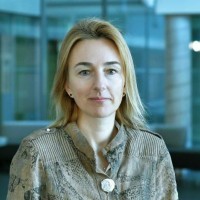
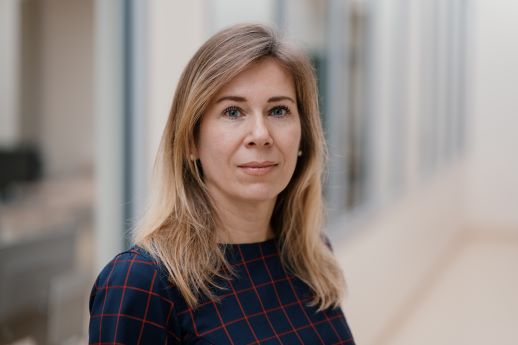
Rimantas Vaicekauskas is a Professor at the Faculty of Mathematics and Informatics, Vilnius University. He has taught consistently since at least the 2016/2017 academic year, with scheduled courses through 2025/2026. His instructional responsibilities include delivering lectures on Logic Programming and leading practical exercises in Object-Oriented Programming with JAVA . His academic focus spans: Core computer science principles Programming language design and implementation Formal logic applications in computing Object-oriented software development methodologies
Dr. Vytautas Čyras serves as an Associate Professor at Vilnius University's Faculty of Mathematics and Informatics, specifically within the Institute of Computer Science and Department of Software Engineering. With over three decades of academic experience since 1984, he bridges computer science and legal theory through groundbreaking interdisciplinary research. Education: Master's in Applied Mathematics (Computer Science) from Vilnius University (1979) Doctorate from Moscow State University's Faculty of Computational Mathematics and Cybernetics (1985) Second Master's in Law from Vilnius University and German Law Centre (2007) Dr. Čyras' research spans legal informatics, information systems, and computer science. His primary focus includes artificial intelligence and law, regulatory compliance, legal requirements, and pioneering work in legal visualization. His Structural Blanks approach to programming with recurrences demonstrates deep expertise in both foundational computer science and legal applications. His research explores how visual and multisensory approaches can transform legal reasoning and compliance in digital environments. His publication trajectory reveals an evolution from technical computer science topics toward sophisticated legal informatics applications. Recent work emphasizes multisensory legal machines, legal visualization frameworks, and the integration of AI with legal reasoning systems. He has made significant contributions to understanding how legal norms can be transformed into operational rules for virtual environments and digital governance systems. Professional Activities: Active participant and organizer of major legal informatics conferences including IRIS, Baltic DB&IS, and EGOVIS Contributor to European Framework Programme projects including VirtualLife and SKY-Scanner Longstanding member of the Lithuanian Computer Society and its Intellectics Section Dr. Čyras teaches courses including Artificial Intelligence, Knowledge Representation, and Human-Computer Interaction. His interdisciplinary background enables him to bridge theoretical legal concepts with practical applications in regulatory compliance systems and legal technology development.
Professor Stasys Jukna is an Affiliated Scientist at Vilnius University's Institute of Data Science and Digital Technologies, specifically within the Cybersocial Systems Engineering Group. Originally from Lithuania and identifying as a Samogitian, he maintains strong academic ties with Vilnius University while also having historical connections with Goethe University of Frankfurt and the University of Trier. His research focuses on theoretical computer science, particularly circuit complexity and combinatorics. Jukna has made significant contributions to understanding lower bounds in computational complexity, Boolean function analysis, and dynamic programming limitations. His work bridges mathematical theory with practical computational applications. Jukna has authored several influential books including Extremal Combinatorics with Applications in Computer Science (2001, 2nd ed. 2011), Boolean Function Complexity: Advances and Frontiers (2012), and Tropical Circuit Complexity: Limits of Pure Dynamic Programming (2023). His recent publications consistently explore the boundaries of computational complexity, particularly in circuit design and dynamic programming approaches. His research demonstrates a consistent trajectory examining fundamental limits in computation, with recent work focusing on tropical circuits, hazard-free implementations, and the relationship between different computational paradigms. The pattern shows increasing specialization in understanding the theoretical boundaries of dynamic programming approaches and circuit complexity. Professor Jukna has served on editorial boards including the Lithuanian Mathematical Journal and the Electronic Colloquium on Computational Complexity . His work has been supported by organizations including the German Research Foundation (DFG) and the Alexander von Humboldt Foundation. His teaching career spans multiple institutions, having taught Mathematical Logic and Discrete Mathematics at Vilnius University (1976-79/81), Combinatorics for Computer Science at the University of Trier (1996-99), and various theoretical computer science courses at Goethe University Frankfurt since 2000.
Fernando Garcia is a Professor at the Universitat Politècnica de València , affiliated with the School of Economics and Social Sciences. His research focuses on Financial Economics, Portfolio Optimization, Risk Management, and Sustainable Finance, with a strong emphasis on Multicriteria Decision Analysis and Computational Finance. PhD in Business Administration and Management (Universitat Politècnica de València, 2005) Licenciado in Business Administration and Management (Universitat de València, 1999) Diplom. Kaufmann (Hochschule für Wirtschaft Bremen, 1998) His publications highlight trends in socially responsible investing, index tracking, and credit risk management using advanced methodologies like fuzzy logic, neural networks, and goal programming. He has collaborated extensively with researchers such as Jairo González-Bueno, Francisco Guijarro, and Javier Oliver across 21 works since 2009.
Elena Iarskaia-Smirnova is a Professor in the Academic Department of Social Sciences at the Eurasian Humanities University. She holds a Ph.D. in Social Work from the University of Gothenburg (2011), a Doctor of Science in Sociology from Saratov State Technical University (1997), and a Candidate of Science in Philosophy from Saratov State Chernyshevskii University (1989). Her research focuses on disability studies, social work professionalization, gender studies, family and child care policies, and inclusion/exclusion dynamics. She has published extensively on disability rights, NGO-state relations in social policy, and post-Soviet welfare reforms. Key works include Disability in Eastern Europe and the Former Soviet Union (co-edited with M. Rasell) and analyses of Russian family policies and inclusive education. She leads the Journal of Social Policy Studies as Editor-in-Chief and has coordinated major research projects such as the Russian Science Foundation’s “Accessible Environment in a Modern Urban Context” (2018–2022). Her work bridges academic research with policy advocacy, particularly on issues of disability inclusion and gender equity.
Julius Andrikonis serves as an Assistant Professor at Vilnius University's Faculty of Mathematics and Informatics, with documented teaching activity spanning from the 2016/2017 academic year through the 2025/2026 term. His academic expertise centers on foundational computational disciplines: Mathematical Logic Logic Programming Discrete Mathematics These fields form the core of his instructional responsibilities, emphasizing theoretical frameworks and practical applications. His teaching portfolio consistently features exercise-based instruction for courses including Mathematical Logic, Logic Programming (with subgroup specialization), and Discrete Mathematics, utilizing university facilities such as MIF-Big lecture halls and Innovation Space laboratories. No research awards, graduate supervision activities, or departmental affiliations beyond the faculty level are documented in available records.
Haroldas Giedra is an Associate Professor at the Faculty of Mathematics and Informatics , Vilnius University. He teaches courses in Mathematical Logic , Intelligent Systems , and Database Management Systems , primarily in the MIF-Dipl. and MIF-Wholesale programs. Teaching focus: Mathematical Logic , Intelligent Systems , Database Management Systems (2016-2026 academic years) Affiliation: Vilnius University , Faculty of Mathematics and Informatics
Assoc. Prof. Dr. Asta Slotkienė is an Associate Professor and Researcher at the Cybersocial Systems Engineering Group , Institute of Mathematics and Informatics, Vilnius University , Lithuania. She has been a faculty member since at least 2009 and is based at Akademijos St. 4, Vilnius. Education PhD in Computer Science Engineering, Kaunas University of Technology (2009) MSc in Computer Science Engineering, Kaunas University of Technology (2004) BSc in Physics and Computer Science, Šiauliai University (2002) Research Interests Dr. Slotkienė’s research spans software quality assurance , development process improvement , e-learning systems , and cognitive decision-making . She investigates how rigorous evaluation methodologies and AI techniques can enhance the reliability and usability of software products and services. Her recent work explores the intersection of large language models and automated software testing , as well as the modeling of web service quality using fuzzy logic and ontology-based approaches. Research Trends Across her latest publications, a clear trend emerges toward leveraging AI and machine learning , particularly large language models , to automate and improve software testing practices. Simultaneously, she continues to deepen the theoretical foundations of software and service quality modeling , integrating fuzzy logic , ontology engineering , and bibliometric analyses to build robust frameworks for quality evaluation. Scientific Service & Awards Program Committee Member: ACM/SIGAPP SAC (2023–2025) Organizing Committee Member: Baltic DB&IS 2024 Program Committee Member: SS AIEDUMED’25, CompSysTech’25 Reviewer for Informatica, Baltic Journal of Modern Computing, New Trends in Computer Sciences Projects & Funding 2022–2026 Master of Science in Smart, Secure and Interconnected Systems (EU Grant 101083531) 2022–2024 Embracing RAD Skills for Employability and Innovation 2020–2022 AI-Enhanced Accounting and Business Management Systems (Grant 01.2.1-LVPA-K-856-01-0083) 2014–2018 Erasmus+ “Open University for Virtual Mobility” (2014-1-LT01-KA203-000550) 2012–2015 Tempus “High Objectives of National Organizational Reform” (530284-TEMPUS+1-2012-1-ES-TEMPUS-JPHES) International Collaboration & Training Through multiple Erasmus+ teaching and learning visits (Las Palmas de Gran Canaria, Madeira, Azores, Maia), as well as participation in DeepLearn schools and professional training (Devbridge/Cognizant Softvision, Robotic Process Automation, Creative Commons, Contextual Modeling), Dr. Slotkienė actively fosters cross-border academic cooperation and continuous professional development.
Aida Pliuškevičienė serves as an Associate Professor and Affiliated Scientist at Vilnius University's Institute of Data Science and Digital Technologies within the Cybersocial Systems Engineering Group. Her research is centered at the intersection of mathematical logic and theoretical computer science. Her primary research interests include Temporal Logic , Modal Logic , and Proof Theory , with significant contributions to sequent calculi, loop-check elimination, and termination methods in automated deduction. Her work demonstrates consistent focus on formal verification systems and computational logic frameworks. Analysis of her 25+ publications reveals sustained expertise in developing decision procedures for temporal and modal logics, with recent work advancing cyclic sequent calculus strategies (2025) and loop-check specifications (2022). Her research trajectory shows evolution from foundational work on Gentzen-type calculi (1992) to contemporary applications in distributed knowledge systems. As an active researcher at Vilnius University's Akademijos St. 4 campus, she collaborates extensively with Romas Alonderis, Regimantas Pliuškevičius, and Haroldas Giedra on temporal logic frameworks. Her publication record in journals like Lithuanian Mathematical Journal and Journal of Automated Reasoning demonstrates sustained scholarly output over three decades.
Roma Kačinskaitė is a Professor at the Department of Mathematics and Statistics within the Faculty of Informatics at Vytautas Magnus University. Her research focuses on analytic number theory, probability theory, and gender equality policies in education. Doctor of Sciences (2002) ORCID: 0000-0003-2656-1052 Scopus ID: 6504101661 Her work spans zeta function theory (Riemann, Hurwitz, Matsumoto classes), joint universality theorems, and computational mathematics. Recent supervised theses explore topics like: ICT integration in calculus pedagogy Discrete universality theorems for zeta function classes Functional independence of periodic zeta functions Public-key cryptographic algorithms Computer-assisted evaluation of Hurwitz zeta function values Student advising emphasizes mathematical olympiads, zeta function analysis, and computational methods. Publications reflect interdisciplinary approaches combining pure mathematics with educational innovation and cryptographic applications.
Dr. Jolanta Miliauskaitė serves as an Associate Professor and Researcher at the Cybersocial Systems Engineering Group within Vilnius University's Institute of Data Science and Digital Technologies. Her academic position reflects her expertise in cybersocial systems engineering and related fields, with a particular focus on the interface between cyberphysical and cybersocial systems. She maintains an active research profile with numerous publications and conference presentations focusing on fuzzy logic applications, quality of service modeling, and information systems. Dr. Miliauskaitė's research centers on cybersocial systems engineering, with significant contributions to understanding complexity issues in data-driven fuzzy inference systems and developing frameworks for membership function construction. Her work bridges theoretical computer science with practical applications in software engineering, particularly in fuzzy logic applications for quality of service planning in enterprise systems. She has conducted systematic literature reviews and developed methodologies for handling uncertainty in information systems. Her publication record shows a consistent research trajectory from foundational work on algorithm concepts to specialized research on interval type-2 fuzzy sets. Recent publications (2023-2024) demonstrate expansion into social factors affecting software quality and more sophisticated modeling of web service quality. Her work often combines theoretical insights with practical case studies, particularly in enterprise business services and web service quality modeling. DAMSS 2019 Best Poster Award for "On issues related to interval type-2 membership function development" Dr. Miliauskaitė actively mentors doctoral students, currently supervising Darius Sabaliauskas whose dissertation focuses on the "Reasoning mechanism of cognitive systems" (2024-2028). She has participated in significant research projects, including the National Complex Program Project "Theoretical and Engineering Aspects of the Development and Use of Internet of Services Technologies in High-Performance Computing Platforms" under Prof. G. Dzemyda's supervision (2012-2015). Her qualifications are continuously enhanced through Erasmus+ programs and specialized training in scientific methodology. As an active member of the academic community, Dr. Miliauskaitė serves on organizing committees for major conferences including Baltic DB&IS (2012, 2018, 2024) and DAMSS (2018), and participates in program committees for ICMarkTech'24, SAC 2025, SS AIEDUMED'25, and CompSysTech'25. She is also a member of the Lithuanian Computer Society (LIKS), contributing to the broader computer science community in Lithuania.
Dr. Vygantas Bagočius is a Lecturer at Klaipeda University in the Department of Marine Engineering, Faculty of Marine Technology and Natural Sciences. He also serves as the Head of Construction Engineering and Port Structures Programs at the university. His academic career spans over 15 years with continuous research contributions in construction engineering and infrastructure planning. Dr. Bagočius's research focuses on several key areas: Multi-criteria decision making applications in infrastructure development Deep-water port planning and development in the Baltic Sea region Offshore wind energy systems and foundation design Construction engineering with emphasis on port structures Sustainable construction materials and methods His publication record shows a consistent research trajectory with recent work (2024-2025) focusing on optimization of offshore wind power plant foundations and sustainable construction materials. Earlier publications established his expertise in port development and LNG terminal location selection using advanced decision-making methodologies. His research demonstrates a clear progression from theoretical decision-making frameworks to practical applications in Baltic Sea infrastructure development. Notable research contributions include: Development of integrated MCDM models for deep-water port selection Application of WASPAS and AHP methods to wind turbine and wind farm optimization Analysis of seawater impacts on hydraulic concrete structures Recent work on sustainable construction materials including alkali-activated systems Dr. Bagočius collaborates extensively with colleagues at Klaipeda University, particularly with researchers like Edmundas Kazimieras Zavadskas and Zenonas Turskis. His work bridges theoretical decision science with practical engineering applications, making significant contributions to infrastructure planning in the Eastern Baltic region.
Tatjana Aleknienė is a Habilitated Doctor of Humanities, Professor, and Chief Researcher at the Department of Ancient and Medieval Culture Research, Lithuanian Institute of Culture Research since 2020. She maintains concurrent academic appointments as Visiting Fellow at Mykolas Romeris University's Centre for Aristotelian Studies, Member of Vytautas Magnus University's PhD program in History of Art, and Consultant at the Lithuanian Bible Society, while continuing lecturing roles at multiple universities. Her educational background includes a Bachelor's degree in Classical Philology from Moscow Lomonosov University (1988) and a PhD from Vilnius University (1997) with a dissertation on 'The Concept of the Parts of the Human Soul in Ancient Greek Literature.' She completed doctoral studies at École Pratique des Hautes Études (Paris) and Vilnius University, with internships at EPHE (2008, 2010) and University of Fribourg (2014-2016). Professor Aleknienė's research centers on Greek philosophical ethics, Plato's dialogues, the Platonic tradition, Philo of Alexandria, and Plotinus, with particular focus on soul theory, mystical experience, and exegetical strategies in Late Antiquity. Her work bridges Hellenistic philosophy, Jewish thought, and early Christian interpretation, examining concepts like 'flight to the fatherland' and 'mystical ecstasy' across cultural boundaries. Her publication record shows consistent output in international journals, with recent work increasingly focusing on Plato's epistemology (Theaetetus, 2022), ancient diplomacy-philosophy intersections (2020), and Plotinian metaphysics. The research demonstrates deep philological analysis combined with philosophical interpretation, often revealing connections between Greek philosophical concepts and Jewish-Hellenistic exegesis. The Most Productive Researcher at Lithuanian University of Educational Sciences (2016) She has supervised three completed PhD dissertations and currently mentors two doctoral candidates. Her research leadership includes international projects like 'Exegetical traditions in ancient philosophy, Judaism and Christianity' (2016) and national translation projects on Plato's dialogues. Professor Aleknienė actively contributes to academic infrastructure through editing the 'Philosophica' and 'Christiana tempora' series, organizing the annual 'Ancient and Medieval Studies' conference, and participating in international Plotinus seminars since 2002. Her scholarly ecosystem integrates textual scholarship, philosophical analysis, and cross-cultural interpretation, centered at the Department of Ancient and Medieval Culture Research where she leads research on the philosophical foundations of ancient Mediterranean civilizations.