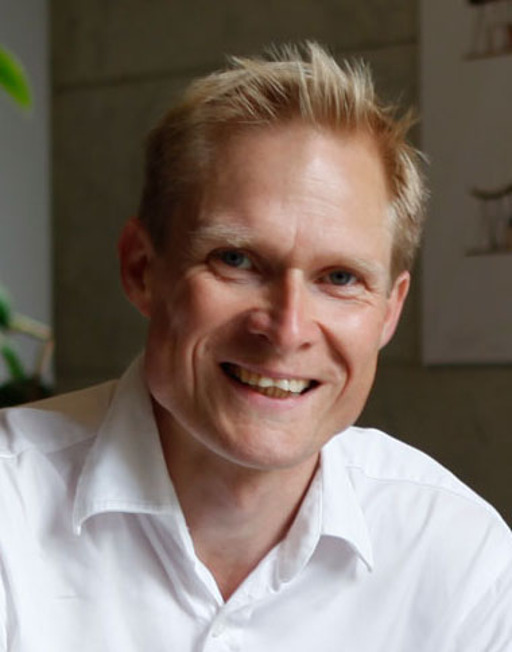
Kristina Heinonen is a Professor of Service and Relationship Marketing at the Department of Marketing, Hanken School of Economics, and holds a Professor II appointment at the Norwegian School of Economics. She has led key roles such as Head of Subject (Marketing) and Director of the Centre for Relationship Marketing and Service Management (CERS) at Hanken (2010–2023). Her research focuses on service innovation, customer experience, and value creation, leveraging technologies to drive strategic service initiatives. She is a Fulbright Scholar from the University of Massachusetts, Boston, and has held visiting roles at institutions across Europe. Her academic leadership extends to co-chairing the American Marketing Association’s Service Special Interest Group (AMA SERVSIG) and serving on the board of Karlstad University’s CTF Center for Service Research. She also contributes to global initiatives like ServCollab, a nonprofit fostering human-centered service collaboration. Her pedagogical expertise spans undergraduate, graduate, and MBA programs, alongside mentoring doctoral researchers. Kristina’s awards include the Evert Gummesson Outstanding Research Award and multiple Emerald Literati Awards. She actively advises companies in service, food, retail, and financial sectors, and leads the Finnish Innovation Index, an annual assessment of corporate innovation capabilities. Her interdisciplinary research bridges academic rigor with practical applications, emphasizing customer-centric frameworks and sustainability in service systems.
Sakari Lahti is a Lecturer in the Department of Computing Sciences at Tampere University, within the Faculty of Information Technology and Communication Sciences. His primary responsibilities include teaching digital logic and hardware design. He holds an ORCID identifier: 0000-0002-9915-4784 . Lahti's research focuses on High-Level Synthesis (HLS) for FPGAs, with emphasis on optimizing embedded systems, real-time applications, and digital signal processing. His work spans FPGA implementation techniques, compiler optimizations for HLS tools, and practical applications in media processing and wireless communications. Notable projects include real-time HEVC video encoding and nonlinear self-interference cancellation systems. His publications reflect a sustained contribution to FPGA-based hardware design, with a decade of work from embedded systems (2002) to modern C++ integration in HLS (2023). Collaborations include colleagues like Teemu Hämäläinen and Jari Vanne, focusing on bridging software and hardware design methodologies. His research also extends to educational aspects, such as real-world product development in system design courses. Lahti’s work is peer-reviewed and published in prestigious venues like IEEE Transactions and conferences like DDECS and ISCAS. His research unit is the Unit of Computing Sciences at Tampere University.
Yuzhuo Cai is a Senior Lecturer and Adjunct Professor in higher education administration at the Higher Education Group (HEG) within the Faculty of Management and Business at Tampere University, Finland. He holds additional roles as Deputy Director at the Research Centre on Transnationalism and Transformation (TRANSIT) and Co-Director of the Sino-Finnish Education Research Centre. Internationally, he serves as Visiting Associate Professor at the University of Hong Kong and holds guest professorships at Beijing Normal University, Tongji University, and Yunnan Normal University. His research focuses on higher education innovation ecosystems, the Triple Helix model, and comparative education between China and Finland. With over 150 publications and an h-index of 32, he has been recognized in Stanford/Elsevier’s Top 2% Scientists rankings. He leads large-scale projects, including a Horizon Europe-funded initiative on post-pandemic youth employment transitions (€2.9M grant). His interdisciplinary background includes a PhD in Administrative Science from Tampere University and prior education in Computer Science and Psychology. Research Interests Institutional theory analysis of higher education Triple Helix and neo-Triple Helix models of innovation University-industry-government engagement Graduate employability and capital theory China-Finland educational collaboration Key Achievements Principal Investigator of €2.9M Horizon Europe project (2023–2027) Co-editor of Triple Helix journal and advisor to multiple academic programs Recipient of Tampere University’s Most Cited Paper Award (2022) His work bridges academic research with policy impact, emphasizing innovation ecosystems and sustainable development goals.
Martin Gustafsson is Professor and Chair of Philosophy at Åbo Akademi University, affiliated with the Faculty of Arts, Psychology and Theology, and the Department of Culture, History and Philosophy. He has held this position since 2010 and continues to be an active researcher, teacher, and supervisor. His research focuses on the interplay between the Philosophy of Language and the Philosophy of Action, particularly how these are embedded in human life. Influenced by Elizabeth Anscombe, Stanley Cavell, and Ludwig Wittgenstein, his work spans the history of analytic philosophy, philosophical methodology, and the philosophy of logic. He has led significant research projects funded by the Academy of Finland, the Swedish Central Bank's Tercentenary Foundation, and the Swedish Research Council. His recent publications reflect deep engagement with thinkers like Frege, Weierstrass, Kant, and Quine, exploring themes such as the paradox of analysis, aesthetic judgment, and the role of passivity in action. His research output is extensive and consistently contributes to core debates in analytic philosophy. Letterstedt Translation Award (2022), Swedish Royal Academy of Sciences He currently supervises six PhD students and organizes advanced research seminars. His teaching includes epistemology, logic, Kant, Frege, and Quine, as well as interdisciplinary courses on AI and surveillance. He also leads the BA program in Culture, History and Philosophy since 2017. Gustafsson co-translated Wittgenstein’s Philosophische Untersuchungen into Swedish, a contribution recognized internationally. His ongoing book projects continue to push boundaries in understanding analysis and human agency.
Christopher Raymond is a Professor of Sustainability Science at the University of Helsinki, where he is based at the Ecosystems and Environment Research Program within the Helsinki Institute of Sustainability Science (HELSUS). He is also affiliated with the Department of Economics at the University of Helsinki and leads the transdisciplinary Human-Nature Transformations Research Group. Raymond serves as Executive Director of the International Association of Society and Natural Resources and Director of the Enabling Multispecies Transitions of Cities and Regions (MUST) Strategic Research Council Project. His research group hosts over 15 researchers committed to "Transforming human-nature relationships for a just, healthy and sustainable future." PhD in Philosophy, University of South Australia (2012) BAppSc (Honours) in Environmental Management, University of South Australia (2005) Guest Professor, Swedish University of Agricultural Sciences (2019-2021) Professor Raymond's research focuses on conceptualizing and assessing the diverse values of nature and finding new ways to embed them into sustainability transformations. His work examines innovative approaches to represent and engage diverse communities (including other species) in nature-based solutions planning in urban areas. He has authored seminal works on Senses of place, socio-cultural valuation of Ecosystem services, and served as Coordinating Lead Author of the IPBES Values Assessment, where his team co-created "an inclusive typology of values for navigating Transformations towards a just and sustainable future." His research contributes significantly to urban and regional planning, biodiversity conservation, restoration planning, Sustainability science, and human geography. Raymond's recent publications demonstrate a strong focus on multispecies justice, urban nature-based solutions, and the integration of diverse values into sustainability governance. His work increasingly examines the temporal dimensions of urban green infrastructure, the role of listening in interdisciplinary scholarship, and the application of role-playing for justice awareness in educational contexts. A consistent theme across his recent work is the exploration of how to better incorporate relational values and justice considerations into environmental policy and planning, particularly in urban contexts where climate, biodiversity, and human health intersect. World's Most Cited Scholar (2019) World's Most Cited Scholar (2020) Professor Raymond serves as Supervisor in the Doctoral Programme in Interdisciplinary Environmental Sciences and has supervised Master's theses for students including Juulia Lehtinen and Anna Ahdekivi. His research is supported by numerous grants including GREEN TALENT (2025-2029), GoGreenNext (2024-2028), MUST (2023-2026), and CO CARBON (2023-2026) projects. These projects focus on urban sustainability transitions, carbon sequestration in urban green infrastructure, and multispecies justice in nature-based solutions. Raymond leads the Human-Nature Transformations Research Group, which actively engages in the Helsinki Institute of Sustainability Science (HELSUS) and carries out research through collaborative projects including MUST, Transformative Cities, RECONNECT, GO GREEN NEXT, GREEN TALENT and SusTra Doctoral Pilot. The group utilizes acoustic recorders for long-term socio-ecological monitoring across Finland as part of their research infrastructure.
Juho Leinonen is an Academy Research Fellow at Aalto University's Department of Computer Science, Finland, specializing in AI-enhanced computing education. His work focuses on leveraging large language models (LLMs) to transform programming instruction through personalized learning analytics and educational technology. Education Background: PhD in Computer Science, University of Helsinki (2019) Docent (Adjunct Professor) in Computer Science, University of Helsinki Postdoctoral research at The University of Auckland, Aalto University, and University of Helsinki Research Focus: Leinonen's work centers on three interconnected pillars: (1) developing fine-grained learning analytics to decode student programming behavior; (2) applying LLMs to create adaptive educational tools for diverse learners; and (3) implementing learnersourcing strategies for scalable resource generation. His research particularly addresses challenges in multilingual programming education and responsible AI integration, with emphasis on non-native English speakers and novice programmers. Publication Trends: Recent publications (2024-2025) reveal a concentrated exploration of generative AI in computing education, with 85% focused on LLM applications. Key themes include synthetic data generation for educational research, multilingual prompting systems, and ethical frameworks for AI feedback. His work demonstrates both practical implementations (e.g., autocompletion quizzes) and critical analyses of AI limitations in educational contexts. Awards & Recognition: ACE2024 Best Paper Award for LLM-generated worked examples study UKICER 2023 Best Paper Award for achievement goals research ACE 2023 Best Practitioner Paper ICER 2022 Best Paper Award for programming exercise generation SIGCSE TS 2022 Best Paper in Computing Education Research ACE 2021 Best Paper Award for contextualized problem descriptions Research Leadership: As principal investigator of the Academy of Finland-funded project 'Advanced Student Modeling and Tailored LLMs for Personalized Learning', Leinonen supervises PhD students and postdocs while leading international collaborations with institutions including The University of Auckland and University of Helsinki. His grant portfolio focuses on ethical AI deployment in education and cross-cultural computing pedagogy. Collaborative Networks: He maintains active partnerships with leading computing education researchers like Paul Denny (Auckland), Arto Hellas (Aalto), and Andrew Luxton-Reilly (Auckland), evidenced by 90% co-authored publications. His work appears consistently in top venues including ACM SIGCSE, ICER, and ACE conferences.
Henri Hansen is a University Lecturer at Tampere University's Computing Sciences Department within the Faculty of Information Technology and Communication Sciences. His research focuses on concurrency theory, partial order reduction, stubborn sets, Petri nets, and formal methods. He holds a Doctor of Science (Technology) and Master of Science in Technology from Tampere University. Key research interests include optimizing state space exploration through techniques like stubborn sets, analyzing financial networks (e.g., stock market dynamics), and applying formal methods to industrial systems. His work bridges theoretical foundations with practical applications in software verification and blockchain systems. Recent publications emphasize network analysis in financial markets and Bitcoin systems, alongside advancements in partial order reduction algorithms. Hansen has received three notable awards for his contributions to stubborn set theory and coverability algorithms.
Kirsi Eräranta serves as Senior University Lecturer in the Department of Management Studies at Aalto University School of Business, where her research critically examines business-society relations through organizational communication and critical management studies frameworks. Her research program centers on gender, diversity, and inclusion dynamics within contemporary organizations, with particular focus on refugee/migrant inclusion initiatives, LGBTQ+ identity work in digital spaces, and corporate social responsibility tensions in Nordic welfare states. She employs critical theoretical lenses including Foucauldian biopower analysis and discourse theory to investigate paradoxes in organizational practices where power, identity, and social change intersect. Analysis of her publication trajectory reveals consistent engagement with evolving business-society interfaces: from historical studies of work-life balance (2011-2015) to contemporary investigations of hybrid CSR models (2024) and inclusion paradoxes in migration contexts (2024), demonstrating methodological versatility across qualitative, discourse-analytic, and critical approaches. Scientific recognition includes: Best Paper Proceedings Publication at the 83rd Academy of Management Annual Meeting (2023) Her scholarly leadership extends to co-editing special issues on gender theory in marketing research (2015) and contributing foundational perspectives on responsible communication in Finnish organizational contexts (2021).
Seppo Törmä is a Senior Lecturer and Principal Lecturer at Metropolia University of Applied Sciences, specializing in computing and construction. He holds a D.Sc (Tech) in Computer Science and Engineering from Helsinki University of Technology (1997), an M.Sc (Tech) in Electrical Engineering (1988), and a Teacher's pedagogical qualification (AmO) from Haaga-Helia (2022). As the Head of the International Master's Programme in Computing in Construction, he focuses on advancing digitalization in construction through innovative methodologies. His competences include Artificial Intelligence, BIM Collaboration, Decentralized systems, Digital Twin, Information visualization, Interoperability, IoT, Knowledge graphs, Linked Data, Ontologies, Semantic Web, and Sustainable built environment. He leads projects such as RADIAL (digital models for construction), Digipurku (digital solutions for deconstruction), and HereUkraine! (educational support for rebuilding efforts). His research emphasizes semantic interoperability, ontology-based systems, and sustainable construction practices. Notable projects include developing the DRUMBEAT platform for federated building models and exploring peer-to-peer networks for linked building data. His work bridges information technology with construction workflows to enhance efficiency and sustainability. He has no listed scientific awards but has contributed to over 70 publications since 1988, focusing on BIM, Linked Data, and construction digitalization. His advising and grants are not explicitly detailed, but his leadership in academic and applied projects underscores his commitment to advancing the field. He is part of the Sustainable Development in Real Estate Team at Metropolia.
Matti Järvisalo is a Professor in the Department of Computer Science at the University of Helsinki, Finland, holding the title of Docent and serving as Supervisor for the Doctoral Programme in Computer Science. He is affiliated with the Helsinki Institute for Information Technology (HIIT), a leading collaborative research institute between the University of Helsinki and Aalto University. His research centers on computational logic and constraint-based reasoning, with core expertise in Boolean optimization, SAT/MaxSAT solving, and argumentation frameworks. He develops declarative approaches for combinatorial problems in computational social choice, judgment aggregation, and fair division, emphasizing certified algorithms and preprocessing techniques. His work bridges theoretical computer science with practical implementations in optimization and AI. Recent publications (2024-2025) reveal a strong focus on multi-objective optimization, certified reasoning, and argumentation under incomplete information. Key trends include symmetry-aware core learning for Pseudo-Boolean optimization, Pareto-optimality certification in MaxSAT, and novel algorithms for manipulation analysis in judgment aggregation, demonstrating his leadership in advancing SAT-based AI methods. Professor Järvisalo's significant contributions have been recognized by prestigious awards: IJCAI-JAIR Best Paper Prize (2019) Best Researcher Award from University of Helsinki Department of Computer Science (2011) CP 2017 Distinguished Paper Award ECAI 2016 Runner-Up Best Student Paper Award Honorary Mention at ICCMA 2015 He actively mentors the next generation of researchers and secures major research funding: Supervision: 6 doctoral theses and 6 Master's/Licentiate theses Active Grant: Academy of Finland project 'Next-generation Unsatisfiability-based Declarative Optimization' (2023-2027) Past Projects: 'Symbolic Techniques for Formally Verified and Explainable AI' (2020-2022), 'Declarative Boolean Optimization: Pushing the Envelope' (2019-2023) As a core member of HIIT, he collaborates within Finland's premier information technology research ecosystem, contributing to the institute's mission of advancing fundamental and applied IT research through interdisciplinary teamwork and international partnerships.
Pia Niemelä is a Lecturer in Computing Sciences at the University of Tampere. She holds a Doctor of Science (Technology) in Information Technology (2018), a Master of Arts in Educational Science (2018), and a Master of Science (Technology) in Engineering Physics (1995). Her research focuses on computational thinking education, peer review systems in programming courses, and the integration of AI tools like ChatGPT into computer science pedagogy. She has pioneered work on autograding systems, flipped classroom models, and learning analytics with privacy-aware MLOps frameworks. Her educational background bridges engineering and pedagogy, enabling interdisciplinary research in areas such as version control pedagogy (Git), functional programming literacy (JavaScript), and cross-cultural curriculum development in Nordic/Baltic regions. Key contributions include analyzing student motivation in algorithm competitions and designing privacy-preserving learning analytics systems. Her work emphasizes practical educational innovations: from using GitHub commits to assess teamwork skills to creating MOOCs for math teachers integrating computational tools. Recent research highlights include AI chatbots as tutoring systems and the impact of autograders on both instructor workload and student feedback quality. While no formal awards are listed, her consistent publication record from 2012 to 2024 demonstrates sustained academic engagement. No advising/grant details are provided in the source materials.
Panu Raatikainen is a Professor in the Department of History, Philosophy and Literary Studies at Tampere University. He holds an academic rank of Professor and serves as the Head of the Philosophy Degree Programme. His research focuses on philosophy of language, philosophy of mind, philosophy of science, metaphysics, and logic/mathematics. Raatikainen has published extensively, with over 50 peer-reviewed works since 2014, including books like Essays in the Philosophy of Language (2023) and edited volumes such as Tekoäly, ihminen ja yhteiskunta (2021). His work bridges theoretical philosophy with interdisciplinary concerns, addressing topics like semantic externalism, Wittgenstein-Kripke debates, and the societal role of science. Recent articles engage with Chalmers' scrutability thesis, Kripkean puzzles, and the ethical implications of AI. Raatikainen has received recognition through awards and is an active contributor to academic discourse, including public-facing articles on science policy and critical analyses of intellectual figures like Jordan Peterson and Ayn Rand.
Ilkka Niemelä is a Professor of Computer Science at Aalto University's School of Science. He has held leadership roles including Head of the Laboratory for Theoretical Computer Science at Helsinki University of Technology, Chair of the Degree Program in Computer Science and Engineering, and Dean of Aalto University's School of Science. His research focuses on automated reasoning and constraint programming for solving computational problems. His work spans key areas in computational logic, including answer-set programming, non-monotonic reasoning, bounded model checking, and parity reasoning. He has explored applications in formal verification, optimization, and system design, with publications reflecting interdisciplinary contributions to artificial intelligence and theoretical computer science. Scientific awards and honors include: Superior of the year at Helsinki University of Technology (2007) Annual dissertation award from the Finnish Society for Computer Science (1993) Knight, First Class, of the Order of the White Rose of Finland (2015) 20 Year Test of Time Paper Award (2016) EurAI Fellow (2013) His research group has pioneered methods in answer-set programming and bounded model checking, with recent publications addressing program transformations, timed automata, and parity games. Niemelä has also served in administrative roles such as Vice President and Provost at Aalto University, contributing to academic governance and education.
Antti Ahlava is a full professor in Emergent Design Methodologies and leader of Group X at Aalto University's Department of Architecture. He previously served as Head of the Architecture Department and holds visiting professorships at institutions in Århus, Copenhagen, Vienna, Cambridge University (Clare Hall College), and Harvard GSD. His research integrates campus design, adaptive reuse, and urban regeneration with artistic interdisciplinarity, focusing on qualitative evolutionary design methodologies for climate-resilient cities. Ahlava pioneers the application of digital media as tools for sustainable architectural practice and social innovation in the public realm, emphasizing community engagement and relationship-oriented development frameworks. Recent publications (2024-2025) reveal a concentrated exploration of social innovation in architecture , with recurring themes in urban renewal (Aviapolis, Espoo, Finnoo), digital design tools, and service-dominant business models. His work consistently bridges theoretical frameworks with practical applications across Finnish, European, and Asian contexts. Awards and Honors First Prize in Andermatt station area regeneration competition (2011) 3rd Prize in Katara Hills housing area, Qatar (2013) Espoo Medal for city advancement contributions (2018) Shortlisted for Padova University campus competition against Foster & Partners (2018) Second Prize in Helsinki Housing Reform competition (2019) First Prize in Espoo City Hospital competition with K2S Architects Honorable mention in Helsinki Guggenheim competition No specific grant information or student advising details were provided in the source material, though Ahlava's leadership of Group X indicates active research supervision. His architecture office helsinkizürich (Helsinki/Zürich) executes projects spanning urban design in Finland, Central Europe, and China, with current focus on Aviapolis Centre and Espoo/Finnoo renewal.
Tuomo Lehtonen is a Postdoctoral Researcher at Aalto University's Department of Computer Science , focusing on computational argumentation and knowledge representation. His work bridges artificial intelligence and formal logic through algorithm design and complexity analysis. Research interests include: Computational argumentation frameworks (ASPIC+, ABA) Algorithmic reasoning under incomplete information SAT-based logic programming applications Complexity theory in structured argumentation Benchmarking methodologies for AI systems Recent publications highlight his expertise in translating theoretical argumentation models into practical computational tools, particularly for admissibility verification and preferential reasoning tasks. Contact: tuomo.lehtonen@aalto.fi