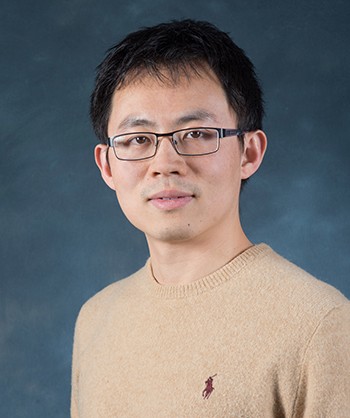
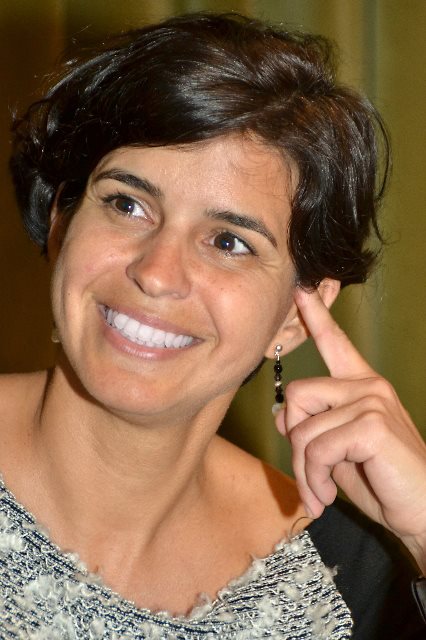
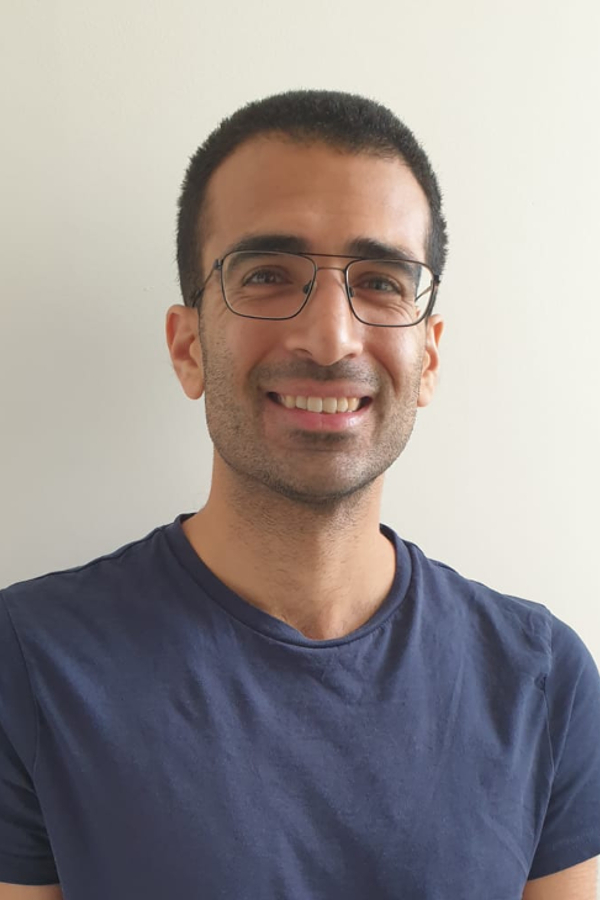
Qile Chen is an Associate Professor in the Department of Mathematics at Boston College . His research focuses on Algebraic Geometry , particularly in Logarithmic Geometry , Moduli Spaces , and Gromov-Witten Theory . He has made significant contributions to understanding A^1-connectedness , Stable Log Maps , and Virtual Cycles in geometric contexts. His publications include collaborations with leading mathematicians such as Dan Abramovich , Felix Janda , Yi Zhu , and Dawei Chen . Key topics span Logarithmic GLSM , Multi-scale Differentials , and Spin/Hyperelliptic Structures . Recent Articles : Punctured logarithmic maps (2025), Gorenstein contractions (2024), Campana rational connectedness (2024) Co-advised Student : Zijian Han (Ph.D. in progress at Boston College)
Myrto Mavraki is an Assistant Professor in the Department of Mathematics at the University of Toronto, with affiliations to both the St. George and Mississauga campuses. She specializes in arithmetic geometry and dynamical systems, particularly the theory of unlikely intersections and canonical heights in families of rational maps. Institution: University of Toronto School: Faculty of Arts and Science Department: Department of Mathematics Rank: Assistant Professor Her research focuses on deep connections between arithmetic geometry and dynamical systems. Key areas include equidistribution, variation of canonical heights, preperiodic points, and unlikely intersections in families of maps, especially on the projective line and in elliptic surfaces. These topics lie at the heart of modern arithmetic dynamics and have strong ties to Diophantine geometry and number theory. The most recent publications show a sustained focus on canonical height variation, equidistribution, and the geometry of post-critically finite and preperiodic loci in parameter spaces. Collaborations with leading mathematicians such as Laura DeMarco, Harry Schmidt, and Hexi Ye reflect her central role in current developments in arithmetic dynamics. Her work combines algebraic, analytic, and arithmetic techniques to solve deep conjectures and establish foundational results. Her research is supported by an NSERC Discovery Grant and an Early Career Supplement (2024–2029), and previously by an NSF grant (DMS-2200981). She has mentored or collaborated with several prominent researchers and is likely supervising graduate students, though none are explicitly named. She does not list formal awards, but her publication record in top journals and prestigious fellowships indicate high recognition in the mathematical community. Mavraki held the Benjamin Peirce Fellowship at Harvard (2020–2023), a highly competitive postdoctoral position, and prior positions at the University of Basel and Northwestern University. She earned her PhD from the University of British Columbia under Dragos Ghioca.
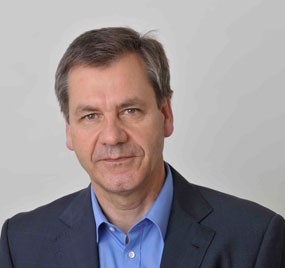
Prof. Jürg Kramer is a Professor of Mathematics at Humboldt University of Berlin, affiliated with the Faculty of Mathematics and Natural Sciences and the Institute of Mathematics. His research focuses on Arakelov geometry, automorphic forms (particularly modular forms), and their intersections. Notable contributions include advancements in arithmetic intersection theory with logarithmic singularities and sup-norm bounds for modular forms. He is also deeply engaged in mathematics education, leading initiatives for teacher training and promoting mathematical talent through networks like the Berlin School Mathematics Network. Active in academic service, he served as EMS Education Committee Chair (2017–2022) and President of the German Mathematical Society (2013/14). His work bridges pure mathematics with pedagogical innovation, emphasizing public understanding through popular science publications. Research: Arakelov geometry, modular forms, L-functions, hyperbolic geometry methods Education: Teacher training programs, math talent promotion, textbook authorship Affiliations: Leibniz Institute for Science and Mathematics Education (IPN), EMS, Deutsche Akademie der Technikwissenschaften Key educational contributions include Felix-Klein teacher training programs and co-authoring standards for mathematics teacher education. His publications span advanced mathematical research and accessible expositions on topics like Fermat’s Last Theorem and Riemann Hypothesis.
Dr. Arno Berger is a Professor in the Department of Mathematical and Statistical Sciences at the University of Alberta. He holds a Dipl.Ing. (ME) and Dipl.Ing. (MSc) in Mechanical Engineering and Applied Mathematics from TU Wien (Vienna University of Technology), followed by a Dr. techn (PhD) and Habilitation in Applied Mathematics from the same institution. His research focuses on dynamical systems, ergodic theory, Benford's Law, nonautonomous dynamics, bifurcation theory, applied probability, and dimensional analysis. He has held visiting positions at prestigious institutions including Georgia Tech, University of Warwick, Goethe University Frankfurt, and University of Canterbury. His recent work includes studies on Saint-Venant-Polya inequalities, planar curves with position-dependent curvature, and distributions of logarithmic functions. He co-authored the seminal book An Introduction to Benford's Law (2015), and maintains the Benford Online Bibliography. His teaching spans courses like Differential Equations and Real Variables. Dr. Berger’s research has explored Benford’s Law in diverse contexts, from stochastic processes to finite-time dynamics. His articles often bridge theoretical insights with practical applications, emphasizing the ubiquity of Benford’s Law in mathematical systems.
John Rognes is a Professor at the Department of Mathematics , University of Oslo, specializing in Algebraic Topology, Algebraic K-Theory, and Geometric Topology. His research bridges number theory and homotopy theory, with a focus on structured ring spectra and topological modular forms. Education : International Baccalaureate (1984), Cand. Mag. in Mathematics (1985), Princeton MA (1987), and PhD (1990) under Gunnar Carlsson. Positions : Professor at UiO since 1998, Visiting roles at Stanford (1996), Chicago (1996), and Bonn (2005-2006). His research areas include Algebraic K-Theory , Stable Homotopy Theory , Topological Cyclic Homology , and Motivic Homotopy . Articles highlight work on Adams spectral sequences, redshift phenomena, Segal conjectures, and topological Hochschild homology of modular forms. Scientific awards include the 1999 Professor Ingerid Dal and Ulrikke Greve Dals prize, Fulbright-Hays Fellowship, and multiple grants from the Research Council of Norway (YFF, SUPREMA). He supervised 18 Master’s and 9 PhD students, including Paul Arne Østvær, Vigleik Angeltveit, and Alice Hedenlund. Leadership : Chairman of the Abel Committee (2014-2018), Program Leader for Master programs in Mathematics (2021-2024), and organizer of international symposia. Grants : YFF program 'Brave new rings' (7.1 MNOK), RCN projects on topology and motivic homotopy (total >30 MNOK).
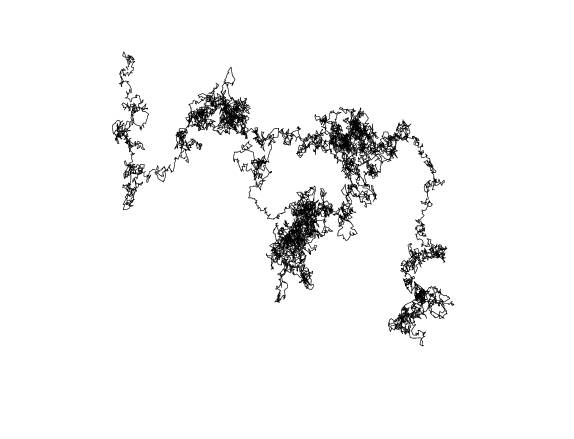
Perla Sousi is a Professor of Probability at the University of Cambridge's Statistics Laboratory, part of the Department of Pure Mathematics and Mathematical Statistics (DPMMS). She is also a Fellow of Emmanuel College. Her research focuses on Probability Theory, Stochastic Processes, and their applications, including Random Walks, Brownian Motion, Mixing Times of Markov Chains, Percolation Theory, and Dynamical Systems. Notably, she explores phase transitions in stochastic models, cutoff phenomena in Markov chains, and the interplay between geometry and probability. Her work often involves collaboration with leading researchers in the field, addressing questions in both theoretical and applied stochastic processes. She has taught courses such as Probability IA, Percolation and Random Walks on Graphs, Advanced Probability, and Applied Probability. Her research has been published in top-tier journals like Annals of Probability , Probability Theory and Related Fields , and Communications in Mathematical Physics . Key contributions include studies on mixing times in dynamic environments, phase transitions in random walks, and capacity analysis in high-dimensional settings. Her articles highlight advancements in understanding stochastic systems' behavior, with a focus on cutting-edge topics like dynamical percolation, branching processes, and cutoff phenomena in complex networks. She actively contributes to both foundational theory and applications in stochastic modeling.
Lionel Levine is a Professor in the Department of Mathematics at Cornell University, affiliated with the College of Arts and Sciences. His academic research focuses on abelian networks, interacting particle systems, and the emergence of complex patterns from simple rules. He has held prestigious fellowships, including the Simons Fellowship and Sloan Research Fellowship, and has been honored with an endowed professorship. Levine's work bridges probability theory, combinatorics, and statistical physics, with notable contributions to the study of sandpile models and internal diffusion-limited aggregation (IDLA). Education: Ph.D. in Mathematics (2007), University of California, Berkeley. Research Interests: Applied Mathematics, Combinatorics, Probability, Abelian Networks, Sandpile Models, and their intersections with computer science and statistical physics. His research explores how local rules generate large-scale structures, such as in abelian networks and sandpile models. Awards and Honors: Simons Fellowship, Sloan Research Fellowship, Endowed Professorship in the College of Arts and Sciences. Teaching: Courses include Probability Theory (MATH 6710/6720), Topics in Probability: Math for AI Safety (MATH 7710), and undergraduate mathematics courses like Strategy, Cooperation, and Conflict (MATH 1340). Grants and Funding: Supported by the National Science Foundation (NSF), Simons Foundation, Sloan Foundation, and Institute for Advanced Study. Collaborations: Collaborates with prominent researchers such as Yuval Peres, Cris Moore, and Jim Propp. His work has been published in leading journals like the Annals of Probability and Duke Mathematical Journal. Future Work: Continues investigating AI safety, causal models, and multi-agent learning, including research on mathematical frameworks for transformer circuits and hidden incentives in AI systems.
Nima Lashkari is an Assistant Professor of Physics and Astronomy at Purdue University, affiliated with the College of Science . His research focuses on quantum field theory (QFT), quantum gravity, black hole physics, and quantum information theory. He holds a Ph.D. in Theoretical Physics from McGill University (2012) and a B.Sc. in Physics from Sharif University of Technology (2006). Prior to Purdue, he held postdoctoral positions at MIT, the University of British Columbia, and Stanford University, and was a member of the School of Natural Sciences at the Institute for Advanced Study (2018–2019). His research explores operator algebras in quantum gravity, local S-matrix formalisms, and multipartite entanglement. Notable interests include renormalization group flows as quantum error correction, eigenstate thermalization in QFT, and holographic principles. He is a member of the It from Qubit collaboration , focusing on non-perturbative quantum field theory and gravity through quantum information lenses. Lashkari’s work has contributed to understanding gravitational dynamics via entanglement, modular theory applications in QFT, and the interplay between quantum information and spacetime geometry. His recent talks include discussions on modular intersections, time interval algebras, and gravitational energy theorems derived from information inequalities.
Kirsten Wickelgren is a Professor in the Department of Mathematics at Duke University, affiliated with Trinity College of Arts & Sciences. Her research focuses on homotopy theory and arithmetic geometry, with support from the National Science Foundation through grants DMS-2405191 and DMS-2103838. She has held academic positions at Duke, Georgia Tech, and Harvard, teaching advanced courses in algebraic topology, algebra, and geometry. Her research explores intersections of algebraic topology and number theory, including motivic homotopy theory, quadratic forms, and enumerative geometry. Notable contributions include enriched counts of geometric objects over finite fields and arithmetic counts of curves in projective spaces. Wickelgren has advised numerous PhD students, including Chongyao Chen, Cameron Darwin, and Thomas Brazelton, and has mentored undergraduate and high school research projects. She has organized conferences such as the Abel Symposium 2025 and co-organized the Mathematics Employment Experience for High School Students at Duke.
Yuichiro Hoshi is an Associate Professor at the Research Institute for Mathematical Sciences (RIMS) , Kyoto University. His research focuses on arithmetic geometry , particularly anabelian geometry and p-adic Teichmüller theory , with a special emphasis on fundamental groups of algebraic varieties related to hyperbolic curves. Education: M.Sc. in Mathematics, Kyoto University (2006) D.Sc. in Mathematics, Kyoto University (2009) Research Interests: Yuichiro Hoshi's work delves into the deep connections between arithmetic geometry and Galois theory , exploring Grothendieck's anabelian conjecture , section conjecture , and p-adic Teichmüller theory . His research aims to understand the structure of fundamental groups of hyperbolic curves and their applications to number theory and algebraic geometry. Recent Publications: Hoshi has published extensively in top-tier journals, with recent works focusing on anabelian geometry of configuration spaces , hyperbolic curvoids , and inter-universal Teichmüller theory . His collaborations include notable mathematicians such as Shinichi Mochizuki and Shota Tsujimura. Scientific Awards: 28th Inoue Research Award for Young Scientists (2012) 1st IUT Innovator Prize (2024) International Engagement: Hoshi has held visiting positions at institutions such as the Isaac Newton Institute for Mathematical Sciences (Cambridge University), Université de Paris 6 , and Johann Wolfgang Goethe-Universität Frankfurt am Main . He actively organizes and participates in international conferences and seminars, contributing to the global advancement of anabelian geometry and related fields. Contact: Email: yuichiro@kurims.kyoto-u.ac.jp
Pan Xu is a tenure-track assistant professor with joint appointments in the Department of Biostatistics & Bioinformatics, Department of Computer Science, and Department of Electrical & Computer Engineering at Duke University's Pratt School of Engineering. Prior to joining Duke, he was a Postdoctoral Scholar Research Associate at the California Institute of Technology, and he earned his Ph.D. in Computer Science from UCLA. His research bridges theoretical foundations with practical applications in machine learning and artificial intelligence. Dr. Xu's research focuses on developing computationally- and data-efficient machine learning algorithms with strong theoretical guarantees, particularly in reinforcement learning, optimization, and high-dimensional statistics. His work addresses two fundamental challenges in sequential decision-making: efficient exploration with minimal interactions and robustness against distributional shifts. His research spans theoretical algorithm design, practical implementation, and real-world applications in bioinformatics and healthcare. His publication record demonstrates consistent high-impact contributions to top-tier conferences including ICML, NeurIPS, ICLR, AAAI, and AISTATS. The research trends show a progression from foundational work in non-convex optimization and multi-armed bandits toward increasingly sophisticated frameworks for robust reinforcement learning, with particular emphasis on distributional robustness, efficient exploration strategies, and practical applications. His work often bridges theoretical guarantees with empirical validation. NSF award on approximate sampling based exploration for sequential decision making Whitehead Scholar award from Duke University School of Medicine PIMCO Postdoctoral Fellowship in Data Science UCLA Outstanding Graduate Student Research Award Rising Stars in Data Science by University of Chicago Best Paper Award for Queer In AI: A Case Study in Community-Led Participatory AI at FAccT 2023 Featured Certification for Wasserstein Distributionally Robust Policy Evaluation and Learning for Contextual Bandits at TMLR Oral Presentation award at AAAI 2024 Dr. Xu actively mentors students and researchers, seeking highly motivated individuals with strong mathematical backgrounds for Ph.D. programs in Biostatistics & Bioinformatics, Computer Science, and Electrical & Computer Engineering at Duke. He has received multiple research grants including an NSF award on approximate sampling based exploration for sequential decision making. His service to the academic community includes roles as area chair for NeurIPS, ICML, ICLR, and AISTATS, as well as action editor for Transactions on Machine Learning Research. His research group develops algorithms that address fundamental challenges in sequential decision-making, with applications spanning healthcare, bioinformatics, and multi-agent systems. Current research directions include distributionally robust reinforcement learning, efficient exploration strategies, and applications of graph neural networks to biological problems.
Marta Casanellas is a full professor in the Department of Mathematics at the Polytechnic University of Catalonia (UPC) and a researcher at the Centre de Recerca Matemàtica. She teaches at the Faculty of Mathematics and Statistics, ETSEIB, and FIB. She earned her PhD in mathematics from the University of Barcelona under RM Miró-Roig, focusing on algebraic geometry and liaison theory. After completing a postdoc at UC Berkeley with a Fulbright Scholarship, she shifted her research to applications of algebraic geometry in computational biology, particularly phylogenetics. Her educational background includes a PhD from the University of Barcelona (2002), followed by a postdoctoral fellowship at UC Berkeley (2002-2003) supported by a Fulbright Scholarship. She obtained a prestigious Ramón y Cajal contract at UPC in 2003, which marked her transition to interdisciplinary research at the intersection of mathematics and biology. Casanellas' research focuses on applying algebraic and geometric techniques to phylogenetics, with particular emphasis on evolutionary models, phylogenetic invariants, and computational methods for genomic data analysis. Her work bridges pure mathematics (particularly algebraic geometry) with biological applications, developing mathematical frameworks to reconstruct evolutionary histories and understand genomic relationships. She has published extensively in both mathematics journals like Advances in Mathematics and biology journals like Molecular Biology and Evolution. Her recent publications demonstrate a consistent focus on developing algebraic methods for phylogenetic analysis, with increasing attention to heterogeneous evolutionary processes across lineages, time-reversible models, and computational implementations of theoretical results. The trend shows progression from theoretical foundations in algebraic geometry toward increasingly sophisticated and applicable computational methods for biological data. Fulbright Scholarship for postdoctoral research at UC Berkeley Ramón y Cajal contract (2003) Casanellas has supervised PhD students including A. Kedzierska (co-supervised with R. Guigó of the CRG). She has served as principal investigator for three competitive Spanish government projects involving fifteen researchers each. She has held significant academic leadership roles including Deputy Director of Research of the Department of Mathematics at UPC (2015-2018), head of studies for the Degree in Data Science and Engineering at UPC (2018-2022), and currently coordinates UPC's PhD in Bioinformatics program and Bachelor's Degree in Bioinformatics. She leads the BIO-GEOMAP research group focused on applying mathematical techniques to biological problems.
Dr. Navid Nabijou is a Lecturer in Mathematical Sciences at Queen Mary University of London, part of the School of Mathematical Sciences. He is affiliated with the Centre for Combinatorics, Algebra and Number Theory. His research focuses on algebraic geometry, particularly moduli spaces and combinatorial techniques from logarithmic and tropical geometry. He earned his PhD from Imperial College London in 2018, followed by postdoctoral positions at the University of Glasgow and the University of Cambridge before joining Queen Mary in 2022. His research interests include algebraic curves, Gromov-Witten theory, logarithmic and tropical geometry, orbifolds, and moduli spaces. He has secured grants such as the COW Algebraic Geometry Seminar (Heilbronn 2025) and the London Mathematical Society grants for conferences and seminars. His work bridges algebraic geometry with combinatorial methods, addressing foundational questions in enumerative geometry and moduli theory. Key research trends in his recent articles include applications of logarithmic and tropical geometry to Gromov-Witten invariants, moduli spaces of curves, and toric varieties. He has contributed to understanding universality in tropical maps, divisors on logarithmic mapping spaces, and degenerations of hypersurfaces. Dr. Nabijou has advised no students listed, but his grants support collaborative research activities. His lab or team is part of the Centre for Combinatorics, Algebra and Number Theory at Queen Mary University of London.
Siqing Zhang is a Gibbs Assistant Professor at Yale University, where he conducts research in algebraic geometry. From 2023 to 2025, he is a Postdoctoral Member at the Institute for Advanced Study (IAS), mentored by Bhargav Bhatt. He completed his Ph.D. at Stony Brook University in 2023 under Mark Andrea de Cataldo and holds a B.S. in Mathematics and Philosophy from NYU Shanghai (2018). Research Interests: Dr. Zhang's work bridges algebraic geometry, arithmetic, and topology. His research focuses on moduli stacks, characteristic p geometry, perverse sheaves, and geometric applications to the P=W conjecture and non-Abelian Hodge theory. He explores phenomena in positive characteristic, including harmonic metrics, liftings mod p², and logarithmic poles. Publications: His recent articles address cohomological structures in positive characteristic, semistability in non-Abelian Hodge theory, and moduli spaces for Higgs bundles and t-connections. These studies often intersect with geometric invariant theory, algebraic stacks, and topological methods in algebraic geometry. Scientific Contributions: Dr. Zhang has been invited to speak at institutions like the Simons Center, Harvard-MIT, and Clay Mathematics Institute on topics including étale homotopy, non-Abelian Hodge theorems, and characteristic p geometry.
Gourab Ray is an Associate Professor in the Department of Mathematics and Statistics at the University of Victoria, Faculty of Science. He holds a PhD from the University of British Columbia, Vancouver. His research focuses on the intersection of probability theory, geometry, and mathematical physics, particularly large-scale patterns in stochastic models inspired by physics. Key areas include random planar maps, random walks, lattice spin models, dimer models, Gaussian free field properties, and Liouville quantum gravity. Recent work emphasizes establishing Gaussian free field-like behaviors in dimer models across various graphs and surfaces. He teaches courses such as MATH 236: Introduction to Real Analysis and MATH 555: Topics in Probability. His publications span leading journals including Inventiones Mathematicae , Annals of Probability , and Probability Theory and Related Fields . Notable contributions include studies on unimodular hyperbolic triangulations, half-planar map classifications, and conformal invariance in dimer models. No specific awards are listed for Dr. Ray, though his work has been recognized in peer-reviewed venues. He actively contributes to academic service, including roles on graduate committees and research collaborations. His research group engages with theoretical and applied aspects of probability theory, often bridging discrete and continuous mathematical frameworks.